Tag: #business

  • Local Cafe and Greengrocer in Naas expands to meet evolving customer demand

    Local Cafe and Greengrocer in Naas expands to meet evolving customer demand

    Founded in 1985, Swans on the Green is expanding to keep pace with Naas’s growing cafe culture and changing customer demand.

    By Iqra Siddiqui 

    Three weeks ago, Swans on the Green opened its expanded seating area, adding approximately 100 sq/m to accommodate a growing number of customers.

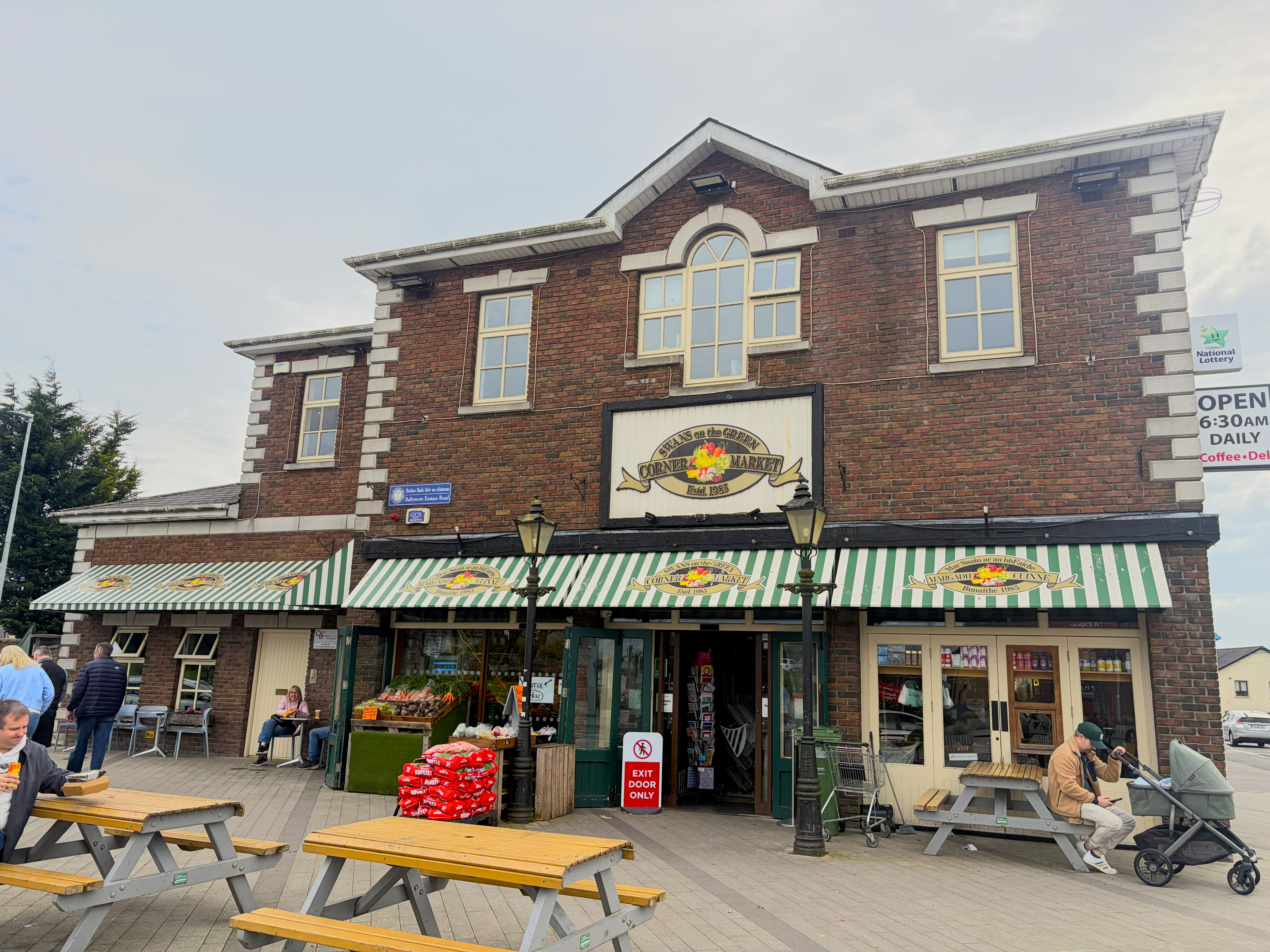
    The newly expanded seating area at Swans on the Green. Photo Credit: Iqra Siddiqui

    The cafe is located at Kilcullen Rd, Naas East, Naas, Co. Kildare. The recent expansion has added a new rear section to the cafe, increasing seating capacity. The layout of the extended area has been adjusted to support smoother movement within the space, making it easier for both staff and visitors during busy periods.

    The extension reflects the cafe’s response to growing demand and to improve the overall customer experience.

    “It is an important place for people. As a family business, we’ve seen customers return over the years as they have watched us grow and change,” the owner, Larry Swan, said.

    “The space is kept simple, with a concrete floor and basic furniture. Seating is a key to a cafe like this,” he said.

    “The new space, he says, increased footfall and brought in a wider range of customers. It attracts more people to the cafe.”

    Before the extension, Swans on the Green had a more compact seating arrangement, but a hub of conversation, community, and new expansion continues to provide a welcoming environment with increased capacity.

    The cafe seating area before the new extension. Photo Credit: Iqra Siddiqui

    “People of all ages gather here to socialise,” Swan said. With the new space, people can continue to socialise and now have more room to enjoy.

    Over the years, Swans on the Green have embraced growth and change. “We were originally a grocery store with the emphasis on fruit and veggies,” the owner recalled.

    Swans on the Green in its early days. Photo Credit: Iqra Siddiqui

    While talking to TheCity.ie, Larry Swan reflected how the cafe has adapted over time. “That has all changed over the last 15 years. Like any business, we evolve to meet new demands,” he said.

    “People’s requirements are very different now, especially with younger customers interested in coffee culture.”

    “We started with a small seating area, maybe 10 seats,” he said.

    Swans on the Green kept up with the evolving trends and the pressures of the pandemic in 2019. The owner told TheCity.ie, “The cafe introduced new offerings, including baked goods, ice cream, cakes, and other products.”

    This shift allowed the business to diversify its products despite the challenges caused by the pandemic.

    Photo Credit: Iqra Siddiqui

    “This space was reconfigured during the pandemic to meet changing customer needs and introduced new products to the shelves,” Larry Swan Said. 

    However, businesses continue to face challenges within rising trends and changing customer behaviour, even if they meet growing demand.  The cafe has recently extended its seating area, but competition from big giants has put pressure on it. 

    “Our business was being eroded because of the advent of the big multiples-Aldi, Lidl, and Tesco,” he said. 

    Larry Swan explained the financial pressures of competing with large retailers: 

    “It was putting our core business in challenging positions. How can I sell the same product that Aldi or Lidl sells for 49 cents? For me to buy it would cost €1.” 

    “We had to adapt and come up with a different business model.” 

    “The only way to do this was to get into the food area, to specialise in sit-down and takeaway food in a nice environment.” 

    “When we got into the business of food and coffee, there was an increasing demand. We offer a good product, a good price, and a nice environment with good staff. That’s the way we went; that’s the way it evolved.”

    Customers are placing orders at Swans on the Green. Photo Credit: Iqra Siddiqui

    “The trend is moving towards food-to-go and food to sit in and eat on the premises. We adapted and created more seating within the cafe,” Larry Swan said.

    “We keep adapting our model to grow. As the business grows, the staff level has also increased, allowing us to create more jobs.

    Looking ahead, Swans on the Green continues to evolve, with the latest addition of more seating marking its adaptation to customer demand and market trends.

    Quotes are displayed inside the old seating area of the cafe. Photo Credit: Iqra Siddiqui

  • Not Tapping Out: Family-run Rascals Brewery fights rising costs and global giants to keep Irish craft beer independent

    Not Tapping Out: Family-run Rascals Brewery fights rising costs and global giants to keep Irish craft beer independent

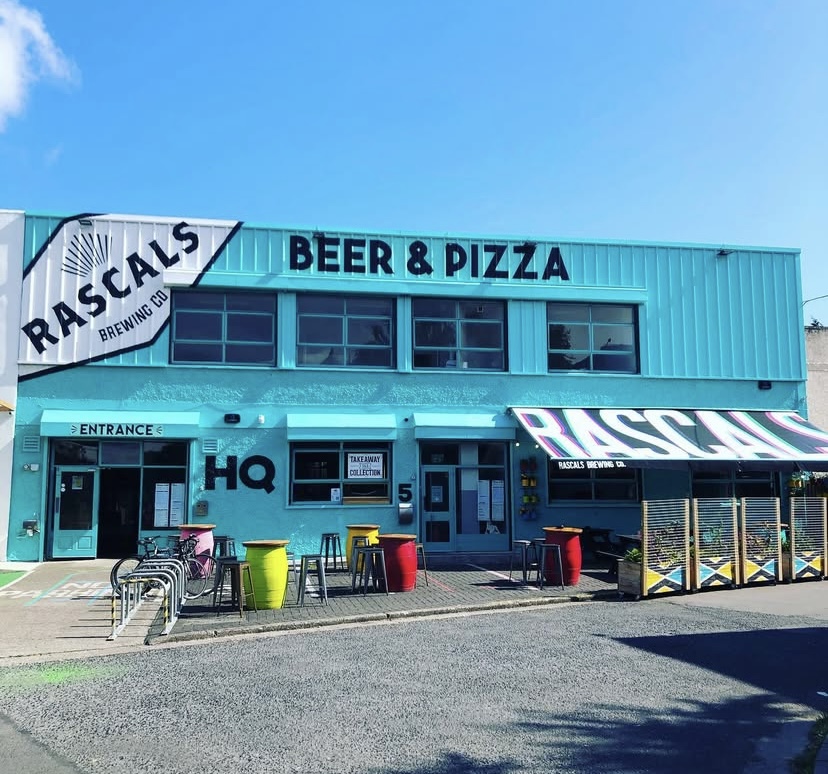
    “We’re not in the business to buy a yacht. We do this because we love what we do,” says Joe Donnelly of Rascals Brewing Company — a family-run Dublin brewery that now finds itself at the sharp end of rising costs, regulatory burdens, and a drinks industry dominated by global giants. 

    With a 30-hectare brewing facility and a popular pizza restaurant on-site in Inchicore, Rascals have built a loyal local customer base over the past 11 years, despite this many of Ireland’s independent craft breweries, it is now grappling with a mounting wave of operating costs — with a recent hike in commercial water charges threatening to push many over the edge. 

    “It’s not one thing in isolation,” Donnelly says. “It comes on foot of years of obstacles put in the way of doing business. Energy costs, inflation, rates — now water charges. At what point do we go — can the government not find the money somewhere else?” 

    The Commission for Regulation of Utilities recently announced a 9.5% rise in water charges for non-domestic users. For breweries, whose product is more than 90% water, it’s not just inconvenient — it’s existential. 

    Ireland’s ageing water infrastructure has long required investment, and few dispute that upgrades are urgently needed but for small businesses like Rascals, the government’s approach to funding those improvements is raising questions.

    “We didn’t cause the problems with the water infrastructure, but we’re being held to account for it,” Donnelly continues. “Of course, it needs to be fixed. But do businesses have to suffer punitive increases as a result?”

    While rising utility costs affect all sectors, small and medium enterprises like Rascals feel the pinch hardest. Donnelly notes that major industries such as Heineken and Diageo can absorb costs far easier — while local independents are left with little room to manoeuvre. 

    People think when you raise prices, you’re just chasing profits,” he says. “But we’re trying to stay open, employ staff, and keep our product at a standard customers expect.” 

    That standard is non-negotiable, he adds. Despite cost pressures, Rascals refuses to cut corners. 

    “We won’t start using inferior raw materials just to protect margins. We have loyal customers who expect quality. That’s what we stand for.” 

    It’s also about more than just beer. Rascals employs 26 people, many from the local area, and supports Irish suppliers across its supply chain. In Donnelly’s view, the company plays a much bigger role than just brewing. 

    Pizza served at Rascals Brewery Inchicore

    “We serve a purpose that’s much bigger than just making beer and pizza,” he says. “There’s a circular economy here that’s being overlooked.” 

    But competing on taps with multinational brands remains a challenge. Donnelly points to the increasing saturation of 0% beers by large brands, which he claims is more about market dominance than consumer demand. 

    They’ve flooded the market with 0% beers,” he says. “It’s not because everyone’s drinking them — it’s about taking up taps. That’s a spot a small Irish brewery can’t get now. It’s an unfair playing field.” 

    He also criticises how alcohol-free beers are being used as a loophole to advertise at sporting events, a tactic that further develops the dominance of global brands. 

    Off-trade access is another uphill battle. While SuperValu is praised for its support of Irish producers, Donnelly says other retailers are more difficult to break into. 

    “Every chain is different, but it’s hard,” he says. “And most people don’t drink craft beer, so you’re introducing them to it for the first time. You have to work hard to stay visible.” 

    Despite it all, Rascals remain positive— cautiously. 

    “We’re going to be here. We’ll still be brewing beer,” Donnelly says. “There might be a bit of economic Darwinism — only the strongest will survive.”

    But Rascals Brewery is not tapping out.

  • How will the global pandemic change Japan’s hectic working culture?

    How will the global pandemic change Japan’s hectic working culture?

    TheCity.ie’s Ayumi Miyano spoke with Tokyo-based businessman Sam Kennedy and Yoshihiro Tsuchiya of the Ireland Japan Chamber of Commerce about the threat to Japan’s business traditions with the coronavirus looming large over the nation and its economy.

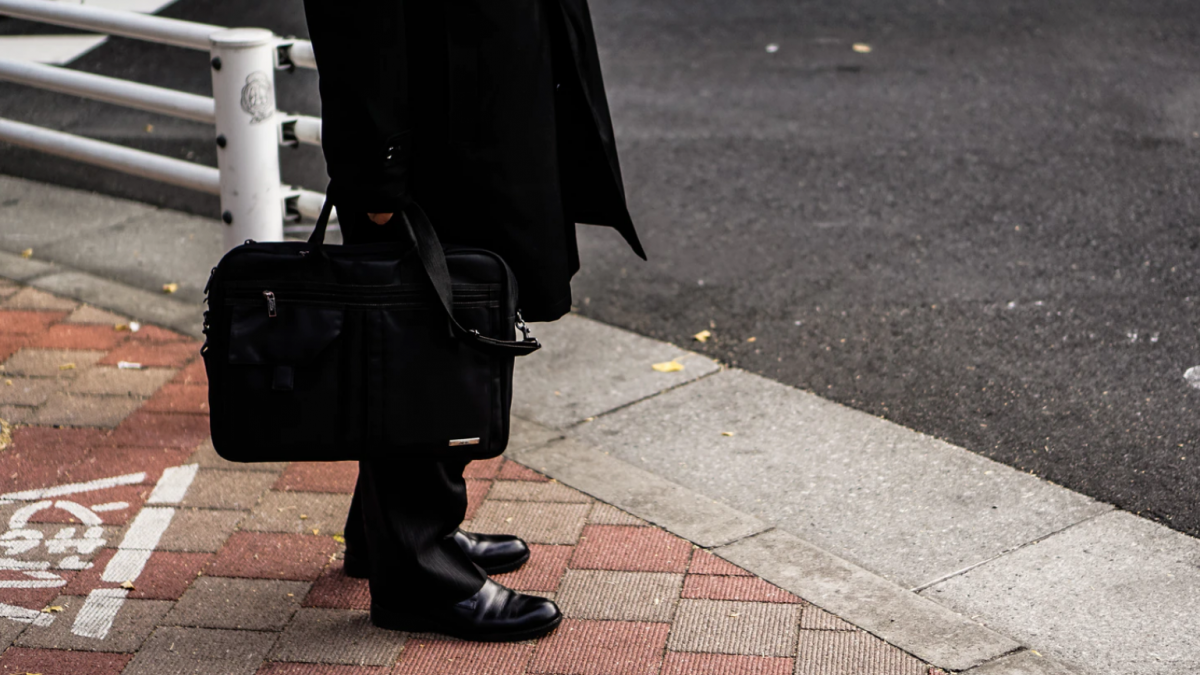
    Photo: tokyoform – Flickr

    The development of technology has completely changed how people communicates with each other, as well as the work environment. Now the global coronavirus pandemic has accelerated the trend of telework.

    But traditional paper-based approval systems and on-site regular meetings may hinder people from catching up to the trend.

    “A lot of data, a lot of our processes have to be done on paper,” said Irish businessman Sam Kennedy. He has been working for a Japanese company in the medical industry for five years. When he started to work there, a lot of Japanese office traditions — including paper-based communication — surprised him.

    “A physical hanko form has to go to the next person and the next person. If you can’t do that, you can’t work, you can’t get a result. And we can’t change that process suddenly either,” he said.

    Hanko” is a Japanese word for a stamp. Normally workers are given their hanko with their names on the first day of their work in a Japanese company. Workers seal it after they make an in-house document, and the document will be circulated among their bosses for their approval. In a way, Hanko is like a signature, but it has more power than signatures do in many Japanese companies. 

    “A stump form has to go to the next person and the next person. If you can’t do that, you can’t work, you can’t get a result,” Kennedy said. 

    Web-based technology systems

    During the coronavirus pandemic, Kennedy’s company started to implement a set of remote working systems, but he doubts whether the tactic can be widely used in his company.

    “The problem I think for us and also for many Japanese companies is we don’t have technology for that and even if we had technology, staff don’t know how to use it,” he said. 

    “We also have a web approval system which is used for big decisions, but the supporting document for the system that you submit to be reviewed by the people who are approving, originally has to have a stamp on it. So, even though we have an online system, we can’t use it without stamping it,” he added. 

    Most Japanese companies have regular weekly or monthly meetings.

    “We have a lot of set meetings, but whether we need to have those meetings are not is not always clear,” he said. 

    “We were planning on using Zoom for work, but I think the problem is a lot of people don’t have the IT equipment to be able to do that,” he added.  

    Overwork

    Traditional practices in Japanese working culture were highlighted in 2013 when the United Nations warned the Japanese government that extensive overwork of employees could be a cause of “Karoshi” (a death or suicide from exhaustion) in Japanese companies. 

    In 2018, 92 cases of karoshi were formally recorded by the Ministry of Health. That is equivalent to one case of karoshi occurring every four days. 

    In 2019, the Japanese government launched the campaign “Work System Reform”. The campaign introduced a new strategy to cap the amount of overtime. The regulations imposed a hard cap on overtime at 100 hours a month, or an average of 80 hours over multiple months, and 720 hours a year, starting in April of 2019. This 80 hours of overtime are also regarded as the limit to avoid karoshi — the so-called “karoshi line”. 

    “We’ve been trying to implement ‘Work System Reform’ for a long time — how to work better — but it has been all the time the same, it’s about overtime, it’s about meetings,” Kennedy said. 

    History of overwork — “You shouldn’t go home before your boss

    For most of the last 70 years in Japan, working long hours was treated as a virtue. The Japanese economy flourished in 1954 to 1973 by depending on heavy chemical industries, the expansion of markets, and growing exports. Although the economy was impacted by the oil crisis of the 1970s, Japan welcomed its asset price bubble as real estate and stock prices were greatly inflated.

    The typical Japanese businessman in the bubble economy foresaw a “certainty” for promotion, big rises in salary and a bright future, says the acting president of the Ireland Japan Chamber of Commerce, Yoshihiro Tsuchiya.

    “The longer we worked, the higher salary we will get — that’s what we believed”

    When Tsuchiya started to work as a graduate in the 1980s for one of the biggest insurance companies in Japan, overtime was “normal” and sometimes he had to take a taxi at midnight after he worked overtime hours for a few days in a row.

    “The longer we worked, the higher salary we would get — that’s what we believed. Japanese society and our company were clearly growing at that time,” Tsuchiya said.

    “The ‘you shouldn’t go home before your boss’ mindset was widely believed to a certain extent, and it was a culture of the company. And it was not just work — companies were like family at that time. We always went for dinner or drink with our clients, and these engagements outside of work were regarded as ‘work’,” he added.

    “But in a way, companies were taking care of their employees well, and it was a nice era I would say. At that time, It was easy to plan for a stable future and keep our hope. But now, everything has changed,” he said.

    Coronavirus shock

    The bubble was burst in 1992 and it led to the “Lost Decade” of Japan. The country had been a leader of the global economy with world’s second-biggest GDP, until China overtook it in 2011, followed by the devastation of earthquake and tsunami that same year.

    And now — the coronavirus pandemic.

    “It is a time that people are starting to look at people’s working styles because of the coronavirus situation,” Kennedy said. 

    “When this coronavirus started, we changed the working hours from 9am-5pm to 10am to 4pm. So, everyone has to come to the office outside of the rush hour,” he added. 

    Ironically, the coronavirus pandemic seems to have some positive impact on Japanese companies’ working style. 

    “I go home on time all the time but I know some people don’t like that – my boss doesn’t like it”

    “So, you come to the office no later than 10am and you leave the office no later than 4pm, that was the idea,” he said.

    However, “nobody wants to be the first person to leave the office,” he added. 

    He commented that the notion of never leaving the office before your boss was still pervasive, particularly when coronavirus came. 

    “I go home on time all the time but I know some people don’t like that – my boss doesn’t like it. He never says it to me, but I know that he probably doesn’t like it,” Kennedy continued.

    “I know that probably it will cause problems for me if I want to get a promotion or get more responsibility, I won’t be seen as a ‘team player’ as much as somebody who can do a few hours more overtime everyday. And that’s unrelated to the amount of work you did. 

    “Even though the rule is very strict now, everyone is waiting until somebody else leaves the office. I thought that was a ‘real dangerous’ culture,” he said. 

    Despite his hope, the coronavirus pandemic might fail to reform Japanese working culture. 

    “To be honest, I expect everything will go back to normal after the pandemic ends – but my dream is that it won’t.”