
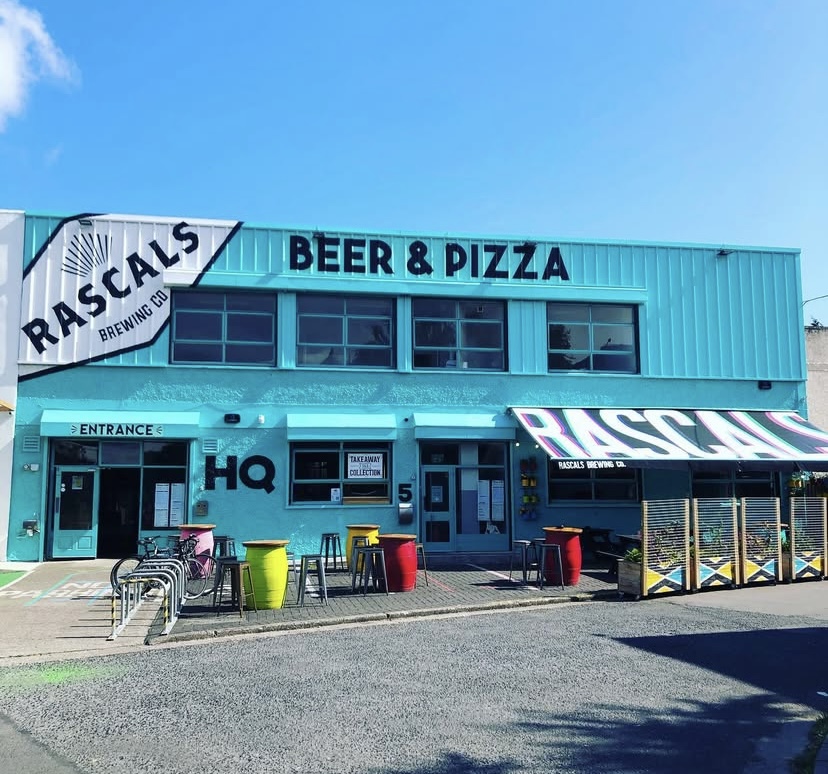
“We’re not in the business to buy a yacht. We do this because we love what we do,” says Joe Donnelly of Rascals Brewing Company — a family-run Dublin brewery that now finds itself at the sharp end of rising costs, regulatory burdens, and a drinks industry dominated by global giants.
With a 30-hectare brewing facility and a popular pizza restaurant on-site in Inchicore, Rascals have built a loyal local customer base over the past 11 years, despite this many of Ireland’s independent craft breweries, it is now grappling with a mounting wave of operating costs — with a recent hike in commercial water charges threatening to push many over the edge.
“It’s not one thing in isolation,” Donnelly says. “It comes on foot of years of obstacles put in the way of doing business. Energy costs, inflation, rates — now water charges. At what point do we go — can the government not find the money somewhere else?”
The Commission for Regulation of Utilities recently announced a 9.5% rise in water charges for non-domestic users. For breweries, whose product is more than 90% water, it’s not just inconvenient — it’s existential.
Ireland’s ageing water infrastructure has long required investment, and few dispute that upgrades are urgently needed but for small businesses like Rascals, the government’s approach to funding those improvements is raising questions.
“We didn’t cause the problems with the water infrastructure, but we’re being held to account for it,” Donnelly continues. “Of course, it needs to be fixed. But do businesses have to suffer punitive increases as a result?”
While rising utility costs affect all sectors, small and medium enterprises like Rascals feel the pinch hardest. Donnelly notes that major industries such as Heineken and Diageo can absorb costs far easier — while local independents are left with little room to manoeuvre.
“People think when you raise prices, you’re just chasing profits,” he says. “But we’re trying to stay open, employ staff, and keep our product at a standard customers expect.”
That standard is non-negotiable, he adds. Despite cost pressures, Rascals refuses to cut corners.
“We won’t start using inferior raw materials just to protect margins. We have loyal customers who expect quality. That’s what we stand for.”
It’s also about more than just beer. Rascals employs 26 people, many from the local area, and supports Irish suppliers across its supply chain. In Donnelly’s view, the company plays a much bigger role than just brewing.

“We serve a purpose that’s much bigger than just making beer and pizza,” he says. “There’s a circular economy here that’s being overlooked.”
But competing on taps with multinational brands remains a challenge. Donnelly points to the increasing saturation of 0% beers by large brands, which he claims is more about market dominance than consumer demand.
“They’ve flooded the market with 0% beers,” he says. “It’s not because everyone’s drinking them — it’s about taking up taps. That’s a spot a small Irish brewery can’t get now. It’s an unfair playing field.”
He also criticises how alcohol-free beers are being used as a loophole to advertise at sporting events, a tactic that further develops the dominance of global brands.
Off-trade access is another uphill battle. While SuperValu is praised for its support of Irish producers, Donnelly says other retailers are more difficult to break into.
“Every chain is different, but it’s hard,” he says. “And most people don’t drink craft beer, so you’re introducing them to it for the first time. You have to work hard to stay visible.”
Despite it all, Rascals remain positive— cautiously.
“We’re going to be here. We’ll still be brewing beer,” Donnelly says. “There might be a bit of economic Darwinism — only the strongest will survive.”
But Rascals Brewery is not tapping out.
You must be logged in to post a comment.