The undeniable growth of Artificial Intelligence (AI) over the last few years has led to a massive increase in AI data centres all over the world, including Ireland. These are buildings that host a large number of infrastructures in order to keep internet servers running smoothly.
As of October 2025, there are approximately 82 data centres in Ireland, with an additional 40 having already been granted planning permission. It is a market that is constantly growing due to the increased demand of AI tools, with 1,200 data centres in Europe. This number is expected to see a huge increase in the next few years.
These data centres have come about from the European Union’s AI Act, which will be governed by the National AI Office in April 2026. The goal of the act will be to implement more AI data centres but ensure the AI systems are regulated and safe for all involved.
A proposed design for an AI data centre in Dublin: Photo from datacentredynamics.com
In a press release from gov.ie, the Minister for Enterprise, Tourism, and Employment, Peter Burke, said “Ireland is building a future where AI is transformative, trusted, and transparent. We’re balancing innovation with safeguards, ensuring AI works for people, not against them.”
As well as these comments from Burke, the Minister of State for Trade Promotion, Artificial Intelligence, and Digital Transformation, Niamh Smyth, spoke about the hopes she has for the act:
“This is about leadership with purpose. We’re creating a system that protects the vulnerable, empowers innovators, and positions Ireland as a global hub for ethical AI. The successful implementation of the AI act requires collaboration, co-operation and collective responsibility amongst all stakeholders,” she said.
However, one prominent issue that has become cause for concern as a result of these new data centres is the effect on Ireland’s climate goals. The current goal set out in the Climate Action Plan is to reduce greenhouse gas emissions by 51% by 2030. The Environmental Protection Agency (EPA) projects a reduction of only about 22-29% by 2030.
AI data centres have led to a major increase in environmental issues. Some of these include a high water and energy consumption and a massive amount of greenhouse gas emissions. With all these new AI data centres being constructed in Ireland, it is likely that these projections will further hinder Ireland’s attempt to hit their climate goals.
In order to get some insight into how damaging the climate effects could potentially be, I spoke to a climate activist, Olivia Byrne:
“Our greenhouse gas emissions are already really bad, especially in comparison with other European countries, considering our population and size. It’s scary to think what they’ll be in the next few years. The data centres are only something I’ve recently been looking into and while I get the argument that they have a place in the modern world, they have to be regulated. They use an extraordinary amount of water to cool the systems and huge CO2 emissions. It’s only going to get worse in the next few years. I’d be shocked if we hit those climate goals, I think they have to be revised eventually.”
It is clear that while these centres are necessary in this ever-changing world, the proposed National AI Office as well as the government’s climate department have to ensure that everything is regulated in order to keep climate goals to an acceptable level.
Food waste is something that isn’t mentioned as often when speaking about the climate crisis, as it is only accounting for 10% of the total percentage with the climate crisis.
The main issue with food waste is the significant resource waste it uses to bring your food from fork to plate, but also the carbon monoxide emissions. Deforestation is another major consequence for the ever-growing demand on the agriculture sector.
On a global scale, the average number of hectares of forests lost is 10 million each year. This happens everywhere but is most apparent in tropical forests in Brazil, Indonesia and the Democratic Republic of the Congo.
Climate activist Arielle Calajate, who is involved in multiple eco-friendly initiatives said, “People don’t realise how truly important the trees are to the climate, and responsible for a lot of what food we can eat. They give us fruits, nuts, healthy soil for food, a water cycle regulation, and pollination. So many important things are given to us by trees.”
Ireland’s deforestation rate is historically low for 2024, with only 670 hectares of trees lost. From 2001 to 2023, Ireland wasn’t as lucky and lost a total of 161,000 hectares of trees. For the small isle of Ireland, it meant we had lost 19 per cent of our national tree coverage from 2000 onwards.
According to Calajate,“by cutting down trees to provide us with more food, we are effectively hurting the one thing that is helping to keep everything okay. This is something the earth has been doing for centuries, long before we started abusing it.”
Statistics released by the Environmental Protection Agency (EPA) show that Ireland has wasted over 835,000 tonnes of food waste in 2023. This means that the average weight of food waste for a person in Ireland is 162kg. Ireland’s food wastage is higher than the European average, which is 132kg per person.
Statistics released by The Central Statistics Office (CSO) stated that food and non-alcoholic drinks increased in waste from 4.7% in the beginning of 2025. It is now at 5.0% in September 2025.
When you keep food in a highly acidic environment of vinegar or brine, it can add to the shelf life of that food for months, when they are properly preserved and sealed. This way of preserving food helps to prevent spoiling by preventing bacteria from growing.
Statistics by the Environmental Protection Agency mention that global food waste accounts for 8-10% of the total greenhouse gas emissions. When food is disposed of in landfills, it releases methane gas, which is a potent gas with a climate warming potential that is 84 times higher than carbon dioxide over a 20-year period.
There is no problem with the usage of agricultural land to produce food for the growing population, the problem lies in large percentages of these patches of land are used to grow food which is not consumed and wastes valuable resources.
Research done by the World Bank Organisation found that around 70% of the world’s water usage is used for food. This makes food a significant waste of freshwater and groundwater resources. Another resource used is the energy consumption, as 38% of the total energy used globally for food, is for food that is never eaten.
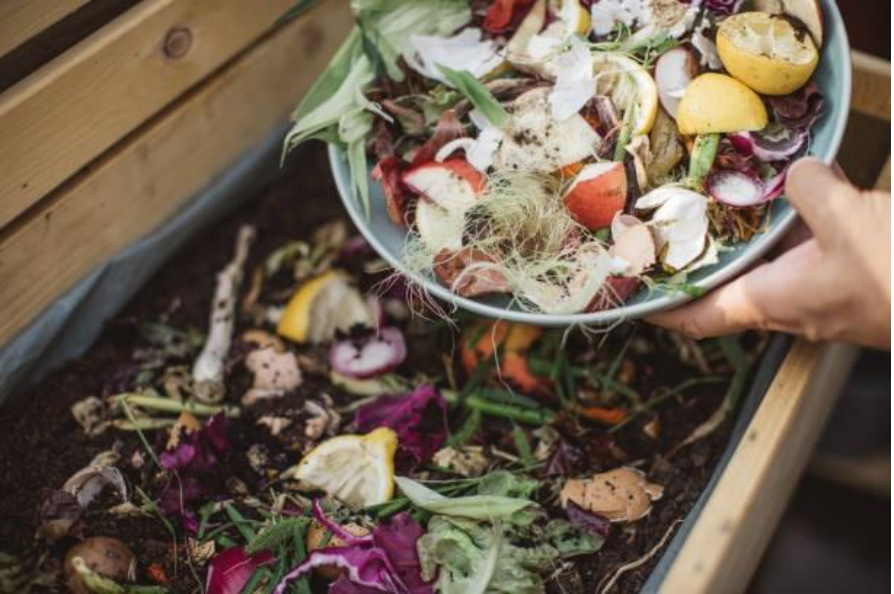
Your own impact on food waste can be a big help to stop the growing problem of food waste and its depletion of natural resources, and most are decisions that can be made at home. Buy in smaller quantities, if possible, from your local markets.
An evening full of comedy, jazz, and of course, climate chats.
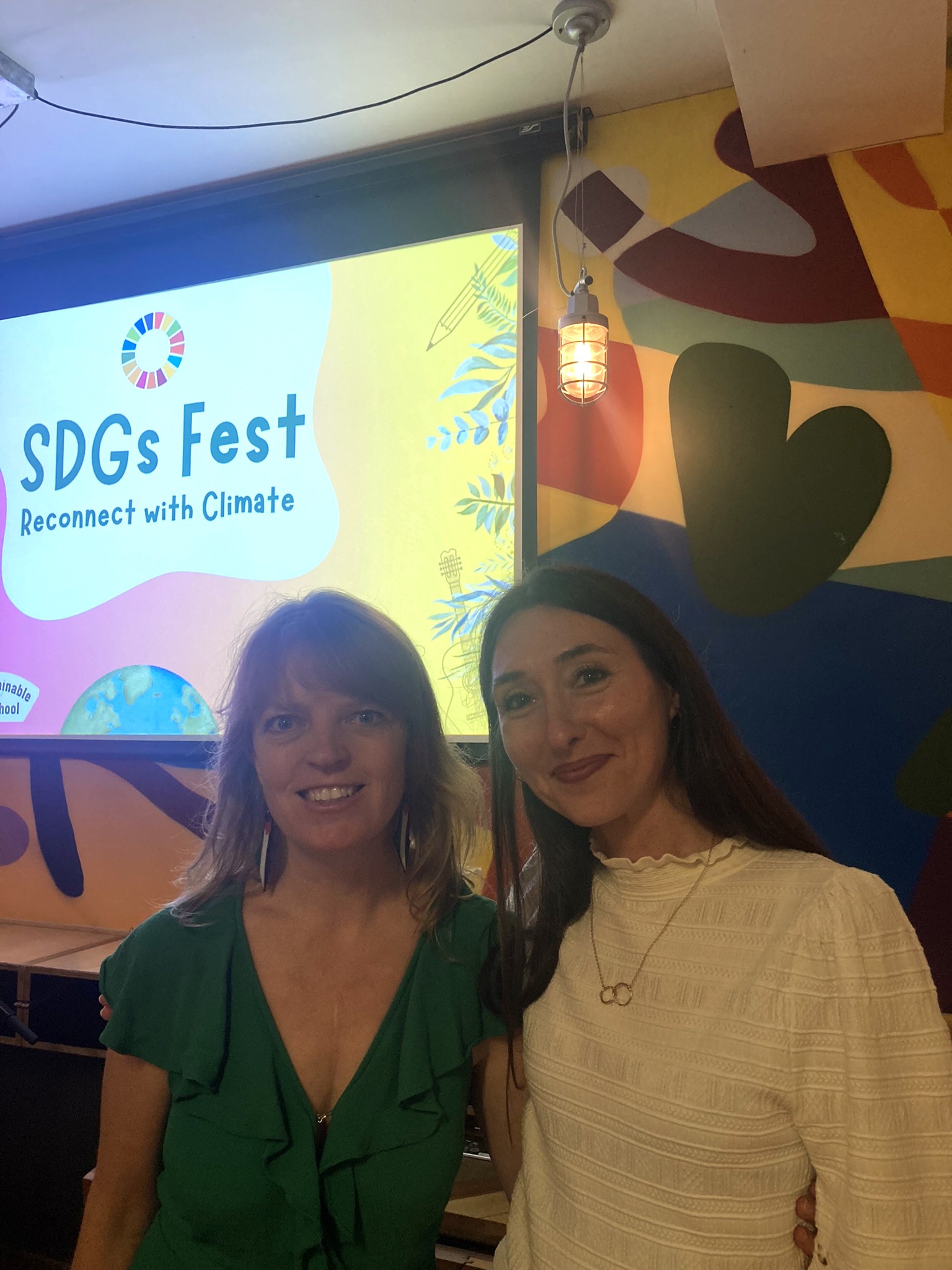
The third Sustainable Development Goal Fest kicked off on Thursday, the 18th of September.
The event was organised by co-founders of the Sustainable Life School, Nathalie Pavone and Dianne O’Connor, an organisation that provides impact-driven programmes in the hope of addressing the climate crisis and providing positive solutions and lifestyle changes in workplaces and communities.
The event was partnered with and took place at The Tara building, where they have previously held clothing swap events and helped members of the Tara community to live more sustainably.
The mini festival ran from 7 to 9.30pm and began with three guest speakers: Tom Popple (Climate Cocktail Club), Keith Maggie (Global Action Plan), and Catriona Kenny (Connecting Cabra). They shared heartfelt stories about what they do and how climate change has affected their own lives.
After this, the guests were asked to split up into smaller groups and have their own chats about how they feel about the climate and what brought them to the event. This included an opportunity to write some inspiring quotes on their ‘Good Vibes Wall’.
Women reading the good vibes wall
This was the main goal of the evening described by Pavone, creating the type of atmosphere to encourage conversation: “This year we wanted to actually get people to have a chat, because the theme is reconnecting, and we wanted people to hopefully make new friends and new connections.”
Another important aspect of the event was to make it free. “It’s a free event because it’s part of our social mission, because we really want to make sure that everybody can afford to have a conversation, and we don’t want to leave anybody behind,” explained Pavone.
Following this was a live jazz performance by Luisa Annibali, where guests were offered to sing and dance alongside Luisa, which added an element of playfulness to the event.
Guests at the event participating in an exercise
The evening wrapped up with two comedic performances, firstly by co-founder Dianne O’Connor and secondly by Colm O’Regan, which centred around the climate crisis.
Taking a step back to where it all started with the Sustainable Life School and where they are at now, co-founder Nathalie Pavone was first motivated through sustainable fashion. “I watched a documentary called ‘The True Cost of Fashion’, which showed me the social and environmental negative effects of the fashion industry,” said Pavone. “And that’s how I became passionate. So, I started with fashion, and then I started to learn about climate and how everything was connected.”
The business offers a sustainable living programme in some of Ireland’s largest organisations. In which they provide six sessions that cover many areas, including but not limited to fashion, food, digital pollution, and travel, which on average results in 160 changes per programme.
Through these sessions, Pavone also explained the importance of recognising the struggles that come with living more sustainably. “What we do as well is that we are honest with each other and with how difficult it is to live sustainably, because obviously you’re going against the grain, because we’re not in a system that’s very sustainable. So, it’s really about kind of sometimes going out of your way.”
One piece of advice Pavone shared to start living a sustainable life is “just start in an area of your life where you know, where you’re passionate about or interested in. Whether it’s clothes, travel, or food, focus on that area and see what you can do to adapt or change in a more climate-conscious fashion.”
Planet Earth could be in serious danger of losing its main oxygen source.
With the Amazon rainforest continually being felled for its timber and cattle grazing at an alarming rate (since 1988, humans have destroyed an area of the rainforest roughly the size of the American State of Texas), what can Ireland do to try to offset and remedy this huge loss of oxygen-producing plants?
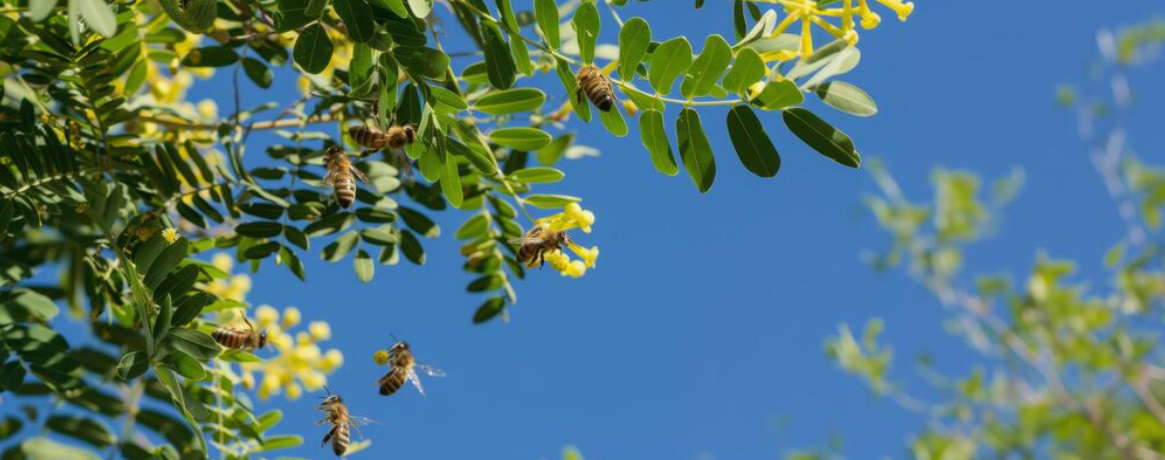
To say it is important for people to support the growth of trees, which support pollinating insects in Ireland and elsewhere, may seem like an understatement. Pollination, and having the right native trees and plants, which contribute to the ecosystem being in balance – is a vital part of nature.
If tree planting is knocked out of balance by human activity, it could have a devastating effect, resulting in the extinction of bats, bees, and other pollinating insects, and hence the plants that rely on them. Also, certainly, birds may be affected. This could have a domino effect, which could eventually lead to the extinction of the animal kingdom, which of course includes our own species, human beings.
It has been reported in the Irish Times by Ella McSweeney, that a third of all bee species in Ireland will be extinct by 2030.
Hanna Backmo, a beekeeper in Ireland, recently told Louise Walsh in the Irish Times, “It’s been a bad year for honey, but the native honeybees are real survivors. Two years ago, because of lack of rain, we had the worst summer in 30 years for honey production. Last year was excellent but, unfortunately, this year doesn’t look too good,” she said.
Orla Farrell is the project leader for the Easy Treesie organisation, whose objective is to plant and grow a million trees in Ireland by 2030. The City asked Orla her opinion on some important environmental issues currently happening in Ireland.
Orla Farrell, the Project Leader for the Easy Treesie. (courtesy of https://easytreesie.com)
Do you think that Irish County Councils giving away thousands of Hawthorn, Mountain Ash and other trees natural to Ireland ahead of National Tree Week every year is a good idea?
Orla: “A super idea. Easy Treesie and Crann do this regularly. The members of the public are thrilled to get such a donation. We ask them only to take them if they have space and if they are going to plant them immediately. The Easy Treesie project is all about planting trees wherever we can find a corner or little spot, to put them. It is vital as a Climate Action.”
Do you think the public are made aware enough about the possible extinction of bees and other insect pollinators in the Irish media?
Orla: “Everyone my age remembers insects at the windows and on car windscreens in profusion in our youth. I was doing a tree-athalon in Sligo on Monday, discussing Yeats’ poem where ‘Moths like stars were flickering out’. Does that happen now? I don’t think so. On the day that Michael D. Higgins called for action on the extinction event that was happening during his address at the Biodiversity Conference in Dublin Castle, the report was only on page 6. The front page had the usual stories.”
I see you have a campaign to plant one million trees by 2030. I see this as a great objective, and I hope it is achieved. You are now halfway to that target. Do you think you will get that number planted by 2030?
Orla: “Yes. All we need is public land. This has been the only slow part of the project. Councils are not yet familiar with our project, so we are really happy Derek, that you are writing about our initiative. Once word gets out about how we are experiencing such success (500, 011 trees at present), we think they will find us space local to the children. We are also open to planting on a really mass scale where children have to travel to the site, though local is our preferred option where the children can easily watch the trees grow.”
At the end of the day, it may be preferable in the long run, for people around the world to choose to get active, and instead of preaching to the Brazilian and South American governments, plant their own trees, woods and forests, which would make a solid positive difference, to ensure planet Earth will continue to produce plenty of oxygen for many more years to come.
Damien Dunne, James Hagan and Christopher Windrum report on the growth of electric taxis for thecity.ie.
The popularity of electric vehicles has increased as we become more aware of climate change, and there has been an increased interest in owning an electric vehicle.
With government grants allowing taxi drivers to upgrade to an electric vehicle, it is hoped that this will see an increased number of taxi drivers using electric vehicles in the future.
Damien Dunne chats to a taxi driver who uses a zero emissions taxi, while James Hagan talks to people on the streets of Dublin to find out their opinion on electric taxis.
In the context of rapidly melting ice-caps, raging bushfires in Australia, a wild 2019 hurricane season, rising water levels in Venice and a growing rebellion, we at TheCity.ie took to the streets to ask the people of Dublin what they think about climate change and what they are doing to prevent climate inaction.
Each of the past five years has been among the warmest ever recorded according to a recent report released by the UN Environment Programme (UNEP) on 26 November 2019.
UNEP set the target of holding temperature rises to 1.5°C by the end of the century, after a decade of growing emissions of 1.5% a year.
According to the UN environment programme’s website: “It’s still possible to keep global warming to well below 2°C, but governments will need to make much bolder commitments to reduce their emissions.”
It also reported that the number of countries announcing net-zero greenhouse gas emission targets for 2050 is increasing, with only a few countries have so far formally submitted long-term strategies to the UNFCCC.
In a recent report, it was found that Ireland missed its greenhouse gas emissions targets for the third year running.
The
plight of bees and other pollinators has been well documented in the media in
recent times. However, one local area has begun to take steps to ensure the
protection of its pollinators.
Dún
Laoghaire Rathdown County Council has implemented a string of measures in an
attempt to become more pollinator friendly. TheCity.ie
spoke to Anne Murray, the Council’s Biodiversity Officer: “Here in Dún
Laoghaire Rathdown, we have altered our landscape management of green verges
along roads, along stream sides and within our parks to create areas for
pollinators and other wildlife.
“We
have also planted fruit trees and orchards in some parks to provide additional
pollinator opportunities and we have reduced our chemical use in relation to
weed control. Our Slow to Mow Campaign
aims to encourage resident groups who manage green areas and also residential
gardens to manage areas for pollinators,” Murray said.
Pollinators
play a major role in the Irish economy, but their existence in the country is
under serious threat. Dr Úna Fitzpatrick from the National Biodiversity Data Centre said: “Pollinators, especially
bees, make up a vital part of Ireland’s biodiversity. Unfortunately, Irish
pollinators are in decline, with one third of our 99 bee species threatened
with extinction.
“Without
pollinators it would be impossible for farmers or gardeners to affordably
produce many of the fruits and vegetables we need for a healthy diet.
Pollinators are also vital for a healthy environment and landscape.”
A
recent study released by the Environmental Protection Agency (EPA) looked at the impact that
pollinators have on the environment and how vital they are for Irish
agriculture. According to the report, food and drink production along with food
processing accounted for 7.7% of the goods and services produced by Ireland’s
economy in 2018. 173,000 people are employed in these sectors and they amounted
to 10% of all Irish exports.
Anne
Murray echoed the results of the study which described the economic benefit
that pollinators give to the Irish economy. She said: “The annual value of
pollinators for human food crops has been estimated at €153 billion world-wide,
and at least €53 million in the Republic of Ireland.”
The
report estimated the effect a total loss of pollinators would have on both
crops grown in Ireland and those which are imported into the country from
abroad. Value of imports, value of exports, production quantity and net trade
were all factors that were examined.
Source: Assessing Market and Non-market Values of Pollination Services in Ireland (Pollival)
The
report, which examined 62 different crops, featured the above chart showing the
five most valuable animal-pollinated crops to the Irish economy as a proportion
of all animal-pollinated crops consumed in the country. It found that for both
imports and exports, apples are the crop that will be most impacted.
Apples
take up 23% of the market share followed by cocoa beans with 17%. Soybean oil
and green coffee were both valued at 7% and rapeseed oil occupying 5%. The
remaining 57 crops are responsible for the rest of the economy.
Dr
Fitzpatrick is responsible for coordinating the All-Ireland Pollinator
Plan which has set up a series of
initiatives to try to help pollinators around the country. She works with farmers,
businesses, schools and communities to try to ensure the future of pollinators
in Ireland is safely secured.
Dr
Fitzpatrick said: “The All-Ireland Pollinator Plan is a call to action to all
of us. Yes, bees are declining, but we know exactly what we need to do to
reverse these declines, and the actions needed are very doable and will show
results almost immediately.
The
biggest threat to pollinators in Ireland is a lack of flowers for food and safe
nesting sites across the country. They need natural green spaces to thrive. Dr
Fitzpatrick said: “If you’re a pollinator, finding enough food is the greatest
challenge you face. In increasing our green spaces, we not only help
pollinators, but biodiversity generally.”
Initiatives
like those in Dún Laoghaire Rathdown can go a long way towards safeguarding the
future of our pollinators. Anne Murray said: “Flying from flower to flower and
transferring pollen along the way, pollinators have had substantial historic,
economic, social and cultural impacts in our world and they provide an
ecosystem service that is vital to humans.”
Thecity.ie is going green and celebrating Environment Week from 25-30 November.
From cycling and recycling to the businesses that are making a difference, all this week we’ll be bringing you our best environmental content, coinciding with Global Climate Action Day 2019 on Saturday 30 November.
Even the savviest of coffee consumers have experienced the coffee lid confusion. At the condiments counter you’ve asked yourself; do I take the regular lid, or this slightly off white compostable, but just as effective version? Any one of us concerned about the climate crisis will choose whatever option sells us a more environmentally sound version of ourselves. But how compostable is this new phenomenon, really?
On November 6 of this year, the Minister for Climate Action, Richard Bruton announced that he will be introducing a coffee cup levy to single-use and compostable cups. The new levy, which will be introduced within three years, aims to encourage a pivot towards more sustainable options when it comes to coffee containment.
Today I’m announcing a range of new environmental levies to crack down on Plastics, Single Use Cups, Landfill and Takeaway Waste. Vital that we reduce the amount of waste created. This is a key part of the Climate Action Plan https://t.co/x6v3RYxtO4
Compostable coffee lids have become increasingly popular among cafe culture in recent years. Any sustainable alternative has to be a good thing, right? This would be the case if the right infrastructure was in place in Ireland for the industrial composting required of ‘compostable’ cups and lids.
A typical compostable coffee cup lid
Understanding domestic recycling is not intuitive so it’s not surprising that many people believe a cup or lid labelled ‘compostable’ is a better choice for the environment. Arguably, they can be, but only when they’re correctly disposed off. Composting these ‘compostable’ lids and cups, can only happen in a controlled environment – commercial composting.
Composting these ‘compostable’ lids and cups, can only happen in a controlled environment – commercial composting.
Our public system
In Dublin, we are somewhat in the junior infants equivalent of European waste management services. German cities have made a positive example of themselves by providing segregated waste bins on their streets, for better, more efficient recycling. According to Simon Brock from Dublin City Council (DCC), Dublin has attempted to implement a segregated bin system in the past. These trials, the DCC said, yielded a high contamination rate of recyclable waste, which means they cannot be recycled.
Dublin City Council collects over 16.5 thousand tonnes of waste per year. This includes waste from public bins, street sweeping and illegal dumping. When our city is collecting this much waste, should it not be utilising the same system as our European counterparts? A second trial of this segregated system is planned to be introduced in the new year in certain areas of Dublin.
A segregated system can only work under a unified public effort to ensure we are correctly separating our waste, be it at home or out and about. Chucking a milky coffee cup in on top of dry, mixed recyclables means anything spoiled is returned to our general, non recyclable waste bin.
Understanding what happens to our coffee cups and lids, compostable or not, allows us to make a better judgement when it comes to choosing how we contain our hot drinks. Scroll through our timeline to discover what happens to any one of the options you might choose.
Treefree Cups are made from the fibres of sugar-cane waste and are fully compostable under controlled conditions.
Closing the loop
Coffee shops using these compostable products will ideally separate them from other waste. Once returned the coffee cups and lids are commercially composted in an environment designed to be a perfect place for these products to break down. These conditions will contain the correct balance of microbes, warmth and moisture which makes the process quick and easy.
Take the Treefree Cup, for example. Zeus, the Irish global packaging company, produces one of the only paper-free compostable cups in Ireland which instead, opts for fibrous materials from sugar-cane waste. Businesses that use their products are provided with a special cup collection bin that are returned back to Zeus for composting in order to ‘close the loop’ on biodegradable waste management systems.
Its estimated that less than 1% of compostable cups are actually being composted properly worldwide and so closed loop systems ensures that these cups and lids are composted properly and do not find themselves in a landfill.
Become a VegWare Vigilante?
If we can’t put them in our domestic waste, in public bins then you might think to compost these items at home yourself. While you’re welcome to try your hand at it, according to Vegware.com: “Home composting conditions vary with the skill of the householder, so we don’t make any claims there, but there have been successful trials using hot compost bins.”
Dublin City Council collects over 16.5 thousand tonnes of waste per year. This includes waste from public bins, street sweeping and illegal dumping. When our city is collecting this much waste, should it not be utilising the same system as our European counterparts? A second trial of this segregated system is planned to be introduced in the new year in certain areas of Dublin.
A segregated system can only work under a unified public effort to ensure we are correctly separating our waste, be it at home or out and about. Chucking a milky coffee cup in on top of dry, mixed recyclables means anything spoiled is returned to our general, non recyclable waste bin.
How is our public waste managed?
“All waste that is deposited in public litter bins goes through processing at a waste facility to extract waste streams for a variety of uses including recycling and for use as SRF (Solid Recovered Fuel) or RSF (Refuse Recovered Fuel),” said Brock.
Dublin City Council collects over 16.5 thousand tonnes of waste every year.
Solid recovered fuel refers to fuel created through a process of dehydrating combustible waste such as biodegradable food waste, paper and kitchen waste, dirt, rocks and clothing.
Refuse recovered fuel is produced by using whatever is left over from the process of creating an SRF. An RSF is a non-specified waste, this makes it difficult to assure quality and environmental-soundness.
The future of coffee cups
The current infrastructure does not allow for recycling or composting the coffee lids and cups we’re using every day. So what options have we?
According to MyWaste.ie, a reusable cup used only seven times is more sustainable than a single-use coffee cup and lid – compostable or not. So next time you turn to the condiments counter at your local coffee shop, the only thing you should plan to reach for is the milk.
A better understanding of how our waste and recycling is managed is required to make more environmentally sound decisions about our single-use, non-recyclables and compostables. Often, we might think we are making the right decisions about products which may not mean to be misleading in how environmentally friendly they are. With little infrastructure currently in place to maximise the environmental impact of these new compostable lids, the catering industry and our government alike should place focus and incentives on the use of reusable cups.













You must be logged in to post a comment.