
By Derek Price
Planet Earth could be in serious danger of losing its main oxygen source.
With the Amazon rainforest continually being felled for its timber and cattle grazing at an alarming rate (since 1988, humans have destroyed an area of the rainforest roughly the size of the American State of Texas), what can Ireland do to try to offset and remedy this huge loss of oxygen- producing plants?
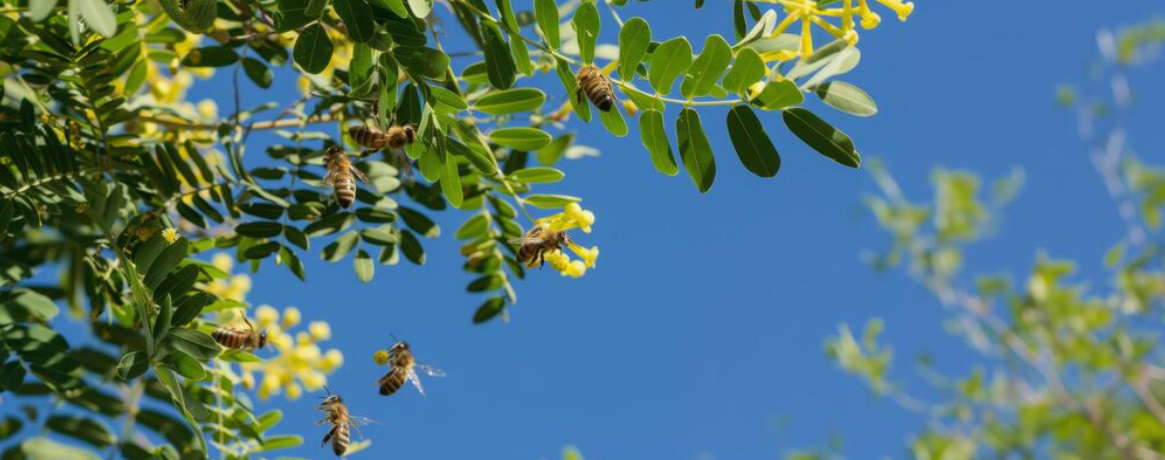
To say it is important for people to support the growth of trees, which support pollinating insects in Ireland and elsewhere, may seem like an understatement. Pollination, and having the right native trees and plants, which contribute to the ecosystem being in balance – is a vital part of nature.
If tree planting is knocked out of balance by human activity, it could have a devastating effect, resulting in the extinction of bats, bees, and other pollinating insects, and hence the plants that rely on them. Also, certainly, birds may be affected. This could have a domino effect, which could eventually lead to the extinction of the animal kingdom, which of course includes our own species, human beings.
It has been reported in the Irish Times by Ella McSweeney, that a third of all bee species in Ireland will be extinct by 2030.
Hanna Backmo, a beekeeper in Ireland, recently told Louise Walsh in the Irish Times, “It’s been a bad year for honey, but the native honeybees are real survivors. Two years ago, because of lack of rain, we had the worst summer in 30 years for honey production. Last year was excellent but, unfortunately, this year doesn’t look too good,” she said.
Orla Farrell is the project leader for the Easy Treesie organisation, whose objective is to plant and grow a million trees in Ireland by 2030. The City asked Orla her opinion on some important environmental issues currently happening in Ireland.

Orla Farrell, the Project Leader for the Easy Treesie. (courtesy of https://easytreesie.com)
Do you think that Irish County Councils giving away thousands of Hawthorn, Mountain Ash and other trees natural to Ireland ahead of National Tree Week every year is a good idea?
Orla: “A super idea. Easy Treesie and Crann do this regularly. The members of the public are thrilled to get such a donation. We ask them only to take them if they have space and if they are going to plant them immediately. The Easy Treesie project is all about planting trees wherever we can find a corner or little spot, to put them. It is vital as a Climate Action.”
Do you think the public are made aware enough about the possible extinction of bees and other insect pollinators in the Irish media?
Orla: “Everyone my age remembers insects at the windows and on car windscreens in profusion in our youth. I was doing a tree-athalon in Sligo on Monday, discussing Yeats’ poem where ‘Moths like stars were flickering out’. Does that happen now? I don’t think so. On the day that Michael D. Higgins called for action on the extinction event that was happening during his address at the Biodiversity Conference in Dublin Castle, the report was only on page 6. The front page had the usual stories.”
I see you have a campaign to plant one million trees by 2030. I see this as a great objective, and I hope it is achieved. You are now halfway to that target. Do you think you will get that number planted by 2030?
Orla: “Yes. All we need is public land. This has been the only slow part of the project. Councils are not yet familiar with our project, so we are really happy Derek, that you are writing about our initiative. Once word gets out about how we are experiencing such success (500, 011 trees at present), we think they will find us space local to the children. We are also open to planting on a really mass scale where children have to travel to the site, though local is our preferred option where the children can easily watch the trees grow.”
At the end of the day, it may be preferable in the long run, for people around the world to choose to get active, and instead of preaching to the Brazilian and South American governments, plant their own trees, woods and forests, which would make a solid positive difference, to ensure planet Earth will continue to produce plenty of oxygen for many more years to come.
You must be logged in to post a comment.