Tag: Coffee

  • Iconic Blackrock landmark reopens as new ‘Mister Magpie’ café

    Iconic Blackrock landmark reopens as new ‘Mister Magpie’ café

    Image: The reinvigorated kiosk, alive with customers – Photo credit: Oscar Meagher

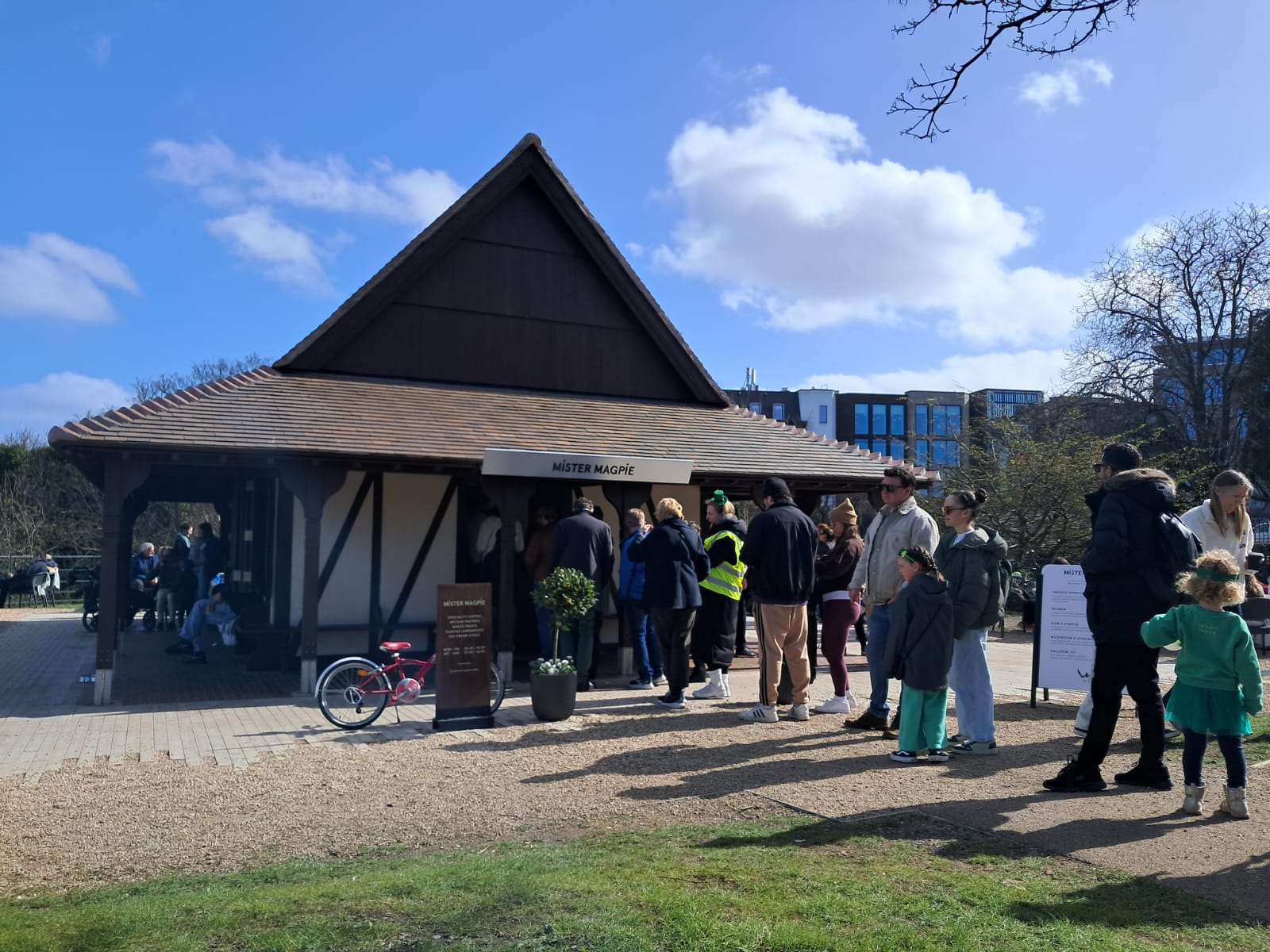
    The newly restored Blackrock Tearooms has become the site of a new Mister Magpie café. The restoration is part of a larger development plan by the Dún Laoghaire-Rathdown County Council.

    By Oscar Meagher 

    A landmark of Blackrock Park has become the site of the new Mister Magpie Café.

    First built in the 1890’s, this historic kiosk has re-opened its doors following years of disuse.  

    The structure served as a residence for park staff until its closure in the 1970s. Reasons for its abandonment and the following decades of inactivity are unclear. 

    The restoration is part of a broader redevelopment plan focused on improving the park’s facilities and accessibility.

    Image: The Blackrock Tearooms, a month before its grand re-opening – Photo Credit: Oscar Meagher

    Plans to restore the landmark were first announced in June 2024 and is reported to have cost €1.1m.

    Damaged windows and timber elements have been replaced while the distinctive Tudor-style wraparound veranda has been fully refurbished.

    The structure is intended to become a new social hub for the renovated Blackrock Park.

    “Restoring a building of this age and character required significant conservation work, and we are proud to see it renewed in a way that respects its heritage while adapting it for modern use,”said Jim Gildea, Cathaoirleach of Dún Laoghaire-Rathdown County Council.  

    Image: Mister Magpie Blackrock interior – Photo credit: Oscar Meagher

    The site is the latest branch of the Mister Magpie coffee chain.

    Since its establishment in 2019, the company has grown significantly with locations in Ballsbridge, Leeson Street and Killiney Hill. 

    Image: The Blackrock Tearooms, overlooking the bustling park – Photo credit: Oscar Meagher

    “I used to cycle out to Blackrock, and I couldn’t help but notice how beautiful the building was,” said Bernard O’Neill, Co-founder of Mister Magpie.

    “It was so striking and contrasted the surrounding area beautifully.”

    Image: Newly installed seating areas provide a wide view of the park and coast – Photo credit: Oscar Meagher

    “It had great potential. It’s close to the DART line and has an amazing view of the sea,” he added.

    “It’s an ideal summer location.”

    Image: The busy streets of Blackrock Village – Photo credit: Oscar Meagher

    The surrounding Blackrock Village is home to many alternative coffee companies, which could either create challenges or business opportunities.

    “There’s a strong coffee culture in Blackrock that seems to have only grown since the pandemic,” said O’Neill.

    “I don’t view them as competition. More coffee shops only draw more people to the area.”

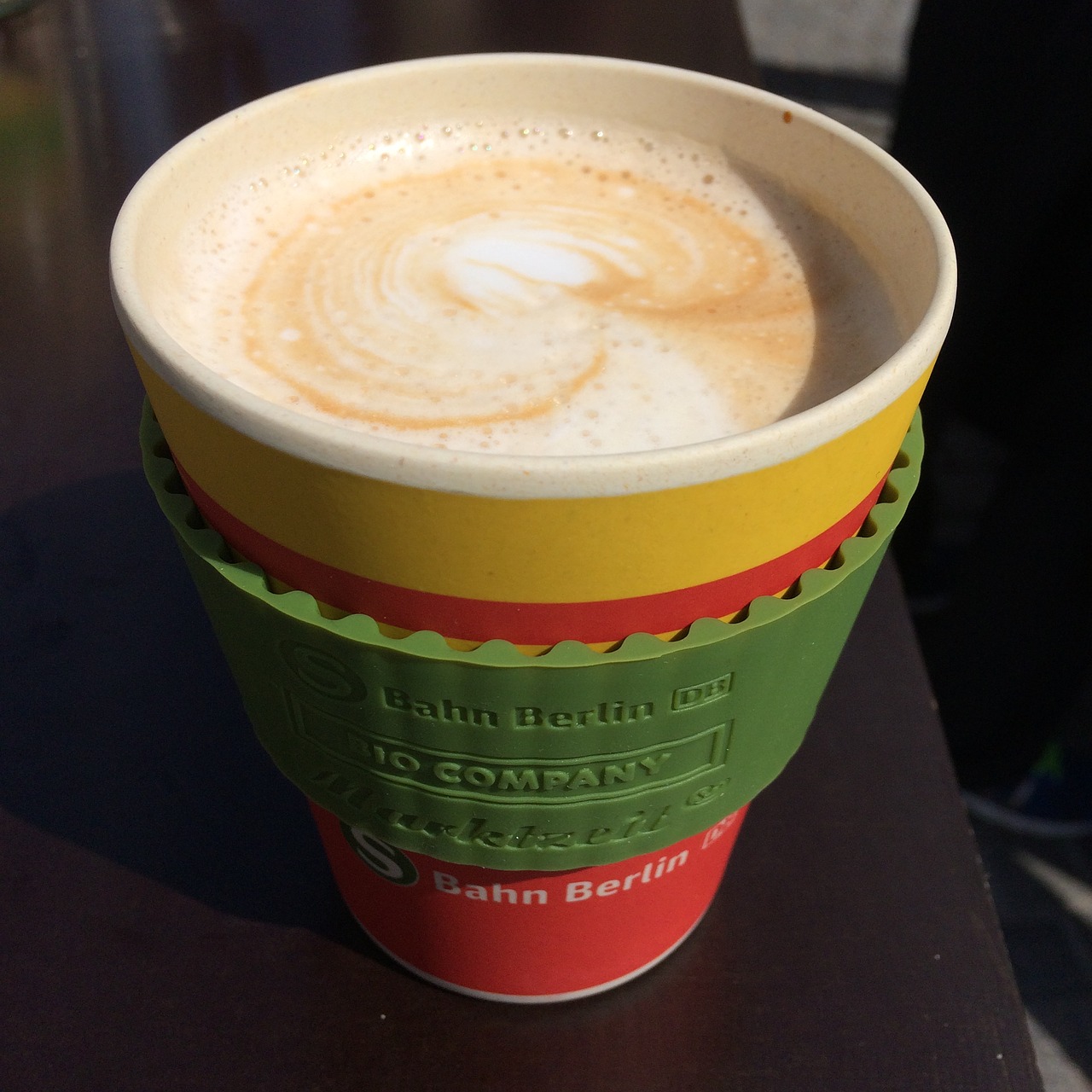
    Image: A Mister Magpie coffee, served on its own pedestal – Photo credit: Oscar Meagher

    Image: Ice creams being handed out via the outdoor-service station – Photo credit: Oscar Meagher

    “We make the majority of our food,” said O’Neil. “Our brownies and ice creams are proving to be very popular.”

    An outdoor service station dispenses drinks and delicacies.

    “Many of our customers are dog walkers, so we provide free treats for the pups and jellybeans for smaller children,” he added.

    “We refer to every one of our customers as a GUEST, meaning Give Us Extra Special Treatment.”

    Image: St Patrick’s Day draws in a large crowd for the recently opened cafe – Photo credit: Oscar Meagher

    The historic kiosk officially reopened its doors on March 11th as the new Mister Magpie café.

    “The reopening marks an important milestone in delivering the Blackrock Park Masterplan,” said Frank Curran, Chief Executive of Dún Laoghaire Rathdown County Council.

    “Restoring the historic kiosk is a significant improvement for both the park and the wider Blackrock area.”

  • The business of coffee 

    The business of coffee 

    There are no cheap shots when it comes to the price of coffee  

    The business of coffee, like any other business, has its up and downs. However, the cost of coffee in the last few years is showing an upward trend.  

    Statistics released by the Central Statistics Office show that coffee prices in Ireland will have risen by 10.6% by the beginning of November 2025. This is also in line with a general increase of the overall Consumer Price Index (CPI), which has increased by 2.9%.  

    Internationally, coffee prices have risen by 109% globally, and this is just in the past year. In the past five years there has been an increase of 145%, which is a very high jump from previous years. This has to do with the type of coffee beans being used, the most popular coffee bean being Arabica.  

    Stephen Kennedy, a café owner in Dublin has been involved in the business of coffee for ten years. “It is challenging. Coffee prices have risen by about 40% in the last three years,” said Kennedy. “There are several reasons for this. Firstly, the demand for coffee is increasing. There are issues around the supply chain because of weather events like floods and droughts, which result in crop damage, all of which contribute to the higher cost of our coffee beans.” Milk has gone up by 65 %, packaging has increased by 40%, insurance has gone up by anywhere between 45% and 70%. The highest cost increase is in the price of a latte, and that is a 25% increase over the last 3 years. So, our cost base has increased by anything up to 70% but we can’t pass that on to the customer.  Businesses are absorbing the cost of the increases, and the only way to stay afloat in this sector is to get busier.” 

    The Central Statistics Office (CSO) released figures that show that dairy prices have soared since November 2024 with the national average price of two litres of full fat milk having gone up by 10c. As of November 2025, this has since shot up by a whopping 12.1%, or a total of 27c. This doesn’t seem like a lot but when running a business which buys in bulk supply, this is a significant increase.  

    Kennedy also said that rising electricity costs are another challenge to keeping the business going. “Prices increased by 200% because of the war in Ukraine. They have now fallen back to 122%. The minimum wage has also had an impact as it has increased by 4%.  Although I am in favour of improving pay and conditions for lower paid workers, the real question is affordability and how businesses meet those increased costs.” 

    According to IBEC, 84% of businesses surveyed were planning a pay increase in 2025, with a forecast average increase of 3.4%. In 2024, the average increase was 4.1%.  

     “We have pushed very hard for a reduction in the VAT rate which will come into operation in July 2026. But there are other factors like national minimum wage increase, pension auto enrolment, statutory sick pay, and additional bank charges which must be factored in.  These are all costs that businesses need to shoulder which make the business model very challenging and very tricky.  It’s a balancing act to make it work.”  

    So how to keep afloat and stay profitable with all these charges? 

    “Get busier, have an excellent product that people will return to, create a neighbourhood style café that is part of the community and be sensitive to the environment you are working in.” 

  • Stay With Us: The Community-Led Cafe

    Stay With Us: The Community-Led Cafe

    Have you ever been in a coffee shop and thought you could make it better? That is exactly what Steven Harris thought before he opened Stay With Us cafe in 2022. A dream project that became reality after Harris was advised to have another income on the side, as his job was only a 6-month contract work in sports. Stay With Us has grown its own community in the small space it occupies just down the road from St. Peter’s Church in Phibsborough.

    Harris said working as a barista was what inspired him to open his own business. He had saved up money and started looking for a place to open. “I say to people [I did] not [have] enough to buy a house but enough to start a business,” he said.  Harris said he did not intentionally choose Phibsborough; it just happened to have a unit that was the size he wanted and within the price range he was looking for.

    Harris and his friend did all the labour to make sure the unit was up and ready for business in just 6 short weeks. When asked about the quick turnaround, he explained how not having to wait on any tradesmen meant they could work quickly. Though Harris did not have a background in construction, he said he was lucky to have some DIY knowledge and had the advantage of asking people he knew for some help; he also relied on some YouTube tutorials. He said because they were doing the work for free at the start it “gave the business a kickstart off the bat without having a lot of outgoings.”

    Hot chocolate bought in Stay With Us, latte art creating a swan on top. Photo credit: Zita Fox

    When asked about the possibility of expanding the Stay With Us brand, Harris informed The City that he already has another cafe in Dublin. Opened on the 31st of May and located in Temple Bar, Mantle, is more of a premium specialty coffee product, as opposed to the more community -oriented cafe in Phibsborough. Harris wanted to open something new rather than opening a replica; he wanted it to be the polar opposite to what he already owned. “I find when people expand out or change, for example, you kind of lose that personal touch of the area,” he said.  

    Harris is a physiotherapist for the NHS in Scotland for most of the year. That is where he got the idea to have multiple different establishments.  There is a man in Edinburgh who owns around 12 coffee shops, but they all have different names and none of them are related to each other. He goes on to say that they are a similar fit if you know what to look for then of course, you would realise it is the same person who owns them all.

    Harris points out how all those cafes have their own little communities, workers, and regulars and how he too wanted to have that broad appeal. He said having the different brands to market makes it far more interesting for himself: “everything’s just slightly different and a bit fresher.”

    Stay With Us continues to pull people in with its charm. Full of treats and drinks, mainly coffee, the cafe has created a small, safe bubble in the centre of Dublin. Whether you go in when it is lashing rain, morning time, or the last order of the day, you will be greeted with some of the most welcoming staff around. For now, it seems that Harris is happy with just the two cafes, but who knows what the future holds.

  • Eating out(side)

    Eating out(side)

    Our takeaway habits have transformed in the past year, becoming one of the only simple pleasures we have to get out and about.

    With the current lockdown dragging on since late December, indoor dining remains on hold, ushering in a revised-look takeaway and outdoor dining culture as we bid to fill our social void and allow some businesses to stay open to a degree.

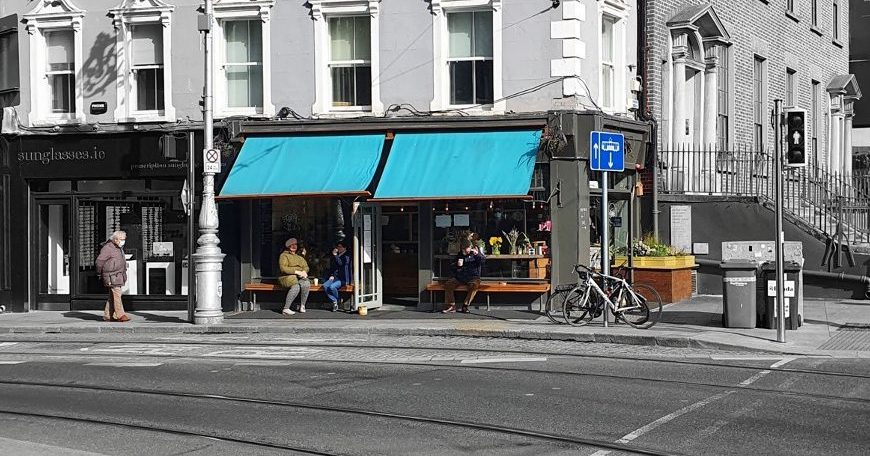
    “It’s good to get out of the house, you can’t be cooped up in there or you’ll go mad” – Anne (last name unknown). Tang Cafe on Dawson Street. Photo by James Molloy
    Waiting patiently for their orders. It has become a common sight seeing groups congregating outside their favourite eateries throughout the city. Photo by James Molloy

    Getting a takeaway coffee used to be something we took for granted – a ‘grab it and go’ type of affair. Now, however, the run-of-the-mill takeaway coffee has been transformed into a means of getting out of the house; offering a chance to savour your time outside – almost becoming a symbol of freedom in our restricted reality.

    We were used to going into a place, sitting down at a table, reading a menu and being served our food or drink; taking our time. Queuing, finding a suitably socially-distant location and the weather have now taken over, as we move from the indoor dining experience to the great outdoors.

    Battle of the coffee shops – advertising is the name of the game. Coffeeshops and restaurants across the city are competing and operating at a restricted level, resulting in more advertisement boards cropping up to showcasing their products to prospective punters. Photo by James Molloy
    The city has evolved into our new dining room. Benches, steps, fountains – if you can sit there then you can eat there. St.Stephens Green. Photo by James Molloy
    Food Trucks are capitalising on the need for outdoor dining. The Sambo Ambo is dishing out lifesaving sandwiches and coffee. The Sambo Ambo, Iveagh Markets, St.Francis Street. Photo by James Molloy

    That being said, meeting with a friend for a socially distant bite to eat and a coffee in the park has become so important in recent times for the sake of our sanity – it gives us a chance to leave the confines of our homes and interact with someone other than our family members.

    Benches have become the new table. Sit, relax and take in the sights. St.Patricks Cathedral. Photo by James Molloy

    Delivery riders and drivers have seen business boom during the pandemic, so much so that you can’t go five minutes without seeing a delivery rider zipping past on their bicycle. People can’t go to their favourite restaurants so they use convenient delivery apps such as Deliveroo or Just-Eat to bring their best-loved dishes to them.

    Not all heroes wear capes, nowadays they wear thermal bags. Deliveroo riders have been on the go non-stop to bring you what you crave. Photo by James Molloy
    Pubs are opening across the city offering takeaway drinks, in a bid to raise some much needed funds as the hospitality industry is on its knees. Photo by James Molloy

    Takeaway offerings don’t only offer a respite from lockdown. They also help to keep cafes, pubs, and restaurants afloat, allowing them to earn some much needed capital and to keep customers happy during these testing times.

    “I wish the pubs were back” – Maeve McEnroe. South William Street. Photo by James Molloy
    The humble pint ─ no longer cradled in a glass, now it finds itself in a flimsy plastic vessel. But it’s better than no pint. Photo by James Molloy
  • If you build it, they will come… Eventually

    If you build it, they will come… Eventually

    Lavanda (left) and V-Face (right) on Lower Grangegorman Road. Photo by Colm McGuirk

    “The fact that this unit was close to TU Dublin was a huge factor in the decision to go ahead with it.” Sarah Boland, owner of V-Face, is talking about her vegan fast-food restaurant’s proximity to the impressive new home of Technological University (TU) Dublin.

    The city campus of what used to be called DIT, built as the centrepiece of a major regeneration programme for Grangegorman in north Dublin city, is ready to welcome around 10,000 students plus staff – once Covid restrictions are no longer necessary. 

    Boland’s is among a number of independent businesses on the Lower Grangegorman Road that had factored those numbers into their plans. 

    “It’s going to be a huge campus, so obviously footfall will increase massively,” Boland says. 

    In the turbulent 10 months since it opened, V-Face has had to make some think-on-your-feet adjustments to compensate for lost bums on its 40 seats. Among them is the outdoor eating area installed on the opposite corner, in cooperation with Dublin City Council, and the window hatch through which Boland speaks to The City

    “Coffee and sandwiches were never in the business model,” Boland says, “but we said ‘let’s bring out a lunch offering.’ The burgers were doing really well, but were more for the evening offering. [The hatch and coffee counter] have been designed in a way that, once the pandemic is gone, you can also swing around and serve people that come in.”

    Dining tables installed by V-Face. Photo by Colm McGuirk

    While V-Face benefitted from a model partly geared towards takeaway from the off, former Mediterranean restaurant Lavanda on the opposite corner has had to reset completely in the last year. 

    “We tried to do takeaway Mediterranean food during the first wave,” says Croatian owner Robert Velic, “but it didn’t work very well.”

    Lavanda’s enforced rebirth was planned with the new TU Dublin campus in mind – it now sells toasties, slices of pizza and sweet treats.  

    “We’ll see when the students come back if we made the right choice”

    Robert Velic

    “The second wave came and then we completely changed. We were expecting those students. We adapted the prices to four or five euro,” Velic says.

    “When the lockdown ends,” he continues, “it’s going to be a proper takeaway and we can add a few more things to the menu when business picks up and the colleges are back. We’ll continue to target students and walk-ins. We’ll see when the students come back if we made the right choice.”

    A few doors up, Russia native Alexander Yegorov’s print and copy shop should be bustling. 

    His unit is next door to one of two new student apartment complexes on this stretch of road built in the controversial ‘co-living’ mould (and, in the ultimate symbol of the area’s gentrification, on the site of the former ‘Squat City’).

    “We opened our shop three months ago,” Yegorov tells us. “They move the lockdown every two months. I expected the students would be here from the new year. But now, it won’t be until summer time. 

    “But it’s OK,” Yegorov adds. “We can survive until summer.”

    “We knew it was a long game, but it’s been a lot longer than anticipated”

    Rebecca Feely

    On the next corner, Rebecca Feely of Kale+Coco tells The City that when she chose the location for her plant-based healthy food cafe in 2019, “it was under the assumption that there’d be lots of students.”

    “We knew it was a bit of a long game,” Feely says, “because they were moving students bit by bit. But it’s been a lot longer than anticipated.”

    While noting that her prices might be a little above the average student’s range, she tells us, “it’s always been in my head to focus more on marketing to students, but I haven’t had the chance yet because we haven’t had the students there yet.”

    Kale+Coco has leaned more towards retail of food products to help stay afloat in what has been a difficult year.

    Rebecca Feely in her cafe Kale+Coco. Photo by Colm McGuirk

    “We were never actually told to close, so you feel almost obligated to keep trading because you have bills to pay,” Feely says. 

    “You have rent due. If you’re not ordered by the government to close, you’re not covered by any insurance, your landlords aren’t going to give you a break,” she adds.

    While the eventual arrival of students should help jump-start these Lower Grangegorman businesses, it could well signal the end for Happy Days Coffee Van on the new campus a little further up the road. 

    The mobile cafe was set up by local resident Olivia O’Flanagan in response to the “inertia and isolation” her neighbours were faced with during the first lockdown last spring. 

    O’Flanagan, a former lecturer with no background in business, was given the green light to operate on TU Dublin’s campus for as long as its own catering services were closed. 

    “It’s a lockdown project to keep us all busy and connected and give some kind of focus for the local community,” she tells The City.

    Happy Days Coffee Van set up at the entrance of TU Dublin’s Grangegorman Campus. Photo by Colm McGuirk

    Hiring only locals helped her secure the temporary contract – staff can return to their own homes for the mandatory bathroom access.

    “For me, it’s not a business endeavour,” O’Flanagan says, “though it has made money and is paying eight people’s wages on 20 hours a week. They’re all delighted and their parents are saying they were all sitting in their bedrooms cracking up.”

  • Keeping ‘Cup’ appearances – just a trend?

    Keeping ‘Cup’ appearances – just a trend?

    It was a Tuesday morning, I was running late for a big day. No time for coffee.

    ‘I’ll grab one on the way,’ I told myself, ‘I’ll use my KeepCup.’ It was at that moment, like clockwork, that I heard it. The sound of glass shattering echoed through my kitchen. I looked on in what I can only describe as a state of frozen despair.

    Not my first, but my second KeepCup, taken too soon from this cruel world. With no time to mourn I swept up the shards and rushed to catch my bus, going without coffee that day because “surely I can’t use a paper cup after all this time”. It was then that I decided to go back to the beginning, what are these reusable cups and where did they come from?

    My first stop, George’s Street. On this street, the coffee shop Granthams had moved from their sit-in-cafe space to its existing space in Camden Market, opening a “Pop-Up” Coffee shop by Diarmuid Gavin near Dunnes Stores.

    I wondered if, as a take-away coffee shop only, they had seen a rise in people drinking coffee from reusable cups. Upon entering I saw a sweet women behind the till. I struck up conversation and then informed her of my article on keep cups, asking if I could interview her on her experiences in the coffee shop. She looked at me in amused bewilderment, “KeepCups?’ Strike one.

    From there she directed me to Austin, the head barista, who knew all too well about reusable KeepCups. He spoke about how reusable cups popped up one day and became the latest craze. “In the last year or so, people will come in with Christmas or birthday gifts that are KeepCups. People are incentivised to use KeepCups, especially with us as our other branch in Camden Market offers 20c off if you bring in one.”

    “They became a craze for a while where everyone was using them, but it’s as though they became a hindrance so we wanted to see how we could improve on that and get people using them again.”

    With the coffee industry continuing to grow while global warming worsens, have these changes, along with the potential discounts encouraged people to use reusable cups? I took to the streets of Dublin to find out.

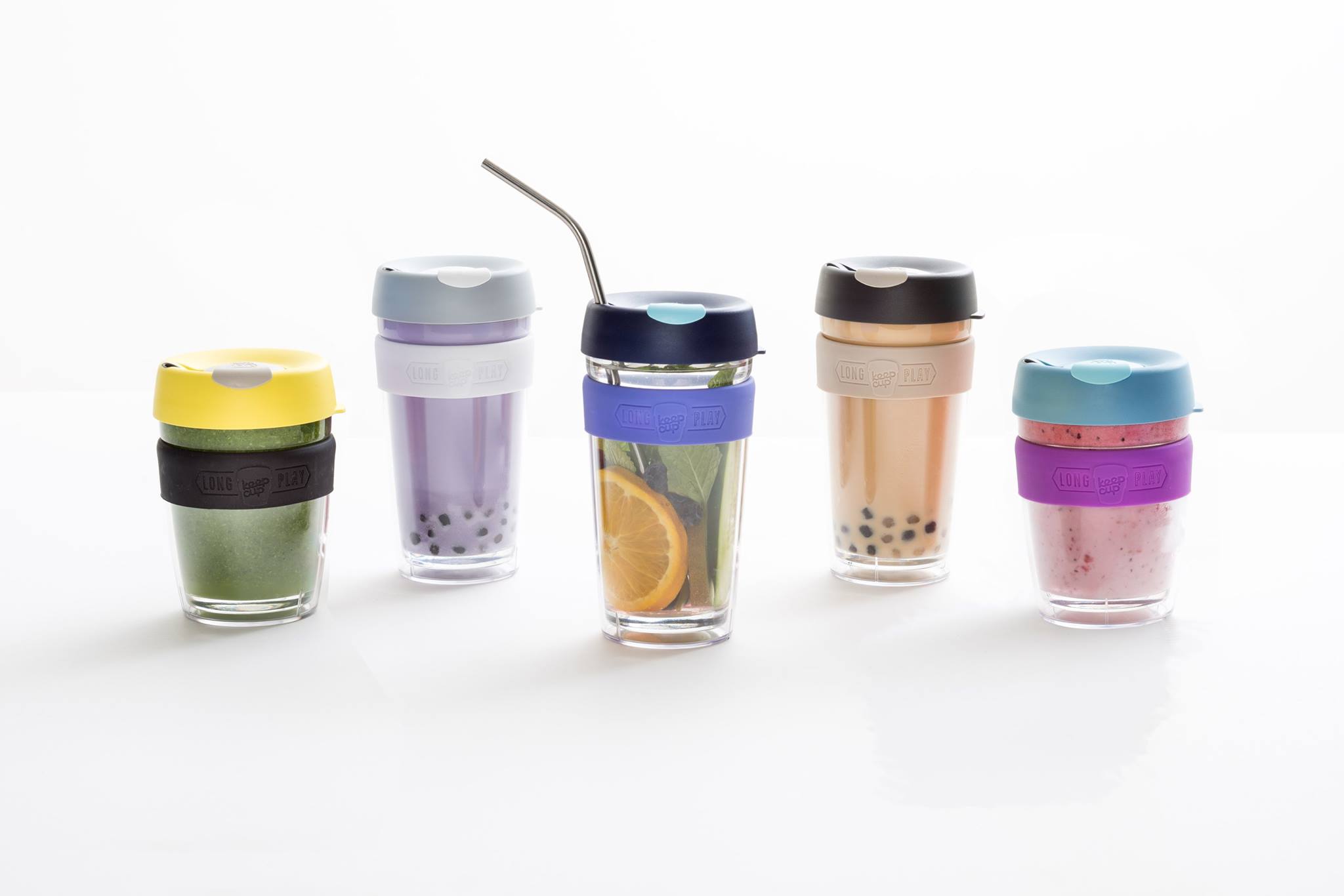
    As I walked down South William Street, I spotted a girl on the steps of Powerscourt, plastic KeepCup held proudly in her hand. Plastic not glass, clever. “I bought a KeepCup when I started noticing the build up of coffee cups on my desk. After a few days I would be surrounded by paper cups, and it was then that I really start noticing the waste,” said Paula O’Rourke, 24, from Dublin.

    “I think the discount is a good idea to get people to use KeepCups but I don’t know if it is enough. People won’t just use them for 20c off their coffee,” she said.

    As a student, I wondered if maybe the idea of KeepCups, in theory, is good, but how many people actually own them, and is there an element of guilt if you still use paper cups? Rory McGrath, 21, from Cabra had a different opinion: “I don’t own a reusable cup and I feel like paper cups aren’t that bad. For me, it’s the plastic lids that are the problem.” When I asked if he felt guilty about using paper cups instead of a KeepCup his response was very well thought out. “No, I think KeepCups are a good idea, but at the end of the day I think there is a lot more everyone could do for the environment, rather than just using a reusable cup.”

    So, after an in-depth look into the reusable coffee cup scene, it seems people’s opinions are torn. Are reusable cups just the latest trend and are they a step in the right direction to a more eco-friendly world?

    One thing’s for sure, I will be drinking from a plastic KeepCup from now on.

  • The Irish Coffee Market is roasting its way to change

    The Irish Coffee Market is roasting its way to change

    Ireland’s relationship with coffee roasting has shifted in the last five years, with an increase from 8 to 50 Irish roasters since 2013.

    Coffee roasting is the process of applying heat to green coffee beans to create roasted coffee products. The process requires dedication and patience; and is the key that unlocks aroma and gives that characteristic flavour that many enjoy in their cups every morning.

    As a result, the coffee industry has been shifting its focus from the product itself, to the person and stories behind the cup.

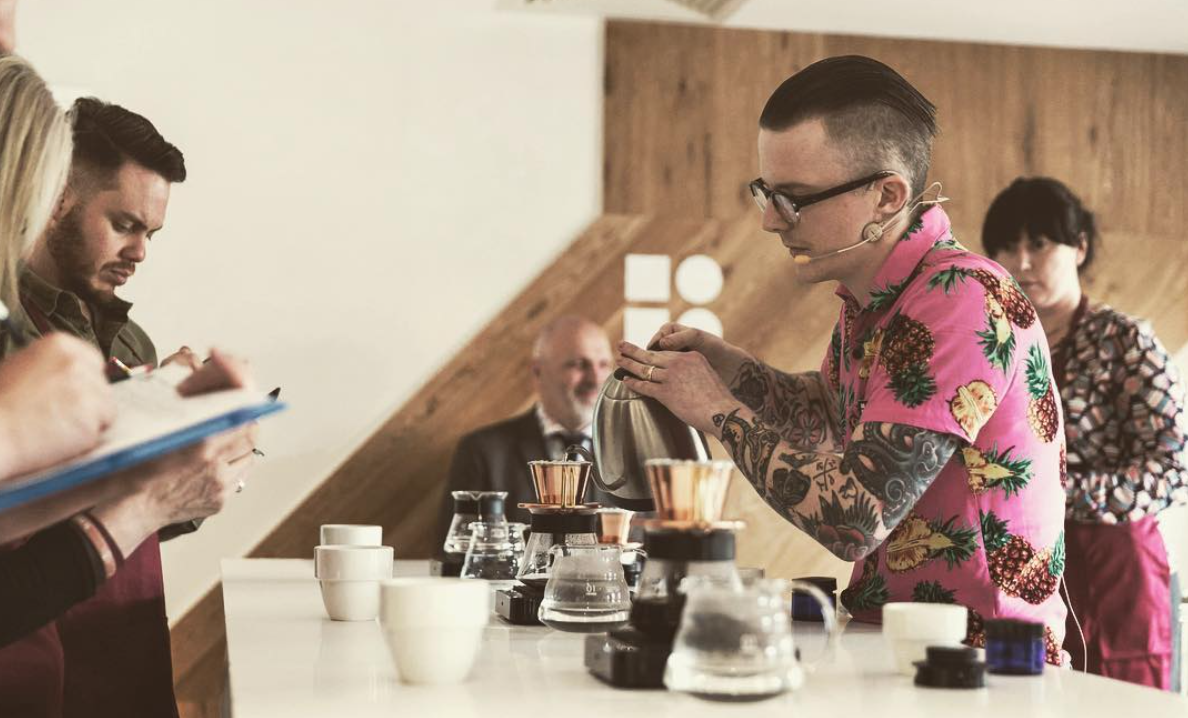
    Stephen Houston is Head Roaster for Bailies Coffee Belfast: “I’ve been working as a roaster solely for four years, I’ve never worked as a barista, never worked in a coffee shop.

    “The artisan style of roasting is what I really fell in love with,” he continues.

    “There are interesting learning curves coming from that point of view… In my short time, I’ve roasted four and a half thousand production roasts, and about a thousand sample roasts.”

    Stephen won the Irish Brewers Cup in 2017 and came third this year: “It was a dream come true,” he says. “I’m a very competitive person.”

    Recently, Stephen has become part of the membership committee for the Coffee Roaster’s Guild (CRG). The CRG is the global trade guild of the Specialty Coffee Association (SCA) “dedicated to inspire a diverse coffee roasting community through the development and promotion of the roasting profession”.

    The relationship with farmers who grow the beans is an essential part of the business: “[We] connect with farmers and being able to buy off them year after year; they get confidence [because] we’re always going to pay a certain price… [and] meet certain criteria.

    “We negotiate the price directly with the producer, not the importers or traders…It’s confidence for us that we’re going to maintain really nice relationships with these amazing farmers.”

    Mr. Houston believes that transparency in the coffee industry creates the ideal product for the customer. “Transparency is something that we’re really keen to see,” he says.

    “I take most of the quality control side from when coffee arrives into our warehouse until it goes out to our customers … passion for the work is what makes the perfect cup of coffee: “It makes me a better person, better roaster, better brewer.”

    The Irish coffee industry as we know it today has been influenced by European and Scandinavian values.

    Per Nordby is a Swedish coffee roaster based in Göteborg, Sweden. He travels to Central America and East Africa annually to meet with the farmers, millers and exporters he trades with. His speciality coffee roastery Kafferostare Per Nordby was founded in 2013.

    What roasters look for in the end product is what makes this style of coffee making so unique. “I like to find an end product that can tell a story, because coffee…comes from someone,” said Per.

    The stereotype of a businessman rushing through South William Street with an espresso in his hand is not what coffee roasting represents.

    Fika is a key part of coffee culture in Sweden explains Per: “We sit down…with friends or co-workers and we’ll drink [coffee].”

    Fika is a term used in Sweden for the coffee break that allows people in the industry to slow down, appreciate their brew, and relax for a few minutes. This idea has found its way into Irish coffee shops in recent years … while challenging the stereotype of a bustling city filled with people too busy to take a break.

    Per Nordby
    Per Norby, coffee enthusiast and a Swedish coffee roaster // Instagram @pernorby

    “Every coffee that we sell is a coffee that I would enjoy myself.”

    Per started as a barista in 1999. “Coffee was fairly new in Scandinavia. Barista was a new word that people learned.”

    In 2007, roasting was in its early stages around Europe. There was only one trader in Europe that could provide the quality Per was looking for and he spent a lot of time travelling trying to find alternatives “trying to get transparent” with the industry: “Over the years when I worked behind the bar, things changed dramatically.

    “Today that’s a totally different story, now there are plenty of traders.”

    From late 2010 after Instagram was launched, coffee culture was diverted. “It’s still a lot about how [coffee] looks,” said Per. The perfect latte or cappuccino art-work filled the social platform to the point of suffocation, with thousands of new coffee posts every day. The hashtag #COFFEE has seen over 97 million posts as of October 2018.*

    Three years later in 2013 he started roasting, and his experience allowed him to begin doing business with contacts and traders he had previously built relationships with while travelling.

    The concept of roasting is a people-based way of business; putting the experience of the consumer at its core: “We want to maintain the diversity that exists in coffee, while not sacrificing taste,” said Per.

    “I believe there’s plenty of room for [more] roasters than we have today.” There are many small towns without local roasteries, and although some may fail at the beginning it may be another factor and “not because the market’s not big enough”.

  • Video: What will be the impact of a coffee cup levy?

    Video: What will be the impact of a coffee cup levy?

    Environment minister Denis Naughten is considering proposals to place a 15c levy on disposable coffee cups. Louise Burne & Gavin Hyland find out what this will mean for coffee lovers and coffee shop owners

  • Iconic coffee kiosk closes after 38 years

    Iconic coffee kiosk closes after 38 years

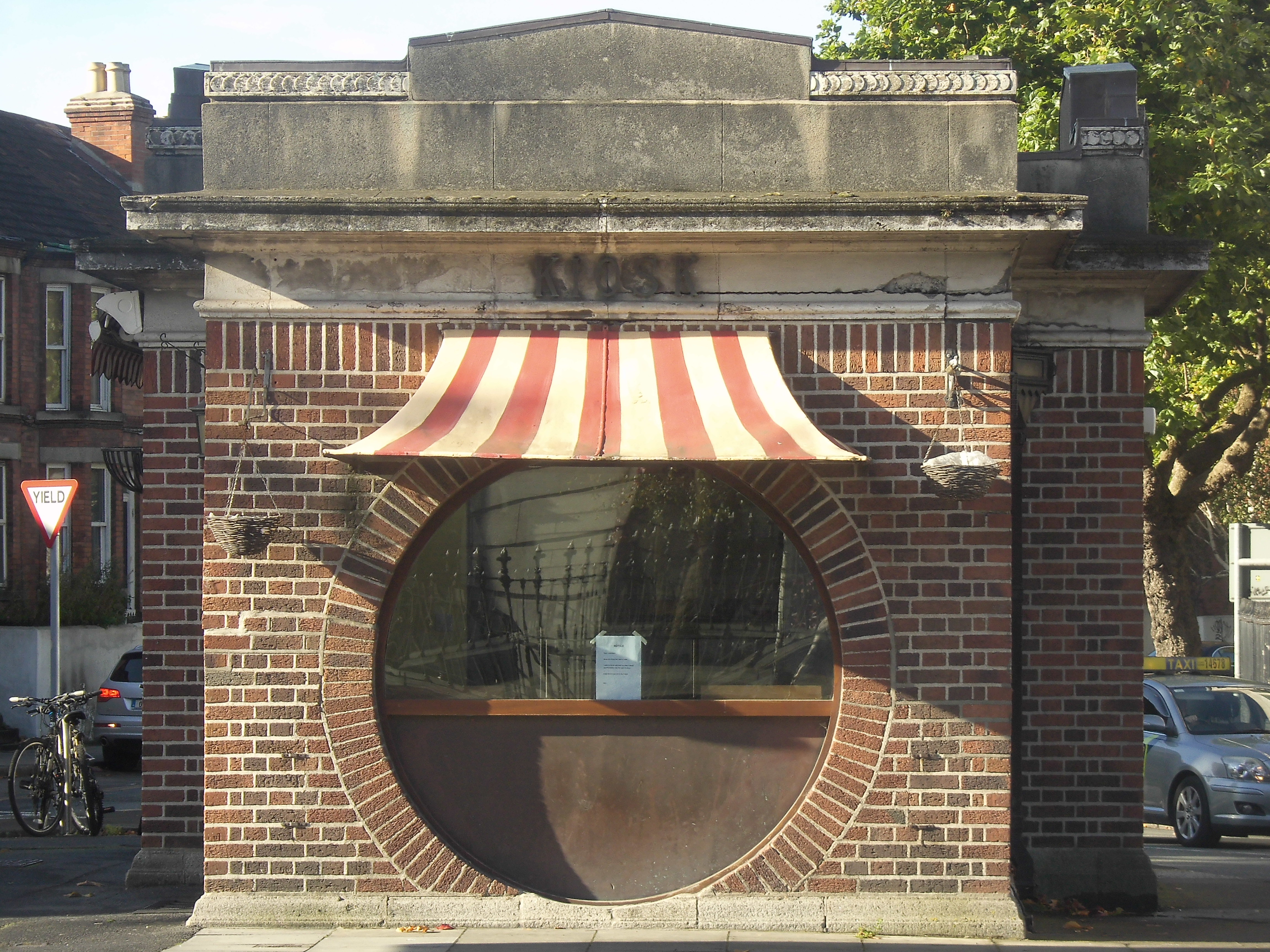
    Dublin City must sadly bid farewell to one of its local icons – a quaint coffee kiosk in the city centre has been forced to close after 38 years in business.

    The Kiosk, which sits on a traffic island at the Leeson Street and Adelaide Road junction, has had a notice placed on its window informing customers of its closure.

    The note, posted by owner Ned McCarthy, simply reads: “Sadly the kiosk has had to close. I wish to thank everyone for their custom and friendship over the past 38 years. Good luck to you all for the future.”

    Coffee shop closes 2
    The notice left for customers of the iconic coffee kiosk

    McCarthy was forced to close the café, in part as a result of declining business in recent years.

    The quirky little building was originally built in 1929 as a water pressure station and public toilets before being converted into a small café in 1979.

    For 38 years, it served coffee to people rushing to work needing a quick wake-up or those just passing through curious about the little red-brick building.

    However, the Kiosk’s awkward location on a busy junction with no stop-off point meant that it struggled to have a huge impact and visibility as a coffee outlet, only being able to cater for pedestrians.

    Coffee shop closes
    The kiosk located on a traffic island on Dublin’s Leeson Street

    As Starbucks and other large coffee outlets opened in the surrounding area in recent times, the kiosk faced huge competition from multinational organisations.

    This is often the harsh reality that small businesses face against dominant market competitors, wherein their only option is to close shop due to dwindling business.

    However, despite the untimely closure of the Kiosk, the building still remains as a piece of inner-city history for nostalgia lovers and the coffee-loving locals and regulars who won’t forget the Kiosk’s charm anytime soon.

    By: Killian Dowling

  • Networking their way to success

    Networking their way to success

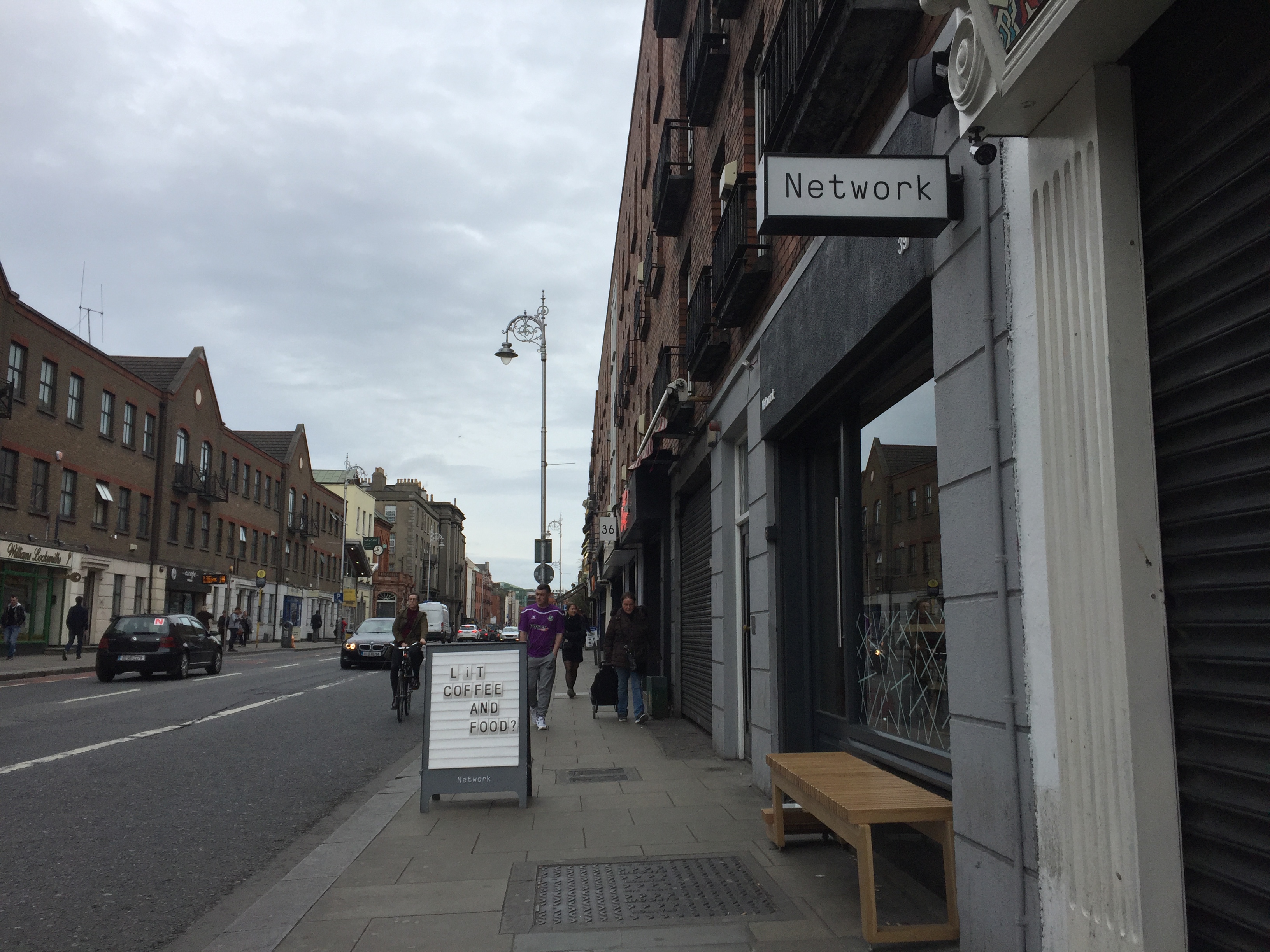
    James Carroll sat down with Network Cafe owner, Oliver Cruise, to discuss the successes and challenges of his first eight months of trading.

    (more…)