In a city becoming ever more individualistic, the Dublin Sourdough Rotation is a breath of fresh – bread scented – air for many of its members.
Founder Niamh Lacy started the group in 2023, inspired by traditional community values and post-Covid disillusionment.
“I was really curious to find out if people would be willing to share food with strangers, and bread was the vehicle for that,” Lacy said.
Despite choosing sourdough as the centre of the effort, Niamh admitted she had never baked it before launching the group:
“I actually got the initial idea for a community like this about a year or so before I turned it into something, and sourdough happened to have been pretty trendy during the pandemic.
I can admit I didn’t make sourdough before starting the project. I just thought it would be a strong but narrow enough group to start with.”
Luckily, she was right, as the community now boasts over 100 members based across Dublin City, with many members saying the project has become a big part of their lives.
Derek Kenny, a pharmaceutical quality director based in Dublin 7, joined in the early stages after seeing a flyer in his local café. As an experienced sourdough baker, he was drawn to the idea of finding like-minded people.
“I grew up with no real sense of community in Tallaght, so when I moved to Cabra, I found myself getting to know the local butchers, grocers, coffee places,” Kenny said.
“So, it was really nice to join an unpretentious, open and friendly community. It is low-stakes. You can challenge your baking, bring something new, and talk about food. What Niamh has built is really great,” he added.
A loaf baked by long-time member Derek, who is a member of the Dublin 7 rotation. Photo credit: Derek Kenny.
Another experienced baker, Pierce Lowe, found himself immersed in the group after leaving his job in Bread 41 to pursue a postgraduate degree.
“I really enjoyed getting to meet other people. Even the small exchanges like handing your loaf over to another person, the feeling of anticipation and getting ready,” Lowe said.
When asked about the power of food to unite people, he highlighted the world-wide significance of food.
“It’s one of the reasons I’m studying for my masters in sustainable development, food and co-ops. We need food to survive. It’s a whole integrated system. It’s a way to show you care about someone internationally. It gets people to socialise, it bridges gaps,” he said.
For new member, Mairi Kachur, this couldn’t be a truer statement. As a Scottish American woman who has lived in Germany, France, and Belgium, moving to Dublin was yet another daunting restart.
“I moved to Dublin to be with my fiancé and start my PhD in Trinity. Most of my friends were all made through him, so I really wanted to find my own people,” Kachur said.
“I had been living in Dublin for just 2 months when my neighbour told me about the group. So, I reached out to Niamh and went to my first group gathering in someone’s house.”
“I met my first friend in Dublin, who is now my best friend. It was really nice to make a friend outside of institutions like work or college.”
As an immigrant, she highlighted that she has had a very positive experience of meeting people in Ireland, with the group being a key component of it: “It really gave me something to hold onto when I moved to Ireland”.
The community has many other members who have come to Ireland over the years, with Kachur’s best friend Isabella also having previously lived in Belgium.
Brazilian member Pedro Ragonezi is also a notable figure, with the former baker being renowned for his “iconic” skills.
“I raised some money on Spacehive to run some workshops for members, which Pedro led demonstrations to help teach members some more skills,” Lacy said.
“He’s passionate about all sorts of dough and I’ve learned a lot while doing the workshops.”
Apart from sourdough, the group has also started sharing recipes for kombucha, kefir and many other fermented foods.
Lacy hopes to develop more shared ownership of the community in the future.
“I’d love each postcode to organise their meetups and schedules as the group grows,” she said.
She added that she would love to see people set up similar groups across Dublin, encouraging the return to traditional neighbourly values with a modern twist.
“I really hope people can trust each other more in the future,” she said.
Dublin Councillor Nial Ring has welcomed An Bord Pleanála’s decision to approve Hammerson’s controversial redevelopment plan, calling Moore Street’s current state a disgrace.
This comes days after An Bord Pleanála’s approval of a highly debated plan that will see a €500 million redevelopment undertaken between Moore Street and O’Connell Street.
The UK property group first made applications for this redevelopment in summer 2021, with approval following just seven months later in January.
However, appeals were made to the board and Dublin City Council by a number of Moore Street preservationists, campaign groups, and businesses, which caused for more than two and a half years’ worth of delays.
“I see huge benefits of this project for the local area,” said Councillor Ring, who, along with being a member on the Moore Street Advisory Group, represents the North Inner City electoral area.
“Not only in preserving the history and heritage of the street, but also in bringing Moore Street back to life. It is a disgrace at present.”
The plans, made up of three applications, include the demolition of several buildings, the construction of a nine-storey hotel, the development of a public gallery and café, and the development of a public square – plans which are allowing Hammerson up to 12 years construction on site.
A generated image of Moore Street post-Hammerson development – Photo: Dublin Central / Hammerson
The An Bord Pleanála decision and announcement coincides with the 10-year anniversary of campaign group ‘Save Moore Street from Demolition’, who have gone on to receive over 380,000 signatures opposing Hammerson’s plans.
The group started in September 2014, when members Bróna Uí Loing, Vivenne Kelly, Diarmuid Breatnach and Mel Mac Giobúin met to begin a weekly presence on the street with a campaign table, leaflets, and petition sheets.
“Moore Street is of huge importance, not just to Dublin, or Ireland, but to the world,” Breathnach told The City. “We have been here over 500 Saturdays. We talk to people, we take photographs, we hear stories – sometimes stories from people coming up with their parents when they were children, others tell us of them coming up to Croke Park for matches and coming home with bangers.
“People have different views as to what we can do with the street,” he said. “Some of us think there should be small shops and stalls here, no chain stores. Any restoration work done should be done piece by piece so that there’s not a huge disruption to the street”.
“The Hammerson plan envisages destruction of some buildings, a high-end shopping area, a street cut through the terrace and up to 12 years of building,” Breatnach said. “That would just kill any street market here.”
Diarmuid Breatnach, co-founder of the ‘Save Moore Street from Demolition’ campaign group – Photo: Liam Murphy
The National Monument buildings of 14-17 Moore Street are currently earmarked for a 1916 Rising Commemorative Centre with an estimated cost of €16.25 million.
The building was originally due to open in 2016 to mark the centenary, before being pushed back to 2023.
Work, however, has not yet started.
“The National Monument site has approval for funding, and it is imperative that this be worked on immediately,” Councillor Ring said. “Now that this [An Bord Pleanála’s] decision is out, I think it will give everyone time to reflect and, in memory of the men of women of 1916, make sure that the work starts immediately.”
“I have an interest in the project, not only as a local councillor, but my grandfather and his four brothers were in the GPO garrison,” Ring said. “It really distresses and depresses me to walk down the street and look at the national monument site, in particular, knowing that some people with their own agenda have managed to delay work on that site for many years.”
One of the many stalls on Moore Street – a street currently under threat of demolition – Photo: Liam Murphy
Hammerson’s plan outlines potential for up to 2,500 jobs after the development, but those currently trading on the street aren’t as optimistic.
“The plan means losing my job,” Andrea, a jeweler who has been trading on the street for two years said. “While there may be jobs after the building, it will destroy our jobs during that time. I’m only new here, but there are people here whose family have traded for 100 years. No one will want to come to a market if there’s construction being done nearby.”
“Other than what it means to me losing my job, my trade, and my community, it’s also what it means for the people of Dublin,” she said. “Those people care about this street. This street’s history is retail.”
“I lived in Spain for quite a while and saw a lot of markets,” she said. “But I have never seen something like Moore Street. Here we have a street full of its background, culture, and history, but also a marketplace. There’s a lot of potential in this street and I don’t think it’s being used.”
“In what world does someone think it’s a good idea to erase all this history to put more shopping centres and hotels.”
Radio-cassette player used to listen to music in 2020-set film The Half of It (Photo: YouTube)
We check them up to 150 times a day — but is it good for our well-being? Tech insiders have described the methods used by app developers to effectively “programme” us to never put our phones down. TheCity.ie’s Paul Caffrey explains why he ditched his device after three years — and explores the beginnings of a backlash against them
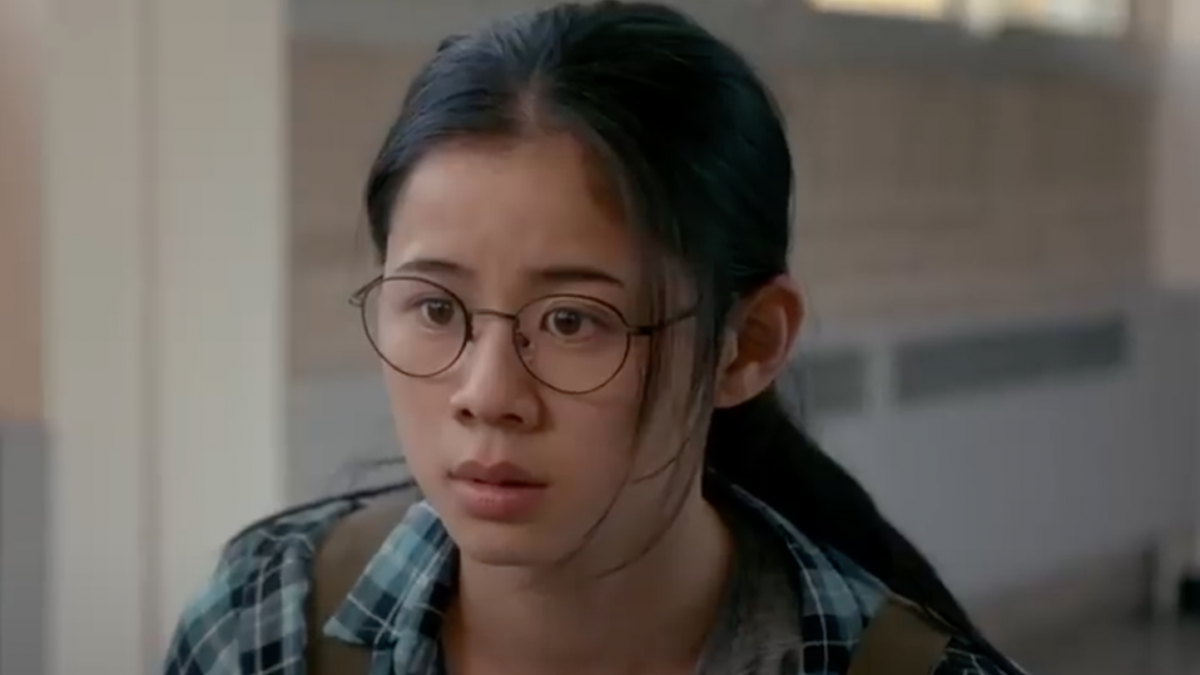
On Friday night, Netflix released The Half of It, a thoughtful film depicting 17-year-olds posting each other handwritten love letters and listening to their favourite music on portable analogue radio-cassette players.
Modelled on the clever premise of Edmond Rostand’s 1897 classic Cyrano de Bergerac, the expert wordsmith here is “shy, straight-A student” Ellie (played by Leah Lewis), who ghostwrites all of “inarticulate jock” Paul’s romantic notes to Aster, the popular girl of his dreams.
GHOSTWRITER: Leah Lewis plays Ellie, a shy student who favours pen and paper over messaging apps, in The Half of It, released by Netflix on Friday 1st May (Photo: YouTube)
Currently, a whopping 91% of Irish people own a smartphone, but I was never so keen on the idea. Until 2016, I resisted owning one and brazened it out with my no-nonsense 2007 Nokia.
It wasn’t easy shrugging off the endless comments about my stubborn refusal to switch over to the latest techology that’s been firmly in fashion since 2012.
Finally, I gave in and purchased an Android, internet-enabled device — the cheapest, least advanced Huawei that I could find. Suddenly, a whole new world of apps and 24/7 internet in the palm of my hand opened up to me.
A Nokia 2007 model (Photo: Paul Caffrey)
At first, it was exciting. I found endless uses for the device, both professionally and socially. But it quickly took control of my life. Like a love/hate relationship, I couldn’t seem to get any peace from this thing until I switched it off at night.
After three years, I ditched it. I’m now back to a basic phone with no internet function and I’m managing fine.
I can Zoom, Facetime or Skype call — and tune in to a range of radio and television stations around the world — using my laptop.
I watch Sky News, CNN, BBC News, Netflix, the Dáil channel and RTÉ on a TV and enjoy listening to our native radio stations on an analogue radio set. I like the intimacy and sense of shared experience of live radio.
I listen to my favourite CDs on a hifi (though also own an iPod), and regularly buy newspapers and current affairs magazines (though also hold online subscriptions to some publications).
In short, in terms of keeping up with the latest goings on, I don’t miss much.
During the extended Covid-19 lockdown period, the internet is certainly a lifeline to many for keeping up with studies, work and friendships.
But I personally don’t feel the need to access that world using these rather bulky handheld computers.
RETRO-STYLE: Some smartphones are being styled as cassettes in a nod to the era that went before (Photo: Pinterest.ie)
I’m not missing Whatsapp at all. Each Whatsapp group I joined began with a sense of shared purpose and camaraderie — and went downhill from there. I’ve found there are other ways to stay in touch with friends and colleagues.
Moreover, as President Michael D Higgins told the Irish Daily Mail in March 2018, social media can be used as “an instrument of abuse, which it so unfortunately has been for so many.”
President Michael D Higgins was interviewed by the Irish Daily Mail in March 2018 (Photo: Paul Caffrey)
By any reckoning, the endless rise of “social” smartphone apps has enabled bullies, crooks, scam artists and worse to thrive like never before using platforms that let them pose as anyone they want to be.
The internet has long been a world of opportunities for those who wish harm on others; smartphones increase their opportunities.
Smartphone app Tinder and its ilk are reportedly popular with so-called “romance scammers” who seek your cash rather than your love using false profiles. So much so that gardaí have issued official advice on how to spot such confidence tricksters.
WATCH: The 2011 film Cyberbully illustrated the psychological effects of relentless online bullying on teenagers in a realistic way (Video: YouTube)
For anyone who hasn’t suffered consistent bullying or depression before, it may be hard to understand my instinctive aversion to being permanently hooked up to the world wide web.
Had smartphones been on trend when I was at secondary school, my life would certainly have been much worse than it already was on a daily basis.
Relentless harassment and threats (of physical harm and even death), along with ritual violence and humiliation — while existing in constant fear of being beaten up — was bad enough.
I won’t understate the huge impact on me when there’s any kind of reoccurrence of that trauma in my present-day life.
As I’ve discovered myself, online bullying and harassment doesn’t just affect schoolchildren. Owning an internet-enabled smartphone for three years in adulthood showed me that even now, I’m not immune to it.
As one good friend remarked to me recently: “I’m glad you’re still here.”
Coco’s Law: Nicole Fox Fenton, 21, had been constantly bullied online (Photo: Facebook)
As it turns out, I’m far from the only adult who feels smartphone-phobic. Something of a movement against the devices has been underway for the past few years, with some tech experts on board.
Former Google employee Tristan Harris says we check our smartphones about 150 times a day and that we’re all being “programmed” by tech giants to never put our device down.
Google headquarters in California where Tristan Harris worked (Photo: Twitter)
App developers use techniques that “work on everybody” to get our attention “at all costs” and keep the world’s three-and-a-half billion smartphone users hooked 24/7, he says.
Harris told America’s PBS NewsHour in 2017 that, after spending just 20 minutes scrolling through his own smartphone:
“I don’t feel very good after that. I feel like my anxiety goes up.”
Tristan Harris describes how ‘your phone is trying to control your life’
The Stanford University graduate set up the Center for Humane Technology in 2018 that urges tech executives to consider the mental health of consumers instead of always looking to their company’s bottom line.
Meanwhile stars like Tom Cruise, Vince Vaughn, Robbie Williams and Elton John refuse to own a mobile phone.
Big Little Lies star Shailene Woodley owns an iPhone (with no data) that she uses like a portable computer when wifi is available, but only communicates using a basic T-Mobile flip phone. The star told Jimmy Kimmel Live last year:
“We don’t notice each other any more.”
Shailene Woodley, 28, blames smartphones for a “bigger lack of camaraderie and community than there’s ever been.” (Photo: YouTube)
Businessman Steve Hilton refuses to own a mobile phone (Photo: Twitter)
And after three years of being connected to the world wide web at every waking moment, I found that I’d had enough, too.
Enough of the incessant social media updates, non-stop email alerts and continuous news flashes at every moment of the day.
My own inability to stop impulsively posting status updates on social media at any given moment was becoming problematic. The more I used the thing, the lower my overall mood became.
Break-out panel: Paul Caffrey
Does the smartphone and its ever-enticing LED screen limit our ability to make conscious choices about how we spend our time? It certainly had that effect on me.
The world changed in the early 2010s when smartphones became universally popular. The days of using our laptops to surf the internet — while separately picking up the phone to make a call — were gone.
In the 2000s, we had more stuff, but perhaps a more restful night’s sleep. Nowadays, our internet-enabled smartphones have replaced items like alarm clocks (Photo: Paul Caffrey)
In short, this cassette-sized appliance was taking over my life. Before long, it controlled me, commanding my non-stop attention to the exclusion of all else. So I quit.
This AsapSCIENCE video that explores how our smartphones alter how our brains function — and suggests we all take a “smartphone vacation” — has had 63,000 likes on YouTube.
Since doing away with my smartphone, I’m unable to obtain apps that range from the handy but laughably unnecessary (turn my heating on before I get home or switch on the kettle remotely from the sofa) to the downright ludicrous (an app which tells me if it’s dark outside).
I’ve been reading more newspapers and books and find that I’m more alert because I’m forced to use my brain more. My sleep is less disturbed and I feel less anxious in general. Social media is still a part of my life but I can put it away when I want to.
And what do you know, I’m somehow in a majority after all. Currently, 55% of the world’s entire population do not own a smartphone, according to number crunchers Statista.
Today, the Irish Travelling community are facing discrimination, racism and hatred by society, and it is vital to bring about awareness and make changes.
Since Taoiseach Enda Kenny announced that Travellers were formally recognised as an ethnic minority, we are starting to see positive changes and like any other community, Irish Travellers have the potential and ability to achieve specific goals.
Jim O’ Brian, Manager of Bray Travellers Community Development Group. Credit: Ana Novais
No matter the ethnicity and origin of the Irish Traveller community, there is a great need to consider and focus on elements that will only add value to the development of our communities and, most importantly, ensure the dignity of all people no matter their origin.
Treating the Irish Traveller community with respect and allowing them to embrace their culture, is one of the most critical steps that will improve respect among people. Most importantly, this will help to protect communities. The Irish Traveller community can have a positive role when it comes to contributing to their local area at large.
Patrick McDonagh, PhD Student. Credit: Ana Novais
The biggest division between the settled and the Traveller communities is that there is no trust and to be trusted, we need to get to know the person.
“Respect is earned, it’s a two-way process. You can’t have if it you don’t give it,” said Jim O’Brian, Manager of Bray Travellers Community Group.
Paddy Moorehouse, Community Employment Placement Officer. Credit: Ana Novais
There are just under 40,000 Travellers in Ireland and members of the community are seven times more likely than the wider population to commit suicide.
According to Senator Colette Kelleher: “Racism is wide-reaching, although only 1% of the population, they are 22% more likely to become homeless, they have an 80% unemployment rate, their average life expectancy is 13 years lower than the average population”.
Christy Moorehouse, DAISH service manager. Credit: Ana Novais
Combatting this culture of racism begins with education. She went on to say: “Teaching Traveller Culture and History in schools is the first step in preventing ignorance and racism being passed down to our children. It is the first step in making school a welcoming place for Travellers. It is the first step in a long process, towards a safer and better Ireland for all.”
It seems that building trust between the communities from a young age would help the relationship improve, Jim O’Brien said: “If we never trust we are never going to achieve in life”.
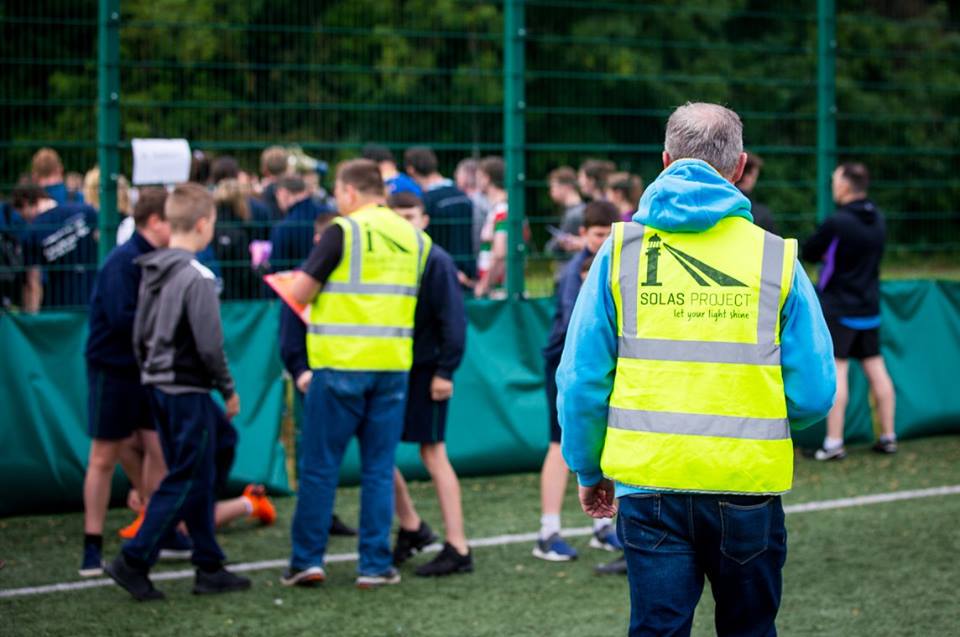
The ‘Solas Project’ is a community development organisation which tackles early school leaving and youth crime. The project has been in operation since 2007, and fundamentally, the belief is that tackling these issues will allow communities as a whole to benefit as they look to pursue a vision of Ireland where the youth of today learn to truly acknowledge their self-worth and attain the ability to take full advantage of their potential.
The Solas Project is responsible for running a variety of programmes, each with a heavy emphasis on building the self-esteem and confidence of the children and teens that they mentor. Speaking about the project’s main goals, current Head Gardener (CEO), of Solas, Eddie D’Arcy, said: “We run five different programmes … and it is really about improving the self-esteem in these boys and girls and making sure that they have a bit of support there for them. Having that caring adult in their life is really recognised as a strong supportive measure.”
One of the many initiatives that Solas run is their sports programme. Eddie believes this plays an integral role in the Solas group, by providing fun school-based activities, Eddie believes they can “increase children’s attendance and participation in school, leading to school retention and academic success.”
Eddie continued: “What we try to focus on with the sports programme is very much about engaging with the children in each school. It’s very much based around building their appreciation of self-worth and the self-esteem of the kids.”
Eddie believes that sport is a great way to get everyone involved, he said: “We generally play tag-rugby in the sports programme because there isn’t an extremely high skill-level required in order to participate, so then all of the kids can be good at it.”
Through the Solas Sports programme, the aim is to teach life skills and develop character through the vehicle of sport. The end goal is to develop confidence in each student by teaching them new skills.
In charge of running this programme is Stephen Mullarkey; he runs a five-week tag-rugby course with 5th and 6th classes in twelve different primary schools throughout the academic year. Stephen has a level 1 coaching certificate from the Football Association of Ireland, and the programme has been a “roaring success for Solas,” according to Eddie, with students becoming “more and more confident in getting involved.”
Although Solas place a big importance on their sports programme, it’s not the only programme where they help build up character in young people in Dublin.
Eddie said: “We run five different programmes. One programme is called ‘step-up’, where we provide an individual mentor for sixty teenagers every week and these same teenagers will stay with us right the way through secondary school. The programme is spread over four nights, each night fifteen teenagers attend the programme and they’re provided with a personal mentor. It all takes place in a club setting and we also have one member overseeing the whole thing. Last year, we had eight young men who graduated and they all spent six years on this particular programme.”
There is also an active programme for younger kids that find themselves in similar situations, who are supported by the Solas ‘After School Club’, where Eddie believes the children are given an excellent chance to excel in their education. He said: “We run a range of after-school clubs, this programme deals with children that are struggling in the national school system.
The Solas Project aims to create an Ireland where every young person knows their self-worth // Facebook @SolasProject
There are three clubs there, one is the junior club which is for senior infants up to second class. Then we have a second club which operates in St. Catherine’s Church for the older primary school kids. Each of those clubs has the children coming 4 days a week for 4 hours each day. They’ll have a hot meal and homework support, and we continue that through the holidays as well so there is a high level of support there available for the kids.”
Unfortunately, running such a widespread organisation as Solas comes with obvious costs. Solas now have sixteen full-time staff, as well as roughly 160 committed volunteers. The funding for the programme is split 50/50 between the state, and Solas themselves have to raise €350,000.
With such huge demand having to be met, Solas are looking for any volunteers to get in touch with them about supporting their work.
Eddie said: “We are constantly looking for extra volunteers, so if there are students interested in social care or even criminology, we would love to hear from them.”
Last month, an elderly gentleman’s group got to experience what might literally be the trip of a lifetime as they travelled to Valencia, Spain, thanks to the Bluebell Community Development Project (CDP).
For many of them, it was a first trip outside of Ireland. Tommy Coombes, who manages the CDP, on behalf of the Canals Community Partnership, led the charge for this unique expedition.
“I’m interested in life’s journey. There are 60 occupied housing units here in Bluebell, and they are occupied mainly by men. These are gents who would [in many cases have had tough lives]. We have tended to experience a strong sense of apathy amongst a lot of the men in this community,” Tommy explained.
Tommy, a PHD student in Maynooth University, has worked in Bluebell for over seven years now. He has worked hard to try and promote health and a sense of well-being with these older men, in the hopes that it will bring them out of their shells, which seems to have been successful.
“We’ve organised various trips, gone out fishing for example. We tend to try take these chances. Importantly, we do what the men want, not what we want.”
This philosophy was what led to this whole trip coming to life.
“One of the men a while ago said: ‘Why don’t we just get out of here for a while and do something?’ While you had a few lads up for it, with places like Limerick mentioned, he goes: ‘No I mean out of the bloody country!’
“So since last January or February they’ve been saving to go to Valencia in Spain. Initially, when someone suggested Valencia because they had a mate who owns a pub there, most thought he actually meant Valentia in County Kerry. It became sort of a dream or wish and we set out to get funding through fundraisers. We engaged with local councillors, with Sinn Fein helping out massively,” explained Tommy.
With most men having never left the country before, the organisers were met with many obstacles, most notably, the organisation of passports. Ed Nolan, also of the CDP, has lived in the community for less than a year. As the new kid on the block, he was tasked with the challenge of helping to get everything together.
“Tommy asked me to organise the Valencia trip, so myself and a couple of others did the work for it. It took a lot of organisation, but we got there in the end. It’s all been worthwhile,” explained Ed.
“Some people here hadn’t even had a passport before. It took a lot of work getting everything together, especially with first time passports. I had a scheme where everyone gave €3-4 a week so that when it came to the day, you would have a few bob in your pocket at the very least,” Ed added.
Tommy, who himself is in his sixties, works hard to try and make sure that these men get the chance to continue to live fulfilled lives through retirement, and in this case, experience brand new things.
“I suppose the idea was to allow the men to experience the life of other older men in another culture. Also, the adventure. With most men never having a passport, it was a serious challenge at first. Fears of flying, fears of the unknown. A general fear of being taken out of their own comfort zone. A lot of these men have a very set framework,” Tommy explained.
“From getting up in the morning to going to bed at night, they have a strict structure that’s very hard to step out of. A lot of work from all the staff was pivotal in helping the men realise they could do this,” he added.
While it might not seem like much of a battle to those lucky enough to travel abroad on a regular basis, it unfortunately was too daunting a leap for some.
“Maybe to us who have gone away and travelled, it may not be a big deal, but for these lads, who may have barely seen the upstairs of a Dublin Bus, it’s a massive step. So much so, that a few men actually had to pull out because they couldn’t take that leap of faith,” Tommy revealed.
However, one man that could make the trip was a resident suffering from cancer, who had just finished his final chemo treatment. As Ed recalled:
“We didn’t ask him to come along originally as his chemo and radiology wouldn’t have been finished until the end of September when we had originally planned on going. Now because of funding and that we ended up going on the 18th of October, [he] was finished up by then.
“Four or five days before we left I asked him if he would come. We checked with the doctors and he was well enough to go. As it turned out, he hadn’t got a passport either. I went down to the passport office morning, noon and night and we managed to get it literally the day before we were going. It was great.”
On reflection, the whole event was deemed a massive success for Bluebell CDP, and for the group of men who got to have a life-changing trip that won’t be forgotten any time soon.
Ed finished: “It was a great little experience for all the lads. Even some in wheelchairs got to go around and see what was an absolutely beautiful city. And of course we had an old sing-song in the evenings. You never know, this could be a yearly thing.”
A schoolboy, who ought to have been in school begged his Dad to buy him a watermelon,one so big that he struggled to lift it. “Please Da can I have it, they’re lovely so they are.” My heart went out to the young lad when his Dad said “not today son.” Even though I suspected he only wanted it because it matched the colour of his uniform.
“Cigarettes for sale” was the brazen bellow to be heard from the street corners. Loud and clear so all could hear.
“Come here to me love and I’ll do your hair for you” pleaded a woman with a handful of hair extensions.
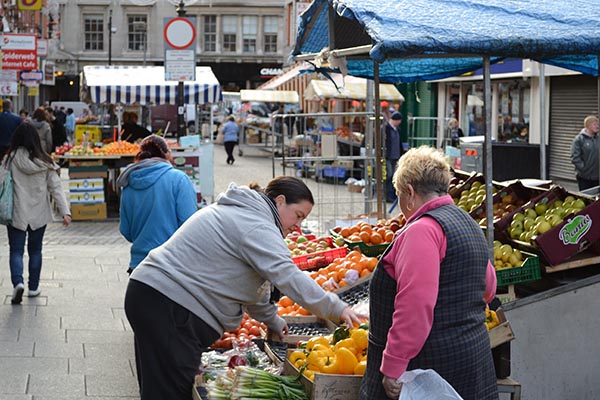
A mother and daughter sat side-by-side at their fruit stall and exchanged tips of the trade. Breakfast for the street merchants consisted of their own produce. One man munched on a banana and a woman crunched on an apple.
The pigeons wanted in on the action too, a flock gathered around chunks of naan bread retrieved from the nearby refuse bin.
A waft of freshly baked bread lingered in the air. The source was a Parisian baker and an actual real bakery.
Across the street stood a lady haggling with the fishmongers; she wanted eight fish but onlyif the price was right. She tried her luck but the experienced trader wasn’t having any of it.
Five minutes later, the customer returned and did a deal. The merchant emerged the happier from that trade-off. Her face lit up, in marked contrast to her earlier scowl.
Neon lights signalled phone repair shops in competition for custom. One such shop had an on-site hairdresser to offer haircuts to ‘shorten’ the wait. Beat that.
A toddler stood enrapt looking skywards; a toy sized toy shop and its turban- wearing ower had captured her attention. She was lost in her own world until her father hurried her along.
A Polish store big enough to take on the Tesco giant complemented the kitsch polish cafe a few doors away. On a fruit stall, Chinese pears took pride of place alongside Irish pears.







You must be logged in to post a comment.