Tag: cork

  • The Comeback of Forgotten Irish Sports 

    The Comeback of Forgotten Irish Sports 

    Sports like hurling, football, and rugby are considered most popular in Ireland. Most athletes learn the rules and how to play at a young age. Ireland’s deep-rooted passion for sports stems from a long lineage of physical activities that date back to as early as the 19th century. While the Gaelic Athletic Association (GAA) keeps traditional sports like hurling and Gaelic football at the heart of local communities, other traditional sports have long been forgotten, while some are making a comeback in other counties or rural areas. 

    One sport that is gaining popularity in Ireland is rounders. 

    This type of sport was played long before the term rounders was coined; its origins can be traced back to medieval Europe. 

    Sport historian Professor Paul Rouse said,“Hitting a ball with a stick is going out all across the world, and there are variations of this big game that can be seen in different cultures”. 

    In Ireland the history of rounders goes all the way back to 1744, where versions of the sport had been played for generations.

    Rounders is considered a traditional Irish sport and is one of the sports included in the GAA charter since 1884. 

    Shirley Lennon, secretary for GAA rounders, told The City, “When the GAA was first set up in 1884, there were four sports: hurling, football, handball, and rounders. The organization changed greatly over the years, and rounders was revived in the 1950s.” 

    Rounders is a bat and ball game team sport where two teams alternate between batting and fielding. 

    It’s similar to baseball and softball but it’s different in terms of mechanics and equipment. 

    “We would have more space between our bases… the ball we use is different; we use the slither, which is the same ball they use for hurling,” Lennon explained. 

    Currently, there is no official team for rounders, “just like all GAA sports, it’s all part-time volunteering,” Shirley Lennon said. 

    Despite this, rounders is slowly gaining popularity, especially in Dublin. 

    “I think we definitely are gaining in popularity, especially since COVID. During 2021 to 2022, there’s been quite an explosion of rounders clubs,” said Lennon. 

    Rounders is also the only sport in the GAA that features mixed teams, with both male and female players competing on the same team. 

    Rounders is expected to be one of the games to be included in the upcoming 2026 Tailteann games, that is to be held in Kilkenny in the spring of next year. 

    Another sport that has made a comeback in Ireland in recent years is road bowling. 

    The origins of road bowling are unknown, but it is believed that stone-throwing traditions existed across Europe during the pre-1600s. 

    The earliest record of road bowling in Ireland started in the late 17th century to the early 18th century. The sport was commonly practiced in County Cork and Armagh. 

    Road bowling slowly faded during the 20th century due the fact that some impromptu gatherings with occasional betting led to the game to be banned by authorities, but the game was kept alive by small communities in rural areas.  

    The Road Bowling Association kept the sport alive throughout the years.  

    Seamus O’Tuama, public relations officer for the Road Bowling Association, told The City that “when the association was set up in 1954 it created competitions for players using the standard rules”.

    The association also included competitions for women and under 18s. “Then over time team competitions started, then in 1963 the association of Ireland got involved with two international road bowling associations, Germany and the Netherlands, which established European championships,” O’Tuama added.  
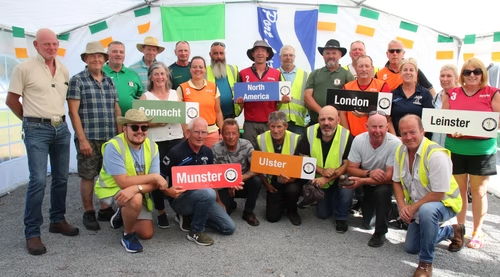
    Today, thanks to the influence of social media, road bowling is slowly making a comeback in Ireland; games are now being organized in County Cork and Armagh. 

    Paul Rouse said, “Road bowling is gaining its popularity because it offers something different and it’s incredibly compelling viewing.” This comeback is no surprise because “games go through queues of popularity and that’s normal. It’s not unusual,” Rouse added. 

    Road bowling competitions are continuously being held in Cork.

    Sports are an important aspect of Irish culture, and it’s a factor that shapes identity in Ireland. 

    “Sports are something that thrive both at the local level and at the international level. People have traditions in their lives, and one of the traditions is to play those sports; it’s about family, it’s about heritage, and it’s about locality… so the comeback of these sports would add to what’s there already,” said Rouse.
  • Watch: Saudade – A Reflection on Lockdown

    Watch: Saudade – A Reflection on Lockdown

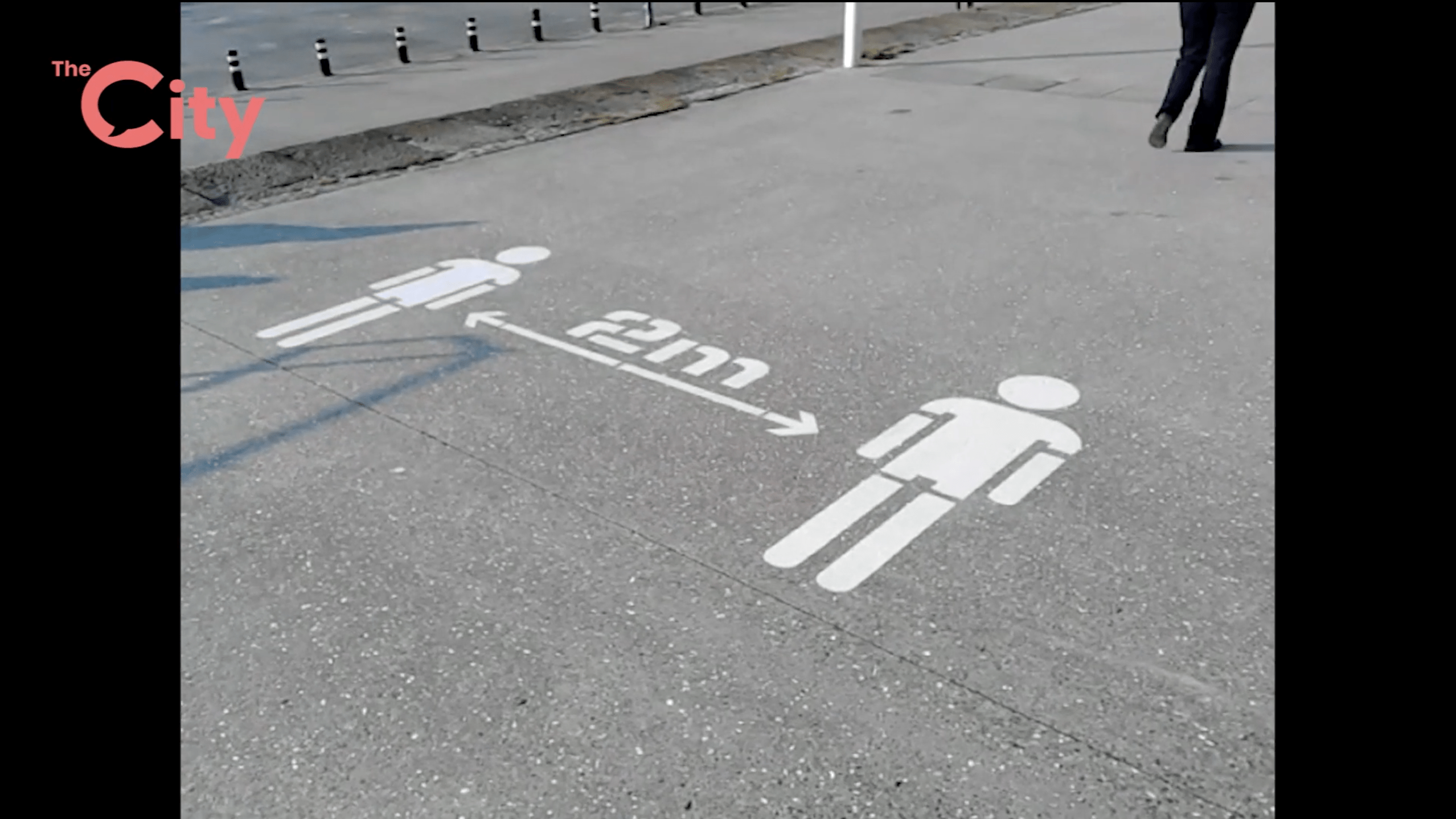
    A sign on a walkway in Dún Laoghaire. Photo: Paul Caffrey

    By Paul Caffrey, Ruadhan Jones and Kim O’Leary

    Have you found yourself longing for normality, for the simple things you took for granted? The Portuguese have a word for it – saudade. It means to long for the presence of the absent thing.

    TheCity.ie offers this visual poem, full of the longing and nostalgia we feel for normality. The reflection draws together footage from our journalists’ localities of Dún Laoghaire, Cork City and Newbridge, with a musical composition by TheCity.ie’s Paul Caffrey.

  • 5 who made it in the AFL…. and 5 who didn’t

    5 who made it in the AFL…. and 5 who didn’t

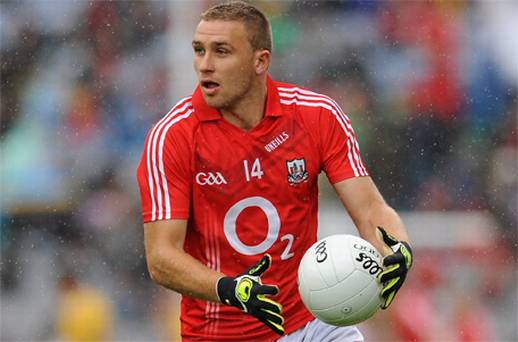
    With the news this week that Cork’s Ciaran Sheehan will join AFL side Carlton Blues in January, TheCity.ie looks at some of the top Gaelic footballers who made it down under, as well as some of those who didn’t adapt to the new game.

    Those who made it

    This slideshow requires JavaScript.

    And those that didn’t

    This slideshow requires JavaScript.

    Sheehan (22) becomes Carlton’s third Irish player, joining Zach Touhy and 19-year-old Ciaran Byrne of Louth, who only signed for the AFL side in August. The Eire Og mans abdication is yet another blow for Cork’s senior footballers, who having already lost manager Conor Counihan earlier this year will be without stalwarts Graham Canty and Pearse O’Neill for the 2014 season after both announced their retirements last week.

  • Dogs for the Disabled

    Dogs for the Disabled

    Anne Stewart writing for thecity.ie travelled to Blarney, Co. Cork, where she met Jennifer Dowler, CEO of Irish Dogs for the Disabled.

    Everyone knows dogs are man’s best friend, but some dogs are much more than that. Irish Dogs for the Disabled places trained dogs with adults and children with disabilities.

    Irish Dogs for the Disabled, Blarney, Co. Cork - Image by Anne Stewart
    Irish Dogs for the Disabled, Blarney, Co. Cork – Image by Anne Stewart

    As we pulled in, Jennifer Dowler and Fleur opened the door to us and we began to chat over tea in a large country kitchen. Fleur, an 18-month old golden retriever, is full of fun and mischievous to boot; she could easily be mistaken for a normal dog, and she is, but with special skills.

    Jennifer has more than 20 years experience training dogs for the disabled. She breeds all her own bitches, stud dogs and puppies, and stresses how important it is for the dogs to be healthy and to come from a perfect blood line.

    “We don’t have health problems with our dogs and we don’t touch anything unless they are in perfect health. If you have one puppy in a litter with cancer, then it will keep coming [back] in the lines. We are very strict about what we will or will not breed,” said Jennifer.

    She explained it was a two-year process to make sure the dog has perfect shoulders, perfect skin, perfect temperament, everything perfect. “We spend thousands on our breeding stock and we don’t get any support from the government. We raise all the money ourselves.”

    I asked Jennifer to explain how a new-born puppy becomes an assistance dog. “From 0-12 weeks is the most critical time in a pup’s life and from birth we start socialising them, de-sensitising them and handling them.

    “When the pups are 8 or 9 weeks old, we place them with volunteer families for about 18 months and they rear the dog and continue with the socialisation process. The dogs then come back to Irish Dogs for the Disabled, where they are assessed on their personality type and matched up with a person on our waiting list.”

    Jennifer Dowler, CEO of Irish Dogs for the Disabled with Fleur, an 18-month old golden retriever with special skills - Image by Anne Stewart
    Jennifer Dowler, CEO of Irish Dogs for the Disabled with Fleur, an 18-month old golden retriever with special skills – Image by Anne Stewart

    Fleur is the next dog out – she is going to Luke, an 8-year old boy with profound cerebral palsy; Fleur and Luke have already met and according to Luke’s mother, “Fleur is cheeky, playful, bright and loveable, and you could just as easily be describing Luke”.

    “Fleur has been clicker-trained to engage with Luke’s physiotherapy”, said Jennifer. “We train her to touch him in different parts of his body and then he has to move that part of his body. Fleur will crawl and roll over and this will encourage Luke to imitate her and crawl alongside her.”

    Fleur is into playing and she is loving and gentle. She will curl right into Luke, as he can’t curl into her or hug her. Each dog has their own strengths and weaknesses.

    “The final step is to train Luke to interact with Fleur and to encourage him to practise physiotherapy himself in a practical and fun way. If you ask a child to do something, they are more likely to do it with a dog, as it is often painful, uncomfortable and stressful”, said Jennifer.

    Dogs for the Disabled is accredited by Assistance Dogs International. Golden retrievers are best for children and more work-orientated dogs, such as labradors, for adults. Labradoodles are ideal for children with a tracheostomy, as they don’t shed hair.

    Jennifer places 85% of her assistance dogs with children aged 6-12 years old. She trains 20 dogs every year at a cost of €15,000 per dog. There is a 5-year waiting list for these dogs.

    Dogs trained for adults are taught to push alarm buttons, open doors, send for help, retrieve a phone and fetch a blanket. Physical disabilities include spina bifida, cerebral palsy, duchenne and muscular dystrophy.

  • Cork Jazz Festival

    Cork Jazz Festival

    It was a filthy night. The rain beat against our backs and bounced up onto our bodies, as we weaved our way heads-down, hoods up, through the torrent of water, towards the Everyman Theatre on MacCurtain Street.

    We passed a lone saxophonist propped against a lamp-post, seemingly unaware of the deluge, immersed in his own melody.

    It was the first night of the biggest, most exciting Jazz Festival yet to be seen in Cork, with 800 performers in 45 venues and 40,000 jazz fans.

    Rene Marie signing CDs after her performance at the Everyman – Cork Jazz festival. Image by Anne Stewart

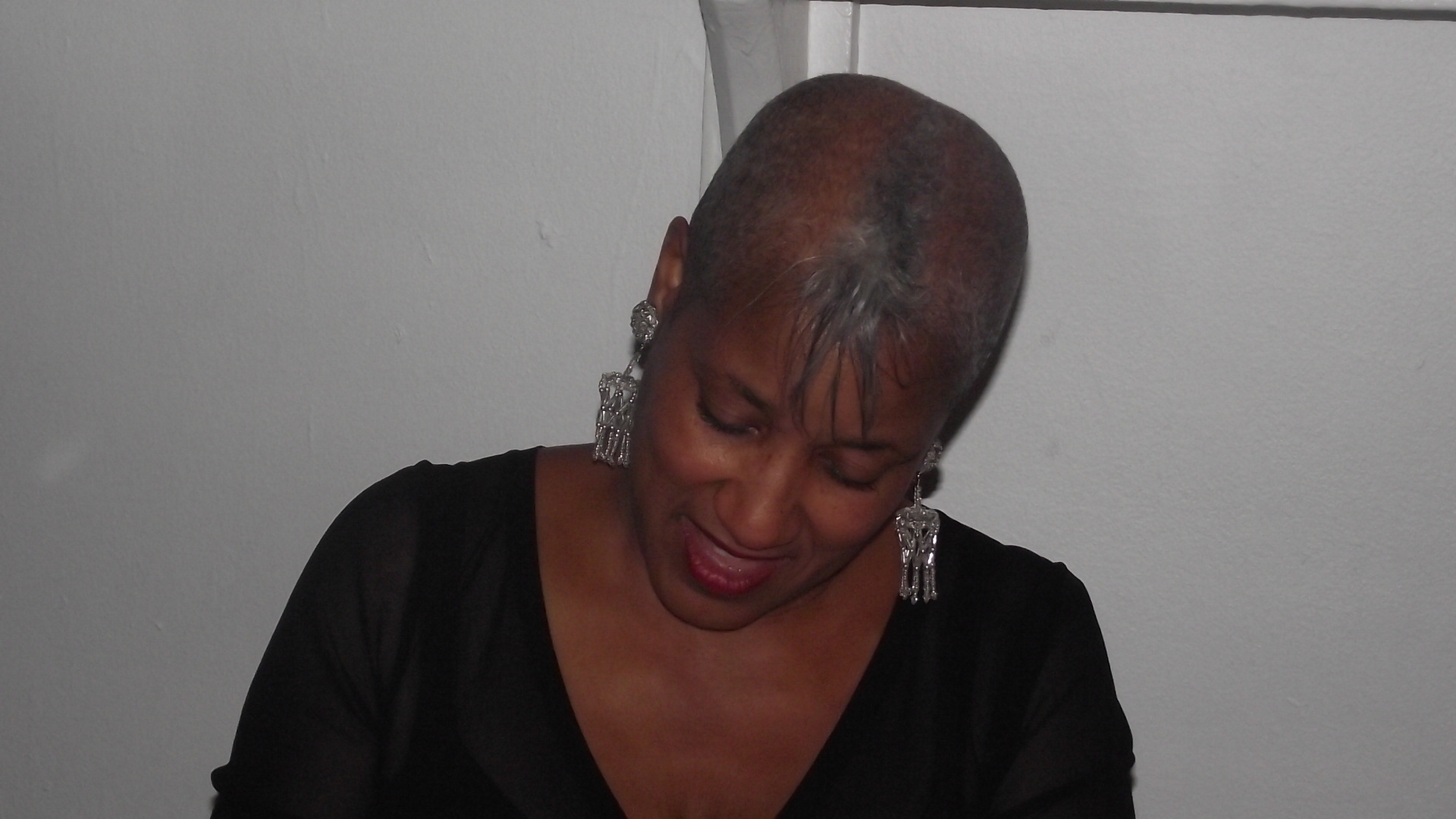
    Efterklang, Chic & Nile Rodgers and Primal Scream were playing at the Opera House, but we came to see Rene Marie, the award-winning American singer, who gave a sensual rendering of Eartha Kitt’s “C’est Si Bon” and “I Want to Be Evil” in the Everyman Theatre.

    2013_1026CorkJazz0014
    Two of Rene Marie’s admirers, Owen Morton (left) and Peter Stewart. Image by Anne Stewart

    The real jazz, according to the organisers, was at the Triskel Christchurch, across the river on Tobin Street, where 16 concerts were staged in the three days of the festival.

    We took our pews in this reverent setting and listened to the Perico Sambeat Quartet, enthralled. Perico, born in 1962 in Valencia, Spain, played the alto saxophone with Albert Sanz on piano, Alex Davis played the double bass and the Irishman, Stephen Keogh was on drums.

    Perico Sambeat, saxophonist, relaxing after his performance in the Triskel, Cork Jazz Festival. Image by Gonzalo Duran
    Perico Sambeat, saxophonist, relaxing after his performance in the Triskel – Cork Jazz Festival. Image by Gonzalo Duran Rius

    Dino Saluzzi, from Argentina, followed on from Perico Sambeat. He took to the altar, crossing his hands and holding them to his chest, as he spoke in a low, sermonic voice, “all we need is “lealtad, humilidad y amor” (loyalty, humility and love), he preached.

    Dino played the bandoneon, which is designed to play religious music, with his brother, Felix, on the tenor saxophone and clarinet and Anja Lechner on cello , forming the Saluzzi Lechner Saluzzi Trio. As we watched and listened, a couple above us danced a gentle tango.

    Our appetite for jazz was insatiable, as we once again crossed the river to the Metropole Hotel, or the Met, as it is known in Cork, where 4 rooms were dedicated to jazz, funk, soul and blues with artists from Ireland, Germany, The Netherlands, UK and Denmark.

  • Smartphones are about to get a lot smarter

    Smartphones are about to get a lot smarter

    Image by Saad Faruque via Flickr
    Image by Saad Faruque via Flickr

    As computers get smarter, faster and more compact we often find ourselves wondering: how much further can we push this technology?

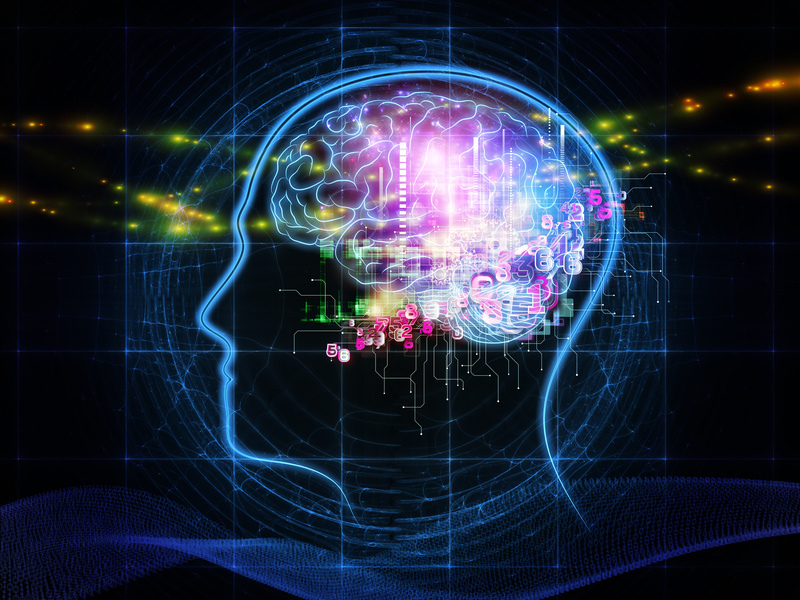
    The singularity is a theoretical instance during which artificial intelligence will surpasses human intelligence and bring about radical change in human nature. While this notion seems closer to science fiction than science fact, recent breakthroughs in computer processing show computers that can mimic the human brain.

    In a statement last week, technology specialists Qualcomm announced they were making headway in relation to their “biologically-inspired” processor that is modelled on real-life neurons.

    “Instead of preprograming behaviours and outcomes with a lot of code, we’ve developed a suite of software tools that enable devices to learn as they go and get feedback from their environment,” states Samir Kumar, director of business development at Qualcomm.

    The tech giant has recently set up operations in Cork creating 100 digital IT security positions and has expressed interest in setting up a research and development wing, which could lead to up to 150 more jobs.

    Qualcomm have already built a robot which uses this ground-breaking technology. The machine learns by means of a reward system. If the machine preforms a task correctly a “good robot” message is sent.

    The companies “neuro-inspired” chips will find their way into robots, vision systems, brain implants and smartphones. They are designed to be massively parallel, reprogrammable, and capable of cognitive tasks such as classification and prediction.

    The ultimate aim is for users to be able to train their devices. The use of this technology in cell phones opens up the possibility for a customised user experience for each individual.

    The enabling of devices to see and perceive the world as humans do is a goal that Qualcomm feels is realistically within reach. “A major pillar of Zeroth processor function is striving to replicate the efficiency with which our senses and our brain communicate information,” said Kumar.

    Other companies such as IBM and Google are also investing millions into the field of cognitive computing. Last year Google unveiled a “neural network” that taught itself how to identify cats after being exposed to YouTube videos.

    Earlier this month IBM announced a collaborative research initiative with four leading universities. The study seeks to develop a system which can learn, reason and help human experts make complex decisions.

    “I believe that cognitive systems technologies will make it possible to connect people and computers in new ways so that–collectively–they can act more intelligently than any person, group, or computer has ever done before,” said Thomas Malone, Director of the MIT Centre for Collective Intelligence, in a press release.

    What will come of this research and how will it affect the average user’s virtual experience? Only time will tell. In the mean time we will have to make do with our not-so-brainy smart phones.