
Tag: Cyrus

  • Are females exploited by the music industry?

    Are females exploited by the music industry?

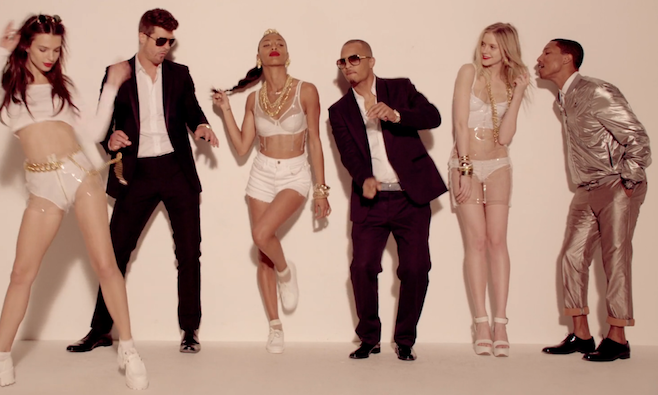
    Robin Thicke and Miley Cyrus performing at the 2013 VMA's.

    Robin Thicke and Miley Cyrus performing at the 2013 VMA’s.

    It is a well-known fact that the music industry’s sole purpose is to generate one thing and one thing only, and it is not music.

    Music is merely the by-product of the industry’s ravaging thirst to generate money. An industry whereby female sexuality – and sexuality in general – is one of the tools that the industry uses to increase potential profits. However, to say that females are exploited by the industry is a step to far.

    Exploitation is the unruly use of a person or a group of people in a cruel and unjust manner

    The vast majority of females who are “exploited” by the music industry receive (quite handsome remunerations for their services.

    Just like in advertising, the music industry employs the idea that “sex sells”. Miley Cyrus is not the first, nor will she be the last female artist to use her sexuality, her figure or her desirability in an attempt to increase her profile within celebrity culture.

    Cyrus is merely just the newest recruit to enlist into the sexuality culture to which the music industry has adopted – not created.

    Men find women desirable, women find other women desirable. These human elements are used to help generate profit in whatever manner possible.

    In 1981, Duran Duran hired female actresses to wrestle one another in mud, topless, in the video for ‘Girls on Film’.

    Madonna has been infamous for her use of sexuality throughout her music career – be it in her music videos or during her stage performances.

    The use of sexuality is not confined to just female artists.

    The gesture of crotch-grabbing is synonymous which Michael Jackson, while R’n’B artist D’Angelo starred completely naked, and oiled, in his video “Untitled (How Does It Feel)”.

    Females are not portrayed favourably in some sections of the music industry – especially in hip-hop or rap –  there is a strong case to claim that there is a high levels of misogyny in the aforementioned genres of music, but the females are not exploited. They are paid. If they are comfortable with flaunting what god gave them for the world to see in music videos, or gyrate in a sexual manner, that is their prerogative as professional female adults earning a living.

  • Sinead O’Connor, Miley Cyrus spat continues

    Sinead O’Connor, Miley Cyrus spat continues

    Sinead O’Connor and Miley Cyrus have continued in their cyber tit-for-tat argument.

    The feud began with a seemingly good-willed letter, drafted by O’Connor, and posted on her personal website addressed to Miley Cyrus, in relation to the young American popstar’s recent sexaully-provacative antics. However the fourth, most recent letter, has moved onto the topic of mental health – more pertinently, Miley Cyrus’ derogatory attitude towards the issue.

    Sinead O'Connor was less than thrilled to hear she was the inspiration of Miley Cyrus' new video. Image by: Pieter Morlion
    Sinead O’Connor was less than thrilled to hear she was the inspiration of Miley Cyrus’ new video. Image by: Pieter Morlion

    The first letter was drafted in response to comments Cyrus made to Rolling Stones magazine in relation to her new video, Wreaking Ball, being “like Sinead O’Connor’s video [for Nothing Compares to You] but, like, the most modern version.”

    Cyrus responded in kind with a crass twitter response saying, “before Amanda Bynes there was Sinead O’Connor,” making light of both Bynes current, and O’Connor previous struggles with mental illness.

    In the most recent letter O’Connor called for Cyrus to issue “an apology to all sufferers of mental health difficulties and all those who have had experience of suicidal feelings or who have been affected by suicide”.

    She goes on to state that “a lot of these deaths [suicide] would not take place if it were not the case that stigmatisation and bullying and buffooning of those perceived mistakenly or otherwise to have mental health issues.”

    The 20-year-old US singer is finding support hard to come by.

    Sue Baker, Director of Time to Change, a mental health anti-stigma programme has also publicly commented on the Cyrus’ ignorant statement.

    “It’s really disappointing to see Miley Cyrus mocking Sinead O’Connor’s mental health problems”, said Baker, “and this only serves to fuel stigma.

    She continued, “one in four of us will experience a mental health problem and there are times when we need to speak out and seek help. We would encourage Miley to apologise to Sinead.”

    Social counsellor Thereseanne McCormack understands the “sense of naivety” shown on Cyrus’ behalf.

    “She has been sheltered from a young age, which has clearly warped her judgement,” said McCormack.

    “I would be worried about Cyrus’ ability to lay blame upon everyone else, as it is a sign of her own worries and sub-conscious issues.”