Tag: Data

  • Ireland’s complicated relationship with religion continues, data reveals

    Ireland’s complicated relationship with religion continues, data reveals

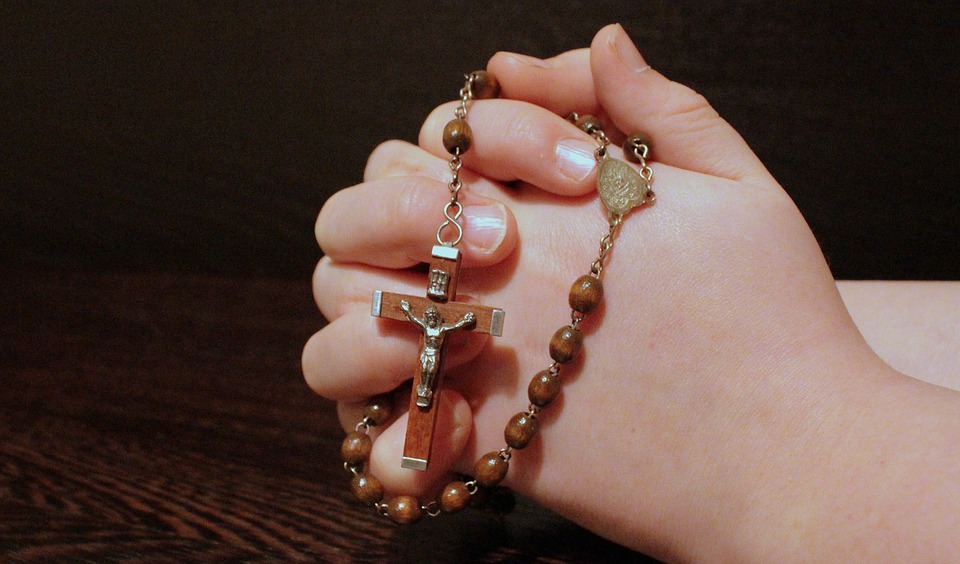
    Every five years, Ireland is subject to a census which, of course, determines a great many things about the population of the nation. One of the questions answered about Ireland’s people is their religion, and its population has historically been a predominantly Christian.

    However, while this fact has remained unchanged in the history of the country’s official censuses, the actual number of those applying a tick to the box marking them Christian, and more specifically Roman Catholic, have undoubtedly dwindled quite a bit. And in noticing this, one cannot help but wonder how much further that number may continue to fall, if at all.

    After all, the percentages recovered briefly, as one will see from the figures displayed below. The question prompted by this may be: “Are people on the edge of cutting ties from Roman Catholicism , and will this be reflected in the statistics for Ireland’s population?”

    It has certainly become a typical trait found in Irish society, the number of people who identify as being Roman Catholic merely by religious label alone. Though, it is very possible that this simply has to do with the religion one finds oneself born into. It is perfectly normal to hear of someone who used to attend mass every Sunday but eventually found themselves only showing up to mark the most important holidays, such as Christmas and Easter. And the statistics collected on this topic actually convey this fact, at least insofar as showing numbers for overall attendance decreasing.

    Data collected by the Iona Institute published in 2009 found that between the years 1972 and 2011 there was a very significant drop in the percentages of Irish Catholics regular attendance at mass; the numbers lowered from 91% to 30%. The statistics show a similar pattern in the percentages regarding general church attendance in the Republic of Ireland; from 1973 to 2009 there was a decrease from 91% to 46%. 

    2

    Interestingly, despite a relatively steady decline in church attendance in the Republic of Ireland, the year showing the lowest attendance was 2005 when the percentage fell from 50% in 2003 to 34% in 2005, followed by a sharp rise in attendance and spiking at 67% in 2007. By 2008, however, the numbers suddenly dropped, giving a percentage of 42%.

    According to the Iona Institute, the number of people attending Mass in the 1990s decreased at a frequency of about 3% per year; from 85% in 1990 to 60% in 1998. Towards the end of the 1990s and coming closer to the early years of the new millennium, the declining numbers persisted at a rate of around two percentage points per year; going from 60% in 1998 to 50% in 2003. From the year 2003 the rate of decline seems to have reduced to approximately one percentage point per year; from 50% in 2003 to 45% in 2008.

    The number of Catholics living in Ireland in 2011 was 3,831,187. Only 30% of this figure were attending Mass on a weekly basis. This amounts to the presence of only 1,149,356.1 Catholics at Mass.

    3

    While Roman Catholics decreased as a percentage of the population of Ireland between the years 2006 and 2011, the religion still showed a strong growth in overall number due to a combination of an excess of birth rates versus death rates, and as immigration increased from countries such as Poland. On this topic, another fact worth noting is that the Irish population has been on a firm increase since 1926. It has gone from 2,971,992 to 4,689,921, as of 2016; an increase of more than 57 percent.

    4

    While those filed as ‘lapsed Roman Catholics’ are a very low percentile, these numbers alone are not an accurate representation of those under the heading of ‘no religion’ in Ireland. Having said that, the figures have certainly been steadily increasing. This, of course, also does not account for the decrease in Roman Catholic figures in the censuses overall, only a very small number of them.

    5

    John Hamill is on the National Committee at Atheist Ireland and when asked the very simply-phrased question of why he believes these numbers for mass attendance by Catholics are falling, he said:

    “The issue is with the doctrines of the church and it’s becoming increasingly easy to see the problems with it. In living memory, mass used to involve the priest with his back to the congregation, speaking Latin, and if you were a member of that congregation and wanted to ask a question about your religion you have no real way of verifying the answers you got back.

    “But now, kids these days, they have the internet in their pocket. They can look at the doctrine and what it says very easily and whether it’s actually true, and they can look at the world around them nowadays and how it has been understood by science,” he said

    David Quinn is the founder and director of the Iona Institute, a socially conservative Roman Catholic advocacy group.

    Mr Quinn said: “It was inevitable. We’ve become a much more secular society in line with the rest of the Western world. We’re an island geographically but we are not an island culturally. I think a lot of the delay in these numbers coming down is due to the fact that we were a poorer society for longer … economic development drives a lot of these things … we only became independent in 1922 … we, in a way, are kind of a case of history interrupted.

    “We became independent in 1922 and decided we were going to become a super Catholic country, and that was a way of asserting our independence. That was a way of saying to Britain that we’re were not just politically independent but also culturally and religiously independent as well. And other countries didn’t go through that kind of a phase.”

    Mr Hamill said figures on what exactly it is that constitutes a believing or practicing Catholic were complicated.

    priest-81872_960_720
    Stats show that Mass attendance is steadily in decline // Pixabay

    Credit // Pixabay

    He said: “There is a report done by the Catholic Bishops every year, and what they do is interview Mass attending Catholics on the way out of Mass and ask them what they believe. 60-70% do not believe what the Church’s teaching [are] about contraception, homosexuality, divorce; Catholics don’t believe in Catholicism when it comes to these social issues.

    “About 50% don’t even believe in hell, 10% don’t believe in God. That’s 10% of Catholics, consistently over a number of years don’t actually believe in God. A belief in God is a pretty low bar to get over before you call yourself Catholic, but not in Ireland it seems.”

    David Quinn said: “When people tick that box, they’re self-identifying as Catholic and who knows what’s going on in their own heads … if I was never going to mass and really didn’t believe in what the Catholic Church teaches and was only turning up to Mass on special occasions, I would not tick that box.”


  • What’s in a name? The facts, figures and trends behind Ireland’s gurgling babies

    What’s in a name? The facts, figures and trends behind Ireland’s gurgling babies

    We often take our name for granted. What inspired the choice? How does it define you? Not everyone has a moving story to tell of how mam and dad looked longingly at their newborn baby, and the perfect name simply floated from the air like divine inspiration. Your name is what your mam roars when your dinner is ready. It’s a key foundational component of your identity.

    There’s a Johnny Cash song about a boy named Sue who hunts down his father as vengeance – and rightfully so – for his questionable naming. At the song’s denouement, Sue’s dad explains that he gave him that name because it would make him strong in life. The lesson being that your name can play a key role in how you are perceived and how you define yourself.

    But how do our names shift and change on a broader level, and over the course of time? Ireland, like any nation, is susceptible to the influences of cultural events, at home and abroad. It’s inevitable that we change as a people due to the impact of rapidly evolving technology, and the forces of globalisation. So it’s natural to assume that these steady shifts have the potential to impact our views, and ultimately what we name our babies.

    The lonesome demise of John and Mary

    For many years the iconic duo of John and Mary have dominated the ceremonial christening of a little one. However, time hasn’t been kind to the pair, with the likes of Tarquin and Blaze usurping the traditional and wholesome names of Ireland. According to the CSO.ie, John and Mary remained undisputed champions from the mid 1960s to the early 1990s, when their popularity began to waver, dwindling from a powerful rank – John fell from 5th to 13th and Mary fell from 16th to 34th between 1997 and 1998 (albeit to a still somewhat respectable standing).

    Ultimately it’s a substantial fall from grace. When the CSO records began, John and Mary were sitting pretty with their namesakes spawning in the thousands. Now in recent years they’d be lucky to break the hundreds. Their throne is now the home of Jack and Emily. The male counterpart is a curious one, as Jack is the diminutive form of the name John. So its transition seems somewhat natural. The shift from Emily to Mary is bit more difficult to explain. Maybe Emily is just a nice name … we agree Emily is a nice name!

    The troublesome threes

    While it’s surprising to see the fall of John and Mary, if you take a stroll into the depths of the CSO’s data, you will find some more famous names that have fallen out of favour. It’s important to note that the CSO does not include names that number fewer than three for privacy reasons. But a brief skim over some of the stats reveal some notable inclusions.

    Some vintage Irish names that you’d regularly hear around your local, are now at the rock bottom of the CSO’s database. Names like Sharon, Donna, and Kimberly as well as Walter, Roger and Christy are fighting for survival, just at the cusp of the relegation zone. Many of them are there due simply to anomalous spelling – Elisabeth rather than Elizabeth – or that the name is more prominently used in its full version, like Terence and Jennifer rather than Terry and Jenny which both number at 3 in 2017.

    Globalisation (or are our babies being Americanised?)

    Since the early 1990s, popular American names have started creeping into the naming bubble, with the likes of Taylor, Corey and Jacob having almost zero activity before then. But for names like Jacob, they began gaining traction once the naughties hit and are now a mainstay of the top 100. This influx of new names in the 1990s and 2000s could be considered a sign of Ireland’s increased globalisation. In that time we went from two channel terrestrial TV to the age of the internet. It’s only natural that there would be some overlap.

    Comparing the Irish CSO figures to America’s Social Security data, it is clear there is a direct correlation between rankings – particularly women’s names.  

    While there is a fluttering of crossovers in both, only Noah and James have managed to cement themselves in Irish culture. For the women, though, over half of the names feature on both lists – Amelia, Emma, Ava, Mia and Sophie. Though the men’s have a distinctly American slant, (Logan and Mason) the women’s sound more universal, unattributed to either nation. Often a trend is unexplainable, as the name Emma has shown. In Ireland she’s been the top dog – or thereabouts – since the beginning of the 1980s, and for America, it wasn’t until the early 2000s she began dominating the ranks. People just really like Emma.

    Pop culture effects

    Sometimes pop culture influences can cause a spike in an unloved name or generate a brand new one.

    Arya: HBO’s critically acclaimed TV series, Game of Thrones sent many expecting couples into a tizzy when the fierce, courageous and brazen Arya Stark revealed herself in the opening season of the show. The name may be unconventional, at least its fans didn’t feel compelled to use names like Ygritte or Gendry.

    arya
    Credit // Central Statistics Office

    Adele: Following a three-year hiatus, Adele made a blistering return with her seminal album 21 in 2011. The name vanished in 2004, but a surge of Adeles appeared through 2011 to 2012 on the CSO database – a direct response to the musician’s newfound popularity. Emotionally gnawing tracks such as “Don’t You Remember,” and of course, “Someone Like You” yanked on listener’s heartstrings, to the point where a bevy of mothers and fathers wanted their little girls to share their namesake with the talented, introspective singer. 

    adele
    Credit // Central Statistics Office

    Zayn: One Direction was such an obsessive phenomenon that almost every young teen had the group of dashing boys plastered across their walls, school bags and notebooks. The older demographic of the fandom went one step better by naming their newborn after their favourite member, even though Harry and Niall were already present and correct in the top 100, with the first little Zayns toddling onto scene in 2012.

    zayn
    Credit // Central Statistics Office

    Rihanna: The ultra-popstar now turned makeup influencer was one of, if not, the biggest names in music during the mid to late 2000s. Her whopping hit “Umbrella” turned a flurry of heads when it smashed through the charts. So much so, that a company of mini-Rihannas started pottering around the local supermarkets. She had a continual stream of hit albums – an average of one a year – between 2005 and 2012, and this was reflected in the amount of baby Rihannas in Ireland. Their numbers peaked in 2008 and 2009 on the CSO dataset.   

    rihanna
    Credit // Central Statistics Office

    While the aforementioned names represent an encroaching shift in popular Americanisation, a previously solid name can take a major blow when a not so pleasant human mobilises an army of partisan followers across the pond, or maybe it’s just coincidence Donald.

    donald
    Credit // Central Statistics Office
  • Public Safety on Irish Rail: Part One

    Public Safety on Irish Rail: Part One

    DART and rail users – are you vexed by vandalism? Tired of tissue sellers? Disgusted by disruptive passengers? Or do you think your daily commute or weekend trip into town is among the safest journeys one could hope to take on public transport?

    Using information obtained under the Freedom of Information Act, The City looks at just how safe it is to travel by rail in Ireland – starting with the DART in the first of a two-part series which concludes next week looking at mainline journeys across the country.

    Redacted figures show that since 2015 there have been 514 reported incidents of antisocial behaviour on the DART. 2017 and 2018 have seen huge increases in the number of incidents being reported compared to previous years, with over double the number of incidents compared to 2015 and 2016. This year is set to have the highest number of complaints yet – with 175 incidents reported by the 13th of October compared to 187 in the whole of 2017.

    These rising figures support the recent calls for increased security on Irish public transport, with National Bus and Rail Union General Secretary Dermot O’Leary recently stating that: “It is no exaggeration to say that commuters and staff travelling and working on public transport are doing so in constant fear of either being attacked themselves, or witnessing various forms of anti-social behaviour, up to and including serious assault.”

    The incident of antisocial behaviour which is most commonly reported on the DART is incidents involving disruptive passengers, with 216 reported since 2015, more than a third of the 514 total incidents reported. Once again 2018 is conclusively the worst year on record – reports of 48, 31 and 54 recorded in 2015, 2016 and 2017 respectively are relatively dwarfed in comparison to the 83 incidents involving disruptive passengers reported by early October of this year.


    Vandalism is the next most common incident of antisocial behaviour that gets reported on DART services. There have been 125 reported incidents of vandalism since 2015, with 2017 and 2018 again almost lapping the previous two years in terms of figures. However, the high number of 49 incidents reported so far this year could partially be attributed to an incident at Clongriffin station on May 8th of this year, when around a dozen people in balaclavas boarded a train and caused €4,000 worth of damage in what Irish Rail described as “an unprecedented graffiti attack.”

    Following vandalism closely in reported complaints are incidents of intimidation, with 122 such reports since 2015. Bucking the trend so far, 2018 looks set to improve upon the substantial figure of 58 incidents of intimidation in 2017, with just 26 reported so far this year.

    While these figures are significant and a legitimate cause for concern, it is comforting for commuters to see that more serious incidents of theft and assault remain at a much lower level. A total of 19 assaults and 14 thefts have been reported in the redacted figures released to The City by Irish Rail, although incidents of theft in 2018 look set to surpass the highest figure of five reported in 2015, with an equal number reported as of October.

    The issue of ‘tissue sellers’ has also sprung up on DART services since 2017. This involves a person putting an item such as a packet of tissues or a lighter on train seats, along with a printed note asking for money in return for the items, which the note says will go towards helping a sick family member.  

    From the start of 2017 to October of this year there have been 13 recorded incidents of ‘tissue traders’ on DART services, although regular commuters will attest that figure is most likely higher. The Garda Press Office said that “An Garda Síochána have legislation available to deal with these matters”, referencing the Criminal Justice (Public Order) Act, 2011.  

    The Act states that if a person begs “while in a private place without the consent of the owner or occupier of the private place, he or she requests or solicits money or goods from another person or persons.” The Act also states that “a person who, while begging in any place harasses, intimidates, assaults or threatens any other person or persons is guilty of an offence and is liable, on summary conviction, to a class E fine or imprisonment for a term not exceeding one month or both.”

    Speaking to The City NRBU General Secretary Dermot O’Leary said that he would like to see the implementation of a Garda Public Transport Division, with powers of arrest to act as a deterrent to disruptive passengers. “Antisocial incidents on public transport are rising year on year, and lots of our members aren’t even reporting some incidents because such behaviour has become normalised,” he said, adding that “Irish Rail is one very serious incident away from a situation where trains won’t operate in certain areas at certain times of the day.”

  • Dublin Marathon: a history in facts and figures

    Dublin Marathon: a history in facts and figures

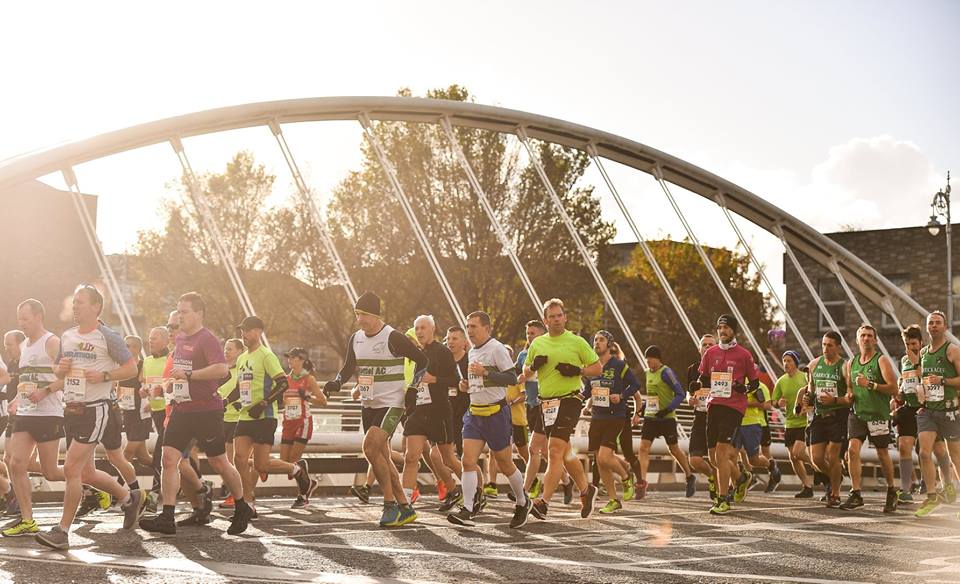
    20,000 people showed up to the startline of the 39th Dublin marathon, from runners just hoping to finish to elite athletes looking to get their share of the €120,000 prize pool.

    The Dublin Marathon began in 1980 and has since been an annual event. Over the years, roughly 306,000 runners have taken part in what is now one of the biggest marathons in Europe.

    This year’s event pulled in 20,000 runners compared to its year of inception, when only 2,100 runners braved the 42.1km course.

    Since the Marathon began there have been 12 Irish lady winners. Christine Kennedy (1990 + 1991) and Cathy Shum (1993 + 1996) both winning two marathons each. In that time there have also been 11 Irish Men’s winners, Dick Hooper holding three wins to his name.

    However, Sunday’s gold medals were claimed by two Ethiopian athletes: Asefa Bekele who finished with a time of 2:13:23, and Mesera Dubiso with 2:33:48.

    There are two trends we can see by looking at the data graphs. Firstly, women’s times are getting faster, and the graph shows a positive correlation with faster times being posted as the years go on. However, times for men don’t seem to follow such a consistent trend.

    The second thing we notice is the number of Irish athletes winning the Dublin Marathon effectively stopping after the 2000s. That is apart from 2013 when there were two Irish winners, Sean Hehir and Maria McCambridge, the first Irish winners in their categories since 1993 (John Tracey) and 2000 (Sonia O’ Sullivan).

    The reason for this was the event failed to get a headline sponsor, and the usual invitations that are sent out to East African athletes were not issued.

    The first major sponsorship was in 2001 when Adidas sponsored the race. Since then, the number of participants and the size of the prize money has increased with this year’s race having a prize pool of €120,000.

    The splitting of the prize pool between the runners and wheelchair athletes raised controversy on Twitter, with many users confused about the disparity in the winnings. First male and female received €12,000 each, while first male and female wheelchair athletes receive €750.

    There is also time bonus prizes for Irish athletes who complete the marathon in certain time brackets starting at 02:35:00 for males and 03:00:00 for women.

    The first Irish athletes over the line this year were Lizzie Lee who took third place overall but won the women’s Irish National Marathon title in a time of 2:35:04. Mick Clohisey won the men’s Irish National Marathon title with a time of 2:15:57 (which is only five seconds slower than the 2017 winner’s time).

    The Dublin Marathon takes place every year on the Sunday of the October Bank Holiday. Registration starts at €70 for the early bird and gradually reaches €90 as it reaches capacity.


  • Taxi numbers up for the first time in ten years

    Taxi numbers up for the first time in ten years

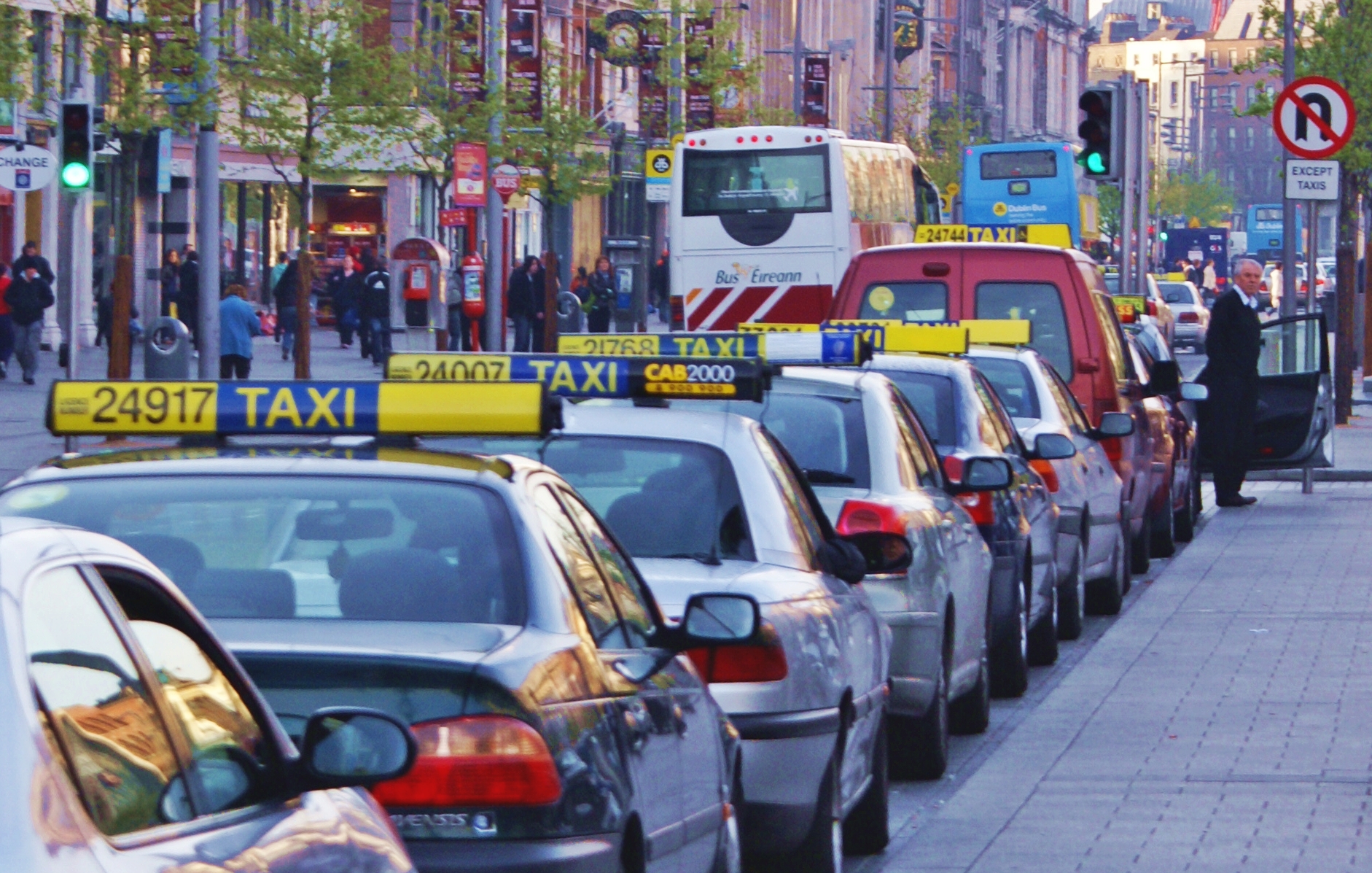
    The number of valid taxi driver and vehicle licences have been steadily declining in Ireland, but are now starting to increase, according to the latest information from the National Transport Authority (NTA).

    Small Public Service Vehicle (SPSV) licences are up for the first time in ten years and SPSV driver licences are up for the first time since 2010, according to the latest statistics from the NTA.

    Since 2008, SPSV licences have been steadily declining each year, with 27,429 overall SPSV licences a decade ago. This figure had dropped to 20,581 by last year.  According to the statistics published by the NTA in September, the number has risen very slightly to 20,621.

    Since 2010, SPSV driver licences have decreased every year up until this year.  In 2010, there were 42,605 active SPSV driver licences and this number had dropped to 26,012 by last year.  As of September this year, active driver licences have increased to 26,255.

    Dublin Taxi Drivers, a Facebook page for taxi news, lost property and traffic reports, said: “Insurance is too expensive. To make a good wage drivers have to work unsociable hours and the job itself is dangerous.”

    At the start of the year, the NTA launched a campaign to recruit an additional 1,600 taxi drivers. The Authority wish to attract drivers into the industry and provide positive taxi experiences to the travelling public.  

    The NTA CEO Anne Graham said: “There are about 26,000 drivers licenced to drive a Small Public Service Vehicle in Ireland.

    “That might sound like a lot, but they are not all available all of the time, which means there can be shortages at certain periods particularly at peak hours and weekend nights.”

    Mytaxi Ireland now has over 11,000 drivers in its fleet, which is more than every other taxi company in the country combined.  

    Aidan O’Connor from mytaxi Ireland said: “1,744 new drivers have joined the mytaxi taxi fleet so far this year in response to the various incentives and bonuses we have been offering.  We are also offering €1 million in incentives to the first 500 drivers who pass the National Transport Authority’s (NTA) SPSV (small public service vehicle) test using mytaxi’s manual training platform, with 320 already passing in this way.  The platform is a free online learning tool that helps potential drivers pass the NTA’s challenging SPSV entry test and enter the taxi industry.”

    Aidan said that mytaxi has more drivers than ever before and that they are always looking to recruit. While the NTA has found that between 2008 and 2017 the total number of SPSVs, in particular taxis, declined by 24%, mytaxi has been expanding its fleet and trying to incentivise new entrants into the industry. Aidan said: “We are making progress in this respect with the 1,744 new drivers that have joined our fleet so far this year. The NTA has also recognised that the SPSV test was excessively complex and last year reduced the required passing grade from 80% to 75%. This was a welcome change and we’re now starting to see an improvement in the number of drivers entering the industry.”

    Aidan said driver recruitment will remain a top priority for mytaxi going forward as part of the drive to meet surging customer demand.

  • The price of peace: statistics from An Garda Síochána reveal the risks members of the force must deal with daily.

    The price of peace: statistics from An Garda Síochána reveal the risks members of the force must deal with daily.

    It is common knowledge that occupational hazards are very much part and parcel of choosing an occupation with An Garda Síochána. The first half of the 2010s it seems however, were particularly dangerous years for members of the force.

    Figures released from An Garda Síochána’s Freedom of Information office have revealed the number of injuries sustained by members of the force since 2008. Most notable of these statistics are the number of assaults on gardaí and the number of road accidents, which have taken place.

    2008 as shown below reveals that the number of recorded assaults on members of the force had begun to see a decrease from 2009 onwards, only to skyrocket in 2013. The figures continue to elevate to just under 300 attacks on gardaí in 2015. Interestingly however, the number eases in 2016 and has reached 153 so far this year.

    image3.png

    On duty members of the gardaí throughout 2010 to 2016 have been involved in a large number of road traffic related accidents, with figures of injuries sustained by gardaí reaching almost 100 per year. 2009 saw a drop by about 22%, only to increase again by another 30% the year after. The trend eases in 2011 to 84, but rises until 2013 to 128 accidents, a spike of 35% in the space of two years.

    This current year, however, the figures for recorded road accidents stand at 61.

    image1.png

    Figures from the garda appropriation accounts of 2016 have shown that the number of garda vehicles damaged over the past eight years have risen substantially. While 2008 saw 482 recorded vehicles damaged in the year, both attributable and not attributable to gardaí, that figure has not once decreased since then.

    The number of damaged vehicles peaks in 2015 at 682, the closest figures to that being 667 damaged vehicles in 2011 and 639 2012. There has however been a somewhat significant decrease in these numbers last year with the number of damaged vehicles totalling 602, an easing of 11.8%.

    image2

    By Henry Phipps

  • Unemployment rate falls to post-recession low

    Unemployment rate falls to post-recession low

    Unemployment in Ireland is at its lowest since before the economic crash of 2008, according to new data from the Central Statistics Office (CSO).

    The latest figures from the CSO show that the seasonally adjusted unemployment rate for October fell to 6 percent, down from 6.1 percent in September.

    The unemployment rate has continuously decreased in the last year, with a 1.2 percent decrease between October 2016 and October 2017.

    The figures released show that 131,300 people in Ireland were unemployed in October 2017, compared to the 158,100 people who were unemployed in Ireland during the same month last year.

    Although the unemployment rate is higher in males than females, both rates decreased in the last year. In October 2017, the seasonally adjusted unemployment rate was 6.7 percent for males, down from 6.8 percent in September 2017 and down from 8.1 percent in October 2016.

    The seasonally adjusted unemployment rate for females in October 2017 was 5.1 percent, which remained unchanged from September 2017 and was down from 6.1 percent in October 2016.

    The unemployment rate for young people aged 15 to 24 years is still higher than the unemployment rate for people aged 25-74 at 14 percent in October 2017 down from 14.7 percent in September 2017. However, unemployment in young people decreased by 2.7 percent between October 2016 and October 2017.  The unemployment rate in people aged from 25 to 74 has remained unchanged since June 2017 at 5.2 percent.

    The Department of Finance has predicted that the unemployment rate in Ireland will fall below 6 percent by the end of the year.

    chart.png
    Unemployment expected to dip below 6% before the year’s end.

    Fiona McCudden from the Department of Business, Enterprise and Innovation directed thecity.ie to the government’s ‘Action Plan for Jobs’ initiative as one explanation for the encouraging employment figures.

    The most recent plan released by the government in February of this year details 164 actions and 430 measures to be implemented throughout the year 2017 by 16 Government departments and 43 agencies under the department’s remit.

    The plans aim to support job-creating businesses and remove barriers to employment. It also attempts to prepare businesses for unexpected disruption to the employment sector, such as Brexit, by providing advice on minimising risk regarding exports, investment and expansion etc.

    Since the first ‘Action Plan for Jobs’ was released in 2012, the unemployment rate has fallen by nine percent, but positive economic growth across all sectors of the economy is undoubtedly a contributing factor to these promising figures.

    By Cara Croke and Chris Kelly

  • More public transport journeys despite 2016 strikes

    More public transport journeys despite 2016 strikes

    Most Dubliners chose to travel on Dublin Bus in 2016 according to new figures released by the Central Statistics Office (CSO).

    Over 125 million bus journeys were taken over the course of the twelve months. The number of bus journeys taken in 2016 jumped 2.7 percent from 2015.

    DB
    Source: CSO

    November was the most popular month for Dublin Bus, with 11,318,902 journeys taken. A sharp decrease in Dublin Bus journeys was seen in September 2016. That coincided with the bus strikes which plagued the capital across five days in September.

    DB monthly
    Source: CSO

    Rail journeys in 2016 increased to just shy of 43 million, up from just over 39.5 million the previous year. This gave a total increase of 7.96 percent.

    RAIL
    Source: CSO

    While the total number of journeys taken across all Irish Rail services (including DART and commuter services) took a hit in 2013, the total number of journeys have increased by an average of 5.2 percent per year since.

    DART
    Source: CSO

    Overall, 44.3 percent of all rail journeys taken in 2016 were on the DART. DART journeys increased to nearly 19 million in 2016, an increase of 10.7 percent from 2015. DART journeys also increased dramatically in 2015, up 7.5 percent from the previous year.

    The only form of public transport in Dublin that did not see an increase in 2016 was the Luas. There was a decrease of over 500,000 journeys.

    LUAS
    Source: CSO

    This decrease of 1.65 percent was uncharacteristic for the Luas as journeys had increased year on year from 2012 to 2015.

    The Red Line proved to be more popular with commuters, with 22.4 percent more journeys taken on the Red Line than the Green Line in 2016.

    Luas lines
    Source: CSO

    Like Dublin Bus, the Luas was also hit by twelve days of industrial action in 2016. This can be seen in the sharp decrease in the amount of journeys taken on the Red Line between April and June. The strike did not, however, seem to have as dramatic an effect on the Green Line, with journeys increasing between May and June despite several strike days.

    These figures, announced last week as part of the CSO’s annual travel omnibus, are released as further transport strikes threaten to leave commuters stranded. Iarnród Éireann strikes are set to affect more than 150,000 daily commuters amid rows over pay. Rail workers are looking for 11 percent pay increases over the next three years.

    The first strike took place on Wednesday 1st November, with further strikes planned for the 7th, 14th and 23rd of November, as well as the 8th of December.

    Reports in Irish newspapers recently suggested that workers may also strike on Christmas Eve.

    By Louise Burne