Tag: depression

  • How Communities are Tackling Loneliness in the Elderly

    How Communities are Tackling Loneliness in the Elderly

    By Paul Lee

    A recent study from The Irish Longitudinal Study on Ageing (TILDA) in Ireland shows that about one-third of adults over 50 in the Republic of Ireland have experienced emotional loneliness at some point, with 7% feeling lonely often.  

    The research found that loneliness tends to decrease between the ages of 50 and 67 but rises again after that. 

    People over 75 are more likely to report feeling moderately lonely compared to younger groups. Factors like lower education, living alone, poor self-rated health, physical limitations, and chronic health conditions were linked to higher levels of loneliness. 

    Ireland is currently ranked number one in Europe for people suffering grom loneliness as of last year, with the coronavirus pandemic forcing generations to feel isolated.   

    Source: Institute of Public Health 

    Men above 65 years old saw a 25.1% increase in living alone, while women over 65 saw an 18.4% increase in the last six years. “The numbers are only going to continue rising,” said psychotherapist Maggie Molloy. 

    “I often deal with young people suffering from loneliness, so I know how bad it must be for the elderly who have far more reasons, most of which are out of their hands for feeling lonely.” 

    Last year The World Health Organization (WHO) declared loneliness to be a pressing global health threat, with the US surgeon general saying that its mortality effects are equivalent to smoking 15 cigarettes a day. 

    Anne Butler is a woman who knows the effects of loneliness all too well, inspiring her to commit her life to helping the most vulnerable in her community. 

    “Loneliness is a big issue for older people, and I don’t think the general public realises this enough,” said Mrs. Butler, who is the manager of Walkinstown Social Service Centre. 

    “It is dangerous to the elderly, we are social creatures that need to interact and get out of the house, but for some people that’s just impossible. It is heartbreaking because some of the faces around here were stuck in nightmare cycles of being upset, refusing to eat, or turning to drinking alcohol at home. It’s stories like these that make me so happy that we’re making an impact in the community and the bigger problem,” she says.  

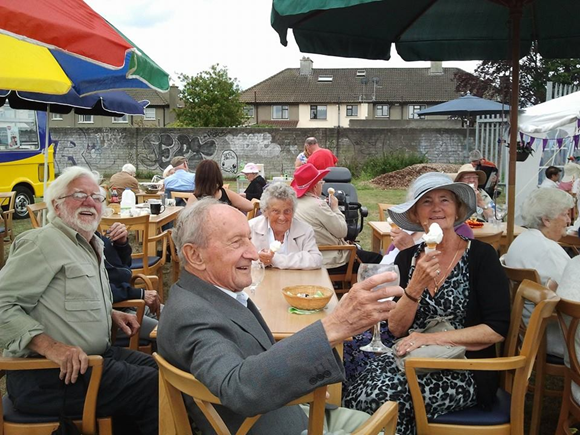
    The centre takes in 60 people daily between lunch and dinner with some walking and others taking the centre’s bus that collects them from their houses. The centre charges €10 for transport, a meal, and bonus activities, whether that is a game of bingo, or a fitness instructor to get them exercising. 

    Members of the centre enjoying the warm summer 
    Source: Facebook – Walkinstown Social Service Centre 

    Group day trips around the country are organised and voted on. Special events happen year-round with ‘Strictly Come Dancing’ watch parties and even live shows with staff members performing dances. 

    “I’ve been coming for the last few years now and it’s just brilliant,” said Monica Walsh, age 72. 

    “I’m not great on my feet any more so going out wasn’t really possible unless I waited for my kids to come and bring me out somewhere. The centre is great because I get a sense of independence back, able to go out on my own. 

    “I feel like a kid again, going out with friends, singing songs. This place has given me some of the best moments I’ve had in years. All the staff are true heroes.” 

    The centre’s staff is made up of half full-time workers and half part-time voluntary workers from the local area such as Amanda Nic Fhannchaidh.  

    “I don’t work on Thursdays or Fridays, and I’d just be watching the Telly all day, so it’s really a no-brainer for me to come here, have a laugh, and feel good about myself for helping out where I can,” said Amanda.   

    Both local schools, the Assumption Secondary School Walkinstown and Drimnagh Castle Secondary School, have included helping out at the centre as a part of the transition year experience. 

    “It’s the right thing to do, so it’s what the lads will do. It gives the school a good name in the community and a chance for the boys to see how far a little help can go,” said Drimnagh Castle Secondary School principal John Haze. 

  • Student anxiety levels at all-time high

    Student anxiety levels at all-time high

    By Andrea Byrne and Paula Bowden

    The number of students suffering from anxiety has doubled since 2012, according to a National Study of Youth Mental Health in Ireland. The findings show that in comparison to the previous study conducted in 2012, the amount of teenagers aged 12 to 19 suffering from severe anxiety has doubled from 11% to 22%. Levels of severe anxiety in young adults aged 18 to 25 have also seen an increase from 15% in 2012, to 26% in this year’s survey.

    The report also showed that females in particular have declining levels of self-esteem compared to males of the same age. There is also an increased level of depression among young people.

    The Union of Students in Ireland (USI) launched their national report on student mental health at the beginning of this academic year. Taking into account the experiences of over 3,300 students in Ireland, the report shined a light on the varying mental health attitudes of students and their experiences in accessing help and treatment. 

    “32% of students have been formally diagnosed as having a mental health difficulty”

    Among the findings in the report were that 38% of students said they experienced “extremely severe” levels of anxiety; 30% of students said they experienced severe levels of depression, and 17% felt severe levels of stress at some point.

    32% of students have been formally diagnosed as having a mental health difficulty, while one fifth of students said they did not have someone to talk to about their personal and emotional difficulties.

    “Third Level education is a key life transition and can be an extremely stressful time for students. We already know that levels of mental illness, mental distress and low wellbeing among students in higher education is increasing” according to a statement from the USI.

    Commenting on the results of the report, the USI said: “Students in third level education are exposed to many stresses, which trigger or exacerbate mental health difficulties.

    “These include living away from family and friends for the first time, coming directly from a structures learning setting, as well as many students taking on additional work commitments to support themselves financially.”

    “In terms of of waiting periods, many students agreed that waiting periods were too long”

    “Over half of respondents strongly agreed that a free face-to-face service is important on campus. Students were least likely to attend group therapy if offered by the outselling services.

    “Many students said they would attend counselling, but students also said that they did not think their problems were enough to warrant counselling. In terms of of waiting periods, many students agreed that waiting periods were too long.”

    Under the Freedom of Information Act (FOI), TheCity.ie has obtained figures relating to the number of counsellors employed, and the finances allocated to counselling services in the following Irish universities: Trinity College Dublin, Technological University of Dublin, Maynooth University, University College Dublin and Dublin City University.

    According to www.tcd.ie, there are 17,000 students currently studying in Trinity College Dublin (TCD).

    Academic Year Expenditure on Trinity College Dublin counselling services Number of counsellors allocated to the counselling services
    2017/2018 €1,517,050 10 (Full Time Employee 6.59)
    2018/2019 €1,674,858 10 (Full Time Employee 9.20)
    2019/2020 (to date) n/a n/a

    According to www.dit.ie, there are 20,000 students currently studying in TU Dublin (TUD). 

    Academic Year Expenditure on Technological University Dublin counselling services Number of counsellors allocated to the counselling services
    2017/2018 €466, 676 (2017) 5
    2018/2019 €480, 475 (2018) 7
    2019/2020 €389, 673 (2019 to date) 7

    According to www.maynoothuniversity.ie, there are 14,000 students currently studying at Maynooth University (MU).

    Academic Year  Expenditure on Maynooth University counselling services  Number of counsellors allocated to the counselling services 
    2017/2018 €300,000 (Full Time Employee 2.6)
    2018/2019 n/a n/a
    2019/2020 n/a n/a

    An FOI request was submitted to University College Dublin and Dublin City University in relation to expenditure on their counselling services, and the number of counsellors allocated, but have not responded for time of publication.

    TheCity.ie spoke to Patricia Murphy, a counsellor at Trinity College Dublin, who said: “I think that universities and third level colleges are all really trying to meet the needs of a specific age group in the population of 18-24. All of them are trying to provide the services of the mental health banner to students.

    “They’re providing one-to-one student counselling, groups and workshops on psycho-education which deal with issues such as anxiety and depression. They’re trying to do lots of outreach through various social media groups, they do a lot at orientation to really try and get people in earlier so that they do not crash and burn.”

    She said that TCD uses a ‘student-to-student service’ where student volunteers, who are well trained, can support other students in the university.

    Credit: pxphere.com

     “All universities and third level colleges around the world are experiencing huge rise in demand for services. It seems to me that the mental health of that age group, well maybe all age groups are needing more services,” she continued.

    The current Minister for Education has seen that two million euro is being given to counselling services, so there is acknowledgement that there needs to be more, which is great, but of course we need more resources in order to meet the growing demand. It’s very difficult, because colleges are hard pressed for money to devote more to this.”

    Patricia said that often people assume that students use counselling services to deal with stress, but that isn’t true: “People come with a variety of issues and some tend to be quite serious in nature. Depression and anxiety are the highest issues in the population anyways, there is a rising level of anxiety in our society that’s being mirrored. Other issues are to do with relationships, bereavement, or loss.”

  • Seasonal Affective Disorder – What is it?

    Seasonal Affective Disorder – What is it?

    Seasonal Affective Disorder (SAD) is a form of depression closely related with the darker months of the year. Sometimes referred to as the winter blues, SAD is a condition that affects up to one in 15 people in Ireland every year. 

    According to the HSE, the symptoms of seasonal affective disorder (SAD) are similar to those of normal depression but become particularly heightened during the Autumn and Winter months, sometimes lasting until Spring. The nature and severity of SAD varies greatly among sufferers with some finding the condition a bit irritating while others experience a severe and significant impact on their daily life.

    The symptoms of SAD can include but are not limited to:

    • a persistent low mood
    • a loss of pleasure or interest in normal everyday activities
    • feeling irritable
    • feelings of despair, guilt and worthlessness
    • low self-esteem
    • tearfulness
    • feeling stressed or anxious
    • a reduced sex drive
    • becoming less sociable

    Sandra O’Loughlin is a nurse from county Kildare. For Sandra, her SAD was further aggravated by her shift work.

    Sandra said: “I think everybody feels a bit crap when the long nights draw in and you get to the stage where you’re getting up and going to bed in the dark, but for me I think it’s another level. I genuinely used to experience really high levels of depression and anxiety that I wouldn’t otherwise feel during the brighter months.

    “If I could have worked a regular 9-5 I think I wouldn’t notice it as much, but I was starting work at half 7 in the morning and finishing at half 8 at night so on days where I was working I literally wouldn’t see the sun for pretty much four months of the year,” she continued. “Even in the hospital there are very few windows as it is.

    “At my lowest, I was ignoring my family and friends and calling in sick to work. No one knew what was going on with me, I didn’t even know what was going on with me, I just thought I was going mad,” said Sandra. “When I finally went to my GP, she suggested pretty quickly that it was SAD. I actually had chronically low levels of vitamin D as well so she prescribed me a supplement amongst other treatments.”

    Two years ago Sandra made a career change, and left the hospital wards to become a public health nurse. Her new job means she can spend a lot more time outdoors and has a constant change of scenery.

    “The job change has made all the difference for me,” said Sandra. “I also do light therapy which I find really effective. I know not everyone does, maybe it’s a placebo thing for me but the light therapy definitely makes me feel good.”

    According to Mental Health Ireland: “SAD may begin at any age, but it most commonly starts between 18 and 30. It occurs throughout the northern and southern hemispheres but is extremely rare in people living within 30 degrees of the Equator, where daylight hours are long, constant and extremely bright.

    “Symptoms generally appear between September and November and continue until March or April, when there may be a sudden burst of energy and activity accompanying the longer, brighter spring and summer days. A diagnosis is usually made after you’ve experienced two or more consecutive winters of symptoms.”

    Mental Health Ireland list these six treatments for seasonal affective disorder:

    If you’re experiencing symptoms of seasonal affective disorder contact your GP or go to Mental Health Ireland for further information and options.

  • The Little Things

    The Little Things

    What are the little things you do when you’re down? For some people it may be going for a walk, or chatting to a friend. 

    The Little Things campaign was set up by the HSE’s National Office for Suicide Prevention to get people talking about the little things they do to feel well again. The City’s Áine Hennessy and Alison O’ Hanlon spoke to young Cavan goalkeeper Alan O’ Mara, who is an advocate for positive mental health, about his involvement in the campaign. They also went out onto the streets of Dublin to ask people what little things they do to pick themselves up when they are feeling down. Check out the video here…

  • Emigrated? How’s yer mammy?

    Emigrated? How’s yer mammy?

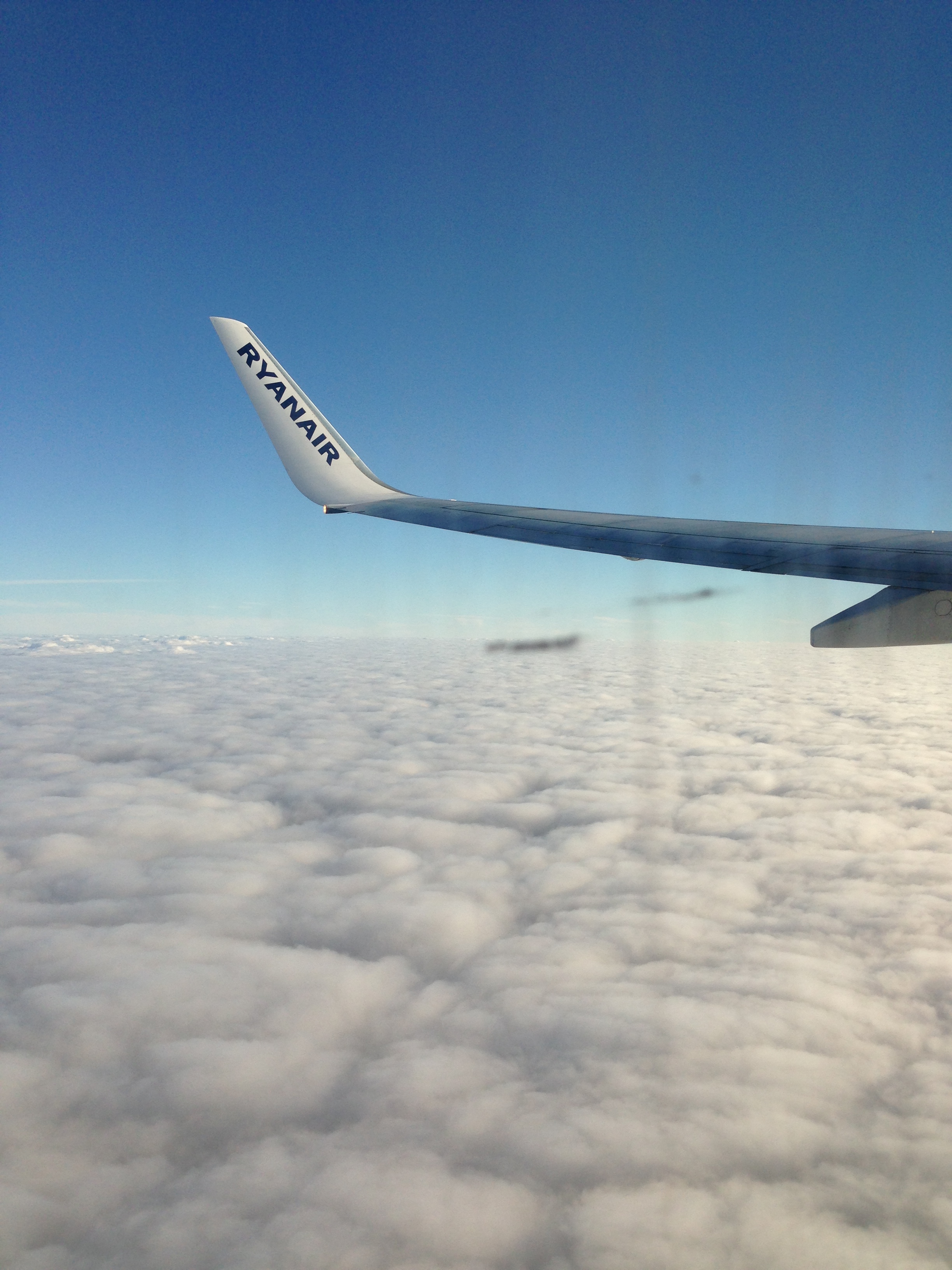
    Because I'm leaving on a jet plane, don't know when I'll be back again..
    Because I’m leaving on a jet plane, don’t know when I’ll be back again..

    Irish mothers are more likely to be depressed if their children have emigrated according to a new report by Trinity College’s Irish Longitudinal Study on Ageing (TILDA).

    The new report shows that the mental health of Irish mothers is suffering as a consequence of their children emigrating during the recession.

    It also shows that these mothers experience increased symptoms of depression and greater loneliness than mothers whose children did not emigrate.

    The researchers found, however, that with the exception of fathers aged over 65, fathers did not suffer an equivalent decline in mental health following the emigration of one or more of their children.

    In the year ending April 2006, 36,000 people had emigrated from Ireland, emigration numbers hit 89,000 in 2013 and are still rising.

    These high rates of outflow meant that a large number of TILDA participants saw their children emigrate.

    Dr Irene Mosca of TILDA says that the report shows the effect on those left behind:

    “Emigration is often discussed in terms of the people who leave, but our study shows that there are also real impacts on the people left behind.”

    “There is a narrative out there that this was a recession that impacted on young people, as negative equity and debt primarily affects young people,” said Alan Barrett of the Economic and Social Research Institute, who co-authored the study with Dr Irene Mosca.

    “But we have now identified a group of older people who have suffered a mental health difficulty as a result of the recession, because of the emigration of their kids… Mental health difficulties often develop into physical health difficulties, so the massive increase in emigration in recent years has public health implications.”

    Some Irish mammies who were left behind when their children emigrated spoke to The City about how they are coping.

    Margaret Hennessy saw her son hop the water to London in search of work as did Elaine Keoghan’s daughter, while Kathleen McCormack’s son James went further afield to Brisbane to work on the pipe lines.

    When Kathleen found out her son was moving to the other side of the world in search of work she said she felt “sad and broken-hearted. I knew I was going to be lonely. James and his wife, Ursula, were only supposed to be going to Australia for two years but that soon changed as they found good, well paid jobs and started a new life together over there. They are there almost four years now.”

    “I still miss them so much, especially now that they have just started their family over there. It was heart-breaking not being part of that. As any mother would I wanted to be there for my son on the birth of his first child, but physically I just couldn’t. I Skype them all the time but it’s just not the same as having them home”

    “Whenever I think about the huge distance that’s between us and all that he is missing out on, I just start to cry. I think it’s a maternal thing. Luckily, I have three other children at home, and grandkids too, so I am kept busy. I can only imagine what it would be like for a mother with only one child having emigrated, their whole life torn away.”

    Una Nannery, 53, took a different approach. With two of her sons gone to Australia she was fed up of being lonely and depressed so three years ago Una, her husband Eugene and their youngest son Ciaran packed up their bags and followed their two older sons, Brendan and Declan, to Melbourne.

    “‘The main influencing factor for our move was unemployment, as Eugene had no work for two years previous to our move and had no prospects of getting anything.  Also, the fact that both our eldest sons had already emigrated and were starting families here influenced our decision in a big way, we were stuck at home missing out on the most important time of our son’s lives and we missed them terribly.” So Una upped and left Ireland and hasn’t looked back since.

    “We are living in Melbourne now, in a lovely suburb called Ivanhoe.  There are many Irish over here for the same reasons as us.”

    So how does life on the other side of the world compare to home? “There’s a much better standard of living here in Australia. Eugene is working full time and on a good wage, I’m not working and we still are way better off. The weather is a huge plus also. Life here compared to life in Ireland is similar, in that during the week it’s the usual routine of work, school etc.  The main differences are work and the weather.” Una continues “Living day to day is similar here to Ireland.  Depending on the supermarket you go to and the brands. Meat is dearer here; chicken and lamb are a lot more expensive. However petrol is cheaper. Clothes and footwear are expensive.  Both eating out and alcohol, like home, can range from expensive to fairly reasonable depending on the areas you are in.  A pint of lager is $7.00 that would work out pretty similar to Dublin pub prices.”

    Speaking about the work situation Una says “There is plenty of work in the building, mining, and general outdoor work. Men seem to get work easy enough. It seems harder for women, but yet not as hard as at home. There are good agencies here, so the ladies get sorted after plenty of interviews and that, but can take 3 to 4 weeks.”

    Emigrating is a tough decision to make, no matter what age, says Una “Emigrating is ok if it is for the right reason, but right now it is the only option for many.  But yes, I would tell all young people to travel, as it really is the best experience and learning curve in any person’s life.  Ciaran is living proof, also the older boys. They love it here and have adapted so well. For me, well I’m just happy to have all my family together again.”


  • Young People in Crisis?

    Young People in Crisis?

    A report published by the Royal College of Surgeons in Ireland last month pointed towards a crisis in the emotional well-being of young people in Ireland. The studies showed that one in two are likely to experience a significant problem by the age of 24 – worse rates than those in similar European societies.

    From The Catcher in the Rye, back through The Sorrows of Young Werther and Hamlet, literature is full of evidence that the passage through late adolescence and young adulthood is one fraught with difficulties. But modern society has introduced a new set of pressures and expectations that serve to make the transition into adulthood even harder. It is at this age that young people are struggling to find their place in the world. They might be entering the world of work or living away from home for the first time and sometimes it is also a time of experimentation with drink and drugs.

    But why do young people in Ireland seem to be faring worse than their peers in Europe? An economic recession, binge drinking culture and a traditionally taciturn approach to issues of mental health are all aggravating factors. Economic recession has put a strain on family life and sometimes left young people depressed or anxious about their future.

    “Life in Ireland has changed in the past few years with the downturn of the economy. Family life has become pressurized and young people often find home life stressful,” said Marguerite Kiely, who is clinical manager at Pieta House. “Parents are struggling financially which puts pressure on relationships. Very often parents cannot afford to separate and the atmosphere at home becomes strained.”

    Young people are still learning the life skills which allow them to adapt to difficult or new situations. And in a society where young people’s sense of self-worth and status among their peers is often wrapped up in their material possessions, financial pressure cannot often hit harder than we think.

    There is still a negative social stigma attached to those suffering emotionally, an attitude which is especially prevalent amongst young people for whom image is all important. It is a pressure which young men feel particularly. At Pieta House they advise using the words emotional well-being instead of mental health because of the negative connotations of the word mental, especially amongst younger people.

    The research was conducted by the RCSI Psychiatric Epidemiology Research across the Lifespan Group (PERL) and is the most comprehensive study on the subject ever conducted in Ireland, relying on over 400 first hand interviews conducted with young people aged between 16 and 24.

    PERL found that high numbers of young Irish people are experiencing mental health problems at any given time. By the age of 13, one in three will have experienced some kind of mental disorder, a number which increases to one in two by the age of 24. The report revealed that high numbers of adolescents abused alcohol and other substances and engaged in self harm.

    “There has being an increase in addictions because of an increase in alcohol consumption and drugs where young people can develop psychosis and become impulsive in their behaviour,” commented Marguerite Kiely.

    Learning to spot the warning signs is an essential element in protecting young people who are experiencing difficulties. These might include changes of moods or angry outbursts, isolating themselves from family and friends and social media, giving away processions or a loss of interest in the future. Significant life events like bereavement or parental divorce can also be triggers.

    At Pieta House they emphasise the need for young people to look out for each other. The organisation recently launched the ‘Mind Your Buddy’ campaign so that teens worried about their friends can approach a nominated teacher in confidence.

    “If a young person is worried about a friend it is a big responsibility so they can really look after their friend by talking with an adult they trust,” said Marguerite Kelly.

    Pieta House provide crisis intervention for those who have suicide ideation and engage in self harm. The service is free of charge and they also provide one to one therapy. Pieta provide a weekend service and anyone can make contact to arrange an appointment on 01 6010000.