Tag: DIT

  • The dawn of a new era: TU Dublin Aungier Street campus enters the market for €110m

    The dawn of a new era: TU Dublin Aungier Street campus enters the market for €110m

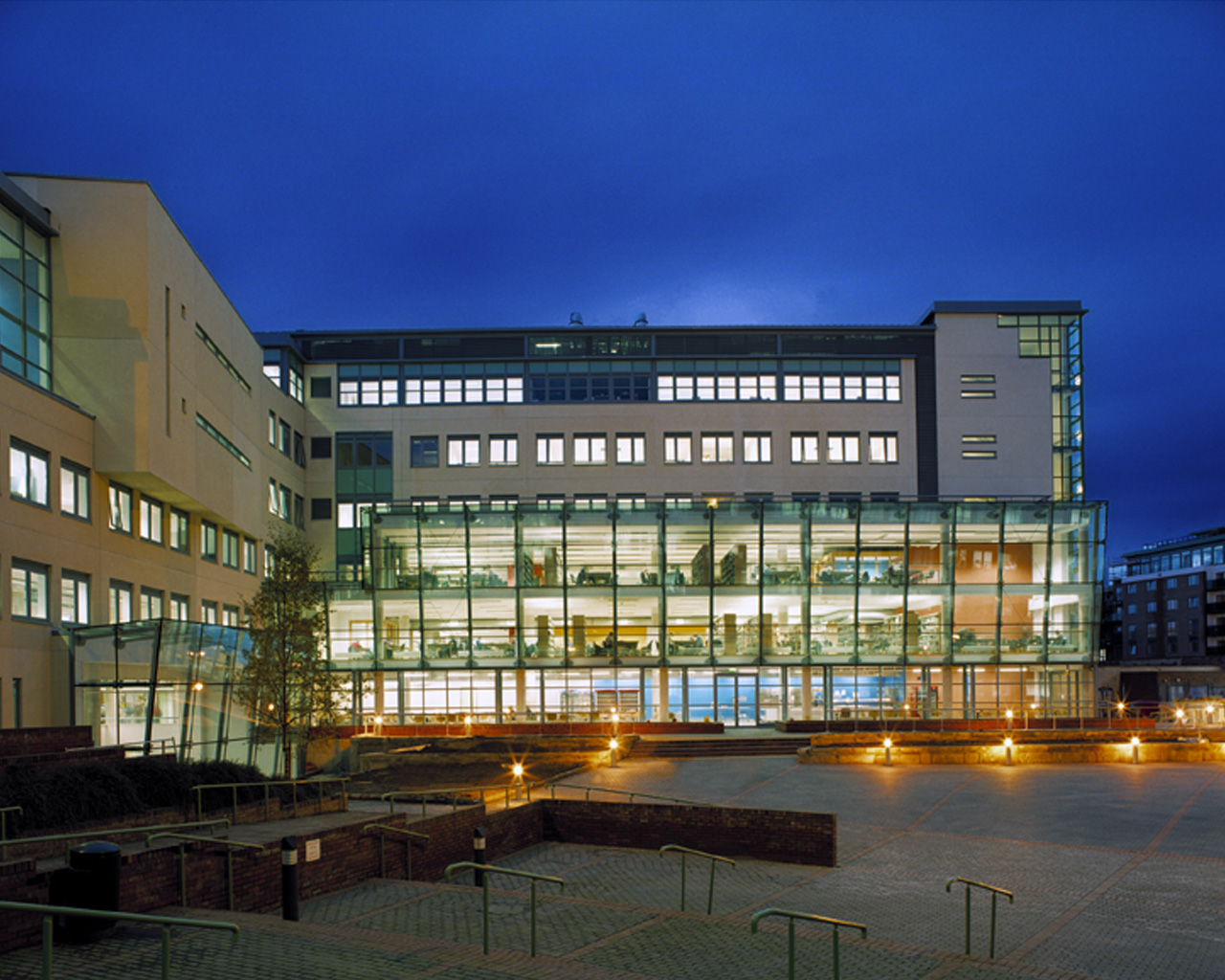
    DIT Aungier Street campus
    Photo: Kim O’Leary

    The next academic year will see many changes on the way for staff and students at TU Dublin, reports Kim O’Leary. With the move to Grangegorman slated for September 2020 and the last of the old buildings hitting the market; a brand new chapter for the university has officially begun.

    TU Dublin’s Aungier Street building has entered the property market with a guide price of €110 million – and its sale will signal a new era for TU Dublin, according to the university’s president.

    The property has been brought to the market by selling agent CBRE on behalf of TU Dublin — the successor of DIT — and while the worldwide markets have taken a nose dive recently due to the outbreak of Covid-19, the sellers are confident that now is a good time to invest.

    “We expect to see considerable interest from a range of interested parties for D2HQ given the scale and development potential to provide for a brand-new urban quarter in Dublin 2,” Peter Garrigan, head of CBRE’s development land division, told TheCity.ie.

    “There is huge potential from anything from offices to hotels and student accommodation, it’s in such a prime location right in the city centre and now is the time for ambitious developers to make a bid.”

    Indeed, the Aungier Street property is situated just 350m from St Stephen’s Green. The 1 hectare (2.5 acre) D2HQ site is zoned “Z5 City Centre” under the Dublin City Development Plan 2016-2022, offering the purchaser scope to provide for a broad mix of uses including offices, retail, residential, hotel and student accommodation.

    The existing Aungier Street buildings range in height from four to five storeys above basement, and extend to 25,833sq m (278,064sq ft) in total and were developed in phases between 1989 and 2004. The building accommodates 5,000 students at present.

    The 2.54 acre Aungier Street campus comes to the market just over one year after TU Dublin secured €140 million from the sale of its nearby Kevin Street campus to developer Shane Whelan’s Westridge Real Estate.

    In acquiring the Kevin Street portfolio, Westridge fended off bids from several of the country’s top developers, including Johnny Ronan’s Ronan Group Real Estate (RGRE), Sean Mulryan’s Ballymore, Joe O’Reilly’s Chartered Land and Pat Crean’s Marlet Property Group.

    Potential buyers

    In recent weeks, speculation has been growing concerning who will eventually buy the Aunger Street campus, with rumours of interest from Dublin Business School. However, according to sellers CBRE, official offers have not been made as of yet.

    Meanwhile local businesses have cautiously welcomed the entry of the DIT Aungier Street property to the market.

    “It’s obviously a great location for either a hotel or a big office block, the college has plenty of history and someone will surely snatch it up very quickly,” said one local business owner.

    Meanwhile, another business owner said that local shops will miss the business brought to them by students making their way to the Aungier Street campus:

    “The students usually pop into my shop to pick up rolls and sandwiches on the way to their classes and during their lunch break, so I suppose I’ll miss the business they bring. It’ll be a big change for everyone, local businesses in the area, the staff, and the students themselves when the move to Grangegorman goes through.”

    The move by TU Dublin to sell both its Kevin Street and Aungier Street properties forms part of its master plan to relocate its entire student body and faculty to its new centralised campus at Grangegorman in Dublin 7.

    According to president of TU Dublin — Professor David FitzPatrick — the sale of both campuses and the move to Grangegorman will see the ‘beginning of a new era’ for TU Dublin:

    “Our College of Business in Aungier Street, with 5,000 students and staff, is the largest business school in Ireland. We are now preparing for them to join our students of many other disciplines and to enjoy the new facilities on our flagship campus at Grangegorman, just across the Liffey in September 2020,” he said.

    The university is set to welcome 10,000 students and staff to Grangegorman from this September. The 29.5 hectare (73 acre) site will ultimately come to accommodate more than 20,000 students and 2,500 staff.

    It’s certainly the beginning of a new era for TU Dublin.
  • Technological University Dublin: new learning opportunities in third level education

    Technological University Dublin: new learning opportunities in third level education

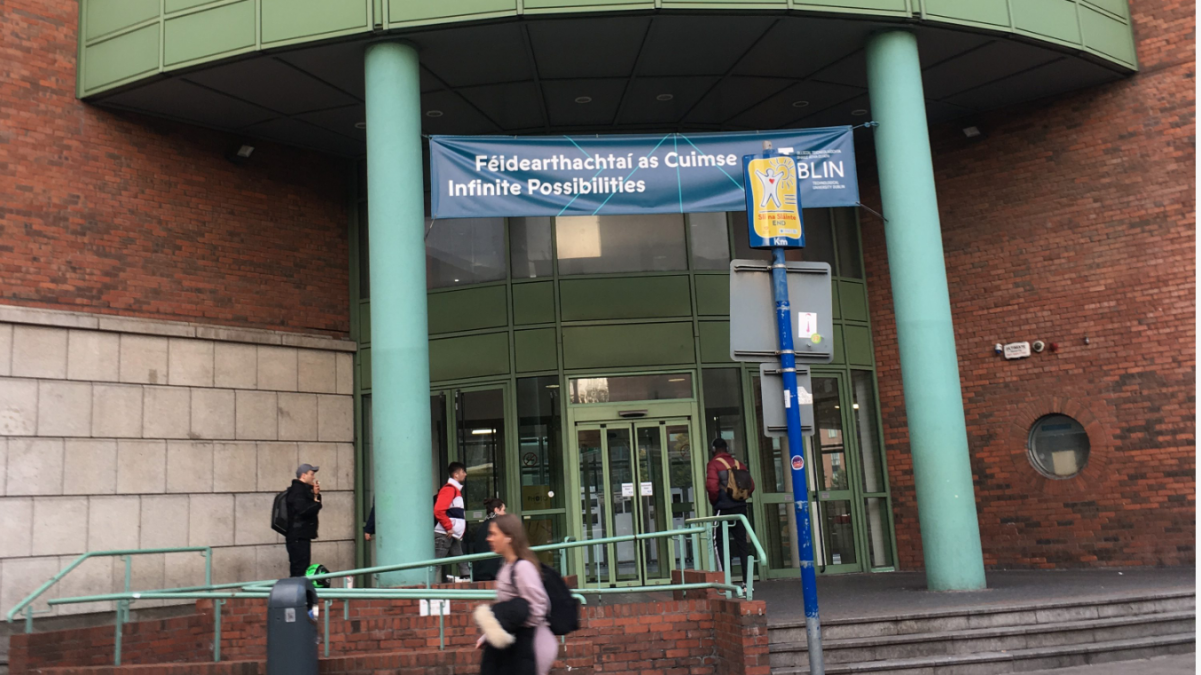
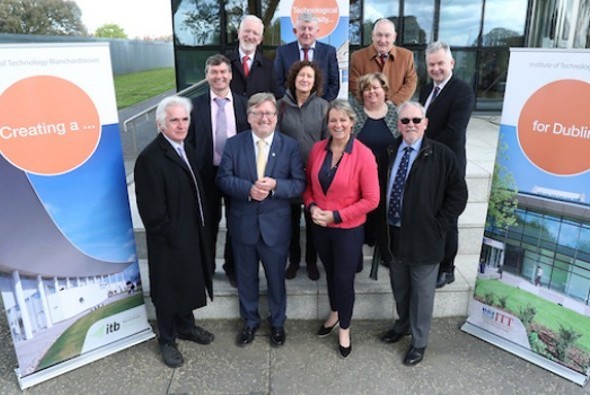
    This time next month, students from DIT, IT Blanchardstown and IT Tallaght will have to acclimatise themselves with telling their friends, relatives and future employers that they studied in the Technological University Dublin.

    TU Dublin will be the first university of its kind in Ireland.

    Professor Brian Norton, the current President of DIT, discussed what it meant to become Ireland’s first Technological University, “I think Technological University Dublin brings together the institutions with a common mission in Dublin. To provide clear, legible opportunities for a whole range of students in a larger institution.”

    The project to unite these three institutes began in 2011 when the Hunt Report suggested the introduction of a technical university to the Irish education ecosystem.

    In the last year, efforts to make TU Dublin a reality began to ramp-up. In March, Uachtarán na hÉireann Michael D Higgins signed into law the Technological Universities Act 2018 following its successful passing through the Oireachtas. In April, a formal application to the Minister for Education & Skills was submitted, to seek a designation as Ireland’s first technological university and in July An Taoiseach Leo Varadkar announced the decision to approve the establishment of TU Dublin.

    Some logistical questions still remain for prospective students, existing students and the Blanchardstown and Tallaght communities. Professor Brian Norton said, “Students won’t be moving under the one roof. The idea is, the institution will have three campuses and is online. I can see a situation, where there is a demand to offer the same course in two different locations; to meet different needs.”

    One example Mr Noton proposed where the same course is offered in two locations is culinary studies which is taught both in DIT Cathal Brugha St and IT Tallaght at present. Mr Norton said these courses could even become one course, under the right circumstances, but he was clear to point out that any change to a course would be subject to local and national needs. “What we don’t want to lose is certain campuses that are rooted in meeting local needs. We don’t want to lose that in exchange for getting a bigger institution.”

    The creation of TU Dublin will offer current DIT students more employment opportunities especially when applying for jobs abroad.

    “Internationally the ‘Institute of Technology,’ doesn’t travel very well, so certainly to the international standing of the institution, it will be very important. I know it’s important to our graduates, particularly internationally, because again on an application form when it says ‘which University did you study at?’ To have a university [degree] is important there.” said Professor Norton.

    From the first of January, 28,000 students will be enrolled in TU Dublin but the spirit and teaching style of three Institutes will not change. Professor Norton said, “In Ireland, the range of universities has been limited.

    “Internationally there are many different kinds of universities. This [TU Dublin] is really part of getting a range of institutions that meet different learner needs, different graduate requirements and different industry standards.

    “The difference I would say is retaining the types of things around small group work, practical work and that students are demonstrating their work by the application of knowledge and not just closed book exams. But it is a university – it’s just broadening the opportunities for university education,” he added.

  • DIT’s maintenance bill triples in last three years

    DIT’s maintenance bill triples in last three years

    Dublin Institute of Technology’s (DIT) maintenance bill has inflated to over three times that of what it was three years ago, The City has learned.

    DIT’s maintenance bill has been steadily rising year after year over the last ten years, for the most part. With the 2015 bill at €1 million, followed by €2 million in 2016, then up to €2.3 million in 2017, the maintenance bill finally reached upwards of €3.3 million in 2018.

    “The 2018 [maintenance] budget includes a provision for refurbishments relating to the relocation from Rathmines Road to the 5th Floor, Park House (circa €1,000,000)” said Lisa Saputo, a spokesperson for DIT.


    Screen Shot 2018-11-30 at 21.37.57.png
    DIT’s budget for cleaning and maintenance over the last ten years

    Despite the rising costs of upkeep in the college, the cleaning bill has been going down with €2.4 million spent in 2008 and €1.9 million in 2018. There have been fluctuations on the cleaning bill from year to year but overall it has been declining.

    DIT say the reduction of the cost of cleaning is down to the centralisation of their budget in 2010. DIT spokesperson Lisa Saputo said: “Centralisation, combined with an improved tendering process, reduced cleaning costs in DIT by 10% without a reduction of service levels in the ten-year period from 2008 to 2018. To facilitate the transition to the fully centralised model, a small specific budget allocation was provided to some campuses.”

    Bolton Street campus had a costly year in 2008, with €590,000 spent on cleaning and €389,000 spent on maintenance, amounting to a bill of €980,000.

    Grangegorman’s maintenance costs have gone up considerably in the last few years despite being a new campus. In 2015, DIT spent €24,000 on maintenance, in 2016 it was €57,000, in 2017 it was over €111,000 and then €168,000 in 2018.

    There was considerable fluctuation in the overall budget of maintenance in the years from 2013 to 2018. The 2013 bill was €1.1 million which went up to €2.3 million in 2014, then back down to €1 million in 2015 and up to €2 million in 2016. It subsequently rose again to €2.3 million in 2017, and finally up to a whopping €3.3 million in 2018.


  • Media and academic conference featuring Vincent Browne aimed at people of all abilities, a success!

    Media and academic conference featuring Vincent Browne aimed at people of all abilities, a success!

    Taking back the web, a media and academic conference aimed at tackling the lack of trust the public has for the media took place for the second time on the 19th and 20th of October in DIT’s Aungier Street campus.

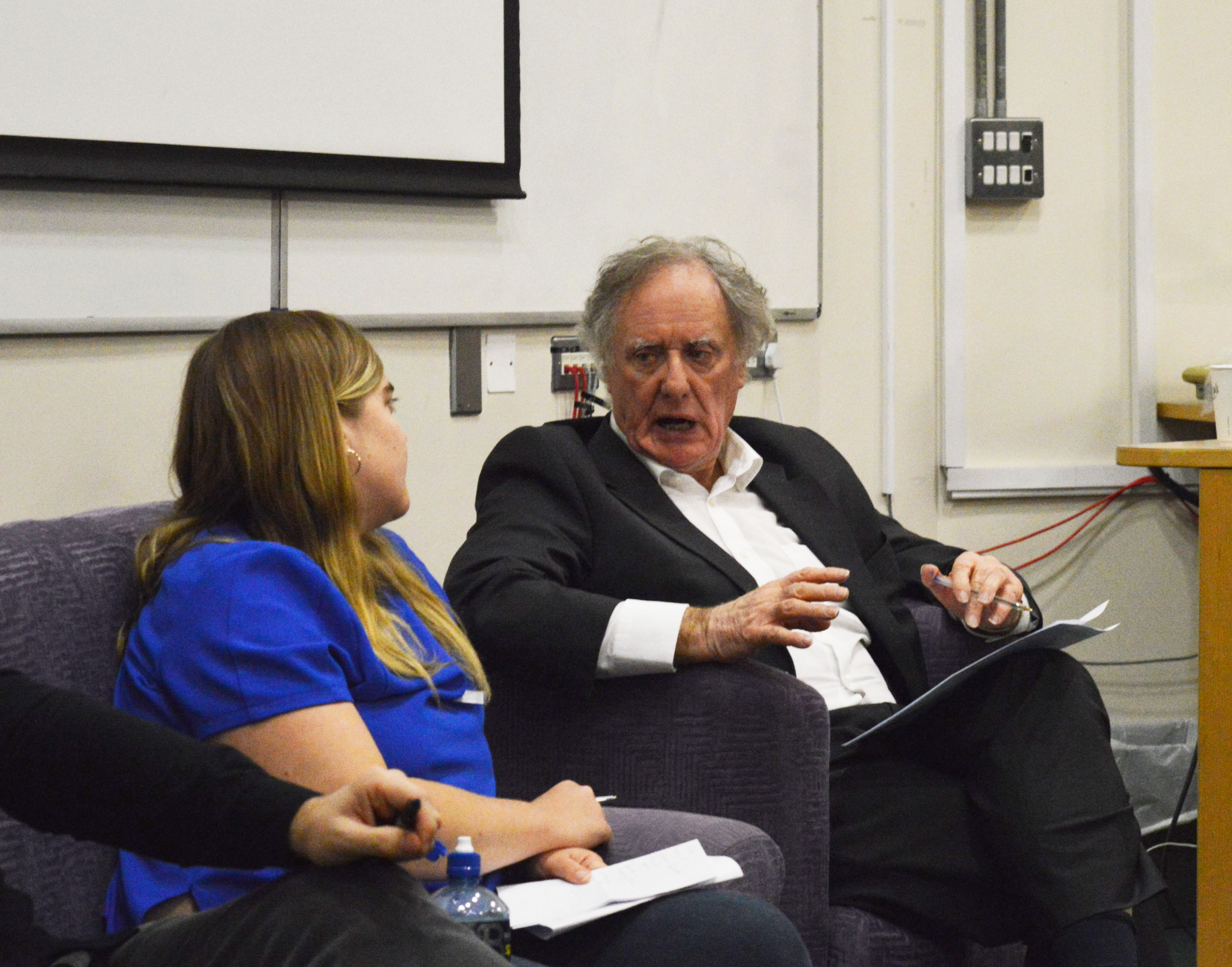
    The event was hosted by The Centre for Critical Media Literacy within DIT and kicked off with a keynote address by veteran journalist and broadcaster, Vincent Browne. He was part of a panel featuring artist and activist Grace Dyas, author Dr Gavan Titley of Maynooth University and Nikki Murphy, DIT journalism student and 2018 Press Council of Ireland Bursary Award winner.

    The organiser of the event and Senior lecturer of Journalism at DIT, Harry Browne said: “The Centre for Critical Media Literacy has run two big conferences now, and we’ll keep doing them, and other public activities too. Partly the idea is, like any academic conference, to get people doing research in media issues to come together from around Ireland and further afield and share ideas with each other and the public.”

    Harry Browne.jpg
    Harry Browne speaking at the conference

    The first night of discussion went off without a hitch with a few awkward ‘questions’ from the audience during the Q and A session.

    Speaker and journalism student, Nikki Murphy said: “It was nerve-racking speaking alongside ‘Vinny B’, there were times I felt physically ill I was that nervous, luckily I had done my research and stuck to the script.

    “While I agreed with a lot of Vincent’s arguments in relation to the media, I felt I needed to stand up for the run-of-the-mill journalists who often find themselves restricted in the way they’d like to approach certain stories, by ownership and editorial. I’m happy with the outcome though, even if Vincent avoided answering my question,” said Nikki.

    'Making the Web' participant Christopher Byrne meets baby Rónán Silke, son of 'Taking Back the Web' speakers Ciara Graham and Henry Silke.jpg
    ‘Making the Web’ participant Christopher Byrne meets baby Rónán Silke, son of ‘Taking Back the Web’ speakers Ciara Graham and Henry Silke.

    On Saturday there were nine hours of lectures and workshops covering a wide range of topics, from “The history of television as the history of the web we do not want” with DIT lecturer Eddie Brennan to “Media literacy and experiments in making journalism transparent” with DIT PHD student Stephanie Costello.

    The conference was unique in that it featured a series of parallel talks and workshops that were family-friendly and inclusive to people of all abilities .

    Masters student and speaker at the conference, Maryam Madani said: “I believe this has the power to really challenge the education system and traditional notions of who should be allowed to enter and flourish in that system. We saw the beginnings of it at the workshops on Saturday. I love [that] vision and strongly believe also that no one should be barred from higher level education.”

    Nikki Murphy enjoyed Saturday’s events as well. “Saturday’s workshops and lectures were amazing, it was great to see DIT classrooms full of children of all ages and abilities asking great questions. There was a buzz and excitement around the place. The lectures were great sources of information, giving me many ideas for ways to take media literacy. Even giving me ideas for future studies.”

    This year’s attendance was around 200 – which is 70 higher than last year’s, a good sign for the conference going forward.

    Organisers Harry Browne and Deborah Brennan have two other goals separate to the one mentioned above.

    The first is “to ensure that there was a really strong and serious computer-oriented research included in the conference and in the publication that resulted from it,” said Harry Browne.

    The publication is called “Critical Media Literacy – Who Needs It?”, which features in the Irish Communications Review journal.  

    Nikki Murphy Dr Gavan Titley Grace Dyas
    (L-R) Day one speakers, Nikki Murphy, Dr Gavan Titley and Grace Dyas

    “You can’t really talk about understanding how media are produced and consumed today without talking about technology and computation – and we think it should be talked about properly, with people who understand its characteristics, challenges and limitations,” Harry continues.

    “The second, which we accomplished this year by running our family-friendly ‘Making the Web’ talks and workshops alongside the conference, was to include people of all abilities, including children and people with intellectual disabilities, in a way that has never been done at a conference like this before. We had support in publicising ‘Making the Web’ from Down Syndrome Ireland, Enable Ireland and branches of Special Olympics,” Harry said of the second goal of the conference.

    Maryam Madani also said: “I’m a big fan of the media literacy conference in DIT. It’s always full of stimulating talks and brings together like-minded and passionate lefties and thinkers from all walks. Academia is usually known for being cut-throat and competitive, but here it is just the opposite. It’s a warm, welcoming, convivial environment where students are supported and encouraged to contribute, in an atmosphere which fosters genuine collaboration and connection.”

    Maryam has been inspired by the event to consider a PhD, saying: “Before coming to DIT, I was not considering academia but now as a direct result of this conference I am seriously considering continuing on as a PhD student because it seems more enjoyable than I ever imagined it would be.”

    Harry browne Lecture.jpg
    Harry Browne (Left) addressing the Media conference


  • DIT Aungier Street suffers the effects of Grangegorman’s development

    DIT Aungier Street suffers the effects of Grangegorman’s development

    The ‘Grangegorman Urban Quarter’ is a proposed education, health and community development by the Grangegorman Development Agency (GDA) for Dublin Institute of Technology and the Health Service Executive. The GDA was awarded funding to begin the construction of the new campus based off the back of the country’s €2.5 billion stimulus package.

    The construction of the new DIT campus began back in 2013, with several listed buildings in need of extensive refurbishment. The buildings listed include those that will now accommodate up to 1,400 staff and students that would have moved into the campus in 2014.

    Integrating over 20,000 staff and students and for the first time having all DIT activities which are currently spread over 39 different buildings into one campus is a long-awaited development. It will make for a much more appealing prospect for Leaving Cert students as they decide on where to undergo their third-level studies.

    However, for those like myself who became a student of DIT Aungier Street back in 2015, it’s fair to say it does leave you feeling a little ‘hard done-by’. My 4 years of studies in DIT will all take place inside the walls of DIT Aungier Street, meaning I will not have the privilege of availing of the modern Grangegorman campus.

    That said, I don’t feel this would be an issue if the facilities in the rest of the DIT locations remained to a certain standard. Especially when you’re forced to pay €3,000 to avail of them. Sadly however, this is not the case. Into my fourth year here in Aungier Street, and still the same problems occur now as they did on my first day attending the college.

    “I attended my first lecture with a great amount of excitement. Sitting in a large lecture hall for the induction day, I expected a similar environment would greet me for each of my classes. However, I didn’t arrive to anything like the induction day. Instead, I arrived at quite a small classroom with roughly 25-30 computers with a seat at each one.”

    Luckily, I was a couple of minutes early for this class because if you arrived on the hour or any time after that, you were left without a seat and had to sit on the ground or stand at the back. Whichever you preferred. Keeping in mind that a full attendance would have meant roughly 60 students were in a room with enough seats for 50% of the attendance, and it’s easy to realise the uncomfortable setting we were in on only our first day.

    In one particular module I took in my 3rd year, there were only 12 computers which have a particular programme which we needed in order to complete our coursework. The problem here is that over 4 different years there are roughly 220 students who can be in need of using these computers at any given time. Particularly when there are deadlines to be met, this can cause quite a lot of unrest as the programme costs over €100 for its most basic package, with prices reaching as high as €2,555 for the more advanced versions.

    This is still a common problem in DIT and the fact remains that most of the classes I have don’t have sufficient seating for the number of students attending the lecture, and even if they are lucky enough to pull a seat from another room, it still leaves them without a desk or computer to work at.

    DIT say that during the period between 2010 to 2015 the state provided no money by way of devolved grant for the maintenance and the upkeep of any of the institute’s properties. As a result, this means that any small essential works were only those that could be funded from recurrent funding.

    On top of the lack of seating, there is a severe lack of computers available in the library which are essential for students in college, especially towards the end of semester. The fact there are only sixty computers available at any given time is extremely disappointing. Even if you are able to find a free computer in the library, which is often full, there is also the chance that the free computer is not working which has been the case on many occasions. It’s extremely easy to feel as if the large fees you pay to attend the college don’t necessarily improve the facilities available for these reasons.

    There is also the fact that our sports teams don’t have any facilities for training or matches on the campus. Instead, they must travel to Grangegorman, where state of the art facilities are now in place.

    Over the last two years, the Department of Education and Skills has reinstated the Devolved Grant. This is limited funding which is provided to maintain all the Institutes of Technology (IOT). IOTs are categorised into three categories based on the number of students attending each IOT. With DIT being in the highest category, it meant that over the last years they have received around €900,000. This money has been more or less evenly split between building fabric (essential maintenance, lifts, fire safety, seat replacement, window blinds, etc.) and computer and ICT upgrades.

    “Aungier Street represents approximately 20% of the total DIT estate and thus has benefitted from a “commensurate, if limited investment”, described as not adequate, as there is a backlog of essential repairs due.”

    It’s quite evident the main authorities are aware that the current state of the DIT Aungier Street campus is not acceptable, and they clearly state that more funding would be required in order for them to maintain the campus at a more reasonable rate. However, it doesn’t take a genius to realise why there is such lack of funding, when there is €47.5M being provided to fund the Grangegorman campus.

    The Grangegorman Development Agency (GDA) is the group responsible for the recent development of the impressive 73-acre site located in the North City Centre of Dublin. The reasoning behind the recently developed campus is to merge all the existing IOTs of this institute into one campus. In September 2014, 1,100 students were relocated to the Grangegorman campus. In September 2019, it is planned that a further 10,000 students will relocate to the campus and it is envisaged that the relocation of all students will be completed by the year 2021.

    The opening phase of the Grangegorman project has been completed, with the institute committed to providing funding totalling €47.5M. Other public bodies have also contributed towards this cost with €11.1M of the total cost amount. In 2014, the institute paid €14.586M towards this total funding, and as of the 31st of August 2015, the institute paid amounts totalling €28.961M to the Grangegorman Development Agency. These payments made toward the GDA have been stated to be treated as “a long-term debtor” by the institute.

  • Video: DIT Societies launch Xmas Appeal

    Daniel Osborne & Conor Shields look at the good work being done by DIT Societies to raise money for charity this Christmas

  • Video:  DITFM goes live

    Video: DITFM goes live

    Sean Meehan, Leo McGuinn & Shane O’Brien spoke to Pat Hannon & Jack Maguire about DIT’s annual radio event “DITFM”

  • DIT launch online counselling service

    DIT launch online counselling service

    DIT has launched a brand new online web chat service for students to avail of counselling services from the comfort of their own homes.

    Quick consultations can now be carried out via Google Chat as students can instantly connect with trained counsellors based in almost every DIT campus every morning from 10am until 11am.

    Although students can get in contact with counsellors from different DIT campuses, the main hub of the web service is currently based in DIT’s Mountjoy Square offices.

    Speaking to TheCity.ie, DIT counsellor Catherine Whelan explained that since September when the service was initially rolled out, they have already seen a small spike in student engagement.

    “A few more have been in contact this week, maybe not through the live chat but they are emailing the new address,” said Ms Whelan.

    The new messaging system was introduced following another year of high demand for the service from students. Last year, some students had to wait nearly four weeks for an appointment when booking.

    “We have been looking at student’s needs in the past and we would be very aware from the past that we have been under pressure, not being able to hit demand and we would have picked up this dissatisfaction from various surveys on that front,” said Ms Whelan.

    “We wanted to make the service as accessible as possible, so over the summer, we’ve been reflecting on what we do. We wanted to see what way can we start addressing things differently,” continued Ms Whelan.

    It was recently announced by the government that €35 million will be allocated to mental health services across the country as part of Budget 2018. However, there has been much scepticism surrounding this as mental health umbrella groups have claimed that much of this funding was already promised in last year’s budget.

    According to the Irish Times, one group Mental Health Reform have said that Minister for Mental Health and Older People, Jim Daly, had confirmed that €20 million of the €35 million had already been promised in Budget 2017.

    By Conor Shields

  • DIT societies raising money for charity

    DIT societies raising money for charity

    Every year, DIT societies run a Christmas Appeal where each society puts on events to raise money for charity.

    Each year, charities are chosen by the students in societies and this year the Irish Cancer Society, St. Vincent de Paul and Pieta House were chosen.

    From pie-throwing to fashion shows and bungee runs to dance showcases, this year’s societies had every type of event covered.

    Check out their events below!

    https://www.youtube.com/watch?v=PQVrZ4_Hslo

    Follow Rachael on Twitter @racheibrien

  • Bressie Launches Mental Health Website in Addition to Talks

    Bressie Launches Mental Health Website in Addition to Talks

    Bressie has launched a new website which focuses on mental and emotional health, while he continues his series of talks on mental health in Dublin and around the country.

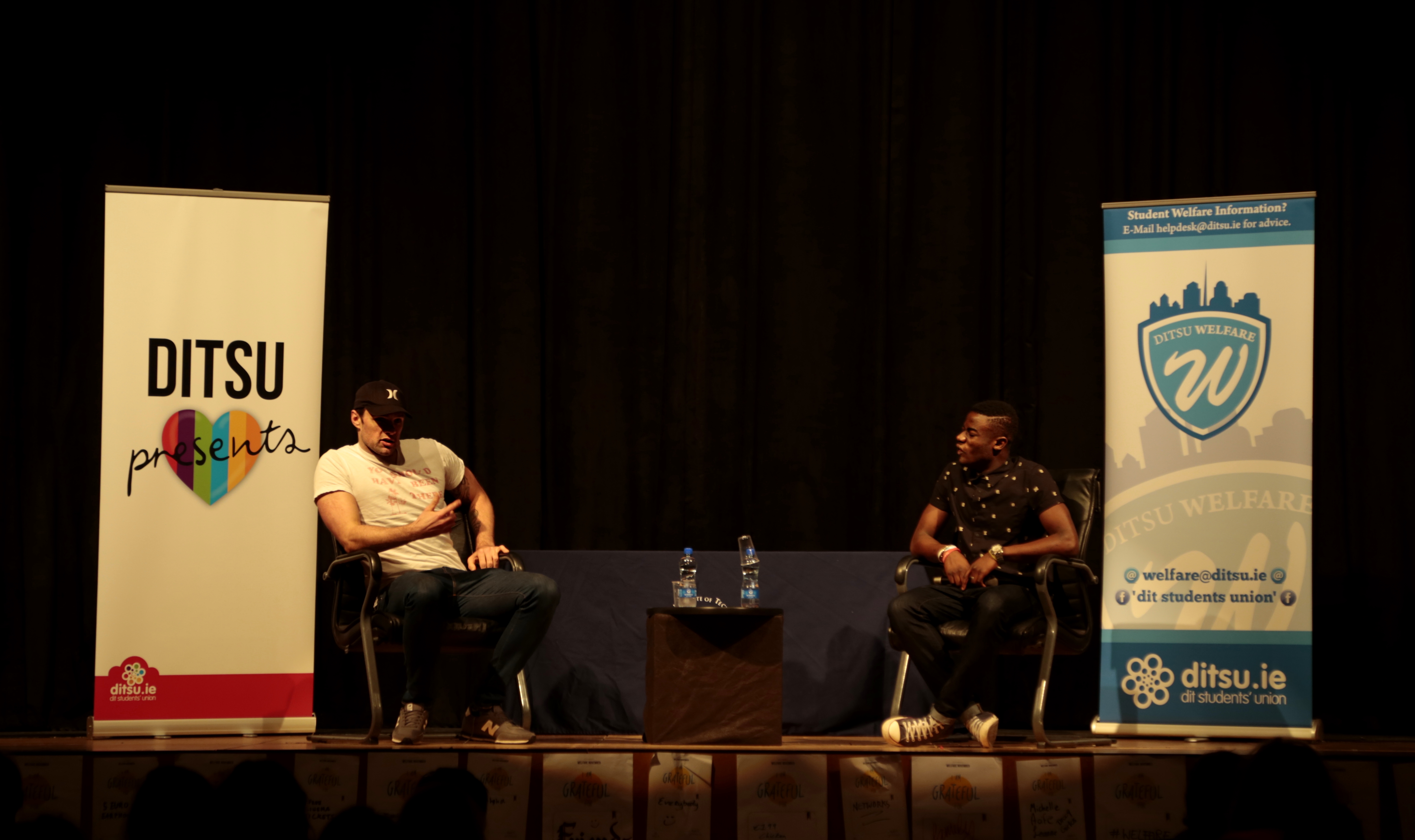
    The Dublin-based singer, best known for being the front-man for the Irish band The Blizzards and a judge on The Voice, has spoken at a number of Dublin-based colleges, including his old college UCD in October, DIT in November, and Trinity College this December.

    stage
    Photo by Cormac Dunne

    Just last month in November he launched a new website called my1000hours, which focuses on the importance of mental health as well as physical health, and will also act as an ‘online support blog’. The website explains,

    “So many of us put so much emphasis on physical fitness but seem to ignore the importance of our mental or emotional fitness. The evidence surrounding the correlation between positive mental and physical health has never been more profound”

    The concept of 1000 hours is to encourage people to improve their mental health by challenging themselves to achieve things such as learning a new skill or running a marathon. This will all be with assistance from the 1000 team “who will help with both the physical training programmes, diets etc…and also the mental processes required to achieve these challenges.

    The website is also due to add a section on musical therapy and how it could help to manage depression.

    Bressie suffers from Generalized Anxiety Disorder, and since first speaking out about his struggles a year ago in 2013 he has become an advocate for mental health in Ireland. As well as speaking at schools and colleges around the country he has also spoken on a number of television and radio programmes on the issue.

    Thanks to DITSU I got to talk to Bressie last month, after his talk on mental health in DIT as part of their Welfare November campaign:

    For more information on 1000Hours follow the links below.

    Facebook

    Twitter

    YouTube