Tag: dogs

  • Ireland Implements first stage of XL Bully ban: Key changes starting from October 1st

    Ireland Implements first stage of XL Bully ban: Key changes starting from October 1st

    Ireland has officially implemented a ban on XL Bully dogs, which came into effect on October 1st, 2024. The ban was introduced by Minister for Rural and Community Development Heather Humphreys in response to a series of high-profile attacks involving the breed. 

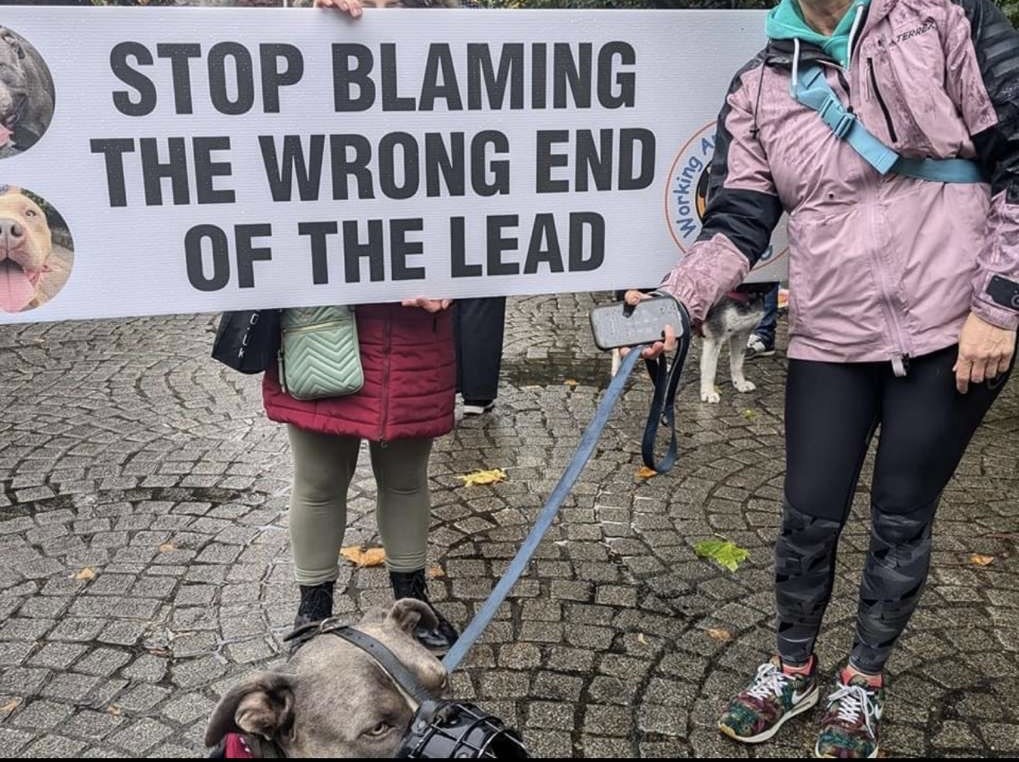
      Banners at XL Bully ban protest. Photo by Sandra Dudkiewicz 

    The ban will be enforced in two phases. As of October 1, 2024, it is illegal to import, breed, sell, or rehome XL Bully dogs. From February 1, 2025, it will also become illegal to own an XL Bully unless the owner has obtained a ‘Certificate of Exemption’. 

    This certificate will allow owners to keep their current XL Bully dogs, provided they meet certain criteria such as licensing, neutering, and microchipping the animal. 

    A deadline of February 2025 has been set for animal welfare groups and shelters to rehome or export XL Bullies already in their care. 

    The decision has generated debate, with some supporting the move as a necessary measure for public safety, while others, including animal rights groups, express concerns about the future of these dogs and the impact on shelters 

    A joint statement published by Dogs Trust Ireland, Irish Blue Cross, MADRA, and the ISPCA states that they will continue to urge the government to prioritize enforcing and adequately funding existing laws that address the root causes of dog aggression across all breeds and types of dogs. 

    This includes cracking down on unscrupulous breeders who prioritize profit over dog welfare and public safety, penalizing irresponsible owners of dangerously out-of-control dogs, and educating and empowering responsible dog owners. 

    “While we are disappointed with the approach the government is taking, we remain committed to continuing our work to advocate and ensure that the welfare of all dogs is protected,” the statement said. 

    Sister of Nicole Morey who was tragically killed by an XL Bully earlier in June this year spoke to RTE news and expressed that the ban is not enough and fears that there will be more accidents linked to the breed. 

    “I think there should be a stricter law brought in. They’re dangerous dogs. They’re not small little puppies. They’re not dogs that you could just mess around with. They can just switch in two seconds,” she said. 

    Earlier in September almost 200 people attended a protest at Stephans Green in Dublin following the news of the new regulations related to the breed. 

    XL Bully owner and attendee Wiktoria Kumorek spoke to The City. “It truly breaks my heart it is unfair that these dogs are being judged solely on their appearance. My dog is gentle, and affectionate and with proper training and care, they are no more dangerous than any other large dogs.” 

    “The problem is not the breed, it is irresponsible ownership just like with any other dog or animal,” she added. 

    XL Bully ban protests in September in Trinty Point. Photo by Sandra Dudkiewicz 

  • Pups on the pier

    Pups on the pier

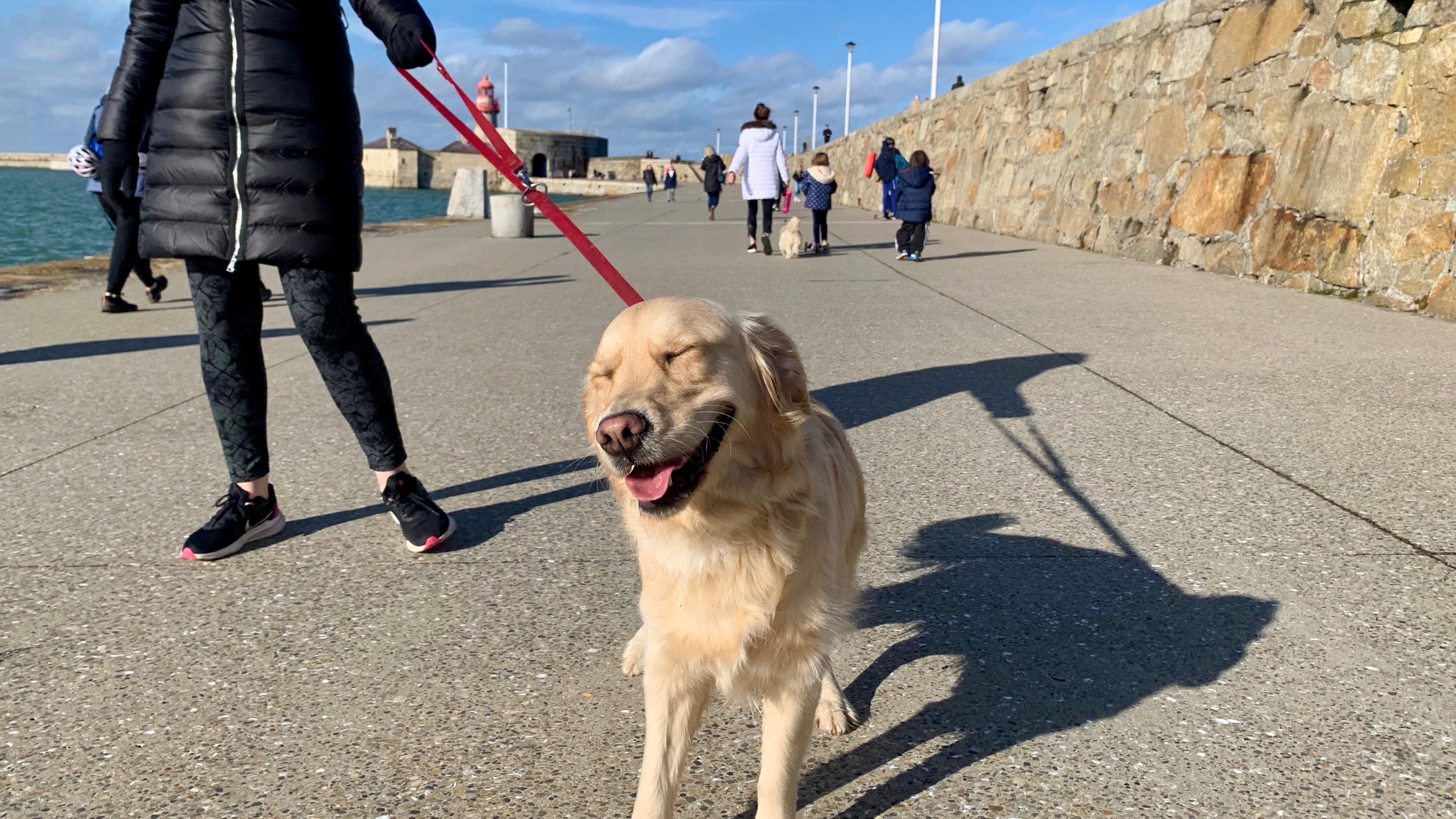
    With a high of 13 degrees celsius, Monday, 15 February 2021 marked one of the of the warmest days of the winter this year. Like many South Dublin natives, I strolled the East Pier in Dún Laoghaire to enjoy this rare moment of warm weather and sunny skies. Here are some of the furry friends that I met on my journey.

    “She’s almost a year old now, we’re lucky to have had the lockdown to train her”
    “While you’re at it, make sure you tell the owner’s to pick up their pet’s crap too”
    “She’s the model of the family”
    Smiley Cosmo abiding by social distancing measures
    “It’s hard for him to see all the action from so low down, so he loves when I let him stand on the benches”
    Cone of no shame
    “They’re just a bit camera shy”
    “Bonnie isn’t one for walking”
    “My record is thirteen dogs at once”
    “We asked Lulu to sit, but she didn’t get the memo”
    Major, the Siberian Husky
    “It might be hard to capture them, since they never sit still”
    “Don’t forget to make her the star of the piece”
    Seeing triple with half siblings Woody, Buzz and Kenny.
    Young puppy, Milo on high alert for birds
  • Recent dog thefts leave pet owners feeling anxious

    Recent dog thefts leave pet owners feeling anxious

    In recent months, there has been a huge increase in reports of dogs being stolen. The DSPCA believes this is linked to an increase in demand for dogs during the pandemic. But how has this affected pet owners?

    Niamh Talbot took to St.Anne’s park to speak with local people about whether or not they feel more anxious when out walking their dogs.

  • Dogs dumped for Christmas: animal rescue lists grow as owners surrender their pets

    Dogs dumped for Christmas: animal rescue lists grow as owners surrender their pets

    By Sian Long and Ana Novais

    In the run-up to Christmas, animal rescues’ phones are ringing off the hook. A lot of the time, the calls answered are not from people inquiring about adopting, but from those who want to surrender their dog. If a puppy is on your own Christmas list, or you’ve been planning on adopting or buying one for a loved one, you need to ask yourself: have I thought about the long- term commitment this animal requires?

    A fluffy, cuddly little puppy can be an appealing choice for a Christmas gift for under the tree and while your choice may be well-meaning, not considering the responsibility of a new pet can have devastating effects on the pet and in some cases, a lack of research and commitment can be fatal.

    As the Christmas period approaches, Gillian Bird from the DSPCA said their rescue team are receiving 20 to 30 calls per day from people who want to relinquish their pets: “The bulk of our phone calls from October on, are from people who don’t want their pets anymore,” she said.

    Following a high number of surrender requests, this year Dogs Trust launched their A dog is for life campaign to make people aware that a dog is not just for Christmas. According to the charity, from January to October 2019, more than 1,900 people across Ireland approached them in order to give up their dog. For someone who wants to surrender their dog, the most common reason they provide is not having enough time to look after them.

    Dogs in Distress (DID) are a rescue charity whose aim is to keep dogs out of the pound system and rehome them by fostering and adoption. Marie from DID says: “There are a large number of dogs dumped for Christmas and people have several excuses. My aunt is coming for Christmas and she’s allergic. We got a new pup and the older dog is not accepting it, we’re going away, the dog chewed the Christmas tree.” According to Marie, the dogs surrendered are nearly always older.

    Many animal rescues just cannot cope with the sheer number of animals given to them over the Christmas period which means that many unwanted dogs end up in the pound. The Irish pound system is in desperate need of reform to ensure that it prioritises the care and comfort of the animals.

    Before you buy a dog, consider the following

    Your new furry friend will require training. You may have to teach her to walk on a lead, to sit and stay and you might have to house and crate train them too.

    Can you afford a vet check-up every three to six months? Can you budget for a trip to the groomers every 12 to 14 weeks? If your dog becomes ill or is injured, can you pay for costly treatments?

    Do you have time to walk your dog at least once a day?

    Credit: Sian Long

    All dogs, young and old, need mental and physical stimulation. Can you find time in your day to play fetch or tug?

    Do you have a backup plan for when you’re out of the house for long periods of time? Who will mind your dog when you go abroad?

    Are you prepared to dig proof you’re home and maintain it as such?

    Will you be able to afford healthy food, toys, chews and treats for the rest of your dog’s life?

    A dog that is never properly trained does not know that peeing on your rug is bad. Almost all behavioural issues in dogs are rooted within a human issue.

    What happens to pound dogs?

    This Christmas, many dogs will be left in cold and lonely pound facilities. Animal rescue charities just won’t cope with the sheer number of dogs being relinquished.

    The real reason that the number of dogs put to sleep is down is because of the great work the private rescues do on very little money.

    The number of dogs euthanized in our pounds is totally unnecessary and is as a result of poor funding and education.

    A pound can be a stressful and scary place for a dog, and, even in well-managed facilities, dogs can encounter stress triggers such as noise, loss of control and unfamiliar people and surroundings.

    When dogs are in fear, they usually respond in the only way they  know how – barking, guarding and defending. Due to a lack of funding and indeed, adequate use of funding, pound dogs do not have much human contact during their time there and rely on members of the public to volunteer to walk and play with them.

    Dogs have feelings and emotions too. If you want to adopt a dog, especially if they’ve gone through a traumatic experience, you need to be patient with them. Being gentle, patient and calm while maintaining a safe space that your dog can retreat to is a fantastic start and will help to build trust with your new pet.

    A dog’s love is forever. So, if you’re adopting or buying a pet this festive season, be sure that you can give your love forever too.

  • Therapy dogs helping the elderly feel less lonely this Christmas

    Therapy dogs helping the elderly feel less lonely this Christmas

    By Amy Connaughton

    For many people, Christmas is their favourite time of year. It’s a happy time spent with family, friends and loved ones. Sadly though, for many elderly people, Christmas can be a tough time to get through. Nearly a quarter of the elderly do not look forward to Christmas because of loneliness and fears that it will bring back bad memories, according to research carried out by Age UK in 2014.

    The research suggested that the effects of loneliness increase during the winter months with a fifth of elderly people worried about not being able to go outdoors as much because of shorter, darker days and poor weather conditions. Age UK is the UK’s largest charity dedicated to helping everyone make the most of later life.

    One charity that is making a positive impact on the lives of the elderly in Ireland, is Irish Therapy Dogs. Irish Therapy Dogs was founded in 2008 with the aim of using pet therapy to provide comfort and companionship to people in long-term or daily residential care.

    Their mission is to provide physical, therapeutic and educational benefit to people, young and old, fit and frail, alert and impaired, in hospitals, nursing homes, day care centres, and schools.

    Today, more than 270 ‘Volunteer Visiting Teams’ make weekly visits to day care centres across Ireland.

    Owners and their dogs give one hour each week to visit their assigned care centre. Once there, they circulate amongst the residents allowing their dog to be cuddled, petted and played with.

    Research has shown that canine companionship brings a number of health benefits, such as lower blood pressure, lower triglyceride and cholesterol levels, as well as increased production of serotonin and dopamine.

    Humans have a basic need to touch and a dog fulfils this need. Stroking, holding and fussing over a dog helps reduce the sense of isolation and loneliness. The companionship of a dog can help to calm and soothe us, ease anxiety and boost our mood.

    “I get so much more out of it than I put in, it’s great. Ruby is amazing and she doesn’t even realise the joy she brings”

    Irish Therapy Dogs visit care centres and enrich the lives of people there by interacting with them. The dogs do not need any specialised training, but it is important that they are friendly, gentle, confident, patient and at ease in any situation. They must enjoy human company and be happy to be petted and handled. The suitability of both the owner and dog, working as a team, is subject to a formal assessment process.

    Orla Keogh, from Deansgrange in Dublin, has been volunteering for Irish Therapy Dogs for two years now. She visits Belmont Nursing Home for an hour a week with her dog, Ruby. Orla said: “I get so much more out of it than I put in, it’s great. Ruby is amazing and she doesn’t even realise the joy she brings.”

    Orla described how visiting the residents has such a great impact on their day: “Basically, even residents that don’t respond or speak, get so happy when they see Ruby. There’s one who’s deaf and dumb and she hates everyone, but she is obsessed with Ruby and when she sees me coming with the dog her whole face lights up.”

    Jane Connaughton who is the activities coordinator in Belmont Nursing Home sees first-hand the effects that the therapy dogs have on the residents. “The reaction the residents have is just great to see. Straight away when the dogs come in you can see their faces just light up and there’s a nice, happy buzz around the room.

    “Loneliness with old people is such a common problem and it’s very sad. A lot of residents here don’t have much family or don’t see their family very often.

    “Some of the residents love to pet the dogs and hold them but some of them are happy enough to just sit and watch everything that’s going on. Either way, everyone has a smile on their face and it’s really great.”

    Peata is another Irish charity dedicated to helping people reap the benefits of therapy dogs. Peata is a voluntary association established in 1996. Every year, they do a Christmas Carol Service in Christ Church Cathedral where there is a blessing of the therapy dogs.

    Jane said: “The residents really enjoy it. We sit right up at the front and there’s a part of the service where all of the therapy dogs go up to the altar to be blessed. The residents love seeing all the dogs right up close to them.

    “After the service, there is tea and coffee and mince pies and a chance for the residents to mingle with all the dogs.”

    Irish Therapy Dogs is a voluntary registered charity and is completely self-funded. Funds are raised by membership fees, donations, sponsorship, personal gifts and various fundraising events.

    If you would like to become a volunteer you can get in touch with the charity at 01 2189302 or you can visit their website at www.irishtherapydogs.ie

  • Greyhound Racing: Are we Supporting a Blood Sport?

    Greyhound Racing: Are we Supporting a Blood Sport?

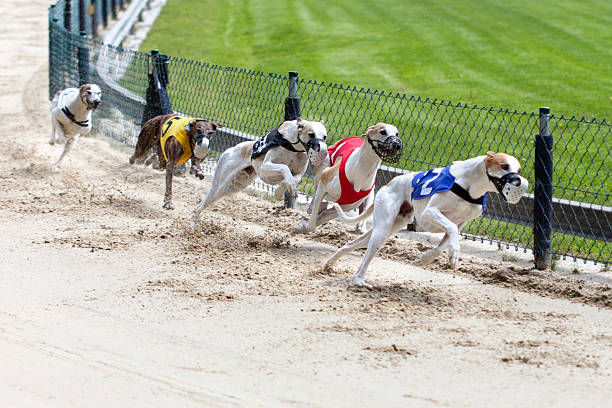
    Ellen Corrigan investigates Greyhound racing during their busy Christmas period and asks if the lucrative sport is ethical.

    “If you’re looking for something different for a great night out, you’ll find it at Shelbourne Park Greyhound Stadium. Nothing beats the excitement of greyhound racing, and some of the most prestigious greyhound fixtures of the year take place right here!”

    This is the description that features on the Shelbourne Park Greyhound Stadium website. They, along with other greyhound racing stadiums such as Curaheen and Galway Racing Park, advertise their racing stadiums as an entertainment venue. They promote their venues as a place to drink with friends, enjoy a meal and even host a communion or confirmation party for children.

    Undoubtedly, many businesses will turn to these venues to host their annual Christmas party. However, behind the drinks and quick bets is a sport with an uncomfortable history.

    The Irish Greyhound Board (IGB) is a semi-state body established to regulate and promote greyhound racing. On their website, they also advocate greyhound racing events as “a fun filled night out”, promising to provide entertainment for the whole family.

    What each website fails to mention, however, is the fact that approximately 8,000 registered racing greyhounds disappear every year. The Greyhound Rescue Association of Ireland (GRAI) estimates that this figure could be closer to 10,000. They estimate that 3,000 greyhounds are submitted to pounds every year, the majority of which end up being euthanised.

    Worryingly, some reports suggest the fate of these missing dogs can be horrific. In May 2017, the Irish Times reported on comments made by Aideen Yourell of the Irish Council Against Bloodsports. She said: “They (greyhounds) can be killed in all sorts of fashions. We’ve had incidents of finding them shot, ears cut off and brutalised, drowned or sold on to live in appalling states.”

    In 2013, six greyhounds were found shot in the head and dumped in a quarry in Limerick. A newspaper report from the time explained how the dogs had failed to “show promise at racing trials”.

    This was one of many incidents reported in County Limerick, where cases of large graves containing bodies of greyhounds have been discovered. The GRAI have also described cases where members of the public have found dogs hanging from trees.

    They say it is common practice for owners of unwanted greyhounds to tie the animal to a short rope connected to a tree, with their paws barely touching the ground. The animal becomes distressed, and subsequently hangs itself in its struggle.

    With such distressing reports publicly surfacing, has it become an issue for the Irish government who fund and support the greyhound racing industry?

    Socialist Party TD Paul Murphy first voiced his concerns about the number of missing greyhounds in the Dáil in 2013. At the time, he said “Figures show that these dogs do not end up in rescues or re-homed. Many end up shot or beaten over the head, then thrown into a pit or quarry as has been shown in recent high profile cases.”

    Recently, he objected to the government’s allocation of €80 million for the Horse and Greyhound Racing Fund, saying “Another year, another €80 million for the horse and greyhound racing industries … how long can you continue to ignore the horrific conditions faced by greyhounds in this industry?”

    Despite the evidence of cruelty, greyhound racing is still promoted as an invaluable tourism asset. A study conducted by high-profile economist Jim Power in 2010 attempted to cast the Irish greyhound industry in a positive light, promoting its tourism value. The report, prepared for the Irish Greyhound Board, said: “The industry employs just over 10,300 people directly and indirectly. The gross wage bill generated by this employment is estimated at €207 million per annum and the tax contribution from this employment is estimated at €21 million.

    “The total cost to greyhound owners each year of keeping the ‘greyhound pipeline’ in operation is around €244 million. This is a significant amount of expenditure, and much of it is injected into local economies and supports thousands of local jobs. The IGB has delivered a very impressive financial performance in recent years, and the industry has been strongly supported,” the report also said.

    With the industry generating such revenue, the battle to bring an end to greyhound racing seems almost impossible. Dr. Andrew Kelly, C.E.O. of the ISPCA, acknowledges this struggle. When contacted, he said: “The reality is that there is no prospect of greyhound racing or hare coursing being banned in our generation – whilst protesting and calling for a ban (as some organisations do) has a place, we believe that the greatest improvements for greyhound welfare will be achieved by engaging with the industry and lobbying key decision makers and legislators for change.”

  • Reduction in euthanasia for Dublin’s dogs

    Reduction in euthanasia for Dublin’s dogs

    Last year saw a significant decrease in the number of stray or abandoned dogs in Dublin being euthanised when compared to 2015.

    Figures obtained from each of the council offices show how out of 1,423 dogs claimed by the four Dublin councils, 109 were put down; a 21 percent reduction from 2015’s figures which saw 138 stray dogs in Dublin being euthanised.

    Dublin City Council had the lowest euthanasia rate with just under four percent of its claimed dogs  being put down, with the majority of the rest either being reclaimed by owners, re-homed or taken to a dog welfare group.

    Killian Dog image#

    Dún Laoghaire/Rathdown had the most successful reclaim rate with 33 percent of its claimed dogs finding homes again.

    As well as a decrease in the number of stray dogs being put down, the overall number of stray dogs claimed by councils in 2016 slightly decreased from the previous year’s total. And the 1,516 stray dogs found in 2015 decreased by six percent to 1,423 by the end of 2016.

    Despite this positive reduction, many problems regarding mistreatment and the large number of stray dogs still on the streets still need to be addressed.

    Áine McAnally is a volunteer at Dogs Aid Animal Sanctuary, a charity set up to house, rehabilitate and rehome stray or abandoned dogs.

    She said: “Education is going to be the most important tool to decrease the number of stray and abandoned dogs. Currently dogs are easy to come by, cheap to buy and so some people are able to discard them without thinking too much about it because there is no value put on the animal. People need to be educated regarding either neutering their dogs or being hyper vigilant when their dogs are in heat and allow no dog wander on their own.”

    Despite the best efforts of shelters and dog charities such as Dogs Aid, the sheer amount of strays which are turned in on a yearly basis, even with a reduction in numbers, is still often too much for shelters to cope with. Shelters are often forced to refuse dogs due to lack of space, and ultimately this can result in the animal being put down.

    “We work on the basis that we can only do what we can do. We have between 60 and 70 dogs in the sanctuary at any one time and about 30 core volunteers that help run the sanctuary. This is our capacity and we don’t go over that or the dogs will suffer. We take in as many dogs as we can, and as soon as a kennel space is available we fill that with another dog,” said McAnally.

    Efforts by councils and shelters are responsible for an overall improvement in the 2016’s figure yet the problem of stray and abandoned dogs needs to be addressed at the source; the owners.

    By Killian Dowling


  • Keeping pets safe at Halloween

    CC image courtesy of Crystal Agozzino on Flickr.
    CC image courtesy of Crystal Agozzino on Flickr.

    Halloween season is exciting for us humans but for pets, it can be a very distressing time of year.

    Household pets, mainly dogs, can get very agitated around Halloween time, due to the noise of fireworks and also by the flashes at night time.

    According to vet Peter Wedderburn, who is better known as ‘Pete the Vet’, the best thing for dogs at this time of year is to make sure that they have somewhere that they can go that is cosy and reasonably well protected by noise.

    “Basically you want somewhere where they can go and feel comfortable and chilled out, and if there is background noise and fireworks, they’re not bothered about them”, he says.

    Pete suggests that a typical ‘safe’ place for dogs would be a cupboard under the stairs, or a boiler room, where you can put plenty of bedding, a hot water bottle and some of their favourite toys.

    He also stresses the importance of dog pheromone, which can be bought in plug form.

    “When a bitch produces milk, she produces a scent that puppies find reassuring”, says Pete, “scientists have extracted that scent and have made an artificial form of it and put it into a vaporizer”.

    Pete, who is also Ireland AM’s resident vet, says that if dogs have this pheromone in the air around them, then they feel more comfortable and reassured.

    There is also an increased issue of cruelty towards animals around the Halloween period.

    “When there are young people out and messing around, where there is fire and fireworks then animals are vulnerable, so people should be aware of that”, says Pete.

    Even cats, who usually roam around, are at risk at this time of year. Like dogs, they can be also frightened by fireworks, but a more serious matter is reports of them being thrown into bonfires.

    Both cats and dogs are also at risk of blackcat fireworks been thrown at them by youths.

    “Keep cats in around Halloween because they can get into trouble, and make sure that your dog has an ID tag on it because it can get out and run away”, says Pete.

    Every year there are reports of people deliberately harming animals during the Halloween season

    Pete advises people that if they hear of, or see any cruelty to animals going on, to get some evidence and  report it.