In February next year, it’ll be 25 years since Paul Kimmage took his first job in journalism. In that time, he’s written about several drug scandals and is now in the middle of investigating one in rugby. In this interview, he talks about that story and the reaction it’s been met with so far…
On first viewing Paul Kimmage and Laurent Benezech would not seem to have much in common. One is a former professional cyclist who retired into sports journalism and the other a former French rugby player turned businessman . Yet when Kimmage met Benezech, the parallels between the two were apparent.
“It was like looking at a mirror image of myself back in 1990,” explains Paul. “Eerie, except… well I never faced the threat of potentially; I think it was 270 grand he was looking at if he lost that case.”
The case Kimmage refers to is the defamation suit that the French rugby player’s union, Provale, took against Benezech for comments he made in an interview with Le Monde about doping in rugby. That case finished in September with the decision going Benezech’s way.
At the end of October, Benezech’s book, Rugby, Ou Sont tes Valeurs , was published. Paul wrote about the Frenchman in the Sunday Independent and described his book as a “brilliant expose on doping”.
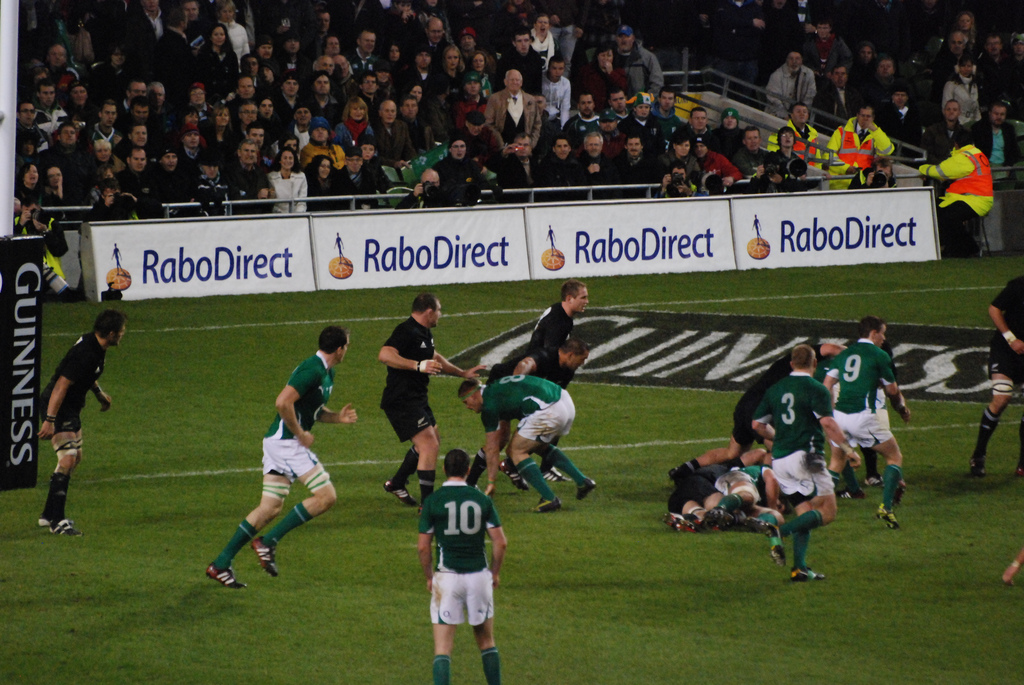
In his book, Benezech charts the weights of french rugby players from year to year. Some players gained a phenomenal 20 kilos of muscle over the course of just one season; a feat he says that the human body simply cannot accomplish naturally.
So, should we be worried about drugs in rugby the same way people should have been worried about it in cycling?
“Absolutely. Oh, absolutely,” replies Paul. “It’s too dangerous. Some of the injuries are horrific. The big talking point now is concussion. And why is that? Because a guy weighing 150 kilos is running at you and he’s going to hit you hard. He’s going to hit you real hard.”
Benezech and Paul have one disagreement over drugs in rugby. Where Paul says doping, Benezech would say medical assistance.
“I said, ‘for me that’s doping’,” explains Paul. “(Benezech) said yes you can argue that but once you make the case that they’re doping, they’ve got the perfect response. ‘Okay, if we’re doping, where are the positive tests?’
“And there are no tests because the IRB, the governing body aren’t interested in this, the same way cycling wasn’t interested and that’s why (Benezech) makes a very interesting parallel between rugby being now in the position that cycling was before the ‘Festina Affair’.”
In the hour that I spent with Paul, the Benezech story kept cropping up throughout. The implications of it are huge for rugby but it’s the immediate reaction to Paul’s piece in the Sunday Independent that he feels shows the true mentality surrounding the sport.
As of the following Tuesday evening, he had yet to be contacted by anyone in the world of rugby about his piece or Benezech’s book. He mentions an argument he had with a friend the night before we met and how it left him wondering about his own attitude to drugs in sport.
“I went to bed last night and I thought, ‘what is wrong with me? Why can’t I just ignore this and move on?’” he says. “But I can’t. It just… it winds me up. It’s the parallels between when I wrote about cycling in the 80s to the response to that then and the response to that now. I mean it’s absolutely the same. ‘Ah yeah, it’s not Kelly and Roche, it’s these foreigners that are doing it, not our lads.’ Same thing.”
But it must leave him disillusioned when people would rather ignore the problem?
“I got disillusioned with it last night,” says Paul and for a brief moment he almost despairs. “But it’s a fleeting disillusionment because I find myself getting up the next day saying, ‘Right. Where are we going? We’ll go for it again.’ I just won’t back down.”
“So it’s almost like I’m constantly going around,” he explains as he leans to ground to pull something out of the air. “It’s like I’m going around constantly getting fella’s heads and pulling them out of the fucking ground and saying, ‘Look right now. Look! This is what is in front of you. Look at it now. And then putting my hand back down again, putting their heads back in the sand.
“I don’t give a fuck what you make of what you see but I want you to fucking see it and acknowledge that it’s there. After that I don’t care.”
And what about other sports journalists? Who has picked up on the Benezech story since Paul’s article was published?
“There’s a lot of guys that I would have said were very good, young journalist coming through the ranks now at the moment here. And they’re in radio shows and they’ve got TV shows and you would have thought, ‘well these guys will be on it straight away’.
“Have I had one call from any of these people [regarding Benezech’s book]? Not one. Have I had one call from any of the rugby correspndents? Not one.
“We want to be fucking cheerleaders. That’s the default position of the sports writer. He wants to be a cheerleader. And there are very, very few who won’t do that. And that’s kind of depressing isn’t it?”
So what’s the point? Sportsmen have their heads in the sand and sports writers are cheering them on. Why continue with the story?
“You see as much as I’ve highlighted the silence that’s appeared, that’s actually the bit that’s interested me,” he says. “That’s actually the bit that’s driving me to work at it again.
“That silence tells me, ‘he’s right, this is the truth we’re getting here folks’ and the silence for me is the adrenaline to go again.”
What does he think is going on in the minds of the top officials in rugby here in Ireland who have seen his feature on Benezech?
“I think that anybody involved in the sport at that level would have opened that paper, read that piece, closed it and said, ‘Oh fuck’.
“This is coming. Definitely.”



You must be logged in to post a comment.