Plans are underway for the return of the SPECIES Gothic and Industrial arts and culture festival to County Leitrim after a short absence.
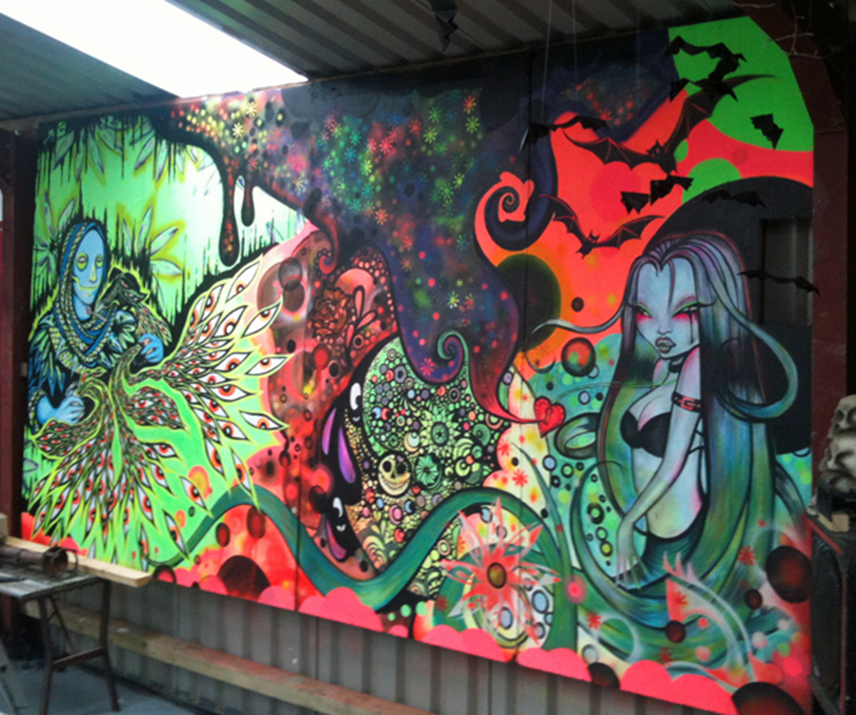
SPECIES is a yearly festival that takes place in the Iron Mountains in County Leitrim. The festival is organised and run by Ilíocht O’Brien and his wife Harriet at their mountain home, and it features a vast array of Irish talent from both sides of the border, and abroad. The festival venue site has a very striking appearance with psychedelic coloured spiritual (but fun) murals mixed with Halloween images dotted around the venue. The first SPECIES festival was held during the May bank holiday weekend in 2015.
Now, over at An Dómhan Ilíocht, as Mr O’Brien calls it, they are busy preparing for the next Gothic and Industrial arts and culture gathering.
On the subject of the SPECIES festival return, Ilíocht said: “We are taking a break from hosting festivals up here while we are working on upgrading the site. SPECIES will return when we are ready, and at that time we will advertise extensively, and hope to re-unite all the beautiful weirdos up here!”
Psychedelic looking mural on site at SPECIES (above). (Photo: Derek Price)
The Great Hall band and DJ performing area at SPECIES. (above). (Photo: Derek Price)
A colourful wall mural at the venue. (above). (Photo: Derek Price)
Dublin duo Freak Control onstage. (above). (Photo: courtesy of Kilian McLiam)
DJ Syrinx (above). (Photo: Derek Price)
Outdoor scenery at SPECIES. (above). (Photo: Derek Price)
There is a big selection of vendors at the festival, selling all types of wares like clothing, furniture throws, and various kinds of fun bric-a-brac and knick-knacks. (above). (Photo: Derek Price)
Cute cuddly items on sale at the stalls. (above).(Photo: Derek Price)
SPECIES revellers keep warm well into the night (above). (Photo: Derek Price)
A view from the camping area (above).(Photo: Derek Price)
Species spooky environment with appropriate mysterious figures (above). (Photo: Derek Price)
Ilíocht,- the festival organiser, on the right, with a friend. (above). (Photo: Derek Price)
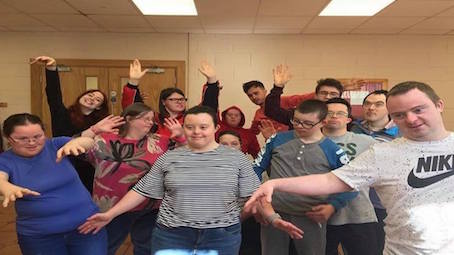
Behind the Scenes: School of Drama’s main aim is to help build confidence in their students so that they can channel their creative talents through drama and theatre. Their objective is the development of the student through drama. Something that sets them apart from other drama schools is that they also have classes for students with special needs.
According to Down Syndrome Ireland, people with down syndrome are good communicators but find it difficult to interact socially from a young age. This is due to hearing or phonological (understanding sentence structure) difficulties, a weak processing of auditory information and their anatomical and physiological differences.
Co-owner of Behind the Scenes and drama teacher, Lachlan Kiss said: “For students with special needs, drama can be a new and unique place where they can explore a creative side of themselves, a side which they mightn’t have explored very much. Drama is also a tool and an activity which doesn’t discriminate, which for students with special needs can be great, as it allows anyone with any sort of disability to take part and get the most out of the experience.
Credit: Behind the Scenes: School of Drama
“The best way I find I get the most out of my students is through encouragement and high energy. The students always respond well when the environment around them is one which feels exciting, but also is respectful of their limits or inhibitions. By exploring things which feel familiar to my students, I find that I am able to get a lot from them, so finding out what they’re passionate about and what they are interested in can greatly help with structuring my classes and my plans.” He continued.
Speech and language are two major skills that are essential to the development of mental abilities, such as reasoning, remembering and thinking, as well as social inclusion. Drama is extremely beneficial for students with special needs for the same reasons that drama is beneficial to everyone. It helps greatly with communication skills, as well as confidence because drama provides a safe place for students to express themselves.
He said: “I think drama is a subject and a hobby which should be addressed more in almost every facet of our society. It is something which I believe all people, especially children, can gain something very valuable from, and I don’t think it is any different for students with special needs. It is incredibly important that students are given a space to express themselves creatively and drama is something which provides them with this tool.
“Each and every student I have taught has responded with such great enthusiasm and our weekly classes often become one of their favourite parts of the week. Drama is also so important when it comes to developing communication skills, especially for students who may be non-verbal or who have difficulty with communicating. When given a carefree space to communicate in a creative way, one will see an incredible growth in almost every student, a growth which they wouldn’t have found without drama.”
Credit: Behind the Scenes: School of Drama
According to Down Syndrome Ireland, children with down syndrome generally learn better through visual learning such as demonstration, rather than through verbal instruction alone. Often it is better to learn through the support of pictures, gestures and or objects. Drama is all about using ones hands, faces and bodies to communicate which is extremely beneficial for students with down syndrome as their strengths include gesture, mime and imitation.
Kiss said: “Often when students begin a term with us, it can take a few classes for them to feel more comfortable. But our classes are geared around trying to create a comfortable space for every student, whether they are very outspoken or very quiet. It is important to be aware of each student’s comfort zone and to help extend this zone slightly every week.
“With a mixture of dance, acting, mime and improvisation we are able to cater to all interests and because of this, each student is given an opportunity to flourish and partake in activities which they feel both comfortable and nervous in. By the end of a term, I often find that students have dropped almost all inhibitions they may have had at the beginning. This process is often a cycle, with particular students showing both rises and dips in their confidence but with each cycle I can see a marked difference in how the students approach the class, an approach which I’d describe as becoming more open, comfortable and creative.”
Credit: Behind the Scenes: School of Drama
Drama is an invaluable skill for children with special needs as it is beneficial in creating skills such as storytelling, learning how to express their emotions and feelings through improvisation and plays, and for the individual it gives them a chance to express themselves and to be part of a community.
Kiss finished up by saying, “I think funding for arts programmes, especially drama, should be considered for students with special needs. As I’ve mentioned, students are able to gain so much from ventures like these and funding would make it far easier for teachers and facilitators to provide students with even more help.”
Modern society is bombarded by sexually themed marketing but when it comes to getting personal, it often comes with an air of disillusionment. People with a desire for sex may walk the walk but not talk the talk. Such an attitude seems unbelievable. In his new film Thanks for Sharing, director Stuart Blumberg attempts to remove this stigma.
Starring Mark Ruffalo and Gwyneth Paltrow, Thanks for Sharing follows the lives of Adam, Mike, and Neil as they battle to overcome an addiction that has taken over their lives.
Adam (Ruffalo) is a successful environmental consultant living in New York, who after being sober for five years seems to be well on the road to recovery. This is until he falls for attractive cancer survivor Phoebe (Paltrow), who begins to question her feelings upon hearing Adam’s revelation.
Mike (Tim Robbins) is Adam’s sponsor, and also head co-ordinator of the group sessions. For the past 15 years, Adam has dedicated his life to providing support for recovering addicts. But, in the midst of helping others, Mike has neglected his relationship with his own son Danny (Patrick Fujit), who has returned to the family home after struggling with an addiction of his own.
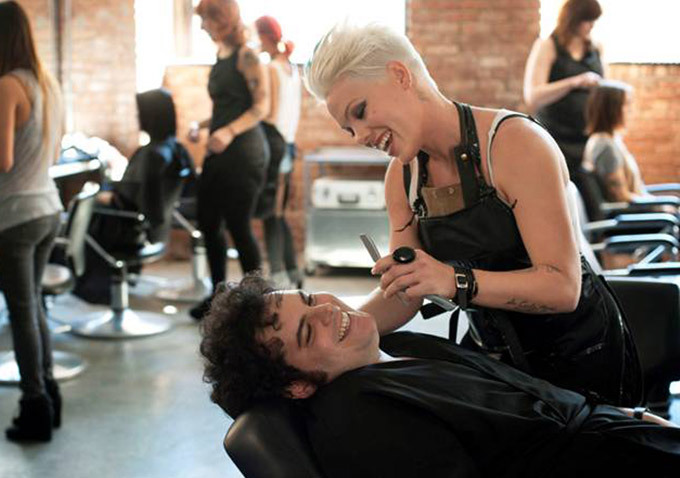
Neil (Josh Gad) is an emergency room doctor and Adam’s mentor, who in the beginning is unwilling to take his addiction seriously. However, when inappropriate behavior results in him losing his job, Neil is determined to turn his life around. It is during this time that he encounters fellow addict Dede, played by popstar Pink. Together, they keep each other in check, acting as a motivator each time one of them shows signs of faltering.
With instances of subtle humour throughout, Thanks for Sharing is an insightful, yet surprisingly enjoyable drama that explores the dark and lonely side of addiction, while illustrating the importance of family and friends in striving for a positive outcome.





You must be logged in to post a comment.