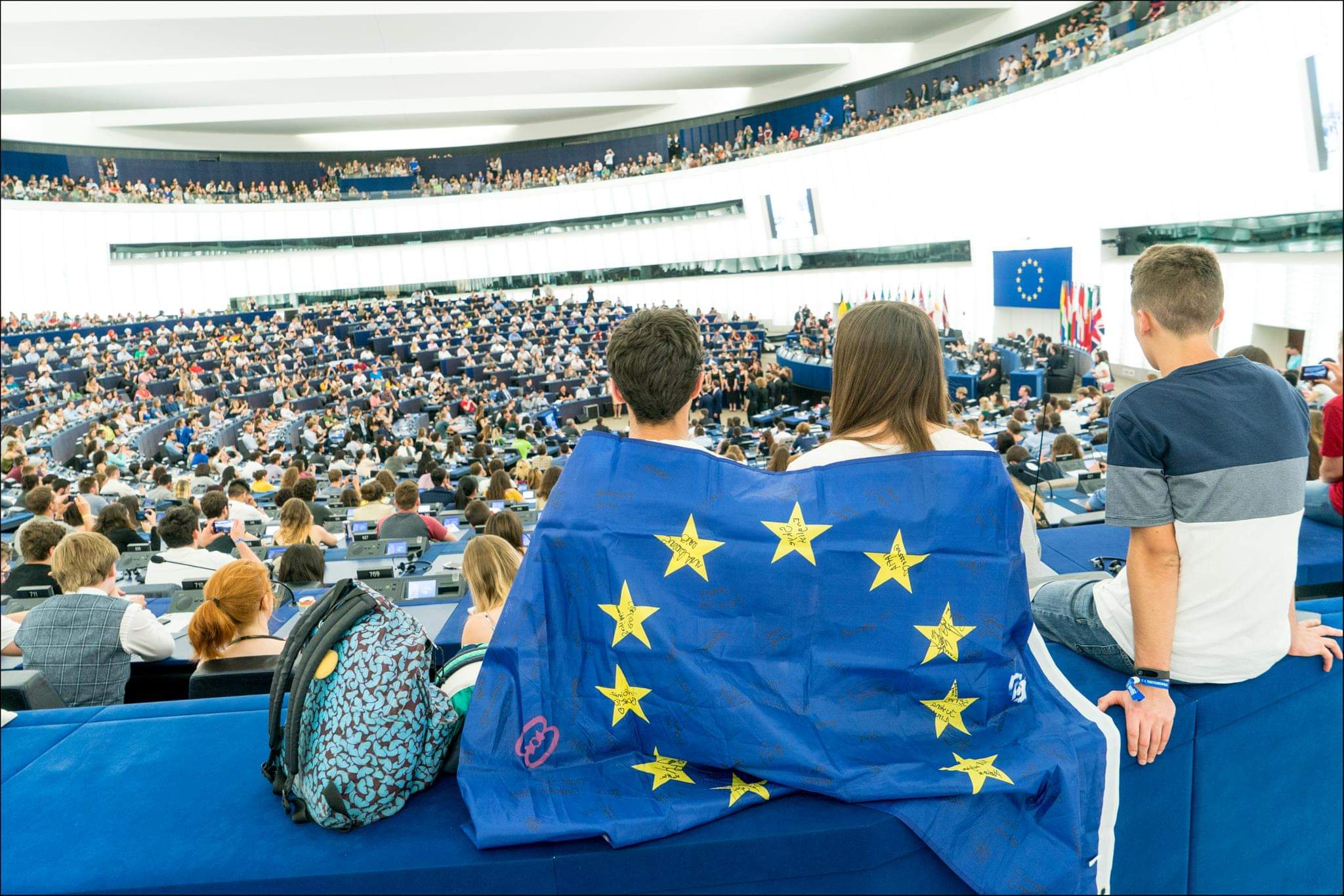
This Time I’m Voting is a campaign run by the European Parliament (EP) in order to encourage European citizens to vote in the upcoming elections.
The campaign is supported by thousands of volunteers across Europe who are committed to promoting the campaign, and ultimately motivating the public to vote. However, social media is the main platform used to promote the campaign, aiming to attract the attention of young users.
Sanne De Ryck, EP press officer, said: “It is indeed important for young people to go out and vote as we are all aware that it is now crunch time, that the future of Europe is at stake. Young people have a whole life ahead of them and will face the consequences of the 2019 European elections.”
De Ryck said social media is ‘part of the answer’ to grab the attention of potential young voters.
The campaign has over a thousand volunteers in Ireland and over 88,000 volunteers across the EU, and aims to inspire citizens to campaign for issues they feel passionate about.
Sarah Buttle, 23, a recent Griffith College graduate, will vote in the upcoming elections and hopes young citizens will do the same. Ms Buttle said: “I would encourage all of my friends to use their vote to help shape the future of the EU. EU issues affect us all, whether it’s migration, privacy or climate change, and having elected MEPs that can voice the Irish opinion, our vote does matter.”
Ms Buttle supports the This Time I’m Voting campaign and hopes the elections will see a big turnout from Irish voters. She said: “The upcoming elections in the EU need an increased voter turnout, especially within the youth.”
Jack Moloney, EP press officer for Ireland, said: “Ultimately, we wish to increase interest in European affairs and de-mystify the electoral process. I have often been asked ‘what does the EU do for me?’ or been told that Brussels is too far removed from everyday life. Our active, young and intelligent participants have already begun to communicate on their own behalf why Europe matters to them and I have found it to be truly amazing.”
The EP also organise events to promote their campaign and on Wednesday December 5, there is a EU pub quiz held in the Boar’s Head pub on Capel Street, Dublin. European Parliament elections take place from 23 to 26 May 2019.
The European Commission and the Department of Culture, Heritage and the Gaeltacht held their third conference on Irish as a full official and working language of the EU this week.
The aim of the conference was to raise awareness of the many job and travel opportunities within EU Institutions that are available to young graduates. Because it’s an official and working language of the EU, job opportunities are available for Irish translators, interpreters, and proofreaders.
Katherine Licken, Secretary General of the Department, said it will provide “high-quality employment” and it is “important for the Government that Irish is a full working language in the EU”.
According to Licken, the aim is to “promote” the Irish language and to provide “a sufficient number of qualified graduates” to work in the EU Institutions.
Licken acknowledged the amount of interest shown in this topic due to the number of representatives from the EU Institutions present at the conference.
A high-quality knowledge of Irish is of course required to work at EU level, though, first-class training for those interested is available. Aside from the array of job opportunities, internships available in all EU Institutions were discussed – for these a knowledge of at least two official EU languages is required.
Earlier this year, a new internship scheme, funded by the Government, was announced for Irish language graduates to work within three EU Institutions – the European Commission, the European Parliament, and the European Council – over a five-month period. The internship provides graduates with valuable training in the field of translation and the opportunity to work in a multilingual, highly professional, and skilled environment.
The overall theme of the day was working together as a Union to reach Ireland’s aims for the Irish language within the EU. Rytis Martikonis, Directorate-General for Translation in the European Commission said: “We are in this together and it works.” Mr Martikonis acknowledged that it “remains a challenge” to reach these aims, however, current “results are promising” and there has been an increase in Irish speaking staff within the EU Institutions.
Irish became an official and working language of the EU in 2007, though, the aim is to end the derogation of the language by 2022.
The conference was conducted in Irish and it was unusual to see Irish interpreted to a room full of EU staff of various languages. The conference illustrated the importance of Irish as our national language and the significance of maintaining and using Irish by future generations.
Cormac Murphy examines the significance of the recent Dutch elections and considers whether populism has reached its limits in Europe.
Swept up in a sensationalist frenzy, one of the most anticipated and fiercely contested elections in Europe produced, at best, modest electoral success for the far-right.
Dutch voters defied earlier predictions that suggested Geert Wilders’ Party for Freedom (PVV) was on course to snap up thirty or more seats in a parliamentary election dubbed “Europe’s quarter final” by incumbent Prime Minister, Mark Rutte.
The seemingly high importance of the election in the run-up to further European elections in France (Europe’s “semi-final”) and Germany (Europe’s “final”) sparked a storm of international media attention.
Geert Wilders campaigning in Spijkenisse. Image by Peter Van der Sluijs via Wikimedia Commons
Branded as a pivotal battle for populism in Europe, the PVV managed to increase their share of seats from twelve to twenty.
However, this is significantly lower than earlier indications suggesting a thirty seat win.
Furthermore, their second place showing was barely ahead of the next largest line-up of parties. The Christian Democrats and Democrats 66 came in joint third, with nineteen seats each.
They are also distant second, being paled by Rutte’s People’s Party (VVD) which won thirty three seats — thirteen seats more than the PVV.
Image by Cormac Murphy
Negotiations to form governments in The Netherlands are notoriously drawn-out and difficult.
According to Bloomberg, since 1945 the average time taken has been seventy two days— a process that, if repeated, would take us well past the French presidential and parliamentary elections scheduled this year.
Locked out of power as others unite against him, the final tally is not even Wilders’ best electoral outcome — falling short of the 2010 election results.
Total score of Dutch populist radical right in past 3 elections:
Considering the electoral wind-down for Wilders, was the heavy media coverage justified and do these elections have a wider significance for Europe as a whole?
Unravelling the Far-Right
Speaking to The City, Gavan Titley, a senior lecturer at Maynooth University who specialises in media studies of race, racism and multiculturalism in European politics said:
“The relationship between results [in different European countries] are often overemphasized and are generally much more complex, involving very particular national issues.”
However, he stated a common theme among the far-right in Europe is their ability to bring the issue of national identity into the spotlight – stating the Dutch election became a “question of Dutch identity”.
Despite Wilders being locked out of power, Titley says the election was in fact “ a dual victory for the far-right” and cited that the PVV not only managed to increase its share of seats from the previous election but also managed to shift political discourse to one that was “openly racist.”
When asked about the fractured nature of proportional representation and the thresholds many far-right political parties fail to advance beyond, he emphasized that power is not defined solely as “executive or governmental”:
“Far-right parties have the ability to shape the news agenda and change the political culture of a country – even if they can’t take office and be involved in the decision making.”
When questioned about the future of the far-right and whether Wilders’ PVV would attempt to ‘de-demonise’ the party to broaden their appeal, he stated:
“There is no incentive for [Wilders] to defuse his language” — as he is able wield a strong degree of influence, without entering government.
The bigger European picture
The Brexit referendum and Donald Trump’s presidential win shook established politics during 2016.
Scattered in-between these two earthquake results were a series of smaller, yet emblematic elections.
Heinz-Christian Strache, head of the Freedom Party of Austria. Image by Thomas Prenner via Wikimedia Commons
On December 4 2016, Austrians went to the ballot box for a second time to elect their president. While the role is purely ceremonial, Austria’s tight presidential race reflected a shifting political tide.
The far-right candidate Norbert Hofer lost to Alexander Van Der Bellen (The Greens) in the end — with it came a sigh of relief but, nevertheless it was a close call for an already embattled EU.
The same day, Italians took to the polls to vote on a constitutional referendum, which if passed, would have granted the Italian government a broader range of powers.
Populists in the country rallied behind a no vote and a no vote it was.
Following the vote Italian Prime Minister, Matteo Renzi resigned and Italian populists rejoiced. Speaking toTime.Alfonso Bonafede of the Five Star Movement stated “Our victory shows that Italians have also said ‘no’ to the austere and destructive policies of the European Union and to the diktats of Germany. It’s about time to ask Italian voters, through a new referendum, whether they want to stay or leave the euro-area.”
Fast forward a few months and all eyes were focused on The Netherlands.
Writing in The Guardian, prominent Dutch political scientist and lecturer, Cas Mudde criticised excessive media coverage of the Dutch Election – claiming the international media declared The Netherlands “the bellwether” of European politics despite lacking a winner takes all system.
In hindsight, the media may have offered Wilders an overtly ample platform.
However, given the bigger German and French elections on the horizon and a string of past close calls across Europe, the coverage was understandable.
Contagion from the Right
Despite negligible gains for the PVV, the most noteworthy result of the elections was a general move to the right.
Aping Wilders’ inflammatory language towards immigrants, Rutte made a series of strongly worded statements towards minorities in The Netherlands.
Demarcating a greater distinction to his rival, Rutte wrote an open letter in January stating that “The solution is not to tar people with the same brush, or insult or expel whole groups, but to make crystal clear what is normal and what is not normal in our country.”
“If you reject our country so fundamentally, I’d prefer you leave,” he added.
Another feature of the election was a highly charged diplomatic dispute between The Netherlands and Turkey, which threatened to blow the Dutch elections apart, just days before voters took to the polls.
The Turkish Foundation in Amsterdam. Image by Persian Dutch Network via Wikimedia Commons
Turkish efforts to hold political rallies and campaign for a Yes vote in the upcoming Turkish constitutional referendum backfired when Turkish officials were banned from The Netherlands.
Mevlüt Çavuşoğlu, Turkey’s Foreign Minister urged all Turkish citizens in The Netherlands to protest outside the Turkish consulate in Rotterdam as a response.
Despite the fiery rhetoric and explosive escalation of the incident, it did not aid the far right in the Netherlands. Instead, Rutte’s hard-headed handling of the affair boosted his appeal among Dutch voters.
Wilders attempted to exploit the diplomatic rift by portraying Turkish immigrants as a fifth column. The tweet above translates as “Four decades, open borders, mass immigration, preservation of culture, zero integration, dual nationality…. This is the result.”
A similar sentiment echoes across Europe as mainstream parties scramble to keep their grip on power.
Angela Merkel who welcomed over one million migrants into Germany in 2015 has made several political U-turns.
In a seemingly desperate attempt to prevent voters straying to the fledgling, far-right Alternative for Germany (AfD) party, Merkel has spearheaded a burka ban as well as revoking her open doors policy to incoming asylum seekers.
She has faced several state elections in the last year that have witnessed AfD gains at the expense of her own Christian Democratic Union (CDU) party.
With the larger federal elections scheduled for September this year, Merkel may find herself struggling to retain her position as German premier.
One down, two to go: Three of the far-right contenders who are to contest elections this year. Marine Le Pen – France (left), Geert Wilders – Netherlands (centre) and Frauke Petry – Germany (right)
Much of the centre-ground was ceded — highlighting and perhaps, partially validating some of Wilders’ positions in the eyes of the electorate.
On 25 March, EU Leaders gathered to celebrate the 60th anniversary of signing of the Treaty of Rome. Considering Britain’s departure, and a surge in populist Eurosceptic politics, it is unclear if the union will last another 60 years.
With more elections on the horizon, Europe will have to brace itself once again. Will Le Pen take the Elysee in May and deliver a fatal blow to the EU, or has the dust settled for the populist right?
Either way, the issue of national identity is rising to the forefront of many EU countries’ political agendas — aided and abetted by a far-right holding their feet to the fire.
A Netherlands’ exit from the EU, or ‘Nexit’ has failed to materialise, but with Marine Le Pen promising a ‘Frexit’ in the upcoming French elections, anything is possible, even if her chances at victory are improbable. Time will tell who wins and how much the mainstream will mimic populist politics in an attempt to regain its appeal. Even if far-right efforts at power prove unattainable, their ability to influence the broader political spectrum is abundantly clear.
Featured Image by Markus Bernet via Wikimedia Commons
Some 163 people have been killed on Irish roads so far in 2016, compared to 131 people at this time last year. Specific figures will not be released until early next year, but trends that were looking optimistic after last year aren’t holding up.
Source: Wikipedia
Looking at the figures and statistics on road deaths last year and over the last 10 years can help discover what kind of trends are occurring and who is most at risk.
Road deaths were the second lowest in Ireland in over half a century in 2015. Mayo had the highest number of fatalities per 100,000 people (10), while Dublin had very few, with just 1.3 per 100,000.
Dublin (17) and Cork (16) had the highest number of road fatalities in Ireland (because of their high populations) while Roscommon and Waterford both had no road deaths. Cathal Lynch from the RSA said that even though the two counties had no road fatalities last year, “It’s impossible to infer a trend from just one year of data,” so this does not necessarily mean they will continue on this course.
Some 29% of people who died in 2015 were not wearing seat belts, which could have been the deciding factor in their death. Almost one in three collisions were alcohol related with even a small amount of alcohol increasing the risk of being involved in a fatal crash. A shocking one in ten drivers (284,000) admitted to drinking before driving in the 12 months prior to November 2015, with 2 out of 5 of these drinking two or more drinks.
Garda Grace Byrne of Blackrock Garda station said, “People might see the stereotypical drink driver as a man having a few pints after work and then driving home. But I have noticed in recent times that there is an increase in young females being arrested for drink driving.” She has also noticed that there are more people being arrested the morning after, “they’ve been out drinking the night before and are still over the limit the next day, without even realising.”
Donegal has had the highest number of fatalities for its population continuously in the past decade, with 18.3 per 100,000 in 2005, but is making improvements, going down to almost a third of that in 2015 with 6.8 deaths per 100,000. In the last five years Roscommon has gone from 14 in 2010 (per 100,000 people) to 0 in 2015. Dublin and Cork are steadily getting lower and Galway had a huge drop from 2005 (9.1) to 2010 (2.4) but rose again in 2015 (4.8).
Created by: Kieva McLaughlin
In 2015, the most vulnerable age group was 16- 25 year olds with 27% of all road fatalities. The elderly had the second highest number of road deaths with 19% and the 26-35 year age group closely followed with 17% of all the road fatalities.
Created by: Kieva McLaughlin
The highest number of road deaths are drivers, totaling 46% of road fatalities in 2015. Vulnerable road users (pedestrian, motorcyclist and pedal cyclist) accounted for 38% of road deaths with the highest number being pedestrians. This was only down 2% in 5 years from 21% in 2010 to 19% in 2015.
Created by: Kieva McLaughlin
A total of 76 drivers were killed in 2015, this is the same number as 2014 and down from 91 drivers in 2010.
Younger drivers were most susceptible, accounting for 25% of all drivers killed (16-25 years). The majority of driver fatalities occurred on country roads, and in particular on roads with a higher speed limit (shown below). Garda Grace Byrne thinks the main reason for accidents in Ireland is speed, “Speed is a killer, the faster you are driving and collide with a vehicle the less likely your chances are [of surviving].” As shown below, males accounted for 76% of driver fatalities.
Created by: Kieva McLaughlin
Speed Limit
No. of Deaths
30 km/h
1
50 km/h
6
60 km/h
6
80 km/h
31
100 km/h
29
120 km/h
3
Total
76
Table 1 (Created by Kieva McLaughlin, Figures Source: RSA)
In 2014, almost 25,700 people died in European Union countries. Over 200,000 people suffered serious, life changing injuries. However, in 2000 very few EU member states had a fatality rate lower than 8 deaths per 100,000 inhabitants but in 2014 there were only 5 EU countries with a fatality rate higher than that. There were a total of 5,700 less deaths from 2010 – 2014.
Malta, the Netherlands, the United Kingdom, and Sweden had the lowest number of fatalities, all below 3 deaths per 100,000. Lithuania, Bulgaria, Romania and Latvia had the highest number of road deaths all having 9 or more per 100,000. Latvia had the highest with 10.5 road fatalities per 100,000 people living there.
The road fatality rate of nearly every country lowered from 2010 to 2014 except Latvia which rose from 10.3 to 10.5 (per 100,000). Sweden and Lithuania both increased by 0.1 each and Estonia stayed constant at 5.9 deaths (per 100,000).
The EU average in 2010 was 6.3 and lowered to 5.1 in 2014. Ireland was below the EU average both years going from 4.7 to 4.3. An EU road safety plan wants to reduce the road deaths by half from 2010 to 2020. Although the rate has lowered by around 19% since 2010 it has only lowered 1% from 2013 to 2014. This means the rate is slowing down rather than speeding up, which, if continued at this rate, will not reach the EU’s goal.
Pedestrian fatalities are not decreasing as much as the overall rate, with 22% of all killed on the roads in 2013 being pedestrians. Pedestrians are at a higher risk in urban areas and the elderly are particularly vulnerable. Ireland was below the EU average at 18%. The Netherlands, Finland, Belgium and France were all below 15% and in Poland, Latvia, Lithuania and Romania over a third of people killed were pedestrians.
The EU has the lowest fatality rate of any region in the world, with the USA having double its rate at 10.2 (per 100,000) in 2014.
Created by: Kieva McLaughlin
Footnote:
Country Abbreviations: AT Austria, BE Belgium, BG Bulgaria, CY Cyprus, CZ Czech Republic, DE Germany, DK Denmark, EE Estonia, EL Greece, ES Spain, FI Finland, FR France, HR Croatia, HU Hungary, IE Ireland, IT Italy, LT Lithuania, LU Luxembourg, LV Latvia, MT Malta, NL Netherlands, PL Poland, PT Portugal, RO Romania, SI Slovenia, SK Slovakia, SE Sweden, UK United Kingdom.
The Nobel Peace Prize was awarded this morning and our two journalists, Craig Farrell And Greg Synnott decided to debate its merits. Craig Farrell believes it still holds value.
Due to the uproar caused by the recent nomination of Vladimir Putin for a Nobel Peace Prize, the question has been asked; is the Nobel Peace Prize become insignificant, and the answer is absolutely not.
The fact the nomination of Putin, who many condemn for the treatment of the gay community in Russia, has sparked such outrage shows how the Noble Peace Prize is still something that people see as having a purpose, and a social and global goal.
It must be noted that the Nobel Foundation does not take part in any of the nomination process.
A Nomination for a Peace Prize is deemed acceptable if submitted by:
Members of national assemblies and governments of states.
Members of international courts
Previous Peace Prize Winners
Board members of organizations that have been awarded the Nobel Peace Prize
Active and former members (and advisors) of the Norwegian Nobel Committee
University rectors; professors of social sciences, history, philosophy, law and theology; directors of peace research institutes and foreign policy institutes.
A Russian advocacy group, The International Academy of Spiritual Unity and Cooperation of Peoples of the World, was the group behind the Putin nomination, and they also let it be public knowledge as all nominee lists remain secret for 50 years.
Putin’s nomination was probably political peacocking on the Russian’s behalf, seeing how both Putin and Barack Obama both have Nobel Peace Prizes to their names. The Russian and US president had open letters printed by the New York Times recently in regards to the Syrian crisis, in which both leaders took shots at one another.
Putting Russia’s treatment of the LGBT community aside – as hard it may be to overlook – Putin has still made some significant strive in creating peace. He played an integral part in preventing a Iraq-like invasion in Syria and had a helping hand in chemical weapons being handed over by the Syrian government.
Russia has also held talks with Georgia regarding the differences between those countries.
So in the grand scheme of things there is some validity to Putin’s nomination. I am not condoning his treatment of the gay community. In fact I would be abhorrently against it. However, Putin has facilitated peace in certain areas outside of Russia.
The Nobel Peace Prize has the ideal of awarding someone who has made a major contribution towards peace in the world, and that is an ideal that can never be insignificant. The nomination process may be flawed – much like everything in life – but the goal it strives towards is the same when the likes of Martin Luther King (1964), Mother Teresa (1979) and Desmond Tutu (1984) received their awards.
Greg Synnot shares his views:
But is the Nobel Peace Prize Damp Dynamite?
On October 11th, we’ll learn whether the Norwegian Nobel Committee is interested in reviving the Nobel Peace Prize to its former glory or whether it will be putting another nail in the coffin for a prize that many consider to have become more of a joke than noteworthy line on someones CV.
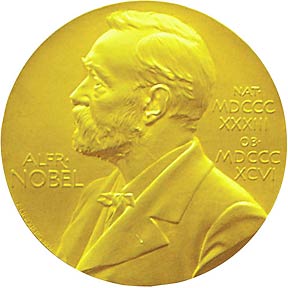
Alfred Nobel’s vision for the prize was created in good will and not as an achievement to proponents of war as we’ve seen with former winners like Barack Obama and the European Union.
The European Union receiving it is a blatant violation of Nobel’s will alone, not to mention the fact it defies Nobel’s will, it has been frequently criticized for supporting regime change in foreign countries with several member-states have supporting violent crackdowns on anti-government demonstrators.
In Nobel’s own will it is stated that the prize is for “the person who shall have done the most or the best work for fraternity between nations, for the abolition or reduction of standing armies and for the holding and promotion of peace congresses.”
The prize is not a lifetime award, but goes, along with the other Nobel prizes, “to those who, during the preceding year, shall have conferred the greatest benefit to mankind.”
Disregarding the obviously laughable options among the 259 nominees, 50 of which are organisations, the favourites for this year barely qualify, if at all. This includes Malala Yousafzai and Denis Mukwege whose work for education and work to aid victims of sexual violent acts respectively should be honoured with an award, but not this one.
It cannot be denied that the prize provides recipients with world exposure, sometimes bringing activists and their causes to international attention.
But when an award can go to a president who took office 11 days before the final date of submission in 2009, it has to be asked, what is the criteria for such an award? Clearly Obama’s only noteworthy point at the time was not being George W. Bush, with that their were seven billion other possible nominations.
The “Peace” Prize has gone through numerous controversial candidates in its long history. Let’s celebrate those who have surely contributed to human welfare and relegate subjective calls to the political spheres that are both their natural habitat and their rightful place: The Committee should disband and nominate no more recipients of the Peace Prize.





You must be logged in to post a comment.