Tag: fashion

  • ‘Rome wasn’t built in a day’: Emily O’Donnell on fashion, TV, and her rise to the spotlight  

    ‘Rome wasn’t built in a day’: Emily O’Donnell on fashion, TV, and her rise to the spotlight  

    Award-winning stylist and fashion broadcaster Emily O’Donnell reflects on the hard work, persistence, and passion that shaped her path in fashion and Irish television.  

    By Peace Okolo

    When Emily O’Donnell was announced as Best Celebrity Stylist at the Gossies 2026 award show, her reaction was anything but rehearsed. 

    “I was genuinely speechless,” she said. “I rarely am.” 

    For someone who has spent over a decade in front of the camera, that moment was refreshingly human. 

    “I think this award meant so much because it was unexpected,” she said. 

    “I was just really grateful to win it and to stand there on the stage in the RDS is just a moment I’ll never forget.” 

    This was an unfiltered moment in a career that mostly looks effortless from the outside, but is built on years of uncertainty, persistence, and behind-the-scenes work that most people never see. 

    “Rome wasn’t built in a day,” she said.  

    Emily O’Donnell at the Gossies 2026 Award. Photo credit: Instagram 

    Now a familiar face on Irish television, Emily’s journey did not start in front of the camera, but in lecture halls and corporate offices. 

    “I started off doing a business degree and then a master’s in PR,” she said.

    “But even then, I always gravitated towards fashion, but I didn’t know how to turn that into a career at the time.” 

    Armed with a business degree and a master’s degree in public relations, she initially followed what she describes as the “predictable” route into corporate PR.  

    But it didn’t take long for her to realize it wasn’t where she belonged. 

    “I was using the degree and the master’s that I had, you know, worked really hard for, but I just felt I wasn’t creatively fulfilled,” she said.  

    “I didn’t want to spend the next 40 years of my life staring at a computer.” 

    This realisation marked a turning point in her career, where she decided to explore styling, a role that wasn’t widely understood in Ireland at the time.  

    “At that stage, people didn’t really know what a stylist was,” she said. “This was many years ago in Ireland, where there wasn’t as much opportunity in the creative fields for women to a certain extent.” 

    Emily O’Donnell in a live television studio. Photo credit: Instagram 

    Emily’s early career was defined by taking every opportunity she could find.

    From writing for emerging online fashion platforms to working behind the scenes on shoots, she slowly combined her interests in fashion, media, and storytelling. 

    Instead of waiting for the perfect opportunity, she started where she could – assisting stylists, taking courses, and saying yes to anything that gave her experience.  

    “I don’t know anyone who works in television who just walked in and sat down on the stool or the couch and started presenting at, like, top level,” she said.  

    “Everyone has made coffee, carried equipment, or assisted in shoots. You learn every part of the business from the ground up.” 

    Then came the opportunity that would eventually change everything.  

    Emily got a call from a producer and was asked to take part in a television pilot, to which she said yes, even though she wasn’t fully sure what to expect. 

    “It was a pilot show for RTE about a cultural exchange between two generations. That show ended up winning an IFTA (Irish Film & Television Award) in 2008 for Best Reality Program,” she said.  

    “That’s when a producer told me I had the ‘gift of the gab’,” she said. 

    “But she said, to become a presenter, you need to be a presenter of something.” 

    For her, that “something” was always going to be fashion.  

    What followed was another pivot in her journey. She went back to education, this time to study television production and presentation, while friends around her settled into more traditional life paths. 

    “At the time, I was wondering, is this ever going to pay off?” she said.

    “But now that I look back, I feel I was being guided in the right direction all the time, even though it was a longer road, it was the road to where I was meant to be.”  

    That moment marked the beginning of her transition into live television and broadcasting. 

    After completing professional training in TV production and presentation, Emily began combining freelance styling with media work, eventually landing a role on a regional TV show that would run weekly for over two years. 

    “I got a call from someone in the business about a new station called Irish TV. They were looking for presenters and asked if I could meet them at Johnny Fox’s,” she said.  

    “Now, my mom, I think, thought I was on my way to get murdered at this point.” 

    But determined to chase her passion, she went anyway.

    Paired with a cameraman and director, she was tasked with producing and presenting a pilot about County Wicklow.   

    “They basically said, if the pilot is good, you’ve got the gig. If not, that’s it.” 

    The pilot was a huge success.  

    “For the next two and a half years, we had a weekly show at seven o’clock every Sunday,” she said.

    “That was the moment I realized I could actually do this full time.”  

    She created, produced, and presented “The Hat Show Fashion Series” and co-produced “Wicklow County Matters,” both of which aired on Sky Channel 191 from 2014-2017.  

    The Hat show series was so well-received that the Irish Times named it one of their Top TV Shows of the Year in 2016. 

    Emily’s persistence eventually paid off when she secured another role as a Fashion Broadcaster with Virgin Media Television, a milestone she had been working towards for years. 

    “I had sent in so many showreels before that,” she laughed. “Some of them were so bad. But I was determined.” 

    Throughout her career, Emily has remained a strong advocate for Irish designers by using her platform to spotlight emerging talent. 

    “Some designers don’t get seen unless someone gives them that opportunity,” she said.

    “One post or one TV feature can completely change their career.” 

    She recalls working with a Ukrainian designer whose work gained major attention after being featured on television. 

    “Her bags ended up in Vogue,” she said. “That’s the impact visibility can have.”  

    “Any time I get the chance to help or promote an Irish brand, I always try to do it because I want to give something back and help, particularly women in the fashion industry.” 

    While her job may appear glamorous on screen, Emily highlighted the realities behind working in the industry, particularly its instability. 

    “It’s not a career where you just walk into a permanent job,” she said. “You have to be comfortable with uncertainty.” 

    She talked about one of the most challenging periods of her career during the COVID-19 pandemic, when retailers were closed and productions halted, forcing her to adapt quickly.  

    “I would say that was the most terrifying time because before that, I felt I was sort of getting to the peak of my career, and things were so busy, and for all that work to just drop off was terrifying and challenging,” she said. 

    For those hoping to follow a similar path, Emily’s advice is simple: be patient, consistent, and self-aware. 

    “Every single thing you do leads to the next thing,” she said. “Even the small opportunities matter.” 

    She also stresses the importance of self-promotion: “If people don’t know what you can do, they can’t give you opportunities,” she said.

    “Blow your own trumpet, essentially.” 

    Looking back, Emily sees her journey not as a linear path, but as a series of stepping stones that led her exactly where she needed to be. 

    “Rome wasn’t built in a day,” she said. “But if you keep going, you’ll get there.” 

    More than a decade into her career, Emily O’Donnell’s journey is still evolving, but if there’s one thing her story makes clear, it’s that success in creative industries rarely happens overnight. 

    Instead, it’s built in layers; through resilience, perseverance, and the willingness to keep going, even when the path isn’t clear.  

  • Weaving in the years: Meeting Ireland’s fresh face in the fashion industry

    Weaving in the years: Meeting Ireland’s fresh face in the fashion industry

    Woven pieces by Sarah Flynn Textiles and designer Sarah Flynn. Images courtesy of Sarah Flynn

    Celebrating a prestigious award ceremony in your living room is a strange dichotomy. 

    That’s how up-and-coming fashion designer Sarah Flynn, of Sarah Flynn Textiles, describes the experience of winning the 2020 Institute of Designers in Ireland Graduate Awards for the Fashion and Textiles category. Nonetheless, the champagne was popped. 

    The project she won it for, entitled Colourfully Conscious, was almost never completed. 

    Weeks before Flynn finished her final year in the National College of Art and Design, universities closed up shop due to Ireland’s first Covid-19 lockdown – leaving many students stranded with unfinished work.

    “We were at home with no equipment and no machinery. It was so hard to work out of a box room with absolutely nothing. We had no access to weaver looms. I discovered my love for hand-knitting during lockdown and based a lot of my collection on hand-knitting and weaving,” Flynn tells me.

    “Thankfully, Ncad got us back in for Makers Month and that’s when we had three weeks to make our full collection.”

    The project

    Colourfully Conscious is a collection of luxurious woven, hand-knit and digital-print fabrics for women’s wear spring summer collection 2020-21. 

    Una Curran modelling a scarlet red knitted piece in the Colourfully Conscious series. Image courtesy of Sarah Flynn

    Inspired by Moroccan tile patterns and fabric materials, Flynn combined traditional textile techniques with the geometric patterns most often seen in Marrakesh. At its core, the collection promoted slow fashion. 

    “I sourced natural materials such as cotton, wool, silks and seaweed yarns. The seaweed yarns I got from a supplier in Belgium,” Flynn says. “As well as that, I sourced dead-stock waste yarns from a local Irish mill, which would have gone to landfill otherwise. So it was nice to up-cycle these materials – they’re natural and still high-quality as well.”

    Una Curran wearing sapphire inspired top from the Colourfully Conscious collection. Image courtesy of Sarah Flynn

    “I think people need to investigate and realise why fast fashion is so cheap. Because the reality is if you’re not paying for the cost, someone else is”

    Sarah Flynn

    Ethical and sustainable production were the driving factors behind this collection. 

    By documenting these sustainable practices, Colourfully Conscious tries to demonstrate alternative practices that can be adopted by the textile industry as a whole. 

    For example, Flynn’s project incorporates natural dyes in an effort to combat the fact that the fashion industry is responsible for one-fifth of the world’s water waste and textile dying is the world’s second largest polluter of water globally

    “Dye is so potent and toxic,” explains Flynn. “It seeps into rivers and oceans and pollutes everything. I thought it was good to focus on that and how you can incorporate a more natural approach and stop using toxic chemicals in the process.”

    Flynn continues: “In Morocco, they concentrated on using natural dyes in their yarns and wools and then weave them into textiles such as rugs and fabrics – turmeric used as a dye is a big one. Paprika is another spice they use and there are loads of flowers too. But obviously, they can’t be grown in Ireland.” 

    While turmeric and paprika may not be readily grown in Ireland, there are sustainable methods being practiced for making natural dyes. For instance, the Apple Oak Fibre Works project in county Clare, who make dye from composted onion skins. 

    Getting down to business

    Woven Frames patterns. Image courtesy of Sarah Flynn

    With the leftover materials from her graduate project, Flynn decided to keep the sustainable cycle going and start up her own business – Sarah Flynn Textiles.

    “Instead of throwing it out, I was like ‘what will I do with this?’ So I decided to make these woven frames and basically use this zero-waste method and turn it into art. Each piece takes about two hours to put together.” explains Flynn.

    Flynn’s pieces don’t shy away from colour. Each squared frame has its own unique design, fixating you into a portal of otherworldliness. 

    I ask Flynn about growing her brand and getting her business up and running. 

    “It’s definitely a learning process. I love being creative so I’m always looking for ways to improve. I think it’s key to recognise that you don’t know everything. So it’s good to be open to new ideas and approaches,” she says. 

    Still in its early days, Flynn wants to stick to her guns and keep her fashion sustainable – a conflict she feels many brands face once they get off the ground. 

    “My brand’s mission is to get customers to see the impact you can curate through strong design processes. And to see the value of hand-made products. Instead of something that’s made a hundred times from plastic or clothes made en masse from cheap materials.” says Flynn. 

    Fast fashion is a problem facing the world over, and with online consumption increasing during the pandemic, lots more garments will find themselves in landfill.

    “I think people need to investigate and realise why fast fashion is so cheap. Because the reality is if you’re not paying for the cost, someone else is.” 

  • High heels, big problems?

    High heels, big problems?

    The idea has graced the internet for over a decade: the economic climate determines the fashionable height of heels in women’s shoes. Is this an undeniable fact or just fabulous fiction?

    The stiletto – typically ranging from one to five inches – has been adored for decades. The designers credited with its creation were Salvatore Ferragamo, Roger Vivier and André Perugia. The shoe, rising to prominence in the 1950s, came at a time when Europe’s economy began recovering from World War II. The stiletto swiftly became a staple for many women across the globe. The shoes were famously seen on the character Carrie Bradshaw who spent a small fortune on Manolo Blahnik. Popular luxury brands such as Jimmy Choo, Christian Louboutin and Oscar de la Renta still carry this style today  

    In 2009 – at the ‘height’ of the recession – it was reported that the average size of women’s heels mentioned in social-media posts was an incredible seven inches. However, by the year 2011, the average dropped to a far more comfortable two inches.

    Clogs first appeared in 1300s European fashion. Their transformation to platform state – like many popular shoes – began in the 1970s, when clogs were worn by both men and women. Their demand slowly decreased until they resurfaced in Viktor & Rolf’s 2007 Winter Ready-To-Wear fashion show

    Also in 2011, Researchers at computer company IBM analysed fashion data to determine what the most popular pair of shoes were. They found that during those times flat shoes and kitten heels were in high demand.

    The evolution of the platform sandal started with 13th-century middle eastern kabkabs, which then led to the European chopine. Other periods where there were major spikes in heel height were in 1929 following the Great Depression and in the late 1960s and early 70s. Notably, the 1970s brought with them another economic downturn for the Western world

    “Usually, in an economic downturn, heels go up and stay up — as consumers turn to more flamboyant fashions as a means of fantasy and escape,” says Trevor Davis, a consumer product expert at IBM’s Global Business Services Unit.

    Even trainers couldn’t escape elevation. By 1990 the original trainer – the plimsole – was a thing of the past. Collections by Buffalo London, Fila, Nike and Northwave in the 90s paved the way for today’s chunky sneakers. Could the West’s recession of the early 1990s be a part of this trend? The fad originally died out in the early noughties only to be revived again in 2013 by the Adidas Ozweego
    In 1938, designer Salvatore Ferragamo presented a multi-coloured platform wedge named ‘The Rainbow’. Coincidentally (or not), the US faced a brief recession between 1937 and 1938 – America’s third worst downturn of the 20th century
    During World War II, wedges grew in popularity because of the lack of leather and rubber available. The materials were needed for the war effort and women were forced to use alternative materials to make their footwear. The desire for wedges faded as the fashion cycle turned to other heels for inspiration. However – along with platforms – wedge heels were all the rage in the 1970s
    One of the most iconic wedges was seen on Ginger Rodgers in 1945, where she sported a pair with no mid-soles
    Fashion is not only an art form but a means of escapism. The fluctuation in heel size has distracted consumers from focusing on economic failures in the past and may continue to do so

    Despite the fact that for the last year the majority of heel wearers have traded their stilettos for slippers, even a pandemic can’t stop the fashion wheel from turning.

    In terms of footwear, it seems like the only way is up. Luxury brands such as Miu Miu, Versace and Moschino lure us onto greater heights with their current collections. Could it be an indication that the worst is yet to come?

    [poll id=”2″]

  • Meet the young entrepreneurs using Depop to revolutionise the fashion industry

    Meet the young entrepreneurs using Depop to revolutionise the fashion industry

    Clothes Rack, photo via pixabay

    Fashion has never been more disposable. A quick scroll through the fashion hashtag on Instagram will present you with an endless feed of bloggers’ Shein hauls and Boohoo Ootds.

    Because mass produced clothing is sold at cheap prices, it is often treated as disposable by consumers. It feels like every day there’s a new trend, promoted by the latest influencer, that’s being swept off the rails and destined to spend eternity gathering dust in a wardrobe or decomposing (slowly) in landfill. 

    Keeping up with these trends seems like harmless fun, and it may not be obvious that the clothes we wear are one of the biggest culprits when it comes to harming the planet. Carbon emissions, excessive water consumption and the release of microplastics into the environment are just some of the problems fast fashion presents – not to mention the exploitation of garment workers.

    The good news is that slow fashion is on the rise. With well-known Irish personalities like Roz Purcell and Tara Stewart using their platforms to educate others on the sins of the fast fashion world, as well as to advocate for shopping second-hand, it seems thrifting is now on trend.

    “The fast fashion era arose from the manufacturing of low quality clothes needing to be replaced faster, which in turn created the mindset of clothing being disposable.”

    Blathnaid Devilly

    Depop is at the forefront of the sustainable fashion movement. Experiencing a massive influx  of users since the pandemic hit, it describes itself as “the fashion marketplace app where the next generation comes to discover unique items”.

    The platform is a godsend for young designers and entrepreneurs looking to grow their small companies.

    Caitlín Ní Dochartaigh, owner of Sugar and Spice Vintage, uses Depop to host her store which specialises in 90s and early 00s clothing and accessories.

    “I really love being able to curate the style and aesthetic of my shop to build my brands image. I’m not very tech savvy so it takes away the pressure of maintaining my own website because Depop hosts my shop. The app also has several features to highlight their sellers which from my experience has been beneficial for gaining followers and boosting sales,” she says.

    Ní Dochartaigh, who describes her personal style as a hybrid of a gothic Bratz doll and Sporty Spice, handpicks the majority of her stock from European thrift markets.

    “Sustainable fashion is really important to me,” she says. “Fast fashion has an undoubtedly negative impact on the environment and the people producing our clothes, so sustainable fashion is a great way to avoid these harmful consequences. I also really love finding funky items that you won’t find on the high street. It definitely helps you to cultivate your own distinctive personal style. And it stops clothes from going to landfill which is always a bonus.”

    Blaithnaid Devilly is a Dublin-based stylist who is also reaping the benefits of Depop for her store, Bedelic. A lover of all things 1970s – she tells me she could watch Reeling in the Years on repeat just to see what people wore – Devilly uses Depop to sell handpicked pre-loved garments.

    Bedelic stemmed from her love of fashion’s ability to express one’s personality and a nostalgia for the charity shops she would frequent as a child. Through uploading aesthetically pleasing images and styling unique looks, Devilly garnered attention and built a following on social media.

    “I wanted to create a place where people of any style, size or gender could find what they are looking for and feel comfortable in standing out from the crowd and being whoever they want to be,” says Devilly.

    Devilly admits that her lifelong love for sustainable fashion was less to do with an eco-conscious mindset and more so a desire for an original personal style.

    “It was only when I started to sell online did I realise the importance of someone purchasing second-hand and the positive impact this new obsession could have in fighting climate change.”

    If you’re a fast fashion addict, starting your journey can be a bit daunting. Devilly’s advice is to start with what you already own.

    “Take everything out of your wardrobe and try to style new looks together. It can be quite fun to play dress up while blaring your favourite tunes. Guaranteed you will come up with 10 new looks that you would have bought straight out of a magazine.

    “If you’re not ready to drop fast fashion completely, then I have this rule where if you do buy from brands, buy something that would last over ten years. You see the fast fashion era arose from the manufacturing of low quality clothes needing to be replaced faster, which in turn created the mindset of clothing being disposable.

    “The price of these garments don’t reflect on their true cost. You will certainly have to spend more money on your new garments but the clothing would be better quality and down the line you will purchase less.”

  • Beanantees: The apparel brand empowering Wild Irish Women

    Beanantees: The apparel brand empowering Wild Irish Women

    Beanantees was created by two gals from the hills of Donegal,  Lana McGhee and Ciara Gallagher. McGhee had experience in marketing and Gallagher’s creativity stemmed from her background in fashion and design. Roise Collins chatted with the women about their brand and how it came about.

    Image source: Beanantees

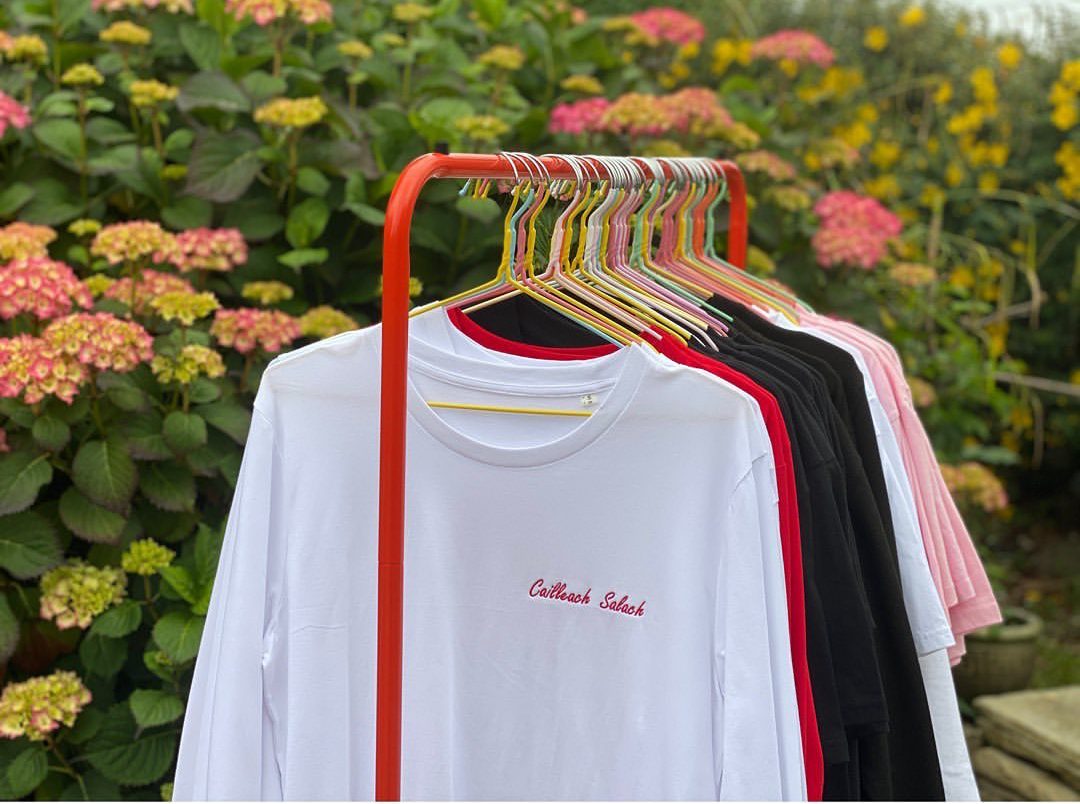
    They sell a wide range of tees, jumpers and bags all embroidered with slogans as Gaeilge. All are influenced by music, feminism, culture and clever word play. 

    McGhee explained how it had all begun as a bit of craic. “Ciara had been embroidering her own clothes with funny sayings as Gaeilge for a while and I thought it was a great idea and spotted a gap in the market,” she said.

    The pair started with a pop up shop in the Bernard Shaw in late December and launched the website on the same day. Not quite in time for a proper Christmas launch, but they took a few snaps and posted them on Instagram. 

    They were ecstatic when they made a sale within the first hour.  She said, “We couldn’t believe it wasn’t from a friend of ours?!  We completely sold out in a couple of days and had to start taking preorders for the New Year.”

    The brand kept growing within the first few weeks. They started getting coverage on platforms like Lovin’ and Stellar and hit 1000 followers.  “That is when we realised there was actually something there,” McGhee said.

    “We came up with some new designs to celebrate things like International Women’s Day and ‘Galentine’s Day’ and the ideas just kept flowing.”

    Branding through Gaeilge was really important from day one, as Gallagher is from the Gaeltacht and grew up speaking Irish in school and at home. McGhee grew up in Glasgow and attended an equivalent of a Gaelscoil, where she learned Scots Gaidhlig which is fairly similar. 

    “So, we both had a grá for it, although neither of us are the most confident speakers. But that’s the whole idea. It’s adding a cúpla focail in places they aren’t normally found. As we’ve gone on we’ve mixed it up with some English on ones like ‘GRMA, next’.”

    “It’s adding a cúpla focail in places they aren’t normally found. As we’ve gone on we’ve mixed it up with some English on ones like ‘GRMA, next’.”

    She said, “We want them to be worn by everyone and not just for Gaeilgeoirs, so that works in our favour.”

    McGhee’s marketing background came into play when establishing an online presence. She said, “Social media has been a key driver for us. We have zero marketing budget in terms of paid ads. Partnering from charities has helped our profile in the nicest way possible.” 

    Since day one, Beanantees have donated 10% of their main collection to the Rape Crisis Network Ireland and the Dublin Rape Crisis Centre. For their ‘Is Cailín Doire Mé’ range, they partnered with Alliance for Choice who advocate for free, safe and legal abortion care in the North and recieved 20% of all profits from that range. 

    They also support the Russian LGBT Network and Galway Pride on their LGBTQ+ ranges. 

    “We don’t reach out to influencers in the way others do, but if we feel there is someone connected to one of our items, for example, we might send them one,” she said.

    McGhee continued, “For example, when we launched our ‘Is Cailín Doire Mé’ range, the actress who played Sister Michael from Derry Girls, Siobhan McSweeny, kindly shared it. We reached out to her and asked if she would like one. We prefer to do it like that than figure out who is the current Insta star.”

    “We also like to champion other cool gals in music, fashion and art. We’ll share what they are doing and they share what we’re doing. It’s a lovely part of what we do. That kind of relationship building has led us to opportunities like working with the Irish Women in Harmony,” she said. 

    Irish Women in Harmony was a charity single released by 40 Irish female artists who collaborated to perform ‘Dreams’ by the Cranberries. The collaboration was organised to raise funds and awareness for Safe Ireland, an organisation that provides support for women and children who are experiencing domestic violence and abuse.

    McGhee said, “They asked if we would like to be involved and we jumped at the chance. We brought them a few ideas and we settled on ‘Don’t mess with Mna’. 

    Image source: Beanantees

    “Once we had that sorted, we sent them to a few of the gals involved and again social media really carried the campaign for us. We’ve now done three rounds of 100 t-shirts and they’ve all sold out in less than 15 minutes. It’s just been brilliant to be able to donate such a huge amount to Safe Ireland and it’s obviously been lovely to see so many familiar faces in our little Beanantees!” she said.

    For many local or new businesses, the pandemic has been extremely challenging. But thankfully McGhee and Gallagher have been kept on their toes. “We have been so blessed to be kept super busy throughout the pandemic.

    “Even in the past couple of days since the Level 5 restrictions have been reintroduced we’ve had so many lovely shoutouts and features like the Irish Times Christmas Gift Guide.” 

    In these challenging times it is now more important than ever to support local businesses. 

    McGhee said,  “I think people are more interested in investing in Irish made gifts and with the high street closed they are going to have to shop online anyway so they may as well shop Irish. And we feel exactly the same. I’ve tried to shop Irish as much as I can the past few Christmas’ and plan to do the same this year!”

    If you would like to keep up to date with the Wild Women from Donegal, you can follow their Instagram @beanantees or to bag an empowering sweatshirt or tee for a Banrion on your Christmas list go to their website https://beanantees.com 

  • Ireland’s ‘Instagrammable’ Industry

    Ireland’s ‘Instagrammable’ Industry

    By Jade Carpenter

    Have you ever posted a selfie on Instagram and felt like you could be the next Kendall Jenner? You may not be too far away according to some of Ireland’s young models.

    Social media seems to be changing the modelling industry, not just as a means of scouting models but also for promoting them, with the idea of self-promotion being widely encouraged.

    Pádraig Ó Luasa, is a tall, chiselled jawed, wolf blue eyed male model whose hair looks like it was cut off a Ken doll. As he sat across from me grinning, his flawless smile was somewhat distracting. Pádraig started modelling at the age of five doing campaigns for brands such as HB ice cream, and later at the age of fifteen he joined an agency where he began modelling in his teenage years.

    Pádraig said that social media has had a major impact on modelling: “It happens a lot that people who are more popular on Instagram will get the job over someone else. For example, a few years ago, a lot of people went for castings to open for Givenchy in Paris fashion week, but they gave it to Cameron Dallas who didn’t have to go to any casting…. There is kind of a pressure to keep up an online appearance especially with certain agencies they’d be like you need to be getting this many followers a week, you need to put this up then and this up now, whereas others don’t put pressure on you like that.

    “Some agencies wouldn’t even look at you if you didn’t have a certain number of followers because they are all looking towards the influencers now, which is a problem. It’s even in an agreement sometimes before you book a show that you will put up a certain number of photos from that job on your Instagram.”

    Pádraig believes being a male is an advantage over the females in the Irish industry: “There is a lot less competition…I’ve worked with lads that are well into their thirties whereas I haven’t seen a girl over the age of twenty-five, yet. Men don’t really hit their peak until their late twenties and you can see that with the faces of brands and who’s walking in shows.”

    So would he like to pursue it full time?: “No I don’t think so, it’s just not a good situation to be in all the time, wondering when you will work or when you will get paid, because each job has three months to pay you. I do love doing it and I’ll keep going as long as I can and see how it goes.” Pádraig has since graduated from UCD with a degree in economics and politics.

    “Demanding, hectic, rewarding”, are three words full time model Abby Harris, used to describe her experience. The natural beauty from Ballymore in Co. Kildare is signed to agencies in Dublin, Milan, New York, Barcelona and Hamburg. Abby has done many notable campaigns including being the face of Weir & Sons as well as Peter Mark.

    Another model scouted on social media, Abby explained: “When I was 16, the managing director of an agency was mutual friends with someone on Facebook and got my number off them and contacted me asking me to go into the agency, so I went in and got some shots taken and then started working from then on.”

    Abby was extremely successful within the industry and decided to leave school to further her career: “I started modelling in Ireland and I was so surprised by how nice everyone was, it’s not at all cut throat here, everyone looks out for each other and a lot of the older girls helped and taught me when I began…it’s a lot more competitive abroad…but to further your career as such you’d need to travel.”

    Although she loves traveling with the job, Abby said if you were content with the size of an Irish based career, a full time job is possible for a female model in Ireland. “It’s definitely possible for a girl to be a full-time model in Ireland, there’s actually a lot of work here, there’s not so much work for male’s…I think it’s one of the only industries in the world that females can actually earn more than males.”

    In today’s society, people strive for the perfect Instagram feed and photos in a world of influencer takeovers. Nowadays, a good social media presence plays a huge part in many jobs in the entertainment and fashion industry. As we can see here, it can be worthwhile, now everyone, you know what to do, get your pouts out on Instagram!

  • Dublin Street Style 2018

    Dublin Street Style 2018

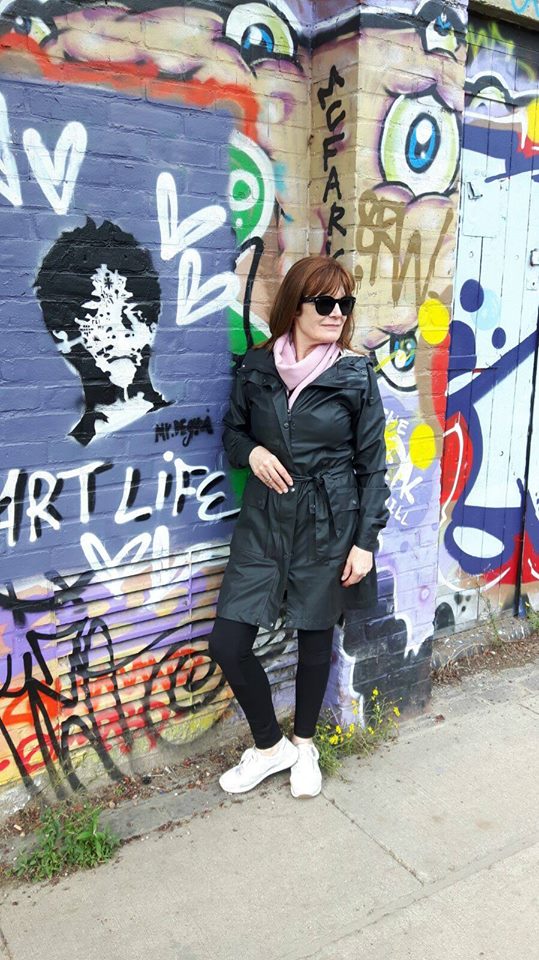
    We took to the streets to find Dublin’s most stylish, where they got their clothes and inspiration for our readers.


  • Fashion doesn’t stop at 50

    Fashion doesn’t stop at 50

    Blogger Hilda Smith spoke to thecity.ie about her fashion blogging success. Hilda created her blog, Over the Hilda, three years ago and now has over 3,000 followers on Instagram. 

    On her reasons for starting a fashion blog, she says: “I realised that there were no bloggers catering to women of my age. It was as if only young people were interested in fashion. Also, I was tired of being sold skin creams and makeup that were not right for an older woman’s skin.

    “In a moment of madness, I said I was going to start a blog myself. I am a technophobe, who even found it difficult to get into Netflix, so my family did not hold out much hope of success.

    “I had plenty of life experiences to share … menopause, my interest in staying healthy and fit into midlife and older … so having laughed in my face at first, they finally got behind me.”

    Hilda Smith Instagram @overthehilda
    Hilda’s blog details her fashion tastes as well as elements of her personal life // Instagram @overthehilda

    She said she has always been an over-sharer.  She writes her posts as if she is chatting to friends and telling them what she is doing. “It could be about how I am worried about my memory, how to survive 35 years of marriage and not kill him, or about the wonderful new lipstick I have found or the cream I consider is not worth the money.”

    Before she got into blogging, Hilda was a secondary school English teacher at The King’s Hospital for 34 years. She has been retired for six years. She graduated from Trinity in 1974 and was involved in drama and hockey coaching.  

    Hilda gets her fashion inspiration from magazines, other bloggers, and her daughter Courtney, who is regarded as one of Ireland’s top fashion stylists.

    She says the main aim of her blog is to start a conversation with similar like-minded women of a certain age, “to discuss issues such as being ignored by the media because we are considered irrelevant”.

    She said: “I suppose I really want to showcase that when we reach 50, 60 or 70, it does not mean that we have to go and hide away. I was always interested in fashion and I still am. I will not be told how to dress.

    “I feel that women over 50 have been undervalued, overlooked and ignored by brands. It is as if when we turn 50 we are expected to start wearing granny clothes or elasticated trousers. Many of us are interested in fashion and looking good and we are not invisible.

    “I love seeing older women rocking their leathers and ripped jeans. And I also admire those who wear beautiful elegant dresses and timeless pieces.”

    Hilda Smith Instagram @overthehilda (2)
    Though Hilda is not your stereotypical blogger, she believes her fashion sense is just as valuable as any 18-year-old influencer // Instagram @overthehilda

    Hilda says that there have been so many articles recently stating that women should not wear jeans, bikinis or short skirts after a certain age, and they certainly should not show off their cleavage after 50.  She believes women should ignore these rules about dressing for your age and just wear what they want.

    Hilda says she usually shops in Zara, Warehouse and H&M and has found items in Penneys and Topshop too.

    “I like LK Bennett for something special and find Arnotts wonderful if I want to spend a bit more. I will shop anywhere and love browsing in boutiques too. I have only recently bought into the online trend, generally, I prefer to feel the material, but if I know a brand suits me I can shop online.”

    Speaking about her style, Hilda says: “I am classic with a twist, I guess. I love boho but it doesn’t really suit me; however, I love it on others.  My style has changed and developed hugely. I am less afraid of trying something different. I have worn many of the trends before and love seeing them re-interpreted.”

    Hilda says in order to create a successful fashion blog you either need lots of clothes, money or contacts in fashion or an amazing photographer who knows how to make you look good.

    She says: “It takes time to build up a following and I have done really no self-promotion. But my name is getting out there now and brands are approaching me, although I want my blog to be about more than fashion.”

  • Berlin celebrates iconic fashion legend Versace

    Berlin celebrates iconic fashion legend Versace

     
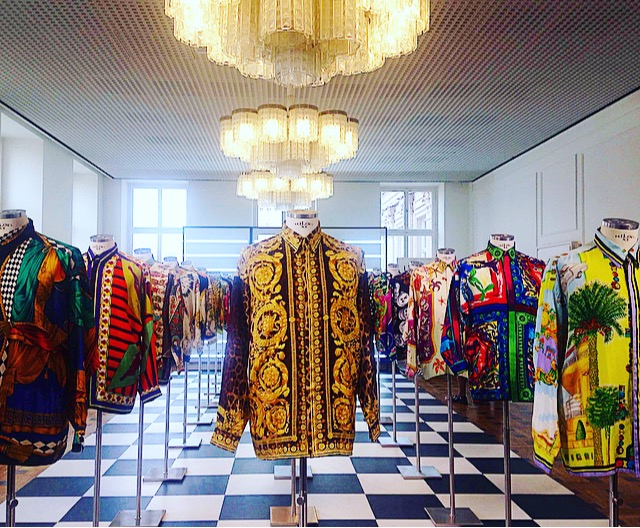
    Léa Pelard reports on the Gianni Versace Retrospective held in Berlin until the 13th of April.

    (more…)

  • Chanel Says Yes to Digitalisation

    Chanel Says Yes to Digitalisation

    Léa Pelard reports on the French luxury brand Chanel’s collaboration with e-commerce giant Farfetch to revitalise their customers’ in-store experience.

    (more…)