I know what you’re thinking; it’s way too early to be thinking about buying Christmas jumpers. But think about it, the good ones are always gone when you leave it too late!
So at theCity.ie, we’ve put together our top five favourite Christmas jumpers for the festive season!
First up is this red ‘Ho Ho Ho’ knitted red jumper with sequence from H&M. There’s nothing quite like a red jumper at Christmas and the contrast of the knit with the sequence is gorgeous!
Price: €14.99
This one from mandmdirect.ie looks so soft. It’s made out of super soft eyelash yarn with a sewn-on sequin motif which makes a reindeer!
Price: €20.95
This Boohoo.com forest green sweater is super festive, and the Home Alone reference just makes you want to grab a hot chocolate and watch a Christmas movie! If green isn’t your colour it is also available in white, grey, red and black.
Price: €20
Here we have another H&M sweater and the print is so cute. If you’re a cat lover you’ll love this cat with lights around him and caption ‘Meowy Xmas’. H&M has a great selection of Christmas jumpers at really affordable prices.
Price: €14.99
The last jumper is from Littlewoodsireland.ie. It’s a sequence ‘Elfie’ jumper, perfect for anyone who loves taking selfies!
Influencer. It seems to be the term of the moment.
This single word is usually always followed by the same question; what the hell is an influencer?
To put it simply, an influencer is a social media user who has an influence over a large number of followers.
There are fashion influencers, beauty influencers, fitness influencers, and so on. You name it, someone is trying to influence it.
These influencers are often sponsored by large companies to promote their products to followers. Some of Ireland’s most successful influencers include Suzanne Jackson (So Sue Me), Pippa O’Connor Ormond, and Rob Lipsett.
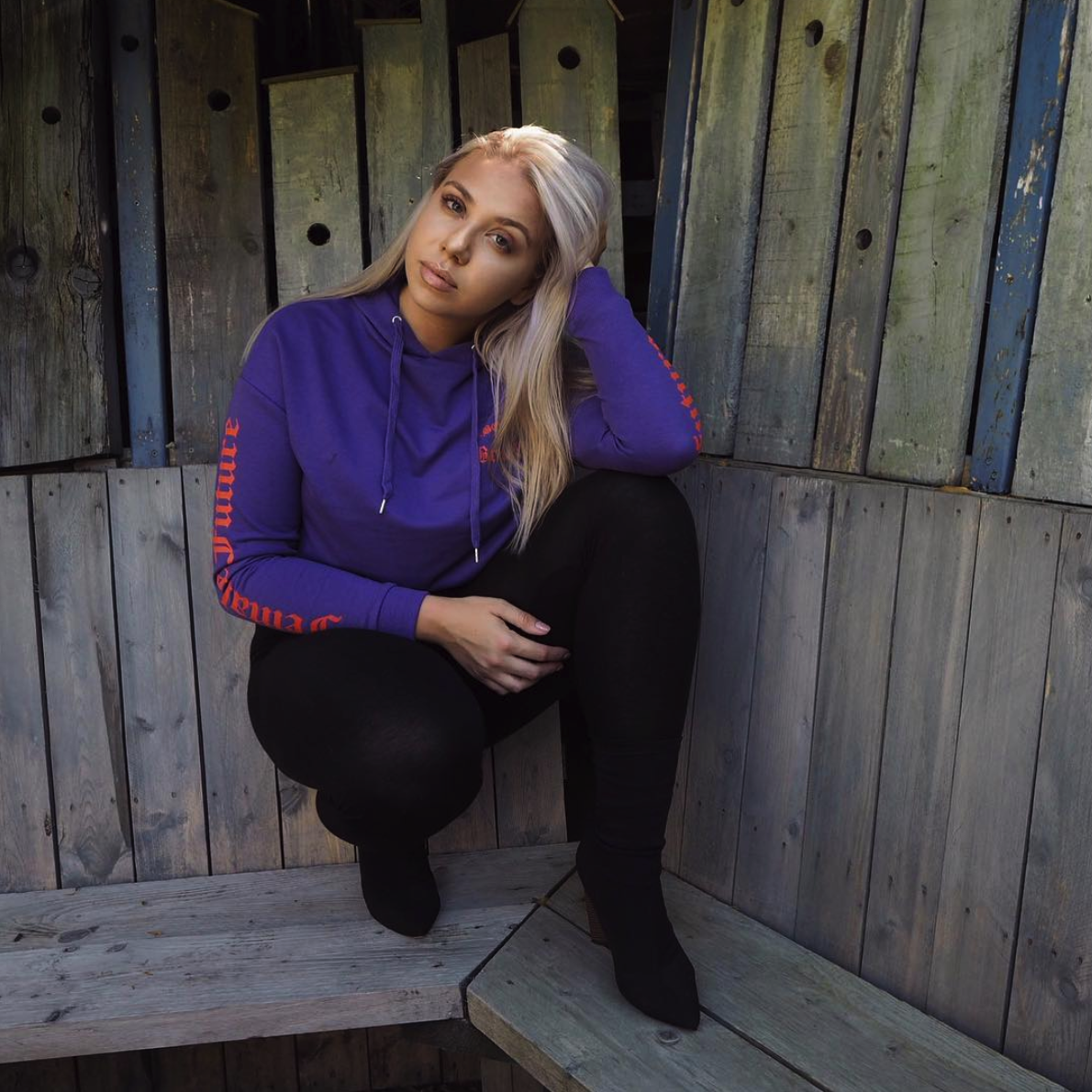
Emma Doyle is a 21 year old fashion design student from Dublin who is trying to make her mark as a social media influencer in a saturated market.
Emma Doyle, a rising star in social influencers
“I started my blog the summer after I finished school in 2014,” says Emma. “I was looking at doing fashion design in college so I started it as a fashion blog and I wanted to put up different outfit pictures.
“I didn’t expect it to become anything,” she explains. “I just wanted to do it for myself to see if I liked it.
“I found out that I really liked makeup and beauty, which I didn’t realise. I started incorporating that in as well and doing reviews when I bought new makeup and products.”
It has been a challenge for Emma to establish a following. She started her blog from nothing and it has taken a lot of time and effort to build her profile. She now has 12,000 Instagram followers and 1,500 people who log on to Snapchat to watch her everyday routine.
“It’s weird because [my following] kind of goes up and down,” she says. “You get out what you put into it. If I have a busy few months when I’m in college and I’m scraping by trying to put up a post a day, I won’t get many new followers.”
Often, followers come when you least expect them. Emma explains: “Say when I’m away on holidays and I’m putting up a load of pictures when I’m away, I’ll end up getting way more followers that week.
Emma Doyle finds posts on holiday outfits attracts followers
“It might not even be blog related. It could be my outfit on holidays and that would be it. It’s weird.”
When Emma started blogging in 2014, it was the fashionable thing to do. Snapchat was in its infancy and Instagram videos or stories had not yet been introduced on the picture sharing app.
However, as technology has changed, so have Emma’s tactics.
“I feel like people don’t really read that much anymore so I rarely write on my blog,” Emma explains. “I think it’s moved to watching things. You need to Snapchat and make videos to get your point across.”
Emma believes that coming on camera and speaking to her followers creates a level of intimacy and this is why people continue to follow her.
“I have a small audience but they’re all interactive,” she smiles. “They all do really care.”
Despite her growing success, there are times the fashion design student wonders why she continues to blog.
“Sometimes I do question ‘should I keep going with this?’ and think about the things I shouldn’t do anymore,” Emma says.
Are there ever days where she’s just not bothered?
“Definitely,” Emma says with a firm nod of her head. “There are days that I feel like I’m in a rut and like you feel that you’re not improving. You’re wondering what’s the point in me doing this if it’s not going to be really successful?
“I think it’s hard because no matter how far you go, you think this. When I first started, I never thought I’d get to where I am now. Now I’m here, I feel like it’s the same and I haven’t gotten anywhere.”
It’s the small things, however, that motivate Emma to keep going.
“I get press stuff sent to me now,” she smiles. “I get sent new products and I didn’t get that at the start. So I have to think about that too and think of that as success.
“Sometimes a bigger company will reach out to you and it’s like wow. In your head you’re thinking ‘I can’t believe that this is happening’ and you’re shocked by it. You can’t even imagine it happening a month before.
“Things happen that you don’t expect and it gives you a bit of motivation.”
Talking to Emma across a small table in a Dublin coffee shop, she radiates confidence. There is an air of self-assurance that streams from her voice as she speaks passionately about what she does.
She explains, however, this was not always the case.
“Anyone who knows me knows I have never been overly confident,” Emma says. “Speaking on Snapchat and Youtube has made me a different person. I feel like I can talk to people.
“Even in college I can talk to my lecturers much easier. Before, I wouldn’t even ask a question.”
What changed?
“I just don’t care,” Emma smirks. “You grow a thick skin and now I actually just don’t care. Sometimes I’m thinking ‘should I post this? It’s a bit risky or a bit weird’. I wonder ‘should I say this?’
“Then I realise that I just don’t care and I post it.
“If I cared, I wouldn’t be where I am. At the start if I had cared when I got my first nasty message, that would have been it and I would have finished.”
Social media influencers have come under fire in recent months about the authenticity of their posts and whether they are talking about a product because they actually like it or because they are being paid to talk about it.
The Advertising Standards Authority of Ireland (ASAI) launched a new code of conduct for bloggers and influencers in January 2016. This states that influencers must say when they have been paid by a company to promote a product by writing either #ad or #sp (sponsored) on their photos and videos.
Despite these rules, influencers have gotten into hot water recently for not posting the relevant hashtags. In recent months, at least two influencers have been issued warnings by the ASAI for not disclosing ads.
Should we be questioning the authenticity of influencers?
“I question it myself,” Emma says. “Sometimes you see a post and you just know it’s sponsored. You know when you look at it. You can tell by the picture and the way it’s posed.
“I can almost predict it and then I scroll down to the caption and I see #ad I know I’m right.
“I do think that’s it fair that they’re paid,” Emma says. “I don’t think it’s bad being paid. Why wouldn’t they get paid for doing it? It is a full time job.”
She is forced to stop when I start laughing. I question whether it is a full time job.
“I think it is,” she says. “I understand how much time and work goes into it.
“For every sponsored Instagram post, they have to do their makeup and get a photographer. Say for example #IWorkWithPrimark, they have to go and shoot those looks. They get a voucher, go into Penneys, buy the stuff. Obviously you wouldn’t complain about that. That’s not a chore.
“Then you have to go hire a photographer and get them to take the photos. They have to do their makeup and style their outfits. They have to edit the photos, put them up and write a caption as well. It does take time. That’s a couple of hours out of your day. If they’re paying that photographer, that’s money out of their own pocket. It is fair they get paid.”
Is it a sustainable full time job that Emma would consider when she leaves college?
“I don’t think it’s going to be going anywhere,” she says. “I think it’s only going to get bigger. More people want to work with influencers. It’s hard to know what it will be in the future.
“I don’t know what I want to do when I finish college,” she reveals. “Last year, I was thinking about not going back to college and just seeing where it would take me. I wasn’t sure if I definitely wanted to do my course. So I was going to try and see what I could do by blogging full time.
“I decided to go back to college and finish it off because it’s only one more year. I’m happy I did go back. My course is beneficial and I need something to back me up. It’s not safe for me to do it full time yet and I need a steady income and routine.”
So what does the future hold for Emma Doyle?
“I’m not thinking about what I’m going to do when I leave college just yet,” Emma says.
“I’d love to try fashion buying or styling. I’d love to design or have my own online fashion shop.”
A classic outfit post influencers would be expected to post
It’s clear Emma will have a lot of options and opportunity when she leaves college next May. Whether she will continue to blog and “influence” remains to be seen.
What’s also clear however, is that influencers are here to stay. In fact, the influencer industry is only going to grow as we become more and more dependent on that rectangular piece of glass we carry around in our pockets.
The future of fashion is well and truly here — or is it? A gadget that rates the outfits you choose has raised the hackles of some trend-setters. Aoife Loughnane checks out the new look.
Amazon has announced its latest venture, known as the Echo Look style assistant.
The Echo Look is the newest member of the Echo device family, which includes the Echo Dot and the original Echo or ‘Alexa’.
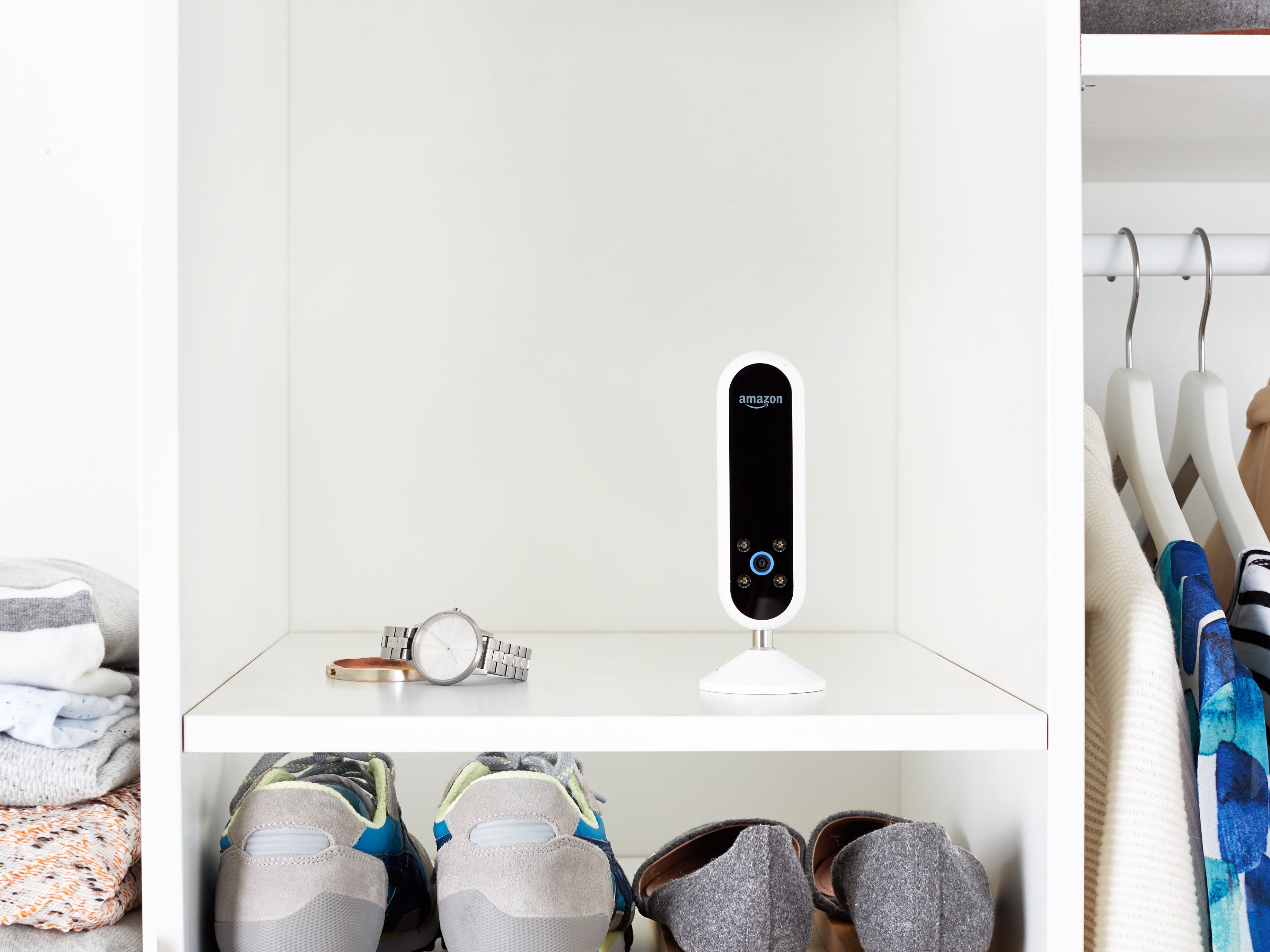
It is what Amazon is calling its hands-free style assistant: it is voice activated and will take full length photos and videos of you in your various outfits and give you an opinion on how you look.
As if we need a robot telling us our favourite jeans look awful on us.
The device comes with a built-in depth-sensing camera and flash that allows full-length images and videos to be taken of yourself via voice command.
Images can then be added to a daily lookbook to keep track of outfits and compare them with each other.
In addition, its style check feature “combines machine learning algorithms with advice from fashion specialists” to help in choosing your outfit, according to Amazon.
This video shows exactly how the Echo Look looks and operates.
Dividing opinion
This new device is dividing opinions on social media, with many people arguing that it takes the individuality away from fashion.
Goss.ie entertainment reporter Aine O’Donnell says that she is not inspired by Echo Look and finds it offensive.
“Fashion is a creative outlet, and no one wants to be told what not to wear – especially by a machine,” she tells The City. “If I want to wear clashing colours because I feel like it, I will. I’m pretty sure the world would respect me more for that, than if I was to become a fashion clone.”
O’Donnell touches on the problem with the core element of fashion – individuality. If a robot is telling us what looks good, doesn’t that go against the whole principle of one’s own personal style?
The Echo Look rates users outfits. Image by Amazon.com
Irish fashion designer Maria Lola Roche is also concerned about the issue of individuality. “’Robots need to be programmed by an individual, and it would be naïve to think that their software isn’t going to be someway affected by advertising industry. You will never know using a robot. Using a trusted stylist you will always know.”
O’Donnell agrees. “Although it can recognise trends and such, it completely misses the point. Fashion is a way of expressing yourself because you wear something you chose specifically for yourself. Fashion is individual, unique, and expressive – no bot is going to take away my personal style,” she says.
The expansion of the Echo family is not doing much to damage Amazon’s figures. Founder Jeff Bezos’ personal wealth rose last week by $1.5 billion (€1.39 billion) as the share price of Amazon.com rose by $18.32.
With the addition of a camera to the Echo, Bezos has tapped into a massive market – fashion.
Bezos made his ambitions clear when he said in an interview almost a decade ago: “In order to be a $200 billion company we’ve got to learn how to sell clothes and food.” In regards to food, Amazon have a grocery delivery service subsidiary called AmazonFresh.
The Echo Look has caused concerns over privacy. Image by Amazon.com
Techcrunch has commented the future of Amazon if it cracks the fashion market, saying that, “It’s not hyperbole to say many fashion brands and retailers are facing a doomsday scenario if Bezos is able to realize the scale of his sartorial ambitions.”
There have been privacy concerns voiced by experts over issues surrounding the fact that the Echo Look camera regularly takes and stores pictures of both users and their homes.
“A lot of consumers see the convenience and don’t think about the long-term records that are being kept,” Peter Swire, an expert in privacy law at the Georgia Tech Scheller College of Business told Wired.
However, users can delete their photos that the Look takes of them at any time. Wired also said that Amazon confirmed that Echo Look will only use its machine learning smarts to identify outfits, and not anything else that it is captured in the photos.
As Amazon’s policy on how it might prevent invasive data collection is unclear and lacking, the future of privacy remains to be seen.
The Echo Look is priced at $199 and currently available only by invitation to purchase on Amazon.com.
It’s true what they say; one man’s trash is another man’s treasure. I explored the best vintage and second-hand shops around the city in search of key winter pieces for a fraction of the cost.
It was hip-hop artist Macklemore who catapulted ‘thrifting’ into the pop culture sphere in 2013 with his undoubtedly catchy song ‘Thrift Shop’.
Second-hand shopping has become increasingly popular in recent years, especially with the rise and fall of the Celtic Tiger where people were willingly giving up their designer goods for those less fortunate – in other words, us.
Dublin city centre has an abundance of hidden thrift and vintage stores catering for all tastes, shapes, and sizes. The secret is knowing where to go.
Proceed with caution… Be cautious, especially in charity shops. Most of the clothes are previously owned and unfortunately some shops do not clean or wash the clothes before re-selling. Give it a whiff – you’ll know.
Don’t expect to find vintage Chanel the first time you go thrifting, but if you look hard enough you will be able to spot the expensive labels. We love this real leather duffle bag from the Dublin Vintage Factory.
An absolute steal at €25, the caramel colouring is completely on-trend and would look great against warm burgundy and burnt orange tones.
Where do I start…? Temple Bar is home to a marvelous bounty of second-hand and vintage shops and is a great starting point. From second-hand designer goods in Siopaella to re-worked vintage clothing in Tola Vintage, there is something to suit all shapes, budgets and tastes.
Situated close to Temple Bar, George’s Street is home to a large collection of charity shops that can be found as far up as Rathmines. St. Vincent’s charity shop, next to Pitt Bro’s on Georges Street, has a great vintage section upstairs where you can get re-worked Levi jeans for as little as €15.
Tahiti Vintage Dublin, located in our historic George’s Street Arcade, is a tiny digs filled with vibrant prints and once-off jackets that would bring a relaxed twist to any suit. We love this oversized western-inspired cotton shirt (€18) that would be perfect for casual Friday’s in the office, or after work drinks.
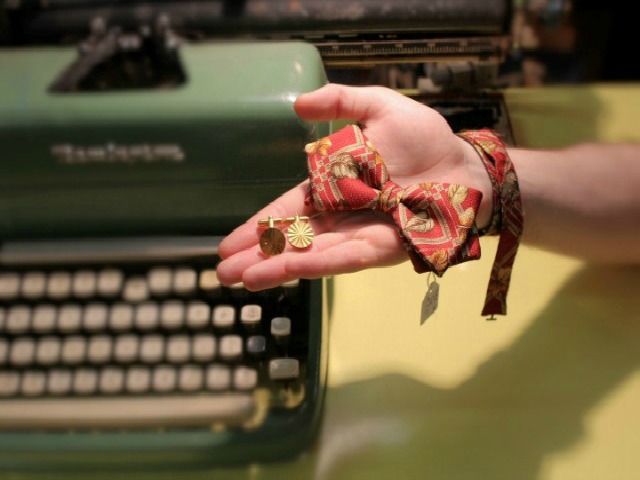
Away from the busy city streets, Rathmines offers a variety of truly unique antique and vintage finds. The 3rd Policeman offers exceptional accessories- from period gold cuff links and Victorian silk scarfs, to brand new leather satchels. Cuff links are an essential buy for those who have an eye for detail. We love these yellow-gold 1980’s cuff links, which range in price from €15-€25.
St Vincent’s charity shop on Aungier Street always stocks designer clothing and accessories, as does the St. Vincent De Paul warehouse in Malahide. To help you on your thrifting journey, below is a list of some of our favourite thrift shops around Dublin, and what you can expect to find in them:
Tola Vintage – 4 Upper Fownes St Basement, Temple Bar: re-worked denim, and lots of Fred Perry.
Kitten Doll & B – Thomas Street: excellent shop for vintage jackets.
Dublin Vintage Factory– South William Street: glamourous silk shirts and retro sports jackets.
Harlequin – 13 Castle Market, Dublin 2: a perfect spot for the gentleman with plenty of hats, braces and structured suits in need of good homes.
The 3rd Policeman – 121 Lower Rathmines Road: accessory goldmine of cuff links, braces, scarves, bags and hats.
Vincent’s Warehouse– Malahide Road: a bit of everything with some designer labels thrown in.
Siopaella– 25 Temple Lane south, Temple Bar: unwanted designer treasures at a fraction of their original retail price.
9 Crow Street– Ormond Quay: festival and holiday attire. They also offer a superb tailoring service.
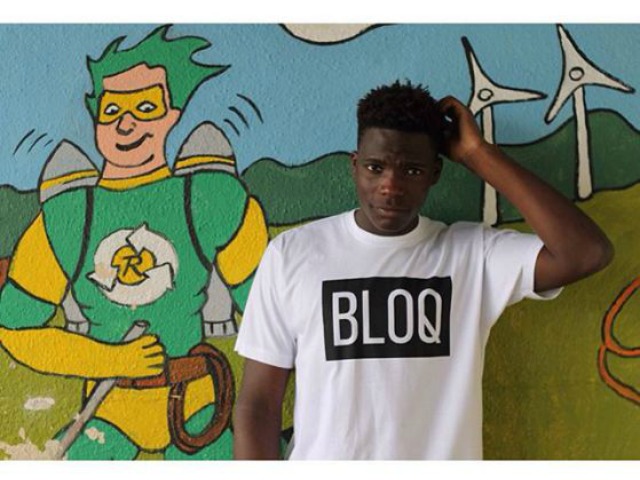
Before saying goodbye to 2015, we spoke to the creative directors behind urban brand BLOQ Apparel, who captured and harnessed their creativity to create a uniquely Irish and innovative fashion label.
Launched in late 2014, BLOQ Apparel is a metropolitan clothing brand designed and produced locally by Dublin natives Simon Bastable and Brendan Ennis. The inventive duo left their financially stable careers in retail and finance, to fulfil their desire for design. One year on, and three collections later, we find out whether their risk was worth taking.
For many, obsession with creativity and design begins at a young age and is later ignited by a growing devotion to produce beautiful designs; whether that’s in the form of technology, cuisine, advertising, or fashion. The finished product behind the design may be different, but the semantics and passion required remains the same.
After conforming to the social norms of going to college, obtaining a degree and getting a nine-to-five job, both Simon and Brendan, who are life-long friends from Dun Laoghaire, repeatedly found themselves becoming bored in their mundane day jobs.
“I was doing it because that’s what I was told you were meant to do. Since a young age, I’ve been obsessed with all forms of art and design. Looking back, I should’ve definitely gone down that road,”said Simon.
Simon has a background in online marketing and digital strategy and has experience in luxury retail, while Brendan studied business and entrepreneurship where he acquired a solid skill set that prepared him for starting out in business.
“We both offer a completely different dynamic which is why we work so well together,” added Simon.
Both the brand concept and name are unique to the Irish market, as he explains:
“We want our clothing to be everyday wear, but to also have the versatility and adaptability to be that ‘special piece’ in your wardrobe.
“The name is derived from the term ‘Bloc’ which translates as ‘a combination of groups who share a common interest, and who have formed an alliance. A community’. We dropped the ‘C’ and replaced it with our trademarked ‘Q’ to give us individuality, but still in keeping with the original pronunciation.
“At the core, BLOQ is a community of people who are passionate about, and share, a common interest,” he added.
Simon and Brendan have successfully built a solid customer base within the last twelve months, and are enjoying continued success with their third capsule collection, as Brendan illustrates:
“The overall feel for Collection 03 is that we are embracing designs and fits that are resounding of late 90’s and early 00’s street and athletic wear. This is broken into three subsections – t-shirts, sweats and headwear.
“We have five t-shirts that fall under our ‘Classics’ that we are carrying on from the previous two collections. In addition to these, we’ve added on two more freshly designed t-shirts, a long sleeve-sweater, a hoody, and a crewneck.
“We work with a manufacturer on designs from the beginning. This is a lengthy process, but it’s done so that we can provide the exact cut, fit and fabric that we feel our customers will really appreciate and love,” he added.
Although the Irish fashion community has welcomed BLOQ, the directors believe that more needs to be done to ensure the longevity of independent Irish labels.
“There’s a reason why we’re so far behind the likes of London and Paris, but in my opinion, there just isn’t the support systems in place for independent producers. We felt that we were on our own at the beginning. However, even though it is extremely difficult, it’s great to see more young designers and brands making a go of it here,” Brendan added.
What do the directors hope to achieve in 2016? Simon and Brendan will soon be launching two new concepts to the brand – BLOQ Sound System and BLOQ Natives – with the aim of further enhancing the lifestyle aspect of the brand. They are also actively looking to take BLOQ to an international market.
“We launched in winter of 2014, and have seen a massive rise in such a short space of time. This has given us the impetus to keep pushing boundaries and see how far we can go. Exciting is an understatement,” Simon concluded.
You can follow Simon and Brendan’s story and progress on Facebook , and Instagram.
Design is a key component to what keeps Dublin ticking and as the year of Irish Design continues The City met with a group of designers who seem to be doing everything right.
Extra Meat Apparel demonstrate that, like much of life, a career in design is about taking the initial leap.
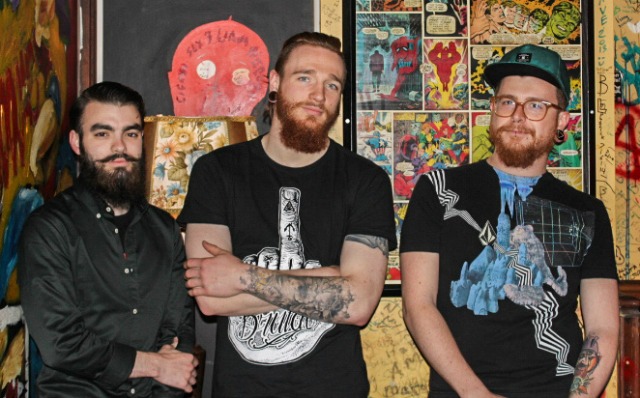
Conor, Jake, and Lucas are three hardworking graduates who have successfully created their first capsule collection – Extra Meat Apparel – by harnessing their love of design with their natural flare for creativity, art, urban living and food.
Jake is a multimedia graduate from DCU, Lucas is a Brazilian native and qualified history teacher, while Conor is a chef. The trio met while working part-time in a popular Burrito eatery and they realised they had the ability to create something that was sustainable, profitable and of good quality.
Established in 2014, Extra Meat Apparel is a new venture in terms of street style – a hugely evolving subculture here – and Jake, the youngest of the team, emphasised the importance of supporting young Irish design.
“It’s important to encourage and promote young creatives. We were able to achieve this without financial stability, but I think many young people with the same creative ambition and goals as Extra Meat Apparel feel restricted because of money. I believe that entrepreneurship is blossoming once more throughout Ireland, but younger people still need that extra support,” he said.
There are many programmes and scholarships available for those interested in entrepreneurship and design such as Enterprise Ireland’s ‘New Frontiers Entrepreneur Development Programme’, which offers financial and executive support for young start-ups.
Jake pointed out that if you have a passion for it, then it’s always achievable.
“Design is design – it doesn’t matter if it’s on a phone, a tablet, a 20 foot billboard, food, or clothes,” he said.
Both Conor and Jake believe that it is their designer Lucas who is the secret ingredient that separates them from other emerging brands in Dublin. The Brazilian native specialises in intricate illustrations and uses mediums in ways they are not typically used creating unique and eye-catching designs for Extra Meat. Lucas left Brazil four years ago to pursue his passion for art and urban culture.
Upon meeting the trio it was obvious that they are very different individuals – an eclectic mix of body modification, eccentric clothing, and facial hair – but their mutual love of urban life and creativity has driven them forward. Conor explained that everything they design and work at ultimately originates from the things they collectively like doing whether it’s skating, cycling, surfing or eating.
“We are a unisex brand aimed towards people who enjoy the things we enjoy,” he said.
Quality over quantity
Once they got talking about their brand, it was clear that their emphasis lies in the quality of their product, as opposed to quantity or profit.
“Quality has been at the forefront of what we are doing from the start. We’re not skimping on quality in terms of design and fabric. It took us months to nail down designs, and took even longer to find a fabric supplier that could do the job at a high standard,” said Jake. He continued by showing his support to local business; finally setting with a reliable and local firm on the North Strand.
“We print only on high-quality printable t-shirts. We use pre-shrunk cotton that is ideal for printing, and retains its shape and fit even after washing. We are trying to be a transient as possible and not be stuck by a certain gender or size. Quality over quantity,” he said.
Creativity knows no bounds, but realising goals and bringing creativity to fruition is often restrictive financially. Extra Meat Apparel would like to see more support across all aspects of the industry either from shops, investors, grants or bursaries.
Conor, Jake, and Lucas are currently working on their next collection which can be bought via their social media platforms.
Reporters Orla Stafford, Jennifer McDonald, and Leah King took to the streets of Dublin to discover what people’s Christmas clothing must-haves were and who their style icons are.
Winter has finally arrived and with it gender-bending fashion is becoming a style staple for how we wrap up. It liberates gender stereotypes and sexuality.
Combining a male and female style aesthetic, androgynous fashion is giving way to a unified gender whose ambiguity defies social and psychological roles within society. A third gender has arrived and “it” is here to stay, (pun intended).
To put it in to context, stylist Louise Cassidy explains the current trend:
“I am a straight female, with a doting boyfriend and a keen appreciation for the female form. Experimentation is so prudish. The niche now is to be ‘blasé’ when it comes to his and hers.
“You love men, loathe boys, and lust after women not girls. I don’t question my sexuality for noticing an ample bosom, nor do I question my femininity for donning a crisp shirt with baggy jeans.
“The crossing between male and female stereotypes is arousing and has opened borders of non-specific sexuality. Androgyny simply allows you to have your cake and eat it in as many different flavours as you can fantasise. So why choose?”
The fashion reins have been loosening; Androgynous styling is continuing to dominate the collections of top fashion houses and the high street has been hot on their heels to follow.
Top Shop released their new AW14 collection; silk shirts, sharp tailored basics, wide legged tuxedos, crushed velvet collars and printed cigarette trousers were all staples of the eagerly anticipated collection.
COS, an independent line from the ever growing H&M group, prides itself on designing collections for the contemporary man and woman. There is uniformity in their androgynous collections, which demonstrate a quintessential retake of the wardrobe basics interchangeable between genders.
Major fashion houses like Helmut Lang and Armani have also featured uni-sex clothing in their recent collections.
While an androgynous aesthetic might be of the moment now, its popularity has remained an undercurrent within the history of fashion.
Emma Mullen is a fashion buyer and has been working in retail for six years; “I hate discussing trends because being trendy is not the same as having style. Style is transcendent of time, like when Coco Chanel designed the iconic Chanel suit, or when Katharine Hepburn became an unconventional icon with her wide legged trousers and oversized blazers. These women were not trying to set trends, they simply had style.”
The 1960’s were the climax of androgynous fashion. Glam rock introduced feather boas, hip hugging jeans, and lavish jewellery as integral items of effeminate dress. This revolutionised sexual and masculine stereotypes. In a stark contrast, models like Twiggy were changing the runways with boyish frames and short hair.
David Bowie in his free spirited reincarnation as Ziggy- hello spandex and glitter and the rise of Grace Jones and Prince paved the way for a new and undefined style, capitalising on their sexual ambiguity.
Padraig Murray is a fashion student at NCAD and outspoken member of the LGBT community. He believes fashion is more than clothes but a representation of the person and a reflection of the society we live in “as we get more liberal with our wardrobes, it seems to mirror society as a whole becoming more liberal”
“Traditional gender roles can be extremely narrow. As a homosexual, growing up I felt restricted to choose between masculinity or femininity, as the only acceptable social norm to follow. Androgyny has opened peoples minds, the LGBT community no longer feel like a misunderstood minority within society.”
“Some see androgyny as a ‘neutered’ nature or existence, having no strict aversion to either sex but masturbation is an androgynous act too, you are playing both roles within the sexual scenario. Would you consider that a neutered experience too? Androgyny open the gates for sexual experimentation and an open platform for self expression.” He said.
In 1994, Calvin Klein released their first gender neutral cologne, CK One. The face of the fragrance Jenny Shimizu became the poster girl for female androgyny with her boyish frame and shaved hair. The 1990’s also saw the arrival of the metro-sexual male as the boy band was born.
Elliot Sailors, Jana Knauer, Stella Tennant, Krisitna Salinovie, and Jamie Bochet are all models known for their androgynous appearances. Hitting the catwalks in 2010 model Patricia Arajo changed the face of androgynous modelling, becoming the first transgender model to break in to high fashion.
Since her arrival, catwalks in London, Milan, New York and Paris have been set alight with androgynous, transgender and cross dressing models. Paul Smith, Marc Jacobs and Jean Paul Gautier have introduced these models in to the mainstream, having them walk in their ready-to-wear collections.
The newest face of androgyny is Andrej Pejic, originally scouted as a girl his long blonde hair and delicate features have seen him in hot demand from all the largest fashion houses.
Today it seems sexual barriers barely exist and gender ambiguity is here to stay. Androgynous fashion is no longer a taboo but a fact of life.
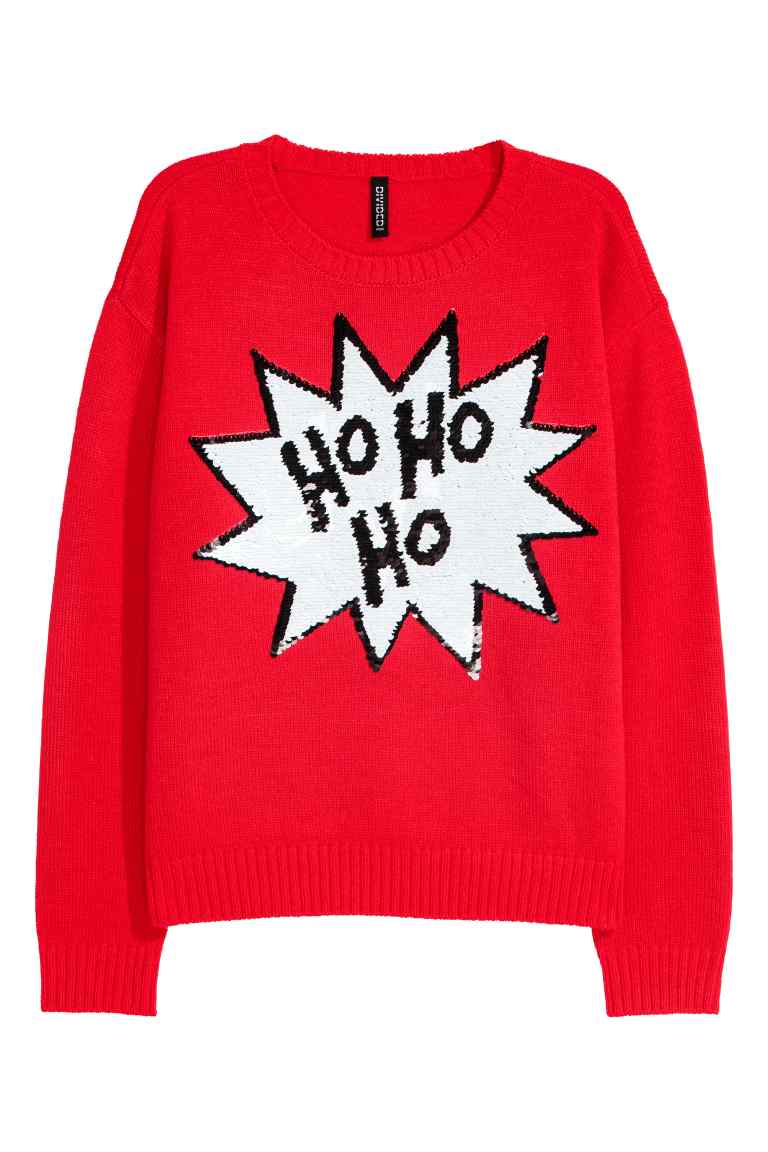
 First up is this red ‘Ho Ho Ho’ knitted red jumper with sequence from H&M. There’s nothing quite like a red jumper at Christmas and the contrast of the knit with the sequence is gorgeous!
 This one from mandmdirect.ie looks so soft. It’s made out of super soft eyelash yarn with a sewn-on sequin motif which makes a reindeer!










You must be logged in to post a comment.