Dublin Doc Fest will take place on the 11th of November in the Royal Hibernian Academy Gallery, Dublin 2.
The short documentary festival, founded by filmmaker Tess Motherway in 2013 uses alternative screening spaces like the National Library of Ireland to showcase the work of filmmakers against iconic Dublin backdrops.
According to Dublin Doc Fest, the festival’s objective is “to create a new platform for short documentary film in Ireland – to give it its own space and context for exhibition – in carefully curated programmes.”
The festival will kick off at 6:00pm and will run until 10:45pm.
The first programme of the documentary will include five short documentaries: Become Invisible (director Edward Costello), Barber Shop Clacton-on-Sea (director Luc Vrydaghs), Se Shin Sa (director Eunhye Hong Kim), The Rock (director Hamid Jafari) and UZU (director Gaspard Kuentz).
The second programme will begin at 7:50pm and features: (Almost) Freedom (director Puck Lo), Whatever the Weather (director Remo Scherrer), and Different Names for Bullying (director Marco Poggio).
The third programme begins at 8:35pm and includes: The Fourth Kingdom (director Alex Lora-Cercos), Familiar Tale (director Sumie Garcia), Rose Amongst Thorns (director Kris Van den Bulck) and the Sound of Winter (director Tizian Büchi).
The last programme will commence at 10:05pm and includes two short documentaries – All Skate, Everybody Skate (director Nicole Triche) and The Truth About Irish Hip Hop (director Gavin Fitzgerald).
Short documentaries are important for Irish film, and particularly important for emerging filmmakers.
According to Tom Wallis, Marketing and Programming director for Dublin Doc Fest, “Short form documentaries are vitally important for film culture, because this is the genre where a lot of filmmakers hone their craft before getting into feature film production.”
Wallis explained: “Sometimes even experienced filmmakers work in the genre to try out new techniques or to explore pet projects. And yet, there are virtually no commercial outlets for short documentaries, which means few people have access to them. Film festivals like Dublin Doc Fest give these innovative films by emerging talents an audience.”
Tickets are €12 for a student and €15 for a regular ticket and are available on Eventbrite.ie. A limited number of tickets will also be available to buy at the door.
With the Academy Awards just around the corner, Clodagh Moriarty kicks off The City’s Oscar Wild series by taking a look at the contenders for the Best Animated Feature Film.
If you are a fan of the Harry Potter franchise, Fantastic Beasts and Where To Find Them is a must see. JK Rowling and David Yeats came together again for the first of five movies about Newt Scamander, played by Eddie Redmayne, and his adventures with magical beasts.
(Source: Vimeo)
While none of the main characters from Harry Potter appear in the movie, Grindelwald, a dark wizard and Dumbledore’s ex-best friend, is mentioned multiple times, with the headmaster himself even mentioned once. You do not need to have seen any of the Harry Potters to understand what is going on but if you are big fan, there’s plenty of exciting references you will recognise.
Eddie Redmayne plays the part of Newt Scamander exceptionally, and he is incredibly believable as the animal loving wizard he is portraying. Katherine Waterston, Dan Fogler and Alison Sudol star alongside him. Dan Fogler plays the loveable ‘nomaj’ (American word for muggle) Kowalski, who you will leave the cinema only hoping he will reappear in the next movies. Katherine Waterston plays Tina, Newt’s love interest, with Alison Sudol playing her beautiful sister Queenie. My only criticism with the acting is that there is no real visible spark between Newt and Tina and the love story the audience is truly rooting for is the one between Kowalski and Queenie.
(Source: Wikipedia)
The special effects and graphics are superb, but with a budget of $250 million it ought to be. All of the magical beasts and spells are done amazingly and you really believe the little furry blue sloth-like animals and tiny trees are just as much there as the actors and actresses.
There is a lot of humour throughout the film and you will be laughing throughout. There’s inside jokes for the true Harry Potter fans as well as new jokes especially for this newest magical franchise, ‘Fantastic Beasts and Where to Find Them’.
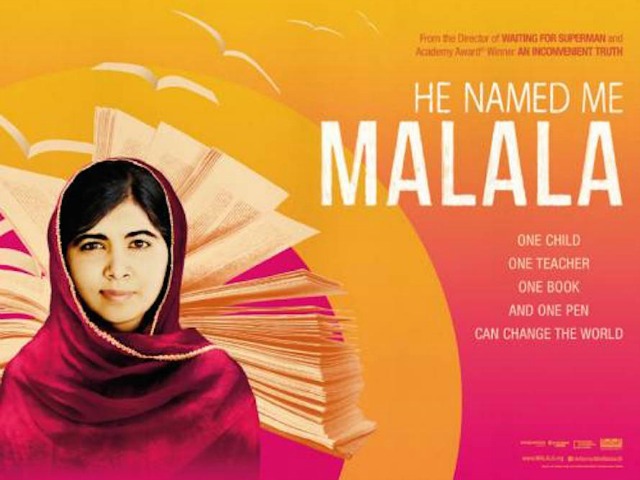
“One child, one teacher, one pen and one book can change the world. Education is the only solution”
The highly anticipated documentary, ‘He Named Me Malala’ has just opened in cinemas and it is most definitely worth the wait.
Global children’s charity, Plan International Ireland, hosted a preview screening of the much talked about ‘He Named Me Malala’ in The Light House Cinema on the 28th October.
The City went along to see if it lived up to all the hype, and we can safely say it did.
The documentary, directed by the renowned Davis Guggenheim, follows the life of 18-year-old human rights activist, Malala Yousafzai. Malala made headlines back in 2012 after she was shot in the face by the Taliban in response to her acting as an advocate for girls’ rights to education in her home town in Swat Valley, Pakistan. The shooting attracted media attention from around the world, turning Malala into an overnight celebrity.
Guggenheim tells her remarkable story in an engaging and relatable manner. He focuses a lot on her family life and allows us to get an insight into the world of the Nobel Peace Prize Winner.
The focus on her family life makes for fascinating viewing. We see her squabbling with her siblings, struggling with her physics homework and worrying about her GCSEs – not something you’d think a girl of such influence and caliber would be doing.
Although Guggenheim has focused a lot on her family and her life in general, the focal point of Malala’s empowering message remained the focus throughout the documentary.
It is evident that Malala is wise beyond her years and she won’t let anything phase her, even when speaking to the United Nations after the shooting, she didn’t victimise herself. She showed herself to be dedicated, selfless and determined, stating that, “They thought the bullet would silence us, but they failed.”
The documentary definitely did justice to Malala’s cause as well as her endearing, quirky personality. There won’t be one person who leaves the movie theatre not feeling a little more empowered to change the world we live in.
Plan International
David Dalton CEO of Plan International was delighted they could host the exclusive preview screening of this inspiring documentary, as part of their global Because I am a Girl campaign.
“Malala’s story is intrinsically linked to Plan International’s Because I am a Girl campaign, and to be able to host this event is great for us. Together, we advocate for a girl’s right to education,” he said.
Because I am a Girl is the world’s largest gender equality movement, so Plan International thought it would be fitting to host the screening of He Named Me Malala, as they share a common vision with this inspirational activist.
“Here at Plan International, we share her vision for change. We recognise that a girl in the developing world faces overwhelming odds from the day she’s born – she is denied basic rights, is more likely to suffer from malnutrition than her brother, can be coerced to marry a man she has never met, let alone loves and worse.
“Yet at Plan International, we know the solution. It’s school. It’s learning. It is not just the right thing to do; it is the smart thing to do. When girls are educated, communities thrive and economies grow. Already, we are seeing success in our programmes and we want to do more,” concluded Dalton.
Coming up to Halloween, everyone is getting in on the action, including Temple Bar’s IFI cinema, who will play host to their annual Horrorthon this weekend. The Horrorthon’s formula is simple, 27 screenings of hair-raising, spine-tingling feature films spread out over a single weekend. We here at The City have compiled a choice selection of films for the weekend, and it goes like this:
The Serpent and The Rainbow & The People Under The Stairs Double Bill
Celebrating the work of horror auteur Wes Craven, this double bill looks at some of his lesser known pictures. The Serpent and the Rainbow, made in 1988, is based on the non-fiction book by ethnobotanist Wade Davis. It follows Davis’ experiences in Haiti, investigating the story of Clairvius Narcisse, who was allegedly poisoned, buried alive and revived by a potion, producing what is commonly known as a zombie. Loosely based on a true story, this is a change of pace from Craven’s usual slasher style of film and a film which John Wirt of Baton Rouge describes as “a trippy, guilty pleasure”.
The People under The Stairs sees a more tongue in cheek approach to the horror genre. This 1991 feature tells the tale of a young boy who has broken into the home of his evil landlord, after he evicted his family from their ghetto tenement. Inside, the boy discovers the true horror of the dwelling, told in the manner of bizarre slapstick and not without its fair share of scares.
This double bill screening is on Friday 23rd October at 11pm.
The Exorcist III
This is the third installment in what is widely agreed on as one of the scariest and most menacing film series in cinema history. William Peter Blatty, the author of The Exorcist, directs this thriller which is based on his novel Legion. The Exorcist III stands up well on its own, despite the legendary status of the original, and the meandering into mediocrity that was the second feature.
The Exorcist III screens Sunday 25th October at 11pm.
Hardware
Hardware sees a young sculptor in a post nuclear future trapped in her apartment with a killer robot. This is definitely the wildcard for the weekend, but this 1991 B movie looks to be a visceral and terrifying rollercoaster. It is a film with a low budget, but big ideas and impressive special effects, which seem to overcome the film’s low-end production value. One thing that can be said though is that the film’s script seems reminiscent of many other sci-fi horrors around from that time. But it’s nonetheless a cheap, no frills, many thrills, low budget robot sci-fi horror, and sometimes that’s just what’s needed.
Aoife Kelleher’s debut feature-length documentary, One Million Dubliners, explores life at Glasnevin cemetery – the final resting place of some of Ireland’s greatest modern heroes.
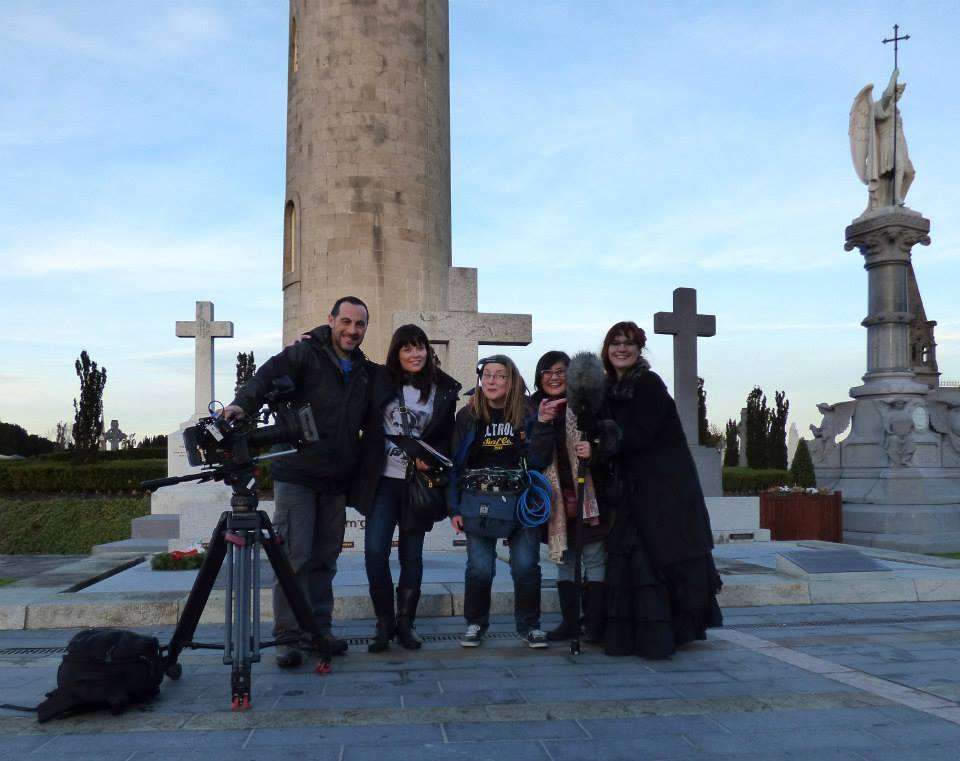
Aoife Kelleher pictured second from left. Picture courtesy of Aoife Kelleher
This wasn’t Aoife’s first time to explore the topic of death. Corrigan’s Funeral Home on Aungier Street was the subject of her first documentary as a film student in DIT.
“I’m sure it sounds incredibly macabre, but I always found that stuff interesting,” she says. “It’s an area that is present for everyone, but not really spoken about.”
Producer Rachel Lysaght – who thought it was interesting that Glasnevin cemetery had its own marketing department – first approached Aoife about the idea of making a film about the site. The two had previously worked on a number of projects together including a short film called Home for the Irish Film Board’s Reality Bites scheme.
“Between myself and Rachel and James Mitchell, the executive producer, [we] wrote up the full proposal treatment for BAI submission over the summer of 2013. We got funding in September and we started immediately.”
From the outset, One Million Dubliners was not going to be ‘just a historical documentary’ – it would tell modern stories as well.
“The idea of merging history and the contemporary life of the cemetery was [challenging] from the point of view of how to structure it,” Aoife says. “So I decided to follow the tour.”
The tour was guided by the late Shane MacThomais, Glasnevin’s resident historian and storyteller, and the leading character in One Million Dubliners.
“As soon as I was on the tour, it became immediately apparent that he would be one of the central people in the documentary. It just made sense then to follow his tour [throughout the documentary] because he was just so warm and engaging. [He was] so good with everyone, from tourists just off a red-eye flight to kids on a school tour.”
Aoife clearly has a lot of affection for Shane, which comes across in the documentary. Shane is a very likeable character; a real header who provides comic relief for the audience as well as some intriguing insights about his own perspective on death.
He was an amazing guy,for us as a film crew and for everyone who visited Glasnevin. He was really, really generous with his time and very, very funny. It was really wonderful spending time with him. If I had a question, he would be great and really helpful about answering…He was great at introducing me to people…It was just a real privilege to get to know him.
Aoife and the team had one day of shooting left in their budget: Easter Sunday, a significant date in Glasnevin’s calendar. However, Shane died suddenly before filming was complete.
“I was in the edit with our extraordinary editor Emer Reynolds. We had been in there for two weeks planning the structure and how best to tell the various stories that we had. And then we got the really, really terrible news about Shane. It really was absolutely devastating for everyone. I can’t explain how much of a shock it was…When making a film about the rituals [of death] and talking to people about how they live and die, that will never prepare for the reality of someone actually passing away.”
Rachel Lysaght and Aoife travelled to Glasnevin to recalculate how they would finish the film.
They contacted Shane’s family and his colleagues at the Glasnevin Trust to seek advice on how best to complete production.
“When something like that happens I think you have to acknowledge as a documentary maker…that you have to be guided by other people…Everyone in his family and all of his friends knew he really enjoyed the process of making the film. It captured so much of his work within the cemetery and all that he had done for Glasnevin. His family really wanted him to stay in [the film], and to show everything that he had done.”
Although Shane steers a lot of the narrative, there is a wealth of strong characters who give an insight into Dublin today and the importance of death and funerals in Irish culture.
For Aoife, the documentary is not only about Glasnevin:
I think that in some ways, beyond anything else, it’s about Dublin and it’s about Ireland. It’s about the Irish way of living and dying and how we talk about it and the stories we tell about it. I think that there’s something completely unique and really intriguing about the Irish attitude to life and death. I think that’s what we conveyed above anything else.
“Every single person we interviewed had a completely different attitude, and a completely different take on life and death and on what happens when we die. That was fascinating.”
Tracking the common causes of death logged in the death register at the cemetery “teaches you so much about Irish society and inequality” from 1832 to today.
Having tackled such a universal topic as death, I wonder if One Million Dubliners has influenced Aoife’s view on death:
“I think that really what the film does is acknowledge that everyone’s view is completely unique and also everyone’s view seems completely offbeat to anyone else’s…I think that what the film does is give everyone the space to explore their own ideas. I think that’s what I’m still doing.”
One Million Dubliners is out on DVD now.
Read Conor McMahon’s review of One Million Dublinerson the city.ie.
Aoife Kelleher’s One Million Dubliners is a beautiful homage to the people of Glasnevin Cemetery – living and dead.
Resident historian Shane MacThomáis, the obvious star of the show, is our guide throughout the documentary.
With great wit, he tells the stories of Parnell, de Valera, Collins, Markievicz, Behan and the many other 19th and 20th century heroes buried here. He recalls the stories of ordinary Dubliners too, with equal charisma and passion.
There are more people under the ground at Glasnevin than walking the streets of Dublin today. That neat little sum is plugged throughout the film as proof that the cemetery serves as Ireland’s national burial grounds; modern Irish history can be mapped out simply by the names and ailments listed on the death register.
As we quickly learn, Michael Collins’ grave draws the most interest from visitors. He gets flowers for Valentine’s Day (while de Valera gets none).
We meet the “mysterious” Frenchwoman who regularly visits to place roses by Collins’ graveside. She has fallen in love with him (or rather, Liam Neeson’s portrayal of him in the eponymous biopic). She vows never to marry because no man can live up to Collins.
Far from being the oddball we might expect, the woman actually offers a unique insight into our devotion to heroes and how we celebrate the lives of the dead.
Her Vietnamese friend offers the best quote of the film: People are not truly dead “until the day I forget them”.
What really makes the film is the chirpy cast of characters: the florists; the gravediggers; the funeral director. They guide us through the history of the cemetery, with MacThomáis at the helm.
Kelleher beautifully captures the spirit of Dublin and explores the mysteries and sadness of death without being over sentimental.
Footage of the Angels Memory Garden, the resting place of thousands of stillborn infants, makes for the most difficult viewing. Such tragedies have affected many families in Ireland and Kelleher handles this sensitive topic with such care.
One Million Dubliners is naturally very moving and emotive, but it also bluntly answers some unspoken questions: What happens to the body when it is cremated? How does a gravedigger go about his work? Do funeral directors harden to death?
A must-see, One Million Dubliners will get you thinking about the big questions — and it will lift your spirits
One Million Dubliners is showing at the Light House Cinema until November 27 or catch it on the RTÉ Player
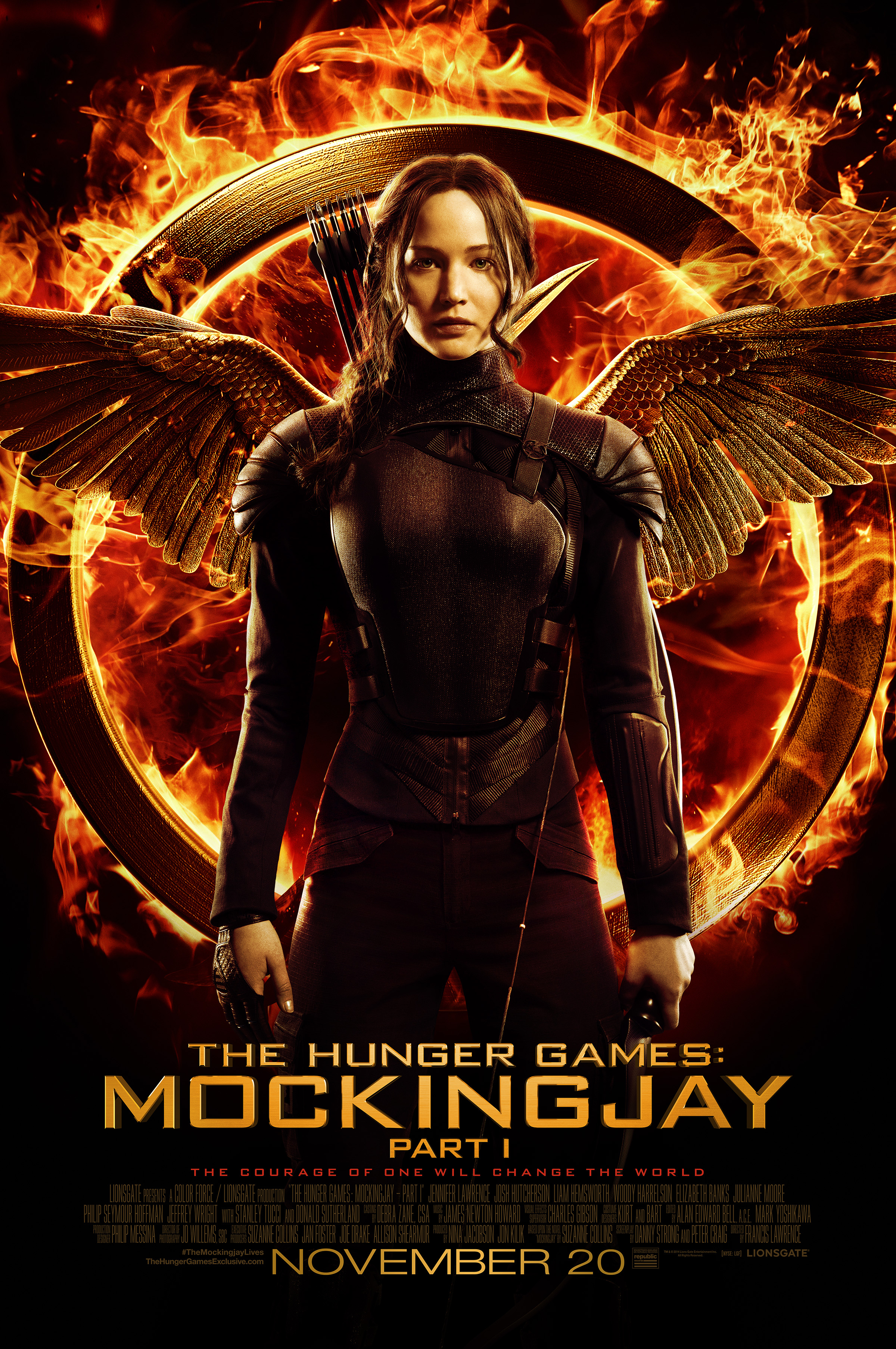
If you know your Hunger Games, you’ll know that heroine and coal miner’s daughter, Katniss Everdene (Jennifer Lawrence) was rescued from a life or death struggle in the Quarter Quell area at the end of the second film, by a group of rebels from Panem’s District 13.
The film is based on the popular Suzanne Collins series of novels.
It was widely understood that District 13 was bombed into oblivion two generations ago, which resulted in the beginning of the Hunger Games, but in fact, much of the population survived and went to live underground plotting their revenge. Now the moment to strike back has come.
They live in a subterranean missile silo, they have been stockpiling for years and they even have a leader with determination and the strategic nous to overthrow the despots in the Capital.
The problem is that President Coin (Julianne Moore) of District 13 lacks the personality to ignite the districts into war, so they turn to Katniss, who has become a heroine to all the districts of Panem through her actions in the Hunger Games.
Assisted by Plutarch Heavensbee (Philip Seymour Hoffman, in his final screen role) Coin devises a plan to transform Katniss into a weapon to sell to the masses.
And that basically, is where we come in to The Hunger Games: Mockingjay Part 1. Katniss is increasingly uncertain about how she might be used in this rebellion and seems more concerned about the well-being of Peeta (Josh Hutcherson), her on-again, off-again boyfriend who has been captured by the Capital dictatorship and is being used as a central part of a propaganda campaign.
“I never wanted any of this, I never wanted to be in the Games, I just wanted to save my sister and keep Peeta alive,” Katniss pleads with the villain of the series, Panem dictator President Snow.
As Warner Bros did with Harry Potter, the final book in the Hunger Games franchise has been divided into two parts which result that Mockingjay Part I is about the build up to the war. This means although there is a lot of tension, it lacks the action of the first two movies in the series. At times the film seems stretched, and too much like a link between the previous instalment and the next, but the story line and tension is strong enough to hold.
With a notable cast involved this makes for a funny and enjoyable movie and Lawerence comes into her own giving the film depth and emotion in some outstanding and haunting scenes. But one thing’s for sure we have an action packed Part II to look forward to next year, and as Katniss puts it…
“Fire is catching! And if we burn, you burn with us!”
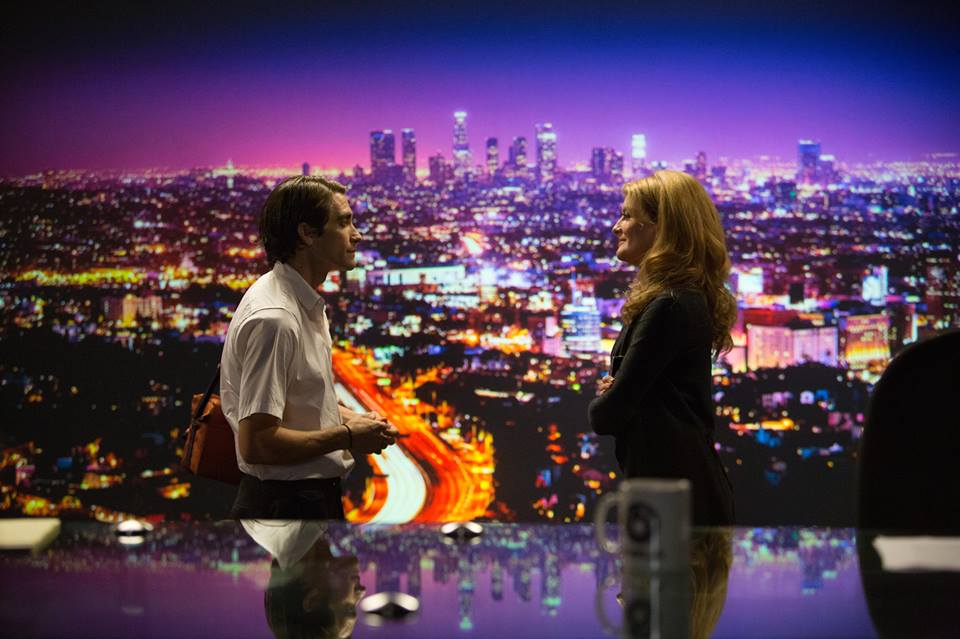
NIGHTCRAWLER is a well directed, heart-pounding, pulse-throbbing crime thriller that’s storyline is the first of its kind to be transformed into a blockbuster movie.
The suspenseful story acts as a mirror to what’s happening in reality in the realm of broadcast media and freelance journalism, with individuals stepping up to the mark and providing self-generated content.
Set in downtown Los Angeles, the film centres on a ruthless thief named Louis ‘Lou’ Bloom who is desperate for a job and who is tremendously tired of showcasing his worth only to be rejected by potential employees.
Deciding that a path of self-employment is the better option, Bloom sets out to stand on his own two feet and so he turns his hand to freelance journalism.
Capturing the horrifying scenes of barbaric crimes committed in the heart of LA is no reason for Bloom to bat an eye-lid and soon the social outsider looks at his new interest as a calling and works towards being the epitome of success.
With an impressive bank account and a bulging contacts book in sight, Bloom befriends as many people as possible to help reach the top of his game and he has no remorse in trampling on those who have aided his progress.
Lou shows no empathy towards victims of terrible acts of violence or road traffic collisions and hijackings. For Lou, these people are merely objects he can cash in on.
Rated 16 and lasting a total of 117 minutes, Jake Gyllenhaal plays the character of Louis Bloom and delivers a killer performance. Gyllenhaal effortlessly illustrates how adaptable he is as an actor as he performs his role as a sociopath to perfection.
Directed by American screenwriter Dan Gilroy, best known for The Bourne Legacy (2012), this drama contains scenes of violence but nothing that is worthy of cringing at with your parents.
Though the movie succeeded in entertaining the viewer and showcases one of Hollywood’s ‘beauts’, it is slightly dragged out with unnecessary scenes that could have been left for the blubbers or deleted scenes of the DVD set.





You must be logged in to post a comment.