Tag: film

  • Legends of the Irish stage come back to life in ‘The Quiet Men’

    Legends of the Irish stage come back to life in ‘The Quiet Men’

    Image of The Quiet Men – courtesy of Bewley’s Theatre Café. Photo credit: Conrad Jones Creative

    A play depicting the lives of Irish actors Barry Fitzgerald and Arthur Shields is currently running at Bewley’s Theatre Café on Grafton Street.

    By Oscar Meagher

    Bewley’s Café Theatre is currently staging a play chronicling the lives of two Irish screen legends.  

    Titled ‘The Quiet Men,’ the show delves into the many successes and personal struggles of brothers Barry Fitzgerald and Arthur Shields.

    Both men were pillars of the Dublin theatre scene and important figures of Irish representation during Hollywood’s Golden Age.

    Despite their illustrious careers, the two are best remembered for their roles in director John Ford’s 1952 adaptation of The Quiet Man.

    The show highlights the pair’s hidden histories – from Shield’s multiple marriages to Fitzgerald’s Academy Award win, his 1945 manslaughter charge and closeted relationship with his stand-in. Further revelations include connections to James Bond, Alfred Hitchcock and James Connolly.


    Following performances at The Viking Theatre last October, the play is set to run at Bewley’s Café from February 23rd – March 14th

    The Quiet Men is directed by Conall Morrison and performed by writer and actor, Morgan C Jones, the great grandnephew of Shields and Fitzgerald.

    “It’s a story that’s very close to my heart,” said Jones. “I grew up hearing all these great stories about them and thought there was a fascinating thread to be explored.”

     “I’ve been thinking about it for around 20 years,” he added.

    Image of Morgan C Jones – courtesy of Bewley’s Theatre Café. Photo credit: Conrad Jones Creative

    The brothers’ journey to Hollywood was intertwined with a significant part of Irish history.

    “At 19 years old, Arthur Shields fought in the GPO during the Easter Rising of 1916,” said Jones. “After his internment, he left nationalism behind and properly pursued acting.

    “His older brother followed soon after.”

    Barry Fitzgerald holds the distinct honour of winning Ireland’s first Academy Award in acting for his supporting role opposite Bing Crosby in 1944’s Going My Way.

    This achievement has cemented itself in cinema history, marking the only time an actor has won after receiving a nomination for both best lead and supporting performances.  

    Rules were implemented the following year to prevent any similar occurrences. 

    Image of Morgan C Jones – courtesy of Bewley’s Theatre Café. Photo credit: Conrad Jones Creative

    Morgan C Jones takes the stage as both Shields and Fitzgerald.

    “I always wanted to be an actor, and I’ve been doing it for about 42 years now,” said Jones. “It’s tough to say whether my turn for the dramatic was directly inspired by my illustrious forbearers, but I think it certainly helped.” 

    Despite coming from a lineage of acting talent, he admitted that his own journey to the stage wasn’t always easy.

    “I became a stand-up comedian at one point because it was just so difficult to find work as an actor in Ireland,” he said. “I really broke into the stage around 1995, the same time when I came up with the idea for this play.”

    While being conceived decades ago, the story’s long journey to the stage has been fraught with numerous delays.

    “My daughter is a playwright herself, and she tried to get it up and running several times. After a few false starts and interruptions, I figured I should jump in.”  

    The Quiet Men will run at Bewley’s Theatre Café from February 23rd – March 14th

    Poster for The Quiet Men – courtesy of Bewley’s Café Theatre

  • ‘The reality is that you need money to work in this business’: an interview with actor and filmmaker Laoisa Sexton

    ‘The reality is that you need money to work in this business’: an interview with actor and filmmaker Laoisa Sexton

    The “I Can’t Go On” writer/director reveals her early inspirations and addresses the challenging realities of breaking into the film industry.

    By Oscar Meagher

    Laoisa Sexton never set out to be a filmmaker. In her own words, “I’m an actor, and then I started plays, and one thing just led to another.” 

    “I grew up in a rural area where there wasn’t much around, apart from community theatre. My mother always encouraged me to take part, especially when we moved to the city. I remember she’d always play showtune records for me and tell me about the stories behind them. Shows like West Side Story or Les Misérables.” 

    Sexton recently won the Best Director award at the Dublin International Comedy Film Festival for “I Can’t Go On,” a short film which follows a children’s entertainer trapped in a party from hell. She describes it as “an angst-ridden dark comedy panic attack”. 

    Image from “I Can’t Go On” – credit: Laoisa Sexton

    “I wanted the viewer to have a visceral experience; to be inside that costume with our lead and to feel her claustrophobia. It’s based on my own experience as a kid’s party entertainer, which can be hell on earth!”  

    The short creates such an overwhelming atmosphere of discomfort that it’s almost off-putting to the viewer. However, that seems to be the point.

    “As a filmmaker, I love to explore the tragedy of what it means to be human while making an audience laugh at the same time. Sometimes, you must go for the jugular by tapping into disturbing levels of discomfort and being unapologetic to get at the truth.” 

    “I Can’t Go On” was produced under the Screen Ireland Focus Shorts scheme and marks the first of Sexton’s films to receive industry funding. She emphasised how appreciative she is of the support, but doesn’t cower from addressing the difficulties faced elsewhere.  

    “Most people who are making films come from more privileged backgrounds than I have. I’ve had to rely on crowdfunding to raise money for much of my work. A short film can take the guts of a year to complete without proper funding. Some of my films have taken longer to create, as I’ve had to start and stop to raise more money for postproduction.”

    Her story is proof that no person can be considered entirely self-made. Both Laoisa Sexton, the person and filmmaker, were born from a passionate and supportive mother.

    “She’d plonk me down in front of the TV and make me watch these incredible films that I probably shouldn’t have been watching at that age. Films like The Red ShoesBlack NarcissusDouble IndemnityIrma La Douce, and North by Northwest. My mother knew the names of all the actors, even the producers. She was always a wealth of film knowledge, and I think that planted the seed.”

    “I Can’t Go On” ends with a dedication to her late mother.   

    The short was recently awarded Best Irish Film at the horror festival, Imblog: Women Who Terrify, held in Griffith College Dublin as a celebration of St Brigid’s Day. The event spotlighted original works by women and LGBTQA+ creatives.

    While film festivals are often the best place for blossoming filmmakers, financial matters may tarnish a promising career before it can even begin.

    “The Irish film festivals are brilliant and passionately supported by the public. They can be wonderful opportunities to get your work out there, but it costs money to submit and to go to the festivals to represent your film. Some of them are very pricey, especially internationally. You really need a budget for this because they can cost upwards of €2K. More affluent filmmakers can afford to pay short film distributors to get their films included in more festivals and promote them. If you don’t already have the financial backing, you are clearly at a disadvantage.”

    Sexton embodies the romantic ideal of a filmmaker. She is honest, uncompromising in her vision, and she fights to get her work made and shown – a task generally more challenging for a female creative.

    “Statistically, we make up less than any other group making films, I think it’s about 8% for female directors. While there are opportunities for us to make short films, when it comes to funding our features, we aren’t being given the same opportunities as our male counterparts. This isn’t just in Ireland; it’s across the board. The subject matter of what we want to make is not given the same weight either.”

    The challenges faced by Sexton are sadly universal. She articulates the limitations imposed on anyone with the desire to push beyond the comfortable and recognisable.

    “I want to make the kind of films that I want to see, but that I don’t see being made. The truth is that unless something has been done before or proven as worthy of financing, it may not happen. Cinema is not like that; you never know what an audience will respond to.” 

    A filmmaker’s personality, interests, heritage and identity will naturally inform their work. For Laoisa Sexton, the diversity of new voices is a necessity for the future of filmmaking.

    “I think when people talk about diversity, they should also include class. It’s very important to include more voices, especially when it comes to funding. Hopefully, that will lead to more types of stories being made.” 

  • Who you gonna call? Ghostbusters Afterlife movie review

    Who you gonna call? Ghostbusters Afterlife movie review

    By Christopher O’Flaherty

    Image via Flickr

    Ghostbusters afterlife is a mix between 1980’s nostalgia and the power of modern cinema. The director Jason Reitman lives up to his father’s original 1984 Ghostbusters movie with this soon to be classic nostalgia trip down memory lane. McKenna Grace steals the show as Phoebe — a young aspiring scientist, the granddaughter of one of the original ghostbusters, Dr Egon Spengler. McKenna Grace does a fantastic job portraying a young child who is not too sure what to do with herself.

    The movie starts off at an excellent pace. Throws you right into the deep end and immediately introduces us to the incredible technology that we will be seeing a lot of in this movie. By the time the first 30 minutes of this movie are up. We have been introduced to all the main characters and developed their relationships with each other. A very hard thing to accomplish but Jason Reitman does a fantastic job not boring us with unnecessary nonsense. We want to see some ghosts being busted. That is what we are here for.

    Now let’s talk about the casting. Logan Kim as Podcast was excellent casting. He’s funny, he’s different all while not being annoying. He has a love for conspiracy theories and mysteries, so it makes him quite the character and he grew to be one of my favourites throughout the film. Podcast and Phoebes friendship is one you love to see blossom through the movie.

    Gary Grooberson, played by Paul Rudd, plays the teacher that teaches summer school. He acts as a sort of help tool for the audience as he explains all the past Ghostbuster tech to the kids, this helps people who have never seen Ghostbusters before understand all the references to the past films. Paul Rudd played the part very well and I only wish I saw more of him in the movie. 

    Trevor was played by The Stranger Things star, Finn Wolfhard. Finn did a fantastic t job playing the teenage brother to Phoebe. He’s embarrassed by his mother, he gets into a little bit of trouble and would do a little too much to impress a girl. 

    Speaking of the teenage girl. Lucky played by Celeste O’Connor is quite frankly. A boring character. Her dad is a cop but there’s never any story there and doesn’t play any major part in the plot. She kind of feels like she’s there so that Finn Wolfhard’s character has a love interest. She’s just very one dimensional. Celeste O’Connor did the best she could with the script she was given. Just comes down to a poorly written character.

     Another poorly written character was Carrie Coon as the mother, Callie. A character with so much potential, but the writing just falls short. Callie is quite frankly dull. She pretends to not know anything about her father for the majority of the film as if she never knew who he even was. She knew exactly who he was but just decided to lie to her kids and have absolutely no idea what’s going on. It’s weird writing and a character with so much potential was wasted.

    Now, the absolute star of the show who really makes this film shine. McKenna Grace as Phoebe. Oh, my days she smashed it. She stole the show with every scene she was in. Her hyper-intelligence really portrays how brilliant she is, but it never comes across as a know-it-all or at all annoying. She was funny, relatable and just amazing. No complaints there, what an amazing actress.

    One of the most loved parts of the original Ghostbusters movies from the ’80s was the action scenes. They were cool, fun and creative. Ghostbusters Afterlife delivers this in spades. Action scenes are exciting and well-directed and incredibly fun to watch. The action starts pretty early on in the movie, at about the 30-45 minutes mark. The best part? The action does not slow down. There is this amazing car chase scene with ECTO-1 that is by far the best action scene in the movie. It is fantastic to see the Ghostbusters with modern-day CGI.

    Ghostbusters is notorious for also being very funny. Ghostbusters Afterlife has its moments. Paul Rudd kills it every time he is on screen with his witty retorts and smart attitude. Logan Kim as Podcast is by far the funniest character. Although comedy is frequent it does leave room for the spookier and more serious side of Ghostbusters.

    I wouldn’t say this movie is scary, but I also wouldn’t say the original Ghostbusters is scary. This movie has more of a creepiness to it. Object floating around the air. Chess pieces move by themselves. Small things that make the movie better while also making sure it’s not pretending to be a horror movie.

    Overall, I loved this movie. I walked out of the theatre only wanting more. It’s a fun, humorous, exciting Ghostbuster’s movie and I cannot wait to see what will be done in the future. If you liked the original Ghostbuster movie from 1984, you’ll love this. If you’ve never seen Ghostbusters before, you will also love it. 

    Final Rating: 8.5/10

  • Green Screen: The impact of the pandemic on the Irish Film Industry

    Green Screen: The impact of the pandemic on the Irish Film Industry

    Daithi Ó’Cinnéide on camera and in his element. Image courtesy of Daithi Ó’Cinnéide

    The year 2020 has provided highs and lows for the Irish film industry, and 2021 is already calling into question the future of our domestic productions.

    This time last year it seemed Ireland was reaching new heights in the domestic film and television industries. Ridley Scott had begun shooting his next blockbuster with Matt Damon – who was spotted ‘slumming it’ in Dalkey – and Normal People was hitting screens worldwide, with Paul Mescal engrossing audiences in O’Neill’s shorts.

    Like everything else, the Irish entertainment industry came to a crashing halt in March when Covid-19 struck.

    The production hiatus, which at the time of the first lockdown was indefinite, meant that up to 12,000 jobs in Ireland were put on hold and some were gone for good.

    Grip assistant Michael Nardone was hit hard by this hiatus.

    “Everything seemed to be going great, I was hopping from project to project, then like most people I’m sitting at home wondering what to do,” said Nardone.

    “Everything seemed to be going great, I was hopping from project to project, then like most people I’m sitting at home wondering what to do”

    Micheal Nardone

    Nardone has worked as a part of the crew in television series like Vikings, Dublin Murders, and Normal People. He had just begun exploring a new avenue, working with some fellow crew members on their own short film, when suddenly everything changed.

    “It was all out the window really, and without the backing that the big productions have, it seemed like it might never happen.”

    Nardone packed his bags for New Zealand.

    “I had been thinking about going for a long time, but I always had a reason to stay [in Ireland].”

    Productions had also been halted in Auckland, which gave him the time and opportunity to apply for work on bigger projects: “All the big productions were miles behind schedule, they were ramping up everything, preparing for reopening.”

    He is currently working on a new series for Amazon and has a full schedule right up to 2022.  

    “It’s mad hearing stories from back home, it feels like the whole pandemic has come and gone here.”

    One project, Paperboy, an independent feature film set in Belfast during the Troubles, was to begin filming in September.

    The project had attracted stars Bridget Moynahan (I Robot) and Colm Meaney (Law Abiding Citizen, The Snapper), with Donald Petrie (Mystic Pizza) attached to direct.

    Producer Kevin Murphy had spent the best part of two years trying to get the film made.

    Unfortunately, the lockdown proved too strenuous an obstacle and the project has since ceased indefinitely.

    “We are not doing much at the moment,” Murphy said in relation to production.

    An uncertain future has proved detrimental to independent filmmaking in Ireland. Filmmaker’s reliance on procuring funding from multiple sources is unstable in a time when producers and companies are keen to watch their expenditure.

    This is something that organizations like Screen Ireland and Screen Producers Ireland were aware of from the beginning.

    Screen Ireland acted quickly, first in making sure professionals were still getting paid – repurposing funding to support writers, producers and directors. 

    Screen Ireland and The Department of Culture, Heritage and the Gaeltacht have implemented funding initiatives to cope with the expanding crews and assisting in the hiring of “Covid Departments” working on set.

    The Covid Department monitors the sets to make sure people comply with rules like wearing masks and social distancing.

    “It’s mad hearing stories from back home, it feels like the whole pandemic has come and gone here”

    Nardone

    This has helped to keep bigger budget films operating in the country and it was these initiatives that allowed assistant director, Daithi Ó’Cinnéide to get back to work by late august and stay there until very recently.

    “The film industry seems to follow the construction industry, if they stay open, we stay open.”

    The diligence of these newly-proposed crews working in Covid departments has proven the real trick in allowing the productions to carry on while most other professions remain at home.

    The introduction of these protocols has helped to keep the industry running as smoothly as possible. However, at the drop of a hat operations can be shut down.

    “At the moment, I had work on another TV series coming up, 12 weeks work, but that seems to be pushed back until April, just with everything going on.”

    While film crews on the other side of the world get back to full swing, the future of the Irish film industry is called into question again. It may be awhile before independent Irish films grace our screens again, but the work of the governing bodies and industry professionals may provide a light at the end of the tunnel.

  • New Irish horror series Shudder Street to premier next week

    New Irish horror series Shudder Street to premier next week

    Shudder Street, a new horror webseries, is coming to a screen near you next week. Erica Carter talked through the inspirations behind the new series with writer and director Seán Donohoe and producer Orlagh Doherty.

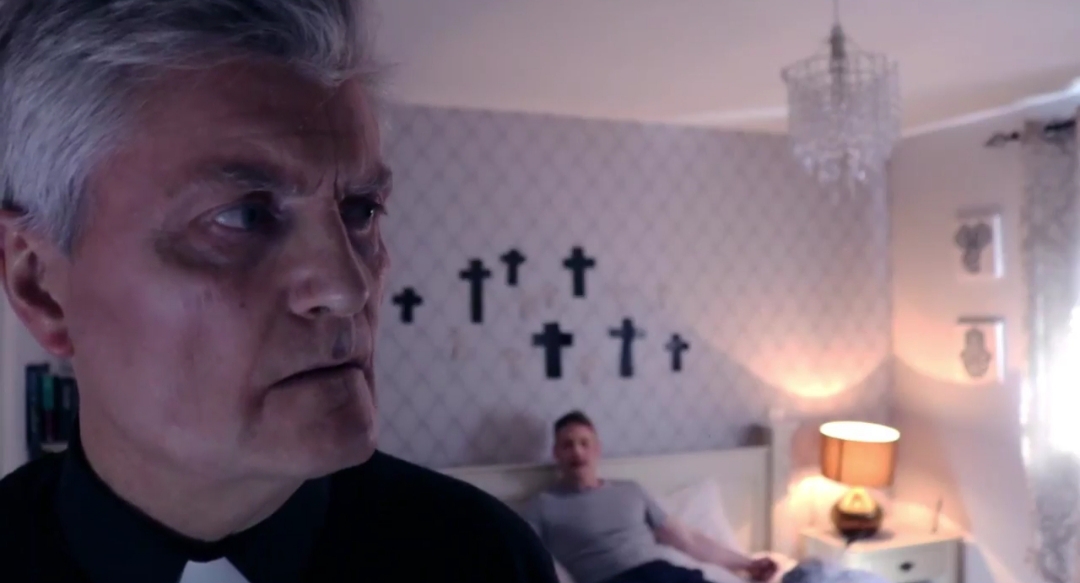
    Still from episode ‘Exorcism’. Image courtesy of Shudder Street.

    Shudder Street is a new anthology-horror series set in Dublin, due to premiere next week. There will be four different episodes, each set in a different house on the same street. As the series goes on, we’ll soon see each different plot connect to one another. Donohoe revealed where he got the idea for Shudder Street from:

    “I took a little inspiration from the British anthology series Inside No. 9, that tells a different standalone story every week, each set in their own singular location,” he said. “That gave me the idea to confine each segment of Shudder Street to its own individual house.

    Donohoe wanted to tell different, standalone stories due to the freedom to explore different subgenres and ideas, but liked the idea of connecting them all with one overarching narrative. “It made location scouting a breeze as we were working with virtually no money, but also presented us with certain limitations that we had to work around. It was a learning curve for all of us, but I think it worked out well for the most part!”

    Doherty came on board after the original script was written, and really enjoys the idea of an Ireland-based horror series. “It’s a different type of horror than a lot of series I’ve seen, the colloquial, everyday language used really makes it,” she said. “I think that having Irish slang in this really brings a different element to it. Definitely a great success!”

    “We are a country with such a morbid history and folklore, sure we’re the birthplace of Dracula, Carmilla, and Dorian Grey for God’s sake!”

    The idea of an Irish series in particular was incredibly important to Donohoe too: “I wanted to make a horror project that was distinctly Irish,” he said. “Not so much in the sense that there’s faeries and banshees running around the place, but more so in a colloquial sense.

    “I wanted to take these common horror conventions and tropes but set them in a world that was familiar and close to home, in this case suburban Dublin. I wanted these characters to speak in a way similar to how myself and the people around me speak. I feel like some Irish media can feel very Americanised and I wanted to avoid that with Shudder Street. For the most part I think we succeeded!”

    “I feel like Ireland has never really took off in the world of horror cinema the way that the UK or The States have,” he explained. “It’s unusual because we are a country with such a morbid history and folklore, sure we’re the birthplace of Dracula, Carmilla, and Dorian Grey for God’s sake!”

    Image courtesy of Shudder Street.

    Doherty is delighted that Shudder Street has now come together and is finally ready to be shown to the public, after almost two years in the making. “Seeing a vision on paper and getting it on screen is something I find so exciting to be honest,” she gushed. “It involved a lot of planning, we got a great casting director to come on board and we just set goals each week to get little things accomplished, such as locations and crew.

    “We just dealt with things as they came, and it all worked out. Seán and I originally started editing the script in January 2019, started filming around April that year and finished filming in May 2019. Post production has been the longest process though. Because it was a zero budget production we had to try to adapt to our cast and crew’s availability and time table so we didn’t have a set deadline for anything.”

    Due to filming taking place last year, Shudder Street luckily didn’t run into any Covid-19 related production issues, although the crew are sad that they can’t celebrate. “In an alternate covid-free world, there would definitely be a Halloween Shudder Street Spookapalooza!” laughed Donohoe.

    Shudder Street will be available to view on YouTube from Tuesday the 20th of October.

  • ‘There’s the makings of a Tolkien epic inside everybody’ – Irish filmmaker Paddy Slattery on seeing the stories surrounding us

    ‘There’s the makings of a Tolkien epic inside everybody’ – Irish filmmaker Paddy Slattery on seeing the stories surrounding us

    Irish filmmaker Paddy Slattery.
    Photo: Paddy Slattery

    TheCity.ie’s Ruadhan Jones recently spoke to director Paddy Slattery, whose debut feature film, Broken Law, premiered at the Dublin International Film Festival last month.

    When the crowd gave Paddy a standing ovation, you could excuse him for feeling overwhelmed with emotion. His debut feature film, Broken Law, premiered before a full house on Ireland’s biggest cinema screen — Imax in Cineworld. Of course, it wasn’t just the crowd’s response that overwhelmed him…

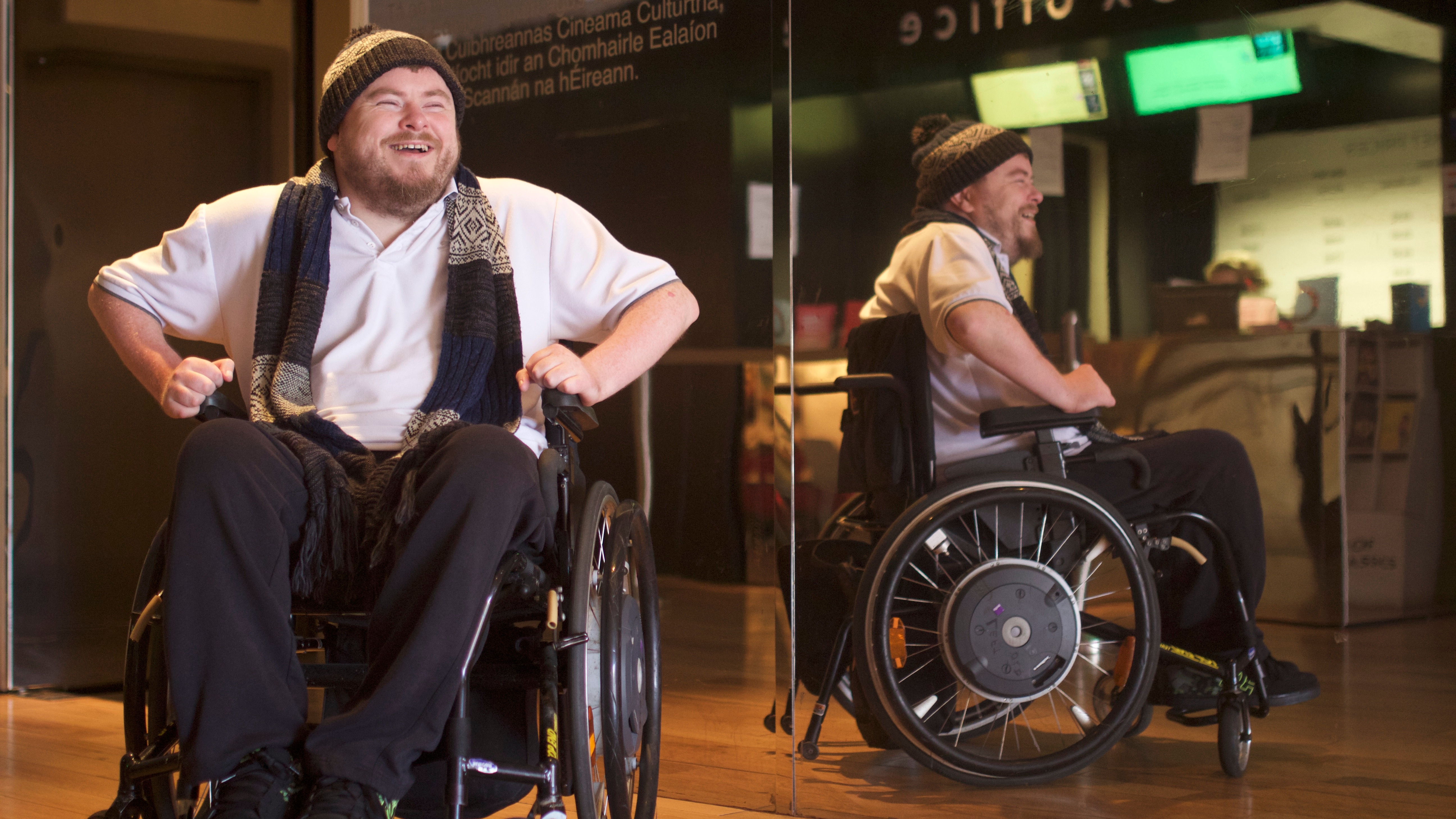
    “It wasn’t the ideal viewing experience,” he said. “Being a wheelchair user, I had to sit front and centre. It was like the whole wall was the film! I had to look left to see one side of the action and right to see the other. But the whole occasion drowned that out — it was a massive honour.”

    “That we sold out the theatre and had a brilliant audience response was a dream, an absolute dream.”

    It was a deserved reward for a director whose route to the “big time” has been an unusual one. Paddy is a quadriplegic, the result of a car crash at the age of seventeen. This may have been a life-changing incident — and it does make productions significantly challenging — but in the end: it was this accident which set Paddy on the path to Cineworld and his feature film debut.

    “After the accident, I spent a lot of time in and out of hospital, lying on beds, doing rehab – and watching films,” Paddy told me. “They were my creative escape and allowed me to discover a whole untapped well of imagination. I always say, when my body switched off, my mind switched on.

    “Film in particular gives you license to escape into another person’s story – it gave me a great sense of freedom. That was the catalyst for me from a very early stage. I didn’t understand the extent of my disability, all I knew was that I wanted to be a filmmaker.”

    Paddy explains himself with a literary, as well as a filmic, sense – he often pauses before coming out with a subtle phrase or metaphor. After one such aside, he apologises for “meandering into my own imagination. I’m forgetting what I’m doing.” There’s just the hint of a smile, self-deprecating, as he moves through the kitchen to make his lunch. Right back into the nitty gritty.

    Gemma-Leah Devereux, who recently played Liza Minelli in Judy, ensures the film isn’t simply another testosterone-fuelled melodrama. Photo: Broken Law

    It’s nearly twenty years since the accident. Ten years on from it, Paddy made his first short film — and in the following ten years, he made several more. Some he directed, some he wrote, some he produced.

    It was a difficult path – all the films were crowdfunded and shot on low budgets with little time. Throw in the added complication of his physical condition and you can see the kind of obstacles Paddy had to overcome.

    “The first short film felt massive, massive. It was like the same anxieties I had making the first feature. There was so much riding on it, and when you put so much time, love, and passion into something – you really want it to come together right. It felt like a big step doing it, and each short film after felt like a stepping stone to something bigger, something better.”

    “A lairy Dublin crime melodrama that launches a headbutt at you right out of the screen”

    Peter Bradshaw — The Guardian

    That something bigger and better was his first feature film, Broken Law, and it has been well reviewed thus far. Peter Bradshaw of the Guardian called it “a lairy Dublin crime melodrama that launches a headbutt at you right out of the screen”. While a few punches don’t land, it has “loads of energy and belligerent moxie”.

    Blending a number of different genres, Paddy hoped it would be a project appealing to investors and audiences alike. But it still took nearly ten years and three or four false starts before it finally got going.

    “Y’know, you get so close to production,” Paddy said. “Then one thing or another falls apart – usually finance. So when it finally comes together, you are a little anxious and tentative. You don’t really feel that it’s happening. It’s not until you’re on set for the first day calling action that you think – yeah, the train is finally leaving the station. It was crazy – a long, long journey to get to that point.

    On the set of Broken Law.
    Photo: Paddy Slattery

    “Our primary aim was to entertain an audience, and we also wanted something that wouldn’t be a difficult pitch to raise money. And when raising money, you want to give the impression that the investor will get some money back! For the next one, I hope we’ve enough learning behind us to do something better, to be more ambitious artistically and financially.”

    In all of his answers, Paddy conveys a pleasant pragmatism and earthiness – you get the sense that he really wants to make good films, the kind that audiences will enjoy. When he talks, it’s about stories and people, about their unique qualities. He’s not an abstract aesthete, and he isn’t mindless either.

    “If you sit down with anybody and they tell you their life story, you’ll suddenly realise that there’s the makings of an absolute Tolkien epic inside everybody. It mightn’t be obvious; it may not be overtly extraordinary to passers-by. But it’s about having a keen eye and a keen ear to listen, to find that story everybody has in them.”

    “Lots of projects planned, but I need to emotionally divorce myself from this one first. I’ll tackle the next mountain once I come down from this one.”

    Paddy has a chuckle when I ask him if he has any projects planned. It’s a bit of an obscure chuckle at first, almost as though it were a silly question.

    “Ugh, too many, I’ve about 80 buns in the oven. Lots of projects planned, but I need to emotionally divorce myself from this one first. I’ll tackle the next mountain once I come down from this one.”

    Metaphors galore and a contented smile – I feel that he’s holding out on me. He knows what’s to come, and there’s a bit of pleasure in knowing and not telling. Here’s hoping what’s to come is a good one: the promise appears to be there.

    A focused Paddy sits in the back watching proceedings. Photo: Paddy Slattery

    If his last answer is anything to go by, he’s lacking neither knowledge nor enthusiasm. My final question was meant to be an easy one, something nice and simple to finish on. “Who is your favourite filmmaker?” I ask him. He reacts as if it’s the hardest so far. There’s a moments pause, a bit of head scratching, before a grin and finally a response.

    “All of them! Bergman, Haneke, Von Trier, Gasper Noe, Kubrick, Kurosawa, Tarkovsky… did I say Bergman? Scorsese, Spielberg, Sheridan, Lean, Wilder, Ford, Cassavettes, Coppola. Truffaut, Godard. I love them all. I love good films – I could sit here all night and name names. I just love films, I love them all!”

    If he can distil even a shred of the work of these “names”, his next film is sure to be an exciting one.

  • Halloween returns the series to its roots with a chilling new installment

    Halloween returns the series to its roots with a chilling new installment

    Michael Myers is back, and he’s as bloodthirsty as ever. The highly-anticipated addition to the Halloween series sees the triumphant return of the slasher mainstay.

    It has been forty years since audiences were left gasping for air at the sight of the masked man on a murderous rampage. In the time since Myers first graced our screens, there has been a total of nine sequels in the now iconic franchise. The latest offering, directed by David Gordon Green (Pineapple Express), ignores the previous timeline and acts as a direct sequel to the 1978 original with Jamie Lee Curtis reprising her role as Laurie Strode.

    07
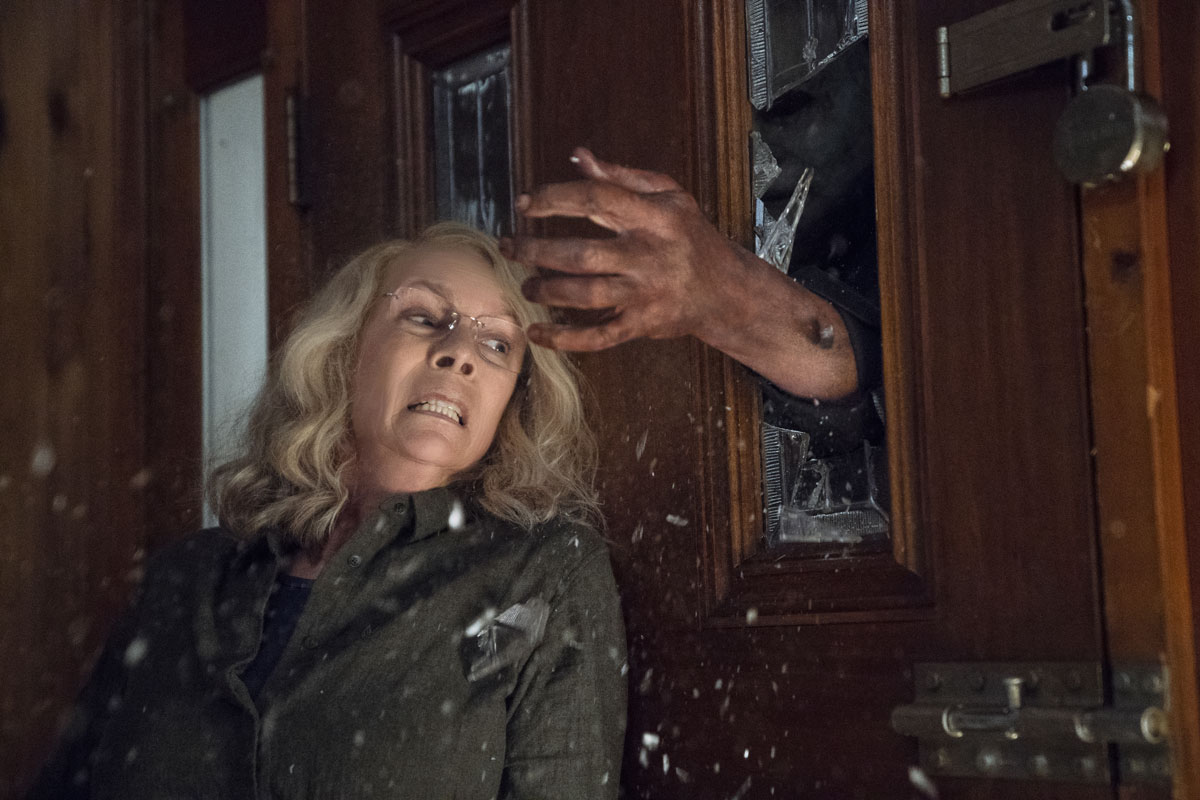
    Michael Myers is back to his murderous best in the 2018 sequel // UniversalPictures.ie

    The film opens with a pair of investigative journalists approaching Myers at the mental rehabilitation facility he’s been held in for the past four decades. Following a chilling scene in the prison, a gruesome series of events free him, which subsequently results in Myers donning the iconic mask.

    Following years of paranoia, predicting Myers’ eventual return, Laurie has spent her time fortifying her house into some sort of bunker while raising – and training – her daughter Karen (Judy Greer), in preparation for the jumpsuit-clad killer.

    Growing tired of her mother’s actions, Karen sets off to live a normal life with husband Ray (Toby Huss) and daughter Karen (Allyson Matichak), away from the memory of Myers and his murderous rampage 40 years ago.

    What follows is a gory, unnerving, and often,  surprisingly charming slasher film. It has everything the viewer would want and expect from Myers, including gruesome deaths, spine-tingling tension and a grandstand finish.

    Halloween delivers on all fronts, in a time when horror titles have become more silly than scary, all the while paying homage to John Carpenter’s 1978 classic that originally gained the adoration of audiences worldwide.

    09
    Jamie Lee Curtis reprises her legendary role as Laurie, and couldn’t wait to correct the distorted Halloween timeline // UniversalPictures.ie

  • Venom: The Good, the Bad, and the “Meh”

    Venom: The Good, the Bad, and the “Meh”

    Despite a solid performance by Tom Hardy, Venom fails to grab the viewer and have them fully invest in its character relationships. Ultimately, this brings the whole film down to a disappointing “meh”. In short, it wasn’t bad, but it wasn’t good either. It is just watchable.

    Tom Hardy, unsurprisingly, was satisfactory in his portrayal of Eddie Brock, a passionate investigative journalist at the top of his game. Hardy also vividly encapsulates Brock’s symbiote alter-ego, Venom. The one problem I had, that seemed to pop up again and again in this movie, was the relationship between Eddie and Venom. It didn’t feel fully developed, leaving the viewers confused as to why Venom – an initially malicious extra-terrestrial being – ends up being Brock’s helpful companion. There could have been a deeper, more resonant relationship developed between the pair, which would have helped the audience root for, and fear, Venom in equal measure.

    All of the relationships in this movie were forgettable, no one is rooting for Eddie and Ann, his fiancée, to make up, the character deaths have no impact whatsoever on the viewer, and Venom and the alien antagonist Riot’s relationship feels really tacked on.

    Venom2
    Tom Hardy joins a long list of Hollywood heavyweights, who have immersed themselves in the Marvel universe // Sony Pictures

    Why throw away these vital relationships by not developing them? Ann Weying, Eddie’s fiancée (played by Michelle Williams) may as well not have been in the movie. Sure she had some relevance to the plot, but ultimately she felt like a superfluous character, that only existed to stitch the plot’s threads together. There was no chemistry between Williams and Hardy, meaning the whole relationship may as well have been cut out of the film.

    Another of the film’s flaws was the weak villain Dr Carlton Drake (played by Riz Ahmed). Ahmed’s Drake, combined with the sinister symbiote villain, Riot, fail to truly capture the menacing traits of a proper screen villain.

    “If you go into Venom expecting a terrifying and enthralling experience, you’re going to be disappointed”

    The movie does however, provide a teaser for a possible sequel that looks much more promising, and hints at a darker, more compelling story that could be explored in future installments.

    Venom, in theory, had everything, a dark yet compelling anti-hero, an array of stars, and a decent storyline, but somehow it just didn’t work. Why was Venom’s character toned down? When the first trailer was initially released viewers expected this eerie and unsettling character-driven superhero film. However, both Venom and Eddie were a little bit too comedic. It didn’t feel like the combination of a hard-hitting investigative journalist, and a powerful symbiote with questionable morals. At the end of the day, director Ruben Fleischer’s Venom can’t quite decide what kind of movie it wants to be.

  • Increase in female film production

    Increase in female film production

    Figures from the Irish Film Board have shown that the number of female producers involved in Irish filmmaking peaked in 2016, with 50 percent of film producing roles in 2016 undertaken by women.

    b

    This was a twenty percentage point swing from the previous year which saw just 30 percent of women involved in these production roles, while 2012 saw a mere 27 percent of films produced by females.

    a

    In the chart above we see female film producers on a par with male producers in 2016.
    This increase is in line with the IFB’s Gender and Diversity Policy which intends to adopt a more inclusive breakdown of creative talent, and that ultimately a 50/50 split of gender in creative roles on and off screen is achieved.

    Teresa McGrane, Deputy CEO for the Irish Film Board said, “We first noticed the divide in gender roles several years ago when we did a study regarding theatre production roles. We noticed women were few and far between in the production roles and we then carried this study over to Irish film, where we found much the same trend.

    “The main problem for the first few years leading into the 2010s was that we weren’t getting applications from female producers. As a result we couldn’t make much of an impact with no applications,” Teresa said.

    “So we invested in increased funding and set up a five year strategy that seeks to largely promote gender equality in film roles both on and off screen. This is largely in the form of working with production companies and funding with our public broadcast partners like RTÉ and TG4 and the BAI so that gender balance is promoted in publicly funding screen content.”

    Although female film producers have greatly increased, the share of female writers and directors hasn’t changed greatly over the past few years.

    b1

    Male directors and writers still greatly dominate these roles.

    y

    By Killian Dowling and Jenna Cox

  • Barry Keoghan & Colin Farrell shine in psychological thriller

    Barry Keoghan & Colin Farrell shine in psychological thriller

    This film is certainly not for everyone, so if you’re not interested in psychological thrillers and dystopian films, choose Bad Moms 2 instead.

    The opening scene of Yorgos Lanthimos’ latest film, The Killing of a Sacred Deer, greets us with open-heart surgery. The bare image of the heart beating is creepy, dark, yet at the same time, it sets the tone for the rest of the movie.

    We’re then introduced to Dr Steven Murphy, a successful heart surgeon played by Irishman Colin Farrell. Similar to Lanthimos’ film, The Lobster, Farrell plays his role with an eerie, robotic tone of voice. In The Killing of a Sacred Deer, Farrell seemingly has it all – a big house, a great job, a beautiful wife (played by Nicole Kidman) and two teenage children.

    In The Lobster, Lanthimos showcased Colin Farrell as a weak character, who was relying on love to save him. In The Killing of a Sacred Deer, Farrell is far from weak. His character Steven exudes confidence, he is well respected amongst his medical peers and he believes that he has done no wrong in life. Well, at least that’s how it looks to the viewer.

    Lurking in the background of this idyllic world is a troublesome teenage boy, Martin, who is played by Barry Keoghan. Steven gives a lot of time to Martin; treating him to lunches and buying him expensive watches. To the viewer, it looks as though Martin may be the product of an affair that Steven had 16 years ago. However, their relationship is not built on love, but built on guilt.

    Some years ago, Steven was reliant on alcohol. He performed some heart surgeries under the influence. One of these surgeries involved Martin’s father, who later died on the operating table. Martin, the blue-eyed innocent boy that we saw at the start of the film, is quietly biding his time.

    Steven’s two teenage children, Bob and Kim (played by Sunny Sulijic and Raffey Cassidy) mysteriously become paralysed from the waist down one day. There is no medical science out there that can explain their illnesses. Yet, Martin knows. It is then up to heart surgeon Steven to make a sacrifice. An eye for an eye comes to mind.

    The cast of The Killing of a Sacred Deer are excellent in how they act. Colin Farrell plays the ever-confident surgeon well. Similar to The Lobster, he is one of the stand-out characters of the film.

    KOD2
    Nicole Kidman and Colin Farrell in The Killing of a Sacred Deer. Credit: Curzon Artificial Eye

    Nicole Kidman, who plays Farrell’s wife, Anna, compliments his role. In the same robotic tone as Farrell, she plays a character who strives for perfection for her family. Yet, at the same time, she is willing to sacrifice all that for herself and her husband.

    The performances of Steven and Anna’s two teenage children compliment the storyline. Scenes showing their paralysis are hard to watch, yet intriguing at the same time.

    The actor that stole the movie’s attention was Barry Keoghan, who played the character of Martin. His unpredictability always made the viewer wonder where he’d be next, what he’d do next and what he’d say next. He is the one character that will hold your interest throughout the film. Any time he spoke or acted mysteriously, it was hard to pull yourself away from the seemingly innocent blue-eyed boy. His performance stole the show from beginning to end.

    This film comes with one big fault. It runs for two hours long. Halfway through the film, the viewer has a fair idea of what’s going on and there’s absolutely no need for another hour. This film would have been sufficient to run for 90 minutes. It felt like it was slowly dragging on until the end. When you’ve paid good money to see the movie, that’s the last thing you need.

    Overall, apart from the over-exaggerated time frame, I’d give this movie a 4/5. Yorgos Lanthimos and his team obviously spent much time perfecting these characters, perfecting this setting and plot and it shows. The music used in scenes is creepy, perfectly matching the tone of the movie. The way in which the cameras were poised to follow characters, spy on characters and engage with characters was an excellent tool to create a sinister atmosphere.

    Nothing about The Killing of a Sacred Deer is for the faint-hearted. But, if you wonder whether everything is as perfect in life as it seems, this film is a must watch.

    By Leanne Salmon

    The trailer of the film can be found here;