Tag: flying

  • Dublin Airport’s new runway to attract more tourists to our shores

    Dublin Airport’s new runway to attract more tourists to our shores

    By David O’Farrell

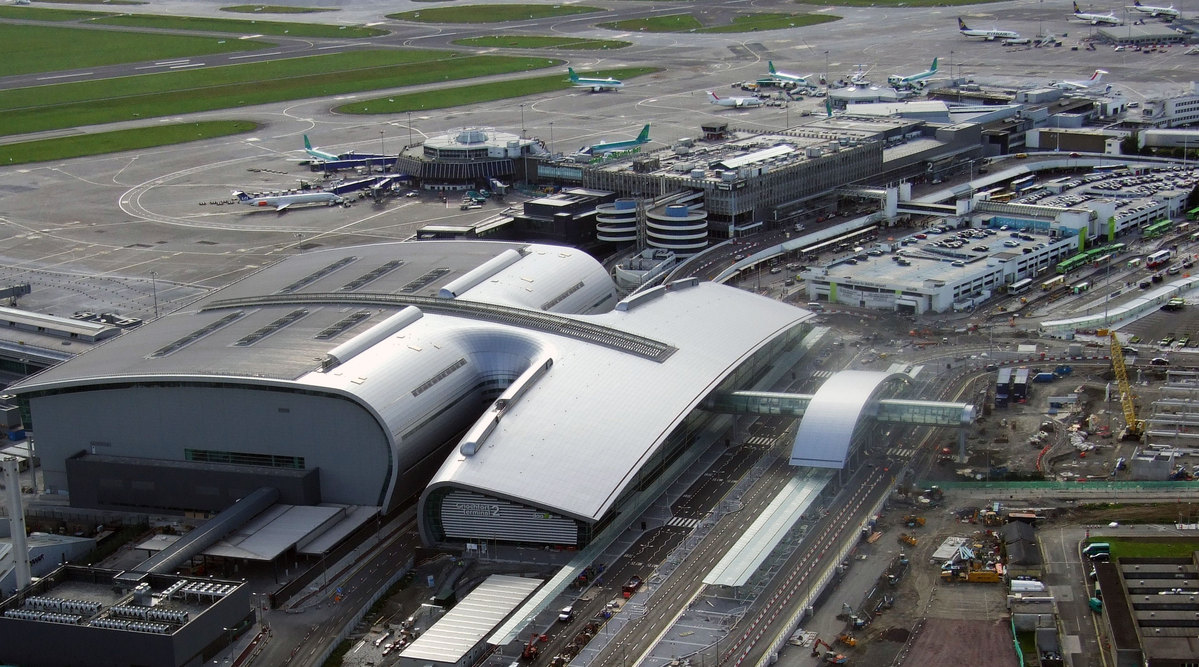
    The tourism sector of the Irish economy is set to receive a major boost  with the building of a new runway at Dublin Airport. In 2018, over 31 million people passed through Dublin Airport, travelling to over 180 destinations across the world. An Bord Pleanála passed the application for another runway at Dublin Airport in 2007, but due to the economic crash, plans had been put on hold until 2016.

    The new runway will be over 3,000 metres long, more than six times longer than O’Connell Street and will open potential new markets for tourism in long-haul destinations such as the Americas, Asia and Africa. Construction first began on the runway in December 2016 and is on course for its scheduled completion in 2021.

    The north runway is expected to deliver a 31% gain in connectivity between Dublin and the rest of the world, making it a crucial European airport. It will open opportunities for connecting tourists to spend some time in Dublin and the rest of Ireland. In the last five years, Dublin Airport has seen a 34% increase in total passenger numbers and a 59% increase in transatlantic seats, highlighting the need for another runway to cope with this ever-increasing demand.

    “The north runway is expected to deliver a 31% gain in connectivity between Dublin and the rest of the world”

    Tourism Ireland is the company responsible for marketing Ireland to potential tourists abroad and they see the building of the new runway as an opportunity to attract a more diverse audience to Ireland. Sinead Grace, Media and Public Relations Manager for Tourism Ireland said: “As the main gateway for tourists to Ireland, Dublin Airport has a critical role to play in the continued growth of tourism, particularly from long-haul and emerging markets.”

    “As an island destination, the importance of convenient, direct, non-stop flights cannot be overstated, they are absolutely critical to achieving growth in inbound tourism,” she continued. “As such, we work very closely with all airports on the island of Ireland, to drive inbound flights.”

    “As the main gateway for tourists to Ireland, Dublin Airport has a critical role to play in the continued growth of tourism”

    Sinead Grace: Media and Public Relations Manager for Tourism Ireland

    Tourism is Ireland’s largest indigenous industry and one of the main benefits of the new runway at Dublin Airport will be the fact that it will be able to handle every type of commercial aircraft due to its length, which currently is not possible as the existing runways aren’t long enough. This will be a big boost to opening up markets in foreign locations.

    Source: Wikimedia Commons

    Grace went on to talk about the importance of tourism in Ireland: “Tourism is responsible for in excess of 4% of GNP in the Republic of Ireland, and for employing about 325,000 people across the island.

    “In 2018, we welcomed almost 11.2 million overseas visitors to the island of Ireland (+5% on 2017), delivering revenue of approximately €5.86 billion (+5%). We are very much focused on driving growth in overseas holidaymakers; and growth in revenue from overseas holidaymakers,” she added.

    “In 2018, we welcomed almost 11.2 million overseas visitors to the island of Ireland, delivering revenue of approximately €5.86 billion”

    Sinead Grace: Media and Public Relations Manager for Tourism Ireland

    The first pavement of concrete is currently being laid onto the runway and the Dublin Airport Authority (DAA) said that this is a key milestone in the construction of the €320 million runway. Dalton Philips, Chief Executive of the DAA, said: “We’re delighted to be starting to build the top pavement concrete layer of Ireland’s new runway. North runway is an essential development for the Irish economy and will help underpin additional tourism, trade and foreign direct investment for years to come.”

  • Interview of Interest: Trainee Pilot Alice Farrell

    Interview of Interest: Trainee Pilot Alice Farrell

    Dubliner Alice Farrell is currently based in Jerez de la Frontera where she is undertaking 14 months of training as part of the Aer Lingus Cadet Pilot Programme. She tells us about securing a place on the programme and what life is like for a trainee pilot.

    alice-pilot-1
    Source: Alice Farrell

    How did you get into the Aer Lingus Cadet Pilot Programme and what did the process involve?

    I applied for the cadetship when it opened last September (2015). I’d made an agreement with myself that I’d wait to apply for the cadetship until I’d finished my undergraduate degree. A couple of weeks after applying I was invited to submit several online essays that covered my interest in aviation, my perceived ability to be a pilot and my general teamwork and communication skills.

    After this stage, I was fortunate enough to be invited to Aer Lingus’ assessment day, which was jointly ran by my flight school FTE Jerez. The day consisted of four main segments; a group exercise, a panel interview, pilot aptitude tests and general aptitude tests. A reasonable standard of maths and basic physics is required to do well in these tests as time is limited. The group exercise was an interesting segment of the day as it’s very hard to prepare for such a scenario and a group of people that are entirely unpredictable. I had to trust my own confidence in my ability to adapt and to truly listen and communicate effectively with others.

    The final panel interview was the next stage. This was as intense as expected but the interviewers really did try their best to relax and settle you. They very much were there to give you the platform to talk and show them who you are. They supported any search for clarity or understanding throughout. At times it’s very much your interview, in terms of what to talk about. An interview with a psychologist followed this stage. It was much like the panel interview but less technical, although it still had technical elements, and a longer time was spent probing certain topics in search of more in depth answers to perhaps previously asked questions. Lastly, [there] was a medical examination in the Mater Private. I was then offered the cadetship in early December.

    Is being a pilot something you always dreamed of?

    When I was younger, I actually dreamt of being an astronaut! As years went on, I realised that this was probably a lot more difficult to achieve than my childhood self had imagined. When it came to going to college I decided that if I couldn’t be the person flying the spaceship, I would be the one who helped build it. Although I found my degree in Physics with Astrophysics interesting, it still didn’t satisfy the part of me that was interested in aviation. So, I decided to apply for an MSc in Safety and Human Factors in Aviation. In the same fortnight, the cadetship opened for Aer Lingus.

    What’s an average day like for you?

    An average day for me at the moment is not as exciting as one may believe. I’m currently in Phase Two ground-school, where I am preparing for eight of the fourteen European Aviation Safety Agency (EASA) exams. A typical ground-school day starts at 9.00am sharp where a student will do three one hour classes in the morning and another three in the evening, finishing at 5.00pm. After the school day has finished, most students will take a rest hour or two for relaxation and dinner. From 7.00pm to 10pm/11pm, I will then study the topics covered throughout the day.

    img_1858
    Source: Alice Farrell

    How intense is the programme?

    The course is a lot of tough work. Before heading down, I was told that however hard you think it will be, double it! This unfortunately proved to be very true. Most students will have to study most evenings, this includes weekends. And for those fortunate enough to be in the flying phase, [they] also have a lot of work to do with flight preparation, from checking the aircraft to route preparation to checking the weather forecast etc. The course is by far the most work I’ve ever invested into something but it’s truly enjoyable to see the rewards of your work as it’s a relatively short course, in comparison to a degree.

    What do you like the most and the least about the programme?

    As would be expected, the flying has been by far the best part. The feeling of walking out to an airplane and 15 minutes later, being at 3000 feet in control and alone, is one of the most liberating and thrilling experiences you can imagine. The least enjoyable part would probably be the ground-school, simply because you’re exactly that, grounded. Although, it must be noted that it’s a necessary evil in order to fully appreciate and understand what is required before heading into either of the flying phases.

    How many people are in the programme?

    There are around 145 of us in the training school – 15 female students and 130 male students. This hopefully reflects a slow but positive change in the industry in which currently only around 6% of pilots are female.

    When do you get your pilot’s wings?

    Wings are presented to students who have completed their CPL (Commercial Pilot’s License) and IR (Instrument Rating). On my timeline, I hope to achieve this sometime in late March/April 2017.

    So will you be flying a commercial airline by May?

    Not exactly. Myself and the remaining cadets return to Ireland late April where we will do our JOC (Jet Orientation Course) and type rating for the Airbus A320. Hopefully I’ll be flying by late summer!

    What one thing would people be interested or surprised to hear about the programme?

    People may think that because they’ve never flown a plane or because they have no background in aviation, this programme might not be for them or that their chances would be limited. I’d say to people of that mindset that the cadetship is for anyone that has ever dreamed of or has been passionate about a career in flying. The cadetship is definitely there to seek individuals that are passionate about aviation, hardworking, and an all-round team player. Regardless of experience, it really is a programme open to everyone who truly wants it.

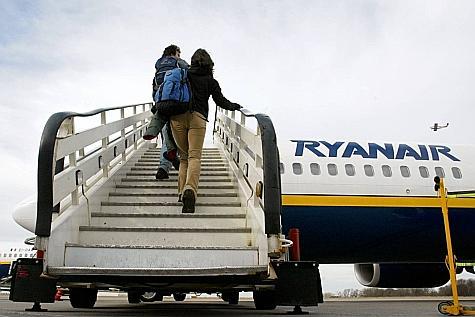
  • New site take-off? 9 ways you know you’re flying Ryanair

    New site take-off? 9 ways you know you’re flying Ryanair

    171462978_4903e2426a_b
    Sit back and relax, right? Photography: ‘fabbriciuse’ via Flickr

    Ryanair has finally accepted their website is AWFUL.

    Speaking on RTE’s Prime Time, Chief Executive Michael O’Leary accepted that the site is “the source of most complaints [from customers]”.

    O’Leary described the site as “clunky” and “very frustrating”, echoing the user experience of… everyone.

    But we’re in luck, O’Leary has promised a rollout of developments in the coming weeks making the site “simpler to engage with”.

    To celebrate the good news, The City has compiled a list of the nine ways you know you’re on a Ryanair flight.

    1. You’ve inadvertently added travel insurance, RyanairTalk or a bus transfer to your booking.

    We’ve all done it, at least once. The frustration of booking the flight becomes a minefield of finger-slips. And that travel insurance doesn’t come cheap!

    Ryanair 2

    2. Ok. You’ve made the booking. Wait. You forgot to print out the boarding pass!

    Quick! You’ve twenty minutes until the four hour deadline. It’s a game of mission impossible with the printer cables.

    Ryanair 3

    3. Phew, you’re at the airport. Carry-on luggage? Ryanair doesn’t think so!

    You bought duty-free didn’t you? Silly, silly silly. You’re clearly a Ryanair nube. Now comes the 10 minute struggle at the departure gates stuffing Toblerones and that reduced bottle of Jack into your tattered old school rucksack.

    Ryanair 1

    4. You’re in. Time for the seat scramble.

    It’s like a game of musical chairs, except your only sound track is the gentle hum of elevator music. Yep, no pre-assigned seating with Ryanair. Get held up at the departure gates with that Toblerone? Welcome to the seat right at the back next to the screaming baby.

    ryanair 3

    5. Buckle up. Phone on airplane mode and… OFF. Ready for your safety demonstration?

    Keep tuned in, because blink and its gone. Your hostess of the most-ess will be throwing on the oxygen mask and life vest like it’s a real life emergency. Don’t forget to thoroughly read the safety card!

    Ryanair 4

    6. And it’s take off! Sit back, enjoy the ride and, you guessed it, the Ryanair lottery tickets.

    Relax they said. Take a nap they said. Oh, and listen to us drone on as we patrol the isle with tickets, perfumes, e-ciggarettes and miniature aeroplanes.

    Ryanair 5

    7. It’s no use, you’re awake. You might as well get a cup of tae. €3!?

    Yep, and you better hope you’re sorry tush you’re not hungry. A packet soup is another €3.50, and a panini accompaniment will set you back €5.50. Wallet empty and only 15 minutes into the flight. Lets hope you’re not travelling too far.

    Ryanair 6

    8. You got some sleep and the captain’s announcing the landing. Wait for it… wait for it… “toot to-toot!”

    The infamous Ryanair on-time trumpet jingle.

    Ryanair 7

    9. Phone on and airplane mode off. Hysterical beeping from your phone. Backpack on. Ready for the hike to the arrivals lounge?

    That’s an estimated 30 minute walk. What Ryanair doesn’t tell you is that the secret to their cheap flights is in them having you walk half the journey… enjoy! Oh, and welcome to your destination.

    Ryanair 9

    Got any other fond memories of your Ryanair travels? Tell us in the comments!