Tag: football

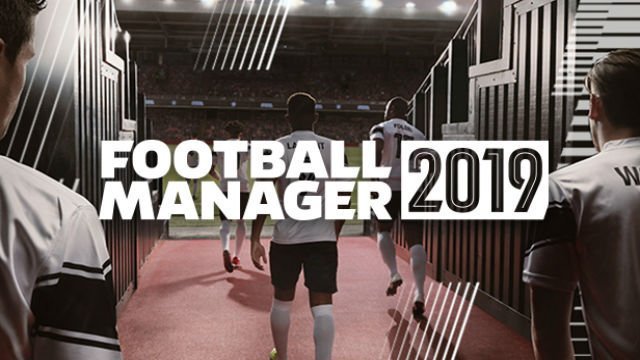
  • Football Manager 2019: key refinements make this new installment a must have for veterans and newcomers alike

    Football Manager 2019: key refinements make this new installment a must have for veterans and newcomers alike

    Partners, spouses, friends, et al., whose significant others are fanatics of the FIFA franchise, will recognise October as the month of the year that their time spent together experiences a dramatic decrease, as game after game takes up a hefty portion of their other half’s day. But for those whose close acquaintances are devotees of the Football Manager series, the above FIFA based scenario is laughable in its tameness – some of the more invested managers are known to spend days holed up, as the battle for promotion from the Vanarama National League intensifies, while the search for the next Freddy Adu, Tijani Babangida or Cherno Samba off the talent conveyor belt is never-ending. The City had access to the beta version of Football Manager 2019 to bring you this preview before the game is officially released on November 2nd.

    The most immediately noticeable change is the interface – or rather the colour. While most of the menus and page layout remain the same, the predominant colour of this year’s edition is purple. But it’s not as overbearing as it seems on initial viewing and is in fact quite easy on the eye as a background colour that players will be looking at for a considerable amount of time.

    The User Interface has undergone a purple transformation in FM19 // Sega

    Seasoned veterans of Football Manager have been calling for a change to the stagnant training section that has been ever-present for almost a decade. Sports Interactive has listened, evident from the massive overhaul that this section has undergone. Gone are the five focus options available to set for the week’s training schedule – now managers see the weekly schedule broken into three sections per day, all of which can be filled with a number of training options. It is a massive and impressive change to the game, one that has been much needed over the previous editions.

    Managers can fill their training schedules with over 45 exercises from sections including match preparation, attacking, defending, tactical, set pieces and physical. The impact of each exercise varies on the selection – attacking drills see most of the impact on attributes weighted towards the forward players, and vice-versa for defensive and goalkeeping drills. Players now train in goalkeeping, defensive and attacking units – managers are free to include the cream of the crop from their youth squads in first team squad’s training units, while youth players can be grouped together with a senior player in mentoring groups for the first time.

    The Bundesliga is officially licensed in FM19 // Sega

    These are truly fundamental changes to training in Football Manager and may seem like a lot to get your head around at first. There is an in-game guide to the new system which veterans and newcomers to the series are recommended to look at. There are also pre-set schedules that can be set as your team training and edited as you wish – from schedules to getting players fit in pre-season, to different tactical styles and scenarios, such as big match preparation and dealing with fixture congestion.

    Football Manager 2019 also sees a huge overhaul to the tactics section – another very welcome addition to the series that veteran managers have been requesting for a while now. When creating tactics, managers now have the option to select a style of play – including, but not limited to, ‘control possession’, ‘gegenpress’, ‘tiki-taka’, ‘fluid counter-attack’ and ‘park the bus’, all of which can be fully tweaked and customised to your personal preferences.

    Tactics are then further broken down into three sections – ‘in possession’, ‘in transition’ and ‘out of possession’. This inclusion really opens the game up to the more tactically minded managers, allowing total control over every aspect of their team’s tactical style and philosophy. The most eye-catching of these sections is the newly-included ‘in transition’ phase. Here managers can decide what their team looks to do when they have both won and lost possession – allowing your team to gallop forward in a Jurgen Klopp inspired blitz after turning over possession, or instead choose a more measured response by keeping the shape of the team along with possession of the ball.

    In terms of the more aesthetically based new features, a fully licensed Bundesliga is included in the series for the first time, with all club badges, kits and player faces present. The Bundesliga is one of the leagues in the new Football Manager which showcases the inclusion of VAR (Video Assistant Referees) for the first time. Referees will stop play in the game if a contentious decision occurs, while the use of VAR will dominate post-match interviews and press conferences. Goal-line technology is also included in the game, so dodgy refereeing decisions preventing your team for gaining a vital three points should be a thing of the past.

    Tactics have been totally revamped in FM19 // Sega

    While no Football Manager player has ever purchased the game for its graphical capabilities, the match engine in the 2019 edition is the best the series has had to offer. Over 500 new player animations for headers, shots, tackles, and celebrations and changes to stadium models give the matches a fresh and vibrant feel.

    Having quickly played through half a season for the purpose of this preview, it must be said that Football Manager 2019 is one of the most complete Beta versions of the game released, which is a great sign for the game’s full release on November 2nd. Matches are playing out with little in the way of obvious bugs, while processing, loading and saving times are noticeably faster than last year’s game. The last few years of Football Manager have seen steady if not spectacular changes and improvements – this year’s game is the polar opposite: there are complete overhauls to fundamental sections of the game. But the changes are much needed and, most importantly, brilliantly implemented, giving an updated and fresh feel to what looks like the most complete edition of the series yet.
  • Value of youth rises with game time

    Value of youth rises with game time

    The 2016/17 football season saw the rise of plenty of young stars. By the end of the season young players were attracting big clubs and massive transfer fees. Over the summer transfer window Ousmane Dembele, aged 20 from Borussia Dortmund, was signed by Barcelona for a fee of €105m, while 18 year-old Kylian Mbappe was signed by PSG from Monaco in a loan deal that will see him sign for the Parisian super club next summer for a fee of €145m.

    With these young players and many more showing their worth, I decided to find out which of the top 5 leagues are the most generous when it comes to giving these players opportunities.

    DO Graph

    Based on the total number of minutes played by all players last season, against the total number of those minutes given to youth players, decided as players aged 21 and under, I calculated the percentage of playing minutes given to youth players in each of Europe’s top 5 football leagues.

    Based on this data, the French Ligue 1 is the best location for young talent to play, coming in with nearly 3 times as many minutes given to youth players as the last placed Premier League.

    To delve further, I calculated the most and least youth friendly clubs in each league based on their minutes given to youth players.

    Surprisingly, it’s one of the most expensive squads in the Premier League that tops the list for giving minutes to youth players, although aside from the academy graduate Marcus Rashford the remaining minutes come from Luke Shaw and Anthony Martial, coming in at a collective €85m in transfer fees.

    It’s no surprise to see Spurs so high with the majority of their minutes coming from Young Player of the Year Dele Alli, and Everton make their way in at third thanks to Mason Holgate and Tom Davies making their way onto the scene this season.

    Crystal Palace are the only team in any of the Top 5 leagues to not give a single minute to youth players, while their neighbours in the league table Swansea gave less than a full 90 minutes themselves. Chelsea, however, were flying without youth, although most of their young lads were finding playing time over at Vitesse.

    There are similar findings in other leagues with Serie A leaders Juventus, and Real Madrid and Barcelona battling it out for the title in Spain, all rejecting the use of youth themselves. The only player to really make a mark in any of these teams is Marcos Asensio at Real Madrid, whom Zidane has taken a liking to. Maybe it’s the luxury of being able to send players out on loan to develop at smaller clubs that allows these teams to have fantastic squads while also having thriving youth at a moment’s notice.

    Toulouse lead the line for youth players, they’re currently sitting in 12th, after two relegation-threatening 17th place finishes in a row maybe the young lads have been the kick that team needs to move up the table.

    Finally I took a look at the individuals who have found the most success in each position this season.

    DO Table

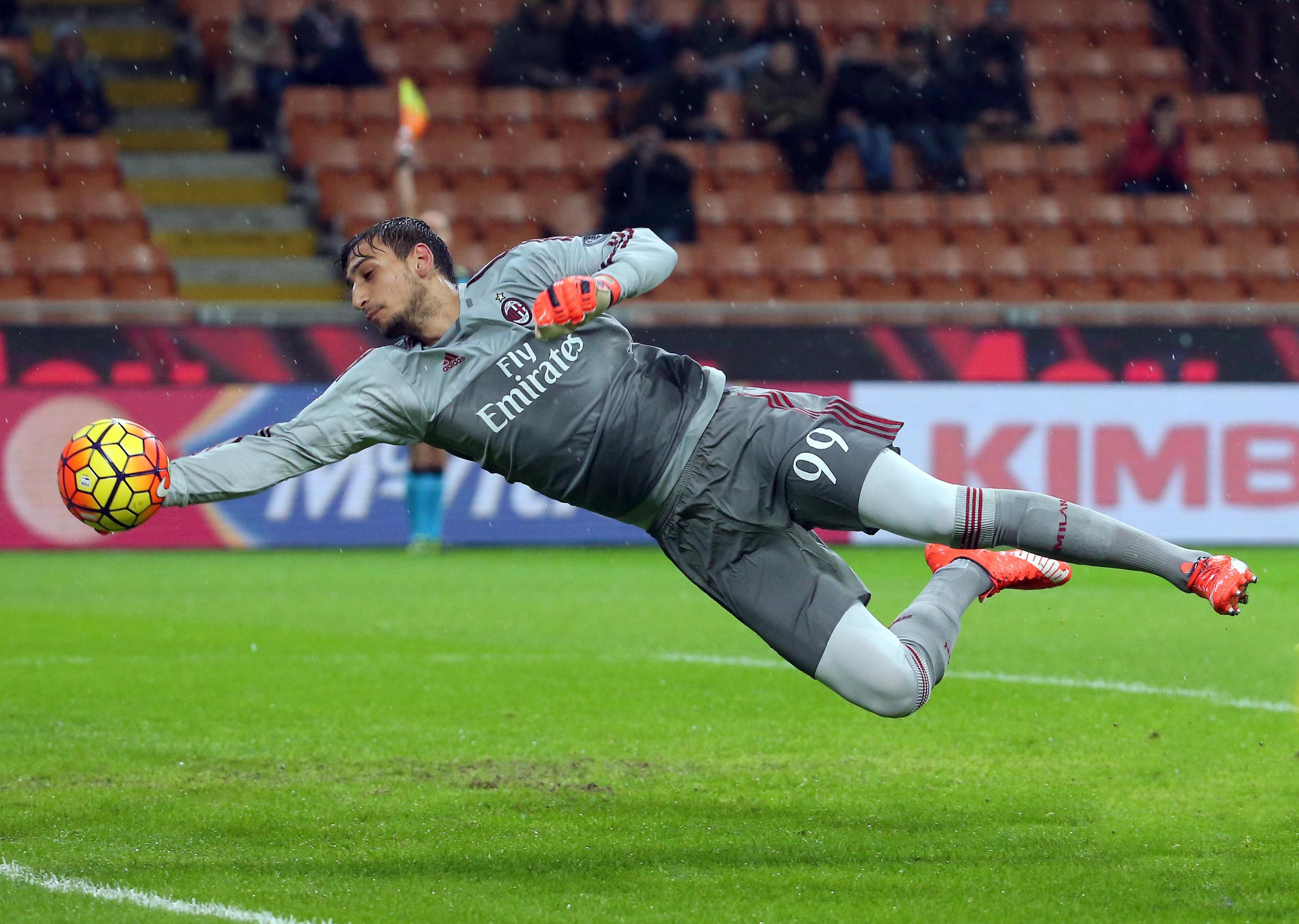
    Gianluigi Donnarumma was an ever-present for AC Milan last season, leading to a pursuit of the 18 year-old by Juventus who he desperately tried to sign for over the summer before changing his mind and staying with Milan.

    Football tends to flow more freely as you move up the pitch and so generally teams like to have more consistent defensive line ups than in attack, and this is shown here as the further forward you go from Goalkeeper to Forward, the less minutes are given on average.

    By Daniel Osborne

  • The City Sports Podcast Episode 8

    The City Sports Podcast Episode 8

    This week’s edition sees host Leo McGuinn joined by regulars Shane O’Brien, Sean Meehan, Scott Howe and Daniel Osborne to look over Ireland’s play-off failure, Tony Pulis’ sacking and the seemingly unstoppable Manchester City, as well as looking at the insipid Irish rugby display against Fiji.

  • Time to say goodbye? Defeat to Denmark should spell the end for Martin O’Neill

    Time to say goodbye? Defeat to Denmark should spell the end for Martin O’Neill

    “Just to say, thank you very much for giving us the space,” Danish manager Age Hareide sarcastically said following Denmark’s 5-1 drubbing of the Republic of Ireland, before going on to say, “they [Ireland] made it a little bit easy for us.”

    To have an opposition manager make comments of that ilk about a fellow professional’s  tactics does not bode well for Martin O’Neill’s future.

    O’Neill got it drastically wrong on Tuesday, maybe not initially, but his response to Ireland conceding was nothing short of farcical. Ireland had not conceded more than one game in a competitive home match under O’Neill prior to Tuesday night, mainly because they never leave themselves exposed as they did. To abandon such an approach with such a huge game still delicately poised beggar’s belief.

    Ireland were absolutely outclassed by an average Danish team at home in what surely ranks as the country’s worst defeat since the embarrassment that was the 5-2 defeat to Cyprus in 2006 (there have been bigger defeats since then, but the losses to Spain and Germany in 2012 can at least be put down to the fact that both teams were world class).

    It started so perfectly as well. Shane Duffy’s sixth minute goal gave Ireland the lead in the tie and seemingly set up 85 minutes of nerves for the Irish fans. Unfortunately, those nerves, or the lead, didn’t even last half an hour before the wheels came off.

    The equaliser changed everything. Ireland were moderately comfortable up to that point and even carved out two decent chances to extend their lead. However, once the Danes got on the scoresheet (shambolically) it was one-way traffic.

    Ireland proceeded to play with what Keith Andrews labelled ‘gung ho’ football and threw bodies forward in the immediate aftermath of conceding the equaliser and paid the ultimate price for it. There was no need to panic. With over an hour left, there was plenty of time to probe at the Danish defence and regain the lead.

    Instead, they played like they were 2-0 down and left themselves exposed on the break and were punished within three minutes. What was a manageable task suddenly became exceedingly difficult and the half time substitutions only compounded the problem. Removing two defensive midfielders exposed the Irish defence even more and Christian Eriksen made them pay dearly.

    Eriksen is genuinely world class and to give him the space that the Irish midfield did at 1-1 is criminal, especially when there was a need to be compact and see the game out to half time.

    Of course, O’Neill cannot have accounted for the individual errors that were the catalyst for so many of the Danish goals. Stephen Ward, a mark of consistency throughout Ireland’s campaign, froze on the big occasion and two of the Danish goals came directly from his errors. Cyrus Christie, usually dependable in a green jersey, looked edgy from the off and should have done so much better with his goal line clearance for the Danish equaliser. However, the tactics remain unjustifiable and inexcusable despite the errors.

    The ends have always justified the means during O’Neill’s reign, impressive 1-0 wins against Germany, Austria and Wales were built off the back of a rearguard action, but any one of those games could have gone the way Tuesday night’s match did. Had Germany put away one of the many first half chances they had in Dublin, you could make a case that the final score would resemble the one against Denmark. The same goes for Austria, who absolutely dominated the opening half in Vienna and, to a lesser extent, Wales.

    It is not last night that should be seen as the killer blow in Ireland’s qualifying campaign however. It is the absolutely abysmal 2017 that wrecked any hopes of automatic qualification.

    The group was there for the winning – ten points out of twelve at the beginning of the year was the perfect launchpad, but a lack of ambition against Wales at home (who had ten men for the best part of half an hour), an Austrian side who were in complete disarray, and a Georgian side that were sixth seeds in the group ultimately saw Ireland pick up three points from their next four games.

    Losing at home to Serbia, who were reduced to ten men around the hour mark, was also inexcusable. A lack of ambition on the manager’s behalf was at the forefront of these results. Sitting back on a 1-0 lead in Georgia perhaps best showcased this lack of ambition, and saw the Georgians enjoy more than 70% of the ball.

    Austria came to Dublin in June lacking confidence and lacking any real hope of qualifying for the World Cup. That should have been the game where Ireland laid down a marker and really went at the opposition, instead they resorted to the same type of football that had seen them drop points against Wales in March.

    O’Neill’s reign has not been all doom and gloom by any means and qualification for Euro 2016 and the subsequent qualification from the group stages are undoubted high points. However, these feats were only achieved because of the expansion of the Euros into a 24 team tournament. Ireland would not have qualified for any previous European Championship based off their last qualification, nor would they have made it out of the group stages in any other tournament.

    Admittedly, O’Neill has been a vast improvement on both of his predecessors in Giovanni Trapattoni and Steve Staunton, but his refusal to blood new talent and continue with the tried and trusted has led to Ireland continuing to play negative football where the ball is treated as the enemy.

    Whether O’Neill stays or goes, whoever is in charge next year has a rebuilding job on their hands and has to give youth a chance. There are some promising players in the Irish Under 21 squad, and friendlies in March offer the perfect chance to hand the more promising players their debuts. There is a plethora of promising players in the squad already that for too long have been overlooked, it is time also to put that to an end.

    By Shane O’Brien

  • The City Sports Podcast Episode 6

    The City Sports Podcast Episode 6

    This week’s edition sees host Leo McGuinn joined by Shane O’Brien, Daniel Osborne, Sean Meehan, Eoghan McGrane and Scott Howe to look over the weekend’s Premier League action, Cork City’s victory in the FAI Cup final, Slaven Bilic’s sacking by West Ham United and Friday night’s GAA teams of the year.

  • Vinnies reign supreme in the capital once more

    Vinnies reign supreme in the capital once more

    St Vincent’s defeated Ballymun Kickhams in a tightly contested affair last Monday to retain their Dublin Senior Football title.

    The Marino men edged out their rivals by a goal winning on a scoreline of 1-08 to 0-8 in front of a sold out Parnell Park.

    The highly anticipated game boasted some of the finest individual talent in the country, however the standard on show was surprisingly lower than expected.

    St Vincent’s were by far the better of the two sides in the opening half enjoying far more possession. Tomás Quinn had two chances to find the net but was denied by a goal line deflection and the butt of the post respectively.

    Vincent’s did hit the back of the net through talisman Diarmuid Connolly midway through the first half, following an uncharacteristic mistake from Philly McMahon. Lorcan Galvin capitalised and supplied an unmarked Connolly with a pass and the Dublin star slotted a low shot to put his side in the lead.

    Ballymun were far from their best in the first period, dropping several shots short or wide and could be considered fortunate to only trail by a goal with the half time scoreline reading 1-04 to 0-04.

    The second half was more of the same. St Vincent’s controlled the game very well and were more than happy to hold possession for long periods, keeping Ballymun at arms length at all times.

    Ballymun never looked like breaking down Vinnies until a slick hand-passing move saw wing back Carl Keeley go one on one with goalkeeper Michael Savage only to see his shot pushed over the bar. This was crucial as Vincent’s managed to avoid Ballymun gaining momentum as they began to run down the clock.

    Ballymun became increasingly desperate with McMahon and Dean Rock both moving to the edge of the square as the game reached its climax, but in truth Vincent’s were never really troubled in what was a very controlled solid defensive effort.

    By Eoghan McGrane

  • The group that nearly got away

    The group that nearly got away

    Ireland rarely do things the easy way. Monday’s win in Cardiff was one of the most impressive away victories in the country’s history, probably the most impressive when you factor in that the game was win or bust. But it should never have come to that.

    Before Monday’s game, the campaign had threatened to become a campaign of ‘what ifs’ following an abject 2017.

    November’s win in Austria saw Ireland sitting pretty on top of Group D with 10 points from 12 and with back-to-back home games with Wales and Austria there was a real chance to gain a stranglehold on the group. Victory over the Welsh, who played with 10 men for 25 minutes, would have put the boys in green seven points clear of their Celtic rivals at the halfway stage of the group.

    Instead they would limp to a 0-0 draw in Dublin that maintained the status quo. June’s clash with a depleted Austrian outfit offered the chance to regain momentum at the top of the group, but again they were held to a draw, producing one of the worst home performances of the O’Neill era in the process.

    The insipid September draw in Georgia that followed put Ireland firmly on the backfoot and brought them to a must win home game with group leaders Serbia that they promptly lost, once again failing to exploit a man advantage for the best part of half an hour.

    That defeat saw Ireland drop to third behind Wales and represented a dramatic fall from grace since beating Austria. What could have been a seven-point buffer following the home game in March was now a one point deficit.

    Trailing Serbia by five points with just two games remaining meant that Ireland’s only realistic chance was the play offs if they could beat wales in Cardiff, however they would need favours elsewhere to ensure they would not be the worst second placed team.

    Miraculously, Scotland did Ireland the favour they needed by beating Slovakia and then failing to beat Slovenia, meaning that a win in Wales would suffice for the play offs. Ironically, it is not the first time Scotland have done an Irish campaign favours either, their defeat to Georgia in 2015 was the difference between Ireland qualifying for Euro 2016 and not qualifying and their win in Bulgaria in 1987 saw Ireland qualify for their first ever international tournament.

    With Monday’s game in Cardiff a must win for both sides, the game had the feel of a cup final and Ireland to their credit executed a game plan to perfection. They dug in in a difficult environment and struck at the opportune moment, a wonderful goal from James McClean that will go down in the annals of Irish football history and sparked wild celebrations among the travelling Irish contingent. Thankfully they were still celebrating come the full-time whistle.

    However, the job is only half done and Ireland face the prospects of a play off for the 4th time in the last five campaigns. Their possible opposition (Switzerland, Italy, Croatia, and Denmark) is daunting but Irish fans will cross their fingers that they are drawn with either Switzerland or Denmark.

    The Danes failed to qualify for Euro 2016, a tournament comprising of exactly half the teams in Europe so their credentials must be called in to question.

    The Swiss, on the other hand, won nine of their ten games in qualifying but it was a visibly poor group featuring one good team in Portugal who were still on a come down following their European success last summer and Ireland would fancy their chances against a team they beat last year, albeit in a friendly.

    Italy and Croatia represent far more daunting opponents and it would be a tough ask to overcome either in two legs. Having said that, Martin O’Neill is slowly building a portfolio of major scalps as Ireland manager and there is always a chance he will pull off another Germany or another Italy or another Austria. Wales can now be added to the list of higher ranked scalps and it was a win that saved Ireland’s campaign.

    But they should never have been in need of that win. The what ifs have been shelved, for now. Hopefully, they will be shelved for good in a month’s time.

    By Shane O’Brian

  • The City Sports Podcast Episode 2

    The City Sports Podcast Episode 2

    Host Leo McGuinn is joined by his regular guests to discuss Ireland’s 2-0 win against Moldova, all the other football news, the Super-8s, and the latest from the NFL.

  • From Templeogue Utd to Reading F.C: how do young players cope when playing abroad?

    From Templeogue Utd to Reading F.C: how do young players cope when playing abroad?

    As the Irish national team begin to perform well on the international stage once again, Gary Ibbotson looks at how our young hopefuls deal with living away from home. (more…)

  • Will email leak beat Brand Beckham?

    Will email leak beat Brand Beckham?

    James Carroll reports on whether the latest email scandal is going to hurt ‘Brand Beckham’?


    Hackers believed to be using Russian servers, accessed millions of messages and documents from the PR firm Doyen Global – which looks after David Beckham’s publicity – and attempted to blackmail the celebrity for £1 million, The Daily Mirror reported.

    Beckham’s business team refused to engage or cooperate with their request, and immediately notified the police earlier this year.

    As a member of the famed Manchester United brand – the Class of 92, Beckham was blessed with one of the best right feet the game has ever seen. He is also known for his specialty in dead-balls, incredible stamina, and ever-changing hairstyles.

    “If you told me as a young boy I would have played for and won trophies for my boyhood club – Man Utd, proudly captained my country, over 100 times, and lined up for some of the biggest clubs in the world, I would have told you it was a fantasy,” he has said.


    The Emails

    However, a series of personal emails leaked by the website Football Leaks threatens to derail his gentlemanly image. These include:

    “Katherine Jenkins OBE for what? Singing at the rugby and going to see the troops plus taking coke. F***ing joke.” This barb was in relation to Jenkin’s admission that she took class A drugs in the past.

    Beckham then allegedly laid into the honours committee, who recommend recipients, raging: “They’re a bunch of c**** I expected nothing less.” While adding, “It’s a disgrace, to be honest and if I was American I would of got something like this 10 years ago.”

    The apparent emails were allegedly written in 2013 due to his frustration at not receiving a knighthood.

    The English tabloids ran with the story on Saturday but his advisors were quick to release a statement saying, “This story is based on outdated material taken out of context from hacked and doctored private emails from a third party server and gives a deliberately inaccurate picture.”


    Beckham missed out on a knighthood in 2013 because of an apparent ‘red flag’ from HM Revenue and Customs over his tax affairs.

    Although there is no suggestion that he broke the law, the ‘red flag’ was enough to halt his nomination.

    It is rumoured that he is particularly annoyed about the way the emails depict his work with the United Nations charity UNICEF.

    One email suggests that he complained about being approached by their ambassador relations manager, Chloe Edwards about contributing money at one of the auctions.

    “Chloe asked me outright which I was p***** off about. . . I don’t want to do it and won’t do it with my own money.”

    However, UNICEF’s deputy executive director Justin Forsyth defended the footballers commitment to the charity.


    Furthermore, a statement from UNICEF read:

    “Before establishing the 7 Fund, David had supported UNICEF and a number of other charities over many years, including donating his entire earnings from PSG during his time playing there. David and UNICEF are rightly proud of what they have and will continue to achieve together and are happy to let the facts speak for themselves.”


    The Backlash

    Having landed their big scoop last week over the emails, the British tabloids went to town on Beckham. Even betting giant Paddy Power are humorously offering odds on which celebrity will receive a knighthood before him.

    Piers Morgan also weighed in on the story over Twitter.


    The Damage

    Will Beckham be the last celebrity to have their private emails or messages hacked? This is doubtful.

    Last month, Italian authorities arrested two people for hacking into the emails of European Central Bank President Mario Draghi and former Italian Prime Minister Matteo Renzi.

    It remains to be seen whether the British authorities will bring charges against anyone for the hack on Beckham.

    Publishing the emails raises an ethical issue, as they were his own private emails.

    Is the public entitled to know that the honours committee were a “bunch of c****” according to Beckham in his private mail and be vilified for it?

    Football Leaks is a website that reveals contract information and transfer fees about famous footballers. It has been described as the Wikileaks for football.

    However, it can be argued that the Beckham brand will not be dented by the material exposed in the emails.

    The hacking may cause more sympathy rather than outrage among the public because of their fear of having private emails hacked.

    There is a reason why people have conversations in private, it is a strictly private matter or, they trust the person they are talking to.


    Back in 2004, it was alleged Beckham had an affair with his PA, Rebecca Loos, when he moved to Real Madrid.

    Loos sold her story of the alleged affair to the News of the World. When the story was splashed all over the tabloids, it did little long-term damage to “Brand Beckham.”

    If the Loos story did not hurt Beckham’s image, then people’s opinions of him are unlikely to change because of a few throwaway comments in his inbox.


    james-carroll-twitter-handle

    Featured Image: Some rights reserved by Bob Bekian