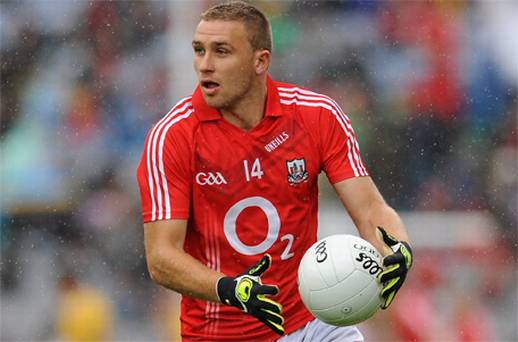
With the news this week that Cork’s Ciaran Sheehan will join AFL side Carlton Blues in January, TheCity.ie looks at some of the top Gaelic footballers who made it down under, as well as some of those who didn’t adapt to the new game.
Those who made it
This slideshow requires JavaScript.
And those that didn’t
This slideshow requires JavaScript.
Sheehan (22) becomes Carlton’s third Irish player, joining Zach Touhy and 19-year-old Ciaran Byrne of Louth, who only signed for the AFL side in August. The Eire Og mans abdication is yet another blow for Cork’s senior footballers, who having already lost manager Conor Counihan earlier this year will be without stalwarts Graham Canty and Pearse O’Neill for the 2014 season after both announced their retirements last week.
Last March I embarked on a photographic quest to depict the essence of our much-derided domestic football league.
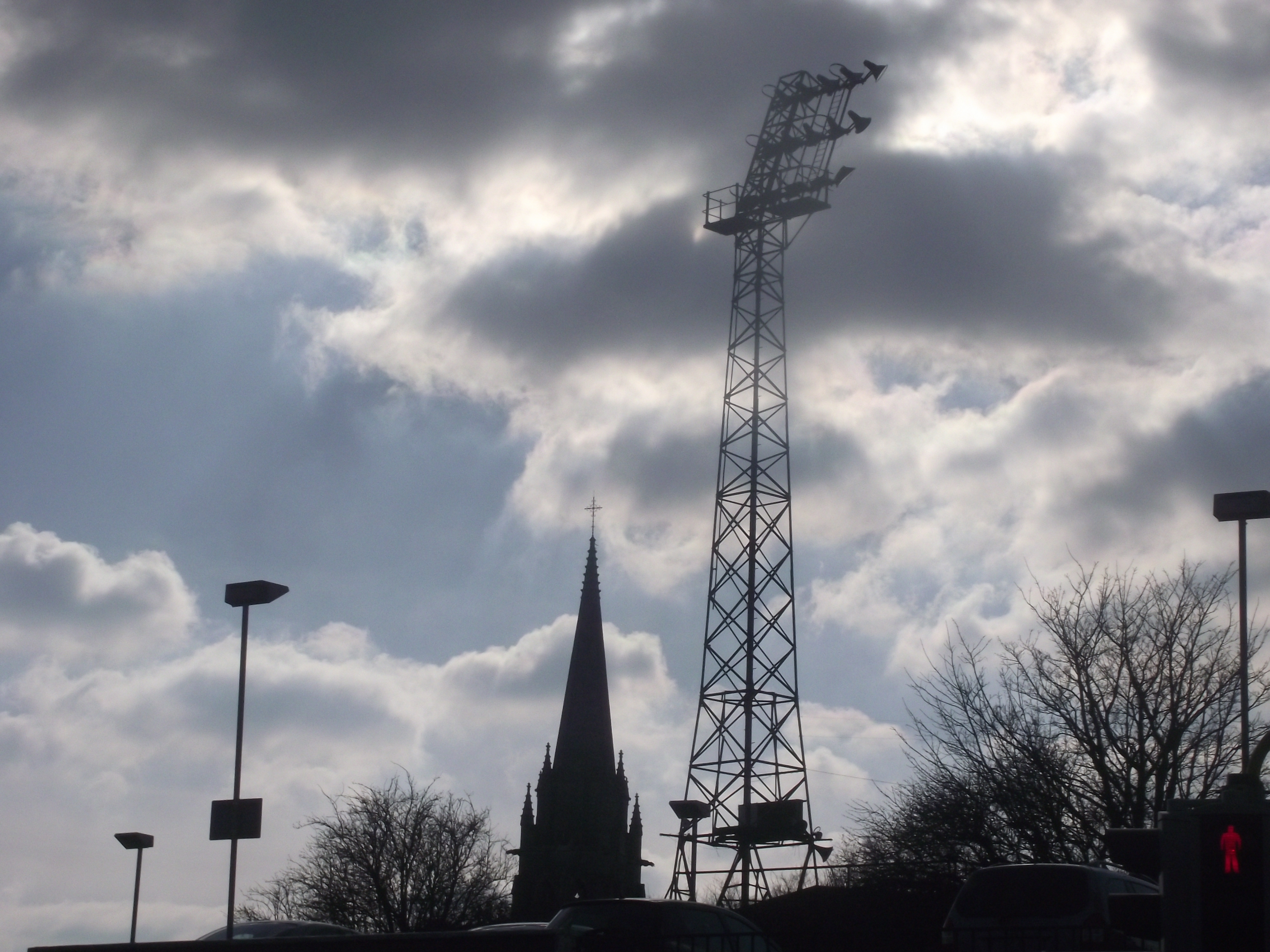
Historical, sometimes dilapidated but always characteristic, League of Ireland clubs’ stadia still retain a quintessential flavour of the game in its simplest form, something that is regrettably absent in the new generation of modern super-stadiums which have come to prominence around the globe.
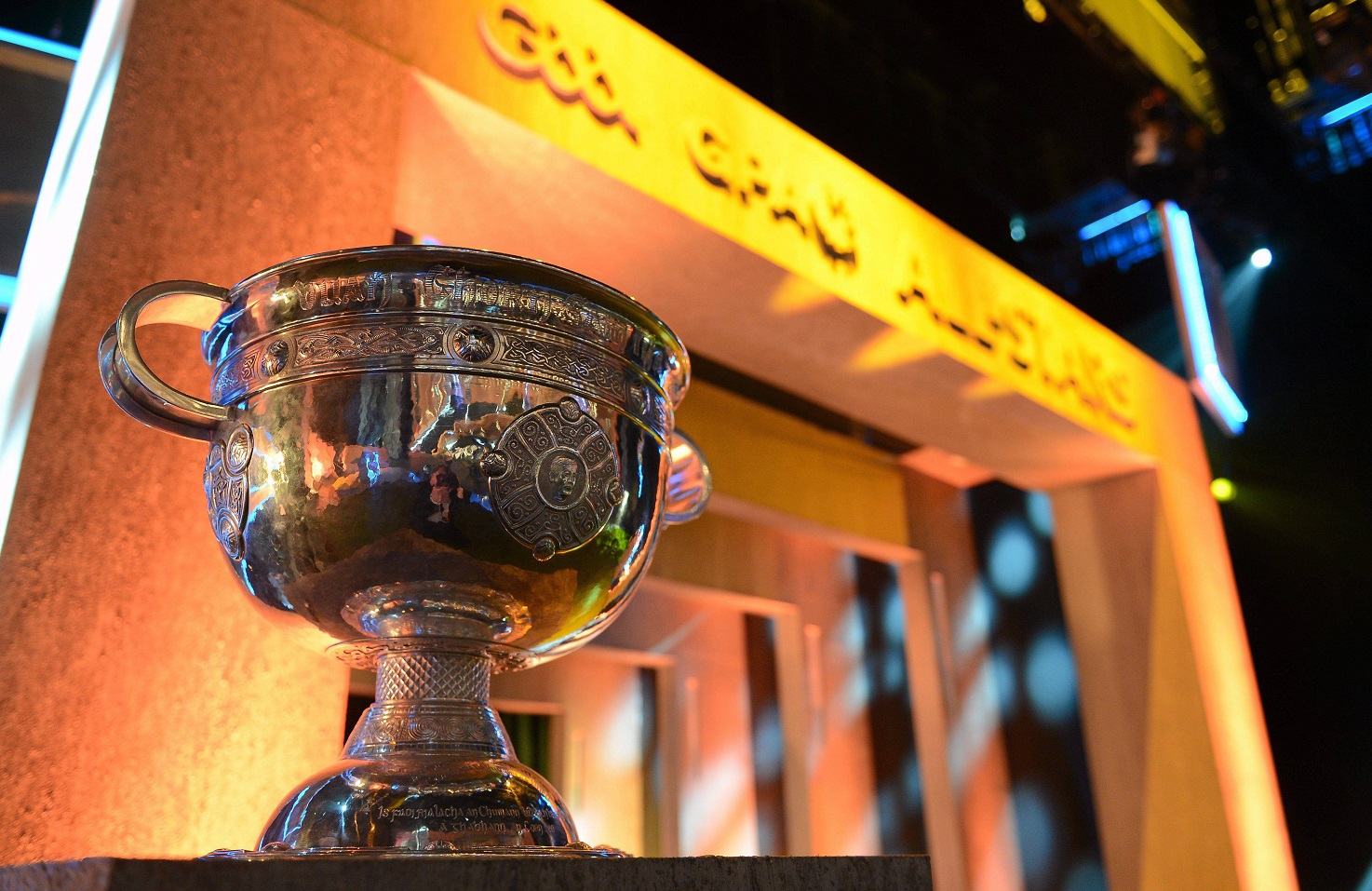
The eagerly awaited nominations for the 2013 GAA GPA All-Stars were announced this month, with the awards ceremony to be held, for the first time, in Croke Park on 8th November.
The awards process has always been subject to criticism, but in recent years have seen enough highly controversial decisions to bring the validity of the process into question.
This year especially was a vital one for the All-Stars credibility. After a footballing year that saw Monaghan come from nowhere to claim an Ulster title, Cavan shock the country on a run to Croke Park and London appear in their first ever Connacht final (not to mention a resurgent Tyrone team), it was a vintage year for the sport.
If football enjoyed a good year, it was nothing compared to the renaissance that gripped hurling this season. Clare’s fourth All-Ireland victory was just the tip of an iceberg that included Limerick bridging a 17-year gap to the Munster title, Dublin winning their first Leinster final in 52 years and an overthrowing of the traditional powers that saw Kilkenny, Galway and Tipperary fail to advance past the quarter-finals.
However, the nomination of Clare hero Shane O’Donnell for a place on the team of the year highlights one of the main problems afflicting the All Stars in previous seasons. While O’Donnell was unarguably the main factor in Clare’s victory over Cork in the All-Ireland replay and deservedly awarded the Man-of-the-Match, this does not warrant an All Star.
O’Donnell celebrates in the wake of Clare’s All-Ireland victory [credit: rte.ie]To be placed on the short-list for the team of the year after 65 minutes of playing time (O’Donnell was replaced by Darach Honan with five minutes remaining) undermines the entire nomination process, not to mention robbing those players who performed consistently over the year the opportunity to be recognised.
The failure of O’Donnell to be included on the Bord Gais Under-21 team of year, and yet still be nominated for its senior counterpart speaks volumes as to the lack of thought given to his selection.
This sentimentality and willingness to accommodate big names was also apparent in the football selections with the nominations of Cian O’Sullivan (Dublin) and Sean Cavanagh (Tyrone). Despite both players spending the vast majority of their years at midfield, O’Sullivan received his nomination in the half-backs and Cavanagh in the half-forwards.
Under the current rules, players are nominated in the positions they lined out in for the majority of the year, with the nominations being grouped into differing lines of the field (e.g. 3 keepers, 9 fullbacks, 9 halfbacks, 6 midfielders, etc.). While O’Sullivan and Cavanagh both had an outstanding year, the performances en route to the All-Ireland final of Aiden O’Shea and Michael Darragh MacAuley make the selection of the two midfield slots a mere formality.
While both players had stints in their nominated positions, this is more an excuse to shoe-horn O’Sullivan and Cavanagh into the team rather than a legitimate reason.
Situations such as these have arisen in the past, most notably in 2010. That year several questions were raised over Graham Canty’s inclusion at centre-back over Downs Kevin McKernan, despite the Corkmans year being plagued by injury. Add that to the fact that not one of the All-Ireland winning Cork forwards received an award compared to three from the Down side they defeated and the inconsistencies begin to pile up.
Last year, Bernard Brogan’s nomination ahead of the likes of Paddy McBrearty and Michael Conroy was seen as an example of the ‘big name bias’ many feel influences the All Star selection committee. Brogan had, by all accounts, a disappointing 2012 season, hampered as it was by injury and bad form, while McBrearty and Conroy were both pivotal in helping their respective side’s advance to the final.
The announcement of Kerry stalwart Tomas O’Se’s retirement from inter-county football last week threw up a remarkable statistic. Despite redefining the wing-back position, one of the greatest defenders of the modern era received only five All-Star awards during his 15-year career.
Kerry legend Tomas O’Se in action [credit: irishmirror.ie]While the All Stars garner great publicity for the GAA both here and over-seas, as well as affording players from so-called ‘weaker counties’ well-deserved recognition for their accomplishments, steps must be taken to improve the selection process before the scheme becomes a joke or, even worse, descends into Railway Cup levels of non-interest.
On the penultimate weekend of the Airtricity Premier League, there were wins for Bray, Dundalk, Sligo and Shamrock Rovers.
Bray won away to Bohs thanks to a Kieran Waters goal in the 76’ minute. The win was long overdue for the Wicklow men but still might not save them from the drop.
Anto Flood has been terrific for pats. credit goal.com
Dundalk coasted to a 4-0 victory over Cork at Oriel Park. ‘The Town’ opened the scoring through Player of the year Richie Towell in the 33’ Minute. Patrick Hoban doubled the advantage on 45’ minutes with a contender for goal of the season.
A John Kavanagh own goal just after the break confirmed Cork’s misery before John Dillion sealed a fantastic season for the Lilywhites.
League Champions St.Pats stumbled to a draw at home to Derry. The Candy-stripes fell behind to a Mc Namee goal in the 34’ minute but Anto Flood rescued a point with his 81st minute equailiser.
UCD suffered heavily to Rovers at home, the Tallaght men opened the scoring through Robinson in the eight minute before Gary Mc Cabe converted a penalty in the 11th minute.
The excellent Richie Towell. credit goal.com
Robbie Benson pulled one back for the students in the 64th minute before Mc Cabe and Stewart put the result beyond doubt.
On Saturday Sligo beat Drogheda 3-1. Anthony Elding celebrated two fine strikes in the 38th and 66th minute, the latter being a spot kick.
Evan Mc Millan made it 3-0 in the 73rd minute before Gavin Brennan pulled one back for the cup finalists albeit from a penalty.
This weekend sees the final round of games in what has been an excellent season for Irish domestic football.
Ireland’s national football question has always been a divisive issue.
It’s a question which has frequently evoked not just sporting rivalry, but impassioned and trenchant opinions from political and religious establishments alike since the inception of association football on this island.
Impractical
Many argue that merging our national teams simply isn’t a viable option. Given the difficult relationship between the north and south since partition, certain aspects either side of the border say that any potential amalgamation of the two associations would be impractical and even dangerous.
However, a significant element would tend to disagree, and there’s plenty of evidence to back up their position.
To say that both the Republic of Ireland and Northern Ireland national teams are underperforming at the moment would be an understatement.
Having both endured a calamitous qualifying campaign for World Cup 2014, large elements of support are urging root-and-branch reform to ensure a swift return to our more competitive days of yore.
But while pundits continue to carefully tiptoe around the substantial issues behind our teams’ failures, others point to the real impracticalities that exist within the current system.
For a region with just over six million inhabitants to expect to field two top-class international sides is nothing short of ludicrous. With neither of the Irish sides now troubling the top 50 of the world rankings, surely now is the time to pool our resources and reinstate some pride in the green of Ireland.
Of course, this difficult history to which I’ve alluded means that many are reluctant to the idea of an amalgamation. But the simple fact is that it works for virtually every other sport- rugby, GAA, cricket, hockey, golf- so why shouldn’t the leading lights in football subscribe?
Tug of War
For one thing, it would at least negate the diplomatic issues that have plagued north-south relations recently. No longer would we be subjected to the unedifying spectacle of an international tug of war over our alleged future stars, as in the high-profile cases of Shane Duffy and Marc Wilson.
Instead, the new national side would be able to reap the abundance of talent that resides amongst the ranks of both the IFA and the FAI without such debacles about allegiance.
The issue of team cohesion is also hugely overstated.
Various members of the current Northern Ireland setup already hold a Republic passport, and given the collective home nations approach of recent years- poaching any talent with a tenuous connection to the emerald isle from English and Scottish academies- that particular argument is a real non-entity.
One potential stumbling block is the fact that any amalgamation would essentially leave us with a new entity in world soccer, which would in turn leave the new unified Irish team with no points ranking history and in the precarious position of being lowest seed in future qualifying draws.
A New Era
However, a quick glance at the meteoric rise of Montenegro, a country of just over half a million people, in the world rankings since the national team’s disaffiliation with Serbia in 2007 provides ample evidence for any naysayers that a new and improved Irish team could do the same.
Who knows, if the move to unify the two national teams were to go ahead it may even usher in a new age of acceptance and social cohesion in north-south relations.
Just look at the case of the Setanta Cup. Far from causing the disharmony that some anticipated, Ireland’s latest cross-border domestic competition has shown how we can reap the dividends of greater cooperation between the two associations.
In many instances the beautiful game has helped to mend fractious relationships the world over. Who knows, in this age of greater social acceptance, it may play a bigger role than ever in bringing people together rather than tearing them apart.
“We are Redskins Nation and we owe it to our fans and coaches and players, past and present, to preserve that heritage.” That is how Washington Redskins owner Daniel Snyder closed his recent open letter to fans of his American Football team.
One of the most talked about stories in the United States at the moment, not just the NFL, is whether or not the Washington Redskins should change their team name.
Many argue that the term “Redskin” is a derogatory term towards Native Americans. However, in his letter, Mr Snyder stated that a poll which talked to nearly 1,000 Native Americans concluded that 90 per cent of them did not find the Redskins name to be offensive.
He also added that an AP poll earlier this year, found 79 per cent of respondents said they didn’t have a problem with the name “Redskins” and that only 11 per cent believed that it should be changed.
The Washington Redskins in training camp, lead by Quarterback Robert Griffin III (yellow). Image by Keith Allison on flickr
In situations like this, all evidence must be considered before forming an opinion.
The team have been known as the Redskins since 1932, and they’ve been the Washington Redskins since 1937. In this time, the team have won five world championships, three of which were SuperBowls, the most recent of these coming in 1991. Changing the team’s name will mean a loss of their history, starting off on a brand new slate.
After several years in the mire of mediocrity in the NFL, a place no team wants to find themselves, the Redskins are now a marketable franchise again. According to Forbes, the Redskins are the fifth most valuable team worldwide, in any sport.
The acquisition of quarterback Robert Griffin III in last year’s draft was crucially important for the revival of the Redskins brand. Griffin lead the team to the playoffs for the first time since 2007. His jersey is the fifth best-selling jersey throughout the entire league. FedEx Field, the Redskins home stadium, which holds 91,704 spectators, is reaching capacity for every home game. The Redskins currently have a marketability level that very few other NFL teams can compete with, not just in America but internationally as well.
An American flag sprawled across the pitch at FedEx Field before a Redskins home game. Image by Jeremy Thoel on flickr
Changing the team name means an entire rebranding on all levels. It is eliminating all possible aspects of growth in income and completely starting anew. It means having to re-establish sponsorship deals.
While it is not uncommon for American sports teams to change their name, it is usually only a process carried out by teams who are struggling, both in competition and financially. While the Redskins may be struggling on the field at the moment, there is still plenty of time for them to turn their season around. Off the field, the future is very bright for the Redskins. The Washington Redskins, not the Washington (insert possible team name here).
St. Patrick’s Athletic manager Liam Buckley cemented his second spell in charge with another league title.
Buckley was the last supremo to have taken the Inchicore side to glory fourteen years ago, giving the supporters every reason to ‘Party Like it’s 1999’.
President Michael D. Higgins and former St. Pat’s and Ireland manager Brian Kerr, were special guests at the game and were given fond receptions by fans on the pitch once the final whistle blew.
St. Pat’s will officially lift the league trophy this Friday against Derry City, but thoughts will soon turn to next season, which will include Champions League qualifying fixtures.
Title defences are never easy, but St. Pat’s know they have the ideal person in command.
In all walks of life there are divides, tensions, battles, opposition, and rivalries. Sport is no exception, all of the world’s biggest sports have intense derbies and rivalries.
In Gymnastics, it’s the USA and China, in baseball, it’s the Yankees and the Red Sox, in Rugby Union, it’s Australia and New Zealand, but in football there is only one rivalry that everyone talks about.
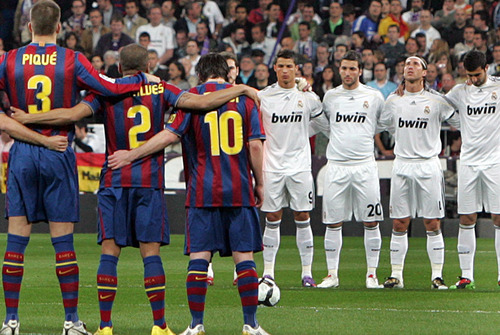
‘El Clasico’ as it’s known, is the biggest rivalry in world football. It is contested between Real Madrid and Barcelona, the two most successful teams in the history of Spanish football.
‘El Clasico’ or the Classic, was first played in 1902 between these two giants of the European game.
All rivalries must start somewhere and more often than not it is an off field dispute that starts these tensions between clubs, causing these fierce rivalries.
The rivalry between Barcelona and Real Madrid starts from the rivalry between the two cities they respectively hail from. Madrid is the capital of Spain and is very closely linked to the monarchy whilst Barcelona is the capital of Catalonia which wants independence from Spain. Real in Spanish means Royal and Real are the Royal club.
‘’Growing up in Cataluña, we were told of all the things that Franco and the Spanish did to us, how they took our money and our freedom, through football we have a non violent way of beating them’’ said 20 year old college student Aleix Hernandez. Although Franco supported Athletico, Real became the symbol of all things Spanish and although they had nothing to do with what Franco was doing they became extremely unpopular.
Ronaldo was one of seven players to play for both clubs. Image by Peter Grimes
As time progressed and politics in Spain became more influential in football, so too did the hatred between the two Clubs, Cities and Peoples. Politics became more influential as the different regions sided with different clubs. The Basque area with Athletic Bilbao, Catalonia with Barcelona, and Spanish nationalists with Real Madrid. As this evolved, so too did the hatred between the two Clubs, Cities and Peoples. When Franco was in power in Spain, from 1939 until his death in 1975, one of the orders that he gave to his troops was to kill Josep Sunyol, leader of left wing politics in Catalonia and President of Barcelona football club.
Franco also abolished the fiscal privileges enjoyed by Catalonia, refused to recognise it as a separate region from Spain and also forbid any other language being taught in schools, except Spanish. When Franco insisted that these means were necessary and would be permanent, he angered and dismissed the people of Catalonia and everything they stood for and believed in, except of course for his supporters.
By doing this, the people of Barcelona rebelled and got behind the local football club, which they saw as an identity and expression for Catalonia and the Catalan people, which they used to vent their hatred for Franco and Spain, they also set up a group called the ‘Boixos nois’ which were a left wing hooligan group used to attack Real fans and vandalise property in Madrid at away games.
‘’In Madrid we are similar to Belfast we love the monarchy and we love Spain, people in Cataluña seem annoyed by this but it is our Country and they live in it,” said Alfredo Juan Fran, a local waiter from Madrid.
The term ‘Mes Que Un Club’ or more than a club, became Barcelona’s motto in the succeeding years and remains right up to the present day. In recent times, the fiscal rivalry has increased as Real’s players don’t pay near as much tax on their wages as their Barcelona counterparts who must pay a 50% tax, once again outraging Catalonians.
This issue has been raised several times in the Spanish parliament but to no avail, Real are known as the Kings club and receive many privileges because of this.
Phil Ball, the author of Marbo ‘the history of Spanish football’, 1977, said that ‘’El Clasico was not just a rivalry but in fact a re-enactment of the Spanish civil war.’’
In the Spanish civil war, the republicans, whom Catalonia supported, fought the nationalists, whom the people of Madrid supported.
The on-field rivalry has been driven by both off field events as well as the successes of both clubs on the field. Between the two clubs they have 53 out of 73 leagues and have 44 Spanish cups.
‘’When they win it is not good it is very sad, they are not nice people, they cause much trouble. We have a history here in Madrid, we have a stadium, trophies and the best players in the world they try to copy us and yet they still want freedom’’ said Alfredo Juan Fran.
Politics has always played a major role in the Spanish Cataluña rivalry. Alfredo Juan Fran, a waiter in Madrid said ‘’you always know when Barcelona are in town, they bring much hatred with them and the atmosphere becomes very uneasy and you see a lot of police around the city, it is not nice when they are here’’.
In 1997, the rivalry reached new heights when then vice-captain Luis Figo traded the Nou Camp for the Santiago Bernabeu, Figo’s transfer from Barca to Real sparked outcry in Spain and much rioting and vandalism occurred before, during, and after ‘El Clasico’. It was revealed in later years that money from the government helped to bring the Portuguese superstar to Madrid. The reason behind this is that if Real keep winning, more people will watch and go to Real games and so Madrid and the government get a dividend.
On Figo’s return to Barcelona in 1998, during a Copa Del Rey match, a pig’s head was thrown at him by members of ‘Boixos nois’. The group cause a lot of trouble when they go to the capital, especially when they play Real. They have been known to start fires, damage and vandalise property, and cause general mayhem, both inside and outside of the Santiago Bernabeu.
‘’When I was a kid, my dad brought me to games every week and we would talk about the great football we would watch, but he would never take me to a Real game. He said it was too dangerous. Now I see for myself why it is too dangerous. I understand why Boxis Nois do what they do, they are like me, a Catalan, and we don’t like Spain or Real for what they have done to us,’’ said Barcelona native Aleix Hernandez.
In 2009, Cristiano Ronaldo’s world record transfer to Real from Manchester United sparked more controversy as it was the Spanish government who forked out some of the €93.9m paid for the Portuguese Captain, as again they felt that having Ronaldo in the capital would indeed help attract people to Real matches giving them a dividend. This transfer showed how the Spanish authorities twice in twelve years publicly backed Real against all the other La Liga teams but particularly to halt Barcelona’s progress.
‘’Real bought Ronaldo because we have Messi, Kaka, because we have Xavi, and Alonso because we have Inesta. They want to be like us, but they can’t because ‘our players’ want to play for us, while their players just want money,” said Hernandez.
‘El Clasico’ has always boasted some of the biggest names in world football, with one club battling against the other to get the world’s best players. The likes of Maradona, Rivaldo, Ronaldinho, and Messi have all played for the Catalan giants with Di Stefano, Zidane, Raul, and Cristiano Ronaldo playing for los Blancos.
The Real-Barca rivalry is the biggest watched club football match in the world with over 600 million people tuning in to watch ‘El Clasico’.
‘’I go to many Real games and I watch many Athletico (Madrid’s city rivals) games but never Barcelona’s. They annoy me and are always flying flags about Cataluña and freedom. Bilbao, a team from the Basque region of Northern Spain and Southern France) fly similar flags, but they never say sorry for all their bombs, ETA, and attacks that have killed so many innocent people,” said Alfredo Juan Fran.
Since their first meeting in 1902, The Clubs have met on 433 occasions. Barca hold the upper hand with 205 victories, with Madrid on 186, and they’ve played out 42 draws.
Although the Catalan giants have enjoyed 19 more victories than Real, it is the latter who have all the bragging rights, having won 11 more leagues than Barca, and also holding the record number of European cups, nine, with Barca back in joint fourth, and Bayern Munich with four.
Real can also boast more Club world cups than their fiercest rivals winning that battle three to two, The Kings club have far greater fan numbers in both Asia and South America although Barcelona have much larger followers in Europe and indeed in Spain.
Barca’s motto may be ‘Mes Que Un Club’ but this unique fixture in world football should acquire the motto ‘Mes Que Un Derby’.
![O'Donnell celebrates in the wake of Clare's All-Ireland victory [credit: rte.ie]](https://i0.wp.com/thecity.ie/wp-content/uploads/2013/10/shane-odonnell1.jpg?ssl=1)
![[credit: irishmirror.ie]](https://i0.wp.com/thecity.ie/wp-content/uploads/2013/10/tomas-ose1.jpg?ssl=1)






You must be logged in to post a comment.