Tag: government

  • Dublin Airport’s new runway to attract more tourists to our shores

    Dublin Airport’s new runway to attract more tourists to our shores

    By David O’Farrell

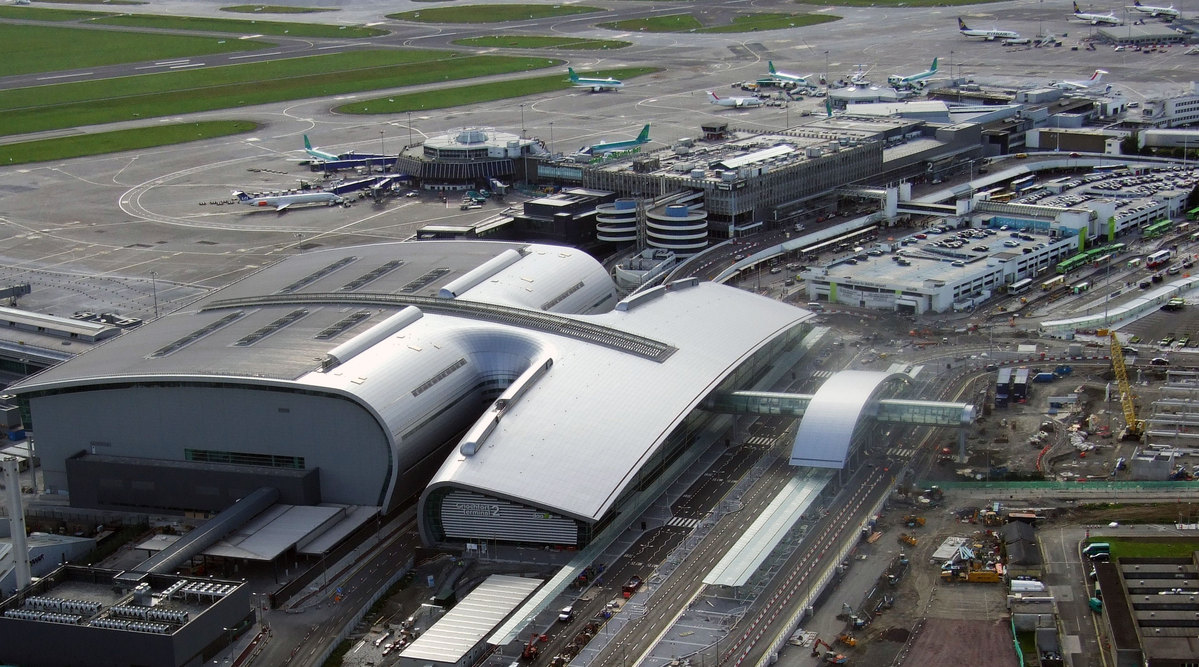
    The tourism sector of the Irish economy is set to receive a major boost  with the building of a new runway at Dublin Airport. In 2018, over 31 million people passed through Dublin Airport, travelling to over 180 destinations across the world. An Bord Pleanála passed the application for another runway at Dublin Airport in 2007, but due to the economic crash, plans had been put on hold until 2016.

    The new runway will be over 3,000 metres long, more than six times longer than O’Connell Street and will open potential new markets for tourism in long-haul destinations such as the Americas, Asia and Africa. Construction first began on the runway in December 2016 and is on course for its scheduled completion in 2021.

    The north runway is expected to deliver a 31% gain in connectivity between Dublin and the rest of the world, making it a crucial European airport. It will open opportunities for connecting tourists to spend some time in Dublin and the rest of Ireland. In the last five years, Dublin Airport has seen a 34% increase in total passenger numbers and a 59% increase in transatlantic seats, highlighting the need for another runway to cope with this ever-increasing demand.

    “The north runway is expected to deliver a 31% gain in connectivity between Dublin and the rest of the world”

    Tourism Ireland is the company responsible for marketing Ireland to potential tourists abroad and they see the building of the new runway as an opportunity to attract a more diverse audience to Ireland. Sinead Grace, Media and Public Relations Manager for Tourism Ireland said: “As the main gateway for tourists to Ireland, Dublin Airport has a critical role to play in the continued growth of tourism, particularly from long-haul and emerging markets.”

    “As an island destination, the importance of convenient, direct, non-stop flights cannot be overstated, they are absolutely critical to achieving growth in inbound tourism,” she continued. “As such, we work very closely with all airports on the island of Ireland, to drive inbound flights.”

    “As the main gateway for tourists to Ireland, Dublin Airport has a critical role to play in the continued growth of tourism”

    Sinead Grace: Media and Public Relations Manager for Tourism Ireland

    Tourism is Ireland’s largest indigenous industry and one of the main benefits of the new runway at Dublin Airport will be the fact that it will be able to handle every type of commercial aircraft due to its length, which currently is not possible as the existing runways aren’t long enough. This will be a big boost to opening up markets in foreign locations.

    Source: Wikimedia Commons

    Grace went on to talk about the importance of tourism in Ireland: “Tourism is responsible for in excess of 4% of GNP in the Republic of Ireland, and for employing about 325,000 people across the island.

    “In 2018, we welcomed almost 11.2 million overseas visitors to the island of Ireland (+5% on 2017), delivering revenue of approximately €5.86 billion (+5%). We are very much focused on driving growth in overseas holidaymakers; and growth in revenue from overseas holidaymakers,” she added.

    “In 2018, we welcomed almost 11.2 million overseas visitors to the island of Ireland, delivering revenue of approximately €5.86 billion”

    Sinead Grace: Media and Public Relations Manager for Tourism Ireland

    The first pavement of concrete is currently being laid onto the runway and the Dublin Airport Authority (DAA) said that this is a key milestone in the construction of the €320 million runway. Dalton Philips, Chief Executive of the DAA, said: “We’re delighted to be starting to build the top pavement concrete layer of Ireland’s new runway. North runway is an essential development for the Irish economy and will help underpin additional tourism, trade and foreign direct investment for years to come.”
  • “Menstruation is not a choice” – new committee to tackle period poverty

    “Menstruation is not a choice” – new committee to tackle period poverty

    By Megan Gorman

    The government has set up a committee to deal with the issue of period poverty. The new committee, which has been set up by the Health Minister, is chaired by the Department of Health.

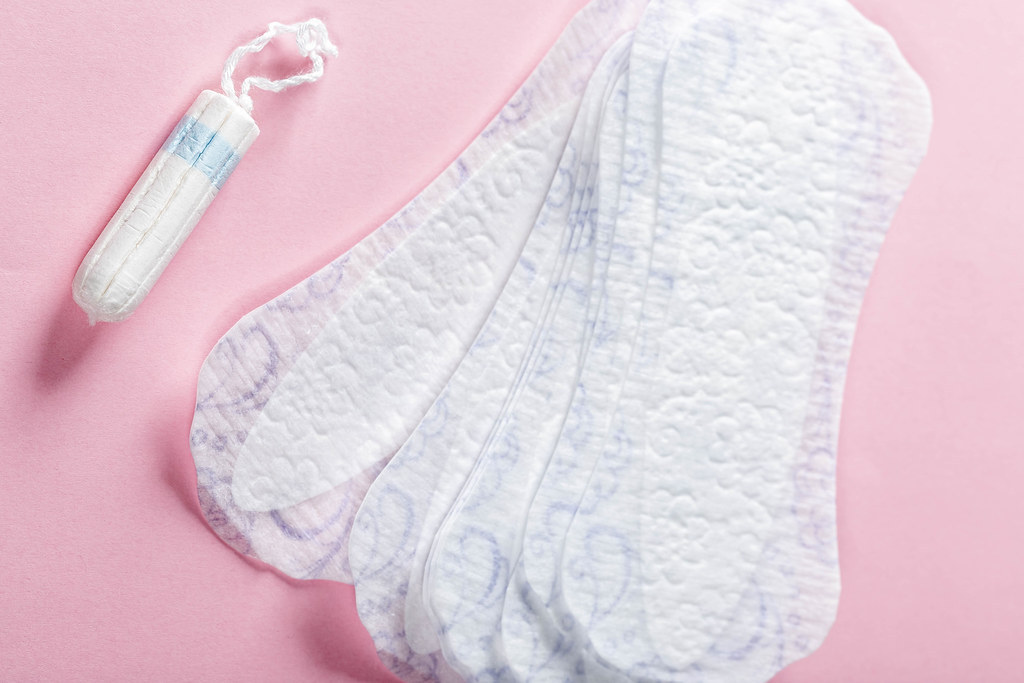
    Period poverty is not something that is mentioned or talked about so therefore not many people may know it is a thing. Period poverty is an issue where girls and women struggle to afford sanitary products. This is happening everywhere all over the world.

    Earlier this year, Health Minister Simon Harris committed to taking action on free sanitary products in all public buildings in Ireland to make girls and women feel comfortable and safe. This is one step towards taking action on the issue.

    In a press release Simon Harris spoke of the first step of this journey. “Period poverty is a global challenge but I believe Ireland can be a leader in this regard. Menstruation is not a choice. Women are facing significant costs for looking after their health and I am pleased we are taking steps, with my colleagues in Government, to address this area.” 

    The decission for this committee to be set up was a result of a survey that was done last year. The survey included more than 1,100 young girls. The survey stated that half of females aged 12-19 in Ireland have experienced issues paying for sanitary products.

    The Oireachtas passed a motion calling on the government to provide free sanitary products in all public buildings in Ireland. By passing this motion it has allowed the Health minister to set up the committee to solve the period poverty problem in Ireland. The motion which was tabled by the Oireachtas women’s caucus, is aiming to have sanitary products stocked for free in schools, universities, hospitals, Direct Provision centres, garda stations and prisons.

    Deputy Catherine Martin, who is part of the National Women’s Council, had this to say about the issue on the motion page of the Oireachtas website “The average woman will have 507 periods from age 12 to 51. In Ireland, sanitary products can cost from €2 to €6 per pack, with the average pack containing 10 to 15 pads or tampons, and that a 12 pack of pain relief tablets costs between €6 and €10. Most women and girls will have 13 periods a year, with some using up to 22 tampons and/or towels per cycle leading to an estimated annual cost of €208 for sanitary products and pain relief, costing €8,100 over a lifetime”

    As according to the World Health Organization’s constitution the motion has called on the government to provide a wide range of safe and affordable sanitary products in all public buildings and also for menstrual education to be viewed as a human rights context

    Menstruation happens all over the planet, in every country every day, yet it is almost taboo to discuss it. The only sanitary product provided for free in most bathrooms across the world is toilet paper. For most of us period poverty is not an issue but it is a matter that needs urgent action and attention.

  • PrEP programme to be introduced in Ireland by November

    PrEP programme to be introduced in Ireland by November

    By Luke Toomey

    Taoiseach Leo Varadkar, Health Minister Simon Harris and Health Promotion Minister Catherine Byrne have announced that a HIV PrEP (pre-exposure prophylaxis) programme will begin from November.

    The programme will initially be rolled out in a limited number of clinics and will expand in 2020 following Minister Byrne’s announcement that €5.4 million is being made available in Budget 2020 for the full roll-out of a “world-class” PrEP programme in Ireland.

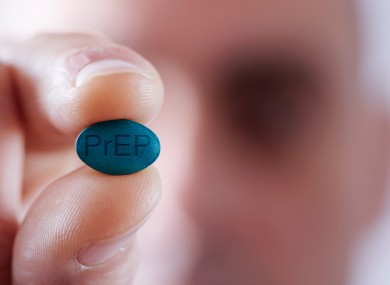
    PrEP is a pre-emptive oral anti-retroviral medication for HIV-negative people to reduce their risk of getting HIV through sex or sharing needles. The combination of tenofovir and emtricitabine (sometimes known as truvada) is proven to be 92-99% effective.

    To date, PrEP has been prohibitively expensive and has only been available to buy in Ireland on prescription at a price of over €400 a month for the brand-name medication, and around €100 for the generic equivalent.

    “To date, PrEP has been prohibitively expensive and has only been available to buy in Ireland on prescription”

    “The budget announcement of a PrEP programme for Ireland in 2020 is welcome although long overdue,” said Noel Donnellon, member of ACT UP Dublin, a group committed to ending the HIV crisis. ACT UP Dublin reformed in 2016, following the dramatic spike in HIV diagnoses.

    Photo Credit: Dept of Health

    HIV diagnoses reached a record high last year, with 531 cases in 2018 according to figures released by the HSE. The number is an 8% increase from figures in 2017. However, many experts are keen to point out that this rise is also related in part to an increase in the number of individuals getting tested.

    “We will be carefully monitoring the roll-out, but we are concerned at the continuing underfunding of sexual health services that are needed to underpin a successful programme,” said Donnellon.

    Those eligible for free PrEP, will need to get a drug payment scheme (DPS) card. There is no means test for a drug-payment scheme card but it does require a PPS number.

    “For decades we have confined conversations about HIV to the shadows. Those living with HIV have felt stigmatised and shamed”

    Minister for Health Simon Harris highlighted the importance of reaching this milestone.

    “For decades we have confined conversations about HIV to the shadows. Those living with HIV have felt stigmatised and shamed,” he said.

    “Today, all that changes. From next month, the State will introduce a PrEP programme and confront the increase in cases of HIV in a real and practical way.”

    Dr Fiona Lyons, Consultant in Genitourinary and HIV Medicine, GUIDE Clinic, St. James’s welcomed the imminent availability of PrEP without charge to those at risk of acquiring HIV.

    “PrEP is an important part of the HIV prevention jigsaw puzzle that together with other HIV prevention interventions, should reduce the number of new HIV infections in Ireland,” she said.

    “I also welcome the announcement by the Government of the roll out of a PrEP programme which includes resources to support services to implement PrEP. This is crucial to successful PrEP implementation. I would like to thank everyone who has worked so hard to make this happen.”

  • Budget 2019 leaves the price of alcohol untouched

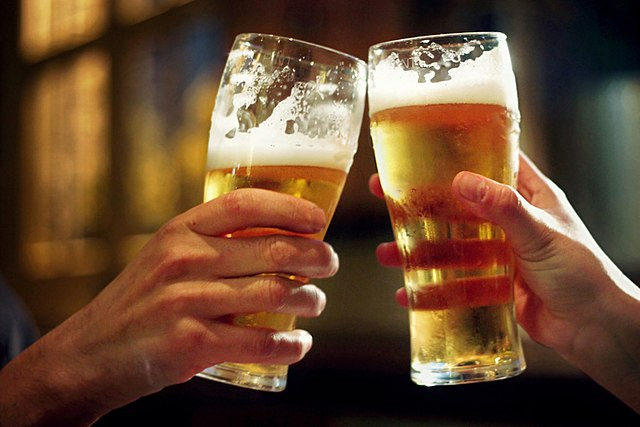
    Budget 2019 leaves the price of alcohol untouched

    Minister for Finance Paschal Donohoe described the 2019 Budget as being “a caring budget”.

    It is the hope of Mr Donohoe and the Taoiseach Leo Varadkar that this budget can keep Ireland’s future secure.

    The main talking points of this year’s budget include, the rise in the minimum wage to €9.80 an hour, which will be in effect from January, the increase of social welfare payments by €5 from next March and the full restoration of the Christmas bonus.

    The price of cigarettes went up as expected by fifty cent, but the price of alcohol was untouched by the Minister for Finance, which came as a surprise to many. However, managing director of the off license chain, Next Door, Brian O’Sullivan was not surprised.

    “Obviously I was relieved to hear that they didn’t put up the price of alcohol, but it didn’t surprise me at all,” he said. “With the legislation expected to be put in place in the next three years or so, that is going to put minimum pricing on the sale of alcohol, I assumed that they wouldn’t touch the price of alcohol this year and it is great for us that they didn’t.”

    Surprisingly, Mr. O’Sullivan is more optimistic than pessimistic about the pending legislation.

    “I actually think it’s going to be great for off licenses. So often us at Next Door nationwide lose out on business to supermarket chains such as Tesco due to their ability to put on deals for alcohol that we simply cannot compete with.

    “I think that the minimum pricing legislation, when put into place is going to greatly benefit us. Many people see it as being more convenient to purchase alcohol at off-licenses than supermarkets and only tend to go to supermarkets when there are better deals on offer, so I am hoping when the good deals are no longer possible at the supermarkets due to the legislation, it will see a rise in business for us here at Next Door.”

    The Public Health Alcohol Bill, which will eventually bring in the minimum pricing legislation, was only passed last week after over 1,000 days of debate.

    Minister for Health Simon Harris called the passing of the bill “a groundbreaking measure” in what many are calling a landmark piece of legislation.

    “We are legislating for alcohol as it affects our health,” he said, “we know we have a relationship with alcohol in this country that is not good, that damages our health, that harms our community. This will help to change the culture of drinking in Ireland over a period of time.”

  • Hotel and restaurant chiefs slam VAT hike in 2019 Budget

    Hotel and restaurant chiefs slam VAT hike in 2019 Budget

    The price of hotel rooms and eating out are set for a major hike after the government announced that VAT rates in the hospitality sectors would increase to 13.5%.

    Irish hoteliers have slammed Minister for Finance, Pascal Donohoe, who announced on Tuesday that VAT for the sector would rise from 9% to 13.5% in the 2019 Budget.

    The Irish Hotels Federation (IHF) has branded the increase as ‘reckless’ and warns that Irish tourism will struggle to compete with cheaper European destinations.

    Over 235,000 people are employed in the tourism sector currently and the government aims to raise over €450 million with this latest tax rise.

    Michael Lennon, head of the IHF has pleaded with the finance minister to reconsider the measures until at least after the completion of Brexit.

    Speaking on Tuesday, Mr Lennon said: “Ireland will now have a higher tourism VAT rate than 26 countries in Europe with which we compete.

    “We are already a very high cost economy by international standards, so it is astonishing that the government is now imposing additional taxes on tourists and making our country less attractive as a destination.

    “Have no doubt, this increase will hurt tourism across the country but businesses outside of Dublin will be hit the hardest.

    “Regional businesses will bear the brunt, as about €300m of the €466m in additional taxes will be taken from the rural economy, which has been slower to recover from the economic crisis.”

    The current VAT rate of 9% was introduced in 2011 as a temporary measure to increase productivity in the tourism and hospitality sectors and Mr Lennon claims that the industries should be rewarded for growth.

    He said: “The government recognised the tourism industry’s ability to deliver on jobs across the country and we delivered, year after year, creating over 65,000 new jobs.  

    “We achieved this by providing a quality product, high levels of service and competing internationally for business every day.

    “Today the tourism industry supports over 235,000 jobs in every county and town, over 70% of which are outside Dublin, generating over €2 billion in taxes for the exchequer each year.

    “It is deeply disappointing and frustrating that despite the strong response of the tourism industry to the 9% activation measure, its economic contribution and potential is no longer of importance to government policy.”

    “We understand that government needs to raise taxes to pay for many social demands on the exchequer.

    “However, we have argued that the best way to generate the additional funds needed for public services is to support growth in those business sectors, such as tourism, which are contributing.

    “Time and again, tourism has shown itself to be one of the most effective ways to spread economic prosperity throughout the country and its successful recovery demonstrated its potential.

    Budget article 2
    While the increased VAT has aggrieved many in the tourism sector, TD Paschal Donohoe said that the initial low rate was a stop-gap measure // Cormac Byrne

    “Today’s short-term budget fix will have long-term implications for an important indigenous export industry and rural Ireland in particular.”

    Hotels and restaurants are not the only businesses that will fall under the new tax rate, with catering, cinemas, theatres, museums, amusement parks, hairdressers, horse racing and greyhounds all subject to the VAT  rise.

    Adrian Cummins, CEO of the Restaurants Association of Ireland described the government’s actions as ‘thoughtless’.

    He said: “This was the incorrect decision by government and had little economic intelligence behind the decision to increase the VAT, as did the report by the department in July which didn’t take consideration of Brexit or revenue generated by overseas tourists to Ireland.

    “VAT at 13.5% reduces Irish tourism’s competitiveness, resulting in less appeal to overseas visitors and, most worryingly, impacts the value for money offering which discourages people to spend their money in Ireland on Irish goods and services.

    “With Brexit on the horizon and the as yet unknown implications it may have on our sector, this decision has put the Irish restaurant industry in jeopardy.

    “This was an election budget paid for by the restaurant and tourism industry.”

  • More than a fight for water

    More than a fight for water

    As the water charges have been scrapped, Hannah Lemass found that the movement represents far more at the most recent Right2Water demonstration

    (more…)

  • Kenny announces referendum to allow Irish citizens abroad to vote in presidential elections

    Kenny announces referendum to allow Irish citizens abroad to vote in presidential elections


    Aoife Loughnane looks at the Taoiseach’s newly unveiled referendum plans and explores what this will mean for the Irish diaspora.

    (more…)

  • Forthcoming Public Service Broadcasting Charge To Be Deferred

    Forthcoming Public Service Broadcasting Charge To Be Deferred

    photo (4)

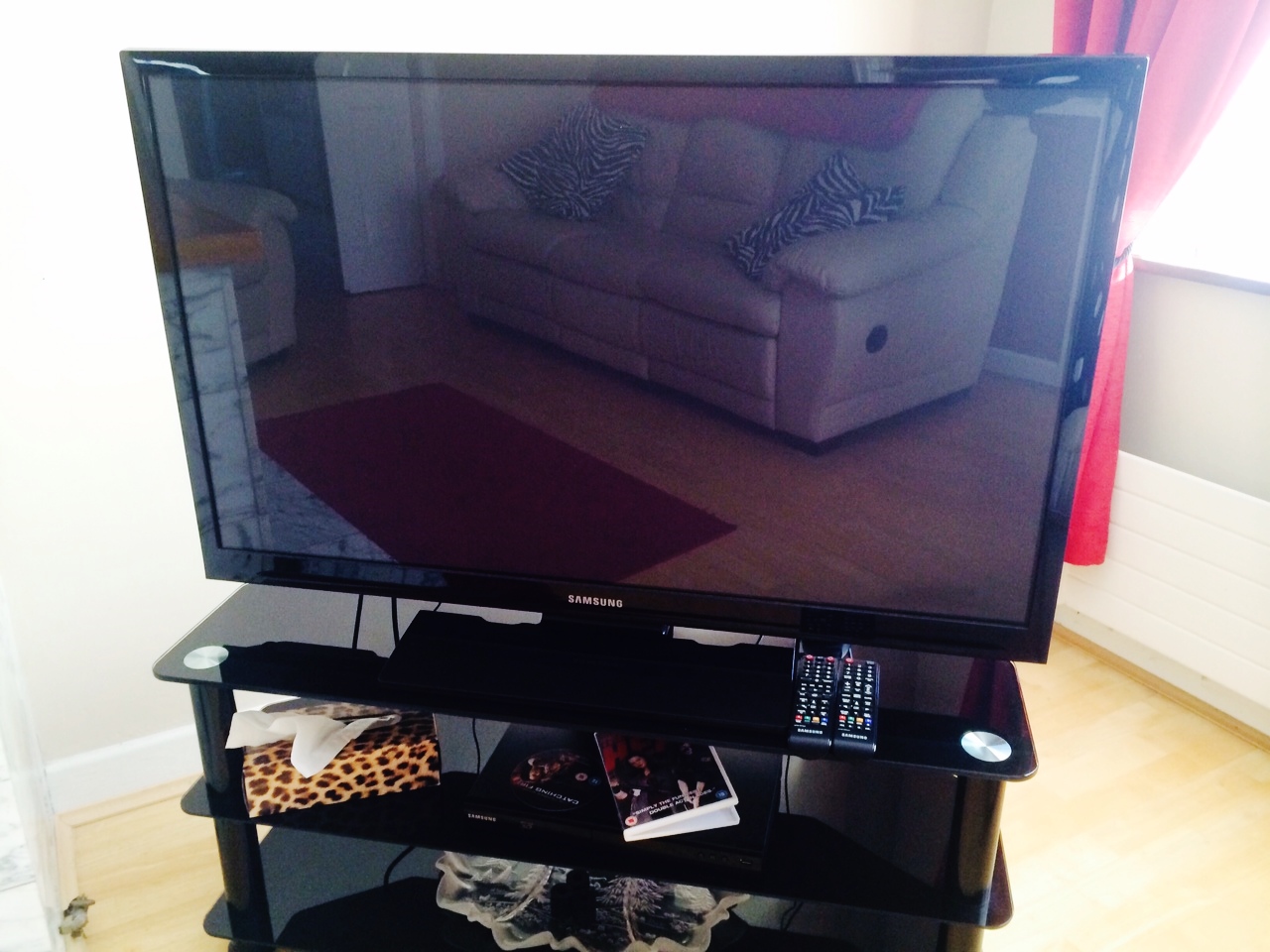
    A proposed public service broadcasting charge, which was due to come into Effect on Janurary 1st 2015 has been postponed until further notice.   

    The charge, which former Minister for Communications, Pat Rabbitte proposed in 2013 to replace the current television licence, has been postponed due to the ongoing difficulties the current Government has faced in implementing water charges.

    The new public service broadcasting charge was due to be issued to every householder regardless of whether they owns a television, and was expected to be approximately the same price as the current television license which currently costs €160.00 per year, with costs for businesses expected to be slightly higher.

    Those who are currently exempt from the television license charge are thought to not be liable for the impending broadcasting charge due to being in receipt of a household benefits package.

    The new charge was a plan devised by the former communications minister due to the trend of individuals watching news and RTÉ content on iPods, tablets, and smartphones.

    This allowed for individuals to steer clear of paying a television license because of not owning a television, which meant that RTÉ were losing out on revenue.

    According to a press release issued by the Department of Communications in July 2014: “License fee evasion is an ongoing scourge. This means that around twenty five million euro worth of potential revenue is lost annually to RTÉ

    “The objective of our TV license system is to fund public service broadcasting. The revenue lost through fee evasion has an immediate impact on the quality of service that can be provided by the national broadcaster.”

    Government permission had been approved to allow for An Post to access cable and satellite television subscription data for purposes of identifying potential fee evaders.

    Former RTÉ producer Alex White has now replaced Pat Rabitte and is currently serving as the Minister for Communications, Energy and Natural Resources.


  • Lead us not into Temptation…

    Lead us not into Temptation…

    Image

    It was Ronald Reagan, of all people, who pointed out that if prostitution was the world’s oldest profession, and politics it’s second oldest, there was often not a lot of difference between the two. Political corruption is as old as the hills, but is it inevitable?

    “You will never get rid of the human tendency to corruption, but it can be combated with better safeguards, more openness and transparency,” said Sean Byrne, a lecturer in economics at Dublin Institute of Technology.

    It’s important not to overstate the problem of corruption in Ireland. Political corruption was at its worst in the years before the Celtic Tiger and Ireland is currently ranked 25th out of 176 in Transparency International’s annual Corruption Perceptions Index, ranking joint 11th with Austria of the E.U member states. Corruption is certainly not as bad as some would have you believe, nor as widespread as in the past.

    “Ireland ranked rather high in the official corruption index in the late nineties and early noughties, but since then levels of corruption have been declining significantly,” said John Gallagher, a PR course director at DIT.

    It is a view echoed by Sean Byrne: “Relative to other countries, we are not doing too badly. A country like Italy, for example, is far more corrupt. The amount of over regulation by the state inevitably leads to corruption, because it is simply impossible to get anything done without it.”

    If Ireland is not anymore corrupt than comparable European countries ,it has traditionally been weak at holding corrupt politicians to account.

    “Parliament in Ireland is weak relative to government, and has no right to launch independent investigations,” said Sean Byrne, “contrast this to the UK, where independent parliamentary inquiries are common, for example, the recent Leveson Enquiry in to the press.”

    It is often said that a society gets the politicians it deserves. Perhaps the public must shoulder some of the blame for allowing corruption to go unpunished in the past.

    Sean Byrne detects an air of ambivalence from people and perhaps a level of tolerance:
    “People don’t like the idea of corruption, but at the same time often have the idea that one day they might benefit from it,” he said.
    But things are moving in the right direction. This July saw the publication of the Protected Disclosures Bill which provides for the protection of whistleblowers in all sectors of the economy. It was a move welcomed by Transparency International Ireland, an organisation dedicated to the eradication of corruption.

    “This could be a hugely important step in the fight against corruption and promotion of good governance in Ireland” said John Devitt, Chief Executive of TI Ireland. “With almost half of all cases of fraud and other forms of wrongdoing exposed by whistle-blowers, it’s time that they enjoy the protection of the law for acting in the public interest,” he added.

    “Our politicians have learnt a bitter lesson,” said Sean Byrne. “All the political parties are now eager to show themselves as full of probity – Fianna Fáil are particularly anxious to show that the era of Haughey and Ahern is behind them.”

  • Abandon Ship! Students on emigration

    Abandon Ship! Students on emigration

    University College Cork’s recent study of emigration trends in Ireland last week revealed that nearly two thirds of emigrants had a third-level qualification. It also showed that half of those emigrating were doing so as a matter of choice, leaving a full-time job they had here in Ireland.

    This provided some food for thought for experts and journalists who lamented the ‘brain drain’ as a tragic consequence of our crumbling economy. The claim that people are leaving unwillingly as a matter of necessity is now being called into question.

    Perhaps the mass exodus has more to do with the quality of jobs available as opposed to the quantity. To put it simply, young Irish people don’t want to settle for what they see as menial jobs. But in this climate, the pressure is even greater to take what you’re given and be grateful. I went in search of answers from some final year college students.

    ImageHilary Pidgeon, 22

    “When I graduate I’m probably going to emigrate. Maybe not permanently, I’d probably move away for a couple of years. There’s so much more opportunities in other countries like America and Canada. Some of my friends are doing jobs that are widely available in Ireland, but if they want to go far in their career they’d have to emigrate. I think it’s really bad. You’ve got your family here and your friends here. You’re basically cutting off the life you’ve built up here for twenty something years”

    ImageLouise McLoughlin, 22

    “I think I’m going to head straight to London after I finish. My boyfriend has already emigrated there, so that’s one reason but secondly I think there’s just a lot more opportunity especially for someone studying media. I think the majority of my friends are going to stay for the next few years at least but I think if something better is offered somewhere else they’re going to take it. People should do what’s best for them. It’s not our job to hold the country together. Why should be stick around just to stop a boat from sinking?”

    ImageTessa Flemming, 23

     “When I graduate I know I probably won’t get work in my area of study so I’m just going out with a completely open mind, to experience life rather  than find a career straight away. I really wanted to learn Spanish this year, I was thinking of going to South America or Spain and just live in another country for a year. I see myself as a wanderer, so any opportunities that are presented to me I’ll definitely say yes. I think people don’t really want to leave, but they’re doing crappy jobs at the moment that don’t reflect their skills. I really don’t want to happen to me. ”

    ImageBarry Lennon, 21.

    “Emigration isn’t really on my radar, but I wouldn’t mind moving abroad for a while to grow as person.  I mean if push comes to shove and there is a better offer abroad perhaps, even just to get a different experience. I probably would like to return to Ireland depending on how things go. Maybe when I get my retirement and I can settle down with the wife. I’ll sell the house and buy a nice retirement home somewhere in west Cork. I think it’s bad though, the country is investing in these people only for them to go away.”

    ImageSean Carroll, 21

    “I’ll  head to the west coast of America for a year, hopefully with friends. I’m  getting a degree in marketing, and I don’t have any interest in working in Ireland right now with the recession strangling any chance I have!  We pride ourselves here in Ireland for having such an educated workforce, but people are getting educated here and then they’re leaving. Obviously people don’t want to leave their family and friends behind but if you’ve studied for four or five years in a particular field, it seems like a waste to stay here. If you have a degree in engineering but you have to work full time in Centra you’re not going to stay around.”