Tag: History

  • A match made in TUD: When flowers are no longer enough

    A match made in TUD: When flowers are no longer enough

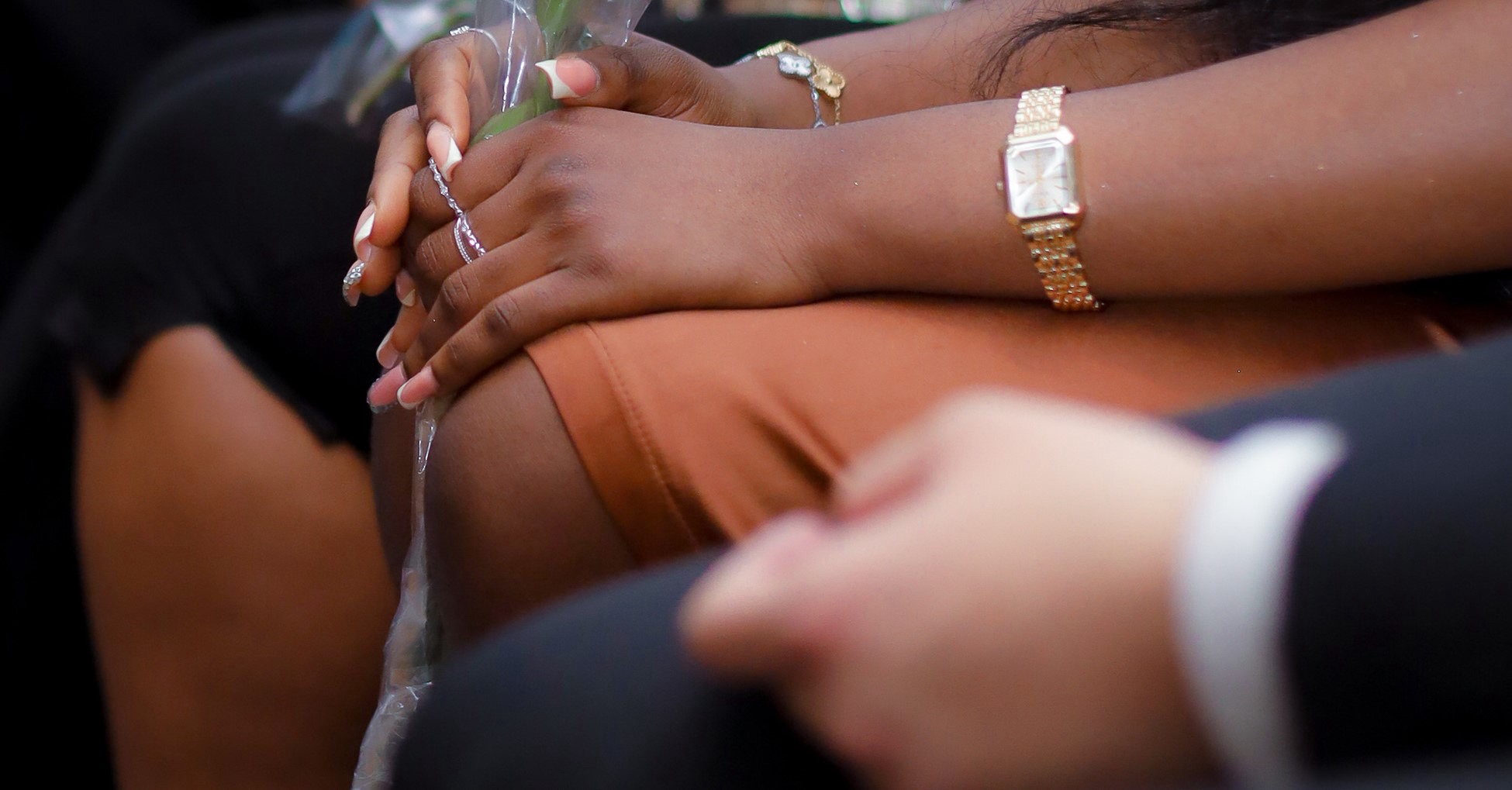
    Technological University Dublin’s African society Valentine’s event represents love beyond just romance and serves as a medium for promoting cultural integration.

    By Samuel Adeleke

    Photo credit: Samuel Adeleke

     With Valentine’s Day around the corner, a time often seen as a period to show and express love, TUD African Society brought the celebration early by organizing a Valentine’s event on 10th of February, at Bst259 Bolton Street.

    For Sharon Ojuade, President of the TUD African society, the theme of ‘A match made in TUD’ was not chosen for love and romance alone.

    “With this event, we aimed to create a relaxed and comfortable environment where people from the same background, different backgrounds, and experiences gather in one room, enjoying the atmosphere,” said Ojuade.

    In organising the event, the committee also sought the support of student entrepreneurs who offered services or provided freebies to participants in an African style.

    This included DJs, photographers, MCs, and the types of foods to be served.

    “Events like this give people a sense of belonging and serve as an avenue to promote student entrepreneurs from Africa and allow them to thrive,” said Ojuade.

    “Before the world loves you, your community must also love,” she added.

    The committee has experienced a record number of ticket sales for the event. For the president, it is inspiring to see that they live in a country with a strong sense of community.

    “Just because we live here doesn’t mean we shouldn’t have fun moments; people should still pursue what they need to pursue outside the community,” said Ojuade.

    Although it is an African society gathering, the event is open to other nationalities. “The first person to get a ticket for the event is an Asian. He reached and said he wanted to be part of it.” said Ojuade.

    According to Divine Nebo, the social director of the society, “the event is not just about finding love, it is about finding people who are like you to bond with on a different level.”

    And by extension, the theme of the event, ‘A match made in TUD’, is to show that love can be found anywhere, not just in school, but in environments like this, outside of social media.

    With students outside the African community feeling the pull of the event, Divine said, “the event is not only about Africa, but expressing the depth of African culture to non-Africans to see what African culture is about, beyond what social media portrays.”

    John Ologunlola, the event manager, also collaborated and highlighted the potential of the event to serve as a platform for non-Africans to experience African culture.

    “Even though they might not fully understand the African culture in its entirety, it is a valuable learning process,” said Ologunlola.

     Ologunlola mentioned that, as a Nigerian, he is learning more about the African culture and finding expression in the community alongside other African nationals, including Ghanaians and Congolese.

    With students like River Rogers, who is half Irish and half Polish, the intentions of the TU African society executive came to light.

    “It is my first time being in an African event,” Rogers said. “I am not African, but I can still attend and make some new friends,” he added.

    Not only did Rivers find the Afrobeat songs being played amusing, but he also left with the intention of trying an African dish. “I definitely need to try the African jollof rice,” he said.

    Mark Ologunlola, a former executive of the society, commended the event as a brilliant way of promoting cultural pride.

     “Events like this help people develop real relationships, and give people a picture of what love is,” he said.

     Ologunlola expressed excitement at seeing other people at the event, “no matter what part of Africa or the world you come from, we are all one body.”

    While the event promotes communal love, in a friendly society that helps people socialise, Nicole Okerikre, an African national from Nigeria, who participated in the event as a contestant, said, “This is a period of love, but people should find love in themselves first.”

    Denoting that self-love is non-negotiable.

    For Jaeson Jang, an Asian, ‘A match made in TUD was not just a Valentine’s event, but an opportunity to find expression among people of other cultures.

    “The African culture is amazing, I feel like family, I feel welcome. Everyone is enjoying themselves; no one feels lonely,” Jang said.

    Jang’s experience underscored the aims of the TU African Society to promote an atmosphere where joy, laughter, and love are shared without identity being a barrier.

    “Everyone can integrate into every culture; you only have to do it respectfully,” said Jang.

    By the end of the night, a match was indeed made in TUD as the event ended with Jaeson Jang from Asia and Nicole Odunsin from Africa emerging as winners.

    It was a reminder that love in its most powerful form goes beyond just being African or giving flowers; it is in identifying with people from other nationalities and embracing a sense of community.


  • Kilmainham Gaol: Prison turned Museum 

    Photo Credit: Kelsey Doogan 

    By Kelsey Doogan 

    Kilmainham Gaol is a former prison located in Kilmainham, Dublin just south of Phoenix Park. Now it is a museum run by the Office of Public Works in Ireland. The admission fee is certainly cheap compared to similar museums in other countries. 

    While it did cater as a prison for even the most common of prisoners, it is primarily known for the imprisonment of the leaders of the 1916 Easter Rising such as Patrick Pearse, Seán Mac Diarmada, and Joseph Plunkett. All were executed within the walls of the prison byy order of the British Government at the time. 

    “One of the aspects of the site I find most interesting is the fact that it was often used to imprison the most marginalised groups in Irish society in the 19th and early 20th century,” said Brian Crowley, Curator of Collections at Kilmainham Gaol. 

    Photo Credit: Kelsey Doogan 

    It serves as a bleak reminder of a dark period of Irish history and a time of oppression and suffering in our past and this can very much be felt as you walk through the doors. 

    “Kilmainham was more or less abandoned after 1924 and was semi- ruined when the Kilmainham Gaol Restoration Society was formed in the early 1960s to restore it. The Gaol was officially opened as a museum in 1966 by President Éamon de Valera, a former prisoner in the Gaol. In addition to restoring the Gaol they also began to collect and display material related to the struggle for Irish independence,” said Crowley. 

    The Gaol is only accessible through guided tours and is definitely worth a visit. Even if you aren’t a history fanatic, there is something about standing where some of our greatest heroes stood that will live with you forever. 

    Photo Credit: Kelsey Doogan 

    As you wait for your tour guide and the tour itself to begin you are invited to wait within the old courtroom located within the Gaol, where many of these historic prisoners would have received their damning sentences. 

    Photo Credit: Kelsey Doogan 

    Within the walls of the Gaol, there were two chapels, for both protestants and Catholics. Now however, only the Catholic chapel is open to the public. You are invited to sit where the prisoners would have sat during mass. 

    The room is most notable for its red walls, a design used to distinguish the Catholic cells from the blue Protestant cells. Hours before his execution, Joseph Plunkett married the love of his life, Grace Gifford in this very room. 

    Photo Credit: Kelsey Doogan 

    The oldest section of the Gaol is called the West Wing. This part of the Gaol is dark, dull and downright gloomy.  

    Photo Credit: Kelsey Doogan 

    When first built, there was no glass in the windows, and no heating or light and the original stone walls still standing only adds to the sense of eeriness.  

    Photo Credit: Kelsey Doogan 

    The most recognisable part of Kilmainham Gaol is the East Wing, known for its huge glass roof letting in lots of natural light. During the Irish Civil War, many of the prisoners in this wing went on hunger strike.  

    Photo Credit: Kelsey Doogan 

    The East Wing has featured in many films on Irish history such as ‘Michael Collins’. 

    Photo Credit: Kelsey Doogan 

    The Tour ends in Stonebreaker’s Yard, which got its name due to the fact it was mainly used by men who had been sentenced to hard labour where they would have to manually break up stones. 

    It was in this very yard where the leaders of the Easter Rising were executed and you can stand where they stood next to the two crosses which were placed in their memory.  

    As time goes on it is easy to forget about our history as a country but places like Kilmainham are striving to not let their stories and sacrifices be forgotten. 

    Word count: 645 

  • New Documents on the Chernobyl disaster reveal more on Ireland’s involvement in relief efforts. 

    New Documents on the Chernobyl disaster reveal more on Ireland’s involvement in relief efforts. 

    By Sean Norman

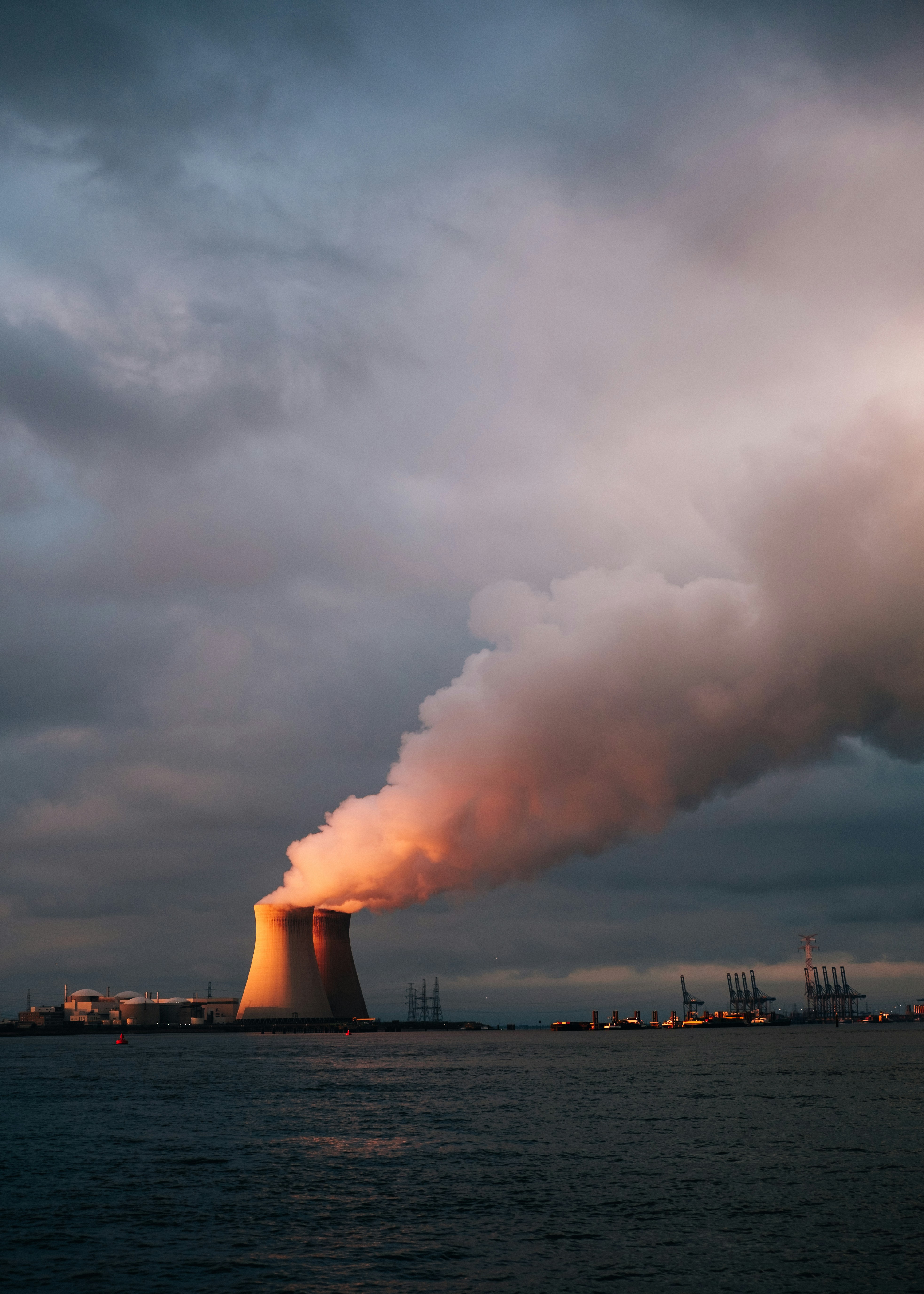
    On April 26th, 1986, the most devastating event in the history of nuclear power took place at the Chernobyl nuclear power station in Ukraine.  

    The UN estimated that 50 deaths could be attributed to the immediate explosion and that up to 4,000 people would eventually die due to medical issues attributed to the radiation released after the explosion. 

    Through new documents (marked DFA/2023/47/6737) obtained from the National Archives of Ireland, we explore Irelands relief response and broader role during the Chernobyl disaster. 

    Correspondence between the UN Secretary General and Michael Gaffey. Photo: Sean Norman 

    On the 28th of September 1993, the United Nations Under-Secretary-General for Humanitarian Affairs at the time, Jan Eliasson, sent a letter to, Michael Gaffey who at the time was the Director General of the Development Cooperation Division within the Department of Foreign Affairs.  

    This came after a meeting of the Governments of Belarus, the Russian Federation, Ukraine and the United Nations Coordinator of International Cooperation on Chernobyl, held at Minsk on the 26th of May 1993. 

    After meeting with the UN’s Humanitarian Liaison Working Group, Eliasson, who would later become the president of the United Nations General Assembly, selected Ireland to help in a list of projects, “for priority action to address the consequences of the Chernobyl disaster.” 

    The projects included help in four “priority areas,” that of “health; food, agriculture, and the economic environment”. Ireland was also asked for assistance with “social rehabilitation and socio-psychological rehabilitation.”  

    These projects corresponded to the needs of three affected states Belarus, the Russian Federation and the Republic of Ukraine – and had been “officially endorsed” by the nations. They promised to provide a solid basis for “future activities in the medium and long-term.”  

    The UN proposed a list of individual projects that could be funded independently of one another. In mid-November of 1993, the 48th session of the General Assembly took place and was an opportunity for all donor countries to present their official response to the request and “where necessary, to allow further discussion of the projects directly with representatives of the proposing United Nations agencies”. 

    They hoped that Ireland would view the requests, “in a favourable light and respond generously to the plight of those, who continue to suffer from the consequences of the Chernobyl disaster.” 

    On the 7th of December 1993 Ireland put forth its relief project proposal to the European Community Humanitarian Office (ECHO) and stated the countries to be receiving the aid. This included both the Russian Federation and the Republic of Ukraine but not Belarus.  

    The disasters described in the document include tuberculosis epidemics, the collapse of both countries healthcare systems, the destitution and displacement of the populations of the countries, conflicts in the North Caucasus region and radiation.  

    According to the documentation, Ireland provided 4 million euros worth of relief items to the disaster-stricken countries, including “medicines and medical materials, medical assistance, food parcels and other basic relief items”. 

    The supplies were delivered through a variety of means including intermediaries for contributions such as, the United Nations High Commissioner for Refugees (UNHCR), the International Committee of the Red Cross, the Netherlands Red Cross, Les Enfants De Chernobyl, Associazione per la Partecipazione Allo Sviluppo and another European NGO chosen by the Moscow Delegation to help with tuberculosis cases in Tomsk. 

    In the Russian Federation aid was sent to Moscow, Tomsk Oblast, Vornej, St. Petersburg and North Caucasus. In the Republic of Ukraine aid was delivered to Chernobyl and Rovno. The relief packages were expected to arrive in the countries throughout December and February.  

    The City.ie spoke to Professor Gearoid Ó Tuathail, who is Professor of Government and International Affairs at Virginia Polytechnic Institute and State University. 

    We asked him about his thoughts on the documents we had acquired and his view on how Ireland fit into the broader narrative of the Chernobyl disaster. 

    What is your view on Ireland’s initial response to the disaster? 

    “In my view, Ireland has always been on the periphery of Europe, we’ve been wary of bigger nations simply by nature, and it must be understood that Chernobyl was not as simple as the meltdown. It has and still does shape geopolitical views on nuclear power, and at the time that was something Ireland was already sceptical about, even today we’re resistant to the idea of nuclear power stations being built in the country.” 

    Do you think these documents reflect that scepticism? 

    “These documents show that reserved nature I think rather well, at least in the political sense. We sent the most urgent items and spread them out as best we could. From other documents on relief efforts I’ve studied in the past these are fairly typical.” 

    So, you believe Irelands response to the disaster was entirely standard? 

    “I’ve always found that we’re unique when it comes to responding to human suffering, not just with Chernobyl, look at our response to the war in Gaza, or, and this of course relates well, our response to the war in Ukraine.” 

    Recent figures from the Central Statistics Office reveal that 109,566 Personal Public Service Numbers (PPSNs) were given to Beneficiaries of Temporary Protection (BoTP) from Ukraine between 04 March 2022 and 29 September 2024. 

    Source: CSO. Chart showing the number of Ukrainians given PPSNs after receiving temporary protections 

    “The documents show the numbers to the story sure, but I was still living in Ireland during the disaster and the outpouring of support really had to be seen to be understood, you had Irish parents reaching across oceans to help children in Chernobyl bringing them into their own homes for recuperation.” 

    Since 1986 Chernobyl Children has brought, 25,600 children from radiation zones to Ireland for rest and recuperation. The clean air is believed to add an extra two years onto the lifespans of those suffering from the effects of radiation. 

    We also reached out to multiple organisations such as Irish Refugee Council and Ukrainian Action in Ireland for comment but did not receive a response. 

  • ‘It’s a disgrace at present’ – Dublin Councillor Welcomes Controversial Redevelopment Plan 

    ‘It’s a disgrace at present’ – Dublin Councillor Welcomes Controversial Redevelopment Plan 

    By Liam Murphy 

    Dublin Councillor Nial Ring has welcomed An Bord Pleanála’s decision to approve Hammerson’s controversial redevelopment plan, calling Moore Street’s current state a disgrace.

    This comes days after An Bord Pleanála’s approval of a highly debated plan that will see a €500 million redevelopment undertaken between Moore Street and O’Connell Street. 

    The UK property group first made applications for this redevelopment in summer 2021, with approval following just seven months later in January.

    However, appeals were made to the board and Dublin City Council by a number of Moore Street preservationists, campaign groups, and businesses, which caused for more than two and a half years’ worth of delays.

    “I see huge benefits of this project for the local area,” said Councillor Ring, who, along with being a member on the Moore Street Advisory Group, represents the North Inner City electoral area.

    “Not only in preserving the history and heritage of the street, but also in bringing Moore Street back to life. It is a disgrace at present.”

    The plans, made up of three applications, include the demolition of several buildings, the construction of a nine-storey hotel, the development of a public gallery and café, and the development of a public square – plans which are allowing Hammerson up to 12 years construction on site. 

    A generated image of Moore Street post-Hammerson development – Photo: Dublin Central / Hammerson 

    The An Bord Pleanála decision and announcement coincides with the 10-year anniversary of campaign group ‘Save Moore Street from Demolition’, who have gone on to receive over 380,000 signatures opposing Hammerson’s plans.

    The group started in September 2014, when members Bróna Uí Loing, Vivenne Kelly, Diarmuid Breatnach and Mel Mac Giobúin met to begin a weekly presence on the street with a campaign table, leaflets, and petition sheets.

    “Moore Street is of huge importance, not just to Dublin, or Ireland, but to the world,” Breathnach told The City. “We have been here over 500 Saturdays. We talk to people, we take photographs, we hear stories – sometimes stories from people coming up with their parents when they were children, others tell us of them coming up to Croke Park for matches and coming home with bangers.

    “People have different views as to what we can do with the street,” he said. “Some of us think there should be small shops and stalls here, no chain stores. Any restoration work done should be done piece by piece so that there’s not a huge disruption to the street”.

    “The Hammerson plan envisages destruction of some buildings, a high-end shopping area, a street cut through the terrace and up to 12 years of building,” Breatnach said. “That would just kill any street market here.” 

    Diarmuid Breatnach, co-founder of the ‘Save Moore Street from Demolition’ campaign group – Photo: Liam Murphy 

    The National Monument buildings of 14-17 Moore Street are currently earmarked for a 1916 Rising Commemorative Centre with an estimated cost of €16.25 million.

    The building was originally due to open in 2016 to mark the centenary, before being pushed back to 2023.

    Work, however, has not yet started.

    “The National Monument site has approval for funding, and it is imperative that this be worked on immediately,” Councillor Ring said. “Now that this [An Bord Pleanála’s] decision is out, I think it will give everyone time to reflect and, in memory of the men of women of 1916, make sure that the work starts immediately.”

    “I have an interest in the project, not only as a local councillor, but my grandfather and his four brothers were in the GPO garrison,” Ring said. “It really distresses and depresses me to walk down the street and look at the national monument site, in particular, knowing that some people with their own agenda have managed to delay work on that site for many years.” 

    One of the many stalls on Moore Street – a street currently under threat of demolition – Photo: Liam Murphy

    Hammerson’s plan outlines potential for up to 2,500 jobs after the development, but those currently trading on the street aren’t as optimistic. 

    “The plan means losing my job,” Andrea, a jeweler who has been trading on the street for two years said. “While there may be jobs after the building, it will destroy our jobs during that time. I’m only new here, but there are people here whose family have traded for 100 years. No one will want to come to a market if there’s construction being done nearby.” 

    “Other than what it means to me losing my job, my trade, and my community, it’s also what it means for the people of Dublin,” she said. “Those people care about this street. This street’s history is retail.” 

    “I lived in Spain for quite a while and saw a lot of markets,” she said. “But I have never seen something like Moore Street. Here we have a street full of its background, culture, and history, but also a marketplace. There’s a lot of potential in this street and I don’t think it’s being used.” 

    “In what world does someone think it’s a good idea to erase all this history to put more shopping centres and hotels.” 

  • Three Castles Burning: An interview with historian Donal Fallon

    Three Castles Burning: An interview with historian Donal Fallon

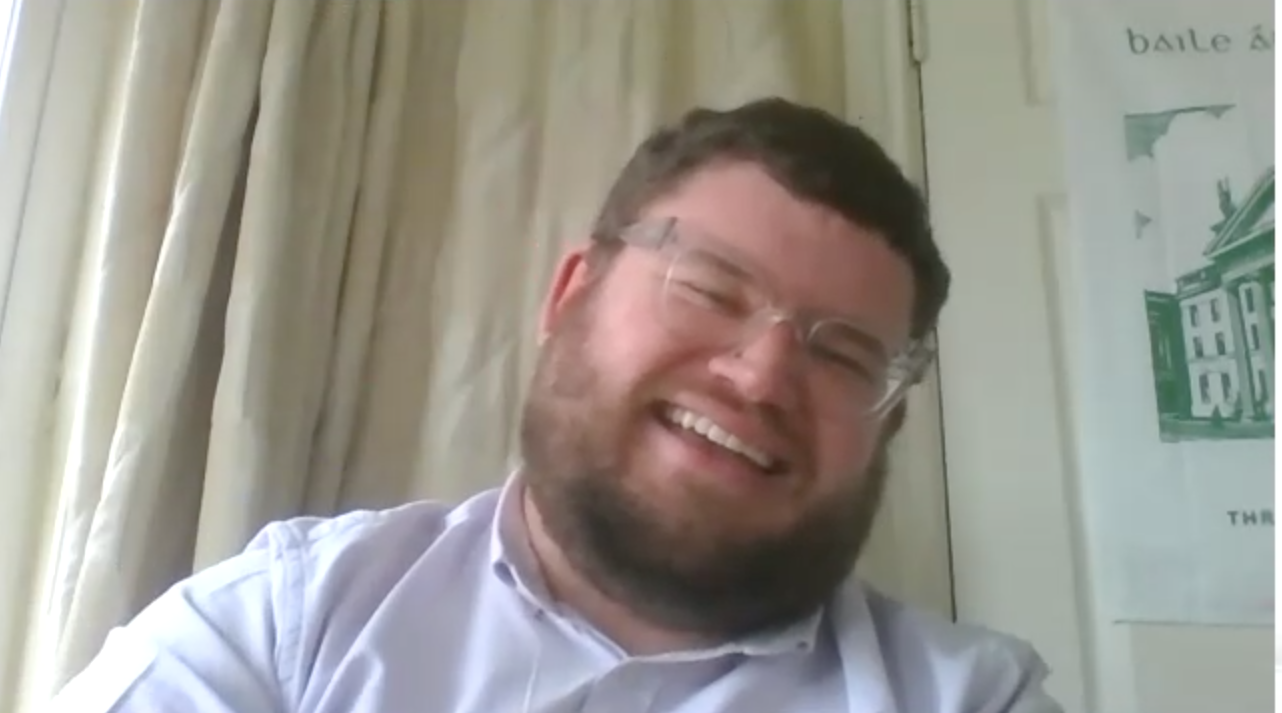
    A screenshot of Donal Fallon during his virtual interview with Mario Bowden. Screenshot by Mario Bowden

    It was while going for a walk around my 5km that I decided to reach out to historian Donal Fallon. In an episode of his podcast Three Castles Burning, Fallon mentions the previous life of an art deco building along the Royal Canal that now houses the new Bernard Shaw. To my surprise, it was the garage of the first Irish commercial airline – Iona National Airways. I couldn’t believe that a building that I walked and cycled by daily had such a unique life story.

    Three Castles Burning is a social history podcast, capturing the tales and intricacies that make up the fabric of Dublin. Running since November 2019, each episode contains a unique deep-dive into the city’s treasures – From discussing hallmark pubs such as Grogan’s, the emergence of subcultures like the punk scene in 1977, and even the stories of migrant communities who have left their stamp on the city, like the Italian community in Dublin who helped give rise to the chipper.

    Fallon, a tour guide in normal times, tells me that there’s a real chance to engage with Dubliners through the aural medium. 

    “When you work in heritage and tourism, the majority of the people you meet are not from here. That’s just how it is and that’s the same in any city. On a tour for visitors, you have to go from before Saint Patrick all the way to the Northern Irish peace process in two hours. So when you have an Irish audience, you have the ability to go into much finer, minute detail, which I really really like. It’s a different challenge,” Fallon says.

    “There are still people interested in local history, it’s not something you can just turn on and off”

    Donal Fallon

    Fallon’s no stranger to capturing all things Dublin. In 2009, he started a blog called Come Here to Me. Coining its name from the Dublin slang to express the tantalising exchange of information, the blog set out to capture the essence of the capital’s nooks and crannies – from music, history, politics, and even pub crawls. Come Here to Me was a big hit amongst Dubliners – and for Fallon, it gave him an audience. 

    Over time, however, the art of blogging began to dwindle, Fallon admits: “I noticed that the readership on Come Here to Me was kind of dropping off. Not like off a cliff, but over time there was less and less. And I wondered, where are those people going? Because they’re still there” Fallon chuckles.

    “There’s still people interested in local history, it’s not something you can just turn on and off. So the challenge for me was how do I get to reconnect with people who I knew were there from Come Here to Me. That I knew were still there,” he tells me.

    It was time for a change and Fallon saw podcasts as the way forward. He tells me how he learns as he goes, taking inspirations from some of his own favourite podcasts – such as the Bowery Boys Podcasts – a social history exploration of New York City. 

    “In a way, Podcasts are the new pirate radio”

    Fallon

    Listeners might notice Fallon’s shout-out to Radio Free Kimmage at the end of each episode. Like many others, I foolishly assumed that it was a real local radio station. But as Fallon explains to me, the nod towards a faux station is simply an homage to the pirate radio scene. Fallon see the parallels between that scene and what he’s doing now – providing alternative and independent content. 

    “Podcasts, in a way are the new pirate radio.” Fallon laughs. “They are increasingly widening what’s on offer. And I really like that. Especially if you look at the podcast charts in Ireland, the top of it is still big radio shows – usually clips from news shows on RTE and so on. But these independent programmes produced on kitchen tables in Kimmage can compete with them. I think that’s fantastic!”

    Three Castles Burning logo, by Donal Fallon

    Today, the podcast is a great success. Released every week, it has attracted an audience of not just locals, but ‘Dubliners in exile’ – with strong numbers of Irish abroad, from Britain to Australia – tuning in for their nostalgia fix. This is no surprise to Fallon.

    “I think that’s how it’s always been. If you go back all the way to when Joyce wrote about exile: the further you are from a particular place, the more you feel a connection to it. That’s been a very noticeable thing that Irish abroad have definitely gotten behind it. I’ve gotten very nice emails from people saying that they really miss these places. The Forty Foot in particular, that had a real emotional resonance with people,” he tells me.

    Each episode has the ability to intrigue anyone in a way that’s unique to them – much like my own experience passing the Bernard Shaw. With more people out and about on their daily walks, a podcast like this can spark curiosity to something right around the corner. 

    “I think if you can change someone’s everyday walk, and make them think about that one little thing that they didn’t know was there before, I think that changes the way people look at the city, but the way they look at life you know, to go a little bit slower. I always try to make the podcast a bit more visual. I know it’s all audio of course but I like saying ‘Next time you pass so-and-so, look at this’, I think that can change the way you look at the city,” he says.

    While Fallon is optimistic about some sort of bounce back for the heritage and tourism industry, the success of Three Castles Burning has kept the Irish history scene on the road – and in turn, our history alive.

  • The baggage of history: Dublin commemorates Red October

    The baggage of history: Dublin commemorates Red October

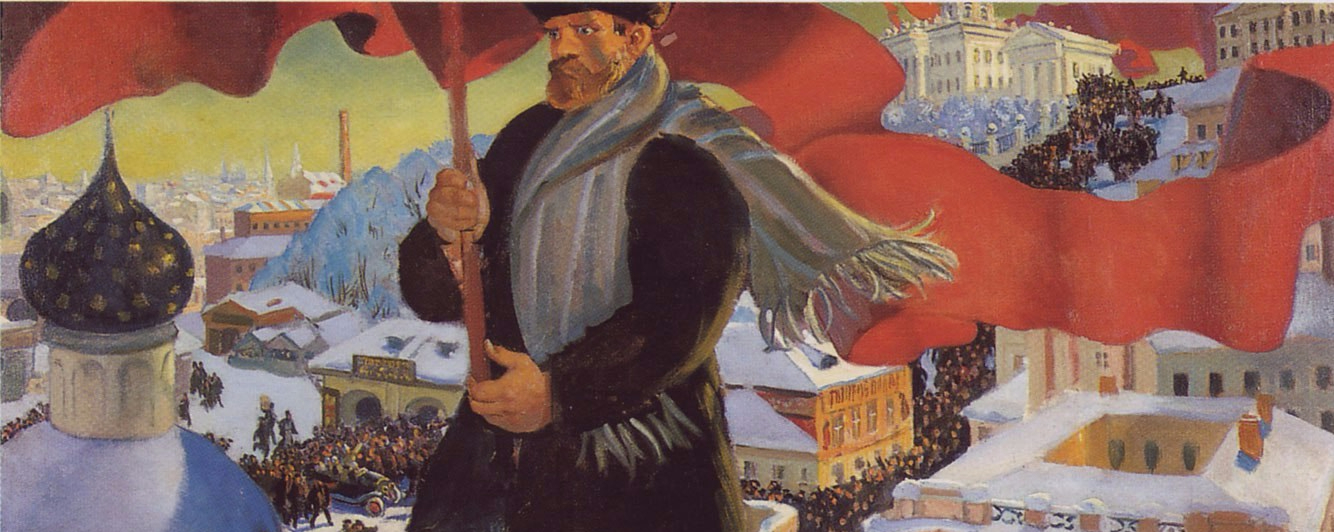
    Dublin City’s commemoration of the 100th anniversary of the Bolshevik Revolution has divided opinion.  Zuzia Whelan finds out more.

    (more…)

  • 1916 Centenary – striking a balance between commerce and commemoration

    1916 Centenary – striking a balance between commerce and commemoration

    Next year sees the 100th anniversary of the 1916 Easter Rising and while this may be an occasion for celebration for some, or reflection for others, it seems inevitable that some businesses will take advantage of the centennial.

    One company has already faced criticism for their use of Easter Rising themed merchandise to attempt to ‘commemorate’ the rising, but is this going to start a commercial trend?

    Fianna Fáil councillor Malcolm Byrne expressed reservations about the commemorations becoming a financial opportunity.

    “We need to ensure … it is not overly commercialised,” he said.

    “I believe that, in the same way as the state protects the use of the harp as the national symbol, there is a need for us to ensure that, however we mark 1916, that it’s appropriate, that it’s not overly commercialised, and that there is some way whereby material used is licensed.”

    Sinn Féin TD Aengus Ó Snodaigh thinks that a balance could be struck between commerce and commemoration.

    “There is always a danger that commercial firms will cash in on momentous occasions, especially historic celebrations, that will devalue the event,” he said.

    However, rather than banning these outright, the South Dublin representative has suggested that they instead use the income for good.

    “There is a respectful way for companies to play a part or their role in this instance, the centenary celebrations of the 1916 Rising and many could play a positive role and donate proceeds of sale to charities,” he said.

    With less than five months until the anniversary, the city is sure to see more efforts to commemorate the event.

  • 1916 Freedom Tour

    1916 Freedom Tour

    The 1916 Freedom tour is one of the most recent tourist attractions to start up in Dublin.

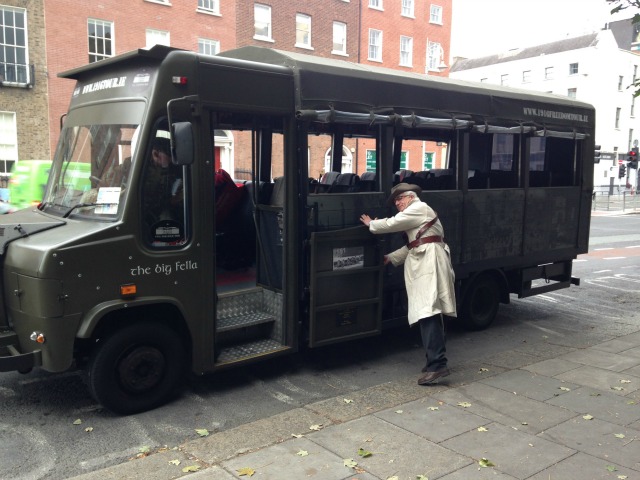
    The tour, which begins at Merrion Square West, drives through the streets of the city while Bernard Birmingham, the man behind the idea, narrates the story of Easter Week 1916.

    Paying particular attention to the human aspect of the conflict rather than the political side, Bernard gives a detailed and unbiased account of one of the most important periods of Irish history.

    “Everyone has a passion for something and mine was always history. I would have made a very boring boyfriend when I was younger,” Bernard said.

    The hour long trip begins with a demonstration of the weaponry used during the rebellion and while Bernard tells his carefully researched rendition of the revolution, the driver Mick Shivnan weaves through the streets in a military style vehicle.

    The tour takes its passengers around St Stephen’s Green, Dublin Castle, past Trinity College and on to O’Connell Street, before returning to Merrion Square.

    After the tour Bernard explains that the most special part of the experience for him has come as an unexpected surprise.

    “We obviously thought the tour would be an attraction to people all over the world, but we didn’t take into account the amount of Irish people that have a family connection to The Rising. I mention characters during the tour in passing and more often than not there’s someone on the bus whose family member it was. It really was just a happy accident.”

    To find out more about the tour, make sure to watch our video below!

    By Rosemary Haughey and Aisling Rafferty

  • DEBATE: Redskins should keep their name

    DEBATE: Redskins should keep their name

    “We are Redskins Nation and we owe it to our fans and coaches and players, past and present, to preserve that heritage.” That is how Washington Redskins owner Daniel Snyder closed his recent open letter to fans of his American Football team.

    One of the most talked about stories in the United States at the moment, not just the NFL, is whether or not the Washington Redskins should change their team name.

    Many argue that the term “Redskin” is a derogatory term towards Native Americans.  However, in his letter, Mr Snyder stated that a poll which talked to nearly 1,000 Native Americans concluded that 90 per cent of them did not find the Redskins name to be offensive.

    He also added that an AP poll earlier this year, found 79 per cent of respondents said they didn’t have a problem with the name “Redskins” and that only 11 per cent believed that it should be changed.

    The Washington Redskins in training camp, lead by Quarterback Robert Griffin III (yellow). Image by Keith Allison on flickr
    The Washington Redskins in training camp, lead by Quarterback Robert Griffin III (yellow). Image by Keith Allison on flickr

    In situations like this, all evidence must be considered before forming an opinion.

    The team have been known as the Redskins since 1932, and they’ve been the Washington Redskins since 1937.  In this time, the team have won five world championships, three of which were SuperBowls, the most recent of these coming in 1991.  Changing the team’s name will mean a loss of their history, starting off on a brand new slate.

    After several years in the mire of mediocrity in the NFL, a place no team wants to find themselves, the Redskins are now a marketable franchise again.  According to Forbes, the Redskins are the fifth most valuable team worldwide, in any sport.

    The acquisition of quarterback Robert Griffin III in last year’s draft was crucially important for the revival of the Redskins brand.  Griffin lead the team to the playoffs for the first time since 2007.  His jersey is the fifth best-selling jersey throughout the entire league.  FedEx Field, the Redskins home stadium, which holds 91,704 spectators, is reaching capacity for every home game.  The Redskins currently have a marketability level that very few other NFL teams can compete with, not just in America but internationally as well.

    An American flag sprawled across the pitch at FedEx Field before a Redskins home game. Image by Jeremy Thoel on flickr
    An American flag sprawled across the pitch at FedEx Field before a Redskins home game. Image by Jeremy Thoel on flickr

    Changing the team name means an entire rebranding on all levels.  It is eliminating all possible aspects of growth in income and completely starting anew.  It means having to re-establish sponsorship deals.

    While it is not uncommon for American sports teams to change their name, it is usually only a process carried out by teams who are struggling, both in competition and financially.  While the Redskins may be struggling on the field at the moment, there is still plenty of time for them to turn their season around.  Off the field, the future is very bright for the Redskins. The Washington Redskins, not the Washington (insert possible team name here).

  • Little Museum gives Dubliners taste of the Rare ‘aul Times

    Little Museum gives Dubliners taste of the Rare ‘aul Times

    This slideshow requires JavaScript.

    WHERE ELSE in the capital city can you be in the same room as objects such as Nelson’s Pillar, War of Independence Documents and a ‘I’ve Been To Switzer’s Santa’ badge? The Little Museum of Dublin, of course.

    Just over a year old, this new museum – housed inside a beautiful Georgian building on St Stephens Green – brings the rare ‘aul times to life.

    Spread over just two rooms, the Little Museum’s tall walls are packed floor to ceiling with artefacts telling stories of Dublin in the last century.

    Displayed chronologically, the artefacts are an eclectic mix of specialist and general interest objects: from original documents, photos and publications to furniture, food stuff and quirky domestic items.

    Some objects give you a glimpse of domestic Dublin – harking back to a time of Gold Flake cigarettes, elephant rides at Dublin Zoo and when Aerlingus offered a return “Rolls Royce powered” service across the pond for just £12.

    While other memorabilia – recalling famous visitors to the capital,  such as Pope John Paul II to John F Kennedy – appears alongside belongings of legandary Dubliner James  Joyce and politician and former President  Eamon De Valera.

    There is also political artefacts – like Bertie Ahern’s first election poster, and a dated Green Party poster from the 80s which claims “Others promise the moon, we only guarantee the earth”.

    The Little Museum of Dublin even has a couple of items from our not so distant past – a membership card from Renards Nightclub or a Ryanair ‘business class’ sticker will raise a few smirks.

    Meanwhile, downstairs there is a rotating exhibition space – which currently houses an excellent display on the life of Dubliner Bram Stoker.

    One gripe visitors may have when visiting the museum is there is scarce contextual information provided on the collection. Additionally, space constraints mean that some artefacts are placed very high up on the building’s tall walls, making them difficult to see up close without a ladder or a stiff neck.

    Fortunately, tours are run regularly by the staff and are included in the admission price. Experiencing the museum through a tour is definitely preferable; as discovering the story behind the objects on display can really bring the collection to life.

    Visiting this place won’t break the bank either – tickets are surprisingly affordable. On the door tickets are priced at €5, where concessions are available for students and senior citizens. Additionally, children under 10 and jobseekers can visit free.

    As an added bonus – if you visit the museum on a Wednesday between 1pm and 6pm – admission to the museum is free to all, courtesy of Johnston Mooney and O’Brien.

    At just two rooms – the Little Museum of Dublin certainly deserves its title, but regardless of its small size, this eccentric and unique mix of Irish memories is well worth a visit.

    After all, great nostalgia comes in small doses.

    All Pictures courtesy of the Little Museum of Dublin

    http://www.littlemuseum.ie/

    15 St Stephen’s Green
    Dublin 2
    Telephone +353 1 6611000

    By Aidan Knowles & Lynne Swan