Tag: hockey

  • Irish ice hockey will be ‘completely transformed’ by arena development in Cherrywood, says IIHA President 

    Irish ice hockey will be ‘completely transformed’ by arena development in Cherrywood, says IIHA President 

    The ice hockey community in Ireland rejoices as Prime Arena Holdings is to submit planning permission for the country’s first ever “permanent, Olympic-standard ice facility”. 

    By Kelly Smyth 

    In a recent statement, the Irish Ice Hockey Association expressed its full support of the National Ice Arena Project in Cherrywood, highlighting the need for Irish athletes to have a domestic space: 

    “For more than a decade, the IIHA has worked to advance the case for permanent Olympic-standard ice facilities in Ireland, in order to support athlete development, grow participation and allow Irish athletes to train and compete at home.” 

    “The Association therefore welcomes this proposal as a significant and positive milestone in that journey”. 

    Speaking to TheCity, IIHA President Aaron Guli, said he’s  relieved that the proposal is progressing, having advocated for a permanent rink for over a decade. 

    “The IIHA has been trying to make it happen. We are the only country in Europe without a permanent ice facility,” he said.  

    The proposed arena is to consist of two professional standard rinks, one of which would be home to a team like the Belfast Giants, while the second would be open to IIHA teams.  

    “A professional team and arena will help boost interest in the game at a grassroots level. The second rink would give us a home,” Guli said.  

    “It’s long overdue. Our closest neighbour, the UK, has over 66 rinks across the country while we don’t have one.” 

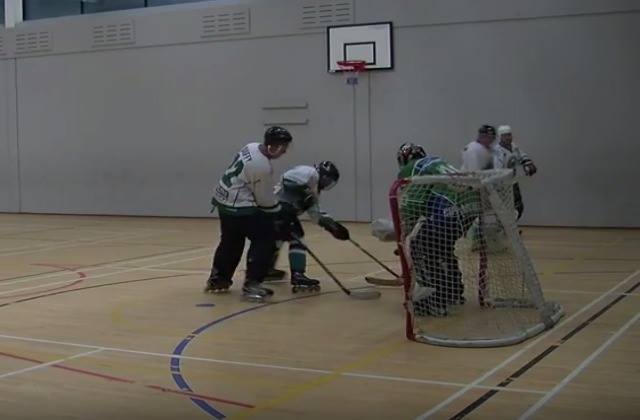
    Currently, players in the Republic of Ireland are forced to travel to Dundonald International Ice Rink in Co Down for training sessions and competitions, making it incredibly difficult to grow the sport domestically. 

    “I mean we have to travel to what is essentially another country to play the sport,” said Guli.  

    Co-founder of Dublin Buccaneers, Derek O’Neill, said he’s frustrated with the lack of local facilities, describing the journey to Dundonald as “very time consuming”. 

    “It’s about a seven-hour round-trip when you factor in the commute, getting ready, getting showered and being on ice,” said O’Neill.  

    O’Neill also revealed many of the open slots for training at the rink are rather late in the evening, further disrupting players’ ability to train.  

    “On a Friday, we can only get a slot at 9:15pm,” he said. “Sometimes you won’t be home until well past 1am.” 

    An Irish youth team practicing in the Dundonald International Ice Rink. Photo Credits: Derek O’Neill. 

    This challenge is not unique to the Buccaneers, and Guli said that the IIHA believes it is another major part in preventing ice hockey from thriving. 

    “If people don’t see the sport, they won’t play the sport. Nobody sees it because we are forced to go so far away even though we are here,” he said. 

    Guli claimed that the lack of ice hockey facilities in Ireland can also be limiting for many immigrants living in the country, who cannot play the sport they grew up with: 

    “There’s nothing here for diaspora. You have a lot of North American and Eastern European players who move here but don’t have the infrastructure to play.” 

    “It’s not the seventies or eighties anymore, Ireland has a very diverse population and there should be something for everyone, especially in a sports heavy country,” he added. 

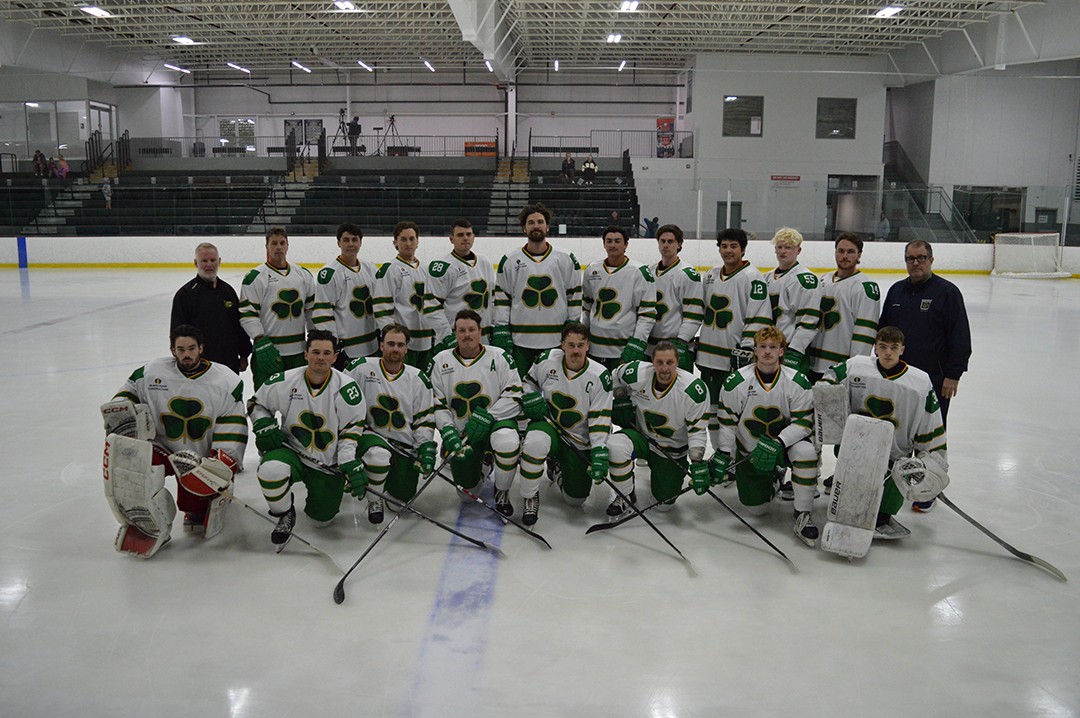
    O’Neill agreed with this statement, highlighting the diverse range of players the Dublin Buccaneers have as one of the largest senior clubs in the country. 

    “Our team has such a broad spectrum. We have Canadians, Americans, Ukrainians, Latvians, and more,” he said.  

    He also emphasised that the team was also home to a large number of “home-grown” talents on the team, showing there is enough domestic interest to justify the development in Cherrywood.  

    “We are very eager to see it being built. Every few years we’ve been hearing rumours start and then fizzle out. You get a little cynical,” said O’Neill. 

    “This development is reliable; it’s got backing from official bodies like the Olympic federation, so that’s very exciting.” 

    The development may come sooner than expected, according to Guli, who revealed that the arena may be ready by as early as 2030. 

    “If all goes well, planning is due to be submitted by this May. It’s hard to know how long that will take, but we’d like to see the facility open in the next five years,” he said.  

    The IIHA holds hope that the development in Cherrywood will support domestic growth of the sport and see it go “mainstream”. 

    “I think that ice hockey in Ireland will be completely transformed,” said Guli.  
  • The Silent Champions: The Battle for Recognition in Women’s Sport 

    The Silent Champions: The Battle for Recognition in Women’s Sport 

    By Áine McKeon

    Despite breaking records, winning major championships and motivating generations, female athletes are frequently overshadowed by their male counterparts.  

    Even though their performances on the field, court or track are on par with that of any male athlete, they are continuously having their achievements overlooked, and they receive an unfair level of media coverage, sponsorships and public attention that they receive. 

    This not only downplays these women’s achievements, but also worsens the restrictions that have prevented women up until now from participating in sports, especially in Ireland. This begs the question; why does this disparity still exist today, and how can it be improved?  

    Media Coverage: The Numbers Tell the Story 

    According to a survey carried out by HerSport, gender disparity in sports participation is only at 3.4% in Ireland, with women’s sporting efforts receiving only 6% of the country’s sports media coverage. Despite this, the study also found out more than 60% of Irish people wanted to see women’s sports receive greater attention. 

    Less than 20% of all sports coverage goes to women’s sports, according to the Irish Sports Monitor. This coverage is typically saved for high-profile events, or when women’s teams accomplish something remarkable, such as their historic 2022 World Cup run. 

    In contrast, regardless of the importance of their games or events, male sports receive regular and everyday attention. For instance, the success of local or national women’s teams frequently remains unrecognised until they hit a significant milestone, while men’s club football or rugby matches frequently receive media focus.  

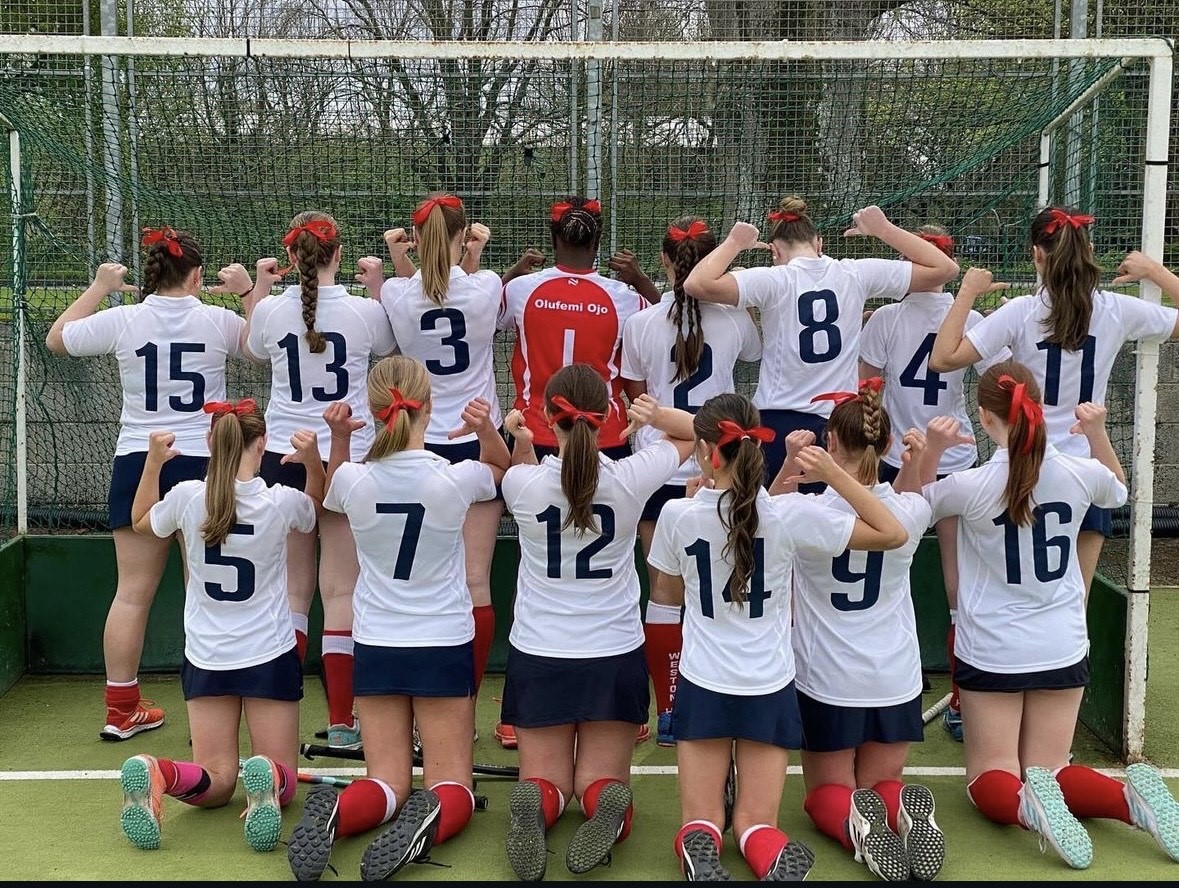
            Photo credit: Weston Hockey Club 

           “We have to do more to be seen”

    Síofra Ní Dhonghaile, a midfielder for Lucan’s Weston Hockey Club, has been playing the sport for several years. Despite her team’s consistent effort at a senior level, she feels the media attention that their achievements receive is only a fraction of what the men’s hockey team get. 

    “Even when we do win a major championship, it’s nothing more than a little headline in the occasional publication – but when compared to the men, it’s disappointing,” she admitted. “We seem to have to put in twice as much effort just to get noticed, I’ve seen my male counterparts receive attention for much less.” 

    Many Irish female athletes in a variety of sports feel the same as Ní Dhonghaile. Women’s sports are frequently confined to smaller portions and are only highlighted during significant international achievements, while men’s sports like hurling and Gaelic football receive hours of coverage throughout radio, television, and print media. 

    TheCity.ie spoke to Brian Percy, who has been coaching both men and women’s field hockey teams for over a decade now.  

    “To be honest, the gap is pretty clear,” he said. “Even for smaller matches, our men’s team receives significantly more media attention than the women’s team, who may win a major tournament and yet not garner a lot of buzz. The ladies put in just as much work, if not more, which is frustrating.” 

    Women’s sports lack sponsorship, which creates an endless cycle whereby companies are reluctant to make investments when there is no media attention, female athletes find it difficult to gain recognition. When the Irish women’s soccer team went public with their complaints in 2017, it became apparent that they were forced to share kit bags and change in airport restrooms. While improvements have since been made after their strike, sponsorship and money are still major problems 

                 Photo credit: Maynooth University Volleyball team via Trisha Zaragoza 

    Despite the challenges, there are signs that change is on the horizon, and the media is slowly starting to catch up.  Sports such as volleyball are mainly female dominated, although more male teams are forming. 

    Kildare native, Trisha Zaragoza, plays volleyball for Naas Cobras, Maynooth University and Valkryies. 

     “I’ve been playing since I was 11, for nearly 10 years now, because volleyball is a female dominated sport in Ireland I haven’t felt left out – although there are many male teams beginning to form,” Zaragoza said. 

    “Regardless of gender, sport to me is my outlet, my way of blocking out reality and stress. I’ve made many friends through volleyball and that’s been the most rewarding part for me,” she added. 

    What needs to happen next? 

    Experts, campaigners, and female athletes all concur that prioritising funding for women’s sports should begin with equitable access to sponsorship opportunities, more regular media coverage, and structural adjustments within sports organisations. 

    “We’re not asking for favors, we’re asking for fairness,” said Zaragoza. 

    Irish female athletes will continue to work hard, achieve success, and break down barriers even if the spotlight isn’t always shining as brightly on them as it should be. 

  • Watch: Evolution of women’s sports in Ireland

    Watch: Evolution of women’s sports in Ireland

    From rugby, to hockey, and especially the Gaelic Games, we have always been a country that has prided ourselves on our strong sporting tradition. But sport in Ireland has always been predominately male dominated. 3rd year TUD student journalists examine the evolution of women’s sports for TheCity.ie.

    It has taken us quite a while to warm to the fact that our women can become the great athletes they have become. However, as time has passed and more waves have been made, we have discovered that our female athletes are just as brilliant as the men- a thriving rugby scene in which the women rival the men, a successful hockey team that have qualified for the Olympic games and a series of determined and hard working women behind all of Irish women’s sports success.

    We have looked into why this could be the case, what movements such as 20×20 movement have done for women’s sports, in the eyes of the athletes themselves and what this means for Irish women’s sports in the future.

  • Meeting the Celtic Clovers

    Meeting the Celtic Clovers

    The City’s Aaron Doyle and Conor Murphy went to the Mountview Centre in Blanchardstown, Dublin to see one of the few ice hockey teams currently playing in the Republic of Ireland.

    They met the players of The Celtic Clovers, spoke to those involved with the team and generally discussed the sport in Ireland.

    https://www.youtube.com/watch?v=lVGTCf9ojHg&feature=youtu.be