Tag: housing

  • St. Michaels Estate and Inchicore have improvements coming… But it could’ve been so much more

    St. Michaels Estate and Inchicore have improvements coming… But it could’ve been so much more

    St. Michaels Estate was a staple of Inchicore and Dublin city for positive, but mainly negative reasons. For many years St Michael’s Estate in Inchicore had an unenviable reputation as one of the worst affected areas in the city for heroin abuse 

    But in 2018 a massive plan by St. Patricks Athletic (which included a state of the art 12,000-seater stadium, a new shopping centre, library, housing and parking spaces) was rejected by the Dublin City Council and only recently the contract for the alternative plan of just 578 new residential homes will be completed early in October.  

    The main reason behind the Richmond Arena proposal being rejected was an alternative plan that focused only on housing by former Minister of Housing Eoghan Murphy. 

    Murphy is no longer in office but his proposal has gone through and the St. Michaels area will welcome almost 600 new residential homes, 441 cost rentals and 137 social homes.  

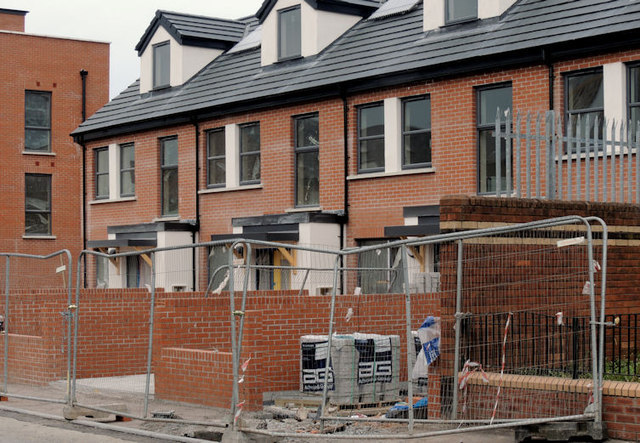
    The current state of the site that will become these new homes

    Talking about the new homes and the plan DCC have said The new housing development will not only help meet local housing needs, but it is being designed to the highest environmental and energy standards. Homes will be built to Nearly Zero Energy Building (NZEB) standards, meaning they will be highly energy-efficient and comfortable to live in.” Outside St. Michael’s Estate now has the whole plan in pictures of what they want this to be when completed.  

    The plan is still going ahead despite faced criticism by then TD Catherine Byrne. She said that Eoghan Murphy’s proposal would ‘destroy’ the local community and near her retirement she even spoke at an event she wasn’t invited to speak at about the St. Michael’s Estate project and once again voiced her strong opinion against the residential redevelopment. She also talked about how she thought that Murphy and the Government were using St. Michael’s Estate as a ‘testing ground’ for cost rental housing.  

    St. Patrick’s Athletic, obviously disappointed with the decision, also voiced their disagreement with the decision and not going for the Richmond Arena idea which would have given the area a lot more amenities. Former club president Tom O’Mahony response to the decision some time ago was “the reasons which were given for rejecting our proposal, such as, for example, that it would require variations to the Dublin City Development Plan, are issues which could be resolved if there was a willingness to accept that the benefits of our proposal far exceed those of the alternative.’  

    They are very keen to show how many houses they are building

    Still, St. Patrick’s Athletic remain hopeful of some sort of compromise that will allow something for the club in the new plans. On their club website they still have outlined plans of the Richmond Arena with some key headlines such as saying ‘The stadium development will be financially independent and will not be reliant on receiving any Government grants’ and ‘The City Development Plan envisages the development of a high-quality, vibrant, mixed-use urban quarter which will help to regenerate Inchicore.’  

    But as shown the work is under way, the contract is now complete, and St. Michaels Estate will soon be cost rental housing with no football stadium or shopping centre to show for any efforts. Although it was widely known that Inchicore and specifically St. Michaels Estate needed this redevelopment it does seem like they have missed out on transforming Inchicore completely by taking the easy and risk-free road.  
  • The Cearta protest – thousands march to save the Gaeltacht

    The Cearta protest – thousands march to save the Gaeltacht

    Over the last 15 years, the number of daily Irish speakers has fallen by 13%, from 83,000 to 72,000. With the government investing only 0.1% of state expenditure into the Department of the Gaeltacht, it’s not difficult to see why numbers are dropping so drastically. On Saturday, September 20, thousands of people took to the streets to protest and campaign for the Irish Language and Gaeltacht investment plan 2024-2029. We spoke to attendees and two top level members of Conradh na Gaeilge about their demands. 

  • Students in Ireland Struggling with Rising Rent and Limited Accommodation 

    Students in Ireland Struggling with Rising Rent and Limited Accommodation 

    By Jamie Ryan 

    Yugo Student Accommodation – Photo Credit: Jamie Ryan 

    The student accommodation crisis in Ireland has been an on-going issue for the past few years. 

    Every year, a new batch of students from across Ireland are accepted into universities, in which it is not an option for them to commute – along with returning students who are also actively seeking out accommodation for their upcoming academic year.  

    Kerry Ann-Darcy, 22, a recent graduate of Maynooth University, but originally from Dundalk in Louth, struggled each year during her time in university to seek accommodation.  

    “It’s not easy to find student accommodation in general, especially when there is a ‘first come, first serve’ general booking forum for on-campus accommodation,” Darcy explained.  

    “The university was not helpful and suggested that alternative accommodation could be found on a website called ‘Student Pad’ but that was it. But on Student Pad, the landlords are extremely picky with terms such as gender specific, academic year specific, course specific, degree specific and so on. 

    “Even once I did get accommodation, there were issues with it. My landlord had a table and chair for us in the dining room at the house viewing but had it removed for when I moved in and he told me that I ‘was imagining that there had been one there’. 

    Yugo Student Accommodation – Photo Credit: Jamie Ryan 

    “He complained and gave out to me because we had access to a bedroom, bathroom and kitchen – although that’s what I was paying him for but that’s the bare minimum. In third year, my landlady said that I had to be finished in the kitchen before 6pm but some of my classes only finished at that time,” Darcy added. 

    Back in 2022, the Minister for Further and Higher Education at the time, Simon Harris, made calls to homeowners living nearby to universities to rent out any spare rooms that they may have in their house to students – as a result of the severe lack of student accommodation to supply the high demands.  

    This alternative, however, does not necessarily end up costing students less as research carried out by the USI (Union of Students in Ireland) in February found that students are paying an average of €660 across the country to live in digs, with just 43% of those students given full access to the room, seven days per week. 

    This same study also found that of those surveyed, 59% said that they chose to live in digs as a result of being unable to find an alternative.  

    Antrim native Caitlin Procter, 19, was unable to attend university this year due to the lack of student accommodation available.  

    “After being accepted into multiple courses, I wasn’t even able to accept any of them because I couldn’t find anywhere to live,” she explained.  

    “I was really annoyed and frustrated about it so I sought elsewhere for digs but was still unsuccessful and unfortunately I can’t afford to commute two and a half or three hours per day to and from Belfast and Sligo,” she said.  

    This is a situation that unfortunately, too many students and university hopefuls find themselves in each year and it appears to be getting worse and worse.  

    Ardcairn House Student Accommodation – Photo Credit: Jamie Ryan 

    Dylan Downes, 22, a former student at the University of Limerick, originally from Wicklow, was living in digs for his first year in third level education as the commute between Wicklow and Limerick twice each week was unfeasible.  

    “I felt that living in digs was my only choice to be honest. I got an apartment with some of my friends for the following year, but I really felt that I probably lost out on the social aspect of college in first year,” Downes explained. 

    “My commute to and from college each day was around forty-five minutes, which is obviously better than three hours but even still, when you’re paying €700 per month for a room, it is disheartening, and I sometimes felt pretty isolated. 

    “Thankfully, my accommodation search in second year was far less stressful because one of my friends had already reserved an apartment for the following year and offered me the other room with him, in many cases looking for accommodation is more about who you know than anything else in my experience,” he said.  

    The student accommodation crisis is a direct result of the greater housing crisis that Ireland has been dealing with for the last decade. 

  • A homeless man has been reduced to living in a tent in the town of Nenagh for the past two years 

    A homeless man has been reduced to living in a tent in the town of Nenagh for the past two years 

    By Jason Quigley  

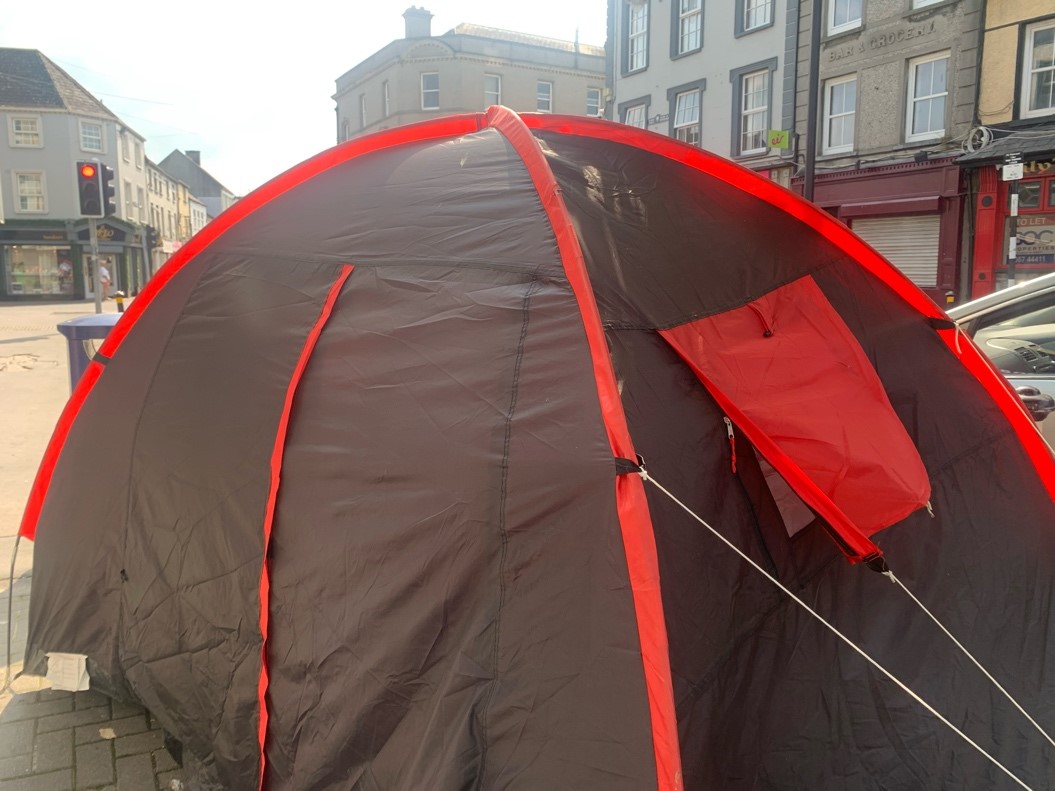
    The plight of homelessness has been brought glaringly home to the people of Nenagh with a destitute man living in a tent on the town’s main street for two years. 

    The man’s tent located on Pearse Street Nenagh. 

    Photo: Jason Quigley 

    The man, in his early 50’s, who agreed to speak under the condition of anonymity, said that he has no hope left and will eventually end up dying on the street. 

    The man, originally from Ballinasloe in Co Galway, became homeless over ten years ago and arrived in Nenagh in 2022. He has been sleeping rough ever since, alongside his small dog, in a tent located in the town centre. 

    “I’ve been in emergency accommodation, it’s all overcrowded and I need somewhere safe,” he said. 

    “At my age, I don’t want to be dumped into homeless accommodation where there could be drugs and fights – I’m not going to be associated with that behaviour.” 

    The man has claimed that Tipperary County Council told him to move the tent off the street. However, he says he’s staying put. “I’m going to get a mattress and lay outside the front door of the council building until I’m listened to.  

    “There’s a few others in the same situation like myself,” he said. 

    He stated that the town of Ballinasloe is not safe for homeless people and he feels “safer in Nenagh”. The man said, “I don’t sleep at nighttime and go to bed at five in morning when everyone is waking up and the birds start whistling. 

    “I haven’t experienced any hassle from anyone, no one really bothers me.” 

    I’ve no hope anymore, I’ve been doing this for ten years and can’t get anywhere. You give up believing when you’re in my situation, I won’t keep my hopes up,” he said. 

    Local homelessness volunteer, Maura Finn, believes more needs to be done to help this “vulnerable man” and people should not be worried about the man’s dog who is “everything to him.” 

    “They won’t allow him to enter any sort of accommodation with his dog. The dog is his only companion and protects him at night on the street,” she said.  

    Nenagh Sinn Féin representative Damian O’ Donoghue has described the alarming increase of homelessness in Co Tipperary as a “worrying and dire situation”. 

    Mr O Donoghue believes that the crisis needs to be treated as a “national emergency” and that the situation is “worse than it’s ever been”. He went on to say that the noticeable sightings of tents across Nenagh and North Tipperary was unacceptable and grim. 

    “The biggest problem with this situation over the last few months has been eviction notices from landlords,” said Mr O Donoghue. 

    “People are then put into a situation where they can’t find alternative accommodation in their area. Couples who are on relatively good incomes are struggling to find anything – this is placing many people into stressful and extremely difficult situations.” 

    Mr O Donoghue added: “I’m dealing with up to ten families now who have an eviction notice hanging over their heads, other councillors and politicians in the region are dealing with much higher numbers. 

    There’s also many people who are too afraid to come forward to seek emergency accommodation services in the county.” 

    He said that, ” we haven’t been building houses properly for the last few decades – which is a systematic failure from the government.” 

    However, Mr O Donoghue believes that Tipperary County Council aren’t receiving enough state funding from the government. “There’s a number of vacant council homes in Borrisokane and the surrounding areas which are currently being redeveloped, but there needs to be a faster approach from the council to these renovations. 

    “There’s so many derelict houses in every town in Tipperary and they all need to be urgently identified and tackled by the council. The cost of living is making it harder for couples to put down a deposit for a house, which then causes a massive domino effect on the situation. The homeless crisis in the area will unfortunately continue to degrade for another while longer. But we need houses built urgently and we need them built now,” Mr O Donoghue concluded. 

  • Vacancy reports lack correct ‘classification and consistency’ says TU Dublin Planning professor

    A planning professor has called for a consistent definition of vacancy and dereliction across all stakeholders as “fit for purpose data has not been achieved”.

    The Residential Buildings Report by GeoDirectory found that the number of vacant properties in Q4 of 2021 represented 4.4% of the national housing stock.

    In comparison, the Census Vacancy report shows 166,000 vacant properties in Ireland, with 48,000 dwellings recorded as vacant since 2016, according to the Central Statistics Office (CSO).

    Helen Murray O’Connor of the School of Transport Engineering, Environment & Planning at TU Dublin has called for ‘stronger definition and classification’ when preparing reports on dereliction and vacancy. 

    “These reports are authoritative and statutory sources of data, but we need to look at what definitions they are using,” she said. 

    GeoDirectory says their database distinguishes between a ‘dwelling’ which is a single residential unit as opposed to a ‘building’ which can comprise one or more dwellings”, the Residential Building Report predominantly focused on individual ‘dwellings’.

    In comparison, the CSO, who deems a vacant dwelling as “classed as vacant by census enumerators if it is unoccupied on Census night, is not used as a holiday home and is not usually inhabited by occupants who are temporarily absent at the time of the census”.

    The Census definition of a vacant dwelling is a point-in-time indicator taken on Census night as to whether the property was inhabited or not on Sunday 03 April 2022.

    The GeoDirectory report contained a range of variables on residential dwellings such as address point for each dwelling and building type, dwellings by building type (detached, semi-detached, terraced, duplexes, bungalows, temporary), there was no separate classification for apartments, but GeoDirectory defines an apartment as a dwelling which exists in a building of 5 or more dwelling and buildings under construction. 

    “Although both the Census and GeoDirectory’s databases are thorough and useful data, I do not think there’s consistency in it as we don’t know what they are measuring and what they are counting,”

    “There needs to be a consistent definition between vacancy and dereliction across all researchers, publishers, county councils, and government departments to achieve truly fit-for-purpose data”, O’Connor said. 

    Reports findings 

    According to the report, the counties with the highest rates of vacant properties were Leitrim (13.3%), Mayo (11.9%) and Roscommon (11.6%). Dublin had the lowest vacancy rate with 1.4%, followed by Kildare (2.1%), Waterford, and Louth (both 2.8%).

    In addition, the report said there were 22,096 residences classed as derelict, a 7.3% decrease since 2016. 

    Annette Hughes, director of EY Economic Advisory, said “based on our analysis for this report, the 90,158 vacant residential properties and the 22,096 derelict residential properties across Ireland should be investigated to ascertain if they can be returned to the housing stock, a move which would also support our retrofitting targets.”

    Kevin Duff, Planning Officer for An Taisce believes stakeholders do not have the resources or the correct understanding of the vacancy and dereliction issue in Ireland. 

    “We need to look at how councils and agencies are differentiating between a dwelling or a building, while also ensuring the stakeholders have defined the difference between a vacancy and a derelict building”, he said.

    Duff believes the regeneration or redevelopment of derelict buildings can help aid the current housing crisis, whilst also maintaining the heritage and history of the city. 

    The redevelopment of formerly derelict buildings at 71-75 Aungier Street is a perfect example of this he says. Truncated buildings were retained and reconstructed adding additional stories, with individual shop units developed below. 

    Speaking of the redevelopment, Duff said “This is a great example of inner-city regeneration, where 

    derelict buildings were maintained and reconstructed with a new student housing development behind,”

    “It goes to show how derelict buildings can provide a good mix of uses that add to a city.”

  • Can’t pay? Move away

    Can’t pay? Move away

    By Leigha O Reilly Hughes

    With homelessness, young people leaving the country as they are unable to afford rent, families living in hotels and the lack of housing for those who need it, the housing crisis is one of the most prevalent and pressing issues that Ireland is facing. 

    There are many factors that make up the cause of the housing crisis in Ireland, and the government is one of the biggest problems. The government has a large share of the responsibility due to the fact that there have been years of housing issues in the country with not much progress to solve. 

    It is also the result of allowing Irish property to be placed in the hands of profit-seeking corporations rather than those seeking to provide housing for those who need it.

    Homelessness

    One of the biggest problems the housing crisis has caused is the number of homeless people in Ireland. 

    There are many causes to homelessness in Ireland, such as personal reasons like mental health and abusive relationships. However, the biggest cause of homelessness in Ireland is due to the lack of affordable housing available.  

    The Department of Housing releases monthly data that captures details of individuals in state funded emergency accommodations. 

    The monthly homelessness report of August 20201 showed that 6,023 homeless adults entered emergency accommodation. 4,220 of those individuals were from dublin. The number of homeless males made up 3,949 of this number, which is 66%. Females made up 2,074, which is 34%.

    Source: Department of Housing 

    There were a total of 953 families homeless in Ireland in August 2021. 723 of these families were from Dublin. This resulted in 2,189 total child dependents. 

    Ballymun, which is an outer city suburb of Dublin, is hit hard with homelessness. 

    “20% of Dublin’s homeless are from Ballymun,” says Dean Scurry, a homelessness activist from the Ballymun area. 

    Abandoned homes in Ballymun. Poster reads “this house could be a home”

    “With that there are about 90 vacant homes in Ballymun that could be used for families instead of leaving them in hotels for other organisations to make money,” says Scurry. 

    Abandoned homes in Ballymun

    The impact on young people

    The housing crisis has caused serious problems for the younger generation of Ireland. Younger people between the ages of 20-30 are paying higher amounts on housing for smaller and rented accommodation. 

    Ireland also has one of the highest rental costs in Europe. 

    According to the Irish Times, the average monthly price for rent stood at up to 1,477, while the average is now 2,035 euro. This is 100% up from the 742 euro a month that was seen in 2011.

    These high rent prices have resulted in young people living at home, unable to afford rent and save for mortgages. It has also caused young people to emigrate to different countries as affording rent is out of the question. 

    Eva Tiernan, 22 from Dublin who has a Level 8 in science degree from UCD, has had to emigrate to Whistler Canada for the foreseeable future. 

    “The renting prices in Dublin are unrealistic. I would love to be able to move out in my city surrounded by the people I love, but I can’t,” says Tiernan.

    “I feel like my only option is to move to another country so I can live a life where I’m not solely working to pay rent. I want to eventually come back to Dublin, but how will I ever be able to rent and save for a mortgage there?”

    In the last four years, 308,000 people have left Ireland – 125,000 of those aged between 15 and 24 years.

    The government’s new “housing for all” strategy intends to address the housing issue by expanding supply, promising to build 33,000 homes per year by 2030, a level of residential building not seen since before the financial crisis.

    A decade of escalating costs and severe undersupply has created a divide in Irish politics, isolating major parties from a growing number of young voters.

    When the Budget of 2022 was released, people were hopeful that the government would provide a solution to help put an end to the growing problem. However, the Government failed to commit to a target of 20% of all housing stock to be social housing, with an annual capital envelope of €3.3bn for social housing. The allocation of €1.7bn for a social housing build of 9,000 units and €224m for 4,100 affordable units in 2022 needs to be increased substantially

    If rent costs are not lowered and more affordable housing isn’t being built for those who need it, homelessness and emigration of Irish people will continue to rise. 

  • IGNORANCE: Are councils failing to enforce ‘Airbnb’ laws?

    IGNORANCE: Are councils failing to enforce ‘Airbnb’ laws?

    By Dave Stapleton

    Only 3% of thousands of eligible properties have applied for planning permission or registered under new short-term letting regulations.

    Under the new rules, which came into effect in July 2019, any property being sublet in a rent pressure zone must acquire planning permission from the local authority. Homes where the owner resides must notify the local authority and can’t rent for more than 90 days.

    The rules apply to 18 local authorities which have been designated as rent pressure zonesby the Residential Tenancies Board.

    However, figures obtained by Fianna Fáil Housing Spokesperson, Darragh O’Brien, reveal that only 16 planning permission applications have been received by local authorities across the country.

    In addition, just 401 notices have been filed for principal primary residences, the majority of which were received by Dublin City Council.

    This offers a stark contrast to the 14,300 properties listed within the applicable local authorities, according to the latest figures from Inside Airbnb – an independent organisation which scrapes statistics from Airbnb’s website.

    Just three staff have been allocated to enforce the new rules, despite each local authority requesting additional staff and resources. All three are assigned to Dublin City Council, who said they have a further 10 staff approved for the end of November.


    Overall, 162 complaints about breach of regulations have been received, while 60 enforcement warnings have been handed out.

    TD Darragh O’Brien believes the findings show that the rules are not being properly enforced and ignored by property owners. He said: “It’s clear that the laws in place since the summer are not being taken seriously by the Government. They have not provided any support to local authorities to implement the new rules.

    “Councils are writing begging letters to the Department looking for the resources to implement the rules and have been completely ignored to date.”

    O’Brien has called on Minister for Housing Eoghan Murphy to provide councils with the full resources required to enforce the regulations, and for a review of the new laws next year.

    ‘These rules are important in ensuring we keep units in the rental market, open up opportunities for first time buyers and protect communities from being transformed into holiday home centres,” he added.

    “There won’t be much change”

    TheCity.ie spoke to an individual, who wished to remain anonymous, that manages numerous sublet properties through Airbnb. They said the regulations will not make much of difference as many will ignore them or find ways around it.

    “Just wait and see what happens. If council enforcement is anything like that in London, there won’t be much change,” they said.

    Owners cannot rent property in London for more than 90 days in a given year on a short-term let and must seek planning permission for a change of use from the local council.

    “People over there just list the properties across different booking sites to meet the 90-day cap. Some even just delete the property and relist it under a new account,” the property manager added.

    When the new laws were implemented during the summer, a spokesperson for the Department of Housing said: “Those found not to be in compliance with these changes will risk criminal conviction under the forthcoming legislation.”

    Speaking at the Oireachtas housing committee earlier this year, Minister for Housing Eoghan Murphy said that responsibility of introducing these rules will fall to the Department of Transport, Tourism and Sport.

  • Government promises to meet social housing needs – How do they measure up?

    Government promises to meet social housing needs – How do they measure up?

    By Megan Gorman

    The government announced the plans for the spending on social housing as part of the budget 2020. It has been said that they plan to spend €1.2 billion on social housing as part of the new Budget. Announcing the budget, Minister for Finance Paschal Donohoe unveiled capital funding to support the delivery of over 11,000 new social homes in 2020. With the promise of new social housing being built, I looked into how much exactly has been spent on social housing in 2019.

    After sending an FOI request to the Government for housing, I was given the Social Housing Construction Status Report. It demonstarted positive progess in social housing. The latest Construction Status Report shows that:

    • There are 6,439 social homes are currently onsite nationwide.
    • There were 143 additional schemes on site across the country at the end of the second quarter (Q2) than at the end of quarter one in 2019.
    • The number of schemes on site at the end of Q2 2019 (1,559) is nearly 50% higher than at the end of Q2 2018 (1,067).
    • The number of homes expected to yield from these schemes is up more than 8% from 20,324 to 22,139.

    The number of new dwelling completions in Q2 2019 was the highest in Dublin at 1,546 followed closely by the Mid-East with 1,233. Together, 56% of all new dwelling completions in Q2 2019 were in Dublin or the Mid-East.

    In a press release the housing Minister Eoghan Murphy said that “7,000 homes would be built next year, with a further 800 acquired and 2,631 leased in the long-term.”

    However even with the numbers showing that houses are being built, it’s still easy to see that the houses aren’t affordable. Figures from the Department of Housing show that more than 10,000 people have been homeless in Ireland for the past seven months.  

    In August 2018, official figures counted 9,527 people as homeless; this increased to 10,275 in August 2019. The reason for these numbers to be so high is due to the fact that although houses are being bulit they are not affordable and more money is being pumped into subsidised private sector tenancies than affordable social housing.

    The figures I received in respone to my FOI confirm that the government will spend more on social housing rental subsidy schemes next year than it will give directly to Local Authorities to build and buy real social houses. The capital budget of €1.2 billion is being spilt between social housing and rental subsidy schemes. €700 million will go directly to scoial affordable housing and an estimated 7,000 social houses will be built in 2020.

    However a current spend of €800 million is going into long term leasing and landlords are expected to receive more than the €700 million being spent on social housing. The figures do show houses are being built but there is not enough capital spending and there needs to be more short term support. 

  • In her words: from homeless to housed

    In her words: from homeless to housed

    By Robert Geoghegan

    This article consists of both written and spoken word. *Jane’s name has been changed to protect her privacy.

    You could be forgiven if you thought that Dublin city today almost embodies the opening paragraph from Charles Dickens’ book A Tale of Two Cities. Depending on who you talk to, we are nearing the best of times, and again you could ask someone else and they might tell you it is the worst of times.

    *Jane

    Ireland has been in the midst of a housing and rental crisis over the last number of years and consequently, there has been an increase, year-on-year, of people finding themselves homeless.  The preconceived notion that all homeless people are either drug addicts or alcoholics, is a notion that should have been challenged a long time ago.  We now know, or at least we should know, that homelessness could happen to anyone.  The current figures say that a total of 10,275 individuals are in emergency accommodation with nearly 1,000 of them being children. Steadily, more people are finding themselves couch surfing, moving back into their parental home or on the brink of poverty just to pay the rent. 

    This is the story of a young woman called Jane* who found herself through a series of unfortunate circumstances that led to her becoming homeless. For Jane, like most people, her adult life began after she opened her Leaving Cert results. Unfortunately, those results were not what Jane was hoping for. Looking for results to anchor her in the age of wisdom, instead they anchored her in an age of young foolishness, tripping up Jane’s dreams of going to college.

    Moving back into your parents’ home is a thought some might consider.  For many there is a sense of shame moving back, for Jane moving back was the only option.  For a while, everything was back on track and being at home offered stability for Jane and her son if only momentarily.

    The spring of hope, for Jane, turned into the winter of despair. Leaving her mother’s house with nothing but a bag of essentials, having left her son with his father, Jane set out to find somewhere to stay for the night.  What do you do? Where do you go? People say school never prepares you for real life, how to pay taxes or balance a budget. School certainly doesn’t tell you what to do when you find yourself in the precarious situation that is homelessness. Jane found herself ringing her local county council who in turn gave her a free phone number to ring.

    When you ring the number, you are greeted with an automated service. You must wait on the phone as numbers count down to zero. For this, you need a fully charged phone or a phone at all for that matter. You then wait until it counts all the way down to 1 and if you are lucky, you’ll have a bed for the night. Most people above the number 50 usually don’t receive one. Upon finding herself lucky enough to get a bed for the night, the reality of Jane’s situation set in.

    Incredulously for Jane, the people staying at the shelter had jobs. They were regular people in difficult circumstances. People you wouldn’t take a second glance at, people you walk beside on the way to work or even work with.

    All throughout her homeless ordeal, Jane was trying to complete a degree course to become a secondary school teacher. Jane found her grades slipping and felt a sense of shame while on her teaching placement; teaching the youth of tomorrow how to best lead their lives, Jane couldn’t help feeling like a fraud and ashamed at finding herself homeless. The emotional strain became too difficult as she juggled being homeless, a single mom away from her child, and a student; so, she decided to defer.

    Things began looking up for Jane when her Housing Assistance Payment (HAP) was accepted by a landlord. HAP is a form of social housing support for people who have long-term housing needs. With this new form of security things began to turn around for Jane.

    She considers herself one of the lucky ones as she managed to transition from being homeless to a private rental accommodation and in the end, managed to finish her degree.

    But the threat of homelessness remains a very real threat for Jane. With the continued rental costs spiralling out of control, who knows how long the best of times will last.

  • Thousands protest in Dublin housing rally

    Thousands protest in Dublin housing rally

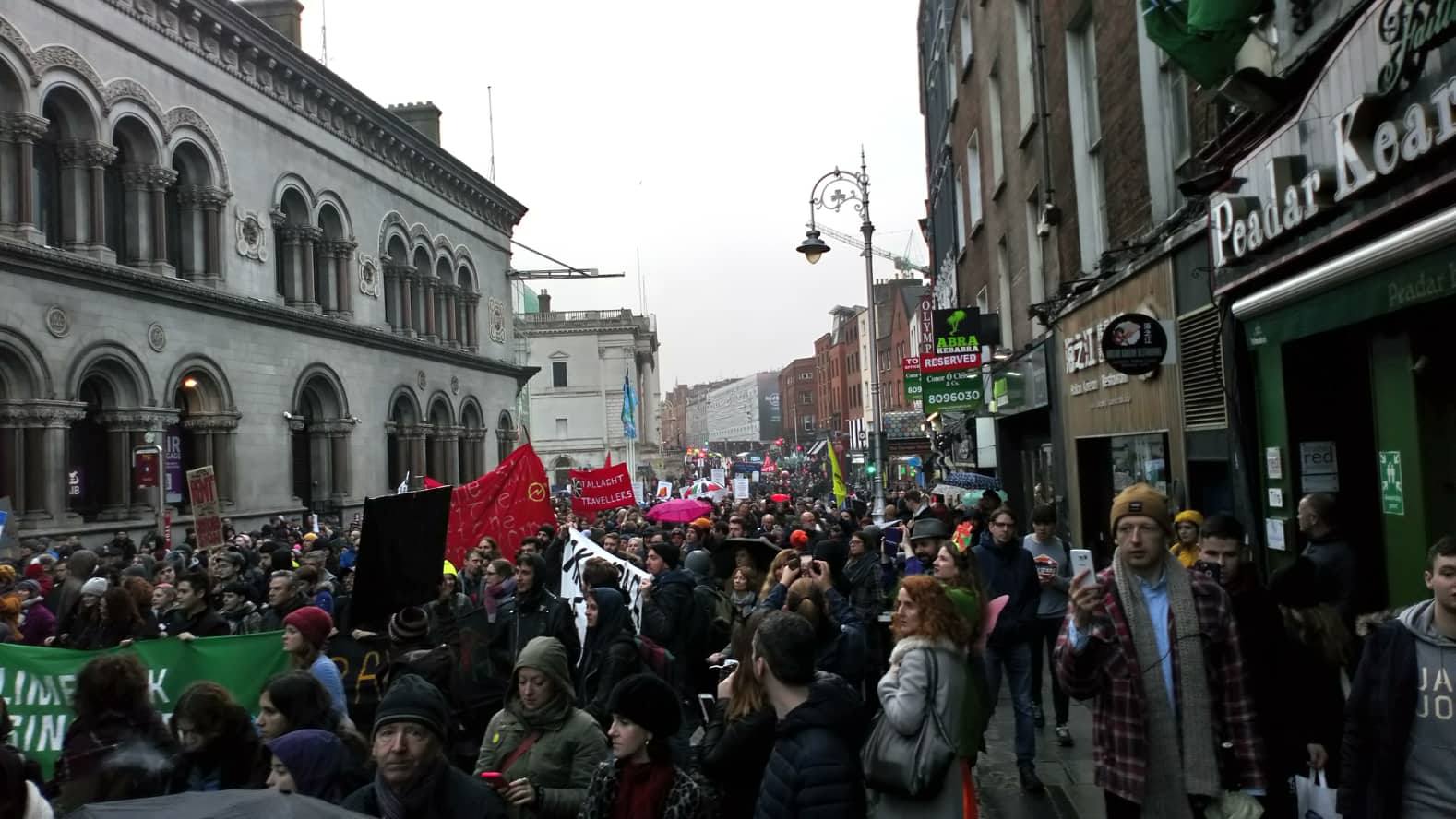
    Last week, held on the fourth anniversary of the death of Johnathan Corrie, an estimated 10,000 people took part in a protest organised by the National Housing and Homeless Coalition, represented by about fifty different groups of homeless activists and unions.

    The protest began at the Garden of Remembrance on Frederick Street, and followed a path to Dame Street, where spokespeople such as Tina McVeigh of People Before Profit called for Government action to introduce constitutional rights to housing and other measures to combat homelessness throughout the city.