Tag: housing

  • Luas living on the rise once again

    Luas living on the rise once again

    ‘Housing crisis’, two words which are a bit sensitive for most Irish people in 2018.

    It wouldn’t be wrong to say that buying or renting in this day and age in Ireland is an utter mess. Demand far exceeds supply, and as a result, we have house prices rocketing. Rents have risen for a 25th consecutive quarter, with house prices up 6.6 percent from the third quarter of 2017.

    But what are people to do? Some have no option but to pay the excessively high prices, with landlords and vendors alike more than happy to see the prices rise; it is a business for them in reality.

    With news of the BusConnects revamp and the altering of some bus routes, living by the Luas has become an even bigger convenience for those who don’t drive, and even those that do. Do you really enjoy sitting in city centre traffic?

    With this, it’s no surprise that purchasers are paying an extra 15 percent to live within 1km of the Luas line, according to a recent Daft report.

    Beechwood is the most expensive area along both Luas lines to buy a property, which may not come as too much of a shock.

    Picture1
    Source // Daft.ie

    On average, it will cost someone looking in the Beechwood area €778,000 to buy a property, with the least expensive on the green line being the newly added Broombridge, which comes in at an average of €323,000.

    The green line actually boasts the four most expensive areas, with Ranelagh, Milltown and Cowper coming in after Beechwood on the list.

    The twelve least expensive areas can be found along the red line, the furthest twelve from the city centre. You probably still would save money buying in these areas, even with the more expensive ticket.

    Cheeverstown is the cheapest at €197,000, with others like Kingswood, Bluebell and the self-proclaimed fastest growing village in Ireland, Saggart, among the lowest.

    Picture1.png2
    Source // Daft.ie

    Conor Clarke, a Senior Negotiator with Ray Cooke Auctioneers understands the stress it can have on people looking specifically to buy along the Luas line.

    “Prices have increased massively in areas along the Luas line including some of the outskirts like Saggart and Citywest. It’s a tough predicament for people and families, particularly those who need the Luas to commute to school, college and work.

    “The increase in house prices over the last few years is massive. Some areas like Dublin 8 for example have nearly doubled in some cases which would have been hard to believe not too long ago.”

    Mr Clarke, who has been in the sales business for six years, feels there are alternatives for those looking to buy near the Luas.

    “Some areas are good for parking, you can leave your car and hop on the Luas. Citywest Shopping Centre is an example where they offer free parking. If you are looking to get near to a Luas stop, do your research. Some bus routes, especially with the changes, tend to drop you near Luas stops and even offer feeder services. Check with agents who will know the amenities available in areas which may be of benefit to you.”

    And if you think saving for a house in one of these areas is tough, rental property prices have not slowed down either, so it may be time to tell your parents you’ll be staying with them for a little while longer.

    The average price for a two and three bed property in Dublin along the Luas line rose by 5 percent from this year to the last, with prices in the county now a staggering 30 percent higher than their 2008 peak.

    No surprises come when it comes to the most expensive areas to rent along the Luas, all close to or in the city, with the average for both Spencer Dock and Charlemont coming in at €2,739 and €2,464 per month respectively.

    Picture1.png3
    Source // Daft.ie

    Properties along both lines cost higher than the Dublin average of €1,884, with the green line coming in €412 more and the red line coming in higher by €197.

    Areas like Dublin 8, 14 and 24, all of which are along one of the Luas lines, increased from this time last year by 11.4, 11 and 10.8 percent respectively, so it may be time to ask your boss for that raise you’ve been thinking about.

    Shane O’Driscoll, a fourth year apprentice actively looking for accommodation feels the current situation in Dublin is “disgraceful”.

    “Dublin is one of the highest rates of rent in Europe and the city isn’t near the size of other countries. I drive but I feel for people who need to use public transport, as the rents in some areas near the Luas and bus [routes] are madness.”
     

  • 2800% increase in number of emergency beds

    2800% increase in number of emergency beds

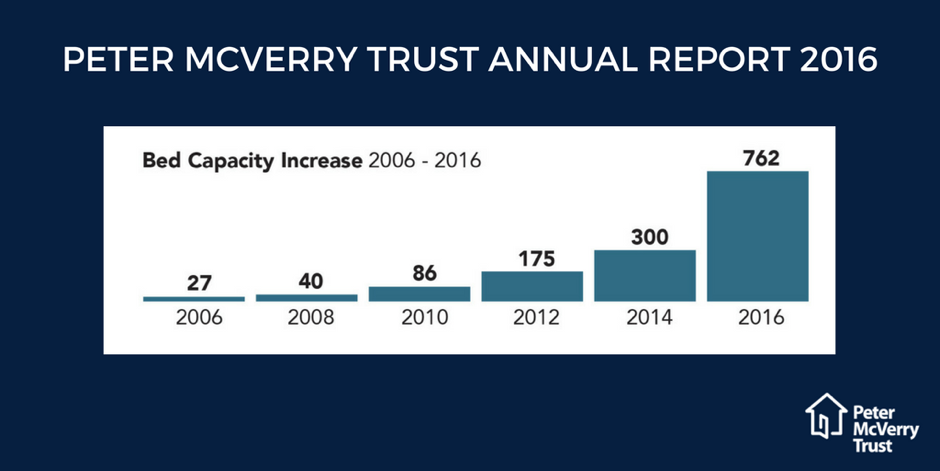
    Peter McVerry Trust (PMVT) annual report has revealed an increase of 2,800% in the number of beds it has provided in emergency accommodation in the last decade.

    The figures released in the latest annual report by the national housing and homeless charity revealed that their bed capacity has seen a twenty-eight fold increase in the past ten years.

    “We’ve been responding to a deepening crisis for the past five years and each year, as the number of people in homelessness has grown higher, it has become much more difficult to respond as resources are stretched ever further,” said Pat Doyle, CEO of Peter McVerry Trust.

    PMV2
    Source: @PMVTrust

    “We have said to government all along that the solution has to be a housing led one yet we find ourselves constantly being asked to deliver greater levels of emergency accommodation,” said Mr. Doyle.

    Mr. Doyle also said that this is “frustrating” because “emergency accommodation is more expensive and less effective than other models such as Housing First. Yet Housing First receives less than one percent of the national homeless budget each year in Ireland.”

    The report also found that there was a sixteen percent increase in the number of people in housing supported by the trust.

    The trust said the government should “switch its funding to more effective forms of responding to homelessness, such as Housing First rather than continue to rely more and more [on] emergency accommodation.”

    Speaking at the launch of the report at the Croke Park Conference Centre, Minister for Housing, Planning and Local Government, Eoghan Murphy, said the Housing First model “almost seems obvious as a solution.”

    The Minister however said “that wasn’t the case when it was first introduced, and it has needed its own pioneers here in Ireland, which it has in the McVerry Trust.”

    PMV3
    Source: @PMVTrust

    The Housing First model is based on providing both housing and intensive case management which aims to end rough sleeping by helping people with access to housing and support for health or social needs so they can live independently in a community.

    In late 2017, Peter McVerry Trust signed an international partnership with the Pathways Housing First Institute. The organisation is headed up by Dr Sam Tsemberis, the founder of the Housing First movement.

    Minister Murphy said he had recently met with Dr Tsemberis to discuss the Housing First model and its success in other countries. “I have read a great deal about it, and indeed it was probably the first thing that Pat and Fr Peter raised with me when we met in my first week on the job,” said Minister Murphy.

    The minister also thanked Father McVerry, the trust’s many employees and CEO Pat Doyle for their hard work with the charity.

    “We are dealing with a crisis in homelessness – a crisis which has a number of different fronts, which must be tackled simultaneously,” said Minister Murphy.

    He also announced that a Director of Housing First will be put in place by the Dublin Region Homeless Executive shortly.

    The Minister added: “The Rebuilding Ireland target is to triple housing first in Dublin to 300 – this is being vigorously pursued. It of course requires the building of more single accommodation by local authorities and Housing bodies.”

    The report also found that 1,208 people accessed the charity’s prevention services in 2016. Some of the prevention services include the Information and Access Centre, the Homeless Youth Cafe and the Streets to Home support service.

    By Keeva Tyrell


  • Minister Alan Kelly wants 150 families in modular homes by Christmas

    Minister Alan Kelly wants 150 families in modular homes by Christmas

    Minister Alan Kelly wants to see 350 families in modular homes next year under a fast track plan for modular homes.

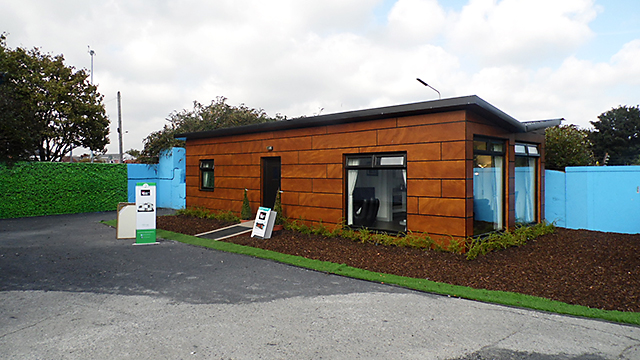
    A spokesperson for the Dublin Regional Homeless Executive told The City that Mr Kelly was so impressed with the modular homes being demonstrated in Dublin 3 that he wanted to see 150 families housed by Christmas, with a further 350 moving in next year.

    Some 75 families a month are becoming homeless in Dublin every month. The latest stats show that there were 607 families in emergency accommodation in the city in the last week of August. There were 1,275 children in emergency accommodation at this time.

    Housing 1 ]

    The modular housing demonstration project was backed by the Director of the Dublin Region Homeless Executive, Cathal Morgan.

    “We feel that modular housing is capable of responding to the housing needs of homeless households who are currently accommodated in commercial hotels throughout the Dublin region,” he said.

    Mr Morgan added that by bringing the proposal into effect “the Dublin local authorities will engage with all relevant stakeholders and with Central Government to consider procurement and provision at a scale required to effectively address family homelessness in Dublin”.

    The modular housing providers who are involved in the exhibition include Modular Homes Ireland, Portakabin and Roankabin, among others.

    The project aims to showcase a number of different styles of modular homes from the aforementioned companies, giving local authorities a way to, perhaps, solve the escalating homeless crisis which sees families living in single rooms in hotels.

    Conditions in temporary accommodation mean that families often cannot cook for themselves and they must often abide by curfews.

    Housing 2

    Ali Grehan, an architect working for Dublin City Council, noted that the long term plan was not for these homeless families to be permanently rehoused in these units. Ms Grehan has championed similar projects in other countries.

    “There is a considerable track record across Europe and the States of system built housing delivering well designed homes affordably, quickly and suitable for different contexts,” she said.

    Another architect who has spoken highly of the project is London based Tom Teatum who played a role in setting up the Demonstration Project in Dublin 3. Mr Teatum said that while similar efforts are being made to rehouse London’s homeless population, it appears to him that authorities in Dublin have gone ‘a step further’.

    “This joined-up effort by local authorities to identify a housing solution that meets the needs of homeless families is the first I am aware of,” Mr. Teatum said of the initiative.

    Teatum added that this is an innovative development.

    ”Dublin’s focus on modular housing designs that bring quality and reliability and that can be speedily developed shows great leadership in response to its homeless crisis. It is an example to be followed in London and elsewhere,” he said.

    The Modular Homes Ireland house that was on show is available to the government at a cost of €85,000 per unit.

  • Rent prices increase as property available plumet

    Rent prices increase as property available plumet

    3344771391_02b74ac075_z
    Image:cincyproject http://bit.ly/1zypMev


    Bad news for students this week as figures released by Daft this week have shown an average nationwide rent increase of €150 a month, a total rise of 11%.

    Over the last two years rent has risen nationally from €790 a month to €933. The report from Daft claims that the national drive in rent prices is coming from Dublin, with the capital’s rent increasing by €300 since 2012.

    The cost of rent in Dublin has increased by 17% since last year. Despite this, Daft claim that the increasing prices in the capital have slowed down for the first time in five years.

    The report, compiled by Ronan Lyons, Assistant Professor of Economics at Trinity College, says that rent has risen nationally by 11%. Counties surrounding the capital have seen large increases in price, with Meath witnessing an 11% growth, Wicklow 13% and Kildare 14%.

    The number of properties available on the rental market have also dropped significantly. Fewer than 5,400 properties were available nationwide on the online property website Daft this month, the lowest it has been since May 2007. The lack of available properties has resulted in rent prices soaring.

    Ronan Lyons commented on the report saying that the lack of available properties to rent is more concerning than the high rental rates.

    “Clearly the two phenomena are inextricably linked. The only silver lining is the fact that this quarter was the first time in five years that rent inflation in the capital eased somewhat.

    “However, even if an easing in Dublin inflation continues and stops the affordability crisis from worsening, it does nothing to change the availability crisis,” he said.

    Less than 500 properties are currently under construction by Dublin City Council on land under their control, which Mr Lyons expressed his concern about.

    “The lack of housing supply was particularly worrying as Dublin’s population is growing by roughly 10,000 households a year,” he said.

    Leitrim remains the cheapest place to rent in the country, with the average rental price being €422 a month. Other significant increases outside the Dublin commuter belt are Laois, up 8.1% on last year, Kilkenny, up 7.8% and Galway, up 7.0%.

    This increase in rental prices is bad news for students who already feel the burden from college fee and rises in transport costs.

    Nicole Whyte (22), a nursing student in DCU, told The City that she had to consider commuting from her hometown in Monaghan for her final year.

    “My rent has nearly doubled since first year, from €240 to €416, and now I’m in my final year I’ve considered commuting from Monaghan.

    “If you take into consideration the increase in transport and the cost of living, it’s a struggle to stay in Dublin. Unfortunately I’m on placement for most of the year so I have no alternative but to rent,” she said.