Tag: Main

  • Students in Ireland Struggling with Rising Rent and Limited Accommodation 

    Students in Ireland Struggling with Rising Rent and Limited Accommodation 

    By Jamie Ryan 

    Yugo Student Accommodation – Photo Credit: Jamie Ryan 

    The student accommodation crisis in Ireland has been an on-going issue for the past few years. 

    Every year, a new batch of students from across Ireland are accepted into universities, in which it is not an option for them to commute – along with returning students who are also actively seeking out accommodation for their upcoming academic year.  

    Kerry Ann-Darcy, 22, a recent graduate of Maynooth University, but originally from Dundalk in Louth, struggled each year during her time in university to seek accommodation.  

    “It’s not easy to find student accommodation in general, especially when there is a ‘first come, first serve’ general booking forum for on-campus accommodation,” Darcy explained.  

    “The university was not helpful and suggested that alternative accommodation could be found on a website called ‘Student Pad’ but that was it. But on Student Pad, the landlords are extremely picky with terms such as gender specific, academic year specific, course specific, degree specific and so on. 

    “Even once I did get accommodation, there were issues with it. My landlord had a table and chair for us in the dining room at the house viewing but had it removed for when I moved in and he told me that I ‘was imagining that there had been one there’. 

    Yugo Student Accommodation – Photo Credit: Jamie Ryan 

    “He complained and gave out to me because we had access to a bedroom, bathroom and kitchen – although that’s what I was paying him for but that’s the bare minimum. In third year, my landlady said that I had to be finished in the kitchen before 6pm but some of my classes only finished at that time,” Darcy added. 

    Back in 2022, the Minister for Further and Higher Education at the time, Simon Harris, made calls to homeowners living nearby to universities to rent out any spare rooms that they may have in their house to students – as a result of the severe lack of student accommodation to supply the high demands.  

    This alternative, however, does not necessarily end up costing students less as research carried out by the USI (Union of Students in Ireland) in February found that students are paying an average of €660 across the country to live in digs, with just 43% of those students given full access to the room, seven days per week. 

    This same study also found that of those surveyed, 59% said that they chose to live in digs as a result of being unable to find an alternative.  

    Antrim native Caitlin Procter, 19, was unable to attend university this year due to the lack of student accommodation available.  

    “After being accepted into multiple courses, I wasn’t even able to accept any of them because I couldn’t find anywhere to live,” she explained.  

    “I was really annoyed and frustrated about it so I sought elsewhere for digs but was still unsuccessful and unfortunately I can’t afford to commute two and a half or three hours per day to and from Belfast and Sligo,” she said.  

    This is a situation that unfortunately, too many students and university hopefuls find themselves in each year and it appears to be getting worse and worse.  

    Ardcairn House Student Accommodation – Photo Credit: Jamie Ryan 

    Dylan Downes, 22, a former student at the University of Limerick, originally from Wicklow, was living in digs for his first year in third level education as the commute between Wicklow and Limerick twice each week was unfeasible.  

    “I felt that living in digs was my only choice to be honest. I got an apartment with some of my friends for the following year, but I really felt that I probably lost out on the social aspect of college in first year,” Downes explained. 

    “My commute to and from college each day was around forty-five minutes, which is obviously better than three hours but even still, when you’re paying €700 per month for a room, it is disheartening, and I sometimes felt pretty isolated. 

    “Thankfully, my accommodation search in second year was far less stressful because one of my friends had already reserved an apartment for the following year and offered me the other room with him, in many cases looking for accommodation is more about who you know than anything else in my experience,” he said.  

    The student accommodation crisis is a direct result of the greater housing crisis that Ireland has been dealing with for the last decade. 
  • Studies Find That Media Framing Can Contribute to Online Harassment for Female Politicians 

    Studies Find That Media Framing Can Contribute to Online Harassment for Female Politicians 

    By Jessica Lee 

    In the digital age, politicians and the public have never been more accessible to one another. While social media can make it easier for politicians to reach potential voters, platforms such as ‘X’ and ‘Facebook’ have become breeding grounds for trolling and online harassment.  

    A report by UCD found that 73% of the Oireachtas members are experiencing abuse on social media regularly. 

    While politicians of every gender identity and background receive hate online, female politicians in particular are targeted the most by sexist and derogatory harassment.  

    It has been argued by academics such as Daphne Joanna Van der Pas and Loes Aaldering that the difference in the way male and female politicians are framed in the media is a contributing factor for the harassment women are subjected to online. 

    Research conducted by Utah State University found that media coverage of female politicians is primarily “focused on their background, family life and personality. Media tended to emphasise women candidates’ lack of viability, focusing more attention on the “horse race” or outcome-predicting aspects of their campaigns.”  

    The study also found that of the articles sampled, 13.6% of them contained reference to female candidates’ physical appearance – such as clothing, age, makeup and weight.  

    Source: Utah Women and Leadership Project  

    A 2019 study by Amanda Haraldsson and Lena Wängnerud notes that, “The media agenda follows male candidates’ political agendas more than female candidates and is more likely to question the chances women have of winning. Media frames, including trivialisation framing, and type of media attention – tabloid outlets for women and broadsheets for men – contributed to the media bias against female candidates.” 

    On the type of online abuse female politicians receive, Social Democrat councillor for Leixlip, Nuala Killeen said that “women are targeted about their looks and their age, it generally has nothing to do with our politics and more to do with misogyny.”  

    When it comes to male politicians, Councillor Killeen states that “they [men] are criticised for their politics and policies, not their appearance.” 

    Although she is “thick skinned” and rarely fazed by cruel comments, Killeen notes that negative media coverage as well as the personal nature of online harassment experienced by female politicians has led to women feeling discouraged about getting into politics or rerunning for election. “Women who are confident in their political experience and knowledge, who feel they can make a difference in their communities have seen the abuse other women have been subjected to and second guess if they really want to ensure the same thing.” 

    People Before Profit Councillor for Ballyfermot-Drimnagh, Hazel de Nortúin, has said that the rise in online misinformation and harassment will “make it very difficult for us to find female candidates willing to run in the future, particularly women of colour and from different backgrounds.”  

    De Nortúin added that councillors are “lacking resources when it comes to tackling online abuse” and are often subjected to “harassment about governmental issues which are out of our hand. People are angry at the government, which I understand, but we [councillors] in local politics have no say in what goes on in Leinster House… they are letting their frustration out on us.” 

    The type of political violence faced by Irish politicians based on gender. Source: Chr. Michelsen Institute 

    Research conducted by the Chr. Michelsen Institute found that female politicians are more prone to being subject to degrading talk and false rumours; in fact, they are 2.3 times more likely to experience this than men. Additionally, the false rumours that female politicians face are more likely to be of a sexual nature.  

    While male and female politicians across the political landscape experience trolling and abuse online, there has been a rise in incidents of verbal and physical face-to-face harassment taking place in Ireland. 

    Independent councillor for Fingal, Tania Doyle and her husband, were the victims of a violent attack by a member of the far right whilst out canvassing in their constituency. Doyle was punched in the head whilst trying to shield her husband, who was beaten to the ground and left bloodied and bruised after being kicked repeatedly. 

    Since the incident, Councillor Doyle has stated that she doesn’t know if she will stay in politics after the attack and has been questioning her decision to run.  

    With the increase in online and public abuse faced by politicians, a taskforce chaired by the former Garda Commissioner Nóirín O’Sullivan on safe participation in political life has been established to make recommendations about changes that can be made to ensure the safety of politicians, with a particular focus on protecting female politicians.  

    These recommendations include personalised security training and advice, and an opt-in social media monitoring service for political figures. Additionally, the taskforce also recommends that election candidates should not have to publish their home address due to safety concerns. 

  • Ireland’s population has largest increase in 14 years

    Ireland has had its largest population increase since 2008 according to a report published by The Central Statistics Office (CSO). 

    By Sadhbh McDonnell

    The CSO reported an 88,000 increase in the population between April 2021 to April 2022. 

    Cathal O’Doherty, Statistician in Population Estimates and projections, stated on cso.ie that, “Ireland’s population was estimated to be 5.10 million, increasing by 88,800 persons in the year to April 2022. This was the largest 12-month population increase since 2008 when the population increased by 109,200.” 

    In the last 12 months, 60,700 babies were born whilst 33,000 people have died, creating a natural increase of 27,700 to the population of Ireland.  

    The CSO also stated that “there were 768,900 persons living in Ireland aged 65 and over in April 2022, those aged 65 and over had increased in population share between 2016 and 2022 increasing from 13.3% to 15.1% of the total volume increase of 139,100 persons.”

    Table

Description automatically generated

    Via CSO.ie

    Immigration was the highest it’s been since 2007, with 120,700 immigrants arriving in Ireland in the last 12 months. 24,300 were other EU nationals, 4,500 were UK nationals and the other 63,000 came from other nations including 28,000 Ukrainians. This comes as no surprise since Putin declared war on Ukraine on February 24th 2022. 

    Chart, bar chart

Description automatically generatedVia CSO.ie

    The CSO report also shows that more Irish people (approx. 27,600) returned to Ireland then left. Since the last annual report, 28,900 Irish natives returned to Ireland, however, this is less than the previous year, in which 30,200 Irish people returned.  

    A picture containing diagram

Description automatically generatedVia CSO.ie

    Emigration has increased in 2022, with 59,600 people leaving Ireland, compared to 54,000 in 2021. These statistics align with a recent survey carried out by Red C in association with The National Youth Council of Ireland (NYCI). The survey found more than 7 in 10 young people across Ireland are considering moving abroad to find a better quality of life. 

    NYCI’s Paul Gordon, Director of Policy and Advocacy commented on the data collected from the survey, “There is a real fear from young people about what the future holds for them. Many say they’re struggling to make ends meet and quality-of-life considerations are driving them to consider a future outside of Ireland. Government must act to ensure young people aren’t overlooked in this crisis.”

    For more information on the population and migration report visit  https://www.cso.ie/en/releasesandpublications/ep/p-pme/populationandmigrationestimatesapril2022/keyfindings/.

  • The rise of sexual abuse in Ireland during the pandemic


    The number of people reaching out to sexual abuse services has almost tripled since before the Covid-19 pandemic. 

    By Aly McGrath

    In 2020, WomensAid.ie recorded that they had 29,717 contacts with the organisation. This is a rise of 10,628 from 2018.  

    WomensAid is an organisation that works to protect women and children from domestic violence. It offers support to those who have been affected by abuse and work towards receiving justice and social change. 

    The number of contacts dropped slightly since the climax of the pandemic with it currently standing at 26,906 according to the National and International Statistics on WomensAid.ie.  

    Covid-19 was found to be one of the busiest years for organisations such as WomensAid. In 2020, Safe Ireland found that within the first six months of the pandemic 3,500 women and 600 children contacted the domestic violence service for the first time. This equates to 19 women and 3 new children every day.  

    In a press release done by WomensAid on February 15th, 2021, the organisation said that “young women experiencing abuse risk are being left behind during the covid-19 pandemic. Reports from other jurisdictions indicate that instances of image-based sexual abuse have surged since last March.” 

    In the same press release CEO, Sarah Benson talks of the dangers of online and digital sexual abuse. “We need to remember that you do not need to be living with a partner for them to target and abuse you when you can be achieved through digital and online means. This abuse can disproportionately impact young adults.” 

    Sexual abuse online or in person can have disastrous effects on a person. 84% of young women have reported that they suffer anxiety, depression and low self-esteem whilst being isolated from family and friends as a result of the abuse. Other results have been reported, such as suicide ideation and hospitalisation due to physical injuries.  

    “We cannot continue to stand over a situation where such a significant number of young women, many minors, are deeply harmed and traumatised at the hands of current and former intimate partners,” Benson explains.  

    The organisation announced a new campaign early this year called the ‘Too Into You’ campaign. It provides a wide range of tools and resources for young people including a relationship health check quiz. This quiz checks for the signs of abuse in relationships and has information on legal protection and a guide to staying safe online. The organisation hopes that this campaign may help anyone affected by intimate relationship abuse or concerned about a friend or loved one who is at risk.  

    “We encourage anyone who is anxious or worried about their relationship to reach out for support and remember if it feels wrong, it probably is.” says Benson.  

    If you have been affected or know anyone at risk of any topic in this article, please call the WomensAid 24hr National Freephone Helpline on 1800 341 900 or contact their private chat rooms to receive support and advice.  

  • Support Local with TheCity.ie’s Market Guide!

    Support Local with TheCity.ie’s Market Guide!

    By Sadhbh McDonnell

    Supporting local has never been more important, with an increasing number of small businesses feeling the strain of the current cost of living crisis. TheCity.ie has created a guide to markets happening all over Dublin.

    Munya Market is an up-and-coming late-night market, which takes place in Fegans 1924 on Chancery St. Dublin 7. The late-night market is one of Irelands firsts and started in June this year by Oran Lapettina. 

    Every Thursday and Saturday from 6pm-10pm, the café consists of stalls selling Jewellery, photo prints, crochet pieces and preloved clothes. Flash tattoos from tattoo artists such as big smoke ink, are also available from €30.  The market also hosts open mic and hip hop nights for you to enjoy while browsing the stalls.

    Speaking to Olivia Grimes, a student from Maynooth, she described how helpful the market has been for buying and selling clothes at reasonable prices. “I’ve rented a stall at the market before, and it’s really helped me make and save some money as a student”. She added, “it almost feels like a real life Depop, and there’s always a good atmosphere on the night”.

    A picture containing chart

Description automatically generated

    Via Munya Market Instagram

    Munya Market have recently began collaborating with The Soundhouse Dublin, to host an extended late-night market.  The event is free entry all night and celebrates local talent from tattoo artists to crochet designers. It’s a whole venue takeover, with local DJs playing until 2:30am. Dates for future Soundhouse collaborations can be found on Munya Market’s Instagram.

    If you’re on the hunt for a good Flea Market somewhere in Dublin, The Useless Project, hosts a monthly market in The Workman’s Club located near Temple Bar. The founders, Geraldine Carton and Taz Kelleher, have announced they’ll be hosting a Christmas market on the 18th of December.

    A picture containing text, indoor, closet

Description automatically generated

    Via TheUselessProject Instagram

    They stated on their Instagram it’s their biggest flea market yet, with over 50 stalls taking over three floors. Vintage fashion, candles, homeware, crafts, and prints will be found throughout the market, all sustainably sourced and made. Combined with complimentary drinks and music. 

    The Alternative, a Dublin based cultural hub, are also hosting a Dublin Christmas Flea Market in The Grand Social, on Liffey Street. The market will be taking place from Saturday the 10th of December to Sunday the 11th of December.  From 11am to 4pm, the market will consist of 25+ stalls selling fashion, art, and some fun Christmas décor across all four rooms. The venue is expecting a large turn out so to guarantee entry, event tickets can be found here, free of charge.

    WeloveMarkets is also hosting their annual Dandelion Christmas Markets, every Sunday from the 13th of November to the 19th of December in the Well located near Grafton St. If you’re looking to support local businesses this Christmas pop down between 12pm to 5pm for unique, personal, and handmade gifts with over 60 stalls across the whole venue.  

    Jewellery and accessories all handcrafted by Ciarna Pham are available at her own stall, ‘KIKI NA ART’ at this market. Ciarna specialises in hand painted earrings and necklaces of iconic public figures such as David Bowie, Kate Bush and many more. 

    Via KIKI NA ART Instagram 

    According to her website, “I studied fine art painting and also love photography, so I wanted to find a way to mix my love for fashion, art and photography in a way that was funky and wearable.”

    She added, “I always liked the idea of people wearing religious icons around their neck, however I am not religious myself, so I decided to work on the idea of modern icons.”

    If you can’t make these dates, The Liberty Market takes places weekly in Dublin 8 from 9:30am to 4:30pm every Thursday through to Saturday. It’s one of Irelands’ longest running markets, selling freshly made pastries, cakes, and other sweet treats. 

    If you’re shopping on a budget this Christmas, the market is an ideal alternative to higher end retail shops, offering low prices and great bargains.

    On The Liberty Market website they stated, “we work on tiny profit margins (a fraction of your average shop). We have vastly reduced overheads compared to average shops and the overheads which do apply are shared amongst all the traders”.

    They added, “we simply have no time for overcharging customers.”

    If you can’t find what you’re after there, you can always pop down to the Ha’penny market which takes place every Saturday from 12pm to 6pm.  With no market the same as they rotate stall holders each week.

    The Ha'penny Flea | Collect Ireland

    Via www.thegrandsocial.ie

    With an abundance of markets to choose from you’ll have no trouble finding the perfect Christmas gifts, that won’t break your bank account, whilst also supporting Irish local businesses. 

  • Where is Ireland’s Solar Panels Plan headed?

    Two African men install solar panels neatly on a residential roof of a house near the ocean. Sustainable living. Photo credit- Unsplash

    Solar panels, an option for combatting increasing energy bills

    By Nimra Ahmed

    There is a climate and biodiversity emergency across the world, yet Ireland has been slow in finding solutions to slash the rising costs of energy.

    An attractive system for household electricity generation could be solar photovoltaic (PV) panels.

    Most solar PV systems feed excess power back to the electricity grid where it is consumed by residential, commercial and industrial users. These solar panels would be an additional source of domestically generated energy and help reduce dependency on imported fossil fuels.

    According to a national study of domestic solar potential, if residents fitted solar panels it could reduce electricity bills by €900 per annum and produce 36 per cent of all residential demand. The solar PV system would pay for itself in seven years. Furthermore, the EU policy aspires to have rooftop panels for all new residences by 2029.


    The MaREI Research Centre at University College Cork used satellite data to look at every rooftop in Ireland and found there was enough roof space for 10 solar panels in more than one million homes. Furthermore, residents could also benefit from a substantial grant from the Sustainable Energy Authority of Ireland. Developers also approached Irish landowners for potential solar farms. As of January 2012, farmers who want to install a solar PV system can claim back the VAT incurred on the purchase of the system.


    The review of Irish planning laws began in 2019 but it has taken an energy crisis to push the government into action three years later. The government has finally decided to amend its very restrictive planning rules. As of 2022, the Irish government has said that homeowners will be paid for the exported electricity they produce through their solar PV system to the grid by their energy supplier.

    However, the initial €200 million fund to provide grants to install these panels is not enough and should be increased. Households were given up to €2,400 to install solar panels, this should be doubled to up to €4,800 so that families who are eager to get the benefits but can’t afford the upfront payment can avail of the scheme.

    “The Climate Action Plan process outlines a series of actions that need to be taken by government, by sector and by citizens to meet the ambitious target of a 51 % reduction in greenhouse gas emissions by 2023.”

    Charlie McConalogue, Minister for Agriculture, Food and the Marine

    The government also has plans to put solar panels in every school in the country. Another step Ireland has taken towards sustainability is wind turbines. This has helped in cutting costs and increasing productivity for the future.

    Do you think the government will give more incentives to farmers to increase the number of wind turbines to make it 100% on all farms?

    “The government is fully committed to and recognises the benefits of the deployment of renewable technology at a farm level, as a cost-saving measure and a diversification opportunity as well as contributing in a positive way to the decarbonisation of the energy system. Under the Microgeneration Support scheme, micro-wind is one of four technologies included for support. More details on this scheme can be found here. Homes, farms, businesses and communities to benefit as Eamon Ryan, the Minister for the Environment, Climate and Communications, announces the Micro-generation Support Scheme,” said Charlie McConalogue, Minister for Agriculture, Food and the Marine.

    What can farmers in Ireland do on a small scale that would help increase sustainability on their farms?

    “At a farm scale, there are three ways in which farms can increase their sustainability by: reducing absolute emissions through activities such as reducing chemical fertiliser at farm level, using low emissions slurry spreading (LESS) technologies for spreading animal manures and adopting nutrient planning at a farm level.

    “Increasing carbon sequestration through forestry and better management of organic and mineral soils.”Increasing carbon sequestration through forestry and better management of organic and mineral soils.

    “Contributing to sustainable energy through adopting energy efficiency measures,
    deployment of renewables and the provision of bioenergy materials as a displacement for fossil fuels and energy-intensive materials. The Teagasc Signpost Farm Programme provides further details on the types of measures that can be taken at a farm level: Signpost Programme – Teagasc I Agriculture and Food Development Authority, said McConalogue.”

    Do you think rural Ireland is doing enough to meet the future demands of Carbon
    footprint?

    “Reducing greenhouse gas emissions will require an economy-wide and all-of -L approach where each member of society will have an important contribution to make, including rural Ireland. The Climate Action Plan process outlines a series of actions that need to be taken by government, by sector and by citizens to meet the ambitious target of a 51% reduction in greenhouse gas emissions by 2023. Agriculture must and will play its part in meeting this objective to ensure that we have economically and environmentally sustainable rural and coastal communities, said McConalogue.”

               Charlie McConalogue, Minister for Agriculture, Food and the Marine 
                Photo Courtesy of  Charlie McConalogue.

    “Systems cost roughly between €4,500 and €5,500 typically, to include the inverter, controls and meters. Solar users prioritize their energy, first on the fridge, then the cooker, lights, laptop and other devices, and directing any excess to hot water if they have a hot water diverter installed,” James Boland (48) a solar panel installation businessman.

    “Unwieldy planning processes are hindering Ireland’s transition to cleaner energy with unnecessary delays. But there has been an increase in domestic solar PV panels after the government’s incentives. Unfortunately, there aren’t enough trained workers to put in the panels, so even when homeowners are keen on it, they aren’t ready to wait for a long time for the installation, said Boland.”

  • Illegal drug use escalating in Ireland

    Illegal drug use escalating in Ireland


    In 2021, cocaine was the second most common main problem drug. In 2021, for the first time, the National Drug Treatment Reporting System (NDTRS) recorded more cocaine than heroin cases among those treated for drugs as a main problem. Cannabis was the third most common reported drug problem.

    By Nimra Ahmed

    There has been an increase in illicit drug use in Ireland in both young people and adults. This could be due to unemployment, high population densities, poor facilities or just for recreational purposes.

    According to a Health Research Board (HRB) survey, one in four (23%) of the participants had used an illegal drug at some stage in their life. That means almost 900,000 adults of 15 years and above of the general public have used an illicit drug. Furthermore, one-in-fourteen (7%) revealed that they had used a prohibited drug in July 2021.

    The areas with the highest drug use in Ireland are: North Dublin, Southwest Dublin, Wicklow, Kildare, Southwest and East coast Regional Drug and Alcohol Task Force (RDTF) areas.

    Looking specifically at opioid use, there are an estimated 11,729 problematic opioid users in Dublin alone while the rest of Ireland has approximately 8,146 users.

    AreaKnownEstimateRate
    Co.  Dublin7,91611,72912.72
    Rest of Ireland4,3968,1463.97
    Total12,31219,8756.68
     

     Estimates of the number of problematic opioid users for Co Dublin and the rest of Ireland, and rates per 1,000 population aged 15 to 64 years (2019). Created by Nimra Ahmed using data sourced here.

    There has been an overall increase in the total number of reported cases of drug use in 2021. Statistics show that 10,769 cases were reported for treatment out of which 39.1% were new cases while previously treated cases were 56.6%. Moreover, 4.4% of the cases were of unknown status. 

    In 2020, cannabis was the substance for which treatment was most commonly received, with 1,229 cases. However, in 2021, for the first time in Ireland there were more cases of treatment for cocaine as a main problem drug. The HRB observed for 2021, 34% were treated for opioids, 30% were treated for cocaine, and 21% were treated for cannabis while 11% were treated for benzodiazepines. It was noted that 28% were females who were treated while 72% were males. 

    In 2020, cannabis was the substance for which treatment was most commonly received, with 1,229 cases. However, in 2021, for the first time in Ireland there were more cases of treatment for cocaine as a main problem drug. The HRB observed for 2021, 34% were treated for opioids, 30% were treated for cocaine, and 21% were treated for cannabis while 11% were treated for benzodiazepines. It was noted that 28% were females who were treated while 72% were males.

    Infographics for drug cases and cocaine cases in Ireland. Infographic created. by: Nimra Ahmed using data sourced here.

    At a glance, statistics show that the median age for drug use is 32 years. 13% are homeless even though 21% are employed and 21% have injected themselves at some stage. When we compare the shocking 3,248 cases of cocaine use to the overall drug use the median age is 31 years. 34% are employed and 25% of them are women.

    Infographics for drug cases and cocaine cases in Ireland. Infographic created. by: Nimra Ahmed using data sourced here.

    Since illegal drug use has increased overall, it is necessary to also observe Irish youngsters.   Another recent study on substance abuse in  Irish youngsters showed an increase in cocaine usage amongst 15 to 24-year-olds. This has led to a 170% increase in the treatment of young cocaine users. The Health Research Board’s report, revealed that  26.7% of young adults used illegal drugs in their lifetime, while 18.5% in the last year and 10.5% in the last month. 

    Created by Nimra Ahmed and data gathered here.

    Over one-half of the sample of third-level students participating in the Drug Use in Higher Education in Ireland (DUHEI) survey (N=11,592), in 2021 reported lifetime use of an illegal drug (55%) 

    Brian Pennie, author, speaker, PHD candidate, university lecturer, and life-change strategist, was a chronic heroin addict for 15 years. He believes trauma could lead to addiction. In his infancy he had a surgery without anesthesia which he thinks may be the root cause of  the uneasiness and anxiety he felt throughout his childhood and adulthood.

    These feelings of unrest, anxiety and worry led him to a dark path even though he was at school and held a job. Pennie turned his life around by replacing his addiction of drugs with the addiction of  learning.

    “I used to think I knew a lot. I didn’t. I believed my own lies, weaving an imaginary world full of delusion, denial, and deceit. Combined with chronic anxiety and an overactive mind, this warped view of reality steered me towards a life of addiction,” said Brian Pennie, author, speaker, PHD candidate, university lecturer, and life-change strategist.  

    A person smiling for the camera

Description automatically generated with medium confidence

    Brian Pennie- Photo Credit: Finne

    Philip Byrnes, 44, a General Practitioner (GP), voices his concerns, “substance use is a very real part of Irish society. Youngsters especially females are now using more than ever. 24% of females are lifetime users while males are 29% so, females are not so far behind statistically.”  

    “Nobody seems to know exactly why substance abuse is on the rise. Drug use affects people’s lives, their health both mental and physical, as well as impacting relationships with family and friends”, he added.  

    “One solution that Germany contemplates is to legalize the buying and owning of cannabis (up to 30g) for recreational use. The reason for this is to better protect young people who are already using black market cannabis. If this law passes, it could be a model for other European countries. The solution for the Irish nation is still unknown but we need to act fast if we want to save our society.”  

    Illegal drug use in Ireland had plateaued in 2014/2015 and further decreased in 2016 and 2017. However, since 2018 it has steadily been on an upward trend again. Today in Ireland, cannabis use has stabilised but there is an increase in cocaine use, and the prevalence of polydrug use. 

    Ecstasy and cocaine usage in Ireland is the second highest in the whole of Europe. It represents a huge challenge for policy makers, social workers and addiction counsellors fighting the issues day in, day out.

  • Diwali- The Indian New Year

    Diwali- The Indian New Year

    Diwali, (festival of lights) is a popular Hindu festival which celebrates the triumph of good over evil is celebrated in conjunction with the Hindu New Year all over the world. 

    By Nimra Ahmed 

    ‘Diwali’ or the ‘festival of lights’ is a religious festival for Hindus and ties in with the Hindu New Year. It is celebrated by Hindus, Jains and Sikhs. Diwali means ‘row of lights’ in Sanskrit. It is a five day festival between October and November depending on the moon sighting. Diwali is generally a time for visiting family and friends, exchanging gifts, wearing new clothes, feasting, feeding the poor, and setting off fireworks. Diwali represents the triumph of good over evil, light over darkness and wisdom over ignorance.

    For the Hindus, it stands for different traditions in various area. In the north of India, it symbolizes the victorious return of Prince Rama with his wife, Sita, and brother, Lakshman, from a 14-year-long exile and war. People of Ayodhya lit lamps along the way to light their path in the darkness. In the south, it is the day Lord Krishna defeated the demon king Narakasura. In western India, the festival is the day that Lord Vishnu, the Preserver (one of the main gods of the Hindu trinity) sent the demon King Bali to rule hell.

    For the Jains, Diwali is the day when the last of the Jain Tirthankaras, Lord Mahavira, reached nirvana, also known as complete knowledge and enlightenment.

    For the Sikhs, Diwali is a story of the struggle of freedom because  it celebrates Guru Hargobind’s, (the sixth guru) victory from Emperor Jahangir, who had him imprisoned and 52 other princes with him, in 1619. Guru Hargobind did not leave the prison for freedom until he was able to take the princes with him.

    Diwali- by Nimra Ahmed.

    Many consider Diwali to be a fresh start, similar to the Lunar New Year in January. Many people clean, renovate, decorate their homes and buy new clothes in preparation for the upcoming year.

    The ‘Tilak ceremony’ is where the hosts apply a red ‘Tilak’ (made of red paste) on the forehead to welcome and honour guests. 

    The colours for Diwali are: Red, Yellow Magenta, Blue . Rangoli’, which means “an array of colours” in Sanskrit. Rangoli is a tradition that dates back nearly 5,000 years to the Aryans. 

    Rangoli has different names depending on the  Indian state and culture. They are usually made outside the main entrance, in the early mornings after cleaning the area as a welcoming gesture to the Gods for good luck. Rangoli designs are bright, colourful and beautiful made using rice, flower petals or coloured sand. Rangoli is intended to welcome Lakshmi (the goddess of wealth and good luck) into their homes and lives. It represents the happiness, positivity and liveliness of a household.   

    During Annakut,  people prepare and offer a large variety of vegetarian food to Lord Krishna as a mark of gratitude. There are 56 different dishes. Annakut means ‘mountain of food’. The story behind it is that Lord Krishna saved the people from torrential rain by lifting Govardhan Hill as shelter, so the ‘mountain of food’ represents the hill and the food represents the people’s gratitude towards Lord Krishna. 

    The national Indian dress for men is Kurta (shirt) and pajama (bottoms). Kurta is a long loose shirt, which falls below or may be just above the knees. It used to be worn by men but now it is a uni -sex dress. For the women it is the sari. There are many other traditional dresses depending on which area of India you belong to. The word ‘sari’ comes from a Sanskrit word meaning ‘strip of cloth’.  

  • “In Turkey, they treat surgery like a production line” – The rise of cosmetic tourism in Ireland.

    In Turkey, they treat surgery like a production line” – The rise of cosmetic tourism in Ireland.

    By Megan Bell. 

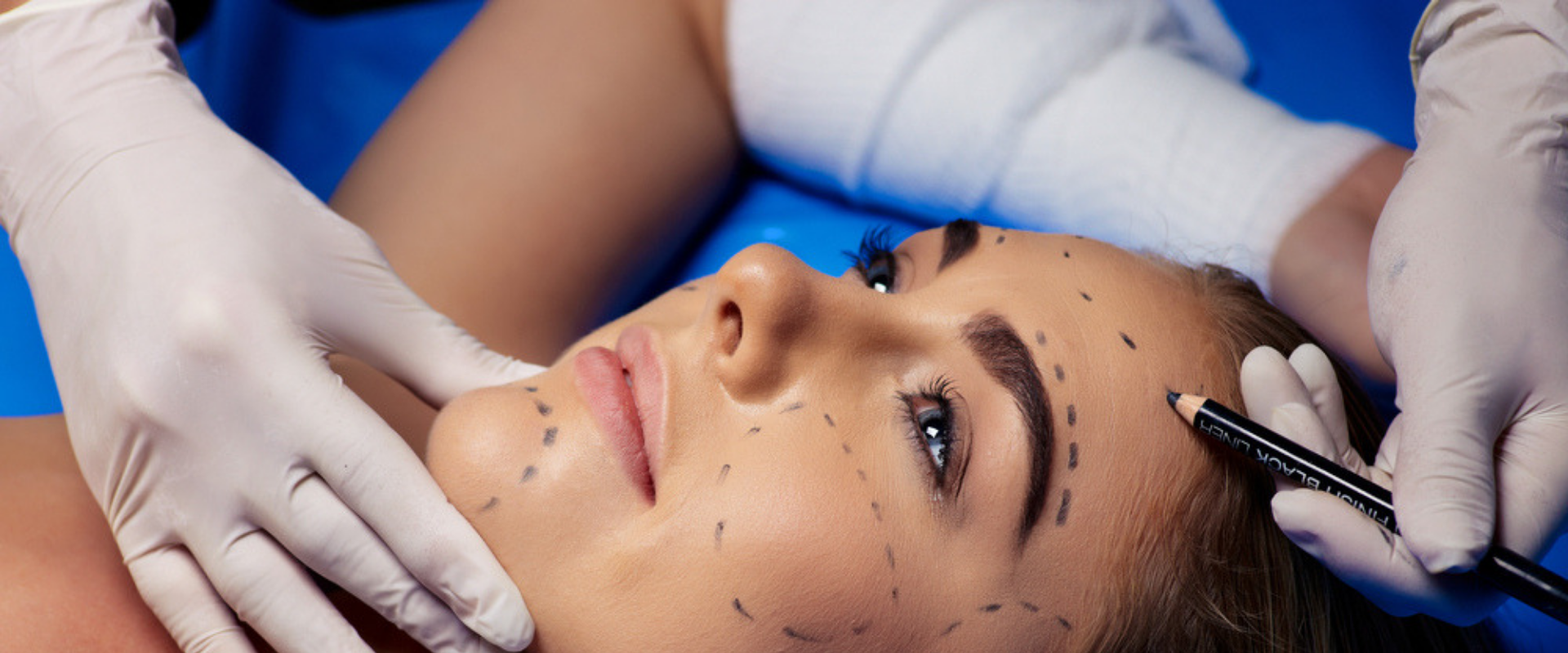
    Image source- Castleknock Cosmetic Clinic.

    The trend for patients to travel abroad to receive cosmetic treatments has been on the rise for the last 10 years. This has been coined as “cosmetic tourism”. 

    Cosmetic tourism is appealing as it is often cheaper to receive these treatments abroad, even when patients take the cost of flights into account. Like all surgery, this does not come without risk, andthe aggressive post-surgery complications of cosmetic tourism have been seen in the Irish health system. 

    But what is cosmetic tourism and what are the hidden dangers? 

    A rise in cosmetic tourism was seen in Ireland throughout the COVID-19 pandemic, as many Irish plastic surgery centres temporarily closed due to restrictions.  

    Last year, a study relating to the burden post-surgery compilations of cosmetic tourism placed on the Irish healthcare system during the pandemic was carried out by Dr Marlese Dempsey at St. James Hospital in Dublin. 

    She found that eight women within four months received treatment in the hospital as a result of complications after receiving cosmetic surgery overseas. All patients were female, aged 18-35. All surgery the women received were in Eastern Europe, mostly Turkey and Lithuania. Most complications were seen as a result of surgical site infection or implant infection. Dr Dempsey also found that the treatment for these women cost the Irish Health System €30,558 (or an average of €3819.75 each). 

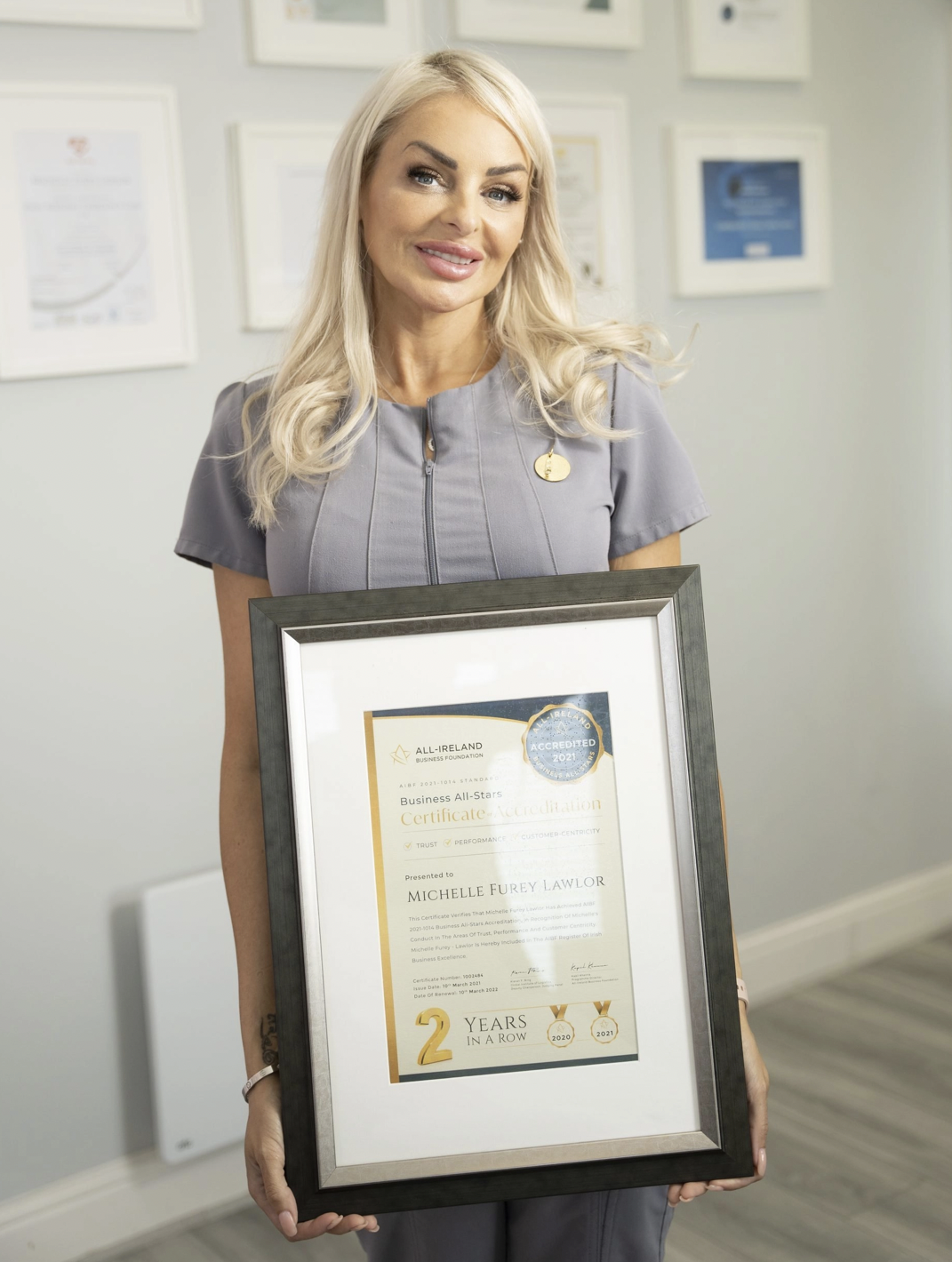
    This is not a new phenomenon, it has been on the rise for years. Michelle Furey-Lawlor, owner of JeJuve Clinic on South William Street in Dublin tells The City about this rise. 

    Michelle Furey-Lawlor is an advanced specialist aesthetician who holds over 50 non-surgical certifications and diplomas in cosmetic surgery. She describes cosmetic surgery as “where individuals travel outside Ireland to have either plastic, dental or bariatric surgeries done”. A rise in recent months has also been seen in surgeries abroad for hip, knees, and other joint replacements as well as women’s treatments and minor surgeries; not just cosmetic surgery. 

    Like many others, Lawlor had her own bad experience with receiving cosmetic surgery abroad. “I travelled to Turkey back in 2018 and had my body botched and destroyed by Turkish doctors when I wanted to have a tummy tuck done,” she says.  

    “I was admitted to St James hospital immediately upon my return to Ireland and received lifesaving surgery.”

    Lawlor was found to have stitches in her mouth, legs, face, and chin. Alongside this, she had 5 litres of fluid removed from the wound of her stomach and voice box damage which led to her being unable to speak for up to 2 weeks. 

    “The Turkish doctors refused to assist the Irish hospital with information about what they had done to me,” she adds. 

    “I had to wait a year for my body to be rebuilt by doctors and surgeons in Lithuania.

    “In Turkey, they treat surgery like a production line. The surgical practice often befriends you on social media. They get your phone number and proceed to organise all the details through WhatsApp. The patient then flies in to receive the procedures and is often released back to their home country after four or five days. 

    “You have no aftercare, you can be blocked on social media by the company if any issues arise, and you can be in medical danger.”

    In 2021, 40 people died from receiving botched surgery outside the EU. Lawlor advises that you ensure the surgeons are registered within the EU, as once they are outside of the EU they have no one to answer to in Ireland. 

    Over the last few years, breast implants and teeth have been the most popular as they follow social media trends. Lawlor offers this advice to anyone looking at travelling abroad to receive any form of surgery: “Do your research and do not go by the advice of influencers, they are paid to entice people in and often make a commission on patients they entice in.

    Michelle Furey-Lawlor, owner of JeJuve Clinic on South William Street. Photo: https://jejuveclinic.com/