Tag: Maira DeGois

  • The true beauty of graffiti in Dublin City

    This slideshow requires JavaScript.

    This graffiti mural of two men embracing, is the true depiction of the struggle same sex couples are going through to obtain the right to get married.

    The Blooms Hotel is located in Temple bar, Dublin. This hotel stands out against its dull grey surrounding buildings … The Blooms Hotel, in all its glory, bright beautiful and modern

    ‘Fresh’ a small clothing Boutique located in Temple bar, wanted to have a contemporary feel both in and out, so they decided to use graffiti to make it different. they store also offers the corner of the shop to new and upcoming graffiti artists to tag their name or show their artistic skills This building offers us a very futuristic theme, with the bright colours and excentric pattern

    this building isIMG_1029 located along the Quays, the detail in this portrait is immaculate, the time and dedication graffiti artists put into their portraits shows through in this picture

    IMG_1030This portrait shows two tapes with the word ‘Confidential’ wrote on the largest tape. This portrait was painted when tape recordings from the Anglo Irish Banks reveal for the first time when the top executives lied about the extent of losses the institution was making.

    IMG_1031 This portrait was also located on an abandoned wall in the city centre.

    IMG_1032 The ‘Blue Lady’ portrait was displayed on the Strand Street Great. her face shows sorrow yet she is still beautiful. she is art and the artist that created her an artist IMG_1034 This form of graffiti is very new, businesses are now employing graffiti artists to draw portraits on their shutters. portraits that represent them and their store.

    IMG_1036 This is another business that has employed the service of a graffiti artist to design the front of their shutter.

    IMG_1039This portrait is displayed above a store called Catch on Abbey Street Upper. The portrait includes an inspirational statement “Don’t waste your potential”

    Graffiti in Ireland is seen as art, many galleries, colleges, restaurants and cafes now use spray painted canvases as decorations, and to bring a modern vibe to their facility.

    Maira De Gois

  • Ukrainian Community in Ireland

    Ukrainian Community in Ireland

    The City met with a few Ukrainians living in Ireland to get their perspective on the Maidan Revolution and Ukraine’s political situation.

    To better understand the Ukrainian situation and the Maidan Revolution, click the sites below:

    http://www.irishtimes.com/news/world/ukraine-crisis/ukraine-joins-west-in-war-remembrance-on-ve-day-1.2205687

    http://www.kyivpost.com/hot/euromaidan/

    By Maira De Gois

  • The future for migrants

    The future for migrants

    “The free movement of persons is a fundamental right guaranteed to European Union (EU) citizens by the Treaties. It is realised through the area of freedom, security and justice without internal borders.” This EU legislation guarantees freedom for its citizens but for the same cannot be said for those outside the strict EU borders. Outside Fortress Europe, migrants endure extreme hardship, risking their lives to enter the EU.

    In April around 900 Libyan migrants were drowned off the coast of Sicily in a desperate attempt to cross the EU border and escape the adversity they left behind. TheCity spoke to the journalist and PHD student, Roisin Boyd to discuss how such a tragedy occurred under EU legislation.

    Please see below for definitions:

    Asylum Seeker – Oxford Dictionary Definition – A person who has left their home country as a political refugee and is seeking asylum in another: ‘only asylum seekers who are granted refugee status are allowed to work in the country’

    Refugee – Oxford Dictionary Definition  – A person who has been forced to leave their country in order to escape war, persecution or natural disaster:  ‘tens of thousands of refugees fled their homes’

    Migrant – Oxford Dictionary Definition – A person who moves from one place to another in order to find work or better living conditions.

    For more information on this topic please click below:

    http://www.theguardian.com/world/2015/apr/22/most-migrants-crossing-mediterranean-will-be-sent-back-eu-leaders-to-agree

    http://www.irishtimes.com/news/politics/president-berates-eu-over-record-on-refugee-crisis-1.2191198

    http://www.eurotopics.net/en/home/presseschau/archiv/magazin/politik-verteilerseite/festung_europa_2007_08/debatte_festung_europa_2007_08/

    http://www.nytimes.com/2015/04/21/world/europe/european-union-immigration-migrant-ship-capsizes.html?_r=0


    By Maira DeGois and Rachael Hussey

  • Graffiti, is it vandalism or art?

    Since the 1980’s people have seen graffiti as a form of vandalism. However the twenty first century sees graffiti as a form of modern day art. Graffiti is a form of expression, a way for our youth to show their artistic skills. This is a form of art , yet people see still see it as pollution or dirt, something that is just making our city look worse in the eyes of tourists, and neighbourhoods that were once highly respected areas look like the ‘ghettos’.

    People have associated graffiti with the old Hollywood movies that show gangsters driving around damp ‘ghetto’ towns such as Boston, where the roads are covered in graffiti from top to bottom. Since then people see graffiti covered towns as deprived areas.

    Graffiti has been around since the cavemen; they used different plant oils and mud to draw images on the walls of their caves. They would draw images of mammoths, bulls, fish, rivers and mountains. They also used wall art to describe what their life was like, or what animals were significant to them. They also used wall art or ‘graffiti’ to express their feelings, some caveman art shows images of love hearts and butterflies and sunshine, meaning the sunshine or butterflies had touched their emotional side that specific day so much that they tried to remake what they saw on their cave wall.

    The Egyptians were utilising graffiti to show exactly what happened within their Kingdom. The pharaohs would demand that slaves create images in the large columns and doors that depicted what happened within the kingdoms by carving out pictures in the stones. Some rebel people would sometimes carve small images in the rock. Some pictures included, fishes, women, and children.

    Ancient Rome was most known for its graffiti signs that would show men that they were near brothels. They would carve a handprint that would vaguely resemble a love heart on a wall that would symbolise love followed by a footprint and a number. The footprint symbolising that you were within walking distance and the number meaning you will have to pay. http://bl.ocks.org/anonymous/raw/5b5a175aed1861229bcc

    Graffiti can also be used to describe the political state at the time the art was produced. In ancient Roman times, they would use graffiti or wall art to describe what the political situation was like, they would draw images of horses and chariots, surrounded by gladiators to represent the importance of the coliseum and gladiator battles in Rome at this time. The top five phrases used in Ancient Roman graffiti included, 1) “Philiros Spado – Phileros is a eunuch” 2) “Oppi, emboliari, fur, furuncle- Oppius, you’re a clown, a thief, and a cheep crook.” 3) “Maximus in lecto. Faetor, peccavimus, hospes. Si dices: Quare? Nulla matella fuit- we have wet the bed. I admit, we were wrong, my host. If you ask ’why?’ There was no chamber pot. “Found inside an inn. 4) “Talia te fallant utinam medacia, copo: tu vedes bibes ipse merum- if only similar swindling would dupe you, innkeeper: you sell water, and drink the undiluted wine yourself.”5) Admiror, o paries, te non ceidisse, qui tot scriptorium taedia sustineas- I wonder, O wall, that you have not yet collapsed, so many writers’ clichés do you bear.” This one was the most famous and appears all over Rome in a lot of different versions of the quote. Below is a video that shows some of the graffiti and phrases that were left behind by people in Ancient Rome and Greece.

    https://youtu.be/zzIKrzdNEMs

    Graffiti in most countries is still seen as a crime. Street artists can be heavily fined if they are caught in the act. In Ireland you can get fines as high as one hundred and fifty euro.

    Tagging is the most known form of graffiti, tagging began when gangs began. It was used to show which gang patrolled which area. It was a warning sign to rival gangs, to warn them to stay out unless they wanted war.

    Graffiti can be any form of writing or image on a wall, graffiti has always been seen as vandalism because of the visual look of it. It is usually large, not thought out and consists of many bright and unattractive colours that wouldn’t generally add to the beauty of a building. It is also seen as a criminal act,  usually due to vandals spray-painting private properties or shop shutters, or in the case of New York its subways. The majority of these properties would be privately owned. If the vandal was caught they could be charged with defacement and vandalism, which is a punishable crime.

    Graffiti began with the cavemen using oils, herbs and mud to draw on the walls. The Egyptians and the Romans would chisel their carvings into the wall. In modern day society graffiti has gone back in time to use the same style as the cavemen, just like then they also paint their artwork on to the walls unlike the Egyptian’s and Romans who chiselled their carvings into the wall.

    Today however the two main items a graffiti artist needs are spray paint and a facemask. Marker pens have also become popular in recent times. Society sees graffiti as trash, something that should be taken down as soon as it’s put up. https://youtu.be/UMK6n4_E3Q4

    Oxford dictionary’s description of art is as follows “ The expression or application of human creative skill and imagination, typically in a visual form such as painting or sculpture, producing works to be appreciated primarily for their beauty or emotional power” the first example of what art is, was painting. If the dictionary can use painting as an example of what are is, them why cant people see ‘graffiti’ as an alternative form of painting, and see it as a beautiful and powerful expression.

    Graffiti in Ireland is illegal; people caught performing the act can suffer severe fines or face being brought to court. However many businesses in Dublin have changed their views of graffiti, and no longer view it as vandalism. Many businesses in the centre of the City have hired graffiti artists to design to front of their business, many now have the entire front portion of their shop covered in graffiti.

    Graffiti in Ireland is seen as art, many galleries, colleges, restaurants and cafes now use spray painted canvases as decorations, and to bring a modern vibe to their facility.

    Manager of ‘Fresh’ a clothes store in Temple bar co-painted the front of the clothes store with his college. He said, “we wanted our shop to look modern, we also wanted to support the graffiti scene and make people stop and look”. Business owners are now seeing graffiti in a new light. It is considered as art by the majority of Irish citizens, shop owners and gallery owners who now display spray painted canvases in their shops and shows. https://storify.com/0857873844/graffiti-as-a-form-of-modern-art

    Maira De Gois

  • Invisibility on the streets of Dublin

    Click on any image to view as a slideshow…

    By Maira De Gois

  • The dark side of Dublin

    The dark side of Dublin

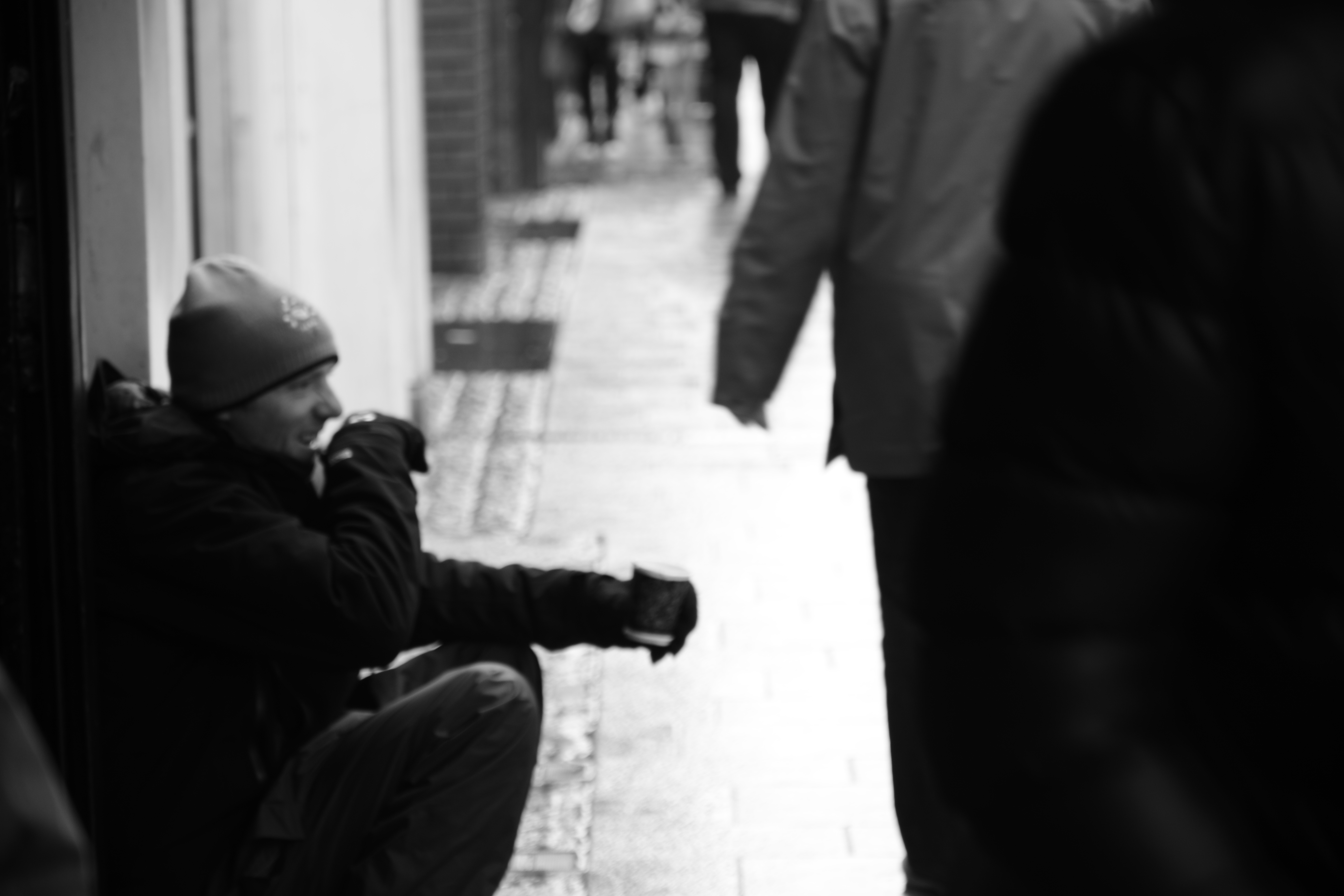
    Homeless at Henry Street in Dublin. Photo by: Maira De Gois
    Homeless at Henry Street in Dublin. Photo by: Maira De Gois

    Last year, Ireland was among world’s top countries on the Human Development Index (HDI). The nation was in eleventh place in the ranking. This means that Irish people had a good standard of education, health, wealth and equality. However, there is a disturbing reality: you can see many people on the streets begging for money. Many of them have this sad fate because of drug addiction, job loss or family problems. Homeless people find themselves in these appalling situations and their only alternative is to ask pedestrians for few pennies.

    James B. (27) has lived on the streets since September last year. James was wrapped up in a blanket to protect himself against the cold. He said: “I’ve no other option besides asking for money. If not, I can’t eat, I can’t survive. I can’t wait for government aid.”

    John C. (54) stated: “Things have gotten worse in this country. You can’t find a decent job these days like years ago. It’s better to beg for money than stealing money.”

    Without a roof over their heads, they have to strive against hunger and, in some cases, violence. In order to provide permanent housing options, supports, preventive services, the Dublin Simon Community (DSC) supports the homeless and helps them to rebuild their lives. This institution provided services to more than 3,000 people in Dublin, Kildare, Wicklow and Meath who are homeless or are at risk of homelessness. Aoife Mulhall works for Mental Health Department, she remarked: “At Simon, we listen to people who turn to us for help and do everything we can to support them to move out of homelessness into independent living”

    Due to their poor living condition, some homeless people can suffer from mental illness or addiction. In one survey carried out in 2013, DSC revealed that out of 163 homeless people who looked for its assistance, 63% suffered from depression, 46% from anxiety, 11% from schizophrenia and 11% from psychosis. To provide mental health assistance every year, Dublin Simon Community receives 52% of Statutory funding and 48% is received from fundraising.


    Chart given by Dublin Simon Community
    Chart given by Dublin Simon Community

    Dublin Simon Community’s goal is to create a more positive future for homeless. Aoife  pointed out: “We strive to empower people to access, secure and retain a home of their own by reducing the reliance on short-term emergency accommodation and providing permanent supported housing for people to sustain a home in their local community.” She added: “Moving people into supported housing produces life-enhancing and life-saving results and is more cost-effective in the long run.”

    By Maira De Gois

  • Staff calls for better contract and fair pay in Dunnes Stores

    Staff calls for better contract and fair pay in Dunnes Stores

    This slideshow requires JavaScript.

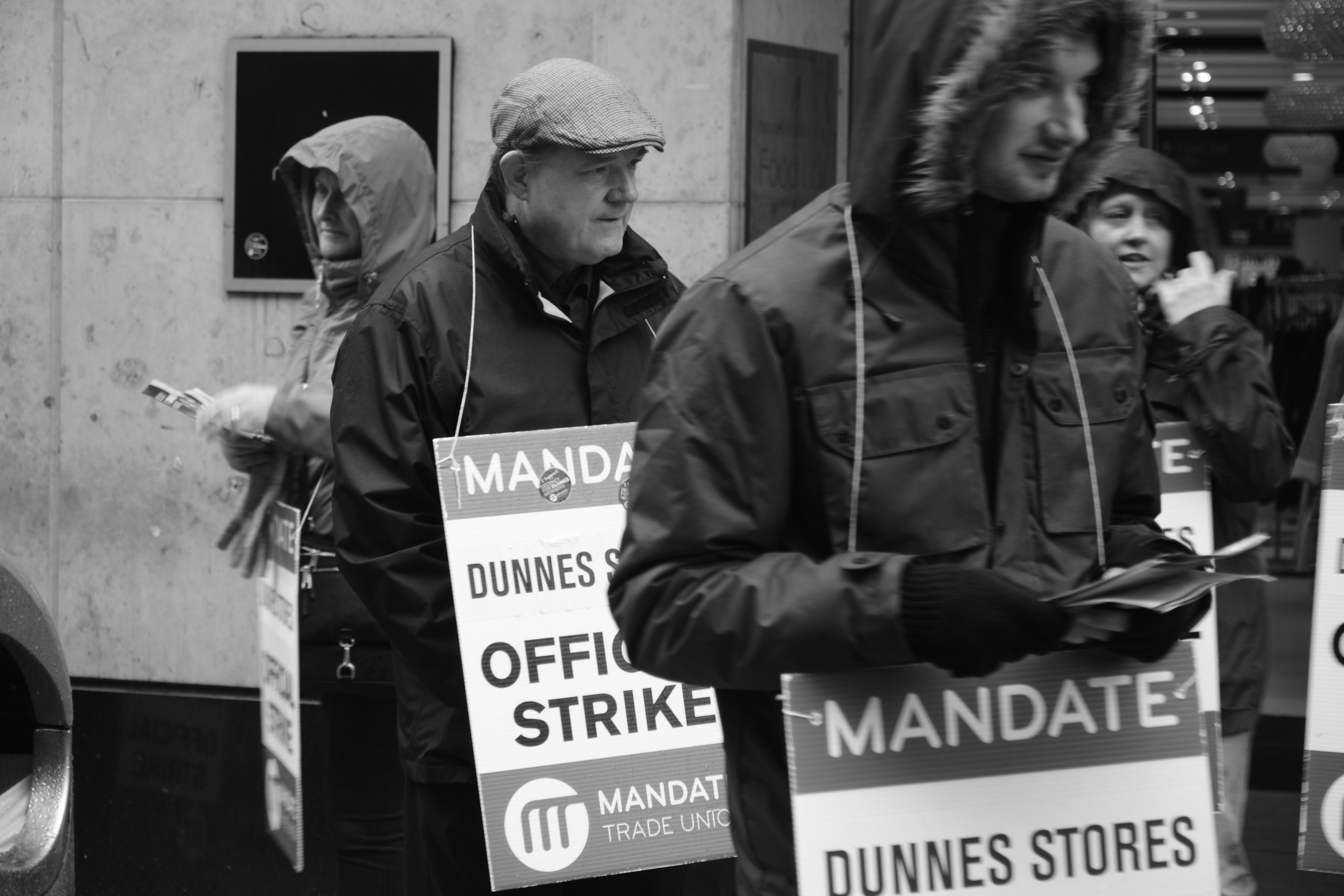
    This Thursday, employees from Dunnes Stores went to Henry Street to protest against working conditions, part of a strike against the chain of stores across the country.

    The workers are striking for increased job security, more working hours per week and increased pay.

    Michael Meegan, organiser for the Mandate trade union, which is seeking to represent Dunnes workers, said: “We claim for better contracts, but the company refuses to talk to us. Most Dunnes Stores workers are working under 15 hours per week. A number of members come to us very frustrated because they cannot get a bank loan or credit union loan.”

    While journalists and photographers were watching the protest, some employees were distributing “Decency for Dunnes Works” stickers urging people to support the workers’ claims and not cross the picket line.

    Sarah B, sales assistant, said: “Basically, we want security in our job because 15 hours is not enough. What they do is to give you a three month contract and then they let you go and hire someone else.We call for right to representation, secure jobs and fair pay.”

    By Maira De Gois

  • Violence against women in Brazil: a heinous crime

    Photo by Concha García Hernández
    Photo by Concha García Hernández

    Domestic violence, particularly against women and children, kills more than war.  A study carried out last year found that aggression against women costs the world economy more than $8 trillion per year.  This study urged the United Nations (UN) to pay more attention to domestic abuse, which receives less attention than armed conflicts such as Syria and Ukraine.

    In Brazil, violence against women is a common practice. For every 100,000 women, four of them are murdered every year. This places Brazil seventh in the world for this type of crime. Many Brazilians suffer more violence at home than in public spaces, and they do not feel safe living with their own husbands.

    Last week, The House of Representatives proposed a bill that increases the penalty for men who commit these crimes against women.  This bill had already been approved by the Senate and now it is waiting for Presidential approval. Its text considers domestic violence as contempt and discrimination against womanhood.  Once this proposal is approved, this crime will be included in the Penal Code and it will be considered as a heinous crime.  Mrs Maria do Rosário, Former Minister for Human Rights, said, “It [bill] will penalize women’s deaths due to violence.”

    Many Brazilians are waiting for their reality to change with this bill and hoping that the perpetrators will now be duly punished.

    By Maira De Gois

  • Mainstream films: unexpected virtue of ignorance?

    Mainstream films: unexpected virtue of ignorance?

    Photo by Coffee. (Pixabay)
    Photo by Coffee. (Pixabay)

    Once one of the most well-known critical theorists Theodor W. Adorno stated that culture was important to manipulate the audience. For him, films provide easy pleasure to people, giving them a false sense of reality. This theory has some valid points.  Undoubtedly, some films can broaden our minds, portraying a different viewpoint than we are used to seeing in everyday life. However, we are tired of being in front of the screen, spending hours watching special effects, cheesy comedies and predictable happy-endings, all of which is far from representing our reality.

    With this years Oscars, we were able to see a little bit of everything, including an off-beat, innovative film: Birdman or the unexpected virtue of ignorance, which won three golden statues. To understand a little more about it, I had a conversation with Donnchadh Tiernan, who is a filmmaker, stand-up comedian and journalist, so he knows what he is talking about. As we sat in the cafe of the Irish Film Institute sipping our americano coffees, TIernan said:

    “I do not think that the Oscars has changed over the years, Birdman won because it was appealing to the masses and they have Michael Keaton. No matter how unusual the film was, the director Alejandro González Iñárritu cast Michael Keaton so he always remains in the mainstream. It is a big idea to be ignored.”

    I was about to ask my next question when the outgoing actor added another comment: “What that mainstream appeals to is easy to understand. If you take it at a very basic level it is easy to understand what happens in the film. In Birdman, the events can be very funny but I think that it has something for everybody so that’s why people reacted so positively to it.” He liked the film for being “unusual” and “innovative in some ways”, but in his opinion many good films were completely left out.

    Donnchadh believes that foreign language films can open our mind but, unfortunately, big producers are not interested in innovative narratives, only predictable stories which they can make lot of profits from. He says: “If each country that doesn’t speak English got to put forward two, three or four films every single year on the Oscars, obviously they would have a high quality and most of the films nominated for best foreign language would be better than any films nominated in any category.”

    When Donnchadh left, an elderly man beside me had been listening to our conversation and said, “I am sick of seeing films from the Oscars, everything is so predictable.”

    I did not hesitate to agree with him. It appears, the mainstream films have not changed over the years, but many of viewers are expecting something challenging.

    By Maira De Gois

  • Le Cain and Rashidi’s universe: an invitation to experimental cinema


    Le Cain and Rashidi at the Temple Bar Gallery + Studios Photo: by Maira De Gois
    Le Cain and Rashidi at the Temple Bar Gallery + Studios
    Photo: by Maira De Gois

    Large room, white walls and not more than three rows of chairs. As people arrive, they find a place to sit. At that moment, all you can hear is quiet voices and someone in the back preparing the projector for some short films. As soon as the lights switch off, silence dominates the scene. The silence ends when the image appears projected on the wall. A set of images and sounds disturb the small audience. What you are able to see is images out of sequence, fragmented space and disjointed speech. Anyone who experiences this finds themselves in another universe.

    It is a different universe that we are not used to seeing on multiplex screens. The use of exploratory, non-script approaches in these films are well explored by experimental filmmakers Maximilian Le Cain and Rouzbeh Rashidi. At the door of Temple Bar Gallery + Studio, I met a man with a smooth voice and reserved personality who introduced himself as Max. The Irish filmmaker has made several short, medium and feature length experimental films over the past few years. Many of them were filmed in Co. Cork, his homeland. He also works as a film critic and runs Experimental Conversations, Cork Film Centre’s online experimental film magazine.

    Max defined his films as “non-script based” and “exploratory”. He says: “I am very interested in cinema itself, in the way that different elements, sound, visual and film history, all these things interact. In the same way, it is my own way of reacting to the world around me and those things play off against each other.”

    Image Turned Down is one of his works, filmed with Super-8 cameras and project on celluloid. The next film displayed was Notebook of a Decade, produced between 1997 and 2008. The sound project had a great effect on Image Turned Down  due to in part the indispensable collaboration of  his colleagues Dean Kavanagh and Rouzbeh. The Iranian avant-garde filmmaker has been making films since 2000 and his works are far from the expected standard of filmmaking. He has been producing films with Max for five years. He says: “Max and I have been working together for the past 5 years, but I feel like I have worked with him all my life. I try exploring things together rather than working individually. Our films are equally important. We have in common the way we treat cinema, images and sound.”

    The intense use of collage and broken narrative portrays a turbulent inner universe in which we can be totally disturbed due to the absence of linear narrative. When I asked Max what kind of reaction he expected from his audience, he said, “Anything except for indifference.” Definitely, we cannot be indifferent to this. When the films ended, it seemed that the audience was slowly getting back in contact with reality. I could describe it as an unusual experience, far from provoking an indifferent reaction in me.


    https://vimeo.com/101292017


    Cloud of Skin is Max’s new feature film which will be released this summer. He points out, “It is a love story on some level.”


    By Maira De Gois