
Tag: news

  • All-day protest outside the Dáil demands movement on the Occupied Territories Bill 

    All-day protest outside the Dáil demands movement on the Occupied Territories Bill 

    Protesters gathering on Kildare Street in favour of the OTB. Photo credit: Kelly Smyth. 

    Dozens of protesters from across the country gathered outside Leinster House aiming to progress the passing of the Occupied Territories Bill (OTB), with many calling for services be added to the bill. 

    By Kelly Smyth 

    Demonstrators have gathered outside of the Dáil urging the Government to push forward on passing the OTB, with many branches of the pro-Palestinian movement uniting for the protest. 

    Groups from as far as Kerry joined in the demonstrations, with artistic performances, poetry and speeches being notable features of the all-day demo. The groups were accompanied by politicians, notably Senator Frances Black, throughout the day. 

    The OTB is a proposed piece of legislation that would criminalise Irish businesses trading goods with illegal settlements as per international law. The Bill aims to prevent trade with Israeli settlements in occupied Palestine, such as the West Bank and East Jerusalem.  

    A protestor from Limerick spray-painting a sign at the scene. Photo Credit: Kelly Smyth. 

    Caroline O’Keane, a member of Irish Healthcare Workers for Palestine, spoke on behalf of the group regarding their presence outside of Leinster House. 

    “We’re here today because what they’re doing there is completely against all of our ethical beliefs and everything that we work for,” said O’Keane. 

    “It’s a mystery to all of us here why the government has not enacted this bill. So we’re here to try and push this bill forward in the Dáil, get it enacted, and stop buying goods from the illegally occupied territories in Palestine.” 

    Caroline O’Keane alongside Irish Healthcare Workers for Palestine members. Photo Credit: Kelly Smyth. 

    Another protester, Eileen Yates, expressed a much more personal reason for her presence at the protest; her experience of motherhood guided her support for the OTB. 

    “I am a mam. I see kids like my own being killed. I have a friend in Gaza with four kids who have never seen a life without genocide,” said Yates. 

     Eileen Yates holding her handmade sign. Photo Credit: Kelly Smyth. 

    As part of the protest, Sinn Féin TD Donnachadh Ó Laoghaire addressed the crowd, calling for services to be added to the bill. 

    “Why shouldn’t there be consequences for who trades not only in goods, but also in services? The Irish Government has fallen behind,” he said. 

    Donnachadh Ó Laoghaire TD addressing the protesters. Photo Credit: Kelly Smyth. 

    Following Ó Laoghraire’s address, Senator Frances Black attended the demonstration, meeting many of the organisers of the event. 

    Speaking to TheCity, Black expressed disappointment with the Government’s delay in passing the bill. 

    “We’ve seen absolutely no signs of this bill getting moved at all. The people have not forgotten those promises, that’s why they’re here today. The activists are saying, ‘We want this bill passed’, and they want it passed as soon as possible,” she said. 

    Senator Frances Black speaking with a protestor. Photo Credit: Kelly Smyth. 

    Black, who first introduced the bill in 2018, believes the passing of the bill will set an example to the international community on upholding international law. 

    “There are no consequences to what Israel is doing, breaking international law on a daily basis. And the reality is that if there are no consequences to what they’re doing to the Palestinian people, if we don’t stand up for what’s right and for international law, then none of us are safe. And I think that’s really important to say. So we need to now really get this bill passed as soon as possible.” 

    The last time the OTB was discussed in the Dáil was in November, with the Government claiming the legality of implementing the Bill being a reason it is being delayed.  

    “The trade in services is considerably more complex than goods and there remains considerable legal uncertainty as to whether the inclusion of services is permissible under EU law. We know for certain that the inclusion of goods is permissible under EU law. 

    We need legal clarity on the point on services. We must take into account practical issues with regard to implementation should services be included in the scope of the Bill,” said Minister for State for Europe and Defence Thomas Byrne. 

    It remains to be seen whether the Bill will be passed in coming months or if services will be included in any progress despite pressures from protesters. 

  • Celebrating Process Over Output: How Witty writer’s podcast inspires its audience  

    Celebrating Process Over Output: How Witty writer’s podcast inspires its audience  

    The Witty Writer’s anniversary workshop examines how music, art, and other visual forms fuel the craft of writing. 

    By Samuel Adeleke 

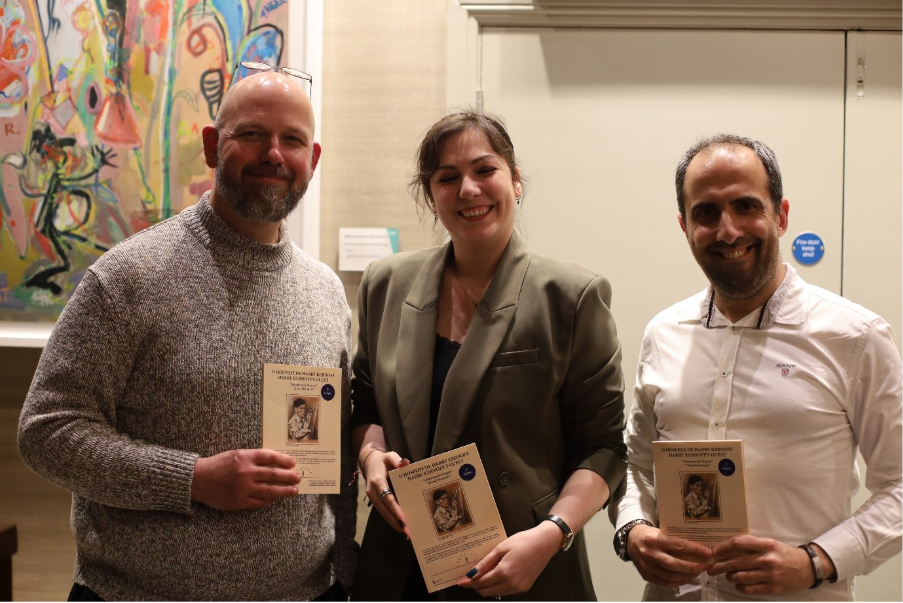
    The Witty Wicklow writers’ workshop, a workshop that aims to bring writers and readers together, celebrated its first anniversary on the 24th of March at the Arthaus Hotel in Dublin. 

    The idea started with Victor Vicente, a writer, who started hosting a podcast and invited his friend Jeroen Vandommele as a guest, where they review and discuss his written pieces. This has grown into a workshop.  

    Victor Vicente is setting up for the live broadcast on YouTube, ensuring that the session will be accessible for others and allowing a wider audience to engage with the workshop online. Photo credit:Samuel Adeleke 

    “Jeroen started to write in the main time, and I thought I could expand the scope of the podcast into a writing workshop,” Vicente said. 

    The YouTube livestream is fully set. Vicente introduced his co-host and outlined ­­the workshop agenda in detail, as they also took a moment to celebrate the milestone of their first anniversary.  Photo credit: Samuel Adeleke 

     The need for an editor for one of these written pieces led Jeroen to meet Maria Stavropoulou, who expressed an interest in joining the podcast at Vicente’s request. 

    “We have been doing it for a year, either online or live, and every month we have different topics,” Vandommele said. 

    Stavropoulou engaged the audience on the significance of the writing process, emphasising that the process holds much value as the final output itself. Photo credit:Samuel Adeleke 

    The Workshop has carved out ­­a distinctive niche in the writing community by offering something unique to its audience. “During the last online workshop, somebody noted that there have been a lot of podcasts about finished books, but not about the process of writing,” said Vandommele


    Vandommele speaks of how his mother inspired his writing through her art, which she passed on to him. Photo credit:Samuel Adeleke 

    “Until you get to finish writing a book, there are a lot of things that people writing books know that you can only discover yourself by going through the grind, failing, and trying different things,” Stavropoulou said. 


    Stavropoulou discussed her journey as a writer and shared the inspiration that has fueled her writing, using her personal experience. Photo credit: Samuel Adeleke 

    ­­­­­Although she has no written book, she said, “There are a lot of things to learn from being in the process of it instead of, oh, I wrote this book myself,” highlighting the value of the journey rather than just the end goal.” 

    Stavropoulou also highlighted the importance of attending a workshop like Witty Wicklow’s. “I was at the Ireland publishing show last week, where there was all the information and advice that it would have taken me years to find out in the writing process.  

    “Writing backwards was one of them, just have a point in your story and then ask yourself one question, how did we find ourselves here, what happened before that?” Stavropoulou said.

    This new but handy information helped Stavropoulou get out of her writer’s creative block after 3-4 months of being stuck. 

    The theme for the first anniversary is “How painting, music, poetry, and visuals influence writing.” This is aimed at exploring and encouraging attendees to find inspiration for their writing through various forms of art.  

    Additionally, as part of their regular practice during the workshop, each participant will share a reading and engage in discussions about what inspired or influenced their writing, making this the centerpiece of the evening. 

    Vicente is reading from his book, which is inspired by the literary work of Harry Kernoff. Photocredit: Samuel Adeleke 

     “This is a book that I published in October 2023, inspired by Irish British printer Harry Kernoff,It is a typical example of how virtual art and poetry work together, and I thought I could expand that idea with the team tonight,” said Vicente.  

    Vicente presents a painting from one of the pages of his book, sharing insights into how art possesses the ability to inspire writing.  Photocredit: Samuel Adeleke 

    “I think it is good to bring some art together because today we are all somehow united, and we can all benefit from learning from each other,” he added. 

    “All arts influence writing, and with the piece I am going to bring tonight, it’s about my Mum, who was an artist, musician, and a singer, all those things, are what she kind of gave to me. 

    “There is a cross-pollination between all arts, and you can learn from different artists and different music genres, and it can bring something to you and definitely inspire you to write,” said Vandommele.


    Vandommele’s reading for the night explored how his mother’s different forms of art were a great influence on his writing. Photocredit: Samuel Adeleke 

    “I don’t think there is one single art that is dry, and it is about the self. You get inspiration from your senses, and from other people,” Stavropoulou said. 

    “You can’t take the visuals out of the writing, and you can’t take the writing out of the visuals. It is when different things meet that you have the best result,” she added.


    Stavropoulou emphasised the importance of community belonging as a powerful source of inspiration to delve into and explore the craft of writing. Photocredit: Samuel Adeleke 

    Stavropoulou highlighted the podcast’s impact on her personality. “Since I started being a part of this podcast, I have become way more curious, I have met more people, and I have been more motivated,” she said. 

    “I would like this to be a job, I enjoy doing it, and I enjoy talking to people about it,” she added. 

    Not only has the podcast had a big impact on her personally, but has also been a source of inspiration to others. “We’re building a community where people are being motivated to write, and it is really beautiful, I won’t be here if I wasn’t motivated to,” Stavropoulou said. 

    “Normally, I like reading books, and I have read Victor’s book in Portuguese, and I like it so much. I joined this community because it is very interesting, and getting to know people’s perspectives on things is great,” said attendee Judani Bijah. 

    Participants at the workshop listened attentively as the speakers shared valuable insights. Photocredit: Samuel Adeleke 

     Vicente expressed excitement about the growth of the writers’ community, mentioning the numerous upcoming workshops, magazines, and writers’ conferences they have planned for the year and going forward. 

    “We didn’t expect to be here a year ago, and we are here a year later. We will keep the podcast going because it has a huge number of listeners. 

    “People have reacted really positively to the podcast, and people are coming out to say I have been writing secretly at home, and I want to do it more,” Vandommele said. 

  • Taoiseach faces backlash from Latin American activists over upcoming Shamrock Ceremony with Trump 

    Taoiseach faces backlash from Latin American activists over upcoming Shamrock Ceremony with Trump 

    Ireland-based Latinx collective Sobremesa en Disidencia claim the US should not receive ‘unconditional support’ from Ireland amid ICE violence and invasion of Venezuela.  

    By Kelly Smyth 

    Sobremesa en Disidencia organisers Catalina Hernández, Barbara Sena and Shoshi Chong. Photo Credits: Sobremesa en Disidencia. 

    As Taoiseach Micheál Martin is due his annual visit the White House this St. Patrick’s Day, activist group Sobremesa en Disidencia says the move is “very strange”.  

    The recently established feminist collective has emerged with strength in recent months, working closely with left-wing political group ROSA to represent Latinx diaspora in Irish politics. 

    Organiser Catalina Hernández said that she felt the decision to uphold the 70-year-old tradition following the recent foreign-policy actions of the Trump administration is not good diplomacy. 

    “We understand this is a long-standing tradition but visiting Trump is legitimising the policies that are harming marginalised communities,” she said. 

    Hernández, a Mexican expat who has lived in Ireland for over a decade, believes that Latin American diaspora living in Ireland have been forgotten in much of the debate surrounding the Taoiseach’s affirmation to visit the White House in coming weeks. 

    “I don’t think it is reflecting the opinion of people in Ireland. I live here, I am a part of the community,” said Hernández. 

    Fellow organiser Barbara Sena, who moved to Ireland from Brazil four years ago, also felt the gesture neglects to consider the large Latin American population living in Ireland, with over 27,000 Brazilian citizens alone living in Ireland according to the 2022 census.  

    “We accompany the politics by being here. We shouldn’t have the Taoiseach agree to meet with someone who kidnaps other presidents, invades countries and bombs them,” she said.  

    A poster advertising the protest on Dawson Street. Photo credits: Kelly Smyth.

    Sobremesa en Dicidencia is not the only group to object to the Taoiseach’s White House visit, with ROSA Socialist Feminists and TD Ruth Coppinger backing the ‘No Shamrocks for Trump’ protest that took place outside the Dáil on the 8th of March, with thousands attending.  

    In a social media statement, ROSA condemned the Irish government for upholding the tradition, stating: 

    “The latest Epstein files released detail grotesque allegations of child sexual abuse against Trump. The genocide in Palestine and the ICE terror of immigrants and people of colour should be enough for an Irish government to boycott but the Epstein file revelations are yet another reason,” said the statement.  

    While Sobremesa en Disidencia are optimistic about the protest, they do feel the public attention to the Epstein files has cast a shadow over the Trump administration’s policies towards Latin America. 

    “Every week there is something new with Trump and it is easy to forget other important issues. From our own perspective, Venezuela and ICE are forgotten because of the Epstein files,” said Sena.  

    Hernández argues was part of the reason for the Latin American diaspora turnout which attend the protest on International Women’s Day, saying, “We need to take a stand as immigrants in Ireland. We will not allow this ceremony to happen.” 

     The organisation understands that diplomacy is important between the two countries – with over 245,000 people in Ireland directly employed by US-owned companies.  

    “We need to be less economically dependent on the US. We can’t say anything. What else does Trump have to do to us to finally say something?” said Sena.  

    The organisation strongly believes in Ireland’s global voice, with the Government’s recognition of Palestine as a state in 2025 being a beacon of hope.  

    “The rest of the world recognises our actions. It makes me really proud to live here. We can always do more,” said Hernández, “One small action can send a message.” 

    “Neutrality doesn’t exist at all. Silence is complacency,” said Sena.  

    Despite the large turnout at the protest and US military activity in Iran, the Taoiseach has confirmed that he is still visiting the White House tomorrow.  

  • ‘We finally have an international-level card show’: a Dublin Card Show photo essay 

    ‘We finally have an international-level card show’: a Dublin Card Show photo essay 

    The Dublin Card Show has established itself as the largest card convention held in Ireland to date with a headcount of nearly 5,000 people. 

    By Alex Cloud 

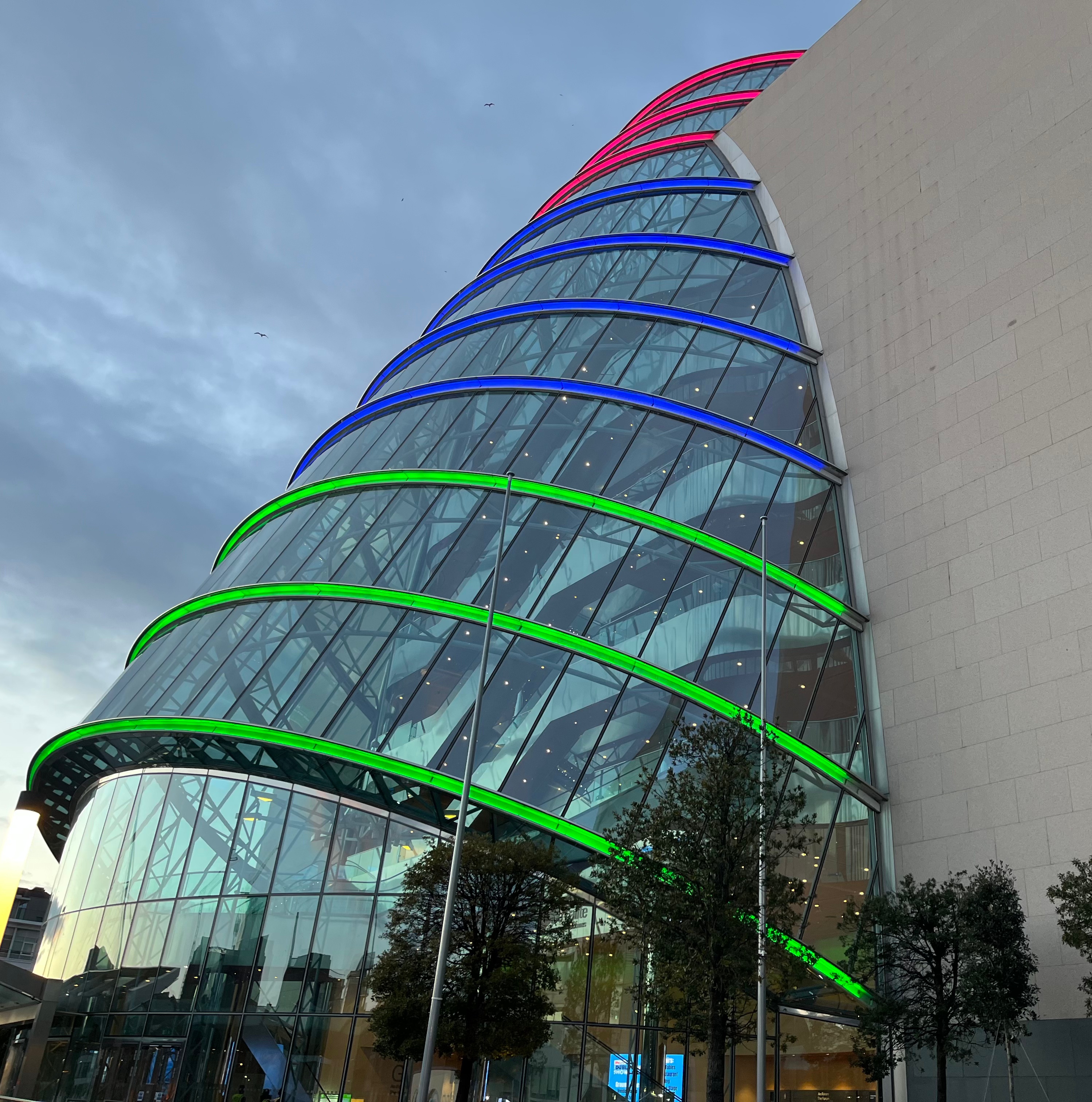
    The Dublin Card Show held on February 28th is quickly becoming a staple in the card collecting and hobbyist community. The show is amongst the first of its kind to host two floors in the Convention Centre Dublin to accommodate international sponsors and attendees.  

    “My background is in sports cards, and I would always have to tell vendors at international conventions that we didn’t believe the Irish scene was ready for a show on this large a scale. Through their support, we took a leap of faith,” said Jason Flynn, co-organiser of the Dublin Card Show. 

    The Convention Centre in Dublin has been used by the Dublin Card Show for the last two consecutive years in a row.

    Early entry attendees queued around the convention centre at 9:30am, eager to enter. 

    “Our first year, we had about 1,200 in attendance, and last year it was 2,800. This year, we had nearly 5,000. The tickets sold out, and we had to add afternoon tickets too,” said Flynn. 

    A representative of the convention centre confirmed these figures. 

    Topps, a leading trading card and collectible manufacturer, has sponsored the event and brought the genuine Premier League golden boot trophy to showcase. 

    “They have been fantastic to work with and continue to support us as we have grown,” said Flynn. 

    Richie Elliot and his daughter Lacey donating a binder of cards to Titan TCG, a vendor at the event, so he may give them to other children who come to the stall. 

    “We don’t have a lot of space for collecting in Dublin, so seeing the community come together and giving back really makes you feel good,” said Thomas Cahill, vendor and owner of Titan TCG. 

    “It’s wild to think that we finally have an international level card show after all this time.” 

    Items from various collecting hobbies such as sports, Pokémon, Yu-Gi-Oh, Magic: The Gathering and more were showcased and available for purchase. 

    “We just brought our international sports card community here and were met with this really enthusiastic and indigenous trading card community,” said Flynn. 

    “Once we pulled off the first year, and word got out. It’s just taken on a life of its own.” 

    Young Alex Larkin ecstatic to show off his Pokémon collection and share with the community of like-minded individuals.  

    “This is by far the biggest event in Ireland to date for the collectors and it’s something adult collectors can share with their kids for sure,” said Cahill. 

    Although there was a designated trading area, attendees chose to sit in the heart of the action on the first floor, where the majority of vendors were based. 

    On the second floor of the convention, another partner who flew in internationally for the event, GTS Distribution, sponsored a live selling stage. 

    “People watching on the live stream can be at the Dublin Card Show without being physically there on the day,” Flynn said. 

    There were mini-games, raffles, spin-the-wheels and more activities available on the second floor of the venue next to the live selling stage. 

    The creative scene has also been given a spotlight, as various vendors who produce their own products were in attendance.  

    “We plan on making it even bigger and better in 2027, hopefully in a way that hasn’t been done before,” said Flynn. 

  • Cycling for a living: The untold realities 

    Cycling for a living: The untold realities 

    Delivery cycling in Dublin, and the overlooked challenges of making a living on Dublin’s busiest road.

    By Samuel Adeleke 

    I Citizens’ concerns in Dublin are usually centered on motorists and pedestrians. Still, recent statistics from the Road Safety Authority (RSA) shows that the greatest share of serious injuries was among those cycling for social trips, at 76 per cent.    

    In addition, the statistics also revealed that 187 cyclists were seriously injured while commuting to and from work, and the majority of these injuries occurred in Dublin. 

    These figures raise questions about the challenges faced by cyclists in the city center, especially for delivery cyclists whose livelihoods depend on riding these roads daily and who are exposed to different road and weather conditions without the protection of a vehicle. 

    Damilola Foluwashayo, a delivery cyclist with the delivery service Just Eat, said, “Cycling can be tedious when it rains. The roads become slippery, and there is a higher chance of getting a flat tire.”  

    This not only makes riding more difficult but also increases the risk of injury to the rider. 

    “If you ride too fast and want to apply the brakes on a slippery road, you might fall because there is no friction to hold your tires,” Foluwashayo said. 

    One of such fall led to Foluwashayo sustaining a serious injury. “I was trying to avoid two kids playing on the road. In the process, I stepped on the wrong brake, my tires got spoiled, and I broke my leg,” he said.  

    The changeable weather presents other challenges for cyclists. “In the first seconds it’s raining, the next seconds it’s not raining, just always take your safety gears with you and have your lights, lights make you safer,” said Judge Eddy, who uses his bicycle for grocery shopping for his wife. 

    In addition to challenging weather conditions, cyclists also have to deal with careless drivers.  

    “We often encounter reckless drivers on the road,” said Thomas Nve, a delivery cyclist with Deliveroo.  

    “Taxi drivers, in particular, seem determined to meet the metrics and quickly get to their next client,” he added. 

    But other road users criticise delivery riders for breaking the rules.  

    “I have a big thing against delivery riders; they have no lights, they go through red lights all the time, and they tend to just cross over all the time,” said Judge Eddy.  

    Eric Andrel, a delivery cyclist with Deliveroo, attributed an accident he had to the deplorable state of the road.  

    “There have been a lot of potholes because of the rain, I had an accident because the pothole was covered by water,” he said. 

    “The roads are also narrow and don’t give room to swerve safely,” Andrel said. To constantly keep himself safe, Andrel said, “I wear high-visibility clothes and always have my helmet on.” 

    Andrel says The Government should do more to keep all road users safe “They should create a system where, after 6pm, only public transport is allowed in the city.” 

    Mariann Finan, who is an all-year-round cyclist, said conditions have improved for Dublin cyclists, but problems remain.  “In terms of infrastructure for cyclists, it is better than it was; at least we have a lot of cycle lanes now, but they are not really finished. They stop and start, and you don’t really know where the next lane is.”  

    Photo credit: Samuel Adeleke

    Finan also noted a pandemic of wearing headphones among cyclists.  

    “I don’t even know how anybody can wear headphones while cycling, because there is so much going on around you that you need to be alert to,” she said. 

    Finan warns of dangerous overtaking by cyclists. She said: “A lot of the Brazilians and Chinese delivery riders have electric bicycles and tend to overspeed, but they should always use their bells to alert other road users.” 

    Cliff Nolan, the owner of Bike Stops on Capel Street, Dublin, which sells and repairs bicycles, said, “I service a lot of delivery riders’ bicycles. The most recurrent issue with them is a puncture in the tyres, and their brakes always need a lot of attention.” 

    “Delivery riders should always buy quality parts instead of going for cheap parts, which puts them at risk,” Nolan advised. 

    Photo credit: Samuel Adeleke

    One Chinese worker with Deliveroo, who did not wish to be named, said, “There are many dangers on the road. There are robberies by teenagers, and our bicycles are easily stolen.” 

    He also highlighted other issues with the healthcare system that discourages drivers from seeking treatment for injuries.  

    “I have fallen so many times on my bicycle and have had to treat my own wounds,” he claimed.   

    “We generally don’t go to the hospital because going to the hospital will be troublesome and takes a lot of time. We figured we could handle it ourselves, and it would be much faster.” 

    “Cyclists should ensure that both they and their bikes are visible to other road users by investing in good sets of front and rear lights, and by wearing clothing that helps them be seen,” said John Paul Guiheen, the Executive Officer of Communications at the RSA, in an email correspondence.  

    “They should also consider wearing high-visibility materials and obeying the rules of the road,” he added. 

    The RSA stated that there was a deliberate effort last year to inform major food delivery companies about changes to the law concerning electric bicycles as introduced in the Road Traffic and Roads Acts 2023.  

    “Riders must obey the same rules of the road as drivers; the roads are a shared space. Hence, drivers must follow all speed limits, traffic signals, and parking regulations,” said Guiheen.  

    On other issues bothering on weather conditions, cycle lanes, and bicycle theft, the RSA said, “That should be directed to the NTA, local authorities who maintain roads, and the Gardai respectively.” 

     But “during severe weather events, we issue advice to all road users, including cyclists,” he said.

  • School lunch standards under scrutiny amid parent and teacher concerns 

    School lunch standards under scrutiny amid parent and teacher concerns 

    Issues have been raised about the lack of standardisation across catering companies under the Government’s School Meals Scheme. 

    By Rebecca Reilly   

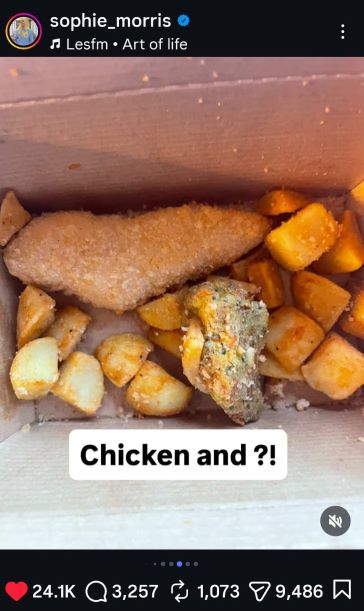
    Nutrition coach Sophie Morris has posted images on social media reflecting parents’ concerns about the quality of meals being served in some schools.

    In the post Sophie has said what she is “advocating for is improving the standard of the food that’s currently being served to our children.” 

    She also references the photos below saying that “this is what’s happening on the ground.” We reached out to Sophie, but she was unavailable for comment at this time.    

    A pilot for hot meals was introduced by the Department of Social Protection in 2019 to a select number of schools.  

    The scheme has been expanding since April 2025, with 3,149 schools awarded funding under the programme for the 2025/26 academic year. 

    There are approximately 100 schools with applications for funding pending, awaiting further information. The Department continues to receive applications as schools finalise their procurement process. 

    The budget for the scheme in 2026 is €286 million, with the aim of catering to all primary schools across Ireland on a phased basis. 

    The meals are provided by a number of suppliers such as The Lunch Bag, Freshtoday and Glanmore Foods.  

    TheCity.ie spoke to a number of parents about the scheme. They spoke to us on condition of anonymity. 

    “I personally believe it is a disappointing service. My children don’t like the meals, and I don’t believe they are nutritious. We have since opted out and send our kids to school with a packed lunch daily,” said one parent.   

    Another parent alleged that their 10-year-old child received undercooked chicken. “When I raised the issue at school, I was told to contact the supplier directly.”  

    According to the parent, the supplier told them that they could opt out of the meal again, apologised that their child did not enjoy it, and they hoped the following day’s meal would be better. 

    Speaking to TheCity.ie, one primary school teacher in Louth said: “Although the premise in theory is good, over a third of parents have stopped ordering lunch in my class. A handful of kids are now eating them.”  

    “I can only speak about what I see in my class, but meals are a far cry from the samples we received last year for staff to try and are not consistent week to week – the kids have commented on that.” 

    The teacher said they also questioned how nutritious the meals are.  

    “The ingredient list is extremely long. Some labels don’t show the percentage of meat content; some do. Some meals contain added preservatives, stabilisers, sulphites, raising agents, and more. Is there a way to reduce those extra ingredients that you wouldn’t typically put into a home-cooked meal?” 

    Waste has also become a growing concern in this teacher’s school. 

    “Parents don’t get to see how much or little their child is eating, as the food is placed into the insulated box it arrived in for the company to collect the next day to dispose of. It is a lot of waste – a waste of food and a waste of taxpayers’ money. Money that could surely be spent better.” 

    A spokesperson for the Minister for Social Protection Dara Calleary said: “The nutritional standards for school meals have been in place since its inception and were developed by a technical nutrition subgroup.”  

    This group included dieticians from the Irish Nutrition and Dietetic Institute of Ireland, the HSE, Safefood, and the Food Safety Authority of Ireland. 

    “Nutritional standards are a priority,” they said.  

    “Last September, the Department seconded a CORU-registered dietitian from the Department of Health to strengthen oversight of the School Meals Programme and conduct a review of the nutritional guidelines and the compliance of the main suppliers with the current guidelines.”  

    Since September 2025, foods high in saturated fat, sugar and salt have been removed from school menus. 

    Although calls for higher quality food echo many parents’ sentiments, some say there are many positive results from the scheme.  

    “My son is really happy with the food,” Pamela Lee, a mother-of -two from Galway told TheCity.ie.  

    “I do think there could be more variety – but I do think I could change it up for my son also in terms of my ordering.”   

    “My son eats everything and has never complained to me about the meals yet,” said Paula Madden from Galway, whose son avails of the programme.  

    Sinéad Crowe, a nutritional therapist and intuitive eating counsellor, praised the scheme for encouraging independence among children, but said regulation needs to be reviewed. 

    “My kids go on to the app every week and see what new specials are out and they like going through what to order. I think that encourages some autonomy and agency and promote decision making skills around what they are going to eat themselves,” she said.  

    “The providers are all different, so it isn’t standardised. Companies are going to vary in terms of what they are offering. I think that would need to be addressed and looked at. The companies need to be more direct with what ingredients are in the food – we need complete transparency.” 

    Crowe, who co-founded the Intuitive Eating Hub, has also raised concerns about how we frame this conversation. 

    “We need to be careful about the exposure that our children might have to this conversation… it could negatively affect a child’s relationship with food. We can talk about balanced and optimised nutrition without coming from a place of fear or scaremongering.”   

    Fine Gael is currently running a public survey on the scheme to inform the next phase of improvements and rollouts.  

  • Fears for jobs in Tallaght as retail sales decline 

    Fears for jobs in Tallaght as retail sales decline 

    Cuts to staff hours and lower sales reflect the reality of the retail market in the Square Tallaght, Dublin, post-festive season. 

    By Samuel Adeleke 

    image emphasises the quietness of shops
    As the shops become quieter, the staff find ways to stay busy. Photo credit: Samuel Adeleke

    Business owners in the retail sector in Dublin are experiencing a decline in sales after the holiday season during the January and February slump, when trading activity slows to its lowest. 

    While statistics often focus on the economic impact of this period on business owners and the economy at large, TheCity spoke to retail staff, who are often the first to feel the effects. 

    Tasha Villisca, a full-time staff member at the Vero Moda clothing brand in the Square, Tallaght, who loves working in retail, described the period as being extremely quiet and slow.  

    “When I am here now, I feel like my day gets dragged, unlike during the peak period, where there is always something to do and people to help,” she said. 

    This situation has hit Tasha’s finances, despite putting in the work. “I got my pay-slip last week, and it is literally not making up for the work I put in here,” she said.   

    “I blame it on not getting enough work hours and people shopping online,” she said.  

    Keris Fonory works as a retail staff member with Naming it (a children’s clothing brand).  “Due to the slump in business, the management had to cut down people’s hours; you can only work contracted hours,” said Fonory.  

    “I work with other girls who are in college, and they are struggling financially because they have fewer hours,” she said.  

    One worker from India, who did not wish to be named, said they were let go from their job in Pandora due to the slowdown in business. He has since managed to pick up with A&B Gadgets, “It is not only a bad time for retail businesses but also a bad time for part-time workers,” he said. “This affects me personally, as the hours I can work are reduced,” he said. From his experience, the retail market has become a “click and collect” model, where people just come in to pick up orders, thereby making the retail staff’s role obsolete. 

    Libby Deleon, a manager at Jack & Jones said, “In the next 5 years, I doubt if there will be any more jobs in retail shops because businesses have fallen into a full decline and people are buying stuff more online.” 

    Deleon also mentioned that with the slowdown in the retail business, a lot of small shops in this period lay off their staff, but at Jack and Jones, she said, “We try to make a system where we still try to make things work. Some are great, some are not.” 

    As a way to drive sales during the slowdown, some businesses resort to running sales. “We have reduction sales going on because we are looking to clear the whole winter stocks and build up for the summer stocks,” Steven Abergele, manager of Best at the Square Tallaght, said. 

    Speaking on the impact of this season on other staff, Steven said, “We only employ part-time staff, so it doesn’t affect us really much; but it does affect bigger brands.” 

    January and February mark the transition into the spring and summer season, and this can impact sales in outdoor gear. Gerald, manager at Trespass, a performance outdoor clothing brand, said that they are a weather-dependent shop. 

    Gerald mentioned that in the post-festive season, there is a slowdown in businesses because people are more careful with their money, and it affects everything, including staffing. “It’s like Irish people forget it’s going to rain and it’s going to be cold, so they come in and buy stuff,” he said. 

    There is hope that businesses will pick up in the summer period leading to the Easter season, and there will be more opportunities for staff to work more hours and earn more in the retail sector. 

  • Remembering Hugh Wallace and his lasting effect on Irish creativity  

    Remembering Hugh Wallace and his lasting effect on Irish creativity  

    By Millie Reid 

    When news broke of the death of architect, presenter, and TU Dublin alumnus Hugh Wallace, tributes poured in from across Ireland’s architectural and creative communities. Known to many as a judge on RTE’s Home of the Year and host of The Great House Revival, Wallace’s impact stretched far beyond television. For current architecture students at TU Dublin, where Wallace once studied many are inspired by his work everyday.  

    Photo by Millie Reid. Bolton Street College, where Hugh Wallace was educated.

    Born in Dublin and educated at what is now TU Dublin’s School of Architecture, Wallace often spoke fondly of his formative years at Bolton Street. Those who followed his work know the hallmarks: warmth, curiosity, compassion, and a belief that design could transform not just buildings, but lives. His death at 68 leaves a void in Irish architecture, but the values he championed continue to resonate strongly with emerging designers. 

    “What struck me about Hugh was how human his architecture felt,” said one TU Dublin architecture student. “He showed Ireland that design wasn’t just for the elite, it was for everyone.” 

    For many students, Wallace’s visibility on television was their first window into what an architect could be. His feedback was always fair, and his enthusiasm was infectious. On Home of the Year, Wallace’s eye for detail and his famous love of bold colour became a national talking point, but what is remembered most was his kindness. 

    “He showed us that you can be both professional and warm,” said another student. “The way he listened to people’s stories influenced how I approach my own projects.” 

    Wallace’s career began long before his television fame. As a founding partner of Douglas Wallace Architects, his style became a niche in design, shaping spaces across Ireland and abroad. Yet he remained grounded. Even as he became one of the country’s most recognisable architectural voices, he championed accessibility in design and encouraged young architects to think beyond traditional boundaries. 

    In a way Wallace mentored young designers informally through his television work, where he broke down design decisions in a way that made architecture accessible and exciting. Although he graduated decades before the Technological University formally came into being, he often referred to Bolton Street as the place that taught him. 

    His influence has also reached students who are currently shaping their final-year portfolios, many of whom grew up watching him on RTÉ. 

    “I didn’t know any architects personally when I was a teenager,” said a third-year student. “Hugh Wallace was the first architect I ever saw talk about design with joy. That mattered.” 

    In a 2025 interview with IMAGE.ie, Wallace reflected on the role of architects in shaping the built environment, noting that the spaces we design today become legacies for the future. Through his own work, from thoughtfully restored homes to innovative public spaces, Wallace left a lasting mark on Ireland’s towns and cities, creations that will be experienced and remembered for generations. 

    At his funeral, colleagues and friends spoke of him being “honest, passionate and deeply human”. Online, viewers shared memories of how his programmes inspired them to restore old cottages, take risks with colour, or simply care more about the spaces around them. But in TU Dublin’s studios, where the next generation of architects are sketching, drafting, and arguing over floor plans, his impact is lasting. 

    Wallace never taught at the university, but to many, he was a teacher. 

    Hugh Wallace may be gone, but the spirit with which he approached design Joyful, and human continues to inspire the students walking the same corridors he once did.  

  • Christmas Spending – The Value of Christmas

    Christmas Spending – The Value of Christmas

    The Central Statistics Office on November 13th released the consumer price index for this year, which shows a 2.9% increase in the inflation rate over the last 12 months, which is the fastest and highest rise of inflation since March of 2024.

    The increase will affect the prices of food items such as dairy and pastries. The price of poultry and meat increased by 6.6% which will affect the price of viands such as Chicken, beef, and turkey.

    Aside from household staples, an increase of 7.7% in health insurance, 3.7% in electricity, and 3.6% in rent was reported in the current figures.

    Going around Dublin city centre, TheCity asked a few people how much they will be spending this Christmas.

    Economist, Dr. Clare O’Mahony, will also be commenting on the hiking prices this holiday season.

  • New government figures raise concerns for future home buyers

    New government figures raise concerns for future home buyers

    An assessment released this week by the Department of Finance shows increasing concerns for Ireland’s future economy and society, with an emphasis on the housing market.

    Minister for Finance, Paschal Donohue, launched “Future Forty: A Fiscal and Economic Outlook to 2065”, which models over 2,000 scenarios for Ireland’s future over the next forty years. The models are based on national and international trends.

    ‘Future Forty’ includes a fiscal analysis of how the age demographic will impact Ireland over the next four decades. The assessment shows that the old age dependency ratio has increased, and fertility rates have declined over the past 38 years. The assessment states, “A rising old-age dependency ratio increases pressure on public finances, by raising costs for age-related expenditure. Over the long term, a smaller workforce relative to the total population will pose fiscal challenges and potentially constrain economic growth.”

    Demographic trends show that migration will have both positive and negative impacts on the issue. Inward migration can help to alleviate the challenges of our ageing population by filling skill gaps and reducing labour shortages. However, an influx of migrants will pose challenges to the government through the increased demand for infrastructure and public services. ‘Future Forty’ states that this may cause delays in family formation which, in turn, lower birth rates.

    Source: assets.gov.ie

    The above graph shows population projections from 1996-2022 and includes estimates up to 2057. 

    The assessment includes a report on housing, which states that it is expected that demand for housing will peak in the early 2030s and will not ease until the 2040s.

    Rachel Dunne, a 32-year-old special needs assistant told The City, “I’d be more inclined to emigrate than to wait another 20 years until I can purchase my own home.” Ms. Dunne and her partner have been renting in Dublin for the past 6 years. “We’re lucky to be in the position to afford rent in Dublin, but I just want to paint my own walls without having to ask someone,” she said.

    Depending on immigration and fertility rates, it is projected that the population will reach between 5.9M and 7.9M by 2065. Notably, the report states that the current government plans to build 300,000 more houses by 2030.

    The main scenario in the ‘Future Forty’ document is referred to as the ‘Central Scenario’. The ‘Central Scenario’ is a model that anticipates a change in household size preference due to changes in demographics over the coming years. Suppliers are predicted to shift from providing family-friendly housing units to units more suitable for single occupants. 

    Source: assets.gov.ie

    The above graph is a representation of projected future housing expenditure and its relative GNI. The ‘Central Scenario’ takes social housing, HAP, and RAS into consideration.

    Housing expectations in this scenario are entirely dependent on the 2030 supply target being met.