Tag: news

  • From Pill to shot: Game-changing HIV medication available in the EU 

    From Pill to shot: Game-changing HIV medication available in the EU 

    A new HIV drug that can prevent HIV has been rolled out in Ireland. 

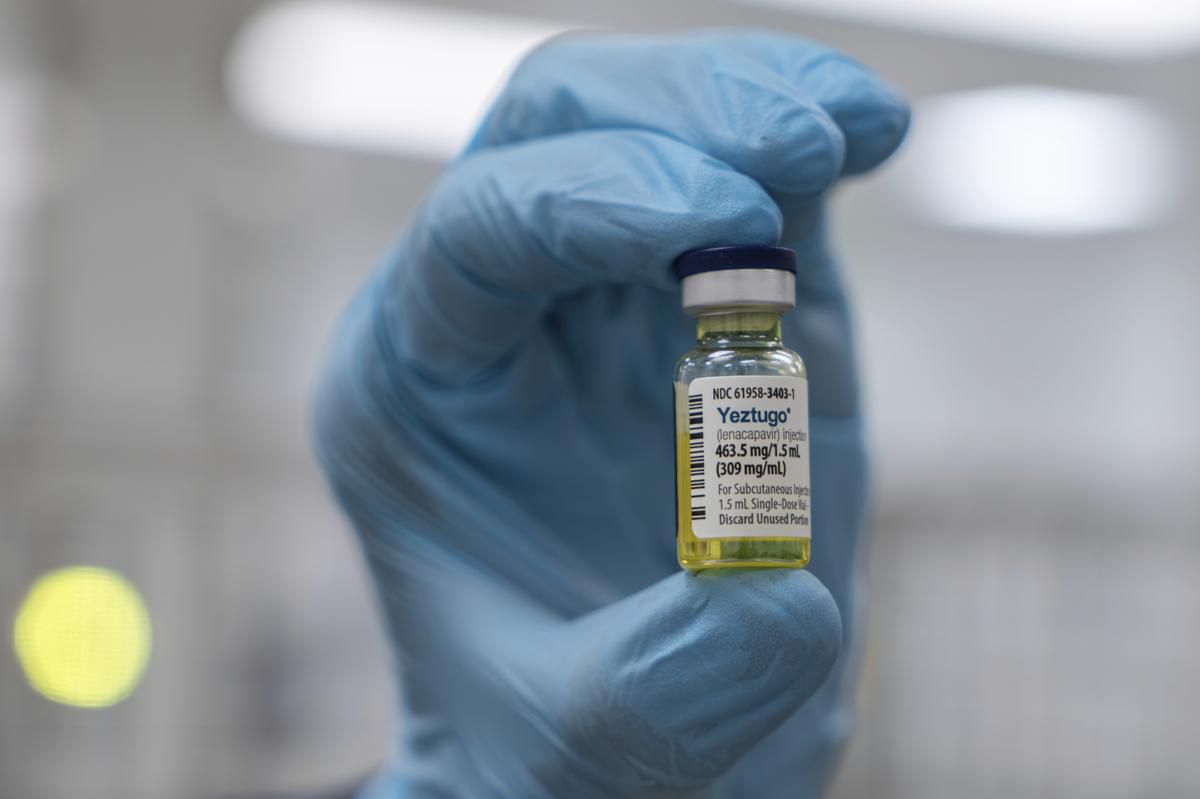
    The newly-approved HIV PrEP (pre-exposure prophylaxis) medication, called Yeytuo, is now available across the EU and will soon be available worldwide.  

    Lenacapavir was developed by GILEAD sciences back in 2010 and was approved by the US Federal Drug Administration (FDA) in August 2022. Three years later, in August 2025, Yeytuo, the EU version of Lenacapavir, was approved for PrEP medication.  

    The European Commission approved the new PrEP medication on Aug 26, 2025.  

    Yeytuo is in a class of HIV (Human Immunodeficiency Virus) medication called capsid inhibitors, which decreases the HIV in the blood.  

    Professor Jack Lambert, a consultant in infectious diseases at the Mater Hospital in Dublin said the medication represents a big leap forward in HIV treatment.  “I think the practical thing is that it’s one of the first treatments that you can give twice a year and then on top of that, it’s injectable,” said Professor Lambert. “It’s an incredible benefit on the current PrEP regimes.” 

    It is also accompanied by two tablets the day after the injection, and the patient should practice safe sex. 

    Yeytuo has also had  99.9% success rates in clinical trials in preventing HIV in patients, and it provides patients with easy uptake because it only needs to be administered twice a year, compared to taking PrEP pills daily.  

    The drug itself can be used “by people who have HIV or those who are trying to prevent it,” Professor Lambert added.  

    One underlying problem of the new medication is its very high cost, priced at $28,000 per patient.  

    Speaking to TheCity.ie, Professor Lambert said that “…it has to be cost effective, the current cost the company wants to charge for PrEP for this particular agent is beyond, and the current PrEP drugs like Truvada cost €20 to €30 a month, so huge difference in cost.” 

    At the beginning of October Gilead Sciences announced that it would make generic versions of the medication to be made available to low-income countries. 

    They are partnering with different laboratories worldwide by sharing their medical patent of Lenacapavir to lessen the cost of the medication from $28,000 to $40 a year.  

    GILEAD sciences, together with UN AIDS, Dr. Reddy Laboratories and several medical groups worldwide wide aim to make the medication more accessible by the end of 2026.  

    Countries like India have begun marketing Lenacapavir and it is to be supplied by Dr. Reddy’s Laboratories.  

    Dr. Reddy’s Laboratories aims to make the drug more accessible to 120 low-income countries.  

    Meanwhile, here in Ireland, there is still no information about the cost of the new medication, and it remains the US price, which is equivalent to more than €24,000. 

    Aside from the cost, there are also side effects to be considered when using Yeytuo, such as “major or minor reactions at the injection site,” Professor Lambert said.  

    Side-effects/Reactions could include swelling, redness, bruising, warmth, pain or discomfort, itching, hardened skin, small mass or lump/bump. 

    “I think there are very few downsides to the injectable HIV medications, both for treatment and for PrEP,” Professor Lambert added.  

    Though the medication itself is considered a game-changer in the field of HIV, its success is yet to be determined globally. 

    “What you’re going to have to do is look at the new cases over the next number of years. For example, in Ireland, there are 400 new HIV cases a year. If they implement a new PrEP program, those numbers would drop to 200. It’s just indirect evidence that the medication has been successful,” Professor Jack Lambert said 
  • TU Dublin race equity group responds to Eoin Hayes blackface scandal

    TU Dublin race equity group responds to Eoin Hayes blackface scandal

    By Sean Kavanagh

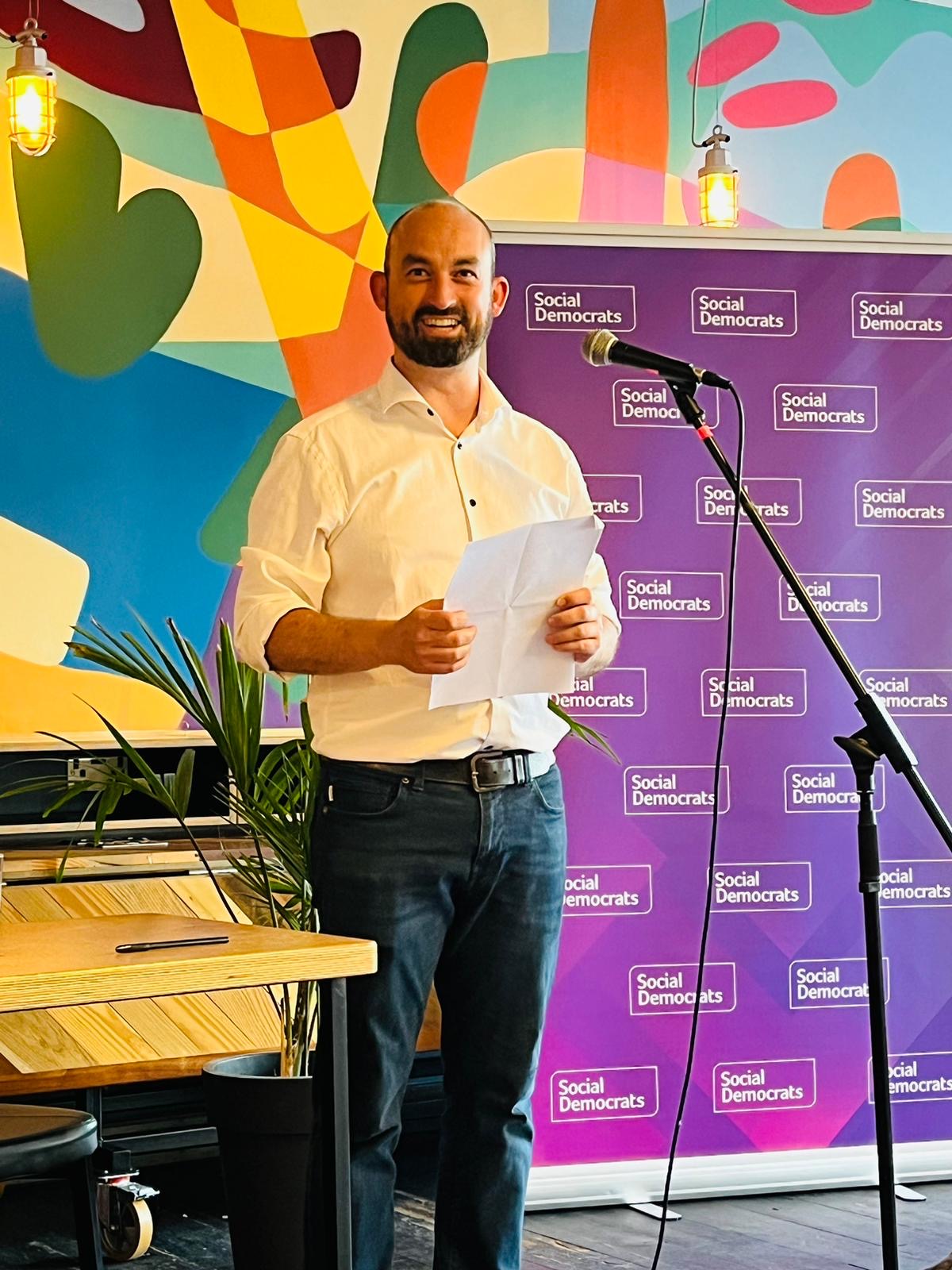
    Social Democrats TD Eoin Hayes will remain a party member following the revelation of his use of blackface in 2009, party leader Holly Cairns announced on Sept. 16.

    The controversy became public on the morning of Sept. 15 when the Dublin Bay South TD released a statement on X apologising for his actions after a news outlet contacted him the evening prior to confirm that they would be releasing pictures of the event.  

    “At a Halloween party 16 years ago, while President of the Student’ Union in University College Cork, I dressed up as someone I greatly admired at the time, US President Barack Obama — whose re-election campaign I went on to work for in 2012. As part of this costume, I wore brown makeup on my face and hands,” Hayes said in his statement.  

    Dressing in blackface is considered by many to be deeply offensive as it has historically been used to promote racist stereotypes.

    “Blackface is part of a very, very long tradition of white performance which by and large ridicules blackness From around the 1830’s, across the 19th and well into the 20th century, white people have dressed up as black people to ridicule them, but also to mobilise different kinds of stereotypes,” Anna-Maria Mullaly, a member of both TU Dublin’s race equity group and the Social Democrats, said.  

    “For instance, black people would be displayed as stupid, as sexually aggressive [and] as lazy in these types of performances.”

    Mullaly added.

    Hayes’ stated that he “didn’t have an understanding of how hurtful [blackface] was at the time” and reiterated that he takes “full responsibility” for his actions and apologises to “any and all hurt” caused by what he did.  

    Mullaly, however, is sceptical of Hayes’s excuse that he did not understand the offensive nature of blackface.

    “An argument has been made in some quarters that it was a different time, or that it was youthful student folly, I really don’t buy that,” Mullaly said.  

    “Tropic Thunder, the movie, came out the year before Eoin Hayes dressed up like this on his way to a party, and there was quite a bit of discussion about Tropic Thunder’s satirical take on blackface, so it was certainly in the news, and he would have been aware of those discussions,” she said.  

    Social Democrats Party leader, Holly Cairns, responded to Hayes’ statement in an interview with RTÉ on September 16th saying she was “hugely disappointed and annoyed about this situation.”

    Cairns later confirmed that Hayes would not face any disciplinary action from the Social Democrat Party as the incident occurred before he joined the organisation.  

    “I want to be clear that it’s not an excuse, but the context of it being 16 years ago is something that I have to consider and I am taking it into consideration,” Cairns said.

    Cairns also stated that Hayes “deserves an opportunity to work hard now and to try to regain people’s trust.”

    This decision riled some members of the Social Democrat Party with the chairman of the party’s Dublin West branch and local election candidate, Luke Daly, citing the decision as one of the reasons that he and his secretary, Jack O’Reilly, would be leaving the party.

    Mullaly seconded Cairns’ sentiment and said that Hayes “should be given the opportunity to follow through now and demonstrate, via action, his actual commitment to anti-racism.”

  • The impact of Saint Carlo Acutis to the Catholic Church

    The impact of Saint Carlo Acutis to the Catholic Church

    Carlo Acutis, a 15-year-old teenager, was canonised by Pope Leo XIV at Saint Peter’s Square in Vatican City on Sept. 7, 2025.

    As the first saint born in the Millennial era, St. Carlo Acutis has captivated the hearts of hundreds of thousands of Catholics worldwide, with people of different nationalities and ages visiting his tomb.

    Carlo acutis was born in london in 1991, but was raise in Italy. Growing up he had developed a passion for catholicism and technology, which he used to spread the catholic faith. He died of leukemia in 2006 and after his death two miracles were accredited to him which led to his canonization.

    Carlo Acutis love for the Eucharist were recognised by the late Pope Francis. Father Michael Collins, a priest at the Archdiocese of Dublin, wrote a book on the new saint, God’s Influencer: A short biography of Carlo Acutis.

    Fr. Collins told TheCity.ie that there has already been an increase in young people who are showing interest in the new saint.

    “I regularly get people contacting me saying ‘that I’ve been interested in Carlo Acutis’ and they share with me their stories” he said.

    Nowadays, when the Church is experiencing a lack of young Christians, Saint Carlo Acutis serves as a reminder that even the younger generation can be influenced through modern Eucharistic practice.

    “The fact that he combined a reverence for the Eucharist, which has been in the church since the beginning, with new ways of presenting the Eucharist to the younger generation makes him an important saint,” Fr. Michael Collins added.

    Aside from being an inspiration to the youth, Saint Carlo Acutis has also impacted the development of the modern Eucharist.

    In his lifetime, St Carlo Acutis was fascinated with the internet. In his life the internet was still in its infancy, but that did not stop him from creating his own website and documenting the Eucharistic miracles from different places he visited.

    Dr. John Scally a lecturer in theology at Trinity College, Dublin, told TheCity.ie that although the new saint doesn’t have a huge theological significance, he has so much to offer to the development of the modern Eucharist.

    “I would see him as an innovator, I mean he’s gone bravely where no saint has gone before in terms of taking the church in a new direction.” Dr. Scally said.

    Dr. Scally explained that in this new generation, St Carlo Acutis has developed a method that would allow him to easily connect with people.

    “Jesus was a brilliant communicator because he communicated in the language of the time, in ways that people could understand. So young people can relate to Carlo, and he was able to come up with a new way of nurturing Eucharistic devotion” he said.

    In his first few weeks as saint, St Carlo Acutis has already caught the devotion of the masses and it could possibly help in promoting the Catholic faith to people and specifically the younger generation.

    Dr. John Scally said he “would not have great confidence in the fact that the church is using Carlo, as a poster boy to sell Catholicism […] Carlo’s story on his own is not going to be enough to save the church. We need much more people getting involved and living, being ambassadors for Jesus on Earth.”

    Fr. Michael also pointed out that having a saint from this era is more than a publicity stunt for the church. “The church would be foolish to look as if it’s looking for publicity […] all we want to do is share when there is good news.”

    St Carlo Acutis’ tomb is currently housed at the Santa Maria Maggiore church in Assisi, Italy, where devotees visit and pray to him daily.

  • How Irish Rugby is Growing Beyond Confines of Dublin’s Private Schools

    How Irish Rugby is Growing Beyond Confines of Dublin’s Private Schools

    By Jamie Ryan

    Rugby is quickly becoming one of Ireland’s most popular sports – but has often been viewed by many as ‘upper-class’.  

    This is because a large majority of home-grown professional Irish rugby players have come up through the school system, which is heavily featured by fee-paying schools – particularly those who rose through the Leinster ranks.  

    The pinnacle of school-boy rugby in the East of Ireland, is the annual Leinster Schools Rugby Senior Cup – which is hotly contested by sixteen teams from across the province.  

    This has been dominated since its inaugural competition in 1887, by Blackrock College with 71 Senior Cup titles respectively.  

    De La Salle Churchtown was the last public school to claim Senior Cup glory back in 1985 – an achievement that has become increasingly more difficult to beat, as private schools have swept up every title since.  

    Back in 2014, the Irish Rugby Football Union (IRFU), appointed former Australian hooker, David Nucifora, as their High Performance Director. Since then, the IRFU have invested heavily in rugby playing private schools across the island with the aim of producing an athlete that is already prepared and has exposure to high intensity and pressure rugby by the ages of 18 or 19. 

    Schoolboy rugby in Ireland has become noticeably more professional in recent years with how these young players are expected to commit, train and diet, while also balancing their education. 

    This has put these players in a great position for when they graduate from schoolboy rugby to adult grades, however, the reason for rugby’s reputation as a posh sport is arguably because of these fee-paying schools having more funds at their disposal to dedicate to their school’s team. 

    This has no doubt played a vital role in many of these schools’ success while also reiterating the belief that rugby is upper-class by many, as the majority of public schools do not have the privilege of this financial backing. 

    European Champions Cup Final 2023 between Leinster V La Rochelle – Photo Credit: Jamie Ryan 

    Ryan McCormack, 18, played rugby right throughout his secondary school days with Temple Carrig, a public school is Greystones, and currently plays club rugby for Greystones Rugby club. “Rugby in private schools is such a culture – the players are given so many resources because they can afford to pump as much money into the sport as they want which adds to the idea that it is a posh sport,” he said.  

    “Blackrock College for example has nine rugby pitches, one of which being an astro turf. They have put so much money into gathering the best coaches and providing players with the best facilities at their disposal. It allows those players to get ahead of the curve but at the end of the day, it is worth nothing unless the player themself is willing to hard work and is determined to make it to the professional rugby scene.” said McCormack. 

    “I have been to many schools’ games with the likes of Blackrock, Clongowes, St Mary’s, and Belvedere and there are always at least three Leinster staff watching out for talent, but for other public schools’ games, there are very rarely Leinster development officers or scouts in attendance. There are far too many exceptionally talented players who have been overlooked due to where they play,” McCormack further explained.  

    While it is difficult to argue against the prioritisation of this focus given the results that have been achieved by the Irish team because of this system, many feel that it can appear from the outside looking in to be elitist and excludes young rugby players from reaching a professional level if they came through the club system or the public school system. 

    While this system clearly produces results for the national squad, it is also heavily catering to Leinster on an inter-provincial front – far more so than Munster, Ulster or Connacht due to the pure quantity of private schools in Dublin particularly.  

    On the island of Ireland, there are 30 private schools that play rugby with 12 of these being in Leinster, 6 in Munster, 6 in Ulster and 3 in Connacht.  

    This rhetoric does, however, seem to be slowly changing slightly in that interest in rugby is at an all-time high in Ireland thanks to the recent success of Irish Rugby in international competitions, but also in club competitions such as the URC, the Champions Cup and also in the AIL (All Ireland League). 

    Jamie Osborne has been one of the most recent examples of a player breaking the mould by rising through the juvenile ranks with his boyhood club, Naas, to now representing Leinster and Ireland but in recent times, playing coming from a non-private school system has been a rare sight.  

    Irish rugby fan Andrew Jones, 23, said: “It kind of sends a message really, doesn’t it? The best way for a player to get to that level is to go to a private school, which is unfair when you consider that where someone goes to school doesn’t tend to be their choice. As soon as that elitist aspect is brought to anything, there can also sometimes almost be a distaste toward the sport itself in certain areas.” 

    Page 19 of IRFU’s Strategic Plan 2018 – 2023: Building Success, Together via IRFU Website 

    The IRFU has over the last number of years, been developing a series of strategic plans to promote growth in the game across the country beyond just the confines of just South Dublin and other surrounding areas’ private schools. 

    The promotion of the game in areas where rugby is not as popular would aid in combatting this ‘posh’ reputation that it currently has, as it would be more freely available for those who want to get involved.

  • Inspection finds warning signs at Cliffs of Moher ignored

    Inspection finds warning signs at Cliffs of Moher ignored

    By Luke Hurson

    An inspection of the Cliffs of Moher walking trail carried out by Sport Ireland has found that some visitors were not equipped for conditions and engaged in reckless behaviour close to the cliff edge.  

    The most recent incident at the cliffs happened on November 9 after a woman’s body was recovered from the base of a cliff in Co Clare following a multi-agency operation. 

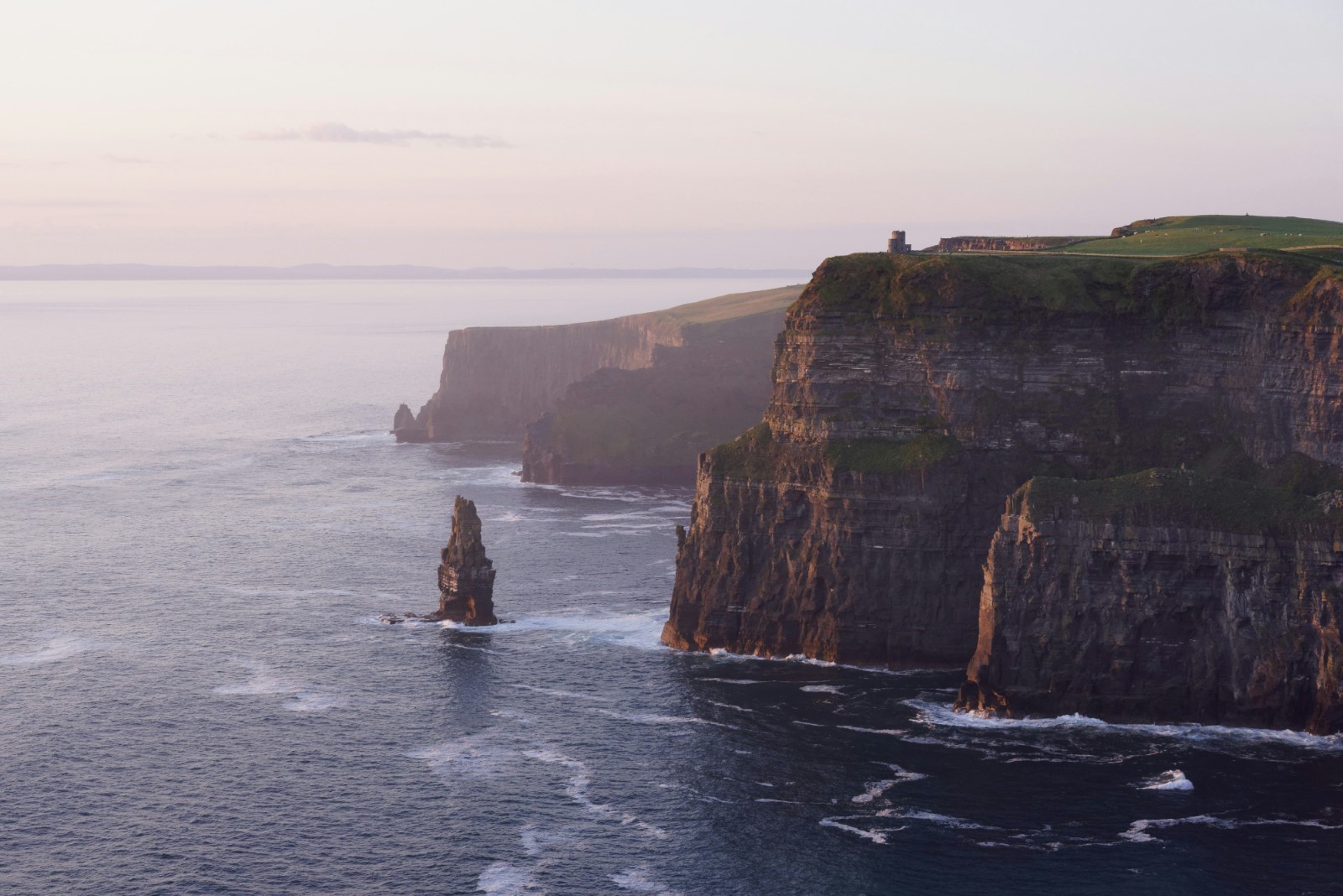
    Featured Image: The Cliffs of Moher. Credit: Unsplash

    Sport Ireland has a responsibility for developing walking trails across the country, and for promoting a variety of outdoor and recreational activities to encourage people to become active outdoors. The organisation conducted the inspection in mid-August. 

    The inspection happened after two young people tragically lost their lives in the area in July. 

    Sport Ireland discovered that a large amount of visitors were choosing to ignore the warning signs and walk dangerously close to the edge.  

    Many of the visitors were straying off the official path due to sections of the walk that were too narrow to cater for the number of visitors walking in both directions. In one case attendees of a humanist wedding were found to be standing close to the cliff edge with their backs to the edge and the water below.  

    The report also found the trail was unsuitable for the type of people it was attracting and that the inspector saw multiple examples of dangerous or risky behaviour. 

    The inspector’s view was that the trail “be closed immediately” to make it safe, according to a copy of the report that was released under freedom of information laws. 

    In a statement sent to The City Sport Ireland said; “Following Sport Ireland’s recent inspection of The Cliffs of Moher Coastal Trail, several safety issues were identified along the trail. 

    In agreement with Clare Local Development Company, which manages the trail, these issues were deemed serious enough to require urgent attention.” 

    The visitor centre at the famous cliffs, along with 800m on either side, is managed by Clare County council, but it does not manage the cliff walk. 

    The coastal walk is managed instead by Clare Local Development Company (CDLC), which is responsible for its maintenance and negotiates with local landowners. 

    Cliffs of Moher. Credit: Pixabay

    Sport Ireland added: “The Cliffs of Moher Coastal Trail is included on the National Trails Register and is on the connected Public Liability Insurance Policy, which is managed by Sport Ireland Outdoors. Sport Ireland Outdoors inspects the trails on the National Trails Register periodically to ensure they continue to meet the required standards. 

    To remain on this register, any safety issues reported during these inspections must be resolved within 30 days of the inspection date. 

    The Cliffs of Moher are a key tourist attraction in Ireland, with the connected coastal trail attracting hundreds of thousands of visitors each year. Therefore, in managing these remedial works, Clare Local Development Company have structured their plans to allow sections of the trail to remain open while other parts are closed for renovations. 

    Clare Local Development Company have successfully addressed all safety issues in the areas of the trail that remain open.” 

    They concluded: “Sections of the trail with unresolved safety issues are now closed to the public until they are addressed.” 

    So how can people be safer when walking along coastal trails? 

    The Royal National Lifeboat Institution (RNLI) is a charity that saves lives at sea in the Ireland and the UK and The City reached out to them for coastal waking advice. 

    A spokesperson from RNLI said; “be wary of all edges around the sea and waterside. Slips and falls happen in all locations; it is not just high cliff edges that are a risk. Always let someone know where you are going and when you expect to be back.” 

    “Take care when walking in dark and slippery conditions. Always take a means of calling for help and always check the weather and tides. Getting cut off by the tide is a common cause of lifeboat launches. Should you get into difficulty or see someone else in trouble, call 999 or 112 and ask for the Coast Guard.” 

    The Irish Coast Guard is another group that saves lives at sea. They are a part of the Department of Transport. The Coast Guard main roles include maritime safety and search and rescue.  

    Below is a clip of the Coast Guard carrying out a rescue on a cliff edge, courtesy of Irish Coast Guard on X:

  • Is Female Healthcare Taken Seriously in Ireland? 

    Is Female Healthcare Taken Seriously in Ireland? 

    By Molly O’Reilly

    Polycystic ovary syndrome (PCOS) can affect a woman’s health in more ways than one.  

    As more people are becoming aware of PCOS as a disorder women experience, there is more questions to answer as we discover female health continues to be more complex. 

    For instance, there are four categories of PCOS. Healthcare professionals try to avoid diagnosis until a person’s menstrual cycle has become regular or fully formed.  

    PCOS is characterised by irregular periods, high testosterone levels and ovarian cysts. The average age of diagnosis is around your late 20s.  

    However, there is not a long-lasting solution to help with PCOS.  Different life occurrences can alter the symptoms of the syndrome, such as childbirth, excessive exercise and stress.  

    Shirley McQuaid, who works with Dublin Well Woman Centre as a medical director, spoke about PCOS in Ireland and attitudes to female health in Ireland. 

    “PCOS involves certain changes to the cycle,” she said.  “If someone has very irregular periods, then it’s worth looking at whether or not that is due to polycystic ovary syndrome.”  

    Laoise Cruise, now 23 years old, spoke to The City.ie about her experience of getting diagnosed with PCOS at the age of 15, which is very unusual. 

    “It was like I had given birth because I had stitches, and I couldn’t stand up straight,” said Cruise. 

    In March 2016, Cruise thought she was getting her period for the first time. In reality, a cyst that was sitting and killing her ovary was causing her to bleed. After experiencing side effects such as extreme bloating, tiredness and intense cramps, Cruise went to her doctor and had to have surgery. 

    “It was basically the size of a melon is what I was told – they told me this is so strange for a 15-year-old.”  

    However, due to the size of the cyst, one of Cruise’s ovaries also had to be removed.  

    “It has affected my life completely – 50% of my chance of fertility gone,” she said. 

    Cruise also spoke about the lack of services provided during this time at 15 years old. 

    “I had my surgery in a general hospital, but it was under my insurance. Then I had to go privately for nearly a year after to go see the same surgeon that took out my ovary [in their private practice]” 

    “I wish it was more accessible; I’m hoping there will be more PCOS specialists in the future, who are more accessible for women who are younger.” 

    The process of getting diagnosed can be a stressful experience. 

    Katlyn Connolly, who is 22 years old, is currently on the journey of being diagnosed with PCOS.  

    “I started looking for help and advice on my female health around 14 months ago and since then I have been referred and sent to person after person,” said Connolly. 

    “I feel If I had backed myself up and was confident in my knowledge 14 months ago, I might be on a very different journey now. I am thankful that people are now talking about female health and fertility. It’s lovely to hear other people’s stories and tips and tricks regarding these issues.” 

    Female health issues continue to be a complex issue. 

    In terms of the long-standing ways of managing PCOS, McQuaid said there unfortunately isn’t one. 

    “There are a few things to manage PCOS but there isn’t a pill that they can take long term to deal with PCOS. It’s just as life events happen, we can help along the way with various things.”  

    Despite an enduring question over how serious female healthcare is taken within the Irish healthcare system, McQuaid said the introduction of the free conception has been a positive change. 

    “In the past a lot of women just were on the pill simply because that what was all available for them or they couldn’t afford to use coils and implants. But now they’ve got a huge choice,” she said.  

    Although there has been a positive progression for female healthcare in Ireland there is still a long way to go as many women continue to go undiagnosed.  

    “It’s not just four letters it’s your life,” said Cruise. 

  • “I Would Rather Die Here Peacefully, than be Killed There” – South Africans Living in Direct Provision on Hunger Strike Outside Dáil

    “I Would Rather Die Here Peacefully, than be Killed There” – South Africans Living in Direct Provision on Hunger Strike Outside Dáil

    By Jamie Ryan 

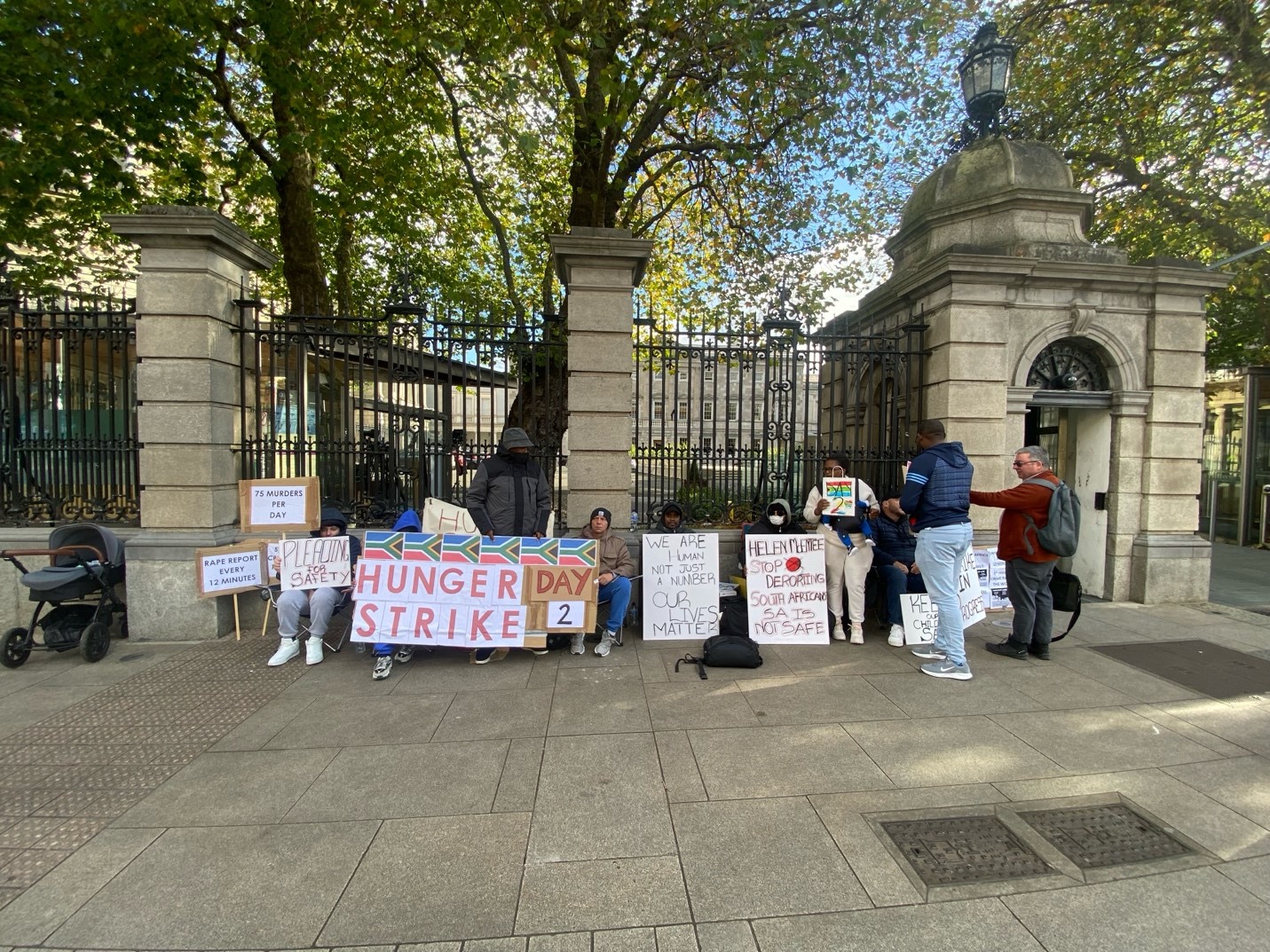
    Since Monday 21 October, these South African men and women who are living in Direct Provision have gone on a hunger strike in the hopes that the Irish Government will reconsider having South Africa listed on Ireland’s ‘Safe Countries’ list.  

    The EU and Irish Government define a ‘safe country of origin’ as a country in which: “there is generally and consistently no persecution, no torture or inhuman or degrading treatment or punishment and no threat by reason of indiscriminate violence in situations of international or internal armed conflict.” 
    Neels Heystek – a South African that are taking part in the hunger strike. Heystek told TheCity.ie his daughter is suffering from PTSD and is having regular panic attacks at school as a result of what has happened to their family in South Africa.

    “This is our last resort now.”

    Neels Heystek
    Passersby and sympathisers have donated water to the hunger strikers.
    On the otherside of Dáil Éireann’s gates, was a protest held by Irish Healthcare Workers for Palestine. Some of these protesters came over to the hunger strikers in support when a far-right agitator arrived.
    The Irish Healthcare Workers for Palestine lending their megaphone to the South African hunger strikers to drown out the far-right heckler. 
    A collection of the protester’s signs 
    • ‘Rape Report every 12 minutes’ 
    • ‘75 Murders Per Day’ 
    • ‘Pleading for Safety’ 
    Hunger strikers displaying their respective signs telling those passing by why they are on hunger strike.
    One of the protesters, down on their knees sticking together another sign for passersby and government officials coming through the gates of Dáil Éireann to see and take notice of.
    Brian Mogotsi is another of the hunger strikers.
    He is taking part in this protest in the hopes that the Government will engage in a dialogue with South Africans that are living in Direct Provision to reconsider their position on deeming South Africa as a safe country

    “I fled South Africa in need of safety.” 

    Brian Mogotsi

  • Ireland U21’s European Dream Ends, but Strong Foundations Are Set for the Future 

    Ireland U21’s European Dream Ends, but Strong Foundations Are Set for the Future 

    By Sandra Dudkiewicz

    Ireland’s hopes of qualifying for the UEFA U21 European Championship were dashed after a 1-1 draw against Italy in Trieste.  

    Ireland previously drew 1-1 with Norway on October 11, with Sean Roughan scoring for Ireland, only to see their lead vanish with a last-minute equaliser by Andreas Schjelderup. This result added more pressure as the Irish needed a strong finish against Italy.   

    Ireland’s Andrew Moran scored the crucial equaliser in the 66th minute, after Italy had taken an early lead through Cesare Casadei. Despite the draw, Italy booked their place in the 2025 European Championship that will take place in Slovakia. 

    Italy’s missed penalty in the first half by Gnonto, along with other squandered opportunities, gave Ireland hope, but they were unable to find that crucial second goal. 

    Ireland’s U21 team may have missed out on qualification for the 2025 UEFA European Championship, but their journey was filled with standout performances. 

    The boys in green opened the qualifiers with a 3-0 victory over San Marino in September 2023, with Sean Roughan and Sinclair Armstrong contributing key goals and a 3-2 win over Turkey in June. 

    Scoreboard: RTE

    The Republic of Ireland U21 team concluded their UEFA European Championship qualifying campaign in third place, level with Norway on 19 points, but missing out on the playoffs due to goal difference. 

    They recorded 5 wins, 4 draws, and 1 loss across 10 matches, scoring 24 goals and conceding 12, for a goal difference of +12. 

    Bristol City player and Republic of Ireland international, Sinclair Armstrong said: “The unity and mentality within the group was incredibly strong, largely due to the belief that Jim Crawford instilled in us which is that we could win every game.” 

    “We went toe-to-toe with big nations, and we didn’t shy away from any challenge, from any fight and we gave it 100 percent. For the experience to end so early is very disappointing but it has been unbelievable, we got to travel to so many different countries and experience different cultures in the process and it’s something I will never forget,” he continued. 

    Sinclair Armstrong (9)  Photo Via Instagram

    Armstrong received his first call-up to the senior Republic of Ireland squad on September 8, 2023, for their UEFA Euro 2024 qualifier against the Netherlands and made his senior debut on September 10, 2023. 

    While the Republic of Ireland team fell short of qualification for the UEFA U21 European Championship, their solid third-place finish and impressive performances throughout the qualifiers sets a promising foundation for the future. 

  • Cuala triumph in first Dublin final since 1988 

    Cuala triumph in first Dublin final since 1988 

    By Oscar Lawlor Plazas 

    A nail-biting end to a dramatic game on a windy day in Parnell Park saw Cuala overcome local rivals Kilmacud Crokes with a last gasp hand passed point by Eoin Kennedy, after Luke Keating’s freekick fell short with seconds to go on Sunday afternoon. 

    This put a stop to Kilmacud’s hopes of winning 4-in-a-row for the first time since the 1960s and gave Cuala their first ever Dublin Senior Football Championship win, in their first finals appearance since 1988. 

    Players appeared to struggle to determine which way the wind was blowing. In the first half, it appeared to benefit Crokes, but that didn’t last long. It was evidently blowing in the main from the church- end and behind Cuala’s backs but was equally indiscriminatory and unpredictable throughout the afternoon. 

    Crokes tried to smother Cuala’s strong first half and contain the damage until they could make use of the wind in their favour, but they were guilty of a few hurried attempts at goal and, predictably, bad choices considering the difficult conditions. 

    With their ace attackers Paul Mannion and Shane Walsh each scoring one point in the first half, Crokes missed six opportunities, blowing attempts at the uprights wide or short into goalkeeper Skollard’s hands. 

    During this period, Cuala’s offensive style was much more direct and focused. They made fewer poor attempts and had some well worked teamplay as they repeatedly drove up the pitch in packs to take a healthy lead going into halftime.  

    Dublin defender Michael Fitzsimons contributed to their onslaught, by fist passing a smart point and following it up by hitting another creative score after flicking the ball over Walsh’s head and collecting it on the other side.  

    Cuala’s five-point advantage at the half was only cheapened by the fact that two goal scoring opportunities had escaped them in the first six minutes of the second half. 

    Con O’Callaghan had the first but was denied by brave defending. This was followed up by Niall O’Callaghan’s excellent strike at the top corner being elegantly tipped over the bar for a point by Devon Burns. 

    Within a frenzied few minutes though, everything looked as though it might change.  

    Cuala fans rush onto pitch after final whistle 

    The Dalkey men kept Crokes at bay with the odd score and some outstanding defending but couldn’t stop a more experienced Crokes side from cutting the margin to three points between the forty- and fifty-minute marks. This was then made worse for Cuala when after just a few minutes in play as a blood substitute, Kilmacud’s Luke Ward scored the game’s first goal to tie the score for the first time since the fourth minute, when Mannion found him with a sweeping pass across Cuala’s last line of defenders. 

    Then, during the break in play, there was drama at the opposite end of the ground when Con O’Callaghan was shown a straight red card by referee Sean McCarthey at Stillorgan sides goalmouth, for an elbow on Crokes goalkeeper Devon Burns. This made for a tense end to the finals for both sets of supporters, but the purple and gold of Kilmacud Crokes didn’t have enough in the end to halt a history making day for the red and white of Cuala. 

    The team’s victory was well-earned, handling the match and Storm Ashley with skill and caution. They now progress to the quarterfinals of the Leinster Senior Football Championship and will take on whoever comes out on top between the Wicklow and Longford Championships respectively. 

    Scorers for Cuala: L Keating (0-3, 0-2 frees); C Doran (0-3); M Fitzsimons (0-2); E Kennedy, C McMorrow, P Ó Cofaigh Byrne, P Duffy N O’Callaghan and C O’Callaghan (all 0-1). 

    Scorers for Kilmacud Crokes: P Mannion (0-4, 0-1 free and 0-1 mark); S Walsh (0-3, 0-1 free); L Ward (1-0); H Kenny, C Dias, D Mullin (all 0-1). 

    CUALA: R Scollard; D Conroy, M Fitzsimons, E O’Callaghan; E Kennedy, C McMorrow, D O’Dowd; P Ó Cofaigh Byrne, P Duffy; C Dunne, C Ó Giolláin, C Doran; L Keating, N O’Callaghan, C O’Callaghan. 

    Subs: C Groarke for Ó Giolláin (43); C Mulally for Dunne (48); L Ward for O’Brien (blood, 54) and for Murphy (56). 

    KILMACUD CROKES: D Burns; M Mullin, T Clancy, D O’Brien; M O’Leary, A McGowan, J Murphy; B Shovlin, R O’Carroll; H Kenny, C Dias, D Mullin; P Mannion, P O’Connor, S Walsh. 

    Subs: C O’Connor for O’Leary (43); T Fox for Kenny (45); M Conroy for D Conroy (56); S Cunningham for O’Connor (71). 

    Referee: Sean McCarthy (St Vincent’s). 

  • Leinster Maintain Perfect Form with Win Against Connacht 

    Leinster Maintain Perfect Form with Win Against Connacht 

    By Jessica Lee

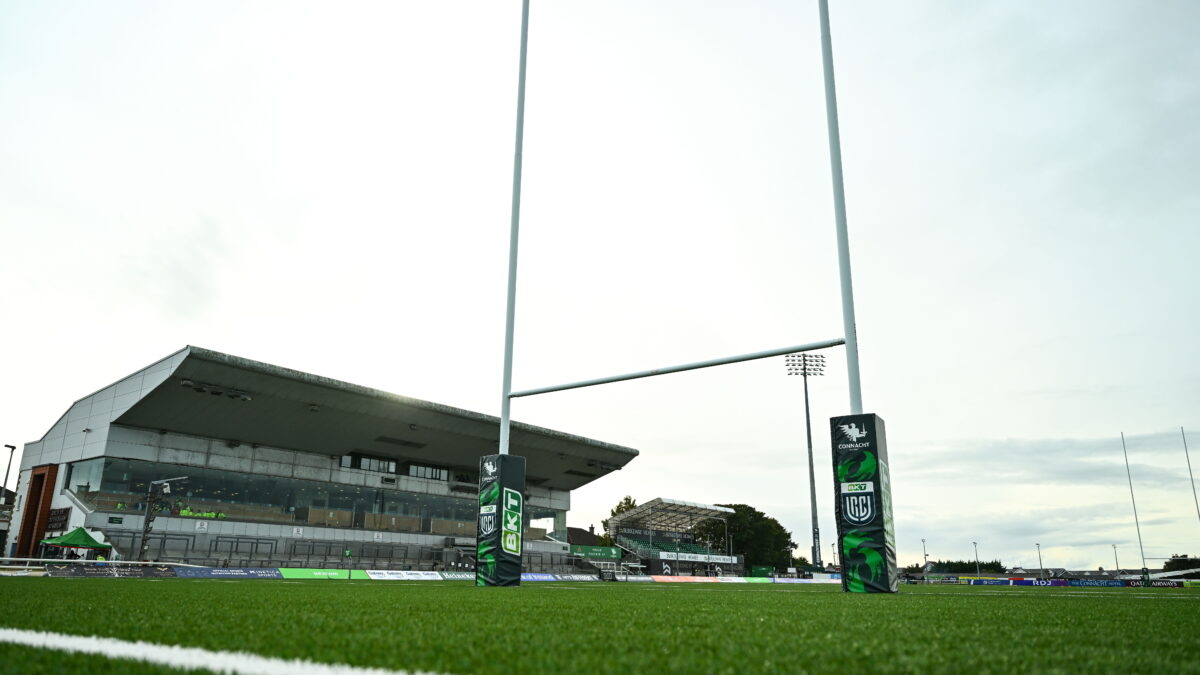
    Leinster have kept their perfect record in the United Rugby Championship (URC), with a stunning bonus-point 33-12 win over a strong Connacht side in Galway on Saturday night.  

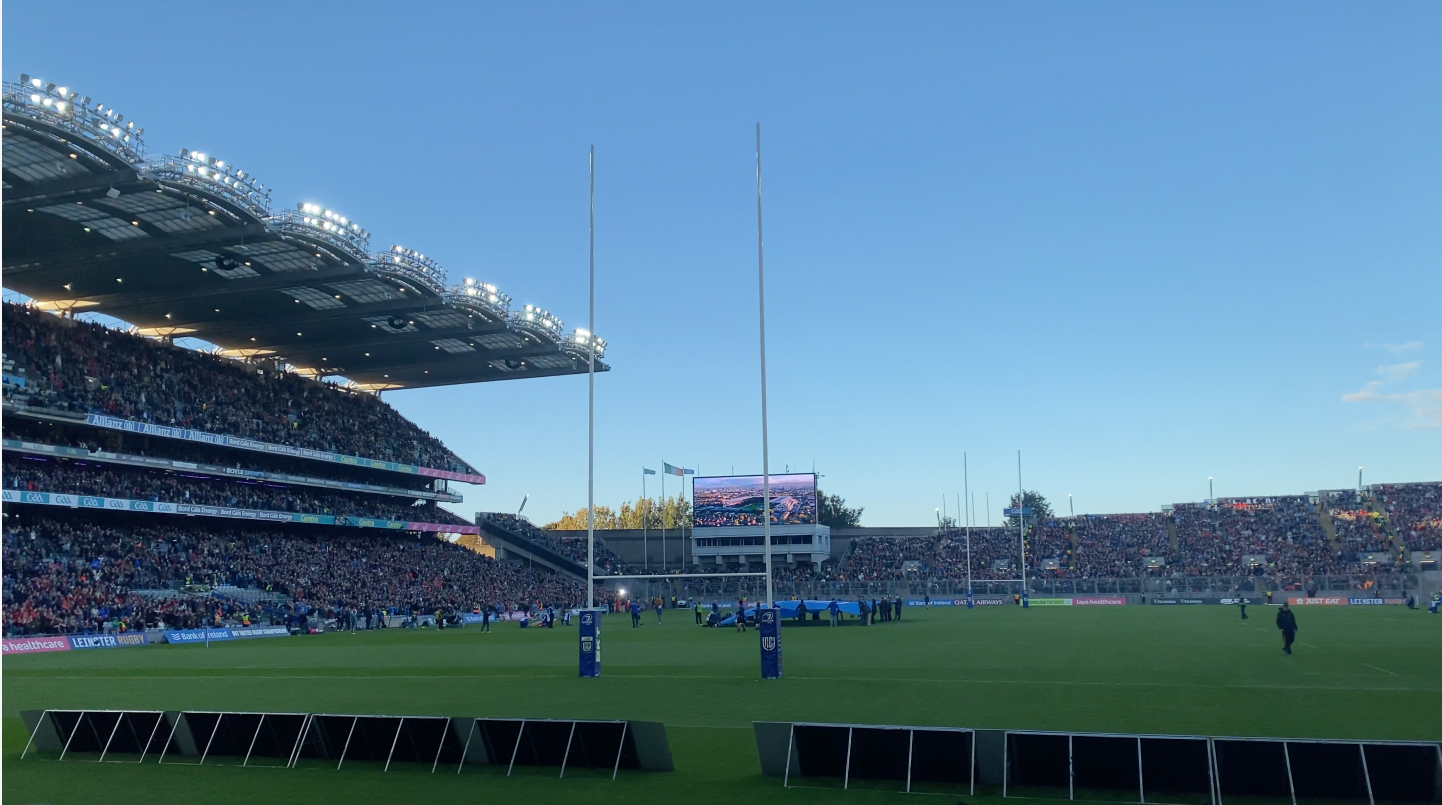
    Coming off the back of their win against Munster in a sold-out Croke Park last weekend, the boys in blue made a fast start to the game, with Jamie Osborne scoring a try in the seventh minute and was quickly followed by Ciaran Frawley kicking the conversion. 

    Despite Connacht’s defense holding firm against Leinster’s strong efforts, Liam Turner scored a try just minutes later, and the kick was converted. 

    Ciarán Frawley suffered an ankle injury during the buildup to Turners try and was replaced by Ross Byrne.   

    An injured Frawley will be a concern for Irish Rugby manager Andy Farrell, as Leinster are set to face New Zealand in the Aviva Stadium in three weeks’ time.  

    Leinster Captain James Ryan appeared to have scored a try; however, it was later disallowed due to accidental offside when Ryan received the ball and Connacht were awarded the scrum. 

    Connacht finally got into the game at the 33rd minute, after a scrappy tackle on the try line with Sean O’Brien getting the score.  

    World Cup winner and South African native, RG Snyman, got Leinster’s third try after gathering a loose ball just before half time, with Ross Byrne adding two points to Leinster’s advantage.  

    Just five minutes into the second half, Leinster further proved their dominance over the home side as flanker Max Deegan scored their fourth try for the bonus point. 

    Connacht returned from half time hungry to get scores on the board but struggled to get through the robust Leinster defense. However, a try from Cathal Forde came in the 64th minute and the conversion was scored by Josh Ioane.  

    This small win for Connacht was short lived, as just minutes later Andrew Osborne ripped up the wing to catch Byrne’s kick from the restart and scoring the final try of the game.  

    With 10 minutes left on the clock, Connacht desperately tried to close the gap, but it was too little, too late. The score was 12-33 to Leinster when the final whistle blew.  

    This is Leinster’s second consecutive inter-provincial victory so far in this URC campaign, with RG Snyman receiving player of the match for his performance. 

    Connacht: P O’Conor; S Bolton, D Hawkshaw (C Forde 62), B Aki, S Cordero (H Gavin 59); J Ioane, B Murphy (C Blade 56); D Buckley (P Dooley 52), D Heffernan (D Tierney-Martin 56), F Bealham (J Aungier 52); J Joyce (N Murray 52), D Murray; C Prendergast (c), S O’Brien (S Jansen 56), P Boyle. 

    Leinster: H Keenan; L Turner (H Cooney 74), G Ringrose, J Osborne, A Osborne; C Frawley (R Byrne 17), J Gibson-Park (F Gunne 71); J Boyle (A Porter 44), G McCarthy (S Smith 74), R Slimani (T Clarkson 44); RG Snyman (B Deeny 70), J Ryan (c); M Deegan, W Connors (S Penny 59), J Culhane. 

    Referee: Eoghan Cross (IRFU)