Tag: Nobel Peace Prize

  • A Russian’s perspective on the Russian LGBT issue

    A Russian’s perspective on the Russian LGBT issue

    Vladimir Putin has arguably strived for peace outside the borders of Russia, while destroying in within the borders. Image by: IoSonoUnaFotoCamera
    Vladimir Putin has arguably strived for peace outside the borders of Russia, while destroying in within the borders. Image by: IoSonoUnaFotoCamera

    In light of the new anti-gay laws in Russia, Craig Farrell talk to a young Russian woman living in Ireland about what life is like on the ground.

    Vladimir Putin‘s recent nomination for the Nobel Peace Prize has shone an unpleasant light on the disgracefull treatment of the gay community in Russia.

    The media have covered the story extensively, highlighting the outrage felt towards the vile treatment endured by the LGBT community. Many opinions have been voiced, but very few of which have had the benefit of stemming from the country in question.

    ‘To each their own’ was the main ideal denoted by Russian-born Oxana Martynova when asked her views on how homosexuality should be treated.

    “Live and let live,” declared Oxana, who moved to Ireland when she was six-years-old.

    “I have always had zero problems with gay people and I really can’t see why anyone would or should.”

    Oxana, who studied English and Geography in UCD, stated further that she felt “gay people are born this way so I wouldn’t hold anything against them for who they are and I don’t believe it should be an issue to anybody.”

    She continued, “I didn’t grow up in an intolerant society, I grew up in Ireland where you are taught to be accepted,but I’d hate to think that maybe if I was still in Russia my opinion would be different.”

    Oxana said she “obviously did not agree with” the current stance that Russia has taken on homosexuality. “It’s a vile situation and I wish any member of the gay, lesbian or transgender community didn’t have to endure it.

    “It’s a huge step backwards.”

    Oxana shed some light on the situation in Russia claiming that the ill treatment of the gay community is not something new. “Crimes against homosexual people were always committed, such as ‘correctional rapes’, beatings or ‘Gay Bashings’.

    “I’m not sure why the government thought this would be a great idea, maybe because, since they can’t now publically show who they are it could hide them and then these people wouldn’t be targeted with hate crimes? Or maybe just simply because people in government there are so narrow minded.

    “I want to think it’s the first option – That the government have the best interests of the gay community at heart and they are trying to protect the vulnerable – but I doubt it is unfortunately.

    The UCD and AMI college graduate had stern words for the house of government in Russia saying, “sadly the Duma is run by intolerant people and intolerance is not progression.”

    Speaking on Russia as a whole Oxana vehemently agreed that “Russia has a superiority complex. It’s all very macho there, just look at Putin and his annual holiday photos!”

    “I have to say though, I am not surprised by what went on. Since the Soviet times people were taught to always behave one way, you couldn’t be different.”

    “You will rarely see a disabled person in Russia as mothers of disabled children were convinced by doctors to give them up.”

    Her final thought echoed closely to one not to far from that of a county’s leader circa 1933.

    “It’s as if maybe a perfect society was trying to be formed.”
  • Is the Nobel Peace Prize still worth anything?

    Is the Nobel Peace Prize still worth anything?

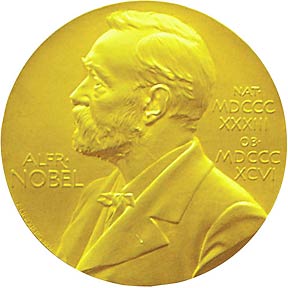
    Nobel_Prize_Medal

    The Nobel Peace Prize was awarded this morning and our two journalists, Craig Farrell And Greg Synnott decided to debate its merits. Craig Farrell believes it still holds value.

    Due to the uproar caused by the recent nomination of Vladimir Putin for a Nobel Peace Prize, the question has been asked; is the Nobel Peace Prize become insignificant, and the answer is absolutely not.

    The fact the nomination of Putin, who many condemn for the treatment of the gay community in Russia, has sparked such outrage shows how the Noble Peace Prize is still something that people see as having a purpose, and a social and global goal.

    It must be noted that the Nobel Foundation does not take part in any of the nomination process.

    Nomination for a Peace Prize is deemed acceptable if submitted by:

    • Members of national assemblies and governments of states.
    • Members of international courts
    • Previous Peace Prize Winners
    • Board members of organizations that have been awarded the Nobel Peace Prize
      Active and former members (and advisors) of the Norwegian Nobel Committee
    • University rectors; professors of social sciences, history, philosophy, law and theology; directors of peace research institutes and foreign policy institutes.

    A Russian advocacy group, The International Academy of Spiritual Unity and Cooperation of Peoples of the World, was the group behind the Putin nomination, and they also let it be public knowledge as all nominee lists remain secret for 50 years.

    Putin’s nomination was probably political peacocking on the Russian’s behalf, seeing how both Putin and Barack Obama both have Nobel Peace Prizes to their names. The Russian and US president had open letters printed by the New York Times recently in regards to the Syrian crisis, in which both leaders took shots at one another.

    Putting Russia’s treatment of the LGBT community aside – as hard it may be to overlook – Putin has still made some significant strive in creating peace. He played an integral part in preventing a Iraq-like invasion in Syria and had a helping hand in chemical weapons being handed over by the Syrian government.

    Russia has also held talks with Georgia regarding the differences between those countries.

    So in the grand scheme of things there is some validity to Putin’s nomination. I am not condoning his treatment of the gay community. In fact I would be abhorrently against it. However, Putin has facilitated peace in certain areas outside of Russia.

    The Nobel Peace Prize has the ideal of awarding someone who has made a major contribution towards peace in the world, and that is an ideal that can never be insignificant. The nomination process may be flawed – much like everything in life – but the goal it strives towards is the same when the likes of Martin Luther King (1964), Mother Teresa (1979) and Desmond Tutu (1984) received their awards.

    Greg Synnot shares his views:

    But is the Nobel Peace Prize Damp Dynamite?

    On October 11th, we’ll learn whether the Norwegian Nobel Committee is interested in reviving the Nobel Peace Prize to its former glory or whether it will be putting another nail in the coffin for a prize that many consider to have become more of a joke than noteworthy line on someones CV.

    Alfred Nobel’s vision for the prize was created in good will and not as an achievement to proponents of war as we’ve seen with former winners like Barack Obama and the European Union.

    The European Union receiving it is a blatant violation of Nobel’s will alone, not to mention the fact it defies Nobel’s will, it has been frequently criticized for supporting regime change in foreign countries with several member-states have supporting violent crackdowns on anti-government demonstrators.

    In Nobel’s own will it is stated that the prize is for “the person who shall have done the most or the best work for fraternity between nations, for the abolition or reduction of standing armies and for the holding and promotion of peace congresses.”

    The prize is not a lifetime award, but goes, along with the other Nobel prizes, “to those who, during the preceding year, shall have conferred the greatest benefit to mankind.”

    Disregarding the obviously laughable options among the 259 nominees, 50 of which are organisations, the favourites for this year barely qualify, if at all. This includes Malala Yousafzai and Denis Mukwege whose work for education and work to aid victims of sexual violent acts respectively should be honoured with an award, but not this one.

    It cannot be denied that the prize provides recipients with world exposure, sometimes bringing activists and their causes to international attention.

    But when an award can go to a president who took office 11 days before the final date of submission in 2009, it has to be asked, what is the criteria for such an award? Clearly Obama’s only noteworthy point at the time was not being George W. Bush, with that their were seven billion other possible nominations.

    The “Peace” Prize has gone through numerous controversial candidates in its long history. Let’s celebrate those who have surely contributed to human welfare and relegate subjective calls to the political spheres that are both their natural habitat and their rightful place: The Committee should disband and nominate no more recipients of the Peace Prize.


  • Who deserves a Nobel Peace Prize?

    Who deserves a Nobel Peace Prize?

    The 2013 Peace Prize has been sparking debate all over the global. Photo by: Vegard Iglebaek
    The 2013 Peace Prize has been sparking debate all over the global. Photo by: Vegard Iglebaek

    Due to the vast controversy surrounding the nomination of Vladimir Putin for the 2013 Nobel Peace Prize, the question of “who deserves a Nobel Peace Prize?” was put to the general public.

    The vast majority of people all had differing opinions on who would make a deserving winner. Only Malala Yousafzai received more than one public nomination.

    James Franklin said, “the girl who was shot by the Talaban. She is a modern version of Martin Luther King Jr. She is a role model for women’s rights in a backwards country.” Gary Kinsella was short and sweet in his nomination, saying “Malala, for being shot for wanting to learn!”.

    Theology student Jason Doran also voted for Malala Yousafzai saying, “I think she showed great courage and bravery in the face of extreme adversity. She could bridge the gap between real people of that part of the world and Europe. Not every muslim is a terrorist.”

    The New Pope got in on the action too. Jason Shaw said “Pope Francis. All the other world leaders have alot of blood on their hands but he seems to be doing alot more for world peace then the rest by his constant calls for acceptance of all people – and that is coming from someone who would not consider themselves religious by any means.”

    There were two nominations for people from Ireland.

    Tessa Fleming and Derek Goulding said that they would like to see Michael D. Higgins and Ian Paisley win awards, respectively. Tessa felt that Higgins deserved the award “because of his work for equality, culture, and ethics”, while Derek said despite being a controversial choice Paisley “was one of the cornerstones in ensuring that peace was at least a possibility in the North.”

    There was a lot of discontent towards the prize and what many deemed it has come to resemble presently.

    “Does anyone deserve to win it?, said Joseph Reid. “Peace is only temporary at best, there will always be war, it’s human nature.”

    Kieran O’Driscoll summed up the apthay towards the Nobel Peace Prize claiming, “they support the war on terror”.

    He explained, “in recent years, the prize has been awarded to Obama, while he was in the midst of escalating military presence in Afghanistan, and the E.U., soon after a number of European countries had intervened with force in Libya. This seems to me to go against the idea of peace-making and could be seen as approving of military action/force, while ignoring those who may be working on the opposite side of a conflict, attempting to work towards peace in these scenarios.”

    “At the moment, I hope the prize is awarded to someone for humanitarian work, someone who embodies the ‘champions of peace’ that the award strives to be bestowed upon.”