Tag: opinion

  • The Rise of the Irish Gambling Problem

    The Rise of the Irish Gambling Problem

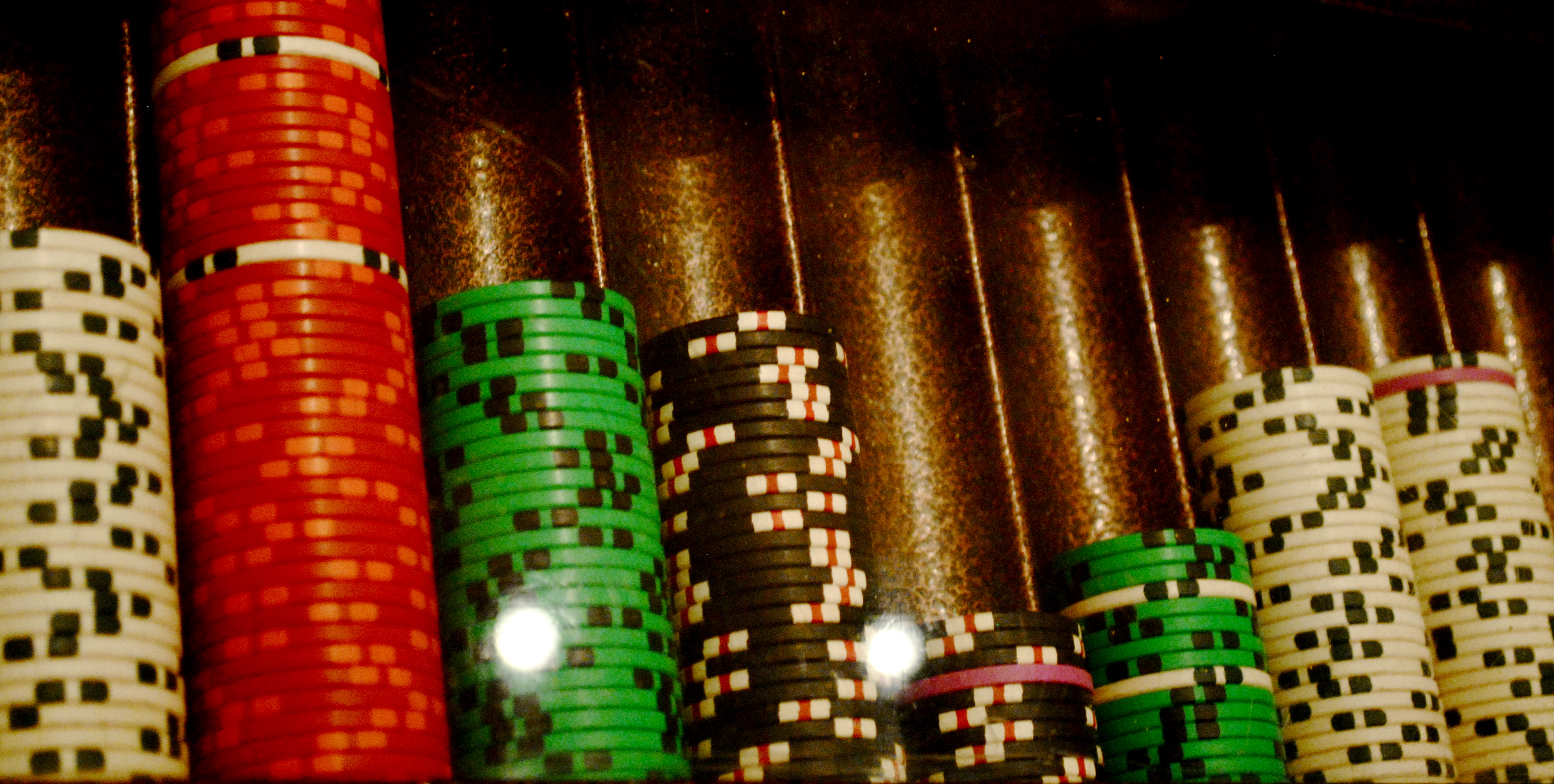
    The turning of the roulette tables is mesmorising, as everyone waits with baited breath for the outcome
    The turning of the roulette tables is mesmerising, as everyone waits with baited breath for the outcome All photography by Louise McLoughlin

    Sitting in a casino on O’ Connell street, all sense of time and outside life is blocked out. There are no clocks, the temperature is constant. No one here seems to be able to tell you what time it is, or how long they have been here. There is no need; why would you want to know how long you have spent throwing money into a slot machine? This suits everybody perfectly. The owners of the casino probably don’t want you distracted from the gambling tables. And the gamblers probably don’t want to be made aware of how much time or money they are spending there.

    The concentration put into gambling is intense. New people have come in to play, but no one has left the casino yet, only for a quick smoke and then they hurry back hoping their seat hasn’t been taken. Everyone has their own tricks and traditions. One person walks away every time his bet is placed and won’t look as the Roulette table turns. People hold their breath and stare at the table unblinking as they wait to see if they have finally struck gold. A young Hungarian man punches the table as his final bet of the day is lost. He tells me that the total spent so far is over three hundred euro. He doesn’t have a job, that money belonged to his sister. Before he leaves to go sell his iPad to get more money, he looks me in the eye and says that when he comes back he will just spend fifty euro. That’s all he needs, because then he “will win for sure this time.”

    Unfortunately this is all too common an occurrence on a Wednesday afternoon in a Dublin casino. Gambling has become a rising problem in Ireland that few seems to be talking about. With all the concentration on other addictions like alcoholism or smoking, that have always been prevalent in Irish society, gambling addiction is an issue that sometimes seems to have fallen by the wayside.

    David Hickson, the Managing Director of the Fitzwilliam Casino and Card Club expressed his concern at the Government’s lack of involvement in helping those with gambling addictions. “There are no gambling regulations in this country. Everywhere else has it. There’s been gambling regulations in place in the U.K. for almost fifty years. Around nine or eleven years ago there was a draft Bill put to the Government to place tighter restrictions on gambling in this country. So far, nothing has come of it.”

    Talking a walk through the Casino and Card club, David shows me the protocols that they have put in place to try to regulate their own client’s gambling. “We have a system for people who want to become a member. Anyone can join, we get people on their holidays who want to come in for a day. We still make them fill out a form and show us I.D before they can enjoy the casino.”

    The casino encourages people who think they may be developing a problem to take themselves off the membership list for a period of time
    The casino encourages people who think they may be developing a problem to take themselves off the membership list for a period of time

    You would think that every casino is just after money. David assures me that this is not the case. While there are some such places, a lot of casinos prefer to enjoy a more stellar reputation. “We train our staff to be able to identify when a person might be developing a problem. We look out for changes in their behaviour. That’s when we would go up to them, offer them a coffee and a chat. We would talk to them about how they are feeling and ask if they think they might be developing a problem. If someone is getting agitated or aggressive that’s when we would usually step in.”

    It does appear that the aim of the Fitzwilliam Card and Casino Club isn’t to take advantage of people.  It is evident that there are two types of casinos, those who cater to responsible gambling, and those where anything goes. However, casinos are not the only place where betting can take place. We all know about places like Paddy Power and Ladbrokes, but now with the emergence of the internet, online gambling is making gambling addiction easier to fall prey to, and also easier to go unnoticed.

    One would have to wonder, if the government doesn’t seem to be doing anything about regulating gambling, is anyone regulating it? Stephen, who wishes not to go by his real name, works in the customer care department of Paddy Power for their online site. He assured me that Paddy Power have their own restrictions in place to promote safe gambling. “I got a call one time, this guy was in his bedroom whispering down the phone to me so that his wife wouldn’t hear him. He told me that he was after spending his pension on the site and needed us to refund some of it so that his wife wouldn’t find out and kill him. Of course we couldn’t refund him the money, but we did talk to him about responsible gambling and I told him that due to our policy on “R.G.” we would have to shut down his account.”

    The presence of online gambling is making it harder for people to spot a developing addiction
    The presence of online gambling is making it harder for people to spot a developing addiction

    Sadly, this isn’t the only incident of desperation Stephen has heard over the phone. “I get phone calls like this all the time. One time a guy rang up and said that he needed us to give him back the last few hundred euro he spent. I asked him why and he said that he needed to take his wife to hospital and he had lost the last of the money that he had gambled. I ended up giving him the money back, which I probably shouldn’t have done. But I did close down his account afterwards.”

    The difference between going to a place like the Fitzwilliam Club and dealing with customers from an online site over the phone is huge. The Fitzwilliam actively encourages their clients to go seek professional help. They have self exclusion policies where a member may voluntarily remove themselves from their membership for a chosen amount of time or indefinitely. The Club also reserves the right to revoke a membership if they deem it necessary. Unfortunately it is not so easy to maintain this level of care through the phone, as Stephen points out.

    “It would be nice if we could do more for them. But we can’t. I mean my job is to, I guess, to shut down their accounts and hope it does help. Maybe for some it’s that smack of reality that they need. I like to think so anyway. But we still see the same people try to reopen their accounts or make up new false ones, and they get so far for a few hours but we always end up finding out. We call them and tell them that whatever they gambled we have to return and shut down their new account as it isn’t a legal bet in terms of our policy. And they all have the same reaction. They’re just delighted they get the cash back.”

    As gambling starts out as a bit of fun for most people, it is very easy to fall into that lifestyle of “just ten more euro.” You might not even realise how much you are spending. It is so easy to just keep betting, especially online as the money doesn’t seem real. It’s all just a silly game right? Just to pass the time? Sadly, it’s this casual way of looking at gambling that makes people believe it’s harmless. This is the reason so many people don’t even realise they have a problem.

    There is nothing I have seen stronger than a gambler’s sense of denial. With the blame for a loss being put on everything but themselves, gambler’s seem almost blind to their addiction. Hopefully, with the help of casinos like Fitzwilliam, and the pressure being mounted on the government for tighter gambling restrictions, there is still a chance to help people before the gambling scene in Ireland begins to spiral out of control. As a Chinese proverb goes, “If you must play, decide upon three things at the start: the rules of the game, the stakes, and the quitting time.”

     

  • Black Friday

    Black Friday

    As Black Friday hit America by storm for another year, Ireland jumped on the bandwagon. It crashed onto our isle on waves of insanity as shoppers took to the streets in droves to avail of the discounts on offer.

    Black Friday began as a shopping day in the States in the early 2000s. It takes place the day after Thanksgiving. It became a ritual for shops to open their doors at 6.00am, offering massive discounts for one day only. Now shops are beginning to open their doors as early as 4.00am for the hungry shoppers. What probably began as a brilliant business initiative has now become a global joke, as television programmes such as South Park belittle the day as nothing more than an excuse for temporary insanity and greedy consumerism.

    This ideology of commercialism and “more, more, more” has been leaking into European culture steadily in the last few years. It seemed to start off with the January sales; people would queue and shop for hours, saving whatever they could spare during Christmas to be able to buy the practical items that they couldn’t afford otherwise. With shops like Boots, Argos and Easons offering incredible percentages off their products, it seemed to be a great success this weekend. We must keep in mind though those who had to work in these retail shops during the madness; what did they think of everything?

    Sara Hanly, who worked in the Dundrum Shopping Centre during the first Irish Black Friday said; “I’ve been working in Dundrum shopping centre for 4 years and absolutely dread “events” like Black Friday. So many customers get crammed into the shops that it becomes a highly stressful environment. Customers are aggravated because it’s too crowed to reach the clothes they want and there’s such long queues.” When it comes to the behaviour of the shoppers Sara said: “Some customers are rude but I think it’s more to do with the stress of the crowds. Sometimes I’m rude to customers myself just because of the pressure, and sales assistants are under a lot of pressure trying to tidy the floor while endlessly running up and down to the stockroom for customers. I finished my shift early on Friday and on my way home a Dundrum security guard asked me if I wasn’t going to do some discount shopping for myself. I said no way, I don’t see the appeal of it at all. He answered “greed”. Kind of summed it up for me ”

    Shops all over the City Centre advertise their discounts to entice eager shoppers into their place of business
    Shops all over the City Centre advertise their discounts to entice eager shoppers into their place of business

    The residents of Dundrum were not too impressed either with the events of the weekend. Many residents said that it was “madness” and that they felt like their weekend was stressful, as they tried to go about their business amongst the crowds. Jane O’ Donoghue, who lives opposite the shopping centre said that there should have been warnings given out. “It would have been nice if they gave some type of warning. It might have been good if they even dropped a leaflet in the post box to say it was going to be on and expect traffic! That’s been the most annoying thing! It’s the whole way around the place which is very annoying when you’re just trying to get home and not trying to shop.”

    However it didn’t seem to be doom and gloom for everyone working the day. Taxi driver Ronan states that sales days like these are the best for taxi drivers. “You see the thing is, no one wants to be carrying all that shopping on the bus. And some of them can’t even lift all their shopping, they’ve gone and bought so much! It’s a great boost in fares for us, we just drive through town or stay in the Dundrum area and there’s always gonna be someone flagging you down. I’ve been working about eight hours now today and I have definately seen a massive difference in the amount of people I’ve picked up today in comparason to an ordinary day. It’s like Paddy’s Day.”

    Henry Street calming down after a crazy weekend of Black Friday
    Henry Street calming down after a crazy weekend of Black Friday

    You could think of this as a harmless day, a great day for those who might not have enough money to afford the finer things in life without these discounts. Unfortunately, the truth is that this day in shopper’s heaven has become nothing more than a violent, animalistic event that shows us how the need to consume more and more has taken over our brains. Sadly, in 2008, a person working in a shop on Black Friday died, having been crushed in a stampede in Long Island. This is not the only case of death that has been reported during Black Friday, with another person in 2011 suffering a heart attack as people stepped over him.

    During the most recent Black Friday in the UK, police forces were called in all over the country to deal with assaults, threats by shoppers, traffic issues and crowd control. Consumers showed behaviour that one would expect to happen in a political riot. UK police were seen to be quoted all over the newspapers  stating that the crowds behaviour was disgraceful. They also commented that the chaos was “predictable” and that retailers should have been more prepared for the frenzy that ensued. One paper claimed that a Tesco store had to be closed 36 minutes into opening as crowds became out of control.

    As Dylan Moran put it so wonderfully: “The other thing that we seem to have bought into in a big way is consumerism. That’s what people use to fill the void. The stuff… All the stuff all the time, that you can’t get away from… You walk around the house looking for a pen or a piece of paper, you cant find anything useful like that but you can always put your hands on a purple furry cube with the number six on the side and rubber legs underneath and you pick it up and you go ‘What is this? Why is it in the house?!’ Because you bought it that’s why! Like all the other useless crap you never use!”

  • Holidays are coming – Top Christmas Adverts of 2014

    Holidays are coming – Top Christmas Adverts of 2014

    TheCity.ie reporters, Leah King and Amy Grehan, recently braved the cold and took to the streets of Dublin to find out what the public’s favourite Christmas ads of 2014 are so far.

    As we could have guessed, the original Coca Cola Christmas ad was the number one choice for most, both young and old. As one interviewee said: “You know Christmas has begun when you see the Coca-Cola ad on TV and hear the words ‘Holidays are coming, holidays are coming’.”

    The Coca-Cola Santa Claus, created by artist Haddon Sundblom back in 1931, is famous throughout the world and helped to define the look and personality of the modern day Santa Claus.

    Another popular choice among the public was this year’s John Lewis Christmas ad, which follows the adventures of Monty the penguin.

    According to John Lewis: “This year’s advert tells the story of a little boy, Sam, and his best friend, Monty the penguin. This is a tale of friendship, love and giving someone the gift they’ve been dreaming of this Christmas.”

    Other popular Christmas ads included those by Guinness, Sainsburys and Marks and Spencers.

    Presenting – Amy Grehan

    Camera and Production – Leah Louise King and Jennifer Mc Donald

  • Water charges: the story trickles on…

    Water charges: the story trickles on…

    Whatever the ongoing Irish Water debacle may yet throw up, it has so far provided some memorable quotes.

    2nd WAter Protest-stills 019
    Still not happy, the protest goes on. Photo: Charlie Heasman

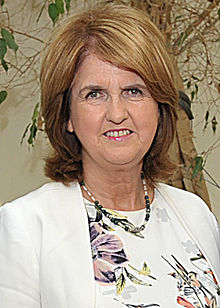
    Tánaiste Joan Burton was first off the mark when, at the beginning of October, she made her infamous statement in the Dáil condemning protesters who filmed Garda handling of demonstrations on their “expensive phones, tablets and video cameras.”

    Given the circumstances it probably ranks as one of the most ill-advised comments ever made by a serving Irish politician, and her opponents fell upon it gleefully. She might not have actually said that if they can afford iphones they can afford to pay for water, but this was the meaning inferred from her words and her tone. It immediately appeared to turn  her into a figure of hate for the anti-water movement.

    Since then she has been booed and heckled wherever she goes, with protesters sharing and mobilising through social media in order to keep track of her movements.

    The culmination of all this so far was the fracas in Jobstown, Dublin.

    Allegations and counter-allegations have been made as to who did what and who was to blame for it, whether it was a peaceful protest or a riot, who should apologise and on what basis to who, but what is not disputed is that Burton was trapped in her ministerial car for two hours by angry demonstrators.

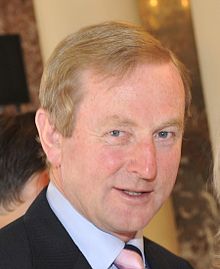
    This led to Enda Kenny bitterly complaining in the Dáil that the protesters had “descended on her like hounds after a fox”. One organisation responded immediately.  Sensing an opportunity, The Irish Council Against Blood Sports stated that if Mr Kenny felt that strongly on the subject he should…

    … Ban fox hunting.

    Meanwhile as far as the demonstrators are concerned it is still open season on politicians.

    At the Rochestown Park Hotel in Cork, Fine Gael citing “security fears”, pulled out of a planned regional meeting which Mr Kenny was due to attend.  Perhaps in part because Enda himself attended a function in Dublin where he was confronted outside the Mansion House by a group of some 50 protesters.

    When asked to comment on their concerns he replied: “Well it’s not about water, is it?”

    His response might have been off the cuff but nevertheless it happens to be the most succinct and insightful comment he has made so far. It is not just about water any more; it is about the Irish people saying enough is enough, and a significant portion of them bringing the Government to account.

    Unfortunately Enda’s moment of lucidity did not last long. Two days later, appearing on RTE’s Nine News to discuss changes to the water charges, he managed to iterate “The average worker, a single worker on the minimum wage of €35,000 is going to get back €400 in the income tax returns starting in January…”

    Once again the mob bayed for blood; the man’s so out of touch with the people he thinks the minimum wage is twice what it actually is. No wonder himself and Joan think that people can afford to own mobile phones and pay water charges.

    To be fair to Enda, it was probably simply a slip of the tongue, which is something we are all occasionally prone to. The difference is that when we suffer one it is invariably either ignored or immediately forgotten; a politician, and a Taoiseach at that, must always be on his guard or regret it. Like Joan Burton’s faux pas earlier, this one did him no favours.

    Meanwhile the Government has been forced into a massive climb-down. PPS numbers are gone, a €100 Water Conservation Grant promised to every household that signs up, rates reduced and capped until 2018. Opposition TDs are accusing the Government of “buying votes for the next election”,  and in a way they are correct in saying so.

    But the simple fact is that the Government had no choice. To carry on regardless against the will of the people would have been political suicide at the next election.  For the time being at least the situation has been defused, but there is still a long way to go.

    What happens after 2018? Will charges inevitably go up? People still remember the introduction of the Bin Tax: recyclables free and “You only pay for what you throw away.” The service was to be Local Authority run and not to be privatised.

    What happened to all those promises then? Can we expect the ones we are getting now to be broken in the same manner in three year’s time?

  • The top Christmas toy (Let It Go)

    The top Christmas toy (Let It Go)

    I’m no Scrooge; I love Christmas. I love everything about it especially the presents. I get so much amusement at hearing how my little cousins are being extra good this year to make sure they’re on Santa’s ‘nice’ list.

    Of course if you’re on that ‘nice’ list you’re likely to be first in line for this year’s most sought after Christmas toy: anything to do with Frozen.

    11315991545_f5b7f28483_o
    Photo Credit: Flickr; Eileen Neyon, http://bit.ly/1241Uo7

    I was in awe when I saw my 7 year old cousin’s list of Christmas presents. She had three categories: 1. If I’m good, 2.If I’m very good and 3. If I’m not good. To be honest I couldn’t see much difference between the presents in the very good category and the not good category, but one present I did notice was the Frozen Elsa doll.

    Yes, the very doll that was advertised at €500 on Donedeal recently. She’s also the doll that caused GardáÍ to be called to a toy store in Dublin after a fight broke out between parents all desperate to get this year’s top Christmas toy. Luckily for one 7-year-old, Santa bought her toys before she had even time to categorise them and a very merry Christmas will be had in her house. Unfortunately for many other children they will have to ‘let (it) go’ to their dream of having their very own Elsa, and really Anna is the hero of that film anyway.

    The demand for the Frozen doll this Christmas has intensified and for people who are planning to do the annual Christmas shop on December 8th it may be too late to get your Frozen merchandise. The cost is not what is frightening in this situation; it’s the fact that grown adults are willing to physically fight and risk being arrested to get a doll that in 6 months time will be lost, broken or completely forgotten about.

    This idea of the most sought after Christmas toy is not one that has appeared overnight; a few years ago it was the Nintendo DS. Remember that? My two younger sisters wanted one and even did chores to ensure they were on the ‘nice’ list.

    Fortunately and unfortunately for my parents a family friend managed to get one – the pink one – however how is it possible to explain that Santa loves one child more than the other?  For days, and what felt like weeks, those who no longer believed in the man in the red suit argued about what to do; give it one sibling or let another child have it and not cause a row. Sharing wasn’t an option as 21st century Celtic Tiger Cubs didn’t share.

    12522997185_6d41097d76_o
    Photo credit: Flickr; Tilaweed, http://bit.ly/1zZ2MWX

    When all hope was lost a shop announced a shipment of 20 Nintendos which would be in-store 9 am on a Monday morning. To my great amusement my father didn’t sleep that Sunday night and instead queued with a ridiculous amount of other people for the game console. He was 11th in the queue and at 6 am in the morning it hit him  that after 6 hours of queueing, if every person ahead of him bought two Nintendos he would have been left with none, not to mention the fact that he had taken the morning off work for this.

    A Christmas miracle happened and my father was triumphant in attaining the Nintendos DS. Christmas was saved in the Brady house, and the Nintendos in question, along with Super Mario, are now lodged at the back of some cupboard somewhere.

    My point? Every parent wants to give their child the most magical Christmas they’ll never forget, but put it in perspective there’s no point getting arrested over a Frozen doll. Some presents just aren’t worth melting for…

  • But First, Let Me Take A Selfie

    But First, Let Me Take A Selfie

    According to Snapchat in May 2014, the app's users were sending 700 million photos and videos per day. (Photo: wikimedia commons)
    According to Snapchat in May 2014, the app’s users were sending 700 million photos and videos per day. (Photo: Wikimedia Commons)

    The public has been asked to think before taking out their mobile phones to capture pictures of horrific accidents.  the appeal follows the death of toddler on the way to kindergarten in Waterford.

    The Waterford City Fire Station had to make the plea on it’s Facebook page after a fatal road accident in the city centre claimed the life of two-year-old Daenerys Crosbie earlier this month.

    To think people could stand there and watch a toddler fight for her life, let alone video it on their mobile phones, turns my stomach and I’m sure many more around the country.

    On the city’s fire service’s Facebook status, they described how a few onlookers immediately reached for their phones to take “ghoulish, thoughtless and extremely distasteful” videos and images of the horrifying scene.

    The Facebook post read:

    “The crew at the scene were astounded by the number of people trying to capture the incident on their phones. This has been an ongoing trend for a number of years now, never better illustrated than at an RTA not too long ago where a man (In his thirties, not a teenager) crept up, phone poised and recording, to within ten feet or so of a car where we were trying to extricate the driver while the ambulance crew were treating him. The driver died en route to hospital.

    “Why do people do this? It’s ghoulish, thoughtless and extremely distasteful. We could fill this page with photos of the injured and dead that we see. But we don’t.

    “Sometimes it’s enough to know that horrible things happen without having to see them. Most obviously there’s the matter of respect for the dignity of the people involved and the desire of paramount importance to not add to the grief and anguish felt by their families and friends.

    “So if you know somebody who considers this kind of thing alright ask them to think about it just a little more.”

    To give my own honest opinion, I think the selfie craze in general has gone too far, so much so that the term is now featured in the Oxford Dictionary and the rumour mill has it that Kim Kardashian is set to release her very own 352-page selfie book, aptly named Selfish.

    For me, it was the ‘funeral selfie’ that really took the biscuit. This, I feel, needs no explanation and can be seen here.

    The selfie craze has become dangerous, even life threatening, as a Polish couple recently plunged to their deaths after trying to take a selfie on a cliff in Portugal. And that’s not all: in Manila, reports have said a 14-year-old student fell down her school stairs and died while she was trying to snap a selfie. In Mexico City, it was reported that a 21-year-old man died when he grabbed a gun with the intention of posing with it for a selfie and it went off, accidentally shooting himself in the head.

    And then to make matters worse, along came the selfie stick, which has somehow made it to Time magazine’s list of 25 best inventions of 2014.

    The selfie stick in action (Photo: Flickr)
    The selfie stick in action (Photo: Flickr)

    Mental health professionals are increasingly seeing patients who have become obsessed with and addicted to taking selfies.

    Psychologist Jason O’Callaghan of The D4 Clinic said “We now offer social media addiction therapy sessions in our D4 Clinic. It shows a narcissistic side to people’s personalities when they obsess about taking selfies. The odd one or two is fine but when people obsess about it to the extent to when they are not living in the now but living in the online world, then it becomes an issue. Only recently, cases have been seen where people have taken selfies at accidents instead of helping the people involved.

    “We also find a lot of anxiety and stress causes by online addiction where young people are more open to getting bullied online because it never stops, unlike school when they can leave and go home. They take what they see and what they read online to be factual, rather than understanding that some posts are fakes. Lies and options and views may be misunderstood. When it comes to body image, we often see celebrities posting images of themselves which are clearly photo shopped to make them look slimmer or fitter, then young people get upset with their own body image, not realizing the image they see is not really what the person looks like.”

    At some point, at least I hope, we will get tired of these “look at me” type photos bragging about how our lives are better than all the people’s we just sent the photo to. I don’t particularly want to see what you are having for lunch today; or how Starbucks spelt your name wrong on your overpriced coffee again; how many squats you did at the gym; or a video of a concert you’re at (all I can hear is screaming anyway). These are your experiences, enjoy the moment instead of watching it happen through your phone screen. Go out and actually live your experiences, if you wanted to watch it on your phone screen you could have stayed at home and saved your money.

    Let me take a selfie.. (Photo: Amy Grehan)
    Let me take a selfie..
    (Photo: Amy Grehan)
  • Listen to the People Enda

    Listen to the People Enda

    “People shouldn’t be afraid of their government. Governments should be afraid of their people.”  So said the 2005 film V for Vendetta.  Right now Enda Kenny should be very afraid of his people.

    220px-EndaKenny
    Enda. Out of Touch

    When the Fine Gail/Labour coalition came to power they faced an onerous task.  The banks were bust, the economy was in ribbons and some tough decisions had to be made in order to clear up the mess left by the previous Fianna Fáil administration.  The electorate knew this and left them to get on with the job.

    To be fair, the Government made a pretty good job of it for a while. Yes, austerity hurt, but sacrifices had to be made and the people uncomplainingly acquiesced.  Wages were cut and taxes raised.  As a result things slowly seemed to be getting better.

    And then came Irish Water.

    Whatever any one person might think about the merits of water metering, the state of the infrastructure and the necessity of paying for its refurbishment, the roll-out of Irish Water was a farce on the grandest scale.  It provides the ultimate textbook working model on how not to go about setting up such an institution.

    The NAMA sale of Siteserve, a bankrupt company with debts of €100m, to Denis O’Brien, Ireland’s richest man, was the first of a long litany of controversies.  That €100m was immediately written off and the debt foisted on to the taxpayer.  A few months later Siteserve was awarded, by the Government, the very lucrative contract to install the new water meters.

    Shortly after this every household in the country was sent an ‘Information pack’ inviting them, with a deadline, to apply for metering.  This without any indication whatsoever at the time of how much they were agreeing to be charged for the service.

    PPS numbers were demanded, not just for the principal occupier, but for every man, woman and child in the house.  Bank details and email addresses were also requested.

    The arrogance of the Government and Irish Water was breathtaking.  What right had they to expect people to sign a legally binding contract for water without even being told how much it was going to cost?  And to then demand their personal details and PPS numbers to keep on file into the bargain?  Who in their right mind would ever agree to such a thing?

    Unsurprisingly the people were outraged and took to the streets in protest.  Some marched; others blocked the installation of the meters themselves.  Many filmed themselves doing so.

    Joan Burton, in a further show of Government arrogance, subsequently complained in the Dáil that if people could afford expensive mobile phones to film with then they could certainly afford water charges.  Who pays for your phone Joan?  Answer: the taxpayer.

    The people have continued to march and plan to march again.

    All of this means that the country is rapidly becoming ungovernable.  A government rules by the consent of the people and the people are withdrawing that consent.

    Enda Kenny says that the only alternative to water charges is to raise income tax on the upper four per cent.  What is so very wrong with that?

    The poor and lower income earners of Ireland have borne the brunt of austerity for years.  Cuts in incomes and Social Welfare have been mirrored by increased taxation.  A little trimmed off here, a little taken from there.  They have given up to the point where they have nothing left to give.  Meanwhile the rich have escaped and become progressively richer at their expense.

    If this Government is to survive it must win back the trust and confidence of its people.  To do this it must first admit it has made mistakes and then redress them.  An admission might be humiliating, but it will be telling no-one anything that they don’t already know.  It is their only course of action.

    And it is to be hoped that they succeed.

    Never in the history of the Irish State has the electorate been so divided. If an election were to be held tomorrow many Irish voters may decide not to vote at all or lend their support to non-party candidates.

    Voters have always had notoriously short political memories, but even they are not yet ready to forgive Fianna Fáil.  Labour has all but disappeared off the bottom of the opinion polls and the various socialist parties never seem able to pull together in a coherent way.  Green is gone; if anyone even remembers them.

    The rising star in the Irish political firmament is now Sinn Fein; despite all the controversy regarding alleged IRA killings and the moving of sex offenders south of the border.  Ordinarily it would be more than reasonable to expect these allegations to damage the party; but this does not seem to be the case now.  Could it be that the people are so desperate for a party to vote for that they are prepared to overlook these transgressions?

    In any case, for all its political posturing Sinn Fein has no experience of government at national level and experience is what is needed now.

    Much the same can be said about the only other option: Independents.  While there are many laudable and honourable such politicians out there, and I for one would be tempted to vote for some of them, a rainbow coalition of Independent TDs is not what a strong government is about.

    Ireland needs a strong government, now as much as ever. Fine Gael can still be that government but it is absolutely essential that it gets back on track and becomes a government for the people; not against the people.

  • OPINION: Help or hinder, Celebrities and charity

    OPINION: Help or hinder, Celebrities and charity

    3471199535_329f8c4645_b

    Image by Sacca via Flickr

    Having grown up with the internet at my fingertips, perhaps I have developed a cynical eye – a digitally fuelled distrust, when it comes to the marriage of wealth and poverty.

    Last week, news of Kate Perry’s appointment as the newest Goodwill Ambassador for UNICEF got me thinking about this paradigm which so many charities are now employing to draw attention to their cause.

    The pop mega-star recently forked over $11.2m (€8.2m) for two L.A properties; and with song titles like “Ur So Gay” and “If You Can Afford Me”, one would wonder why people like Perry are picked to serve as role models for children in need.

    UNICEF for one, sees celebrities as a “vital and unique” part of their organisation, and has been doing so since 1953.UNICEF’s star-studded line-up includes Audrey Hepburn, Liam Neeson, Sarah Jessica Parker, Selena Gomez and Dustin the Turkey, to mention but a few.

    But what do these famous faces do?

    In an interview with Claire McKeever Communications Manager for UNICEF Ireland, she stated that Goodwill Ambassadors: “can make direct representations to those with the power to effect change and they can use their talents and fame to fundraise and advocate for children”.

    “Can” is a key word here. Participation is solely up to the individual. In fact, UNICEF ambassadors have been seen to do quite little in the way of active participation – usually one trip a year.

    According to Simon Scriver, Director of Total Fundraising, it really depends on the celebrity ambassador and if they themselves wish to act.

    “I think simply having a big name associated with your charity will not increase fundraising or necessarily further the cause. It may even leave you exposed as you’re somewhat reliant on their reputation,” said Scriver.

    Indeed Celebrity Ambassadors could almost be viewed as double-edged swords. The sexual abuse scandal involving Jimmy Savile last year has resulted in the closing of two separate charities which were affiliated with the British DJ and BBC television presenter.

    McKeever insists that UNICEF’s ambassadors are chosen based on certain criteria so as to minimize such risks : “A UNICEF Goodwill Ambassador will have demonstrated a commitment to improving the lives of children worldwide before they are appointed.”

    For many other charities though, these are risks they must take. The fact of the matter is, people are more likely to listen to a celebrity then they are to a charity spokesperson. Celebrities are the sugar coating on an otherwise bitter pill.

  • Are we happy to accept failure?

    Are we happy to accept failure?

    Image courtesy of Wikipedia commons
    Image courtesy of Wikipedia commons

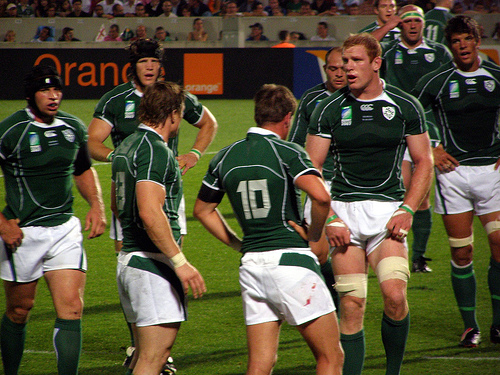
    Ireland’s agonizing defeat against New Zealand’s All Blacks in the Autumn Internationals last weekend signaled yet another disappointment for Irish sports. Having lead the game the whole way through, all it took was one try from the Blacks to crush Irish dreams in a matter of seconds.

    Within minutes of the final whistle being blown, Facebook and Twitter were awash with comments from members of the public expressing their anger and disgust. Then, just like that, the public’s words of resentment were replaced with words of consolation for a team that had “played so well.”

    In his post-match interview to BBC, Seán O’ Brien expressed his frustration at his teammates for letting such a monumental victory slip through their fingers. Despite receiving words of encouragement from the journalist, he summed it up for all of us when he said: “we lost.”

    The question that must be asked then is, are we as a country happy to accept failure?

    Ask yourselves, would New Zealand have been so quick to emphasis the positives had the roles been reversed? The answer: probably not.

    As the Irish sporting history books would suggest, we have come to be known as a nation of “second bests.” Back in 1990, Ireland suffered a harrowing loss to Italy in the world cup quarterfinals. Despite not managing to win a single game during the tournament, thousands thronged the streets to welcome home our “heroes.”

    Evidently, there are those who will argue that it was a massive achievement for a country so small, but Portugal and Switzerland who are of similar population size to us have both managed to reach the top level in various sports, so why can’t we?

    Ireland is a small nation that punches well above its weight in many aspects of life. We are home to some of the world’s greatest writers like Oscar Wilde, and great musicians like U2, so why doesn’t the same success transcend to sport?

    Of course, we have produced many champions such as Ronnie Delaney, Michael Carruth, Robert Herffernan, Eammon Coghlan, and Sonia O’ Sullivan among others, but in recent times, our results have failed to match our potential.

    Sports Psychologist Canice Kennedy believes that this is because “ we have a national inferiority complex which is typical of small, young nations previously occupied by a large foreign power.  This transfers into low levels of expectation in terms of sporting success in some sports particularly where we have not been successful in the past or where we do not have modern training facilities. In these sports we cannot compete with our neighboring countries…while we are never happy to lose, we are often happy not to lose badly.”

    The reality is that there is a very thin line between success and defeat. In his famous poem entitled If Rudyard Kipling said “If you can meet with triumph and disaster, and treat those two imposters just the same…you’ll be a man, my son!” However, Roy Keane, one of Ireland’s leading sportsmen is one who is unwilling to accept this mentality as he famously once said, “show me a good loser, and I’ll show you a loser.”

    Ultimately, if you can find happiness in defeat, then you’ll never be a winner. Keane has recently taken up post as assistant to Ireland’s new football manager Martin O’ Neill. Only time will tell if he’ll be able to communicate his winning ideology to a bunch of players who are in desperate need of some tough love. And, who knows, if he can succeed, then maybe other sports will follow suit.

  • Do you know first aid?

    Do you know first aid?

    A study carried out by NUI Maynooth in October 2012, on behalf of the Irish Red Cross shows that 95% of people surveyed would not respond in an emergency situation, such as a traffic accident or cardiac arrest, as they feared not being competent enough to offer assistance, even if they have been trained in first aid.
    We went to the streets of Dublin to see what the public thought.