Many of us are stuck at home with extra time on our hands. Nathan Davies discusses a safe and fulfilling pastime that many have turned to in recent months: community gardening.
Photo taken by Nathan Davies
The past decade has seen a steady rise in the number of community-run gardens being planted in Ireland. In the last year, however, this hobby has grown even further as a wholesome pastime during trying times.
Whether you have a spacious back garden or even just a south-facing window, there is plenty of room to plant some greenery.
For those with more ambition though, renting a plot in a local community garden is a perfect way to exercise your green fingers.
Unlike personal gardens or public gardens, community gardens are allotments given to a local community to do with as they please. Locals rent out spaces to grow whatever they desire – some people tend to flowers and rare plants to make the garden prettier, while others grow fruits and vegetables for harvest.
A volunteer-run organisation, Community Gardens Ireland, was set up in 2012 to oversee community gardens in both Ireland and Northern Ireland. The organisation promotes the building of new gardens and supports them financially. The CG Ireland Facebook page boasts almost 4,000 followers and is updated daily with photos from gardeners nationwide who are proud of their work.
Importantly, CG Ireland have put in place rules to ensure that participation in community gardens is as safe as possible during the Covid-19 pandemic. All activities are held outdoors, and many gardens have been reorganised to allow people to work on their plots while remaining socially distanced. Despite this, many gardens were temporarily closed off over the summer, but have since been reopened and remain open during the second lockdown.
Social Democrats Councillor Joan Hopkins oversees the Baldoyle Racecourse Community Garden. She explained: “The garden was started in 2013 with some help from the council.”
“It doesn’t look like much now in December, but it comes up lovely in the warmer months. There are people in the area working on it throughout the year.”
The garden is growing bigger every year according to Hopkins; however, the community is making sure that it stays as eco-friendly as possible.
“Everything in the garden is either upcycled or recycled out of plastic and old wood,” said Hopkins.
The effort that locals have gone to maintain the garden is striking – they recently strung together an entire shed out of upcycled water bottles. They put soil on the top of a second shed to allow for a roof-garden.
The work that the volunteers in Baldoyle put into their garden saw them win the Community Spirit Award in 2018 along with a €2,000 prize from Dublin Bus.
The rise in interest in gardening has many causes. In 2020, it is a safe and fulfilling hobby – one that you can reap the rewards of in several months’ time.
However, it also comes from the rise in demand for organic foods as well as food that has been produced with a low carbon footprint. Those who plant, grow, and harvest their own food can rest assured that they are eating the most natural food possible and enjoy themselves along the way.
The City’s Ciaron Noble spoke with Enable Ireland representative Donal Kitt about the role technology has played in helping them keep the services up and running for their service users during the pandemic.
As the pandemic threatens to overload the global economy, the healthcare system, it’s also having a powerful impact on the security of business and people.
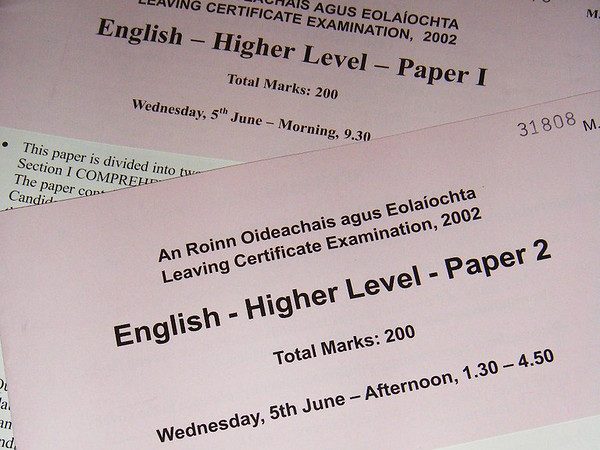
As worrisome as the 2020 Leaving Certificate exams were, many of the students felt relieved after the decision was made to move to Calculated Grades instead. Little did they know that the autumn would bring more concerns. Laura Matjusaityte explored how the calculated grades affected students this year.
Photo taken by Sinéad Cochrane. Sourced from Flickr.
It all started on April 10th when the decision was made to postpone Leaving Certificate exams due to the dangers posed by Covid-19.
As the usual order of things was jeopardised by the pandemic, a further decision was taken and the Leaving Certificate examinations were replaced by a system of Calculated Grades.
In order to forecast students’ grades the system took the estimated marks, decided by teachers and reviewed by other authorities, and predicted the grades that students would have received if examinations would have taken place.
Many students interviewed by TheCity.ie reporters back in March believed that Calculated Grades would be the best option in such circumstances.
When the results came out on the 7th of September a wave of errors followed.
Oisin Tiernan from Wexford shared his experience saying that he was “delighted with the grades” that he got and was able to secure the CAO place that he wanted.
“For the most part, I think 95 per cent of people I’ve talked to have been happy with their grades”, Oisin said, acknowledging that in his opinion, Calculated Grades were “a good decision”.
“I got grades that I was very happy with, that I felt reflected my work perfectly”, Oisin added.
Oisin secured his first choice CAO place in UCD studying Politics and International Relations.
The Department of Education and Skills acknowledged on September 30th that two errors occurred in Calculated Grades, according to independent experts’ from the Education Testing Service (ETS).
To calculate the grades, students’ scores from Irish, English and Maths as well as scores from two subjects with the highest marks were meant to be used. Instead, the system calculating the grades added two subjects with the weakest marks. This led to some students receiving lower grades than what their scores would have actually been.
The second error occurred on how algorithms regarded students’ grades on the extreme ends of the scale, i.e students who score from 99 percent to 100 percent and zero percent to one percent.
According to the ETS statement, the second error would not have had a “magnificent impact on results”.
Another student named Kate McAuliffe secured her first choice in Law in UCC. She said she was “happy enough” with her results, even though she felt she got “downgraded in some of the subjects”.
“I only know one person who didn’t get their first choice in CAO and they were in a grind school,” Kate said.
“Overall in my own experience and looking at my own friends group, I think a lot of people were quite happy,” she added.
Kate has rejected the UCC offer as she accepted a place in University of London instead. She is studying online at the moment and waiting impatiently until she will be able to move to London.
The Department of Education and Skills issued a statement last week acknowledging that nearly 7,000 grades will be increased after the errors will be fixed, which will affect over 6,000 students.
It was noted that no student will receive lower grades due to the process.
This means that many students who will receive higher grades will be eligible for their first CAO choices.
CAO released a statement declaring that all students with upgraded results will be included in the Round 4 offers.
It is still unknown if all 6,100 students affected by the errors in Calculated Grades will be facilitated to commence to the courses which they otherwise would have been offered in the first place.
It is estimated that there will be another 450 new applications to Technological University Dublin after the fourth round, according to TUD spokesperson Melda Slattery. “We believe that approximately 20 percent, around 85 students, will be entitled to receive an offer from TU Dublin”, she added.
As the new academic year already started a few weeks ago, many students joining through Round 4 will have to catch up with their peers.
Ms Slattery acknowledged that the university will do “everything possible” to facilitate new applicants.
By the time of the publication the Higher Education Authority and CAO did not respond to questions on how they are planning to facilitate all students with upgraded results in courses of their choice.
For some, the mind can be a form of imprisonment in itself. Living with mental health disorders can be a daily struggle for many people. What happens to those people when a global pandemic hits, and the country must go into lockdown?TheCity.ie’s Kate Brayden, Cameron Weymes and Ayumi Miyano report.
The level of anxiety which the nation is currently experiencing is just a sample of what those dealing with mental illness have to cope with on an ordinary day.
For those who experience a heightened feeling of worry, fears over the health of family members and friends are extremely common, as well as fears regarding their own health. Covid-19 and the emphasis on hygiene, protecting others, and daily death tolls is causing severe stress for many. Being unable to physically see loved ones in person can take a drastic toll, and can lead to a sense of hopelessness and loneliness.
In TheCity.ie’s video project on mental health during lockdown, Kate Brayden interviewed her twin sister Eleanor, who has Obsessive Compulsive Disorder and severe anxiety, as well as Eleanor’s boyfriend Dan, who has been diagnosed with high-functioning autism and agoraphobia.
Eleanor’s family also feature in the project, illustrating how living with those suffering from psychological distress can impact the entire home. Cameron Weymes spoke to chartered psychologist Dr Christine Tizzard about the impact of quarantine and self-isolation on wellbeing in general.
TheCity.ie’s Kim O’Leary has been looking at how professional and amateur boxers are continuing their work-outs at home during the Covid-19 lockdown. Kim spoke to Ireland’s youngest female pro-boxer Katelynn Phelan and her father/trainer Paddy Phelan, who are hoping to be back in the ring sooner rather than later
The coronavirus has hit the sporting world hard over the last few weeks, with many contact sports like GAA, basketball, soccer and cricket seeing their seasons cancelled. It’s also been a major blow for the rising stars on the Irish boxing scene, with the Irish Athletic Boxing Association (IABA) postponing all championships, competitions, clubs shows and tournament due to take place this summer.
However, there may be some good news on the horizon, with recent talk about boxing returning in June in a series of behind closed doors shows that would be shown on live TV. It is understood that Ireland’s boxers are determined to prepare for the rescheduled Euros as well as the postponed Tokyo Olympics, which is expected to take place in the summer of 2021.
Speaking at the launch of the Government's new #InThisTogether campaign, Irish boxer Kellie Harrington said that training at home helped her through self-isolation. She said Irish athletes will be posting fitness tips online as part of the campaign. pic.twitter.com/pTpNr4ghcR
To find out how boxers and boxing clubs are preparing for a potential return to boxing later in the year, I spoke Ireland’s youngest female professional boxer, Katelynn Phelan from Kildare Town, and to her father Paddy Phelan, who is also a trainer at St Brigid’s Boxing Club in Kildare Town.
Katelynn comes from a family of highly respected boxers and her brother Allan Phelan is the current featherweight pro.
It’s been an impressive year for Katelynn as she recently won her first ever bout at the ‘Celtic Clash’ boxing tournament in February against Bulgaria’s Borislava Goranova, winning all four rounds in a decision at The Devenish Complex in Belfast.
Now with the lockdown measures still in place due to covid-19, Katelynn says that she is still training at home.
“I plan on getting myself an Irish title by the end of the year.”
As the Covid-19 pandemic continues to impact Ireland, many people have reported that they are having sleep issues. TheCity.ie’s Kim O’Leary speaks to sleep physiologist Motty Vargheseabout how to ensure students get a good night’s rest – especially as they approach the final few weeks of assessments.
Students sleeping in lecture theatre (Photo: Pexels)
For the last four weeks, I have found myself spending the late night hours constantly tossing and turning in my bed, unable to drift off into an uninterrupted sleep. There is always a distraction of some sort.
The latest Covid-19 updates from Ireland and around the world, as well as the anxiety about final assessments at college, make it hard to ‘switch off’ and sleep through the night.
With the final few weeks of the academic year upon us, many TU Dublin students are wondering how they can get some peaceful rest, despite the troubling circumstances they are experiencing.
College student asleep at her desk (Photo: Pexels)
I started our interview by asking Motty Varghese,how many hours of sleep each night does the average person require?
Varghese: Sleep need is variable between individuals and every individual’s sleep need is unique to themselves. The recommended sleep duration for an adult is over seven hours, and not recommended is less than six hours or over 10 hours. In sleep problems like insomnia, your sleep quantity can be compromised. In sleep disorders like obstructive sleep apnea or restless legs syndrome, you will have a tendency to sleep for a longer time. However, despite increased sleep duration, the person can still feel tired.
Teenagers or young adults would also have a tendency to go to bed very late and wake up very late. If there is an extreme delay in sleep onset, it could be symptoms of Delayed Sleep Phase Disorder (DSPD) – unfortunately, this can have an adverse impact on their academic performance. This happens due to a delay in their circadian clock, not exclusively due to poor habits alone. This warrants therapy, since regularising their sleep patterns by strategic light exposure can bring multifaceted benefits.
O’Leary: As the Covid-19 pandemic continues, do you think there has been a noticeable change or disruption in sleep patterns? If so, why?
Varghese: Yes, this has been flagged as a problem by many. If you remember, the lockdown was implemented around the same time the clocks moved by an hour for DST. With the implementation of lockdown, many people started working remotely, and with it came some flexibility in the morning as well. Our sleep patterns changed and we started sleeping in in the morning. Along with it, there is a general anxiety about COVID 19 and this has been leading to an aroused mental state or a state of hyper-alertness for people. It is needless to say when we are hyperalert, our sleep onset can be delayed and the sleep quality can be compromised along with sleep quantity.
O’Leary: What recommendations/advice would you have as a sleep expert for TU Dublin students having difficulty getting enough sleep during the pandemic, as well as preparing for their final assessments and exams?
Varghese: Your approach to protect your sleep should focus on a few factors:
1. Avoid a state of hyper-alertness
Preoccupying yourself with thoughts of what is happening around you can lead to cognitive or mental arousal. You also want to be informed at the same time. Hence avoid consumption of news via TV, social media, or other sources close to bedtime. Relying on credible sources of information will help to avoid unnecessary panic. Engaging in some relaxing activities like meditating, doing some breathing exercises etc can also help reduce anxiety.
2. Prioritize sleep
You know how important sleep is for you, yet you cannot force it. Understand that sleep is a natural process, but you can nurture it by adopting certain good habits. It may go against what your preferences are, but prioritizing sleep will pay you the dividends now, more than ever.
3. Have a routine
It would also be unrealistic to ask you to adhere to the pre-lockdown sleep schedule since you have the flexibility of working/studying from home and not commute. You may be waking up late, but ensure you still have a structure and are not sleeping in too late. On the upside, at least you are not accumulating a “sleep debt” and focus on consistency of bedtime and wake time through the week. You can gradually move to an earlier wake time when the lockdown is over.
4. Know your rhythm
Whether you are working or studying, productivity is an important factor to keep our stress levels down during lockdown. Everyone has a chronotype – evening, morning, or intermediate – based on your genetic coding. We also call them “larks” and “owls”. This would also mean you will have a preferred bedtime, wake time, and time of optimal alertness during the day. For instance, an evening type person tends to go to bed late and wake up late and a morning type person will do the exact opposite. Pay attention to this pattern of sleepiness at night and alertness during the day. You will be able to be productive and get more done by following your circadian rhythm.
5. Light
Light is a powerhouse of energy. Focusing on light exposure during the day and reducing light exposure closer to bedtime indicates to our body about the day-night cycle and prepares itself for sleep at night and alertness during the day. Seek out natural daylight in the morning and avoid blue light exposure from screen devices for two hours before bed time.
Blue light from screens can hinder sleep (Photo: Unsplash)
O’Leary: Are there any particular food types that can help people to have a more restful night’s sleep?
Varghese: A lot of research has been done into the effect of food on sleep. Research indicated a carbohydrate-rich meal ingested four hours before bedtime in the evening reduced sleep onset latency. It is also advised not to eat any food within 2-3 hours of bedtime since this can increase the body temperature (and delay sleep), cause heartburn, etc.
Food that is rich in tryptophan is also mentioned in the proposed relation of food and sleep.
O’Leary: Is it true that less sleep may weaken the immune system and make people more susceptible to illness, such as this virus (Covid-19)?
Varghese : It is true that sleep and immunity have a mutual relationship. We have known for a very long time that there is an increased chance to catch a common cold or to have flu symptoms if you are sleeping poorly. There is also evidence that the flu vaccination was more potent in individuals who were good sleepers compared to poor sleepers.
It is also vital for us to prioritize our sleep during this time when we are constantly looking for a new line of defence against the virus. It would also be ideal if sleep becomes part of our public health messaging along with good dietary habits and exercise.
O’Leary: Do you think that more studies should be carried out to analyze sleep patterns during the Covid-19 pandemic?
Varghese: Pandemics like this are thankfully not a common occurrence and it will be useful to study how sleep patterns are affected during this period. It will help to prepare for any future pandemics if at all it happened. Sleep monitoring wearable devices (like Fitbit) will come in handy in situations like this to look at the sleep habits of a large number of people.
O’Leary: Some people are also reporting that they are having vivid dreams as of late, do you think that dreams are an important coping mechanism during this stressful time?
Varghese: Dreams occur during a specific stage of sleep called REM sleep. The functions of REM sleep are memory formation and emotion regulation. The information which we take in during the day is processed during REM sleep and converted to memory.
Unfortunately, we have an information overload now which is not very pleasant, and this may be having an effect on our dreams.
Most of the REM sleep or dream sleep happens in the second half of the night. So we may also be getting some more dreams in the extended sleep period in morning hours and these dreams are possibly influenced by the information we received the previous day.







You must be logged in to post a comment.