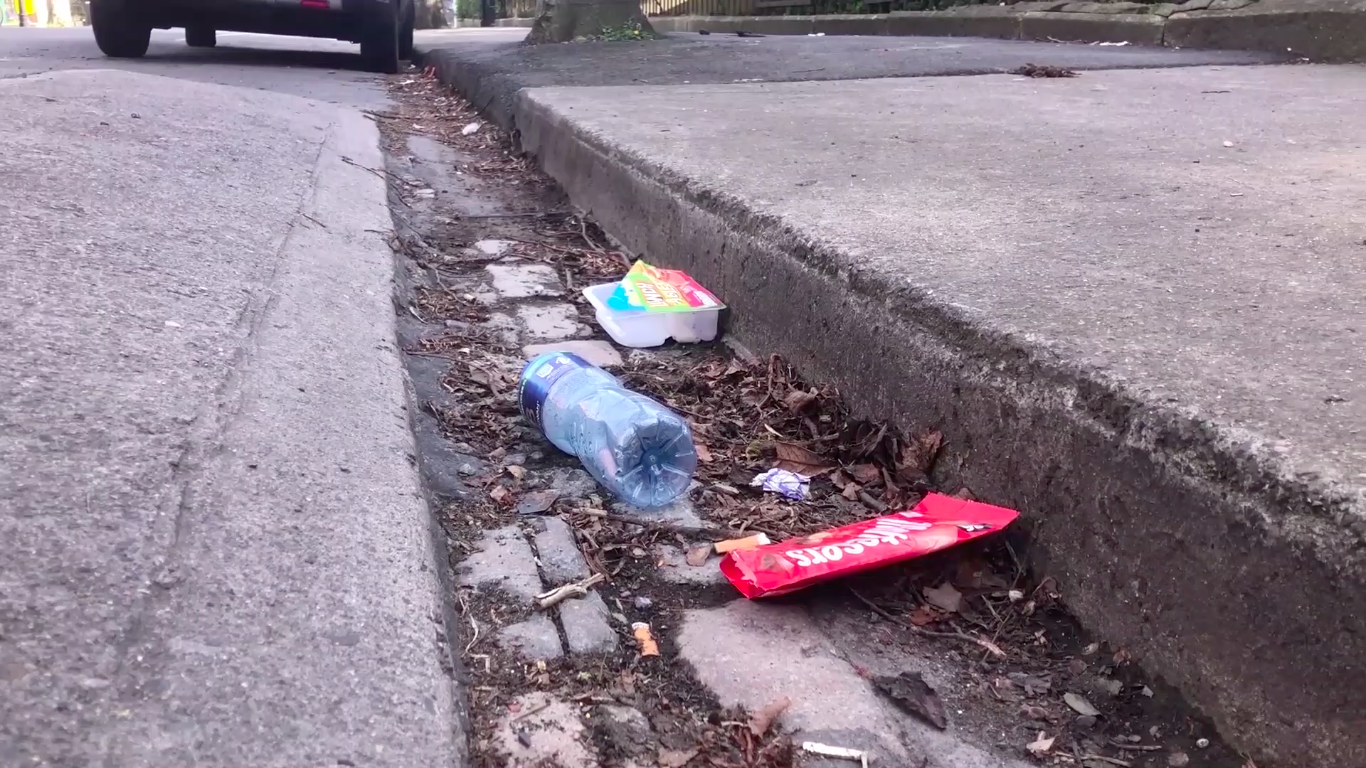
According to work carried out by Irish Business Against Litter and An Taisce, the level of littering in Ireland reached a 13-year high last year. Of the 37 towns and cities inspected, the amount of litter increased in 24.
With parts of Dublin ranked worst overall for litter volume and illegal dumping, community cleanup groups in the capital are a welcome sight. The City joined one such group as they treated a sports court in The Liberties area to a spring clean.
“We’re aiming to do cleanups around Dublin within our 5k,” says Kathleen Reilly, referring to the allowed travel limit under Covid restrictions.
Spurred into action by the state of the stretch of the Royal Canal near her home, Reilly’s friend Ciara Haughney proposed the group’s first cleanup in March.
“I just got so down and disheartened looking at all the trash in the canal,” she says. “Especially when you see nesting birds and swans trying to make a nest, and they’re picking up litter with their beaks. It’s just really depressing.”
After being supplied with litter pickers, bags and gloves by Dublin City Council, Haughney put the word out to friends in the area, “and surprisingly loads of them were like, ‘yeah it’s a disgrace, I really want to help.’”
The success of the first cleanup effort encouraged Kathleen Reilly to set up an Instagram page, and more volunteers signed up.
“Whenever you actually look,” says Reilly, “it’s very dirty. There’s a lot of litter, there’s a lot of dumping. It’s not pretty to look at. So it’s just kind of encouraging people to be looking after their city.”
A number of factors connected to the Covid-19 pandemic have contributed to the recent spike in littering. Firstly, restrictions on indoor activities have meant a massive increase in outdoor recreation, where not everyone, it seems, pays the appropriate respect to the surroundings they’re enjoying.
Another factor is the deluge of disposable containers produced by a shift to a takeaway model for restaurants, bars and cafes, while PPE equipment also featured high up on An Taisce’s list of most common litter items.

Cleaning up the streets during Covid-19 has brought its own unique challenges for councils.
“We’ve broken our [street cleaning] crews into pods,” says John McPartlan, Dublin City Council public domain officer. “If someone is sick or is a close contact, you lose that person; you can’t take anybody from another pod to make up for it.”
McPartlan also explained the rationale behind the positioning of bins in the city – many have suggested there aren’t enough around.
“The rule of thumb for a bin is that the area has to have heavy footfall or else have food outlets like chippers or takeaways, sandwich shops, that type of thing. Where someone comes out and eats their food and then wants a bin. We don’t put bins in housing estates, or quiet streets.
“A lot of the parks only have bins at the entrance to the park. The workers in the park are there to maintain the park and then the waste management function is to empty the bins. But you won’t have vehicular access into the parks, which is generally how we empty bins; we send the side loader around. But we do try to put as many bins in heavily used areas as we can. We’ve started putting out beach barrels now in these locations [that have recently become popular for outdoor recreation].”

To date, Haughney and Reilly’s group have done six cleanups and counting, and anyone can join in; look for Make Our Streets Clean on Instagram if you’d like to get involved. The floor is open to suggestions on where to tidy up next – the scene of today’s mission is beside the home of one of the volunteers.
Alternatively, search online for a similar group near you, or ask your local council for litter-picking equipment.

You must be logged in to post a comment.