Tag: photography

  • Pandemic as muse? Artists on their art in a year of lockdowns

    Pandemic as muse? Artists on their art in a year of lockdowns

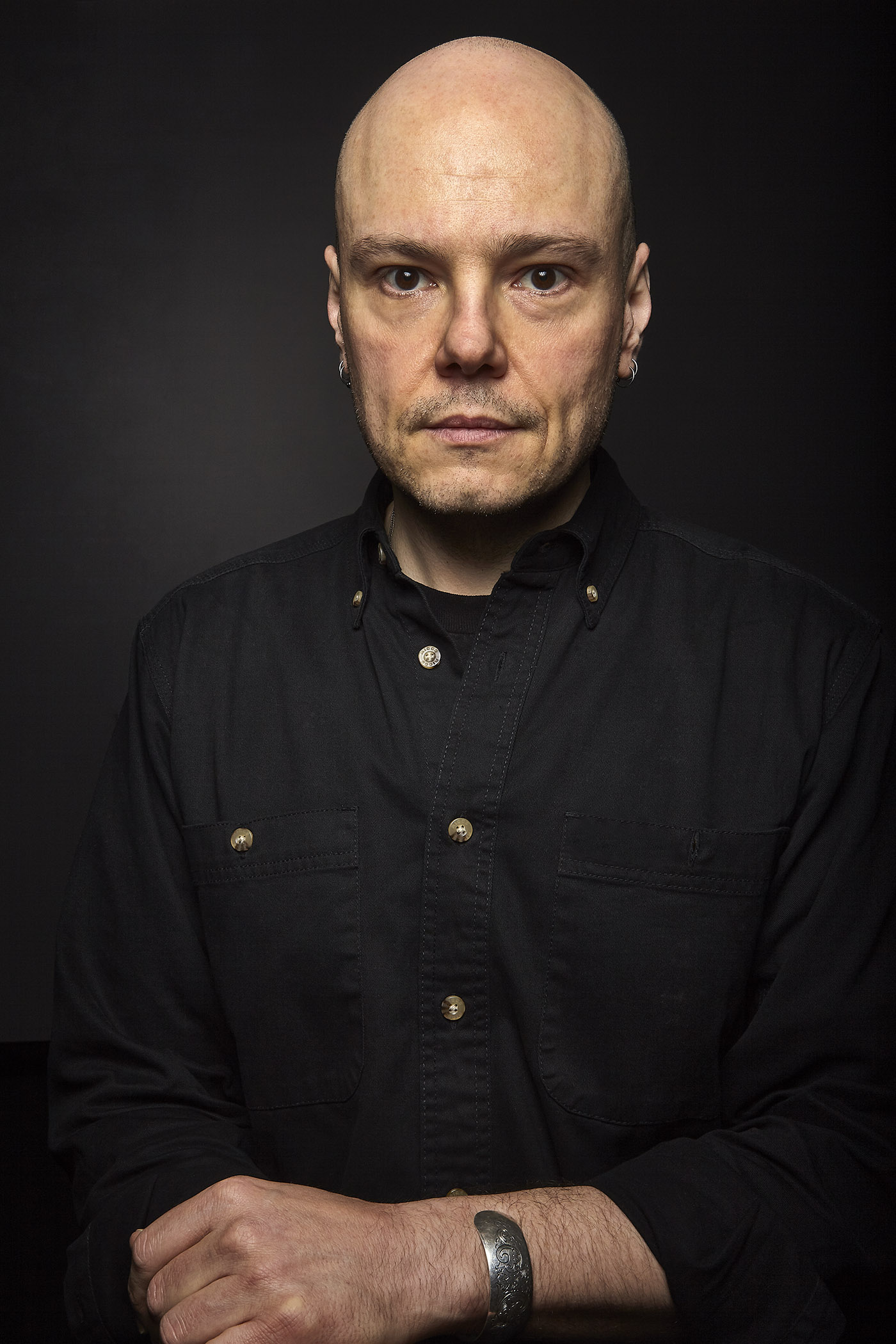
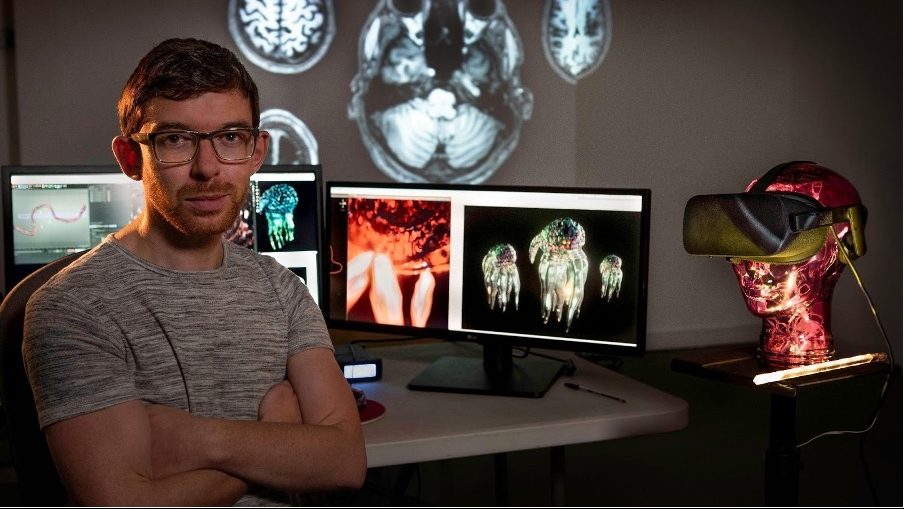
    Alan James Burns in his studio. Photo courtesy of Trevor Whelan

    Alan James Burns

    “I’ve had to move a lot of work online, which is quite interesting because it’s something that I never thought would be possible,” says Cavan-born visual artist Alan James Burns. “I usually create large events with up to 50 people attending, so that went completely out the window. Moving online has opened me up to be able to work from my bedroom, or work with international partners because you kind of break down the idea of having to be in the studio together.”

    Burns says he “can’t work now without putting in the context of the pandemic somehow.”

    “When I’m writing up my ideas and developing new works, it’s all with the context and background of this last year.

    “Everyone’s gone a lot more digital now, and the idea of the human machine – the digital world and our interconnectedness with that – has started feeding into a lot of new works I’m creating. I’m working with brain computer interfaces – looking at the idea of the human machine and what possible futures are like when we become more integrated with technology, which the pandemic has forced us all into.”

    Along with Sinead McCann, Burns is currently collaborating with users of intellectual disability services at St John of God Hospital in Dublin, as part of an artist in the community project. Participants are receiving training in audio recording and editing, and the piece they’ll create together will be exhibited on Culture Night in September.

    “That came about because of the pandemic. With everyone being at home, we decided to create a work, and the one medium we could think of that people would have access to tools, like a phone and stuff, was sound. So we’re all recording sounds and editing them together remotely online.”

    Tonally, Burns says his latest output has been “actually more hopeful than what it probably had been before the pandemic. The works that I’m creating have more joy within the production and also within what they’re trying to achieve for an audience when they do engage with it. So rather than looking negatively outward, they’re looking positively outward.”

    Burns says the Irish government’s Pandemic Unemployment Payment (PUP) has been a lifeline in compensating for cancelled projects.

    “Actually, I’m better off [than before the pandemic] thanks to the PUP. As an artist, you have no regular income, you live on minimal amounts of money, so the PUP was the first time many of us got a living wage that you could rely on.”

    Upcoming work: “Open Mind, Closed System”, Carlow Arts Festival, Co Carlow (June 2021)

    Ella Bertilsson

    Ella Bertilsson. Photo by Ella Bertilsson

    For Swedish multidisciplinary artist Ella Bertilsson, the initial lockdown last March was a case of life imitating art.

    “In the month before lockdown,” she tells The City, “I was working on a piece where I did a performance from inside a cardboard box, which was all about being trapped in a domestic space. That opening was I think two weeks before [the first] lockdown. So that was a super-odd coincidence.”

    In terms of concepts, Bertilsson feels the pandemic “will probably feed into my art at some point, but I think at the moment I find it hard to tell.”

    In terms of practice, however, her studio’s closure forced a rethink, as her workspace became “a tiny sewing machine table in a tiny room” at home.

    “I was like, ‘What do I do now?’ So, that was nice because it really brought me back into drawing a lot. I ended up illustrating a book cover and went back and sold a lot of prints, and I did a lot of photography. So the circumstances had an impact on my practice. It definitely had a creative impact. I’m now working with 35mm photographs I took around my neighbourhood every day for six months, and I’m turning them into digital collages with written text. That will be in my solo exhibition in Ballina next year.

    LOOPING SQUIRREL by Ella Bertilsson, music by Economusic

    “I hadn’t been doing drawings since my BA really,” continues Bertilsson, who’s been based in Ireland for the better part of two decades. “Now I’m drawing, and I’m printing and I’m doing things that I would have done a long time ago, so I think that’s kind of nice because I’ve done a bit of a circle and now it’s part of my practice again.”

    Bertilsson says she has “really enjoyed” the slower pace of the last year, in which she’s had “time to reflect on the work, and not have the pressure of exhibitions”.

    She counts herself fortunate to have been funded by the Arts Council for a number of projects in the lead up to and during the pandemic.

    “I think I was kind of lucky that I had that time to apply for awards,” she says, “and didn’t really have to use the PUP at all.”

    Upcoming works: Solo Exhibition, Ballina Art Centre, Co Mayo (2022),  Solo Exhibition, The Complex, Co Dublin (2022)

    Marcel Vidal

    Marcel Vidal. Photo by Marta Faye

    Sculptor and painter Marcel Vidal came into 2020 having picked up three prestigious awards in the previous year and landed a partnership with a commercial gallery.

    “I was in the midst of making work for a solo show,” Vidal says, “so that work had been established and the ideas were in place of how that might manifest itself. In a way, the work, as it’s developed, it’s changed in terms of what the overall show might have or potentially could have appeared like. It has a lighter tone. 

    “Some of my work would be large-scale cultural installations that are predominantly black, with paintings hung around the sculptural objects, whereas now the show is going to take on a lighter tone. The weight of [the work he is known for], its energy, is at this time unnecessary. So that all left my brain, and then it became about being in the studio [to focus on painting].

    “But it’s also maybe just that, as an artist,” continues the Wicklow native, “you find a way to manage the work. So for me, painting has been the easiest form to work in, in terms of just the practicalities of getting into the studio and being motivated. So in that way, [the pandemic] has influenced my art, in that I haven’t thought about sculpture, or that overall idea of making sculpture. But in conceptual or thematic elements, it wouldn’t play in that way. The type of art I make is never trying to speak on current or topical issues in that way.”

    The possibility of exhibiting Vidal’s show online was mooted, which he found “quite difficult, because it’s imagery that has a materiality, a physicality and a present. If it goes digital, the viewer is not having their own personal experience with it in a space. 

    “You come to a gallery or exhibition space with a set of criteria or a set of expectations as a viewer. And for me, the image and how it’s displayed and how you navigate that space – that brings out something else and that’s personal to that viewer. But if it goes into a digital format, you lose that context and it becomes something that could be viewed in distraction while doing something else. The subtlety of the work would be diminished and it could be misrepresented too.”
  • A community of highflyers

    A community of highflyers

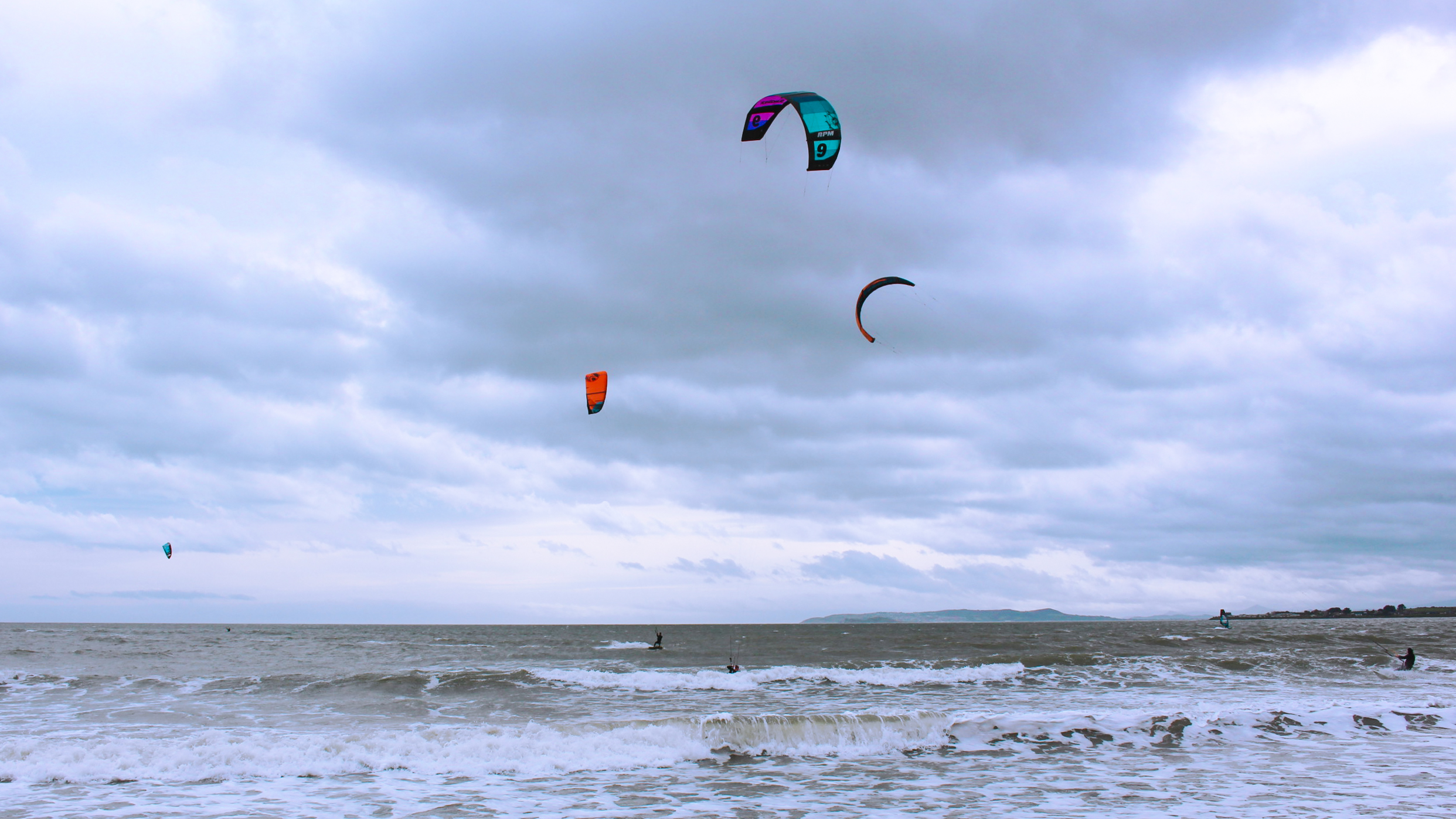
    On Rush’s South Beach in north county Dublin, a collection of kite and windsurfers gather. It’s a way of blowing off the cobwebs, finding a community, and getting in touch with nature. Here are some of the incredible sights I saw and people I spoke to.

    “I taught myself how to kite surf. I didn’t know anyone who did it, so I taught myself”
    “I’ve spent my entire life learning about the water and the winds,” says Oisin van Gelderen, an Irish windsurfing champion who has set the Irish speed sailing record. He started at age six in “Killary adventure centre when I was on holidays”. He says that windsurfers live for the water and the wind – “in the depths of January it’s a bit bleak, but it’s blowing 40 knots of wind and it’s a great wavey day – we’re out doing jumps and loops and all kinds of things. We couldn’t be happier. I feel incredibly lucky that we can do this. I’ve barely missed a windy day since I started”
    “Their power is 20 feet above their heads”
    “Ours is right in front of us”
    “Rush is one of the better wave beaches in Dublin”
    “I can still see us doing this in our 60s and 70s”
    “Even when you’re a beginner in windsurfing and you’re drifting along at five kilometres per hour, it feels like 50, because your body is part of the whole rig”
    Steven, pictured left, started windsurfing at the age of 12. One day, after his summer job of cutting grass at a water sports centre, he made use of the free gear available “and I just never stopped after that.” Garret, pictured right, started windsurfing when he was just nine years old on a campsite in West Cork. He saw a father and son learning to kite surf. The father invited him to join in, taught him to surf, and “now, that man’s son is one of my best friends.” The two travel all over Ireland with the sport and have raced in the Irish slalom series for years
    “We’re a very open group. If someone rocks up to the beach and they’re new, we’ll tell them where to go, where to get information, and welcome them in”
    “Kitesurfers are the Evangelical Christians of water sports – always trying to convert people”
    “I look at the clouds and see what way they’re going; I pay attention to the currents… I’m also glued to the weather app on my phone”
    Sailing into the sunrise
    Matthew is the founder of Fly High Windsurfing Ireland, an online group for windsurfers to connect. He’s also using the group to encourage surfers to clean up after themselves and leave no trace. “I’m obsessed with water sports,” he told me
    “You have to know the currents and you have to know the wind. If you don’t you’re gonna be in big trouble”
    “With the lockdowns you see all these sea swimmers now. For the first time ever, they’re considering swimming in the water. And people always ask, ‘is the water not freezing? Is it not mad wet?’ We’re wearing five mil wetsuits – I couldn’t be warmer. It’s like wearing a hot water bottle”
  • ‘Winter Lights’ return to illuminate Dublin City

    ‘Winter Lights’ return to illuminate Dublin City

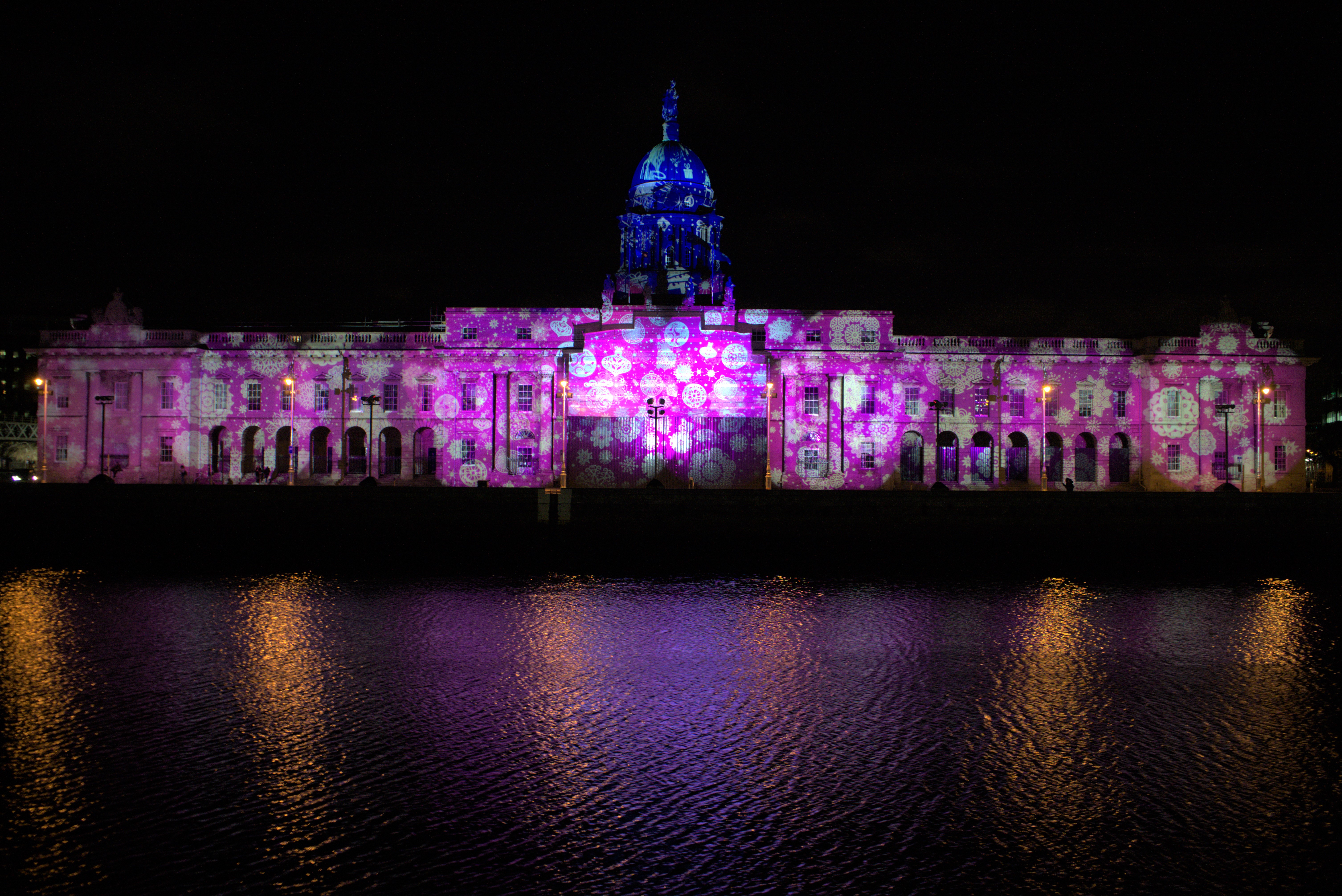
    As the month-long festival returns, Eric Ryan captures some of the inner-city locations that have been lit up by festive projections.

    For the third consecutive year, Dublin’s Winter Lights festival has returned to restore some much-needed brightness and festive cheer to the people of Dublin.

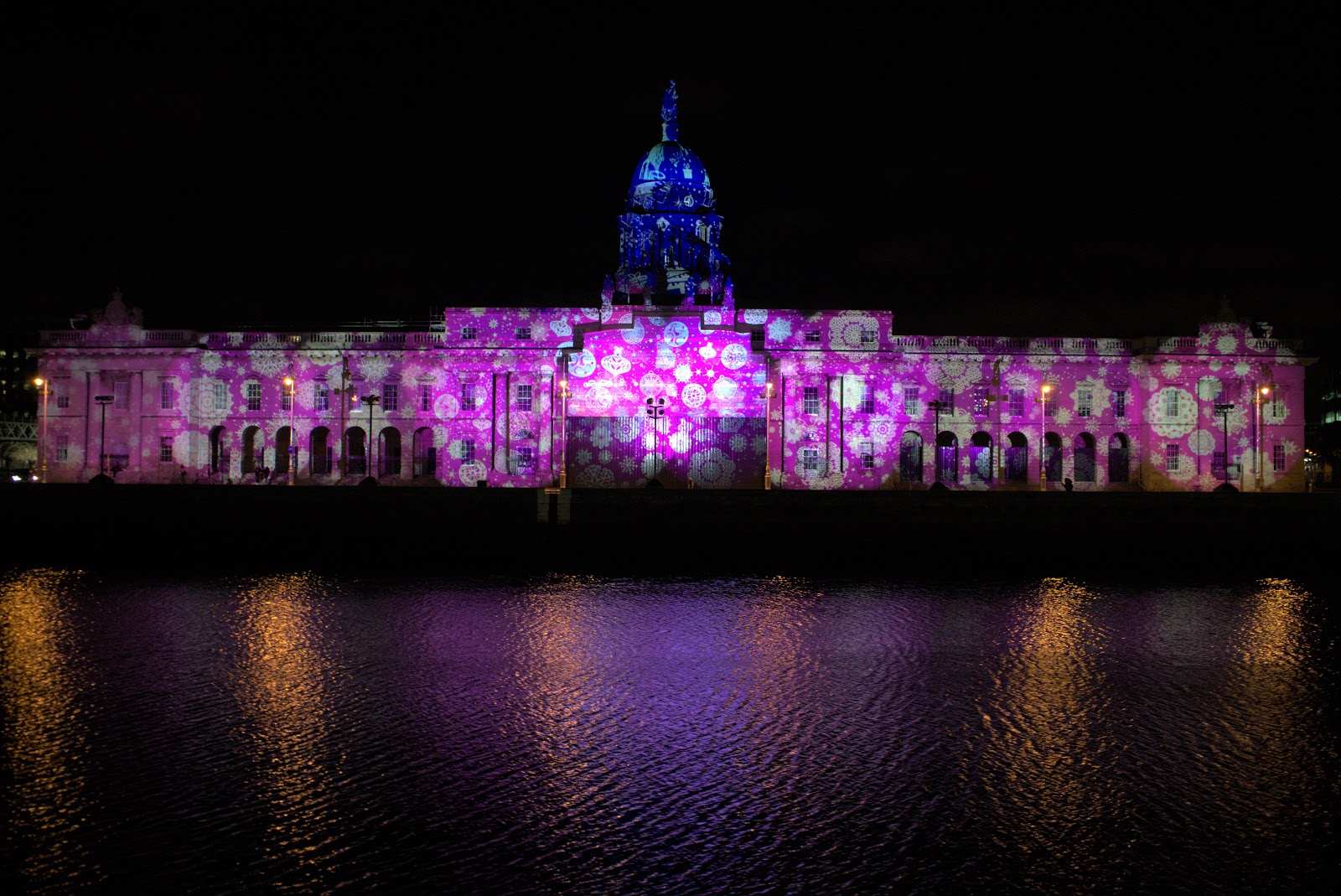
    [The Custom House, North Dock, Dublin 1]

    Marking the beginning of the Christmas season, the project organised by the Dublin City Council will be running from December 1st to January 1st and will project festive lights across 17 different locations.

    The eco-friendly projections feature 157,800 LEDs, 15,780 metres of cable and 100 tonnes of equipment. Some of the lights that power the projections run on 80% of their traditional predecessors.

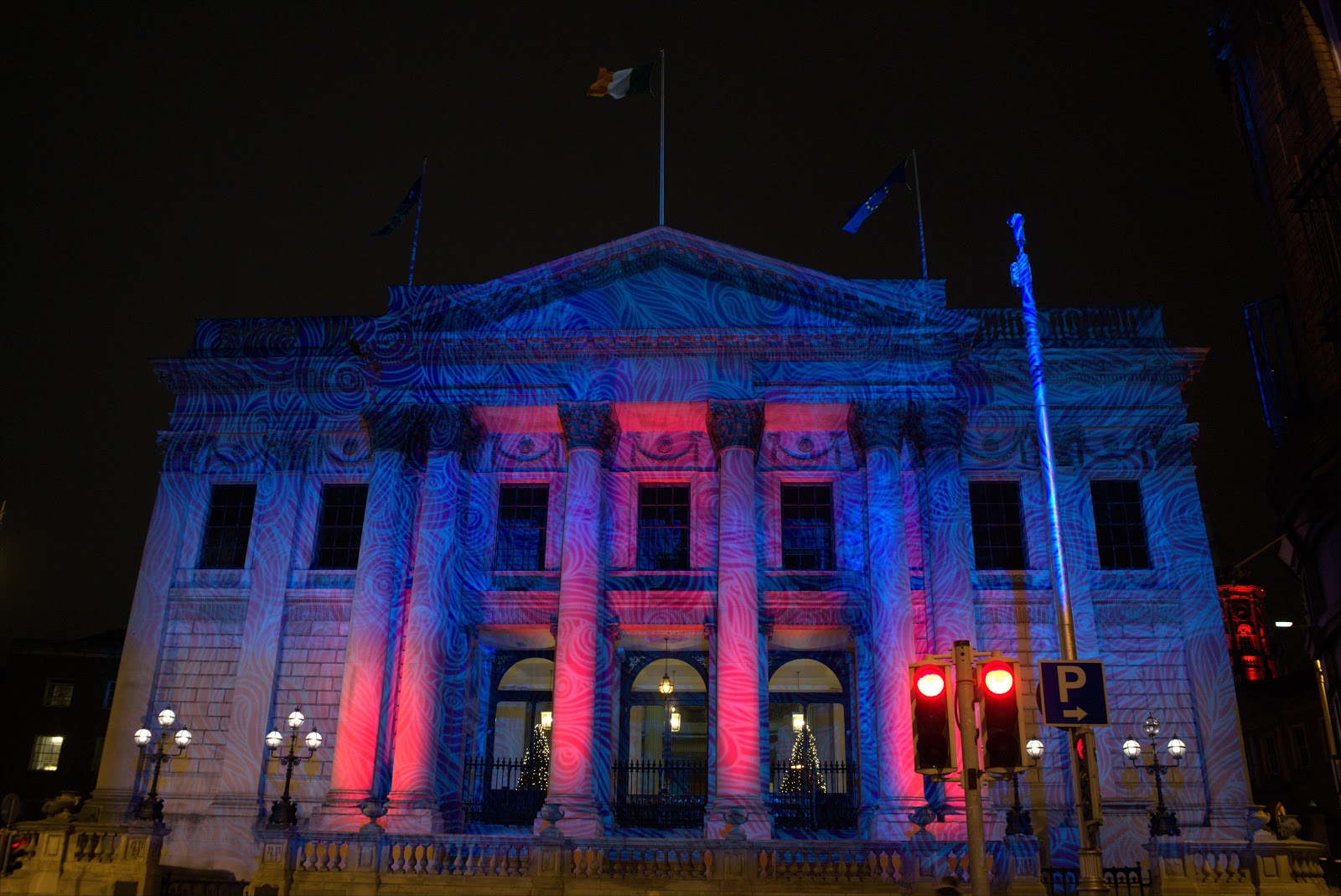
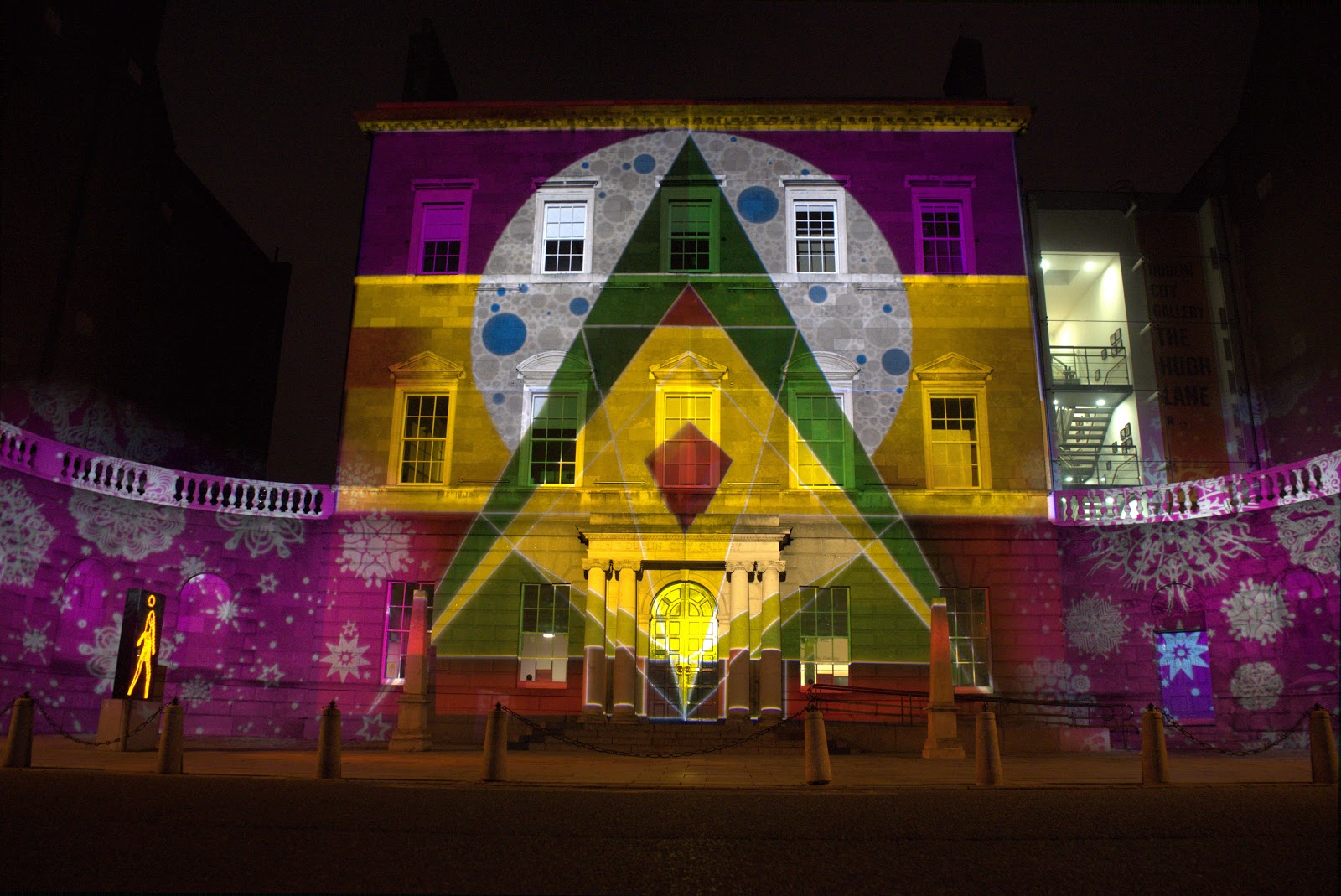
    The projection that covers City Hall uses the same amount of electrical power as two dishwashers and the display at the Hugh Lane Gallery uses the equivalent of a vacuum cleaner. 

    [City Hall, Dame Street, Dublin 2]

    [The Hugh Lane Gallery, Parnell Square North, Dublin 1]

    This year’s festival has several new locations as well as new artworks from a range of artists. These locations include the Triumphal Arch at the CHQ, the Mater Hospital, Capital Dock, the Jeanie Johnston Tall Ship.

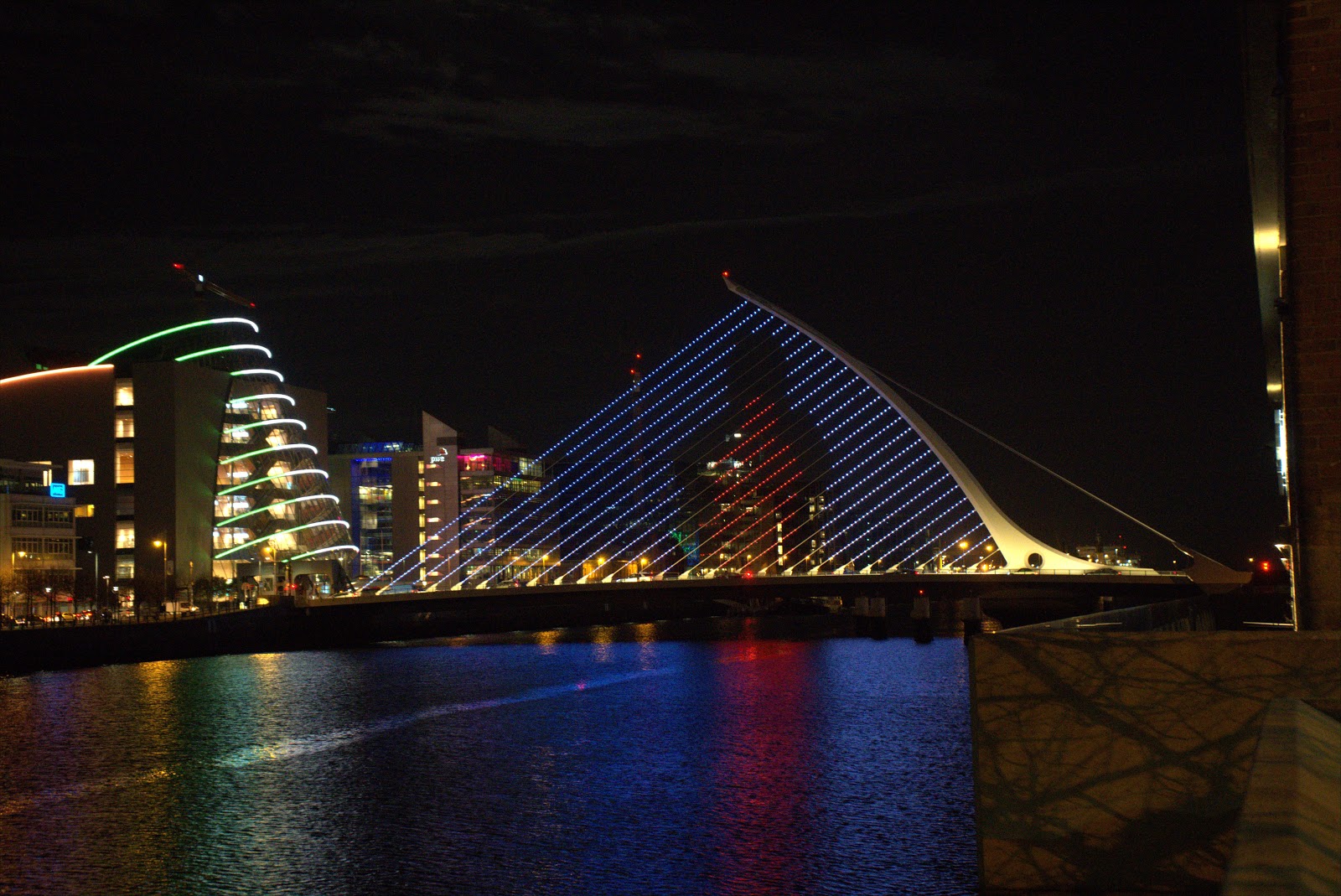
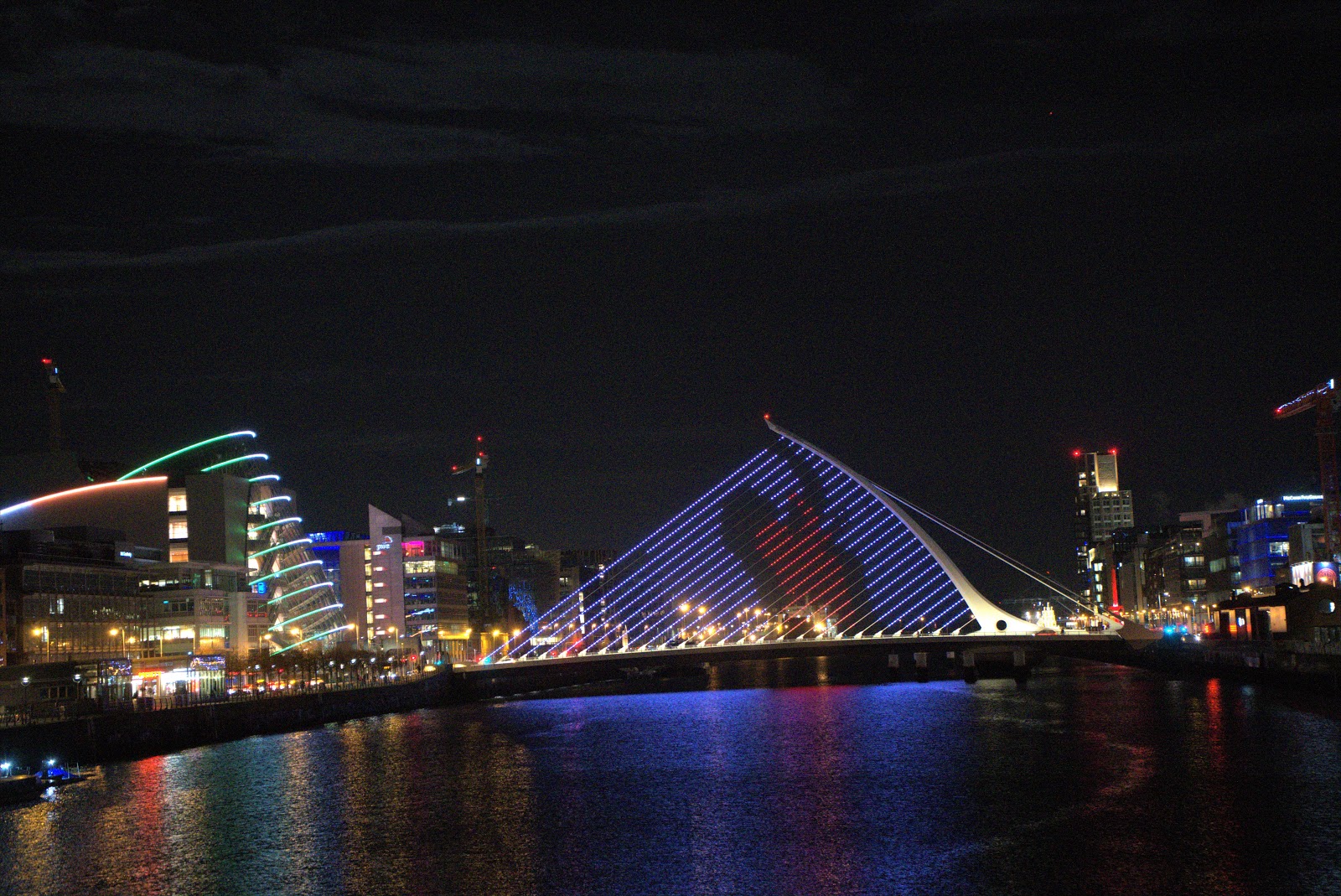
    Perhaps the most imaginative and captivating piece of them all is the Samuel Beckett Bridge. Named ‘Keep on Moving’ it’s a four-minute dance routine by Richmond Barracks Over-55s Movement Group that captures themes of strength, resilience and fun.

    [Samuel Beckett Bridge, North Wall Quay]

    Smithfield’s display has been improved and will feature photos of frontline workers to commemorate their efforts during the Covid-19 pandemic and the projections at the Civic Offices plays a three minute shadow puppet animation. 

    The Dublin City Culture Company worked with community groups and artists to create the new displays. These groups include Croft Nursing Home, Hollybrook Nursing Home and Henrietta Street Adult & Community Education Service (HACE). They collaborated with artists Steve MacDevitt, Alan Dunne, Helen Barry, Ben Redmond and Aoife McAtamney. 

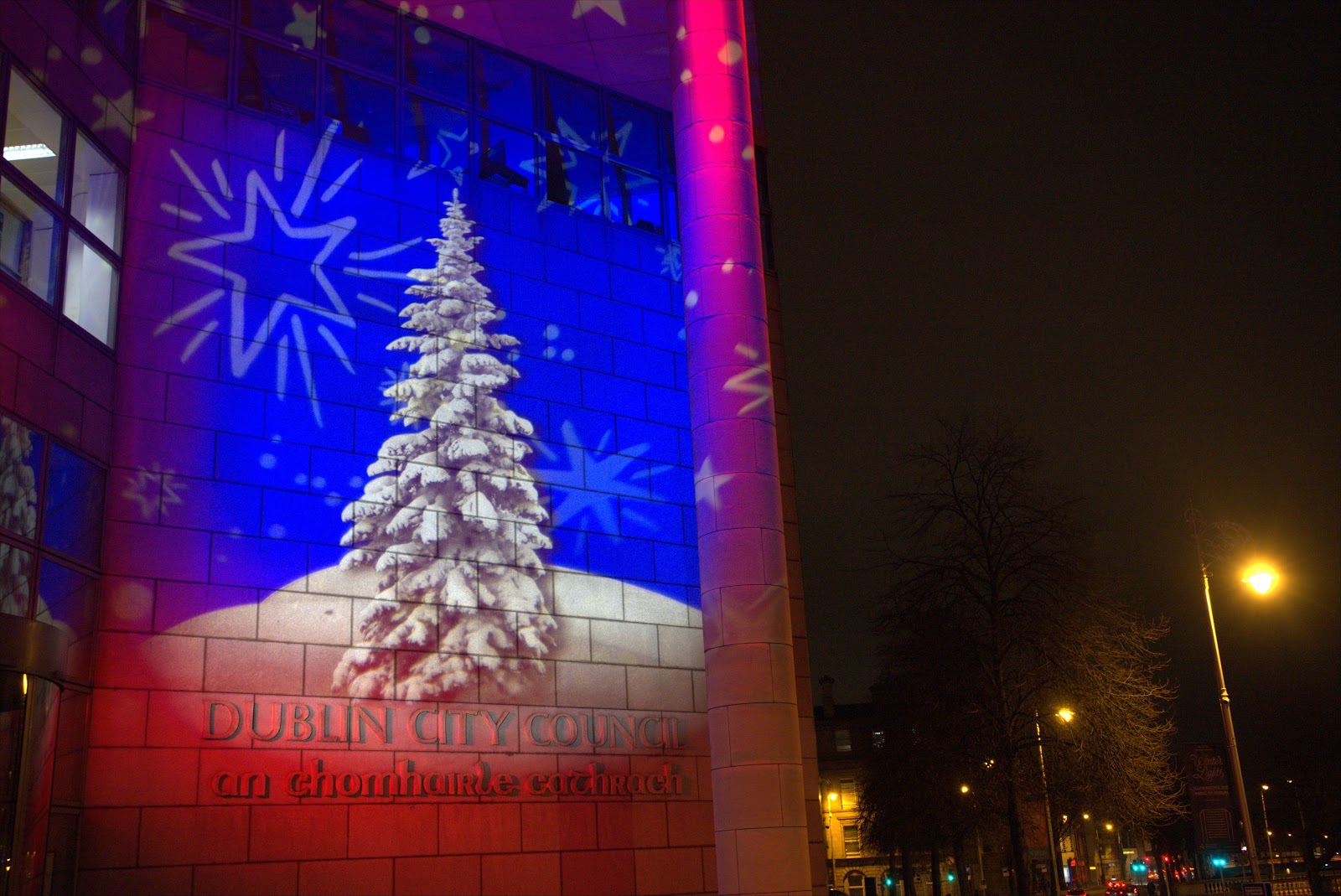
    [Civic Offices, Wood Quay, Dublin 8]

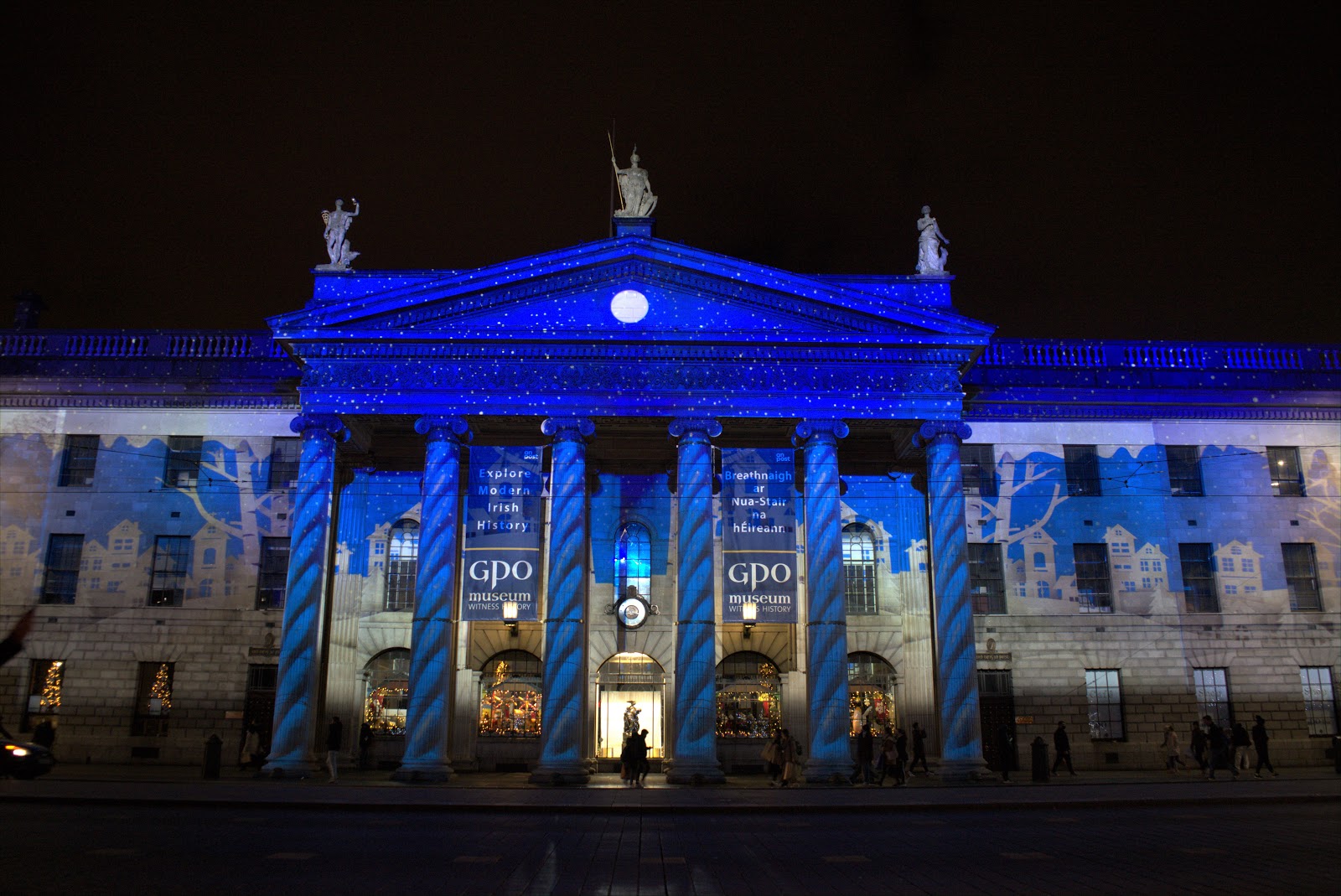
    [The GPO, O’Connell Street, Dublin 1]
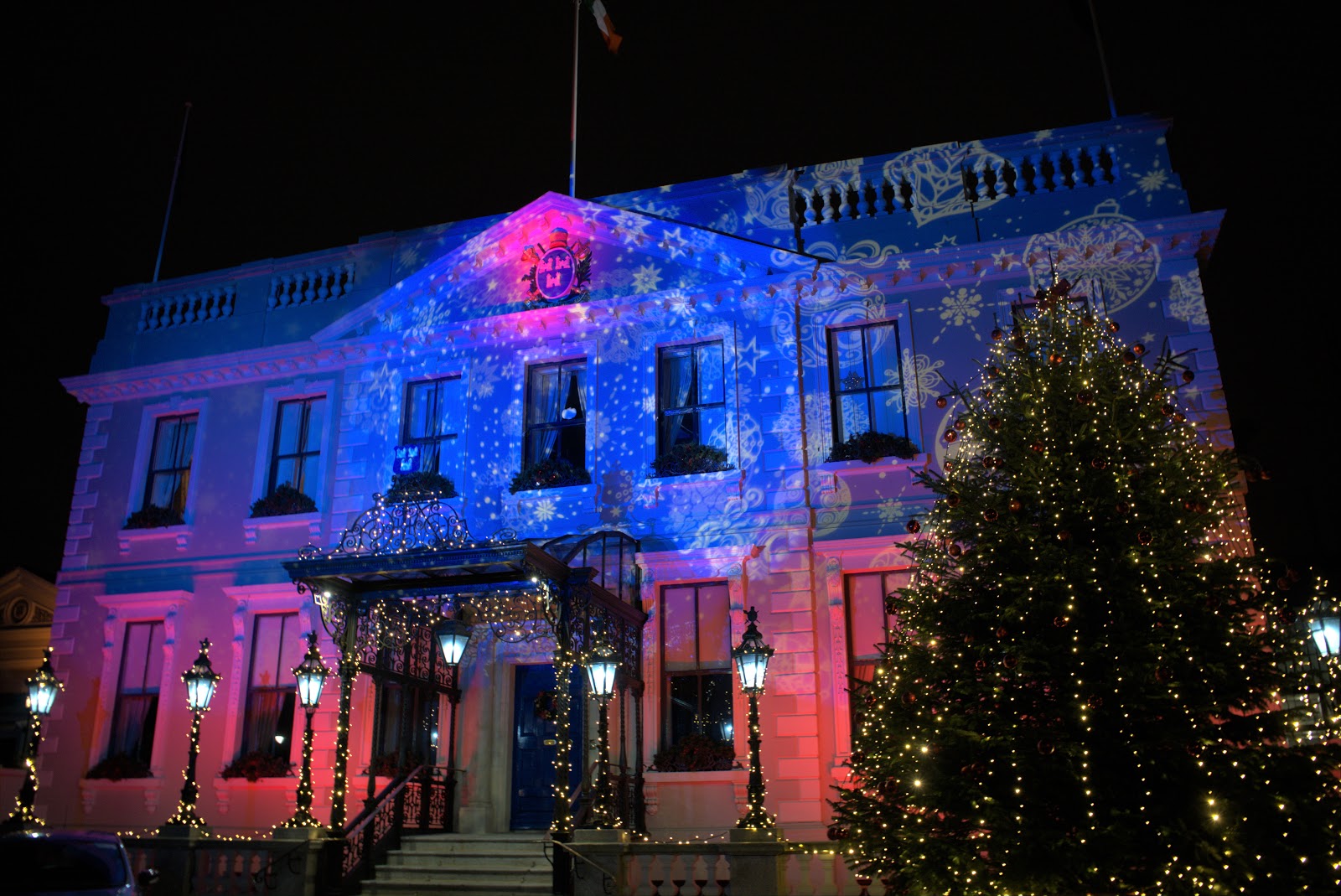
    [The Mansion House, Dawson Street, Dublin 2]

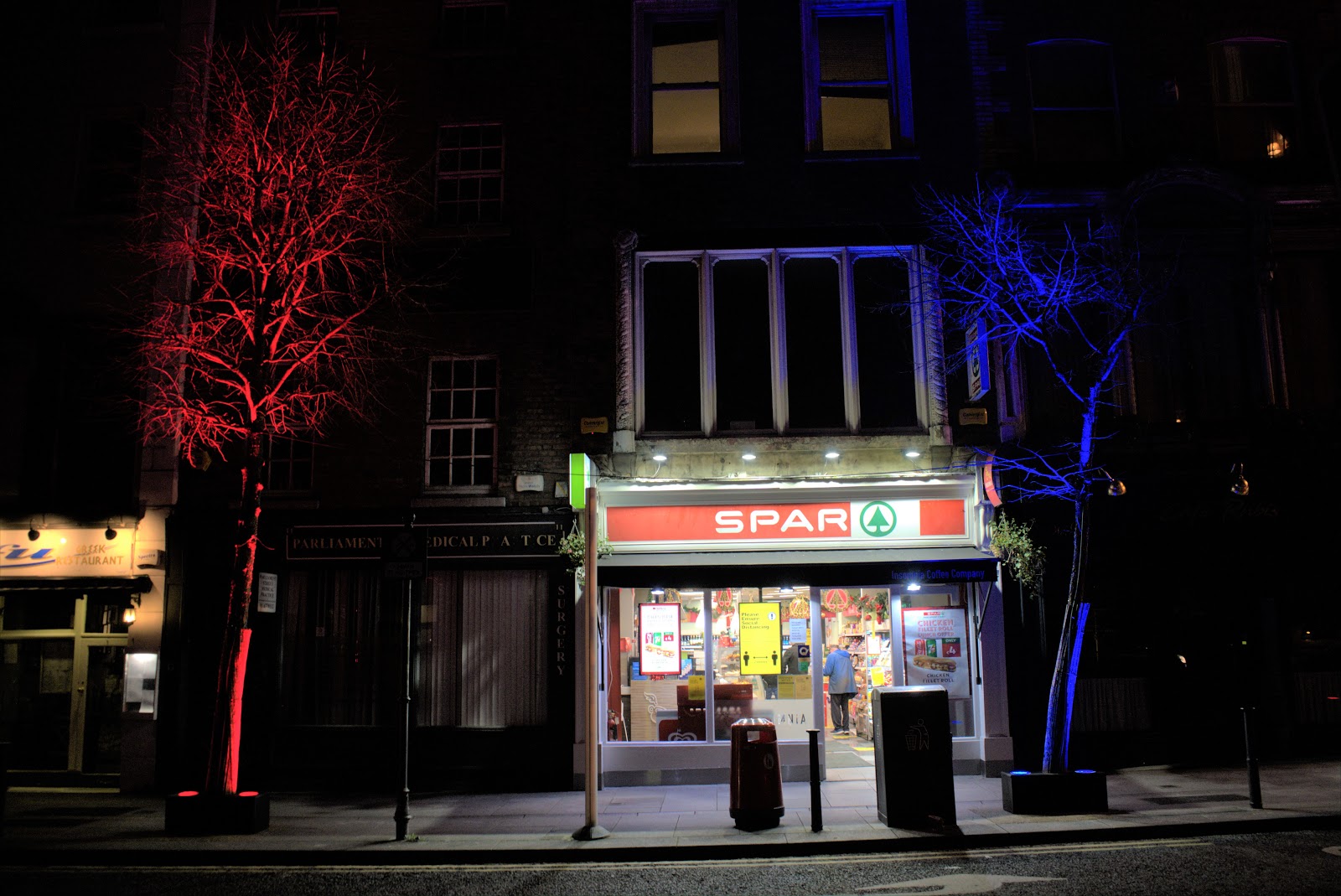
    [Parliament Street, Dublin 2]

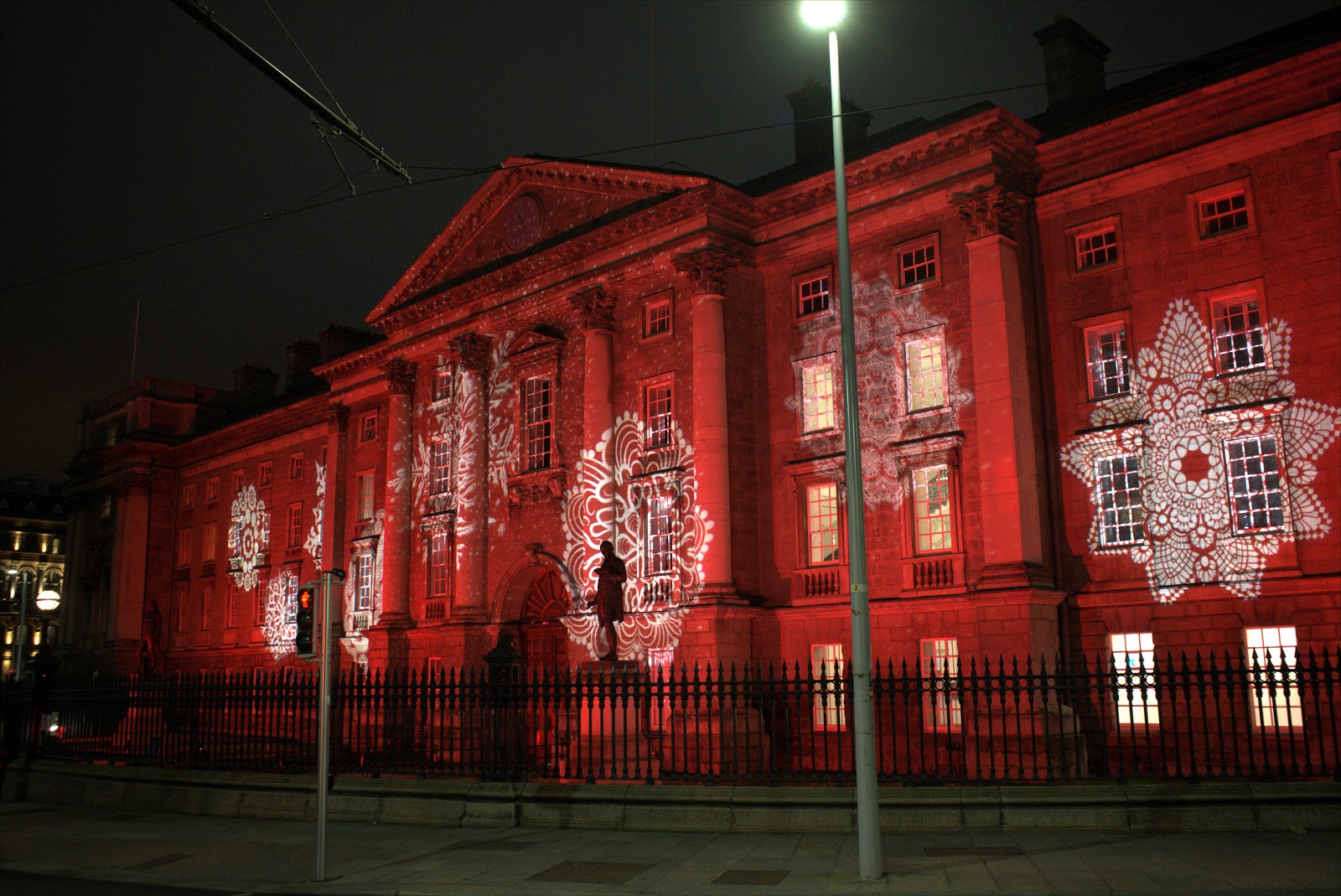
    [Trinity College Dublin, College Green, Dublin 2]

    [Samuel Beckett Bridge, North Wall Quay]

    Full list of projection locations:

    • The Custom House, North Dock, Dublin 1
    • The GPO, O’Connell Street, Dublin 1
    • The Hugh Lane Gallery, Parnell Square North, Dublin 1
    • The Mansion House, Dawson Street, Dublin 2
    • The Mansion House, Dawson Street, Dublin 2
    • Trinity College Dublin, College Green, Dublin 2
    • City Hall, Dame Street, Dublin 2
    • Covanta Dublin Waste to Energy Plant, Poolbeg, Dublin 4
    • Smithfield Square, Dublin 7
    • The Mater Hospital

    Full list of lighting locations:

    • Millennium Bridge
    • O’Connell Street, Dublin 1
    • Parliament Street, Dublin 2
    • Samuel Beckett Bridge 
    • Capital Dock
    • The Jeanie Johnston Ship
    • CHQ Triumphal Arch
  • Remembering pints past with Old Dublin Pubs

    Remembering pints past with Old Dublin Pubs

    Facebook Group Old Dublin Pubs is a place to share nostalgic memories of wet pubs that are long-gone. Rebecca Daly spoke to members of the group to find out what the group offers and why it is so relevant today.

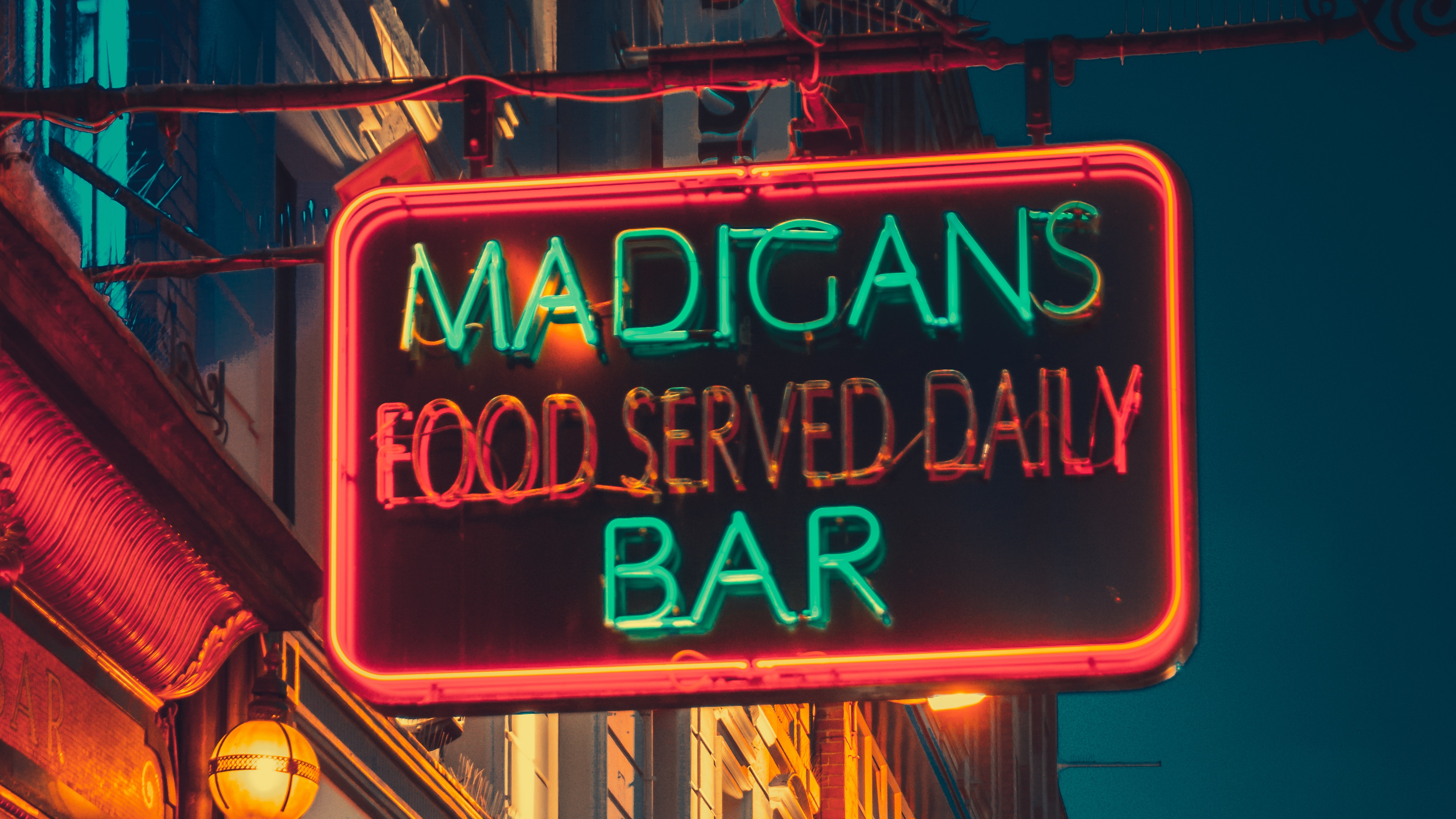
    Madigans Bar on Amiens Street. Photo by Lucian Petronel Potlog via Pexels.com

    The 15th of March brought with it the closure of all pubs in the country as a result of concerns over the then-new virus COVID-19. 

    While wet pubs in other counties were given the green light to re-open on the 21st of September, Dublin’s pubs were told to remain shut due to a rise in positive coronavirus cases. Now with the introduction of Level 5, it will be another four weeks at least before they can even consider welcoming patrons in again. 

    Eager pub-goers in the capital have certainly been missing the act of heading to their local for a few rounds with their friends. 

    However, one Facebook group has come together to recall times spent in their favourite pubs over the years and share retro photos of long-gone spots. 

    Set up in 2014 by a group of Dubliners, Old Dublin Pubs looks to bring nostalgic memories of popular watering holes together. Some of the charming images shared there are of pubs that shut their doors before the new millennium, while others only shut their doors in March.

    Regardless of if the pubs have still traded up until the pandemic, the group asks members to focus on pre-2000s images and stories. 

    Throughout the hundreds of photos on their page, you’ll find familiar places such as the Brazen Head, The Liberty Belle and Toners, as well as pubs that have long since shut down or changed their name. Some of the images even go back as far as the 1900s. 

    Under each photo are comments from strangers around the county. They recount memories of lively nights filled with song, dance and conversation

    Some photos feature famous faces in their local pubs such as The Dubliners, Phil Lynott and even Christy Brown. 

    Pub adverts are also featured on the page, which can bring a whole new level of nostalgia to the group members. One 1967 ad for The Embankment in Tallaght reads, “There you can leave behind congested city streets, park your car in the roomy car park, take a seat in the spacious Lounge, and relax over your drinks to the best of entertainment.” 

    Tony Carey from Tallaght had his first pint of Guinness in the Tap Pub in Chapelizod in 1964. Four years later, he became a distillery delivery driver until 1986. Carey would deliver to pubs across the country as well as in Dublin City. He recalls that in those days, bartenders would offer free pints to their delivery drivers. 

    For Carey, going to the pub was not about alcohol. It was more a social event than an opportunity to drink.

    Joining the Old Dublin Pubs group allowed him and many others like him to recall the golden days in their favourite spots. 

    “It’s like going down memory lane of one’s social life of the past.” He said.

    The group helps people to relive the joy of heading to the pub in pre-Covid times. Carey said, “It’s important to remember the Dublin culture of socialising in different ways, and of the enjoyment of being part of that and remembering friends present and past who were part of your life.”

    Old Dublin Pubs now has 5,100 members and will allow anyone with an interest in getting nostalgic over some of Dublin’s greatest pubs to join.

  • Unheard voices: Irish Traveller community

    Unheard voices: Irish Traveller community

    By Ana Novais

    Today, the Irish Travelling community are facing discrimination, racism and hatred by society, and it is vital to bring about awareness and make changes.

    Since Taoiseach Enda Kenny announced that Travellers were formally recognised as an ethnic minority, we are starting to see positive changes and like any other community, Irish Travellers have the potential and ability to achieve specific goals.

    Jim O’ Brian, Manager of Bray Travellers Community Development Group. Credit: Ana Novais

    No matter the ethnicity and origin of the Irish Traveller community, there is a great need to consider and focus on elements that will only add value to the development of our communities and, most importantly, ensure the dignity of all people no matter their origin.

    Treating the Irish Traveller community with respect and allowing them to embrace their culture, is one of the most critical steps that will improve respect among people. Most importantly, this will help to protect communities. The Irish Traveller community can have a positive role when it comes to contributing to their local area at large.

    Patrick McDonagh, PhD Student. Credit: Ana Novais

    The biggest division between the settled and the Traveller communities is that there is no trust and to be trusted, we need to get to know the person.

    “Respect is earned, it’s a two-way process. You can’t have if it you don’t give it,” said Jim O’Brian, Manager of Bray Travellers Community Group.

    Paddy Moorehouse, Community Employment Placement Officer. Credit: Ana Novais

    There are just under 40,000 Travellers in Ireland and members of the community are seven times more likely than the wider population to commit suicide.

    According to Senator Colette Kelleher: “Racism is wide-reaching, although only 1% of the population, they are 22% more likely to become homeless, they have an 80% unemployment rate, their average life expectancy is 13 years lower than the average population”.

    Christy Moorehouse, DAISH service manager. Credit: Ana Novais

    Combatting this culture of racism begins with education. She went on to say: “Teaching Traveller Culture and History in schools is the first step in preventing ignorance and racism being passed down to our children. It is the first step in making school a welcoming place for Travellers. It is the first step in a long process, towards a safer and better Ireland for all.”

    It seems that building trust between the communities from a young age would help the relationship improve, Jim O’Brien said: “If we never trust we are never going to achieve in life”.

  • Daily Show photographer Sean Gallagher opens up about life in show business

    Daily Show photographer Sean Gallagher opens up about life in show business

    We’ve all wondered what we would see behind the curtains of a TV show. There is a combination of mystery and fascination with what goes on behind the scenes, and the process that takes place until the show is presented to us. The Daily Show is one of those shows. The American late-night satire programme is presented by Trevor Noah, who replaced Jon Stewart in 2015.

    Sean Gallagher, set photographer of The Daily Show gives us a little insight into the world of The Daily Show through his camera lens. His Instagram page is filled with behind the scenes photos of the show. Trevor Noah chugging down water, last minute make up touches, Hasan Minhaj fixing his tie quickly before rehearsal, and a lot more. He’s been working on the show just over six years, and has been snapping shots behind the scenes and photographing guests in his studio for a series of portraits of those who make it onto the show.

    Gallagher received a Bachelor’s degree in English from the University of Massachusetts, initially wanting to be a writer. Now 44, the Brooklyn based photographer has been shooting for over 20 years. In an interview with thecity.ie, he tells us more about his journey with photography.

    How did you get into photography?

    My mother took a photography course when I was young. I thought it was magic and was absolutely entranced by the camera, which was a fully manual Olympus. I had never seen anything like it. In high school I had some friends who took photography, but I had a full schedule of classes and couldn’t fit it in. Then I went to university thinking I would be a writer. After finishing there and back home in NYC, a friend of mine took a photo class, asked if I wanted to go with her, and I jumped at the chance. That was over twenty years ago and I’ve been shooting pretty consistently since.

    What’s it like being a photographer on a show compared to in a studio?

    It’s very, very different! In a photo studio, it’s generally just me, or myself and an assistant. Maybe someone whose portrait I’m doing, plus perhaps their friends on a rare occasion. The setup is mine, I know where everything is, and I can be anywhere I want. Everything that’s there is intentional. I have a goal in mind, a particular shot or shots in mind, and I spend the time accomplishing those shots.

    At the show there’s an audience, the talent, the crew … people everywhere. I have to make sure I’m out of everyone’s way, not in any camera shots. The show is of paramount importance, and whether I can do my thing is incidental. I’m shooting in more of a documentary style, just trying to capture what I can about what’s happening with the show, the people, what life behind the scenes is like. Then, during rehearsal and the show, I’m trying to capture things that might be useful … expressions, use of props, good angles, moments that wouldn’t make it to the show or standout moments that did. As compared to my studio, I have little control over the look or location and no control over the content. My choices are limited to how I can tell a story while being constrained by the television show that’s going on. It all adds up to a daily challenge and it’s very fun. Trying at times, but always fun.

    Do you think being a photographer today is harder than decades ago, for example, or is there no difference?

    I definitely think it’s harder to make a living as a photographer now than it’s ever been – an SLR camera used to be a bulky, specialised instrument that was not all that common and kind of difficult to master. Film was hard to work with and expensive, so experimentation cost money.

    Now, almost everyone has access to an excellent camera and most even carry one in their pocket almost everywhere they go. They can take thousands of shots for free. It’s simple to fix errors, or to layer on effects that used to only be available via chemistry or Photoshop, which took some time investment to learn.

    And while the internet is amazing – it can be the biggest photography school you could possibly imagine – and it might at first blush seem like it holds endless promise as far as having an audience as large as the world, it’s hard to find a way to stand out from that giant, endless crowd of people. Social media is a lot of work. The hustle of it all is a lot of work. The business of photography is secretly the hardest part. It’s not hard to teach anyone to take nice enough photos to sell, it’s a lot harder to teach people that the bulk of the work of photography is business, not being creative.

    How did you start working on The Daily Show?

    I was working in lighting on a soap opera called “One Life to Live,” which was in the midst of fading out before it was cancelled. The writing was on the wall, despite what the producers were telling us. I had friends there who had worked on The Daily Show for years. I started out subbing for them when they took time off and then worked my way in when they transitioned out, and eventually I was hired on. Then when Trevor started, there was much more of a concentration on the web and all the ways the show could use it.

    What’s your favourite thing about The Daily Show?

    It’s tough to find just one thing! I think primarily the people are pretty great. Show business is rough, and rude, with all kinds of attitudes and personalities. While no place is immune, The Daily Show is far and away the best show on which I’ve worked in this regard. The feeling there is we have to see each other as much as – if not more – than we see our families, so we might as well try to make the building a pleasant place to be. For the most part, it is. There are dogs running around, there’s a lot of joking in the hallways, people are curious, kind and supportive about what each other are working on. It’s very homey.

    What do you love about lighting and photography?

    I really love the whole thing, from conception – whether it’s because I’m bored on the train trying to think of something new and fun to do or lying awake at night and something comes to me – to gathering together the elements I need, to the set-up to the lighting all the way through to retouching and then watching people react when I start to show it around. It’s always been thrilling, for twenty or so years, and I hope it always will be. I’m even learning to love the business end of it as I mentioned earlier.

    What are the main struggles of photographers in show business from your experience? And how did you overcome them?

    My experience doing photography in show business is pretty limited to my own story, and I think my own particular journey has been a little unique. I’m not sure if I have any good answers.

    I will say this, and this advice is pretty typical for most gigs “behind the scenes” in show business: show up early, have a good attitude about everything, always have the tools you might need and don’t hesitate to pitch in. People will always notice the person who spent the whole day bitching and moaning and who needed to be asked three times to do their bit. Likewise, they’ll remember the person who did the worst jobs with a smile. And there are a ton of bad jobs in show business.

    For photographers specifically, learn to be quiet, respectful and flexible. And always be nice to the lighting guys.

    What’s your key advice for the photographers out there?

    Just keep shooting, and learn how to be your own harshest critic. Don’t worry about your look, learn to use the camera and how to make a good, correct exposure. Learn how to colour correct. Don’t kid yourself into working your shortcomings into your “style.” Learn what you need to learn and then you can make something [look] funky … later on.

    You can see more of Sean Gallagher’s photos on Instagram at: ruminasean

    By Hajar Akl

  • The city in Autumn

    The city in Autumn

    From the leaf filled paths of St Stephen’s Green to the hazy streets of the inner city – here is a collection of photographs showcasing Dublin in Autumn.