Tag: Racism

  • Dublin Divided: Anti-immigration Protest Faces Counter Demonstration 

    Dublin Divided: Anti-immigration Protest Faces Counter Demonstration 

    By Áine McKeon 

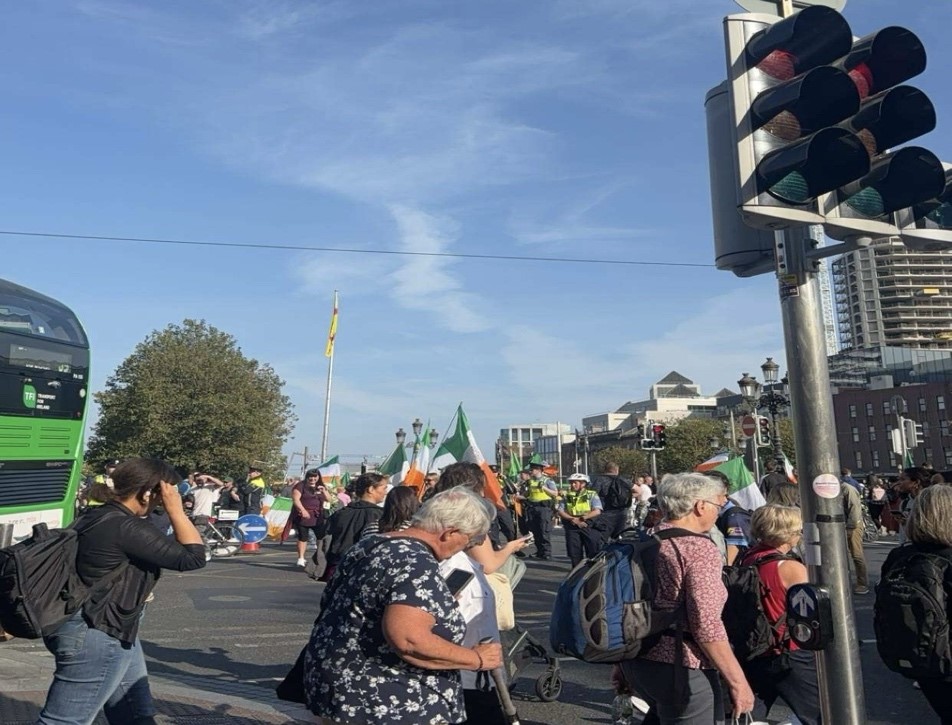
    On Thursday September 19th , Dublin witnessed a sharp division as anti-immigration protests were met with vocal opposition from counter protesters, displaying deepening divisions over the country’s immigration policies. 

                      Source: TheBurkeanIE on X 

    The protest resulted in considerable disturbance for the public and multiple arrests. Groups against Ireland’s immigration laws organised the march, which began in front of the General Post Office (GPO) on O’Connell Street. 

    Protesters expressed their disproval of the country’s immigration and asylum seekers laws. During the demonstration chants like “Get them out” and “Irish Lives Matter” could be heard. 

    Lorraine Vallessca, originally from the Philippines, who has lived in Ireland for nearly 16 years, described how she felt walking past the protest. 

    “I was on my way to work when I first saw the protest – as an immigrant myself who’s lived here basically my whole life, for the first time I felt scared”, she said 

    Irish flags and banners with anti- immigrant messages were held by the protesters and upon arriving at Leinster house, the marchers retreated to O’Connell bridge where they staged a sit-down protest that blocked important roadways.  This led to significant delays in Dublin City Centre, stopping the Luas and other public transportation systems causing extensive disruption. 

    “Close the borders” and “foreigners” were just some chants screamed at passerby’s during the march. 

    “Hearing the chants and anger in their voices was uncomfortable when I finally got to work, I thought I’d feel relieved, but I was anxious my whole shift” explained Lorraine. 

           Source: Aine McKeon 

    The Gardaí dispatched public order units in reaction to the crowds’ unwillingness to disperse on top of the increasing tensions.  

    Nineteen people were taken into custody for defying Gardaí instructions and causing disruption to the public. Investigations into the event are still ongoing. No injuries were recorded. 

    A short distance away, at the bottom of Grafton Street, a small anti- racism organistaion staged a counter protest, chanting “refugees are welcome here”. Gardaí were stationed to prevent clashes between the two groups. 

    The protests have generated a lot of discord. Numerous civil rights and community organisations have organised counter demonstrations to promote diversity and inclusion. The Irish Refugee Council and MAS (Movement of Asylum Seekers in Ireland) have denounced the anti-immigration discourse whilst highlighting Ireland’s longstanding status as a haven for refugees. 

    This protest follows a rising trend of far-right and anti-immigration protests in Ireland in recent years. 

    One of the onlookers of the protests who asked to remain anonymous said, “it is upsetting to see this happening in our country – Dublin hasn’t felt like a safe place in a very long time, it’s just not the same.” 

    The individual who claimed to have lived in Dublin for over 20 years, emphasised that the protest’s driving force was dissatisfaction with the way the immigration system is being run, not hatred. 

    Anti- immigration protests have been more frequent over the past year, which is reflective of the growing dissatisfaction among a minority of people with how the government is managing immigration and asylum policies. The highly publicised demonstrations have sparked a national conversation on Irelands Immigration laws, ranging from nonviolent marches to more aggressive riots. 

    Source: TheBurkeanIE on X             


    Over the past year, there has been a noticeable increase in the number of refugees and asylum seekers in Dublin’s inner-city areas, such as Ballymun, East Wall and Finglas. Anti-immigration sentiments have been concentrated in certain places, where locals have expressed discontent about the increasing demand for healthcare and housing provided by the influx of people. 

    Tensions in Ballymun escalated due to demonstrations at a shelter for asylum seekers, citing rising homelessness and stretched public resources. Nonviolent protests included vandalism and police clashes. 

    On November 23rd, 2023, after a stabbing attack that left three children and one adult injured, rioting broke out in Dublin. Rumors of the attacker’s immigration status contributed to the incidents anti-immigration riot. A few hundred people gathered in the throng, who at first expressed protest but soon turned aggressive. Buses, Gardaí vehicles and businesses vandalised and set on fire by rioters, Dublin’s city Centre was also looted, resulting in extensive damage.  

    While Ireland adjusts to the reality of its shifting demographic despite the polarising nature of the protests. The government has previously discussed enhancing efforts and discuss concerns between immigrant communities and Irish citizens. 
  • Watch: Being an immigrant in Ireland

    Watch: Being an immigrant in Ireland

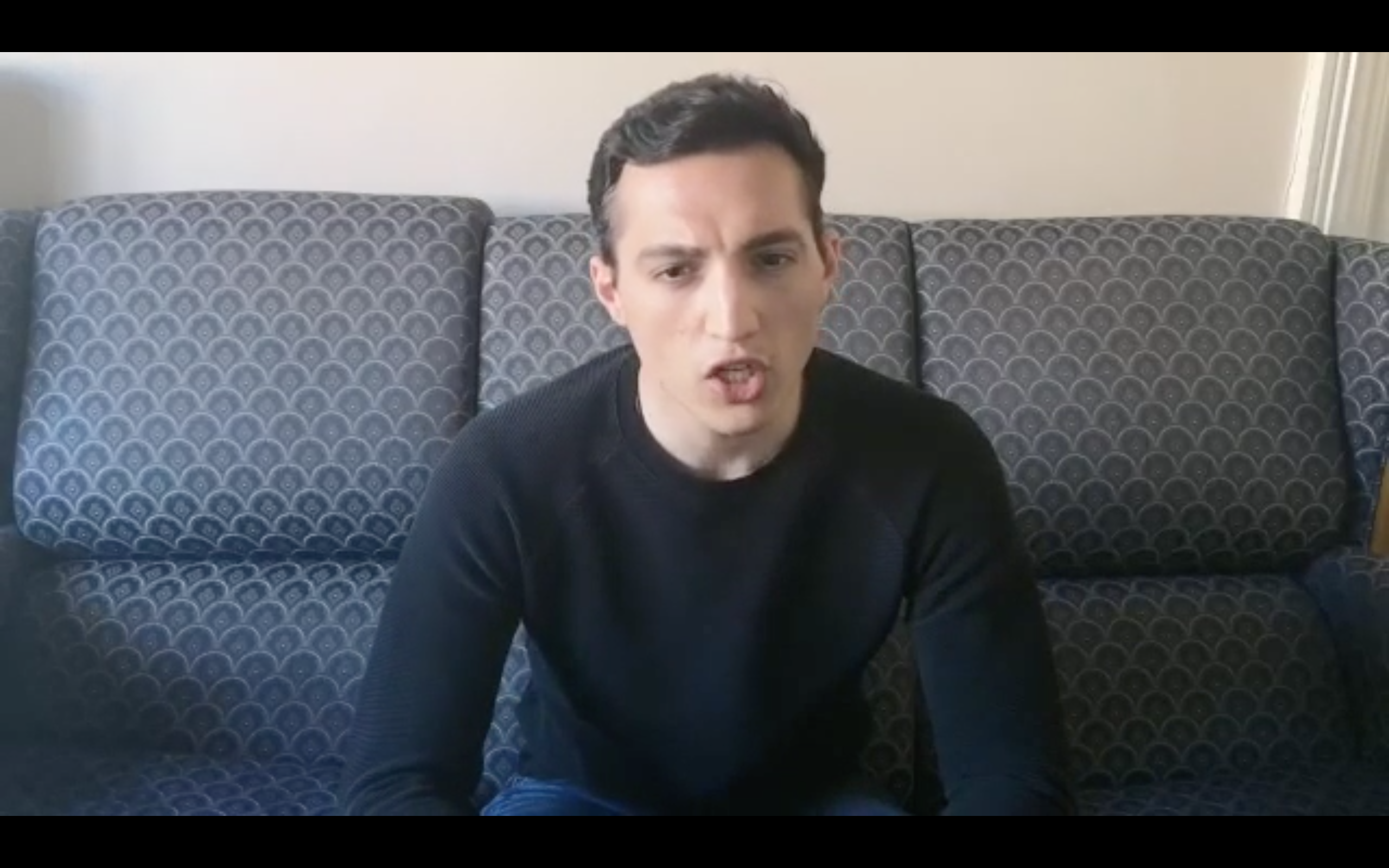
    First generation immigrants in Ireland spoke about their experiences in Ireland, the good, the bad and the ugly. A report for TheCity.ie by third year TUD student journalists.

    Two of the immigrants are 3rd year student journalists and focus on their first impressions of Ireland, racism they may have encountered and even what they miss about their home countries and also recount the kind Irish people that they have encountered while living in the country. Racism is a huge issue in Ireland and this video goes to show that it is still present in 2020 and this needs to come to an end. However, the pleasant memories are recalled and spoken about too.

  • An island of refuge? Ireland’s political parties and ‘Fortress Europe’

    An island of refuge? Ireland’s political parties and ‘Fortress Europe’

    Photo: Pixabay

    TheCity.ie’s latest series, ‘An Island of Refuge?’ tackles the immigration policies of seven political parties, highlighting their views on asylum seekers, the Direct Provision system, migrants, climate refugees and open borders. Editor Kate Brayden gives an overview of the findings.

    While Ireland’s recent General Election was undeniably focused on issues based at home, we have turned our focus to the increasingly unstable global landscape and its influence on our nation’s attitude towards migration and foreign affairs.

    Éire may be known as a welcoming place, but the strain of climate breakdown is impacting far-right rhetoric worldwide – examining whether our politicians are succumbing to this issue is a key concern.

    TheCity.ie’s team of journalists interviewed TD candidates and councillors from Sinn Féin, People Before Profit, The Green Party, Labour, Fine Gael and Fianna Fáil after dissecting each party’s manifesto statements on immigration and foreign policy to garner our coverage.

    In the aftermath of the election, the parties must now organise a government that will withstand the tests of the international stage. This includes policies relating to justice and climate breakdown. 

    Photo: Pixabay

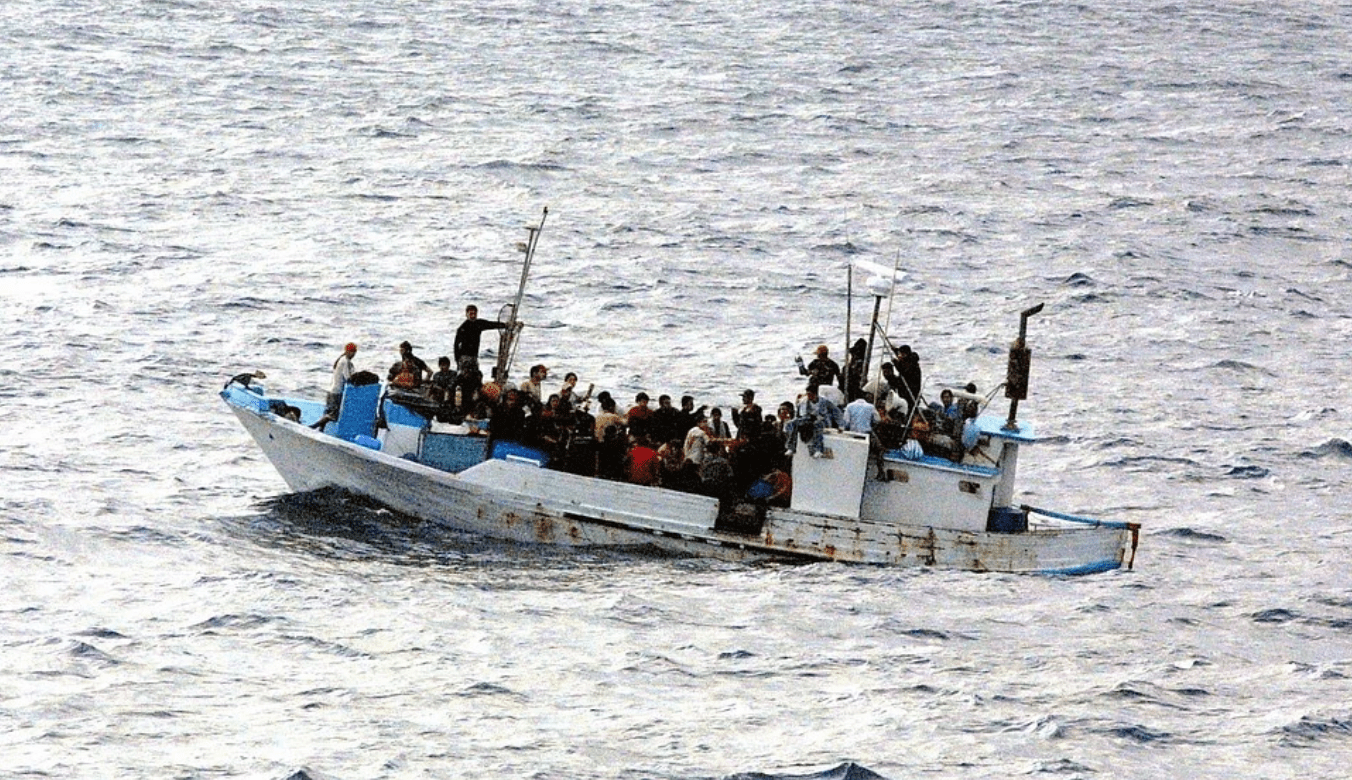
    Refugees are a core part of this, with thousands risking their lives to cross the Mediterranean every year, and some losing their lives in the fight to escape war. The policies of ‘Fortress Europe’ aim to keep people from nations specifically outside of this continent out, the very people who are affected by the planet’s destruction despite having the lowest carbon footprint. How do Ireland’s political parties hope to treat them?

    Sinn Féin, possibly writing the most intriguing manifesto in terms of economic promises, have claimed that they are against open borders, but also hope to end Direct Provision. What they would replace the system with, however, is a mystery. Should they find themselves in power, they intend to avoid a situation of mass climate-related migration – not solely for the difficulty it will pose to recipient nations, but because people deserve to live in their own nations and communities. Their stance certainly needs more explanation. 

    Mary Lou McDonald celebrates Sinn Féin victory. Photo: Instagram/africaworld_news

    People Before Profit and the Green Party have socialist and left-wing policies embedded in their manifestos, with PBP acting as fierce critics of imperialism and of tyranny abroad. References are also made to the UN Security Council seat Ireland is hoping to win, as well as US military presence in Shannon Airport. The party condemn the murderous regime of Bashar al-Assad – someone largely responsible for the flight of Syrians towards Europe

     The progressive stance of the Greens is reflected in their emphasis on freedom of movement, open borders and refugee housing, and they are highly aware of climate breakdown’s role in the displacement of innocent communities in developing countries.

    Labour’s political director Nat O’Connor has taken an arguably weak stance, admitting that Ireland is not playing the part of a wealthy country, accepting a low number of refugees, but “we can’t promise to do something that we cannot do”. Housing and health are first on the priority list for the party, which are worryingly diminished following the election.

    As the party competes for control of the Dáil, Fianna Fáil is proposing long overdue complete reform of the asylum system and to improve refugee accommodation. Their manifesto has figures and policies backed up by plans, which is a (welcome) change from some of the other vague manifestos. However, it could be all talk rather than action. Pledging to speed up the asylum process, they take a leaf out of the Greens book by promising an integration plan as well as allowing asylum seekers to access driving licences. 

    In 2015, the Fine Gael-led government pledged to take 4,000 programme refugees fleeing war-torn countries like Syria by the end of 2017. Even now, we’re still well short of that quota – having resettled only 3,206 such refugees. The government has faced fierce criticism over their handling of Direct Provision, with Fine Gael ministers exhibiting resistance to change. Former Minister for Justice Charlie Flanagan promised to improve the party’s numbers when it comes to refugee placements, but are they to be believed?

    Irish communities held protests last year nationwide, rejecting the possibility of new Direct Provision centres opening in their area. Migrants rights groups such as the Movement of Asylum Seekers of Ireland insisted that these protests were not to support asylum seekers, but were rooted in racial undertones “dressed up in human rights language”.

    “The Irish of #Fingal have voted once again for their own extinction,” O’Doherty posted on Twitter following the result.

    Interestingly, only 1 per cent of respondents cited immigration as a main voting concern of GE2020 in the Ipsos MRBI exit poll for The Irish Times/RTÉ/TG4/UCD. Within this umbrella topic, climate refugees, asylum seekers  as well as migrants are all grouped. 

    Desolate refugee camps. Photo: Pixabay

    There are important distinctions to be drawn between asylum seekers, migrants and refugees – but these terms often get mixed up in the course of public debate on what is a complex topic. The issue will only become more onerous as CO2 emissions cause further destruction in the Global South, South-East Asia, Australia, Canada and the US. 

    The movement of people has already led to dangerous, inhumane situations in the refugee camps of Libya and Greece, with the European Union recently rejecting a voting to ask members to step up search-and-rescue missions in the Mediterranean.

    An asylum seeker is someone seeking refugee status – but whose application has not yet been approved. In the meantime, as long as they’ve made an application for asylum to the country they’ve landed up in – usually on the basis they were forced to flee their home country – they are entitled to remain in the destination country while their request is being processed. If it’s ultimately approved, then they have permission to remain. If it’s rejected, then they’ll be deported. 

    Though some, who fail to qualify as refugees, are granted subsidiary protection to remain.  Migrants are not fleeing persecution; instead they choose to move country – often for economic reasons.  

    Those defined as refugees have been recognised as such under the 1951 Refugee Convention of the UN, while programme refugees have their claims formally assessed in refugee camps overseas – and are invited to the destination country under a resettlement programme.   

  • ‘One Human One Race’ launches nationwide tour

    ‘One Human One Race’ launches nationwide tour

    This week saw Show Racism the Red Card (SRTRC) launch its mobile anti-racism exhibition at the Atrium of Dublin Civic Offices.

    With over 200 schools and youth services participating, the exhibition will run from the 22nd of October to the 16th of November in Dublin, before moving to other venues.

    The aim of Show Racism the Red Card is to harness the high profiles of sports people to combat racism. The organisation works to produce anti-racism educational resources, and to educate young people through workshops, summer camps and coaching activities.

    ‘One Human One Race’ will feature work produced by children in schools and youth services throughout Ireland as part of their participation in the SRTRC Creative Competition.

    The annual competition calls for young people to develop creative messages about racism and integration using written, visual and audiovisual means.

    Garrett Mullan, Executive Director of Show Racism the Red Card, told The City: “The purpose of this exhibition is to recognise the work of schools, youth services and young people in their efforts to promote inclusion and oppose racism. The creative competition’s idea is that young people are able to come up with their own messages about racism. Some of the work on display is absolutely outstanding.

    “One primary school child made a mosaic out of 30,000 beads. Apparently it took this child 60 hours to make, but its a really interesting piece to have at the exhibition.”

    He continued: “The exhibition includes about 40 pictures and links to audio visual entries.We’ve had a huge amount of good quality work that is worthy to be shown in high profile locations. We figure it’s time to show it off and reassure others that young Irish people have a good attitude to both integration and the issue of racism.”

    Further information about Show Racism the Red Card is available at: www.theredcard.ie.

    Follow Niamh Haskins on Twitter at @niamhhaskins.

  • Racism still prevalent in Ireland

    Racism still prevalent in Ireland

    Racism seems to be an ongoing, unreported, issue due to the influx of foreign nationals over the past decade. Image by: Machine Made
    Racism seems to be an ongoing, unreported, issue due to the influx of foreign nationals over the past decade. Image by: Machine Made

    According to a recent report racism is rampant in Ireland, with very few cases going reported.

    The report was conducted by Dr Patricia Kennedy, of the School of Applied Social Science in UCD, and states that 60 percent of foreign people in this country have encountered racism.

    An Garda Síochána Press & Public Relations Officer, Duty Sergeant Damian Hogan stressed that  “All matters relating to racism should be reported to An Garda Síochána”.

    He also noted that An Garda Síochána has a designated unit for dealing with racism at their Racial and Intercultural Office, which is located on Harcourt Street.

    The Racial and Intercultural Office is deemed to be responsible within An Garda Síochána for the development and monitoring of the implementation of organisational policies and strategies, which deal with racial, ethnic, religious and cultural diversity.

    The office received a thirty thousand Euros innovation prize by the European Commission in recognition of work already undertaken by the Garda organisation in raising awareness around racism and related issues.

    “I have been abused cycling through the city centre,” said Donatas Okafor, a Nigerian national, who came to Ireland in 2006.

    “I have had people drive by making monkey chants and stuff,” explained Donatas.

    When asked if he any of these incidents were ever reported Donatas replied; “No. I don’t have the time to be going through the effort of dealing with reports. I just get on with life”.

    Donatas did have some positive experiences to share about his time in Ireland: “I have lived in many countries over the years; England, Thailand, China, South Africa and Ireland is definitely the nicest of them to live in. There has been some isolated incidents but overall I would say Ireland is the least racist country I have lived in”.

    It seems that people of colour may encounter racism more than other foreign nationals. Hungarian national Katalin Takacs said, “I have never been racially abused but I have seen Luas staff abused over the colour of their skin and being told ‘go back to your country”.

    Katalin, who has lived in Ireland for the past 7 years, explained further, “I think people are angry over the economy and that state of the country and black people just seem to be an easy target for these people. It’s sad”.

    Paul Zhang and Anna Slugacz, who have been in Ireland for the past eleven and 7 years respectively, have never encountered racist events.

    “No one has ever been racist to me, or any of my friends thankfully,” said Anna. “I really like working in Ireland and at times you think that maybe some people think bad things about you, but no one has ever actually said anything”.

    Paul found some humour in an otherwise serious issue saying, “Ireland loves Chinese food, so that might be why me and my friends haven’t been abused. Thanks to our food”.

  • Racism in Dublin

    Racism in Dublin

    With over 15 per cent of Dublin’s population of immigrant origin and over 120 different nationalities now calling the city home, Dublin clearly embraces its multi-ethnicity. However statistics from Dublin City Council reveal that the problem of racism is very much an issue in the capital, with over 35 per cent of migrants reporting harassment on the street or on public transport and over 32 per cent of migrants questioned reporting discrimination at work. The City reporter Patrick Gormley, spoke with David O’Donovan from the ‘One City One People’ campaign and Helena Clarke from The Integration Centre to see if enough is being done to combat this growing issue.

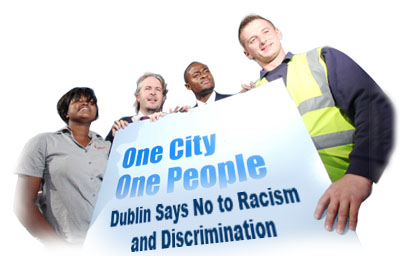
    Running throughout October the ‘One City One People’, held a number of different events across the city to promote inclusion, integration and to combat racism and discrimination, David explained his role in the project. “My role is the support of the overall project from minor projects, to major conferences held as standalone Dublin City Council ventures or indeed working with national governing bodies with similar interests regarding a multi ethnic city.” He added “Every day was different, one day I could be answering emails in my office, the next day I had my shoes off and having a meeting in a mosque, some meetings had translators and also the chance to travel to different cities to compare how they do things compared to “our way” can lead to very interesting discussions.”

    When asked if he thought the issue of racism was on the rise in Dublin, David surprisingly answered “In my own personal opinion the issue of racism is not getting worse, this maybe contrary to a lot of consensus out there.  But if you think about it, the level of crime is pretty much the same as it ever was, but it’s the type of crime now that would be concerning.  We live (and have been living) in a multi- cultural city for the best part of 30 years, it’s the current 20 something’s from all backgrounds who are streets ahead already of the “experts” yet we fail to properly acknowledge this. I believe in 15 years time, the younger kids of today won’t discriminate between the colour of one’s skin, the accent, the traditions, it will be the norm for many at that stage, but the one commonality they will have is that they are all Irish.”

    However, Helena Clarke at The Integration Centre, an NGO (Non- Governmental Organisation) committed to the integration and inclusion of people from immigrant backgrounds, argues the contrary saying “racism is the type of issue that, when it is not dealt with properly, it progressively worsens. Racism in Dublin is getting worse and will continue to do so until policy makers take it seriously and legislate for racist crime.” When asked if she felt there was enough being done to highlight the issue she stated “In a word no. The Integration Centre would like to see racism legislated for. This means that racism would be made an aggravating factor in sentencing. We believe that if it was legislated for properly it would be taken more seriously as a crime.”

    Both organisations believe that the continuing promotion of an anti-racism message in the city is an important statement of commitment and acknowledge some work still needs to be done. David explained “Dublin’s cultural outlook towards migrants we have found has in general been very positive, with an open acceptance and welcome for the new diversity of population as an asset for the city. A recent Euro barometer survey of  attitudes to immigrants in over 70 cities ranked Dublin  18th as a city which is welcome to foreigners but needs to achieve more on integration.”