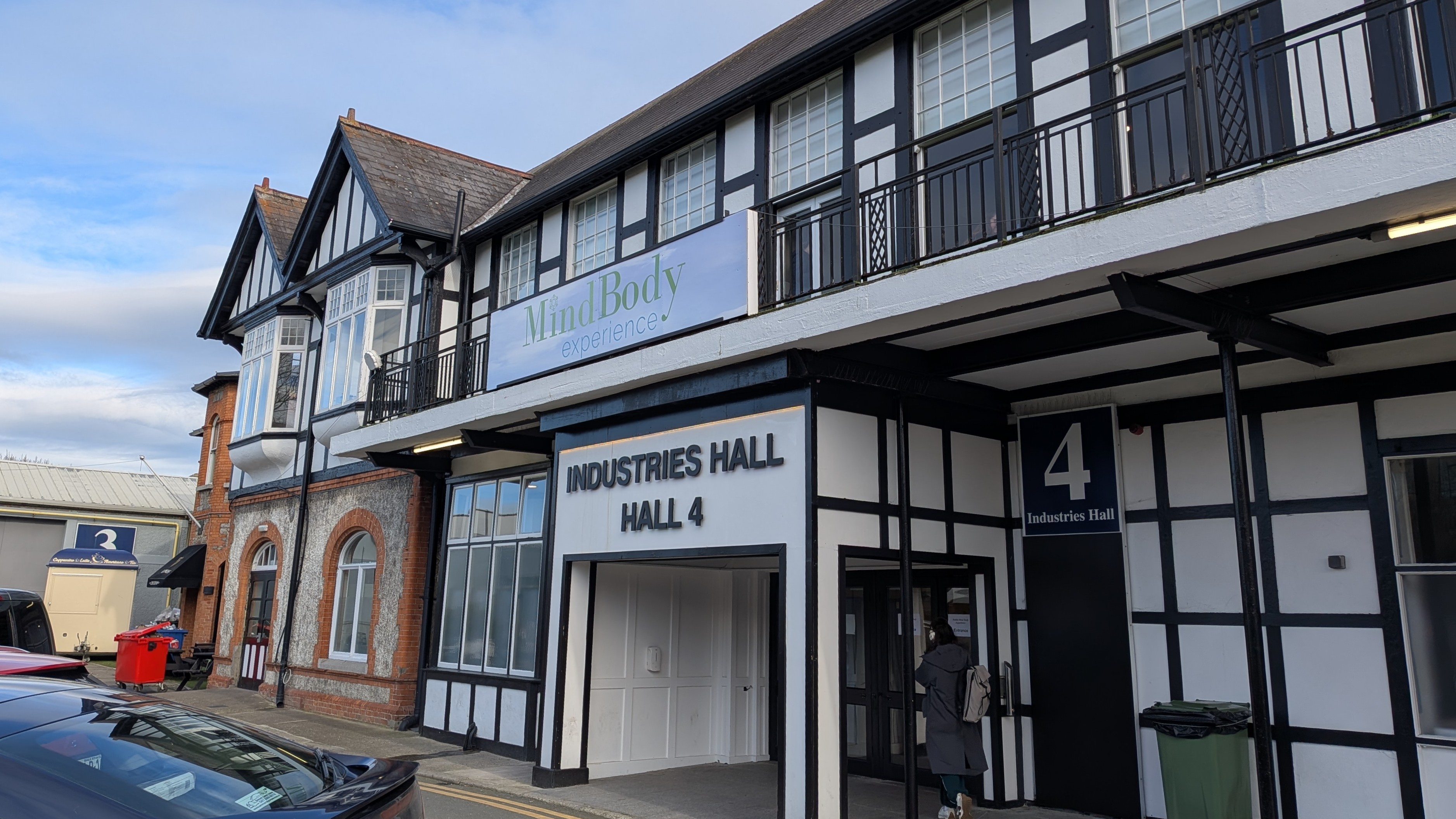
The Dublin Mind Body Experience was held over three days at the end of February and the beginning of March, bringing together a variety of exhibitors in the fields of holistic health, yoga and general wellness.
By Adam Jackson
The scent of incense was thick in the air in the RDS hall four, with almost 200 stalls set up, displaying a variety of products and organisations.
The Dublin Mind Body Experience might have seemed overwhelming at first, with so many different things jammed into a relatively small area, but after doing a circuit of the hall, one would be likely to see something that attracted their interest.
The event was a combination of four different elements: the Mind Body Soul Expo, the Yoga and Meditation Festival, the Dublin Wellness Expo, and the Dublin Psychic Fair.
As well as exhibitors desperately trying to make eye contact with anyone window-shopping, there were those consistently drowning in customer inquiries.

Immediately to the left upon entering, was a stall that might be easy to miss, with the intriguing name Ballyhubbock Bee Beds.
Gillian Moody, who managed this stall, talked about her experience attending the Mind Body Experience for the first time, drawing particular attention to the difficulties that came with exhibiting bee beds.
“This is my first time ever exhibiting or even attending the Dublin Mind Body Experience, and I’m here for people to understand what bee bed therapy is,” Moody said.
Moody’s bee beds are beds filled with multiple colonies of bees, the idea being that the vibration of the bees’ wings has some sort of therapeutic property.
Understandably, Moody was unable to bring one of these beds to the event.
“For the likes of these shows, I don’t necessarily have something that people can sample. Some people pass the stand, and you can see the hesitant look on their faces,” Moody said.
Moody explained that although it was difficult to get people interested without something physical to show them, once she explained the concept of the bee beds, people became more interested.
“People automatically assume that it’s bee venom therapy or that they might get stung, but with bee bed therapy, you don’t physically interact with the bees,” Moody said.
Although Moody did not have the ability to bring along her bee beds, there were plenty of stalls providing samples of different therapies or simply selling products.

There was an entire corner dedicated to psychic readings, as well as beds and chairs set up for various types of mental, spiritual and physical therapy.
One thing that was impossible not to notice were the gongs and other sound devices set up in various stalls, all to demonstrate something called sound therapy.
One such stall was set up by AOSTI (Association of Sound Therapists Ireland), who were there to promote entering sound therapy as a profession.
Jennifer Cruise, the chairperson of AOSTI, explained the practice as the use of certain sound frequencies as a form of therapy, using instruments like Tibetan bowls, crystal balls and gongs.
“We’ve been absolutely inundated with people,” Cruise said.
“This fair, which is the largest indoor holistic fair in Ireland, has had far more sound therapists this year than any other year.”
Cruise attributed this popularity to the ease with which most people can use sound therapy.
“Anybody can experience sound; you don’t have to be a musician, you just have to understand how sound affects people,” Cruise said.
Although human wellbeing was a major focus of the event, somewhat surprisingly, there was one stall set up for the wellbeing of non-human animals.
IAVS (Irish Anti-Vivisection Society) were there to spread the word about animal testing in Ireland, specifically focusing on Botox testing.
“We’re here to publicise the amount of abuses carried out on non-human animals every year, both in Ireland and the world,” Catherine Morrow, IAVS chairperson, said.
While the EU has banned cosmetics testing on animals, Botox testing is still allowed on a technicality.
“At the moment, we are particularly focused on campaigning against the testing of Botox on mice, which kills thousands of animals in Ireland every year,” said Morrow.
Morrow emphasised the existence of humane alternatives to animal testing that she said were “more reliable” and “far cheaper”.
The Dublin Mind Body Experience seems to have been the right event for IAVS, with plenty of interest coming from the event’s attendees.
“We’ve had crowds of people today, a number of vegetarian and vegan people coming to the stall, so they are automatically sympathetic,” said Morrow.

Things were dying down by six o’clock, although the event was indoors, the skylight above made the waning light apparent.
There were no longer nearly as many attendees as there had been earlier in the day, and exhibitors were beginning to pack up their stuff and leave.
Exhibitors who had been previously eager to catch the attention of passing attendants were, at that point, comfortable with the lack of engagement, many of them using the downtime to read.
Like so many other things, the Dublin Mind Body Experience ended, slowly fading out.





You must be logged in to post a comment.