Tag: religion

  • The Irish-speaking Monk

    The Irish-speaking Monk

    From Gaelscoil to Monastery, Joey O’Toole is a unique Gaeilgeoir Monk living in Thailand but born in Dublin. 

    From studying “Géibheann” to studying the Dharma, from praying Sé do bheatha, a Mhuire to “Namo tassa Bhagavato”, Joey is living an extraordinary second life as a Buddhist Monk, after attending Gaelscoil Mide in Kilbarrack and Gaelcholáiste Reachrann in Donaghmede. 

    Joey on his Communion day
    Joey on his Confirmation day

    “I have been living in Thailand for three years now. I had a feeling I would be moving somewhere out of Ireland and thought we would move here because my granny lives here and so do my cousins in the village. We had to move because we were struggling financially in Ireland”. said Joey. 

    Joey was born in Dublin to a Thai mother and an Irish father. Growing up in Donaghmede Joey spoke Thai with his mother and his older sister, Ath and spoke English with his father at home. As well as speaking Irish in school and with his friends. 

    Once Joey and his family decided to move to Thailand, he chose to keep the tradition of his people alive. 

    “It is tradition in Thailand that when a male of the family turns 20 years old, they have the decision to get ordained as a Monk. I chose to keep the tradition alive and also to have some self-discipline, because Monks follow strict rules. I’m in my last month here, but usually people don’t do it as long as me. I’ve been here eight months, but people usually only stay for a week or two after being ordained.” 

    Joey and his family are extremely proud of him for keeping tradition and for the fact he is currently the only Monk in his family. Joey’s whole village are proud of him too as over 200 people turned up at his ceremony for ordination. 

    Joey surrounded by the people of his village and other Monks during his ordination
    Joey having his head shaved

    “There is three days of ceremony before the ordination,” said Joey. “First, I had to cut my hair bald all the way down to the skin and then shave my eyebrows too, then there’s a big ceremony that your family have for you in the house with food, singing, drinking, like a party. There were so many people there for that too, everyone in my village is proud of the little half Irish, half-Thai boy following in the traditions.” 

    Joey mid ceremony after having his head and eyebrows shaved
    Joey receiving his Monk robes

    Joey’s routine in Thailand is very different to his normal routine he had here in Ireland for years. In Ireland Joey, would wake up at 7am to get up for school, have a small lunch at 10:30am, big lunch at 12:45pm and then finish school at 3:25pm and have the rest of the day to himself to do whatever he wanted.  

    In Thailand his routine is quite different for the last eight months he’s been a Monk. 

    “I have an early morning like all the Monks at 3:50am and I have my first morning prayer from 4:30 to 5:30 am. Then we all have our first meal of the day from 6am to 7am when we walk around the small village near the temple and the people living in the village feed us all. I’ll then have my first chores of the day to do at 8am and finish around 10am. We all then have our last meal of the day from 11am to 12am. We can’t eat after 12am but we can have mints and drinks are also allowed. If you are struggling with not eating after 12 and you are just freshly ordained, you can eat in that exception, but you must be fully honest with yourself if you can go without it until you’re allowed. From 1pm to 3pm I’ll have my long break and after that I have more chores from 3pm until our evening prayer from 5:30pm until 7:30pm. After 7:30 it’s light out.” 

    With such a hard strict routine, you would wonder if Joey ever missed his life here in Ireland. 

    “The last eight months have been so rewarding for me here because I am half Thai but of course I miss Ireland. I couldn’t say I prefer one over the other because I grew up in Ireland and loved it and also love my life here. All my friends I grew up with are in Ireland and there are some things I miss like Irish things. I do think Thai cuisine is better, but I really miss chicken fillet rolls and breakfast rolls and spice bags.” 

    Along with his rigorous schedule where there are no days off, there are also many rules that he and the other Monks must follow such as not being allowed to drink alcohol. 

    “Theres 227 rules we all have to follow, four of the rules are forbidden rules that you absolutely cannot break or else you will be banished from the Temple. Then there’s 13 of the rules that are slightly less serious than the forbidden four. If you break any of the 13, you won’t be banished but you will be punished. A punishment for this would be sleeping in the forest for ten days with other Monks that have also broken the rules.  

    “I can’t say too much because I don’t want to sin but some things I can’t do here would be to play football and also sing but we can’t express too much so I can’t sing songs like I would in Ireland”. 

    Joey was unable to give the name of his Temple or the village surrounding because it’s against the rules, however the city in which he and his fellow Monks reside in is Suphanburi. 

    One of the buildings in Joey’s Temple

    Joey doesn’t see his family very much as it’s important for him to spend as much time in the Temple as possible.  

    “I’m allowed to leave to go see my family if I want but it’s important I stay in Temple as much as I can and they can come visit me here, I’ll see my mam and sister more when I’m finished here”. 

    Once Joey is finished at the Temple this month, he is hoping to visit Ireland again sometime at the end of the year or the start of next year. 

  • The impact of Saint Carlo Acutis to the Catholic Church

    The impact of Saint Carlo Acutis to the Catholic Church

    Carlo Acutis, a 15-year-old teenager, was canonised by Pope Leo XIV at Saint Peter’s Square in Vatican City on Sept. 7, 2025.

    As the first saint born in the Millennial era, St. Carlo Acutis has captivated the hearts of hundreds of thousands of Catholics worldwide, with people of different nationalities and ages visiting his tomb.

    Carlo acutis was born in london in 1991, but was raise in Italy. Growing up he had developed a passion for catholicism and technology, which he used to spread the catholic faith. He died of leukemia in 2006 and after his death two miracles were accredited to him which led to his canonization.

    Carlo Acutis love for the Eucharist were recognised by the late Pope Francis. Father Michael Collins, a priest at the Archdiocese of Dublin, wrote a book on the new saint, God’s Influencer: A short biography of Carlo Acutis.

    Fr. Collins told TheCity.ie that there has already been an increase in young people who are showing interest in the new saint.

    “I regularly get people contacting me saying ‘that I’ve been interested in Carlo Acutis’ and they share with me their stories” he said.

    Nowadays, when the Church is experiencing a lack of young Christians, Saint Carlo Acutis serves as a reminder that even the younger generation can be influenced through modern Eucharistic practice.

    “The fact that he combined a reverence for the Eucharist, which has been in the church since the beginning, with new ways of presenting the Eucharist to the younger generation makes him an important saint,” Fr. Michael Collins added.

    Aside from being an inspiration to the youth, Saint Carlo Acutis has also impacted the development of the modern Eucharist.

    In his lifetime, St Carlo Acutis was fascinated with the internet. In his life the internet was still in its infancy, but that did not stop him from creating his own website and documenting the Eucharistic miracles from different places he visited.

    Dr. John Scally a lecturer in theology at Trinity College, Dublin, told TheCity.ie that although the new saint doesn’t have a huge theological significance, he has so much to offer to the development of the modern Eucharist.

    “I would see him as an innovator, I mean he’s gone bravely where no saint has gone before in terms of taking the church in a new direction.” Dr. Scally said.

    Dr. Scally explained that in this new generation, St Carlo Acutis has developed a method that would allow him to easily connect with people.

    “Jesus was a brilliant communicator because he communicated in the language of the time, in ways that people could understand. So young people can relate to Carlo, and he was able to come up with a new way of nurturing Eucharistic devotion” he said.

    In his first few weeks as saint, St Carlo Acutis has already caught the devotion of the masses and it could possibly help in promoting the Catholic faith to people and specifically the younger generation.

    Dr. John Scally said he “would not have great confidence in the fact that the church is using Carlo, as a poster boy to sell Catholicism […] Carlo’s story on his own is not going to be enough to save the church. We need much more people getting involved and living, being ambassadors for Jesus on Earth.”

    Fr. Michael also pointed out that having a saint from this era is more than a publicity stunt for the church. “The church would be foolish to look as if it’s looking for publicity […] all we want to do is share when there is good news.”

    St Carlo Acutis’ tomb is currently housed at the Santa Maria Maggiore church in Assisi, Italy, where devotees visit and pray to him daily.

  • “I saw myself and my church friends as completely cut off from the rest of world”: The growth of Evangelical churches in Ireland 

    “I saw myself and my church friends as completely cut off from the rest of world”: The growth of Evangelical churches in Ireland 

    by Diana Lazar

    For centuries, Catholicism has been the leading religion in Ireland. While it still leads by far, no one can deny the steady decline of Catholic identification and church attendance numbers in the past few decades.

    According to the Census 2022, there has been a 10% decrease from 79% to 69% of the population who identify as Catholic since the previous Census six years ago.

    Evangelical churches such as the Pentecostal and Presbyterian churches have been noticeably growing due to inward migration, particularly from Africa, Asia, South America, and certain eastern European countries. They tend to be more conservative in their theology and social beliefs than other branches of Christianity.

    Maria Pop grew up in the Pentecostal church community, “I attended church regularly every Sunday, and occasionally on other days of the week,” she said. “Parents in the church are told that since the first few years of a child’s life are the main formative years and the framework for the rest of the child’s life, it is imperative to expose the child as much as possible to the church.”

    She took part in many of the church activities as a child.

    “My main experiences as a young child in the church are mostly positive. I would attend Sunday school with other children my age. We’d read books and comics, watch movies, play games, and occasionally prepare songs to sing in front of the rest of the church.

    “Of course, all these activities were Christianity presented in a child-friendly manner. That is until you reach ‘older child’ status and suddenly the Sunday school teachers are talking about alcohol, sins, lust, purity, Satan, spiritual warfare, and the rapture. At this point, my church attendance had trailed off. I tried to push away some of the ideas they were putting on us,” Pop said.

    After her attendance started to drop, things were not the same for her anymore.

    “When I did attend, it was nice to catch up with my church friends, but the heavy, seemingly philosophical topics covered in Sunday school were always a source of unease. It felt like anytime someone would mention the evil world, they would be referring to people like me, who weren’t completely engrossed in the church,” she said.

    For Pop, being a part of a community did come with positive aspects.

    The church has been a consistent source of community my whole life. They were alwaysthere, and they continue to always be there. We were taught how to play instruments, we’d go on trips locally, and abroad. We’d go Christmas carolling with our families. It was a positive experience to grow up with the sight of the church adults carrying out charity events and travelling to areas of poverty to support people in need. The church raises money and transports necessities to impoverished areas every Christmas,” she said.

    Image: Unsplash

    Pop does not agree with some of the ideologies shared in the church, however.

    “Most of the churchgoers are simple, humble people with good intentions, but they’ve just been raised to see the world as this horrifying monster that wants to break apart their families and corrupt their kids. Some of the ideas that have been passed down through the generations are damaging, and they continue to be passed down, despite the progressive century we are in.

    “Not unexpectedly, most of the churchgoers, including women themselves, are prejudiced against women. Frequently during church services, the pastor, or the men in leadership will preach about women’s faults. How women lead men to perversion by wearing skirts that are too short, or too tight. How women of today need to learn how to listen to men, because God made men rational, but women emotional. Often, they will list things that women in the church are not allowed to do like paint their nails, get Botox, wear jewellery or heavy makeup,” she added.

    Judgement fell upon her from her community as she grew older.

    “Throughout my adolescent years, my church friends, and other church adults found my posture, my humour, my lack of style, and my aspiring career goals distasteful. It is a commonly accepted idea that women need to be meek and kind, always dress nicely, and they must always assume a mature motherly persona, even from a young age. Yet, the men in the church are allowed to make crude jokes, be loud, attend Sunday service in jeans, lack basic manners, and most of all, have dreams bigger than just a wife and children,” she said.

    The women are expected to start a family as soon as possible.

    “If a woman is unmarried in her mid-twenties, people begin to wonder what is wrong with her. But if a man is thirty and unmarried, nobody bats an eyelid. There isn’t much of a concept of a woman wanting anything other than a husband and as many children as the Lord gives her. College is just something we’re supposed to do while we wait to get married. Once we’re married, we’ll forget about everything that we’ve learnt, and start giving our husband children.

    “The concept of submission is taken very seriously in the church, and the nineteen-year-old girls who get married are expected to fully submit to their husband’s wishes and wait on them hand and foot. This submission can be from something as minor as permission for a new hairdo, to something as major as their career choice or number of children to have,” Pop added.

    Image: Unsplash

    The church places a great deal of focus on the Biblical Book of Revelation’s ‘End Times’ which is an ideology about the rapture coming to Earth soon. The belief is that all repented Christians will get brought to heaven, while everyone else gets left behind to suffer.

    “In my personal experience, it was a great way to introduce an abundance of anxiety into a nine-year-old child. I would constantly ask my parents for reassurance that I was good enough to be saved. Innocuous thunderstorms, flight turbulence, news of wars and environmental disasters, all seemed, to my fragile mind, as signs that the end was possibly occurring, or just about to occur,” she said.

    The idea of some people not being saved in the apocalypse created a division between Pop and others.

    “Mentally, I saw myself and my church friends as completely cut off from the world. We were different, and we were going to go to Heaven. All the other kids were sinners and would go to hell. Many churchgoers, even as adults, have adopted this divide between themselves and the ‘unholy’ world. Their interactions are superficial with people of different beliefs, including other denominations.

    “Being raised in the church gave me a sense of superiority as a child, but as I became a teenager and distanced myself from the church, I realised how alienating it is to think that way. All humans are brought onto the same earth, we all have the same fundamental needs, and we are much more similar than we are different, even down to a genetic level,” she said.

    Her drift from religious belief strained her relationship with her family.

    “This is a common occurrence for anyone who slightly strays away from the church. It is baffling how families that would express excitement for the birth of their child, and that nothing else matters except that their baby is healthy, are the same families who are willing to cut off their grown-up child, all because they no longer share the same beliefs.

    “Many are under the illusion that having a child means that the child will only ever be an extension of themselves, rather than a person with independent beliefs and wishes. So, they do not accept when the child deviates away from the good Christian soldier-for-Christ script. It is easier for them to reject their child and lose their emotional connection to them because if they are unbelievers, they are going to eternally suffer in Hell, and that reality would be too difficult to bear,” she added.

  • No New Nuns – How Ireland’s convents have handled declining numbers 

    No New Nuns – How Ireland’s convents have handled declining numbers 

    By Aoife Daly 

    Religion used to be at the core of Irish society. Despite the Church scandals and abuses that have come to light in recent years, the organisations impact on Irish society can be seen to this day. Most primary schools still have a Catholic ethos, at 88.6% in 2021, and an Irish Times poll from 2015 indicated that 93% of parents have their children baptised. A 2023 survey by Amárach Research found that, despite dwindling mass attendance numbers, about 50% of Irish adults still believe in God. 

    Image source: Landgeist. Sourced from the following article: https://landgeist.com/2022/07/30/importance-of-religion-to-europeans/ 

    All of this makes it impossible to ignore the remaining pillars of the Catholic Church in Ireland today. Clearly, religion is still relevant in the current age. But how is this religious community adapting to a modern, increasingly secular, Ireland? 

    “Where the sisters are elderly and aren’t able to work, it’s the pensions keeping them going” 
     

    “There’s very, very few people entering religious life today,” said Sister Bríd Geraghty, the delegation leader of the Disciples of the Divine Master in Blackrock, Dublin.  

    “I was only 17 when I joined, I had just finished my Leaving Cert,” she said. “There were four in my class, three became Sisters of Mercy, [and I] chose the Disciples of the Divine Master.” 

     “It was a beautiful experience, because we were many together,” she continued.   

     “You had great company,” she said. “That’s one thing that would be lacking today, if a young girl decided to enter the convent.”  

    Image: Unsplash

    In 1950, the number of female religious figures in the diocese of Dublin was 3,031. In 2021, that number had dropped to 1,022. During this time, the overall population of Dublin rose from around 632,000, to well over a million.  

    The impact this has had on religious communities is palpable. It is no longer possible for nuns to remain in convents as they age, as the support system that previously surrounded them has shrunken to a fraction of what it once was. Many are sent to nursing homes, against their better wishes.  

     While Sister Geraghty’s convent manages to generate income through hospitality, other orders would struggle to sustain themselves. 

    “We have about four rooms where people would come on retreat,” she said. “For full board here, it’s €70… So that helps us, but in other orders, it would be the pensions… Where the sisters are elderly and aren’t able to work, it’s the pensions keeping them going.”  

    Image source: Unsplash 

    Sister Geraghty believes the best way for the Church to mitigate these issues is to expand the range of people it appeals to.  

    “There’s a lot of talk now about whether they should be blessing gay marriages, or whether there should be women priests,” she said. “People have sat down and said, ‘how would we like to see the Church today?’ It has to change.”  

    “The Church as it is now, is not attracting young people,” she continued.  

    “The younger generation have changed, culture has changed, but unfortunately, the Church hasn’t changed,” she said. “And it’s not going to change a great lot if we’re going to depend on all older priests, older men.”   

    “I think at the moment, women will be more involved in the Church, and given a different place, a more important place, in the Church, where they feel like they’re contributing,” she said. 

    “People have it be invited to help in the Church today, and that’s missing” 

    Sister Geraghty also believes the Church must join forces with those who may not be religious, but would still appreciate the community the Church could offer.  

    “There’s no need for so many religious [people] today. It’s the lay people, like yourself, that should be more involved with the Church, given a chance, encouraged, invited. They’re not invited… People have to be invited to help in the Church today, and that’s missing. Like, my own nephews and nieces, they don’t feel that they’re part of the Church,” she said. 

  • Focus on peace: Ireland’s pro-Palestine demonstrations  

    Focus on peace: Ireland’s pro-Palestine demonstrations  

    By Leon Thompson

    Ireland’s support during the Gaza crisis has extended following the announcement of €13 million in aid being sent to Palestine.

    Tánaiste Micheál Martin announced the aid in Dáil Éireann as an acknowledgement of the escalated violence in the Middle East. 

    Mr Martin hopes “a lasting and sustainable peace” can be achieved following Israel’s declaration of war on Hamas when Israeli citizens were attacked two weeks ago. Mr Martin has also said the Irish government unequivocally condemns the attacks made by Hamas and expresses their deepest condolences for the Israeli people affected.  

    The Ireland-Palestine Support Campaign (IPSC) is supporting demonstrations nationwide, while the national demonstration to end the slaughters in Gaza will take place in Dublin tomorrow afternoon. 

    Cork, Cavan, Clare, Kerry and Belfast will also see demonstrations tomorrow. 

    The Garden of Remembrance in Dublin 1 should expect demonstrators at 1pm on the 21st of October following IPSC’s announcement saying, “As Apartheid Israel continues pounding the captive and besieged people of Gaza with indiscriminate bombing and gets ready for a full-scale invasion, all with the blessing of Western powers, we ask you to join us at an emergency solidarity rally in support of the Palestinian people.” 

    Crowds are expected to attend while TD Mr Paul Murphy has announced his support and attendance saying, “When does Palestine get the right to defend itself? 75 years of ethnic cleansing and apartheid…17 years of a brutal siege on Gaza…10,000 Palestinians killed in the last 15 years. Stop the slaughter!”

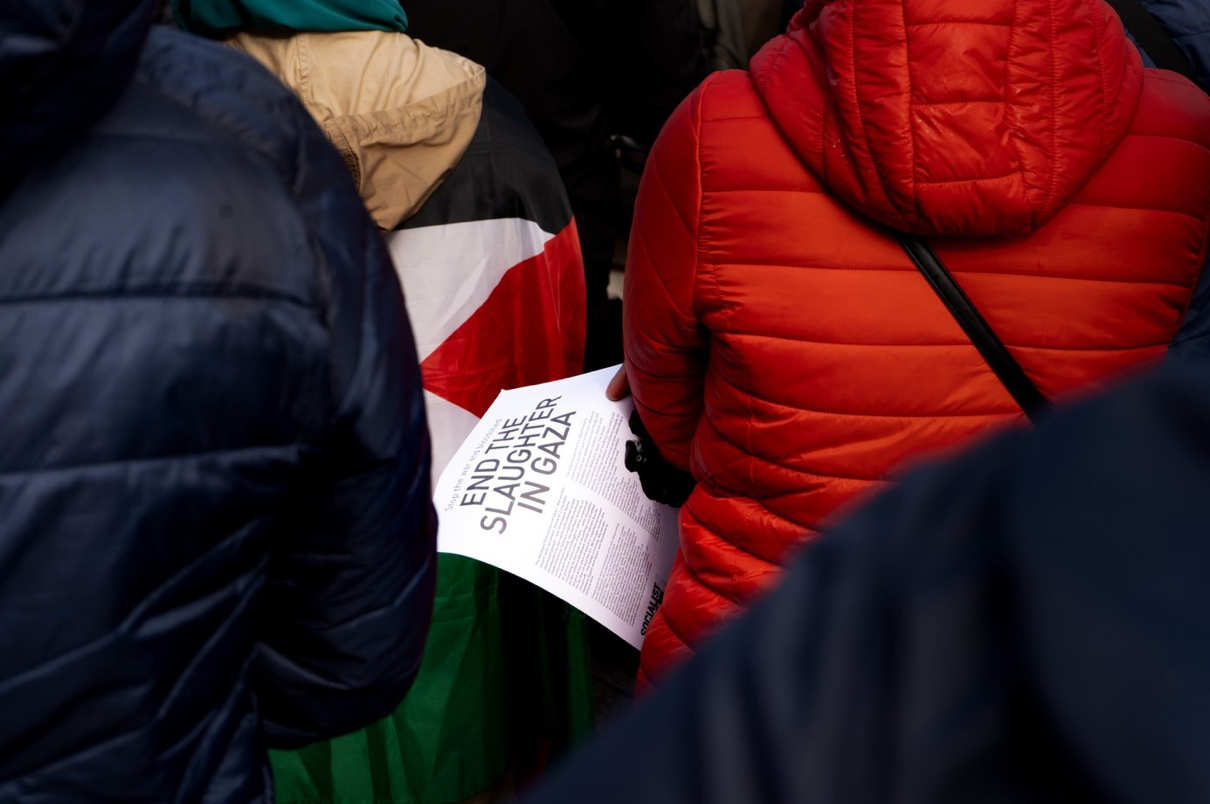
    Demonstrators at a protest. Image: unsplash.ie

    Other counties such as Tipperary and Antrim saw protests yesterday, October 19th while counties such as Louth, Longford, Cork, Down and Armagh will hold more demonstrations throughout the month of October. 

    The last demonstration supported by the IPSC is anticipated for Co.Mayo on the 25th of October. 

    Campaigners were outside of the Dáil on October 18th with Diarmuid Breatnach in attendance calling it “a duty and a pleasure” as he anticipated the outcome of the debate happening inside.  

    In Cork, one demonstrator Patrick Hobbart said: “…it’s deeply distressing to witness the enduring hardships faced by the Palestinian people who have carried the heavy burden of apartheid and colonialism for generations. It’s imperative to acknowledge that Hamas doesn’t speak for all Palestinians. The Israeli government must heed this plea and halt their relentless assault on innocent civilians. In this conflict, there are no victors…the international community must unite to demand an immediate ceasefire.” 

    Kevin Callinan, General Secretary of Fórsa Trade Union echoed Mr Martin’s sentiments, “The killing of Israeli civilians by Hamas and the collective punishment of the people of Gaza by the Israeli government will do nothing to end the occupation and bring about peace,” he said. 

    President of the EU Commission Ursula von der Leyen’s statement declaring “Europe stands with Israel” has led to a lot of pushback from members of the European Parliament (MEP) especially  

    MEP Clare Daly commended protesters that occupied the European Commission’s Office in Dublin saying: “So proud of friends and comrades…currently occupying the European Commission offices in Dublin as we here in Strasbourg go in to vote on a shameful Parliament motion that fails to condemn Israel for its ongoing crimes against humanity in Gaza.”

    Protesters outside of Dublin’s European Commission’s Office. Image: X

    The office was occupied by concerned citizens organised into a group called Dublin for Gaza, with one member Lamia Tadjine saying: “Let us be clear—blood is on the hands, not just of the Israeli military and leadership, but on the hands of those states and institutions who have provided cover for these atrocities, such as the European Union.”

  • ‘I think all Christians feel a call to find ways to bridge the social distance we’re enduring’ –  Fr Conor McDonough

    ‘I think all Christians feel a call to find ways to bridge the social distance we’re enduring’ – Fr Conor McDonough

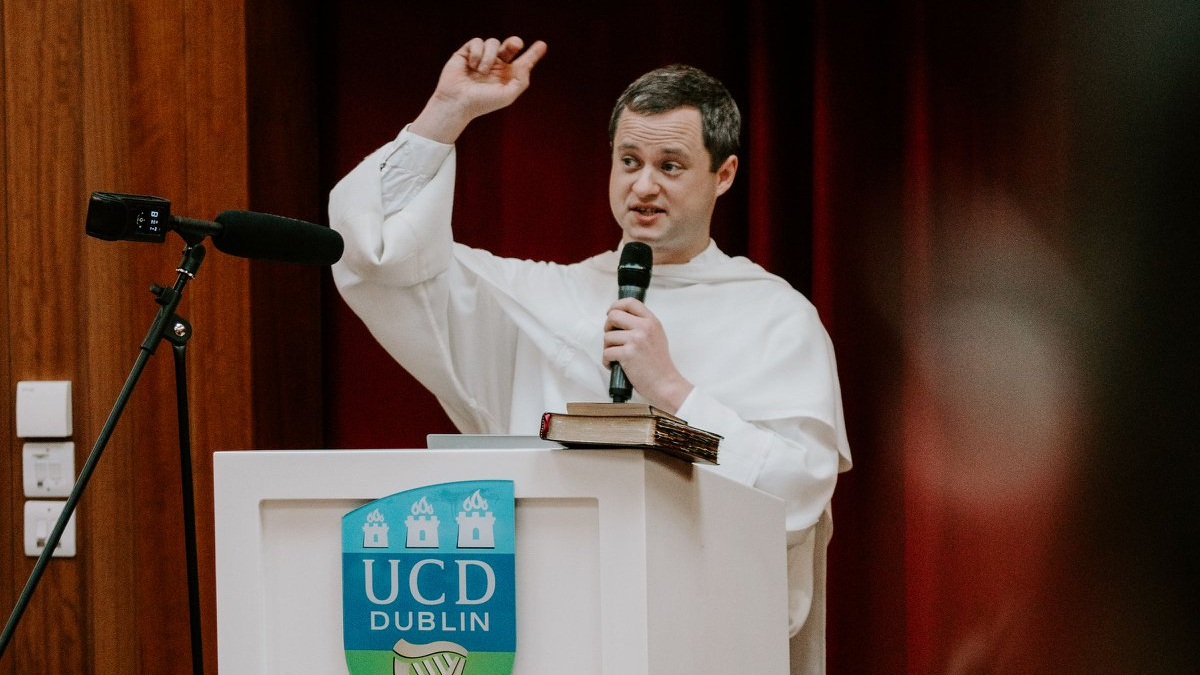
    Fr Conor McDonough giving a lecture at UCD. Photo: Fr Conor McDonough

    TheCity.ie’s Ruadhan Jones hears how priests and lay Catholics have been finding innovative ways to connect with the faithful online.

    Though the long Lent is over, we are still in isolation and masses continue behind closed doors. As a result, how to participate in Church life remains a pressing question for many Catholics.

    Fr Conor McDonough has been particularly active, giving up his Lenten fast from Facebook to join in the fight against the coronavirus pandemic.

    “I think all Christians feel a call to find ways to bridge the ‘social distance’ we’re currently enduring,” he says. “As a Dominican I feel that call particularly keenly: we’re preachers of the Word of God, we’re always looking for open ears and open hearts.

    “Right now, lots of people are in their homes, spending time looking at their screens – which are inevitably filled with bad news. I came back to Facebook to try to counter the bad news with the Good News of Jesus Christ,” McDonough continues.

    “I’ve had lots of positive feedback from people who appreciate being pointed to good online resources. People like the lighter side of things too, stories about community life and the strange things we find ourselves doing during lockdown.”

    Fr McDonough giving a talk as part of a webinar series for Catholic Voices Connect.
    (Photo: Ruadhan Jones)

    As part of his effort, McDonough gave a talk as part of a weekly webinar (online seminar) series called Catholic Voices Connect. His contribution to the series, titled ‘Coronavirus & the Church: keeping connected in a time of crisis’, took place on March 23rd.

    His talk, he explains, is part of his and the Dominicans’ effort to minister to the needs of the faithful, particularly their desire to gather as a community.

    “It’s such a strong instinct for Christians to gather. Jesus gathered groups around him, calling them away from their daily occupations to spend time in his presence.

    “Since then, Christians have continued to assemble, above all for the Eucharist, even at times of persecution, and especially during times of suffering. This is the fundamental reason it’s so painful for Catholics not to be able to attend Mass at this difficult time.”

    While he sees the pain it causes, McDonough says the bishops made the right decision in postponing masses.

    “We know so much more about how infection spreads, and it would be irresponsible and imprudent not to apply this new knowledge to our situation.”

    McDonough draws on his knowledge of the early Church in order to inspire his new, virtual mission.

    “I’m reminded of a moment in the life of St Paul. He had lived and ministered to the community of believers in Ephesus, but then was called to leave them. He gathered the people and told them he was leaving. He encouraged them and consoled them, they all knelt down in prayer and, as Paul left, the little community wept freely (Acts 20:37-38).

    Paul Writing His Epistles, attributed to Valentin de Boulogne.
    (Photo: Wikipedia commons)

    “But even when Paul was absent from his congregations he continued to write letters, and we should have the same attitude. Most ministry will have to be by phone calls, texts, livestreamed preaching and prayer, and social media updates. But this ministry of encouragement is so vital at this time of physical distance.”

    McDonough encourages people to take part in Church life in the ways which are open to them, such as online Masses and adoration. A recent survey found that 27% of respondents had watched mass online.

    “Watching online is definitely a good way to participate in the Mass, and to welcome the presence of Jesus into your home and your heart. It’s not exactly the same as attending Mass, and we naturally feel that lack.

    “But if someone confined to their home but desires and welcomes Christ in prayer, they’re actually living the Eucharist, as union with Christ, in a far more intense way than someone who attends Mass with little faith or love.”

    Churchservices.tv have been offering a selection of masses from Britain and Ireland.
    (Photo: Ruadhán Jones)

    But these are not the only ways we can fulfil our roles as Christians during this difficult time. McDonough sees the current crisis as an opportunity for the laity to remember their call.

    “It’s a good time too to remember the call of the laity to identify and use the particular gifts given to them by the Spirit, and to minister to each other in new ways now that priestly ministry has been interrupted. Here I’m thinking of all the kinds of charitable works being carried out around the country: collecting shopping, walking dogs, even organising bingo!”

    Having spoken about the call outward, McDonough’s last piece of advice is to also take this time as a chance for reflection.

    “It’s important not to be constantly communicating. This time of isolation also gives us the opportunity to be silent, to meditate, to read the Scriptures. These are the deep wells where we’ll draw water for the weeks to come.”

    Though this is indeed a dark time for religious and non-religious alike, McDonough speaks of the need to “let the light of our faith shine brightly on the digital continent”. It is this work that he and many other priests, religious, and laity are attempting to do.

  • ‘We’ll be praying for people on the front line of healthcare’ – Ireland’s Baha’i community to celebrate Naw-Ruz over video call 

    ‘We’ll be praying for people on the front line of healthcare’ – Ireland’s Baha’i community to celebrate Naw-Ruz over video call 

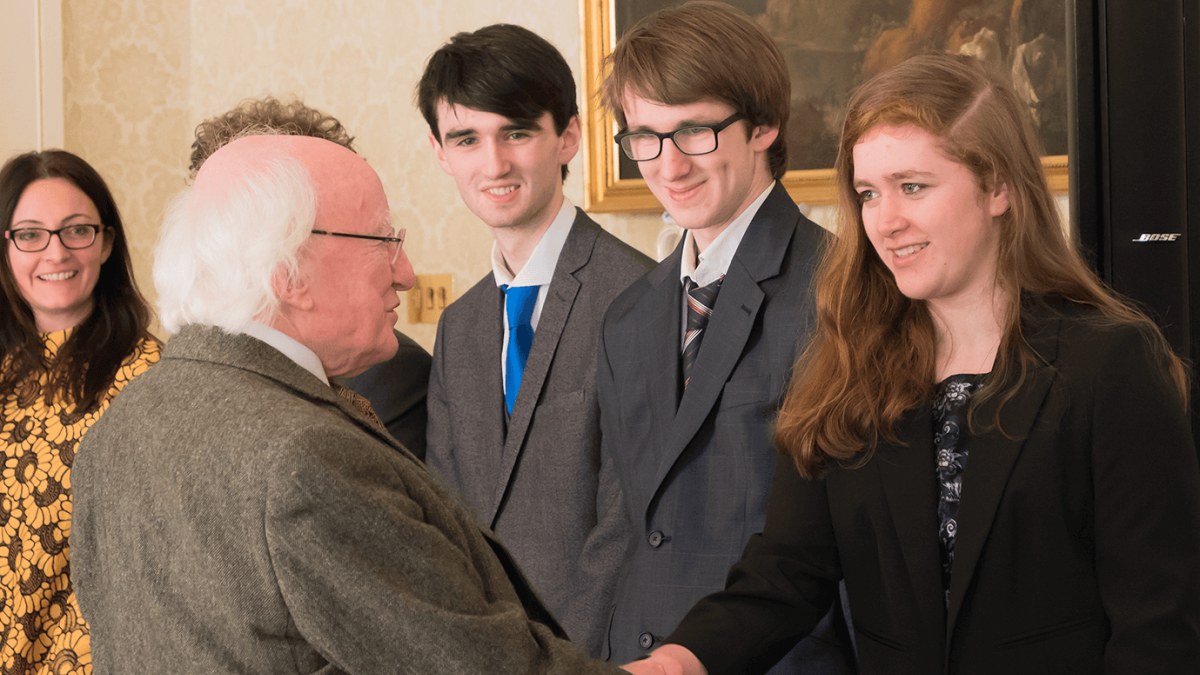
    President Higgins meets Ireland’s Baha’is, 2018.
    Photo: Baha’is of Ireland

    TheCity’s Cameron Weymes explores the creative response of Ireland’s Baha’i community to celebrate Naw-ruz, in spite of the Coronavirus pandemic. The Baha’i faith is a monotheistic religion that originated in Iran in the 19th century.

    This Friday, Ireland’s Baha’i community will celebrate their New Year, called Naw-ruz, which coincides with the Spring equinox.

    Due to the Covid-19 crisis — rather than celebrating with friends and family in Dublin or Cork — many of Ireland’s Baha’is will gather over video call to ring in the new year this Friday.

    “People are quickly becoming accustomed to Zoom, Hangouts and Microsoft Team Meetings ahead of Friday,” said Brendan McNamara, an administrative member of Baha’is of Ireland.

    “We are planning to have a large video call meeting, even just for a few prayers to mark the beginning of the new year.

    Irish Baha’is and their friends during bicentenary celebrations.
    Photo: Baha’is of Ireland

    “We might have a bit of music and singing together too, to make the most of it in these circumstances,” he added.

    The first Bahai in Ireland was George Townshend, a former clergyman and Irish Times writer, who converted to the faith in 1947.

    There are now approximately 600 Baha’is in the Republic of Ireland, most of whom are ethnically Irish. 

    In the 1980s, 25 Iranian Baha’is were granted refugee status in Ireland after fleeing oppression in post-revolutionary Iran. 

    “Many those who arrived as refugees now have children and grandchildren in Ireland and have integrated into the community here”

    “One of the kids ended up playing basketball for Ireland, and another has been elected to the Royal Irish Academy as a distinguished scientist in NUI Galway. They’ve settled well and have become very much a part of the country.”

    For Baha’is, Naw-ruz is among the most important religious events in the year.

    Baha’i Gardens in Haifa.
    Photo: Twitter

    “Naw-ruz is a joyous occasion of religious significance. It’s traditionally a period of reflection, with 19 days of fasting leading up to the event,” he said.

    “We close off the year that has passed and try to put things into perspective and prepare for the year to come.”

    However, for Ireland’s Baha’is, this will be a New Year’s celebration like no other.

    “It’s been quite extraordinary, we’ve had to cancel all of our contact meetings and make arrangements to stay at home.”

    “We’ll be praying for people on the front line of healthcare in Ireland and those less fortunate than us,” he concluded.

  • Mass cutbacks threaten future of rural communities

    Mass cutbacks threaten future of rural communities

    By Aoife Kearns

    It’s a Saturday evening. Sitting at the kitchen table, my laptop is open and aside from the regular distractions that most 22-year-olds give into, such as WhatsApp notifications, or opening the Facebook tab to name a few. At ten-past-seven every week, there is another distraction in my house. In the kitchen, there’s a scramble for car keys, upstairs a fight over the shower and in the sitting room my 89-year-old Grandmother sits, immaculately dressed, handbag on her shoulder, waiting for the 10 minutes of madness to end so she can be on time.

    I was once a part of this madness. Five years ago, I would have been pacing the landing with a reading in my hand, recounting a story that St. Paul told the Corinthians. Admittedly, I was focusing more on the delivery, but I was always happy to be given the opportunity to read and, in my own way, help the community. I was never a natural reader, to be honest the fact it didn’t come easy was one of the reasons I put myself forward in the first place. The nerves that I felt were always lessened by the knowledge, that everyone who was sitting in the church was a neighbour, a friend or acquaintance, or a part of my family that dutifully attended mass every week.

    Nowadays, this scene is very much the same, but the location has somewhat changed. From this month onwards, St. Killogue’s Church Kilnaspic in the parish of Mooncoin, Co. Kilkenny, is one of the many Catholic churches in the diocese of Ossory, (whose parishes include parts of Kilkenny, Laois and Offaly), that will no longer hold weekly mass. Instead ceremonies will now be held once a fortnight. As I sat at the table with my laptop on that December evening, the difference was that my family weren’t going to meet their neighbours outside the church-gate for a chat, or visit the grave, as this change had already come into effect.

    In his Winter Pastoral letter, Bishop of Ossory, Dermot Farrell addressed these changes outlining what it will mean for the churches impacted. He said: “Beginning on the First Sunday of Advent there will be changes in the number of masses in our parishes.

    “These changes reflect the changing character of our parishes and communities; not only the effect of fewer clergy, but also the need for greater collaboration between parishes.”

    In relation to what this might mean for the future, Bishop Farrell said:

    “This is an exciting time in our Diocese, new shoots are emerging, new supports are being given, and new structures are developing. It is ordinary, and yet always extraordinary, to see our community, all of its members; discussing, responding, growing, and continuing today what the Lord began with the Apostles long ago.”

    These “exciting” times that the Bishop refers to, are certainly not the sentiments reflected by everyone who has been impacted by the change. As someone who grew up with Kilnaspic Church on my doorstep, to me, it is one of the remaining things that brings the people within the surrounding areas together. Although the church is located within the parish of Mooncoin, the people of Kilnaspic have had their own identity throughout history. Be it the short-lived Clogga hurling team of the 1940s, or Aylward’s shop that ceased operation in the early 1980s, this small pocket of the village was once a smaller remote village with its own amenities, and innate sense of community.

    One major fact that I have left out of this idyllic image of the Church and area, is that the number of people attending mass in Kilnaspic and other small churches and parishes nationwide, has decreased significantly. I am one among others in my generation that were raised Catholic, but don’t attend weekly mass. For some people it might be a case of clashing schedule in our increasingly busy lives; for others it might come down to a lack of interest, or disillusionment with the current practices and past failings within the larger organisation.

    This falling number has been in reflected national polls conducted by the likes of the ESRI and Amárach Research, which saw church attendance drop from 56% to 35% in a ten-year period alone. In Dublin, The Irish Times reported that in 2016 weekly mass was as low as 2-3% in some parishes. This national downward trend was one of the reasons for the decision, to cut back on weekly masses throughout Ossory, and the verdict was made following a headcount as Mooncoin Parish Priest, Fr Martin Tobin explained.

    He said: “The Bishop asked us to have a look at the schedule of masses that were in each and every parish, and as a result of that he took a look at the number of churches that were in each parish.

    “He then took a survey of how many people were attending mass, which was conducted over three weekends in November of 2018, and if my memory serves me correctly that came in at about 24%. From this figure it became clear that there were far too many churches and masses for the population.”

    In terms of the knock-on effect that the cut-back will have on rural communities, Fr Tobin acknowledges that there will be a danger in these places losing an important meeting point.

    He said: “I would be one of the few that would have felt rather uncomfortable about taking the masses out of the smaller communities as the churches are in one sense, their source of identity.

    “How do we survive these changes and remain a kind of entity? While equally acknowledging the reality of the situation, at the moment we do not have enough priests to cover the present structure considering male celibates are the only people allowed do all of this.”

    Kilnaspic is one example of the once bustling townlands of rural Ireland, that now have little to no amenities left aside from the church. With masses being cut in these areas, there is a sense of foreboding fear felt among locals that religion aside, their sense of self could be under threat. The development has already been rolled out in this part of the country, but is inevitably going to happen in other parts of Ireland in the near future.

  • Interview with a vampire…I mean witch

    Interview with a vampire…I mean witch

    By Saoirse Nisbett

    Double, double toil and trouble; fire burn and cauldron bubble? Well, not quite. When we think of the world of Witchcraft, we think cauldrons, broomsticks and spells, but they are stereotypes that have been linked to witches from folklore and film. Witches have been, and still are, synonymous with Halloween for as long as the idea of the witch has existed, but they are a lot more than just a costume.

    Wicca, or witchcraft, is a Pagan religion that is still recognised and practised today. The religion involves worshipping the Earth and its seasons. It focuses on using rituals to bring about desired changes in life. There are eight holidays or times of celebration in the Wiccan religion: Winter Solstice (19-23 December), Imbolg (1 February), Spring Equinox (19-23 March), Bealtaine (1 May), Summer Solstice (19-23 June), Lughnasadh (1 or 2 August), Autumn Equinox (22 September) and Samhain (31 October). Ireland has a vast history of Witchcraft and Paganism. To this day, there are hundreds of practising witches in Ireland. One of these witches is High Priestess Barbara Lee.

     Barbara’s mug – Credit: Saoirse Nisbett

    Lee has been a witch since 1980 when she was 20 years old. She is currently the leader of her second coven called Serpent, along with her husband who is High Priest of the coven. She is also Priestess of the Fellowship of Isis,  an international spiritual organisation devoted to promoting awareness of the Goddess Isis, a Reiki Master and practices Tarot.

     Growing up in a Protestant family with a father who was a Deacon in the Church of Ireland, Lee always felt something was missing in her religious life: “one, the divine feminine, two, the individuality of self- you weren’t encouraged to think, you were encouraged to believe. And three, there was a scarcity of a sense of community or belonging. I didn’t feel like I was part of something else and Wicca provided all of those things for me and more and has let me develop in a way that I feel has allowed me to be, dare I say, happy”, said Lee on why she made the move to Wicca.

    Lee spoke of how Wicca found her by chance one day in her mother’s restaurant; “Two witches walked in for dinner, they got chatting to my mum and it turned out we had read a novel that one of the guys had written, they came back and a friendship started to grow. My mum was interested in what they were doing, I wasn’t quite sure as I was still in my teens, but I went up to visit them in the West of Ireland for a couple of weeks in the summer and they stayed with us for about three months when they decided to move back to Dublin. I wanted to know more so I read a lot, was keen to get involved and so I asked if I could come along to a ritual, they said yes and the rest is history because it fit me, and I never looked back.”

    “When Lee isn’t leading her coven…you’ll probably find her at home tending to her four cats, three of which just happen to be black”

    For Lee, witchcraft is more than the stereotypes of magic and spells, she sees it as more of an experiential journey in which spells and magic play a small part. “[I’ve got] loads of books of spells but a good spell is one you make yourself, tailored to a specific person or feeling,” Lee said.

    Baby naming ceremony on the Hill of Tara (right: Barbara Lee) – Credit: Barbara Lee

    Lee mentioned two different types of spells; Piseógs, which she described to be like a hex or curse of sorts, and spells made to help or benefit a person.

    “Anybody can do a spell once they have intent. Anyone can cook, they might not be a great cook but follow the recipe and you’ll probably succeed,” said Lee.

    “Phrasing is extremely important when it comes to spells, every word is taken very literally so always follow the KISS method: Keep It Simple Stupid. Be direct and have a purpose, using a point of focus like candles, crystals or a tight knot is good for focusing energy because if a spell can be misinterpreted, it will be.”

    Lee also mentioned that a table of correspondence is also very important to channel the spell, the table can be made up of various symbols and objects relating to the spell.

    “If a spell can be misinterpreted, it will be”

    The religion of Paganism emphasises the importance of self and making choices that benefit you and the Earth. This means that modern witches are very in-tune with the Earth and respect it as number one in terms of recycling, using its resources to their full potential and seeing the seasons as new beginnings. Any rituals or ceremonies held throughout the year are dictated by the Earth. For example, during Bealtaine, which is seen as a time of cleansing, the herd of cattle would traditionally be lead between two twin fires to rid them of any disease, ticks or fleas.

    Samhain altar with scrying mirrors – Credit: Barbara Lee

    At Summer Solstice, there is a custom of throwing an ember from the solstice fire into the field of wheat and, if you could see the ember the harvest would be bad but if you couldn’t see it, it would be plentiful. At Samhain, witches will ‘lay the dumb supper’ which involves setting an extra place at the table to honour those who have past and are in other realms. It is during Bealtaine and Samhain when the ‘veil is thin’ between our realm and the others so during these times of the year those from other realms are honoured and focused on.

    Lee dismissed modern theories involving witches and the devil, as she said, Pagans don’t believe in the devil: “[…]it is just a Christian construct to destroy paganism. Pagan gods in the dark and middle ages were described as devils, and yes, Satan existed as the counterpoint to God and he would make you question motives, bringing forth the concept of the Devil’s advocate, but the Devil isn’t part of the pagan mindset. We believe in good and evil as a human trait rather than something that was brought down by some divine influence. We do believe in gods but again, experiences and beliefs are unique. In a coven, everyone will have different beliefs but the commonality lies in their practice. It’s about people being the best they can be as individuals.”

    Lee’s coven, Serpent, has eight members and is run out of her living room where they meet for ritual about twice a month. Lee stressed the point that one is never asked or invited to join a coven and that if you’re ever asked, run. Joining a coven is something one has to take upon themselves to decide to do and can only be initiated into Wicca when the person turns 18 years old. Once you ask, you’ll be invited to go to a meet and greet with the coven. This meet and greet stage of the process can take months but is important to see if the coven is a fit for you.

    “one is never asked or invited to join a coven… if you’re ever asked, run”

    After being invited to three rituals, one decides whether or not they want to progress. If they agree, there is a ‘neophyte’ (new member) ceremony which involves committing to learning, reading and training to gain the knowledge and acquire the techniques needed. After a minimum of a year, you are then initiated into first degree if you are seen to be ready and are answerable to the coven.

    Some witches never surpass first degree but those who move up to second degree take on the responsibilities of looking after the first degrees in the coven. At this stage, one also has the ability to start a coven of their own but under the leadership of their parent coven. It isn’t until a witch reaches third degree that they are completely autonomous and able to start their own coven or act freely as an independent witch.

    When it comes to outside opinions or hate as a witch, Barbara Lee has encountered almost none; “I’ve never been treated differently. Maybe once by an Evangelical Christian…I never expect to be treated differently…maybe I’m naive.”

    Samhain altarpiece – Credit: Barbara Lee

    “I guess I don’t parade the fact that I’m a witch like I don’t go around in flowing black clothes but the whole neighbourhood would know my house as the witch’s house,” said Lee.

    As well as being a practising witch, Lee is also a co-founder of Pagan Life Rights, an organisation which acts as a community for pagans in Ireland as well as actively campaigning for equal rights for pagans. As part of Pagan Life Rights, Lee performs handfastings, which are a type of commitment ceremony, baby-naming’s and funerals. The organisation has also made a major impact in the Pagan community in that hospitals now have Paganism as a religion on registration forms and in the last census, following a campaign to encourage people to identify as pagan in writing, there was an increase of 40% in people identifying as Pagan.

    When discussing certain stereotypes that go hand in hand with Witchcraft Lee mentioned: “[…]you’ve got shows and things on the telly that do all the supernatural stuff and makes it out to be very ‘wooo’ which it’s not, it’s very mundane a lot of the time actually, but you do develop those extra senses as you grow within the craft, the same senses you had when you were a child, like seeing things or beings but it being sublimated and being written off as imagination.”

    When Lee isn’t leading her coven, being a Pagan activist, hosting pub moots (traditional meetings), doing community clergy work or working in her full-time job as a transcript typist, you’ll probably find her at home tending to her four cats, three of which just happen to be black.

    “I couldn’t imagine my life being any different, what we do is to live the best possible life that you can live. I look after myself, my home and my animals and do nothing in excess…except the odd gin and tonic doesn’t go astray.”

  • Ireland’s complicated relationship with religion continues, data reveals

    Ireland’s complicated relationship with religion continues, data reveals

    Every five years, Ireland is subject to a census which, of course, determines a great many things about the population of the nation. One of the questions answered about Ireland’s people is their religion, and its population has historically been a predominantly Christian.

    However, while this fact has remained unchanged in the history of the country’s official censuses, the actual number of those applying a tick to the box marking them Christian, and more specifically Roman Catholic, have undoubtedly dwindled quite a bit. And in noticing this, one cannot help but wonder how much further that number may continue to fall, if at all.

    After all, the percentages recovered briefly, as one will see from the figures displayed below. The question prompted by this may be: “Are people on the edge of cutting ties from Roman Catholicism , and will this be reflected in the statistics for Ireland’s population?”

    It has certainly become a typical trait found in Irish society, the number of people who identify as being Roman Catholic merely by religious label alone. Though, it is very possible that this simply has to do with the religion one finds oneself born into. It is perfectly normal to hear of someone who used to attend mass every Sunday but eventually found themselves only showing up to mark the most important holidays, such as Christmas and Easter. And the statistics collected on this topic actually convey this fact, at least insofar as showing numbers for overall attendance decreasing.

    Data collected by the Iona Institute published in 2009 found that between the years 1972 and 2011 there was a very significant drop in the percentages of Irish Catholics regular attendance at mass; the numbers lowered from 91% to 30%. The statistics show a similar pattern in the percentages regarding general church attendance in the Republic of Ireland; from 1973 to 2009 there was a decrease from 91% to 46%. 

    2

    Interestingly, despite a relatively steady decline in church attendance in the Republic of Ireland, the year showing the lowest attendance was 2005 when the percentage fell from 50% in 2003 to 34% in 2005, followed by a sharp rise in attendance and spiking at 67% in 2007. By 2008, however, the numbers suddenly dropped, giving a percentage of 42%.

    According to the Iona Institute, the number of people attending Mass in the 1990s decreased at a frequency of about 3% per year; from 85% in 1990 to 60% in 1998. Towards the end of the 1990s and coming closer to the early years of the new millennium, the declining numbers persisted at a rate of around two percentage points per year; going from 60% in 1998 to 50% in 2003. From the year 2003 the rate of decline seems to have reduced to approximately one percentage point per year; from 50% in 2003 to 45% in 2008.

    The number of Catholics living in Ireland in 2011 was 3,831,187. Only 30% of this figure were attending Mass on a weekly basis. This amounts to the presence of only 1,149,356.1 Catholics at Mass.

    3

    While Roman Catholics decreased as a percentage of the population of Ireland between the years 2006 and 2011, the religion still showed a strong growth in overall number due to a combination of an excess of birth rates versus death rates, and as immigration increased from countries such as Poland. On this topic, another fact worth noting is that the Irish population has been on a firm increase since 1926. It has gone from 2,971,992 to 4,689,921, as of 2016; an increase of more than 57 percent.

    4

    While those filed as ‘lapsed Roman Catholics’ are a very low percentile, these numbers alone are not an accurate representation of those under the heading of ‘no religion’ in Ireland. Having said that, the figures have certainly been steadily increasing. This, of course, also does not account for the decrease in Roman Catholic figures in the censuses overall, only a very small number of them.

    5

    John Hamill is on the National Committee at Atheist Ireland and when asked the very simply-phrased question of why he believes these numbers for mass attendance by Catholics are falling, he said:

    “The issue is with the doctrines of the church and it’s becoming increasingly easy to see the problems with it. In living memory, mass used to involve the priest with his back to the congregation, speaking Latin, and if you were a member of that congregation and wanted to ask a question about your religion you have no real way of verifying the answers you got back.

    “But now, kids these days, they have the internet in their pocket. They can look at the doctrine and what it says very easily and whether it’s actually true, and they can look at the world around them nowadays and how it has been understood by science,” he said

    David Quinn is the founder and director of the Iona Institute, a socially conservative Roman Catholic advocacy group.

    Mr Quinn said: “It was inevitable. We’ve become a much more secular society in line with the rest of the Western world. We’re an island geographically but we are not an island culturally. I think a lot of the delay in these numbers coming down is due to the fact that we were a poorer society for longer … economic development drives a lot of these things … we only became independent in 1922 … we, in a way, are kind of a case of history interrupted.

    “We became independent in 1922 and decided we were going to become a super Catholic country, and that was a way of asserting our independence. That was a way of saying to Britain that we’re were not just politically independent but also culturally and religiously independent as well. And other countries didn’t go through that kind of a phase.”

    Mr Hamill said figures on what exactly it is that constitutes a believing or practicing Catholic were complicated.

    priest-81872_960_720
    Stats show that Mass attendance is steadily in decline // Pixabay

    Credit // Pixabay

    He said: “There is a report done by the Catholic Bishops every year, and what they do is interview Mass attending Catholics on the way out of Mass and ask them what they believe. 60-70% do not believe what the Church’s teaching [are] about contraception, homosexuality, divorce; Catholics don’t believe in Catholicism when it comes to these social issues.

    “About 50% don’t even believe in hell, 10% don’t believe in God. That’s 10% of Catholics, consistently over a number of years don’t actually believe in God. A belief in God is a pretty low bar to get over before you call yourself Catholic, but not in Ireland it seems.”

    David Quinn said: “When people tick that box, they’re self-identifying as Catholic and who knows what’s going on in their own heads … if I was never going to mass and really didn’t believe in what the Catholic Church teaches and was only turning up to Mass on special occasions, I would not tick that box.”