It is impossible to know the exact number of places of religious worship in Dublin, according to Dublin City Council.
The recent announcement about the arrival of the Church of Scientology’s European Headquarters in Firhouse has raised the question of what other religious institutions are operating in the city and, if so, how many there are and where are they.
In order for a building’s usage purpose to change (for example from residential to business or residential to religious), the owner must apply through Dublin City Council for permission.
There have been over fifteen applications, mostly proposed by minority religious groups since 2004 and the majority of these were accepted. There have also been over 35 cases where buildings have been used as unauthorised places of worship, but no record of the type of religion or faith has been kept.
While there is no official register for religious places of worship, it is possible to accurately estimate the number of active places of worship for some of Ireland’s larger religious denominations. Based on the CSO data for religious worship, the biggest religious denominations include Roman Catholicism, Islam, Orthodox, Presbyterian and Hindu.
Over 220 Catholic churches list their services for use online. However, this figure is probably inflated by non-active sites of worship which are still open to the public for tourism and other use. The Catholic Directory, a site which aims to help people find churches which perform mass, lists 60 active churches in the Dublin area (but there are probably more).
There are two Presbyterian churches in Dublin and five Orthodox churches, which include Greek Orthodox and Romanian Orthodox.
There are twelve mosques in Dublin for followers of Islam. According to census information, Islam is the fastest growing non-Catholic religion in Ireland, followed by the Orthodox tradition.
For places of worship for those of the Jewish faith, there are two sites. One is the Progressive Jewish Congregation, the other being the Dublin Hebrew Congregation which cater to their own communities.
There are two centres of Hindu worship as well as six centres for Buddhist worship.
It is not surprising that Catholic places of worship vastly outweigh other religious denominations, but other religions are opening new churches in Dublin, whereas the Catholic church has if anything, been closing them.
Falling numbers of those attending mass as well as dwindling numbers of diocesan priests are forcing the closure of churches around the country. Since 1972, mass attendance has fallen from 91% to 30% in 2016. According to The Irish Catholic, the number of priests fell 16% between 2004 and 2014 while applications to join the priesthood have rarely reached double figures since the year 2000.
As more people enter Ireland from different countries and cultures they will, of course, take their religion and beliefs with them and we can expect to see more churches from non-Catholic denominations in the future.
Protesters gathered outside the Victory Centre in Firhouse, Dublin on Saturday, October 14th, to oppose the Church of Scientology’s grand opening of their new headquarters there.
It was widely reported that the religious movement had purchased the building earlier this year in order to establish a European base of operations. Controversial leader of the Church of Scientology, David Miscavige, had been flown in from the U.S to cut the ribbon at the opening ceremony.
The road leading to the newly-refurbished centre was cordoned off for approximately 100 metres, closing off a bus stop along the way. A lollipop man who appeared to be employed by the centre’s new residents, occasionally stopped traffic to allow visitors to cross the street.
Protesters gathered in protest of the new Scientology centre A mix of both local and international protesters held signs and formed a picket-line across the main entrance to the building. Signs were emblazoned with witty slogans and graphic images of supposed ex-members.
Anne-Marie, a resident of the Firhouse area, believes that the group may only view Ireland as a “soft touch” and is being used as a stepping stone in order to gain further entry into Europe.
Another protester from North Dublin, who wished to remain anonymous, claimed that he lost a number of close friends to Scientology a few years ago.
“I know a few people who are in the Church, people who were my friends, who were taken by the Church and now they can’t communicate with me anymore. I’ve joined in these protests because I think what they stand for is absolutely unbelievable,” said the young protester.
Throughout the afternoon, visitors could be seen leaving the centre in small groups. None of these visitors wished to comment.
Visitors leaving the victory centre did not speak to the mediaWilliam Drummond, a man who claimed to be a member of the Church of Scientology for over 50 years, led the protest over the course of the day. Drummond, who claimed that he was indoctrinated into the Church as a child in South Africa, said that he came to Firhouse to deliver a warning to Irish citizens.
“The end result here is to send a message to the Irish people that this is a dangerous cult. We want to know why these people are allowed to get away with this, to practise here in Ireland,” explained Drummond.
The opening of the new Scientology centre comes as the latest census revealed that only 87 people identify as Scientologists in Ireland. However, the Victory Centre boasts an impressive total capacity of 1,200.
This slideshow requires JavaScript.
The Church of Scientology includes some of the world’s biggest stars in its membership, including Tom Cruise, John Travolta and folk superstar Beck.
With the plans for the new National Maternity Hospital swaddled in controversy, Hannah Lemass examines the reasons behind the row
Plans for the new National Maternity Hospital (NMH) may be in jeopardy as the board of St Vincent’s Hospital will review the project amid ongoing criticism.
The plans have faced controversy since it was announced that the St. Vincent’s Hospital Group (SVHG) would have ownership of the new NMH.
The Sisters of Charity are the largest shareholder in the SVHG and will, therefore, be the owners of the new €300 million building.
Planning permission posted at St. Vincent’s University Campus, image Hannah Lemass
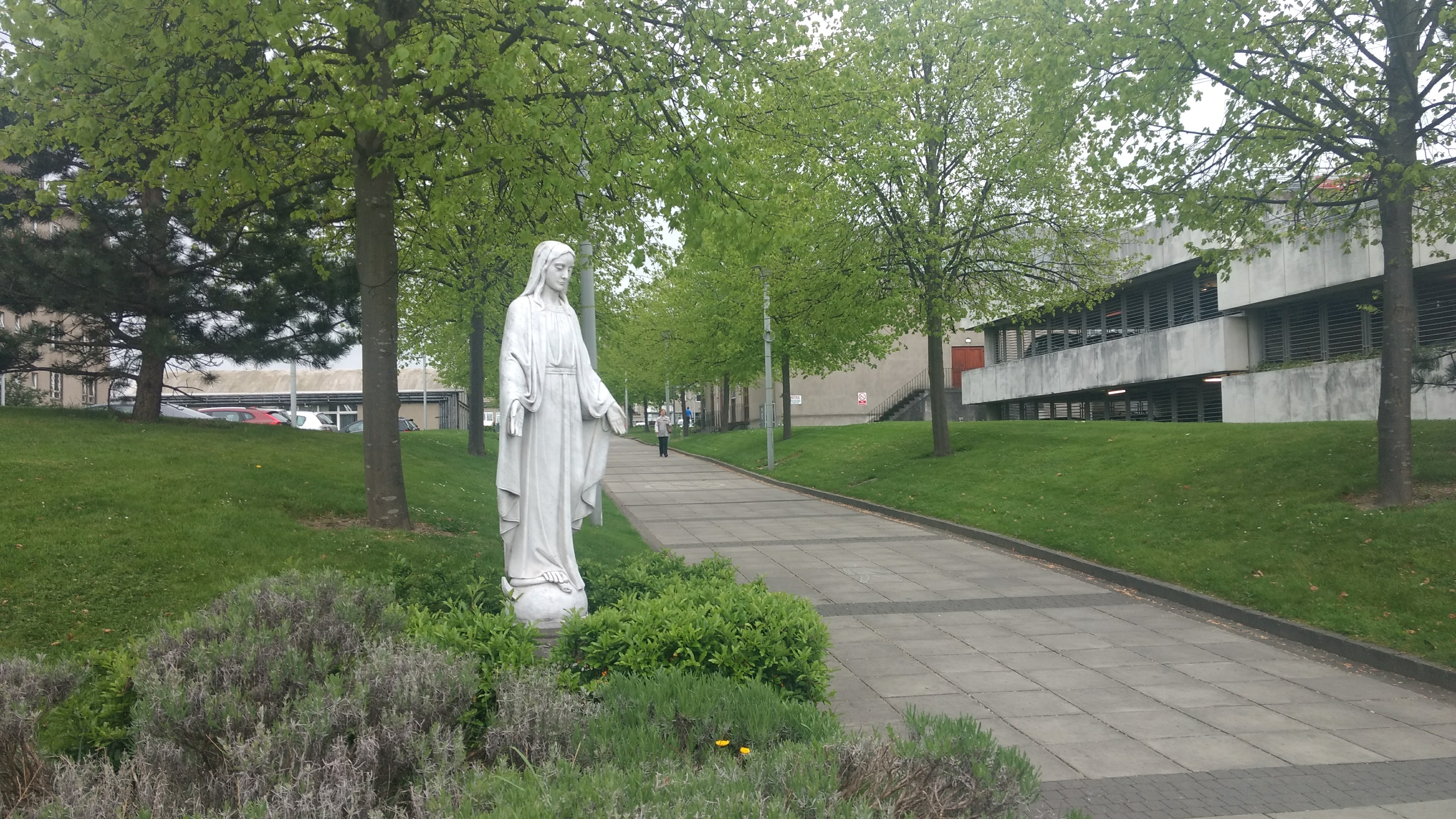
St. Vincent’s University Campus, image Hannah Lemass
St. Vincent’s University Campus, image Hannah Lemass
St. Vincent’s University Campus, image Hannah Lemass
The planned site for the new National Maternity Hospital, St. Vincent’s University Campus, image Hannah Lemass
Protest
Demonstrations took place outside of maternity hospitals nationwide last weekend.
The first protest occurred on Thursday 20 April.
The crowd which included representatives from Parents for Choice and Midwives for Choice gathered outside the Department of Health headquarters on Poolbeg street in Dublin’s city centre.
The lunchtime demonstration was organised by Workers’ Party Councillor Éilis Ryan.
She criticised Minister for Health Simon Harris for tweeting on the issue of the new NMH rather than actively engaging in negotiations.
“We would prefer if you actually got involved in the negotiations and didn’t leave it up to the doctors to have to come out and make public statements about what kind of healthcare we should be having in this country.
It’s a minister’s responsibility to take back control of healthcare from the church, put it into medical hands and make sure they are the ones making the decisions”.
“It’s a slap in the face to the women of Ireland” -Robyn, a protester at the Department of Health, image by Hannah Lemass
Religious institution or independent hospital
“As technology allows us to provide better and better medical care we’re going to have more and more procedures and treatments that the church rejects… the delay that I don’t want is when some form of new stem cell treatment is introduced, the board of the new NMH will have to have months-long negotiations about whether or not they approve it,” Councillor Ryan said.
Critics are fearful that having a religious order as owners will impede patient access to medical procedures that the church does not approve of, such as abortion and fertility treatments.
Former master of the NMH Dr Peter Boylan has been very vocal in his criticism of the plan for the new hospital’s ownership
“Hospitals on land owned by the Catholic Church are obliged to follow Catholic teaching and Canon Law on medical practices and procedures,” he said on Newstalk’sPat Kenny Show.
“To believe the new National Maternity Hospital will be the only hospital in the world owned by a Catholic congregation to permit serialisation, IVF, abortion, gender reassignment surgery and any other procedures prohibited by the Church is naive and delusional,” he added.
New Maternity hospital will have full clinical,operational,financial & budgetary independence, free of any religious or ethnic influence 1/2 https://t.co/1g2mHkjbrj
He was concerned when Sister Agnes Reynolds of the Sisters of Charity – and sitting member of the SVHG board – did not directly comment on the influence the congregation will have at the new NMH.
When asked by The Irish Times what influence the Sisters of Charity would have she said that she“can’t make a judgment on that.”
“What she probably means is that we can’t make a judgment on that now, but wait until the hospital is built and then we will make a judgement call,” Dr Boylan said on Morning Ireland.
Acting Deputy Chairman Nicholas Kearns requested that Dr Boylan resign due to his “public intervention to criticise and oppose the overwhelming majority decision of the Board.”
Independence of the maternity hospital will be copperfastened by reserved powers and golden share held by Minister for Health of day. 2/2
Initially, Dr Boylan said he would not resign. However, on Newstalk’sPat Kenny Show,he revealed that he had in fact submitted a letter of resignation.
“I can no longer remain the member of a board which is so blind to the consequences of its decision to transfer sole ownership of the hospital to the religious Sisters of Charity and so deaf to the disquiet of the public which it serves,” he wrote in his letter of resignation.
Minister Harris’s tweeted that the state will hold a golden share in the ownership of the hospital that will prevent the church from having any power to deny treatment.
Former Magdalene Laundry run by the Sisters of Charity in Donnybrook Dublin, image by Hannah Lemass
On RTÉ’sTodayWith Sean O’Rourke, current Master of Holles Street Hospital Dr Rhona Mahony said that any suggestion the new hospital will be run by nuns or under a Catholic ethos is not true.
She said that when the NMH moves, it will be an independent hospital with its own independent board “dedicated solely to the provision of gynaecological, maternity and neonatal service.”
The agreement between SVHG and the NMH over the operation of the New Maternity Hospital, as mediated by Kieran Mulvey, was made public on 25 April.
The 25-page document submitted to Simon Harris outlined that the hospital will be operated as a new company officially named The National Maternity Hospital at Elm Park DAC and the SVHG will be the sole owner.
Demonstrators at the Department of Health, image by Hannah Lemass
Demonstrators gather at the Department of Health, image by Hannah Lemass
Demonstrators outside of the Department of Health on April 20, image by Hannah Lemass
The Department of Health on Hawkins Street, Dublin, image by Hannah Lemass
Demonstrators protest at the Department of Health, image by Hannah Lemass
The first of several nationwide demonstrations was held on 20 April outside the Department of Health, image by Hannah Lemass
The report also states that “the parties [the SVHG and the NMH] are agreed that the creation of a special golden share in the DAC is the best mechanism to provide legal protection to the inviolability of the “Reserved Powers” arrangement.”
These “Reserved Powers” include:
“a) Clinical and operational independence in the provision of maternity, gynaecology, obstetrics and neonatal services (without religious, ethnic or other distinction) in the hospital at Elm Park, Dublin…
b)Control, utilise and protect all financial and budgetary matters as they relate to The National Maternity Hospital at Elm Park DAC (limited by shares)”.
— Upfront with Katie Hannon (@RTEUpfront) April 24, 2017
The Board
The board of directors at the new NMH will be made up four directors nominated by the SVHG, four nominated by the current NMH, and one independent international expert in Obstetrics and Gynaecology.
Deputy Chairman of Holles Street Nicholas Kearns wrote inThe Irish Times on 26 April that the new hospital “will operate in accordance with the law of the land, not canon law – just as it does now. It will have no religious ethos”.
He also explained that the hospital, which will take about five years to build, will have a ministerial lien which will prevent the Sisters of Charity from being able to borrow against or sell the property.
The City report on the National Maternity Hospital, video by Hannah Lemass
He also said that here is no alternative for the new NMH and that “women will benefit greatly from closer proximity to an acute adult site.”
They have been looking for a new NMH since 1998. He described the current Holles Street location as “dilapidated, antiquated building that is not fit for purpose”
Petition
An online petition started by UCD postgraduate student Denise Kiernan has over 100,000 signatures.
The petition calls for the prevention of the Sisters of Charity from becoming ‘sole owners’ of the hospital, for a formal apology from Sisters of Charity and that they pay their share of the redress scheme.
National Maternity Hospital petition (screen shot, May 1st, 2017), by Hannah Lemass
Denise, who is currently taking part in a work placement at Welcome to Justice for Magdalenes, told The City that “we need to stand in solidarity with those who have faced abuse at the hands of religious institutions”.
With no end in sight for this saga, it seems that we will have to wait a bit longer for the already overdue state of the art maternity services that the country requires.
We Irish are usually typecast as a rowdy, drunken bunch with good anecdotes and generally fun to be around. Not the worst stereotype out there, not by a long shot! Would you rather be identified as loud-mouthed, fat and stupid or unhygienic with terrible teeth?
But we tend to be a good-humoured group and are praised for our ability to take a joke on the chin. With recent outbursts in the media and considerable public backlash, notably by infamous comic Ricky Gervais, is there a line that should not be crossed when it comes to stand-up comedy?
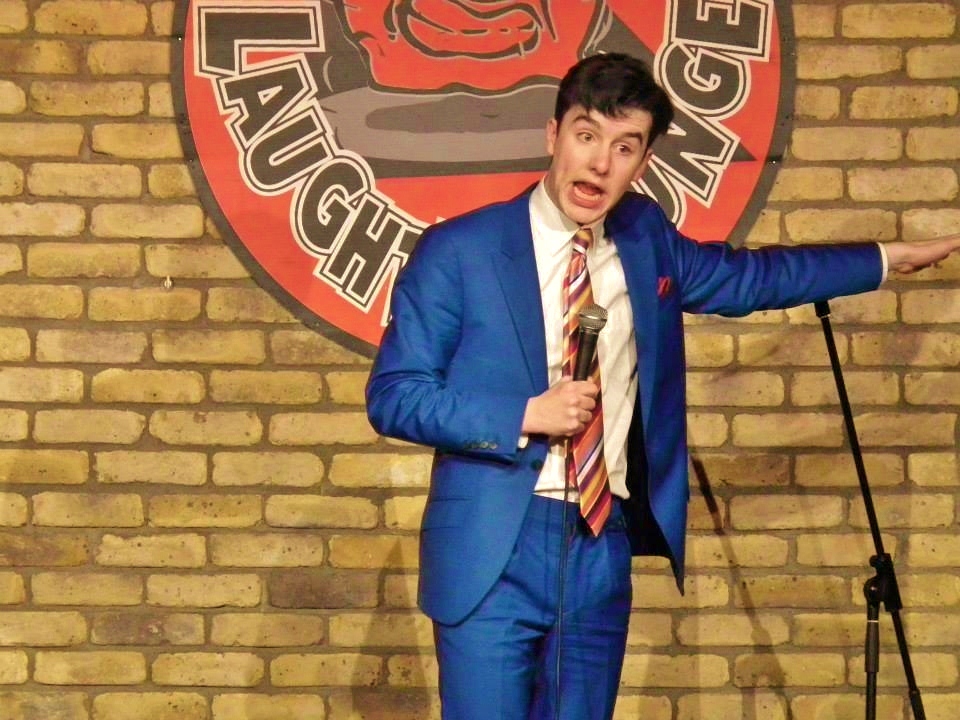
Irish comedian Al Porter talks to The City to give his opinion on the nature of the art.
“As a comedian, it’s our jobs to address the things going on in peoples’ minds that maybe they don’t want to say. If you even go back to Shakespearean or Medieval times, you have the court jester. He was the only one permitted to slag the king. He was the only one allowed to rock the boat and talk about the establishment.”
Al recalls a night in the Laughter Lounge where the issue of people taking offence on behalf of others arose at a comedy gig. Do people have a right to take offence on behalf of others, even if the butt of the joke may not necessarily concern them?
Al Porter performing at the RTE New Comedy Awards
MC on the night Steve Cummins usually pokes fun at the audience, luring them into a sense of comfort at the beginning of the shows. On this particular night he had 40 people in wheelchairs in the audience.
“He usually tells people the emergency rules and that night said: ‘in case of a fire you’re f*cked’, looking over at the 40 people in the wheelchairs,” said Al.
However, they all found it hilarious but eight people rang in to Joe Duffy the next day to complain about how rude Steve had been. Following this, members of the group in the wheelchairs rang in jumping to the comic’s defence, explaining that they recognised it was a joke and found it quite funny.
“In Ireland, and anywhere in the Western world, I think freedom of speech comes with the right to be offended but also the right to offend. If you have the right to be offended then I have the right to offend you. I mean I have the right to say things in the name of entertainment.”
Although there are very sensitive issues in regard to race, religion, culture and sexuality, many comics have successfully incorporated these topics into their routine – Chris Rock on race, Louis C.K. on homosexuality etc. Are there issues comedians should avoid joking about and how does one know where to draw the line?
“The problem is that you can’t mark something out as taboo – as something not to be talked about, because that is the reason that comedy exists. It’s there for these things to be talked about.”
“A sensitive issue for an audience is one where you are going to upset people inadvertently, and that’s not doing your job. And that’s things like people who can’t defend themselves, people who have issues that they can’t change about themselves. You can’t change the fact that you are disabled; you can’t change the fact that you have a mental disability; you can’t change the fact that you’re blind.”
“I do religious material and one of the elephants in the room in Ireland is child sex abuse. Now that’s very hard to make fun of. How do you make fun of child sex abuse? It’s a very difficult thing to do comedy on.” said Al.
Al is a regular feature on the Irish comedy circuit, performing here at the Laughter Lounge
Although child sex abuse is the overriding sensitive topic in Irish culture, we have seen the likes of Tommy Tiernan achieve success in his comedy on the subject, taking a light-hearted approach on the matter.
“My way of doing it is to take a light-handed approach. For example, ‘I was an altar server until I was seventeen but I was only in it for the action’. And people tend to laugh at that. And then I say, ‘if you think the Jews were cruel to Jesus you should have seen how Father Billy nailed me’ and it gets a good reaction,” said Al.
“If we’re going to say that everything is okay for you to talk about, then the only lines we can draw are moral, ethical or boundaries of taste and decency. The problem there is that everybody differs. If you really want to be a top comedian, you should have enough audience entity to know your audience’s moral compass.”
“For example I don’t do those religious jokes down the heart of the country. If I’m in a bar in Sligo or a small village in Tipperary, and that’s because I understand that these audiences don’t particularly want to hear this. I’m here to entertain. I’ll do those jokes up in Dublin where people are more accepting.”
It is obvious that audience entity and knowing your particular audience’s moral compass at any given show is vital for a comedian’s outlook. Pushing the boundaries in comedy comes with great success if done correctly, but it is such a difficult skill to master and one has to accept that they are not going to please everyone. Someone will usually always be offended where sensitive topics are joked about.
“I watched a video of David Walliams recently which made me uncomfortable. He brought a man from the audience up on stage, The man didn’t know what he was volunteering for and he pushed him to the ground, pulled down his trousers and dry-humped him on stage. I think that’s gone too far.”
“The line can be drawn there because it’s not immoral to talk about dry-humping somebody with their trousers down, but he has breached an ethical code, where his audience was not given a yes or no choice here. If that was a verbal joke, the man hears it, but he can hear it, get offended, leave and never buy a ticket to see David Walliams again. The fact that this guy didn’t have the choice to leave and that his own personal space was invaded was wrong.”
“I do stuff that I flirt with men in the audience and they might be rubbed on the shoulder or the leg, but believe me, I am looking at his face and for his reaction. I know when to move away and who to leave alone.”
“That is when it becomes immoral – when somebody else’s freedom is being breached. Nobody is breaching your freedom by censoring you. You’re allowed say what you want and nobody is breaching the audience’s freedom by making them stay there and suffer because they can leave whenever they want.”
“If people are going to allow you the freedom to do what you want, you should allow them the freedom to consent as to whether they want it done or not.”
Al Porter has hosted a set of successful comedy shows in Dublin’s Woolshed Baa & Grill, the last of which takes place on December 16th in a Christmas comedy special.
The City team headed over to Parnell Square to check out the Moving Crib in St. Martin Apostolate. This charming Crib has attracted huge crowds over the past 55 years. It has over 100 figures and begins with the story of Adam and Eve and finishes with the young Jesus teaching the doctors in the Temple.
The Moving crib will be open until the first week in January and is the perfect Christmas activity for all the family. The Crib in all its glory, reminds us of the real meaning of Christmas.
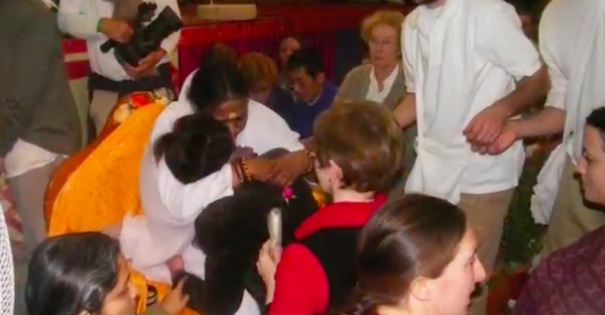
The ‘Hugging Saint’, Amma, recently ran a two-day “Embracing the World” programme in Dublin.
The event was held in the National Show Centre, Swords from 17th – 18th November 2012.
It was last month that I first caught sight of the promotional-posters, advertising Amma’s planned visit to Dublin and despite my initial skepticism, I decided to attend the event.
Intrigued by what her visit might entail, I wasted no time in contacting Amma’s press-team to get permission to take photographs and carry out interviews at the event. Many of the images I captured at the event can be seen in the slide-show below.
To kick-start my visit, I took a few minutes just observing the National Show Centre turned Buddhist-haven.
I soon got chatting to volunteers working on the many different stalls. Some appeared suspicious, and questioned my intentions. This is something I was taken aback by, considering that the event was very much a public one.
After a while, the volunteers warmed to me and opened up in relation to their various tasks.
Karma Thubten, a strict Buddhist and musician with the Dublin Satsang group, was one of those volunteers. “The Satsang group gathers regularly and we focus on Amma’s message of love, through music and meditation. I have been involved with Amma-Ireland the past few years. My life is governed by being compassionate,” he said.
The event was marketed as ‘free’, yet one could not help but notice the countless huge donations boxes which were scattered around the hall. Food was far from free or cheap for that matter, and everywhere I looked money was exchanging hands for one thing or another.
The event was also marketed as being all about “giving”, in which case I couldn’t help but question why so many items were on sale. Atulita Walkden Browne, who was volunteering on a traditional Indian clothes stand said, “All these beautiful pieces were brought over from India. They were given as gifts to Amma from Indian women and are being sold on today to raise money for her various charities”.
Other gifts that Amma had decided to sell on at the event were items of jewellery. Praveena Pichini, who was volunteering on one of the jewellery stands said, “The pieces featured here were worn by the statues in Amma’s temple in Kerala, South India. They are very valuable to Amma devotees”.
Namitha Schaefer was selling Indian Yantra cards. Each card cost 12 euro. Ms. Schaefer described the images on the Yantra cards as “traditional symbols” which are thousands of years old. “They are as they are and cannot be changed. All the symbols each hold different meanings. The Lakshmi Yantra for example, symbolises prosperity, love and beauty”, she said.
Volunteering on the handcraft stand, was Swaminc Krishna. “These handicrafts were made by Indian-natives whilst they said the Mantra, so the vibration they put in whilst making them adds positive energy. The people who buy these items are happy because their money is going to charity. All in all it is a beautiful cycle of giving”.
Also on-sale at Ms. Krishna’s stall, were items marketed as having been previously worn by Amma herself. But when asked no-one could tell me the price at which one of the key pieces, a heavy silver bracelet, was being sold for.
Sugandhi Brown was in charge of the Tulasi-tea stall. “Tulasi-tea is highly medicinal. It is considered a sacred plant in India and Amma recommends it for its healing properties”, she said.
Volunteer usher, Hillary Bodell explained, “I love Amma. Through following her, I have met a lot of people who are very loving and very kind and I’m really happy to be helping out this weekend.” Ms. Bodell first heard of Amma a few years ago. “I was very ill with a Multiple Sclerosis type condition and was wheelchair bound. Some friends of mine knew about Amma and told me about her healing power. I really believe Amma helped to cure me”.
It wouldn’t be far off the mark to describe Amma’s volunteers and followers as ‘disciples’, though they are obviously sincere in their beliefs. The highlight of the event for many Amma followers was the free hug or ‘Darshan’ as Amma refers to it.
Niamh Gallagher explained how she had received her first hug from Amma in 1994 and has been a keen follower ever since. “Volunteering at this event doesn’t feel like work. The weekend is going great,” she said.
There were alternative therapy and massage booths set up, with volunteer specialists carrying out the treatments. This acted as yet another fundraising method and the therapy booths were consistently booked out over the duration of the two days. Her supporters will point to the money that Amma donates to charitable causes. Her detractors will point to the ‘impressive portofolio of property’ amassed by her organisation as American magazine Rolling Stone pointed out in an article earlier this year.
As for me, while I have no qualms in supporting worthy causes, I remain more sceptical than ever in relation to such ‘spiritual’ organisations. Amma, whose real name is Mātā Amṛtānandamayī Devī, has ingeniously become a highly marketable and very powerful product.


![IMG_6444[1]](https://i0.wp.com/thecity.ie/wp-content/uploads/2017/10/img_64441.jpg?resize=5184%2C3456&ssl=1)
![IMG_6516[1]](https://i0.wp.com/thecity.ie/wp-content/uploads/2017/10/img_65161.jpg?resize=5184%2C3456&ssl=1)




You must be logged in to post a comment.