
Tag: renovation

  • Trinity’s Old Library Set To Close to Public in 2027 For Renovation

    By: Eoin McKenna Walsh

    Trinity’s old library has been cleared for a redevelopment project and is set to close to the public fully in 2027. Bianca Dickel Campanher, a librarian scientist specialising in paper and book conservation working on the project, describes the process and her experience working with such important historic artifacts in such a historic building.

    If you have seen movies or shows like Michael Collins (1996), Foundation (2021), Byzantium (2012), the Young Indiana Jones Chronicles, or even Star Wars Episode Two (2002), you would have seen Trinity and its famous Old Library, home to the Book of Kells.  


    In 2022, the Old Library Redevelopment Project began, which saw the slow and systemic moving and cleaning of books and other artefacts stored in the library, so that when the library is eventually emptied, work could be done on the building to “implement urgent physical and environmental upgrades,” such as climate control systems and digital archives so the physical artefacts can be preserved.  

    As “the Old Library’s precious collections, spanning millennia, have been in (the library’s) care for over 400 years,” has been located in the old 18th century design, it may be no surprise to learn that “external pollution and dust accumulation are taking their toll on the collections and the fabric of the Old Library building”. Even though there is no confirmed re-opening date yet, on the project’s Info and FAQ page, it asserts “there is a need to modernise environmental control and fire protection measures. Recent fires in similar heritage sites across the globe provide stark warnings.” 

    The process of restoring these books and artifacts is delicate, involving a specialised vacuum to clean centuries of dust, measuring, RFID tags being added, and wrapping with a cotton cord to secure its structural integrity, if necessary, before being boxed up. One of the talented members of team involved in this process is Bianca Dickel Campanher, a librarian scientist specialising in paper and book conservation. According to Bianca “Over time, the materials that make up books go through physical and chemical deterioration which make them so fragile. We use the vacuum cleaner to remove dust and other dirt rather than dislodging and spreading it. Great care is needed in cases where the book is so fragile that parts of it could be sucked into the vacuum cleaner.” 

    “When you first start working with old and rare books it feels so magical. I used to wonder what people back then were thinking as they consulted those books and whether they ever imagined that hundreds of years later someone would still be holding that very same thing,” said Campanher. 

    Photo Story by Eoin McKenna Walsh. All Photos by Eoin McKenna Walsh
  • Dalymount Park renovation faces another roadblock 

    Dalymount Park renovation faces another roadblock 

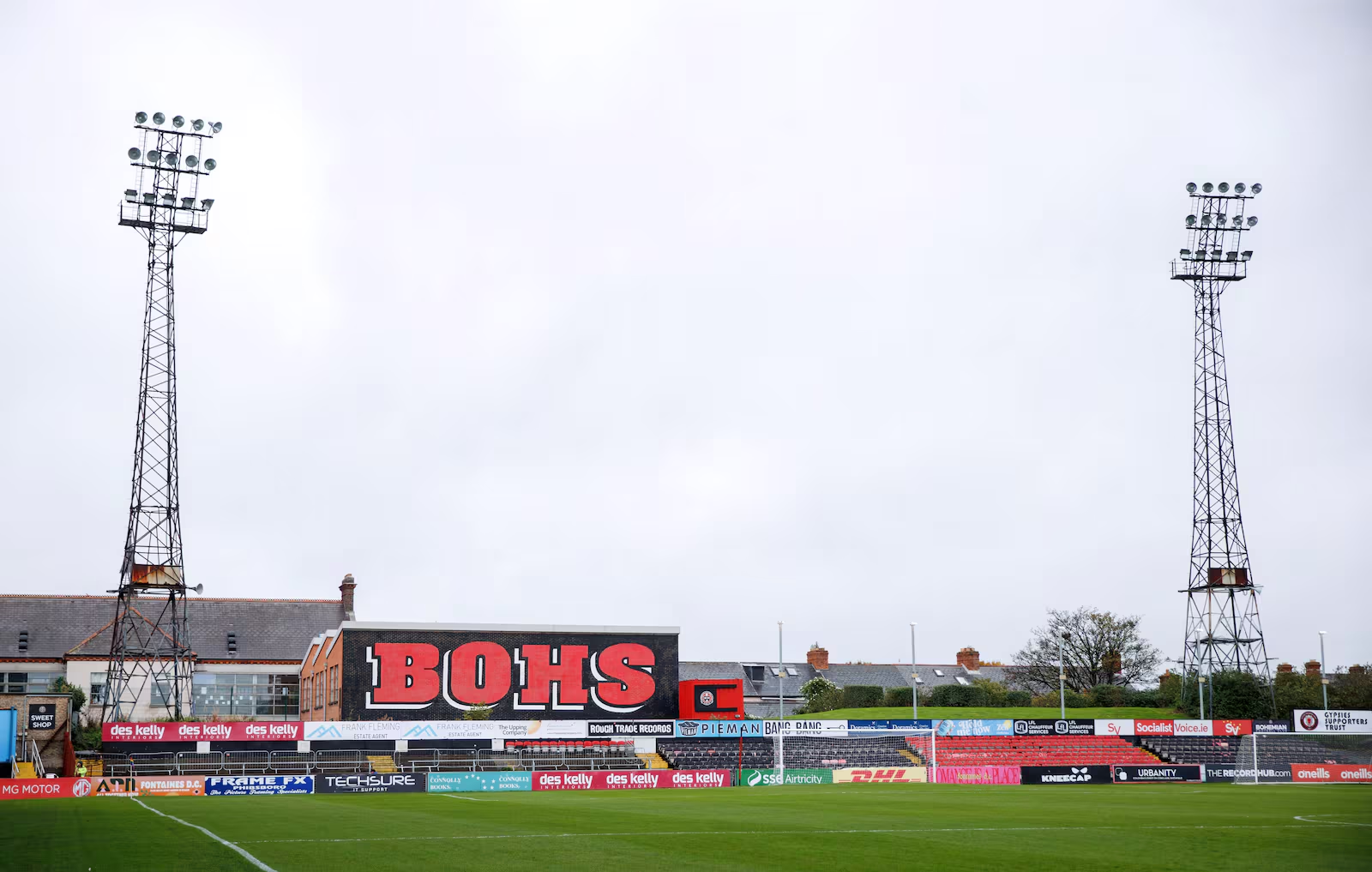
    Dalymount Park football stadium in Phibsborough, home to Bohemian Football Club, faces problems with its redevelopment again. 

    The cost of redeveloping the Dublin pitch has more than trebled since Dublin City Council (DCC) bought the stadium a decade ago, reaching as much as €63 million. On top of that, the construction of the stadium is expected to be delayed by as much as two years. 

    In 2015, the council purchased the sports ground from Bohemians for €3.8 million. The following year, it unveiled plans for a new stadium costing an estimated €20 million. 

    In the same year, DCC purchased Drumcondra’s Tolka Park, home to Shelbourne Football Club, with the goal of selling the property to raise money for Dalymount’s renovation into a facility for both teams. 

    However, following a campaign by Shelbourne supporters to maintain the ground, it subsequently modified its plans regarding Tolka Park. 

    The council agreed in 2022 to abandon plans to rezone Drumcondra’s stadium for housing and to redevelop Dalymount Park as a standalone project. 

    In February 2024, planning permission was granted for Dalymount’s demolition and reconstruction, with a new 8,000-seater stadium the aim for the redevelopment. 

    One of the entrances to Dalymount Park football stadium, home of Bohemian Football Club (picture taken by Patryk Goron)

    At that point, the project’s total cost, which included team facilities, club offices, a bar/function room, and community facilities had increased to over €40 million. The cost had again risen to €56.6 million by the end of the previous year when the council released its capital plans for 2025-2027. 

    New estimates, submitted to municipal councillors last Monday, suggest the cost has reached €63.75 million.  

    The council has received €25.6 million in government funding, an additional €2.6 million from levies paid to the municipality, €1 million from the long-term lease of Tolka Park back to Shelbourne FC, and €500,000 from UEFA. This results in a gap of over €34 million. 

    Around €25 million will come from government funding but Dublin City councillors have now approved the borrowing of €34 million to get the project under way. Repayments will be “partly funded from the annual rental income, match day revenue and non-match day revenue,” the council said. 

    It is expected that work will begin around the end of 2026 or early 2027, with the reconstructed stadium opening in time for the new League of Ireland season in February 2029. 

    Bohemian FC praised the council’s ruling in a statement, calling it “the final step in a process that began with DCC acquiring Dalymount exactly 10 years ago.” 

    The borrowing, along with government funding, “will allow for the historic stadium to be fully redeveloped and serve the people of Dublin and beyond long into the future.” 

    Councillors questioned if the stadium’s capacity could be extended to accommodate European football games, whether there was a business plan for the stadium’s operation, and how the project’s cost could be kept within budget. 

    Don Daly, the Council’s Capital Projects Manager, stated that Bohemian FC’s decision to have terraces for standing was one of the reasons the stadium could not be constructed to category 4 standards, while Richard Shakespeare, CEO of Dublin City Council, stated that it would require “a whole different level of pain financially” to make the stadium eligible for hosting European games. 

    Additionally, Mr. Shakespeare stated that while the stadium’s operational elements are still being worked out, the predicted costs have “a whole range of contingencies built into it” and he expressed confidence that the project will be completed within the allocated budget.