Tag: rock

  • Precinct: From school project to rising rock act

    Precinct: From school project to rising rock act

    By Sean Kavanagh

    Many rock bands take much consideration when coming up with the name of their group. Eddie Vedder and Jeff Ament reportedly spent over three months arguing about what they would name their grunge-rock startup before settling on the name Pearl Jam. 

    Precinct, however, took a slightly different approach.  

    “We had two names. One, I can’t even remember, it was that forgettable. The other one was Precinct, and we asked a waitress at the bar ‘which do you prefer?’,” guitarist Barry Fenton said. 

    “I can’t even remember the first one, I only remember precinct,” the waitress replied. 

    And so, they went with Precinct.  

    The group was formed in 2017 during a Junior Certificate music project by Fenton, fellow guitarist Oliver Grennan and drummer Simon McVeigh, before they were later joined by bassist Zap Dickinson. 

    They discovered their current lead singer, Andrew O’Donovan, at a ‘battle of the bands’ style event in University College Dublin shortly after Dickinson joined the band in 2022. 

    “We did our set with a different singer at the time, and then Andrew came on after on his own with just a guitar and f—ing blasted the place away,” Fenton said.  

    Soon after, Precinct parted ways with their original lead singer due to problems with punctuality and differing musical styles, though the group insists that the breakup was “nothing dramatic”. 

    The first choice for their new frontman was O’Donovan, whom they contacted through a mutual friend and asked to come and do an audition. 

    According to Fenton, there was an instant connection between the band and their new lead singer, and the moment Andrew left, the rest of the members knew that they had “hit the jackpot”. 

    “It’s almost like a relationship; you just hit it off.” Fenton said.  

    The first song the band wrote together was “We’ll Be Fine”, though the band decided not to release the track.  

    “If we’re going to record a song we all have to be fairly enthusiastic about that song. If there’s much questioning about it, we probably wouldn’t do it,” Fenton said.  

    But it didn’t take long for the fivesome to put together their first single-worthy track, “Marlay Park”.  

    The song originated from a chord progression written by Grennan just moments before a rehearsal began and turning it into a full composition took a collaborative effort from each member of the group.  

    “There wasn’t much buzz around [the song] at first, but I think once we got the full band on it and we got some lyrics, and Barry wrote a really nice riff, like you hear in the song. I think in that moment it all just clicked,” Grennan said.   

    This spontaneous collaboration is indicative of the groups writing style and Fenton says that there is no methodology behind their making of music. If it doesn’t come naturally, he says, then the entire process becomes an “uphill battle”.  

    Precinct then moved from their rehearsal studio in McVeigh’s house to Paradise Studio Dublin. They worked with producer Cian Tisdall, hoping that his expertise would add a level of professionalism to the record that they couldn’t get at home. 

    “I remember the first time we tried to record something, we just got out a laptop and tried to do it ourselves, and it went terribly. So, we learned that lesson,” Fenton said.  

    The song, like the band’s music in general, fuses jazz, rock and R&B to create a unique, fast-paced indie-rock sound that could be likened to The Strokes or fellow Irish band Two Door Cinema Club.  

    This style blends the musical interests of the three founding members, though the addition of O’Donovan, according to McVeigh, added “a little bit of sauce” to their music.  

    Although Precinct are yet to earn royalties from their music, they have begun to get paid to play at small venues and functions, which helps to fund their studio time.  

    The band’s first paid gig wasn’t exactly the rock’n’roll birthing you might expect, as they mainly performed cover songs in the Talbot Hotel to a group of pharmaceutical toxicology students at a ‘master’s ball’. 

    Precinct perform live at a 'battle of the bands' event - Photo: Andrew O'Donovan
    Precinct perform at a ‘battle of the bands’ event. Photo: Andrew O’Donovan

    “I would 100% prefer to do our originals over covers. When we’re doing covers, they’re not judging us, they’re judging how the original band sound, and then our sound,” O’Donovan said. 

    “It was just an insane night. We were so underprepared,” Fenton added. 

    O’Donovan was no stranger to live performing prior to joining Precinct, having spent much of secondary school doing solo shows in front of classmates with his only backing being an acoustic guitar.  

    He still struggled in their first live shows, though, feeling naked without his guitar and unsure what to do with his hands. But as the band played more and more shows, O’Donovan has found his footing.  

    “I think we’re all still kind of finding out what our performances are like on stage, what kind of people we are as performers. I tend to run off the stage for Marley Park and then just literally run around everything. It feels great to interact that way on stage,” O’Donovan said.  

    Fenton also admits that the group struggles most with finding the balance between being musically accurate on stage, whilst still displaying the dynamism and showmanship that defines all great live performers.  

    Precinct’s two newest singles, “Take Me Home” and “Light Up The Ceiling”, are available to stream on Spotify and you can click here to follow them on Instagram.  
  • Opinion: Why are U2 loathed by the Irish?

    Opinion: Why are U2 loathed by the Irish?

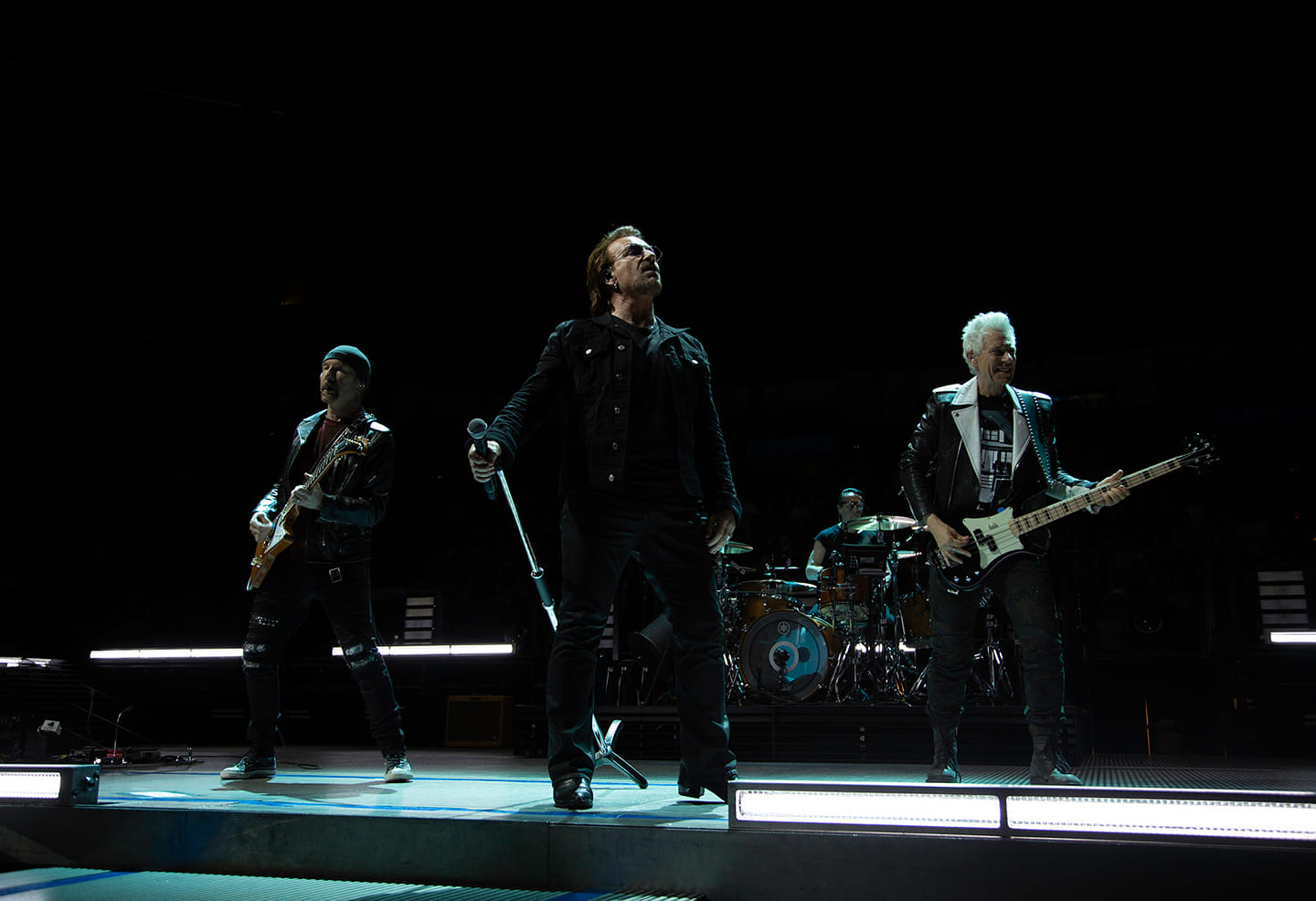
    U2 recently wrapped up their eXPERIENCE + iNNOCENCE tours – selling out four nights at Dublin’s 3Arena.

    But, despite rocking almost fifty thousand fans Irish fans with superb performances, there remains an air of uncertainty surrounding the Dublin band’s relationship with the Irish public.

    For a band that causes such an international clamour, why are Bono and Co not adored by the Irish?

    Arguably one of the most universally recognised quartets in the world, the band, who originally hail from the northside of the Liffey, have arguably produced wider reaching work than Irish greats such as James Joyce, Phil Lynott, Brendan Behan, and Patrick Kavanagh.

    Joyce, Lynott, Behan and Kavanagh all have statues dedicated to their talents, so it is a little more perplexing that there is no tribute to U2 in their home city.

    No statue, no mural, nothing.

    Even when paying a visit to cult spot Windmill Lane – where the band recorded albums such as Boy, Joshua Tree, and War – there is little to discern that the group has history there.

    Instead of any sort of tribute, the lane is filled with derelict buildings and vandalised incomprehensible spray paint.

    500x500
    The seminal track “Sunday Bloody Sunday” was released on U2’s 1983 album “War” // Facebook @U2

    How can it be that a rags-to-riches band from Dublin can share so little common ground with the general public? Songs such as Bad and Sunday Bloody Sunday about heroin abuse and the Northern Ireland troubles should surely resonate with people more than they do.

    Bono has vaguely acknowledged this problem in the past, remarking on the Conan O’Brien show in 2005 that it is part of the Irish mentality to be critical of wealth, remarking that the Irish don’t necessarily like seeing their compatriots being successful.

    This would seem like a plausible (Irish) reason to like the band, I myself often search for reasons to dislike Irish celebrities before looking for reasons to like them.

    Perhaps this is just something that comes in our DNA, a deep mistrust for people with fabulous wealth and influence. What doesn’t help Bono’s case is that he often cosies up to people in even more powerful positions than him; George Bush, Tony Blair, and Bill Clinton to name but a few.

    This kind of guilt by association is more than likely one of the major failings the singer has in the eyes of the public.

    From this point of view I can see why people would question his integrity, how can people trust a man who campaigns for the rights of children in the Middle East but also engages with leaders who’ve had such a chequered history in the region.

    That’s not to say they don’t have a large enough core group of die-hard Irish followers, but it seems like if you are not part of that group, you probably don’t like them, almost as if there’s no middle ground.

    While working at Croke Park for their four performances, I saw this first hand. While there was a lot of overseas visitors at the event, the vast majority were Irish and the large queues at the merchandise stands showed their loyalty to the band.

    It is particularly puzzling that a lot of what they do is genuinely helping people in need, yet they are viewed in a predominately negative light. Bono’s charity work with the ‘ONE campaign’ and his help toward charities such as UNICEF and AIDS research firm ‘DATA’ is overshadowed by reports of sophisticated tax strategies, particularly since the ‘Paradise Papers’ were released.

    I have always grown up with the belief that they were pretentious and pompous without really knowing why (particularly after that South Park episode). However, even though I still believe there is a high level of pretentiousness about them, I feel it is exaggerated and they should be recognised for the work they’ve done, not only in their musical field but for their humanitarian work also.

    Bono recently remarked, “we’re going away for a while” at the final leg of their tour, which was met with little to no reaction by the public or Irish news sites, even though it could well be a strong hint that the band are calling it a day. I found this a little surprising considering the scale of their international success.

    Even though there is definitely a level of pompousness about them, their music a lot more (mainly old stuff) has definitely grown on me (I’m willing to forget Get on Your Boots was ever made). A few months ago, I would have turned off a U2 song if I heard it on the radio, but I have a new-found level of respect for their work.

    I can also see how the negative side of Bono’s persona can affect the group of relatively grounded individuals in the Edge, Larry Mullen Jr, and Adam Clayton. It will be interesting to see whether Ireland will ever build statues and tributes to the band, like those towering artistic figures who came before them.

  • Marching to the beat of their own drum

    Marching to the beat of their own drum

    From indie-rock to electronica, the Dublin music scene has been thriving in recent years. To explore why, Gary Ibbotson talks to the musicians behind the revival.

    (more…)

  • Bastille grace Olympia stage

    Bastille grace Olympia stage

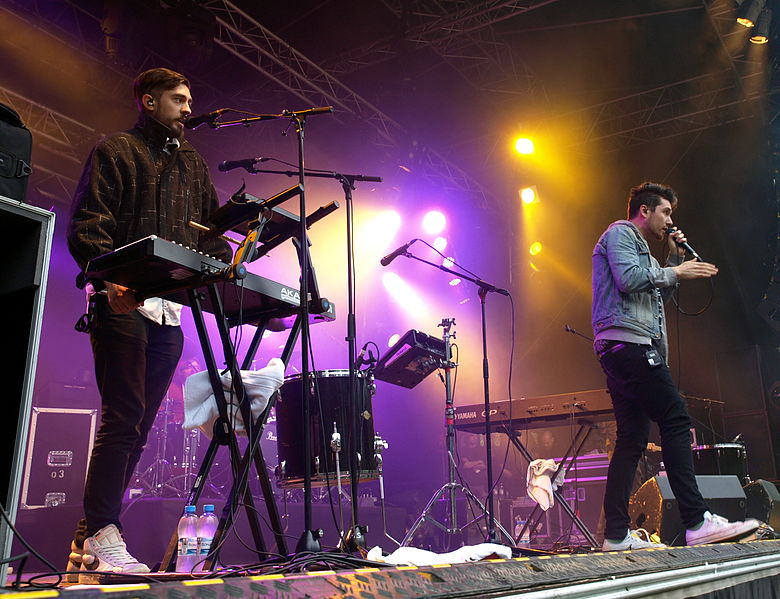
    Provinssirock_20130614_-_Bastille_-_12
    Image courtesy of Wikipedia Commons

    There’s something endearing about a band that repeatedly thanks the audience for coming out to see them. It’s a refreshing display of humility and gratitude in an industry that is becoming increasingly dominated by money. But as Bastille took to the Olympia stage on Friday night, it was clear that the London quartet are still getting to grips with their newfound fame.

    Opening with catchy hit Badblood, what is immediately evident is an affectionate casualness between the four lads that almost makes you feel as if you’re watching your friend’s band rehearse in his basement, rather than the global chart toppers who are actually on stage.

    What’s not casual however, is their performance. Flashing strobe lights, snare drums and questionable, yet infectious dance moves are all a loud accompaniment for the band’s blend of indie-rock and electronic pop.

    Not one to chitchat, lead singer Dan prefers to let his voice do the talking as he effortlessly rattles his way through popular hits Overjoyed and Things We Lost In The Fire.

    At one point during the night, Dan decides that he wants a piece of the action and jumps into the crowd while launching into a rendition of Flaws much to the delight of his many admirers.

    The setlist is an eclectic mix of new records such as Campus and Brave combined with old familiars like Laura PalmerThese Streets and Weight of Living Pt. II.

    They even throw in a cover of City High’s What Would You Do? which instantly goes down a treat among their predominantly young spectators. It’s a generous delivery of 17 songs that is more than enough to satisfy the masses.

    During the encore, Dan playfully asks the audience to join in on his dancing during club anthem Of The Night, and of course the crowd are only happy to oblige.

    As they bid farewell with their most well-known hit Pompeii, every single concertgoer jumps to their feet, a sure sign of an enjoyable night.