Tag: Shane Duffy

  • O’Shea’s swansong?

    O’Shea’s swansong?

    “What’s rare is wonderful!”- RTÉ commentator George Hamilton celebrating John O’Shea’s 27th minute goal which saw Ireland take a 2-1 lead against Kazakhstan in the final qualifying round match for World Cup 2014.

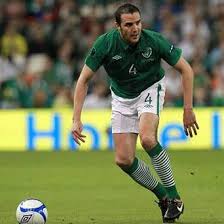
    Could O'Shea have made his last appearance for Ireland? [credit: eurocuppictures.com]
    Could O’Shea have made his last appearance for Ireland? [credit: eurocuppictures.com]
    That goal turned out to be the turning point of the match, a late own goal sealing the 3-1 victory in the final minutes. What Hamilton failed to mention was that O’Shea’s goal, his only competitive goal in a green shirt (he did score once before, against Australia in a 2003 friendly), was scored in what could very well be his last international match.

    By far and away the most successful Irish international in years, O’Shea is now 32, and with a new club manager and Sunderland in a less-than-enviable league position, this year looks like it will be anything but easy for the Waterford man.

    After breaking onto the scene at Manchester United (we all remember THAT nutmeg on Luis Figo), O’Shea established himself as the utility player in Alex Ferguson’s squad. Equally adept at playing anywhere across the back four, as a holding central midfielder (or even in goals), Johnno was partly a victim of his own adaptability.

    After finally nailing down a spot in the heart of defence at his new club, the last thing O’Shea will want is to see the Black Cats relegated. He may feel that, with an in-coming Ireland manager and youngsters like Ciaran Clarke and Shane Duffy waiting to make the step up, now may be the time to call a halt on his Ireland career.

    Many who play under Alex Ferguson tend to retire from the international game early, in an attempt to prolong their playing careers. Paul Scholes and Ryan Giggs are just two of many who prioritised their club over their country, and looking at the ever-green United pair now it is hard to fault their choice.

    With Shay Given, Damien Duff and Kevin Kilbane already gone, Richard Dunne crippled with injuries and eager to cement his place at new club QPR, and with Robbie Keane nearing 34, O’Shea may feel that now is the right time to leave gracefully and let a new manager build his team with the long-term in mind.

    Dunne’s retirement, if O’Shea does decide to call it a day, would give the new boss a serious hole to fill in the middle of his defence. With Clarke still learning the ropes, and Shane Duffy far from the finished article, it would fall to the supporting cast to fill the void.

    Sean St Ledger would seem the obvious choice, but finding a partner for him wont be simple [credit: irishmirror.ie]
    Sean St Ledger would seem the obvious choice, but finding a partner for him wont be simple [credit: irishmirror.ie]
    While enough has been written on Paul McShane’s short-comings to fill several articles, he remains an integral part of the Ireland squad. With Darren O’Dea deemed unfit to serve in a poor Celtic team and now plying his trade in Toronto, Stephen Kelly a square peg in a round hole, and Damien Delaney nearly 33, it may indeed fall to the Hull City man to lead a new-look Ireland team into the Euro 2016 qualifiers.

  • The national football question

    The national football question

    Ireland’s national football question has always been a divisive issue.

    It’s a question which has frequently evoked not just sporting rivalry, but impassioned and trenchant opinions from political and religious establishments alike since the inception of association football on this island.

    Impractical

    Many argue that merging our national teams simply isn’t a viable option. Given the difficult relationship between the north and south since partition, certain aspects either side of the border say that any potential amalgamation of the two associations would be impractical and even dangerous.

    However, a significant element would tend to disagree, and there’s plenty of evidence to back up their position.

    To say that both the Republic of Ireland and Northern Ireland national teams are underperforming at the moment would be an understatement.

    Having both endured a calamitous qualifying campaign for World Cup 2014, large elements of support are urging root-and-branch reform to ensure a swift return to our more competitive days of yore.

    But while pundits continue to carefully tiptoe around the substantial issues behind our teams’ failures, others point to the real impracticalities that exist within the current system.

    For a region with just over six million inhabitants to expect to field two top-class international sides is nothing short of ludicrous. With neither of the Irish sides now troubling the top 50 of the world rankings, surely now is the time to pool our resources and reinstate some pride in the green of Ireland.

    Of course, this difficult history to which I’ve alluded means that many are reluctant to the idea of an amalgamation. But the simple fact is that it works for virtually every other sport- rugby, GAA, cricket, hockey, golf- so why shouldn’t the leading lights in football subscribe?

    Tug of War

    For one thing, it would at least negate the diplomatic issues that have plagued north-south relations recently. No longer would we be subjected to the unedifying spectacle of an international tug of war over our alleged future stars, as in the high-profile cases of Shane Duffy and Marc Wilson.

    Instead, the new national side would be able to reap the abundance of talent that resides amongst the ranks of both the IFA and the FAI without such debacles about allegiance.

    The issue of team cohesion is also hugely overstated.

    Various members of the current Northern Ireland setup already hold a Republic passport, and given the collective home nations approach of recent years- poaching any talent with a tenuous connection to the emerald isle from English and Scottish academies- that particular argument is a real non-entity.

    One potential stumbling block is the fact that any amalgamation would essentially leave us with a new entity in world soccer, which would in turn leave the new unified Irish team with no points ranking history and in the precarious position of being lowest seed in future qualifying draws.

    A New Era

    However, a quick glance at the meteoric rise of Montenegro, a country of just over half a million people, in the world rankings since the national team’s disaffiliation with Serbia in 2007 provides ample evidence for any naysayers that a new and improved Irish team could do the same.

    Who knows, if the move to unify the two national teams were to go ahead it may even usher in a new age of acceptance and social cohesion in north-south relations.

    Just look at the case of the Setanta Cup. Far from causing the disharmony that some anticipated, Ireland’s latest cross-border domestic competition has shown how we can reap the dividends of greater cooperation between the two associations.

    In many instances the beautiful game has helped to mend fractious relationships the world over. Who knows, in this age of greater social acceptance, it may play a bigger role than ever in bringing people together rather than tearing them apart.

    (Featured image courtesy Steven Depolo on Flickr)