Tag: thecity.ie

  • Explainer: What is the government’s minimum alcohol pricing all about?

    Explainer: What is the government’s minimum alcohol pricing all about?

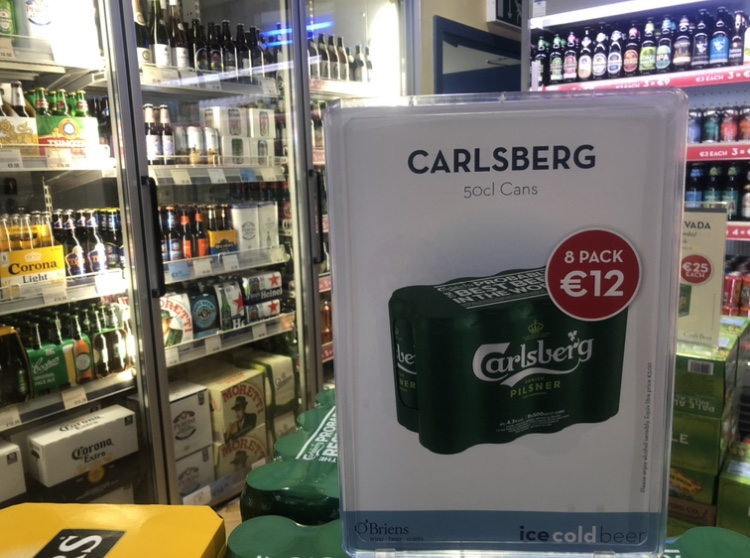
    Carlsberg advertisement in O’Briens Wines Glasnevin. Photo by Mario Bowden

    On Tuesday 4 May 2021, the government revealed plans to implement a minimum pricing on the sale of alcoholic products in of January 2022. 

    In a nutshell, the price of alcohol sold in off-licences will be determined by the strength of the product – priced at 10 cents per gram of alcohol. The higher the alcohol content, the higher the price.

    This policy is based on the 2018 Public Health Alcohol Act that the previous government decided not to put into action before the last election.

    Minimum pricing will not apply to bars and pubs, only to the off-licence sector.

    At the press conference to announce this policy, Minister for Health Stephen Donnelly and Tániaste Leo Varadkar spoke about the proposal’s aim to reduce the health harms of excessive drinking. The hope is that minimum pricing will curtail alcohol-related death and disease rates in Ireland. 

    Data shows that alcohol misuse is responsible for 2,700 deaths each year in Ireland.

    Data released by the health research board (HRB) revealed that during the pandemic in 2020, the average Irish person consumed 10.1 litres of pure alcohol – the equivalent of 116 bottles of wine and 445 pints of beer per person each year. This is a slight reduction from the 2019 average of 10.8 litres.

    The HRB noted this was a “relatively small decline, considering pubs have been closed for the majority of the year”.

    It’s also pretty far off the government’s goal to reduce the average per person alcohol consumption to 9.1 litres in 2020.

    Beer fridge in O’Briens Glasnevin. Photo by Mario Bowden

    “It’s understandable that people are drinking more at home,” said Varadkar at the press conference. “I’m doing so myself. To most drinkers, I want to say this: minimum pricing is not targeted at you. But, rather at the heaviest drinkers, those who attempt to seek out the cheapest alcohol. And particularly children, experimenting with alcohol for the first time.” 

    There is sufficient evidence to back the government’s plans. In 2018, Scotland introduced a similar minimum pricing system. Since its introduction, alcohol related deaths have fallen significantly. Canada has also had minimum pricing in place since 2010. 

    So, what will minimum pricing look like? 

    Minimum pricing will vary depending on the product being sold and its alcohol content.

    For instance, a 500ml can of lager will start at €1.70, whereas a 500ml can of cider will begin at €1.78. A bottle of wine’s minimum price will be €7.40, while 700ml bottles of vodka start at €20.71 and gins and whiskeys at €22.09.

    As the price is decided per gram of alcohol, it significantly increases as the percentage of alcohol increases – designed to impact on the strongest alcohol most.

    For example, a bottle of wine at 14% alcohol by volume (ABV), not an uncommon strength, works out at a minimum of €8.28.

    In shops like Lidl and Aldi, a number of good wines come in underneath this threshold – the shelves will be transformed.

    For those of us who enjoy a craft beer, you won’t be able to get a relatively strong IPA (6.5% ABV) in a 500ml can or bottle for €2.56 per can/bottle. We can wave goodbye to any four for €10 deals.

    Unpopular plan

    To little surprise, the new pricing scheme has come under scrutiny from both retailers and consumers alike. For consumers, the proposal mostly targets those with lower-incomes who will now be spending a bigger proportion of their income on drink. 

    Ireland’s alcohol prices already remain the second-highest in Europe – 88.9% higher than the EU average, only lower than Finland. 

    In Italy, for instance, a country closer to the EU average, a 660ml bottle of beer costs as little as 90 cents in a supermarket and imported German beer only around €1.60.

    Beer fridge in O’Briens Glasnevin. Photo by Mario Bowden

    For retailers like Pearse Greally, the manager of O’Brien’s Wines of Glasnevin branch, the lack of clarity communicated by the government has been frustrating. 

    “There’s not been that much information [given] to retailers yet. For example, how it will work with the smaller brands? We sell Tennents for €1. If the minimum price of that is going to be at €1.72, what does that mean for more premium beers like Heineken? Will Heineken then increase their price to €2.50 or three euro a can to keep its premium headline? Because this increase [in price] isn’t a tax, where is that increase coming from or going to?” asks Greally. 

    The government in the Republic of Ireland  is also calling on Northern Ireland’s government to implement its plans for minimum pricing at the same time as the south. Especially around Christmas time, when cross-border shopping is most active. Northern Ireland is set to introduce minimum pricing in 2023, a year after the Republic.

    “We have high competition with the North because drink is much cheaper there.” says Greally. “And if their minimum pricing doesn’t come into effect until January 2023, why are we doing it a year early? We’ve already increased the tax on drink as well and now we get this? So no one really understands from a retail point of view.” 

    While a number of unanswered questions remain, not least how off-licences will compete with pubs and restaurants, one thing is for sure: students can wave goodbye to cheap cans.

  • Podcast: ‘This is way bigger than Covid’: The pandemic’s effect on climate activism

    Podcast: ‘This is way bigger than Covid’: The pandemic’s effect on climate activism

    Ceara Carney protesting at the Department of Agriculture with Animal Rebellion – a subgroup of Extinction Rebellion. Photo courtesy of Animal Rebellion Ireland

    Prior to the pandemic, Extinction Rebellion were one of the biggest groups at the forefront of climate activism, making headlines worldwide. But ongoing lockdowns saw them forced to take a step back and rethink their plans.

    “We are very much on the way back with some new tactics and we can’t wait to get back to the streets in huge numbers again” 

    Ceara Carney

    Actress, podcast host, and activist Ceara Carney wants to make it clear that the group hasn’t gone anywhere.

    “Our main tactic of mass mobilisation was taken away from us,” she explains. “But we’ve had some activists and rebels throughout the pandemic and lockdowns constantly meet to figure out our strategy going forward.

    “We had our People’s Assembly meeting a few weeks ago where there were 116 people on a Zoom call and we came out with some visions of where to go next. We are very much on the way back with some new tactics and we can’t wait to get back to the streets in huge numbers again.”

    Carney attending a protest with Extinction Rebellion and Irish Wildlife Trust to highlight overfishing in Irish waters. Photo courtesy of Ceara Carney

    For the past year, activism hasn’t quite looked like it used to – large scale protests have been replaced with smaller actions and social media posts.

    Last week, two Cork rebels broke Covid restrictions by travelling to Dublin to live stream a graffiti attack on the Department of Foreign Affairs.

    After dousing the building with red paint, the two spray painted phrases such as “no more empty promises” along the exterior.

    The activists explained that the purpose was to highlight the lack of action from the government in response to the global climate crisis.

    Carney portrays a sea goddess at Killiney Bay as part of a campaign to raise awareness for rising sea levels. Photo courtesy of Ceara Carney.

    Following the live stream, many people took to social media to express their disgust at the act of vandalism.

    “People were just really upset that this historical building had been destroyed, and the irony of that just gets to me,” Carney says. 

    “If we don’t change, and the government doesn’t change, that building could be subject to water damage from rising sea levels because Dublin is a coastal city. So if people really cared about that building they would be putting pressure on their government too to act now and fight the climate crisis. Nothing like that will matter if we keep going the way we are going.”

    If you are interested in getting involved with Extinction Rebellion, email welcomexri@protonmail.com

  • Meet the young entrepreneurs using Depop to revolutionise the fashion industry

    Meet the young entrepreneurs using Depop to revolutionise the fashion industry

    Clothes Rack, photo via pixabay

    Fashion has never been more disposable. A quick scroll through the fashion hashtag on Instagram will present you with an endless feed of bloggers’ Shein hauls and Boohoo Ootds.

    Because mass produced clothing is sold at cheap prices, it is often treated as disposable by consumers. It feels like every day there’s a new trend, promoted by the latest influencer, that’s being swept off the rails and destined to spend eternity gathering dust in a wardrobe or decomposing (slowly) in landfill. 

    Keeping up with these trends seems like harmless fun, and it may not be obvious that the clothes we wear are one of the biggest culprits when it comes to harming the planet. Carbon emissions, excessive water consumption and the release of microplastics into the environment are just some of the problems fast fashion presents – not to mention the exploitation of garment workers.

    The good news is that slow fashion is on the rise. With well-known Irish personalities like Roz Purcell and Tara Stewart using their platforms to educate others on the sins of the fast fashion world, as well as to advocate for shopping second-hand, it seems thrifting is now on trend.

    “The fast fashion era arose from the manufacturing of low quality clothes needing to be replaced faster, which in turn created the mindset of clothing being disposable.”

    Blathnaid Devilly

    Depop is at the forefront of the sustainable fashion movement. Experiencing a massive influx  of users since the pandemic hit, it describes itself as “the fashion marketplace app where the next generation comes to discover unique items”.

    The platform is a godsend for young designers and entrepreneurs looking to grow their small companies.

    Caitlín Ní Dochartaigh, owner of Sugar and Spice Vintage, uses Depop to host her store which specialises in 90s and early 00s clothing and accessories.

    “I really love being able to curate the style and aesthetic of my shop to build my brands image. I’m not very tech savvy so it takes away the pressure of maintaining my own website because Depop hosts my shop. The app also has several features to highlight their sellers which from my experience has been beneficial for gaining followers and boosting sales,” she says.

    Ní Dochartaigh, who describes her personal style as a hybrid of a gothic Bratz doll and Sporty Spice, handpicks the majority of her stock from European thrift markets.

    “Sustainable fashion is really important to me,” she says. “Fast fashion has an undoubtedly negative impact on the environment and the people producing our clothes, so sustainable fashion is a great way to avoid these harmful consequences. I also really love finding funky items that you won’t find on the high street. It definitely helps you to cultivate your own distinctive personal style. And it stops clothes from going to landfill which is always a bonus.”

    Blaithnaid Devilly is a Dublin-based stylist who is also reaping the benefits of Depop for her store, Bedelic. A lover of all things 1970s – she tells me she could watch Reeling in the Years on repeat just to see what people wore – Devilly uses Depop to sell handpicked pre-loved garments.

    Bedelic stemmed from her love of fashion’s ability to express one’s personality and a nostalgia for the charity shops she would frequent as a child. Through uploading aesthetically pleasing images and styling unique looks, Devilly garnered attention and built a following on social media.

    “I wanted to create a place where people of any style, size or gender could find what they are looking for and feel comfortable in standing out from the crowd and being whoever they want to be,” says Devilly.

    Devilly admits that her lifelong love for sustainable fashion was less to do with an eco-conscious mindset and more so a desire for an original personal style.

    “It was only when I started to sell online did I realise the importance of someone purchasing second-hand and the positive impact this new obsession could have in fighting climate change.”

    If you’re a fast fashion addict, starting your journey can be a bit daunting. Devilly’s advice is to start with what you already own.

    “Take everything out of your wardrobe and try to style new looks together. It can be quite fun to play dress up while blaring your favourite tunes. Guaranteed you will come up with 10 new looks that you would have bought straight out of a magazine.

    “If you’re not ready to drop fast fashion completely, then I have this rule where if you do buy from brands, buy something that would last over ten years. You see the fast fashion era arose from the manufacturing of low quality clothes needing to be replaced faster, which in turn created the mindset of clothing being disposable.

    “The price of these garments don’t reflect on their true cost. You will certainly have to spend more money on your new garments but the clothing would be better quality and down the line you will purchase less.”

  • Away with the dairy: Going vegan for Green Week

    Away with the dairy: Going vegan for Green Week

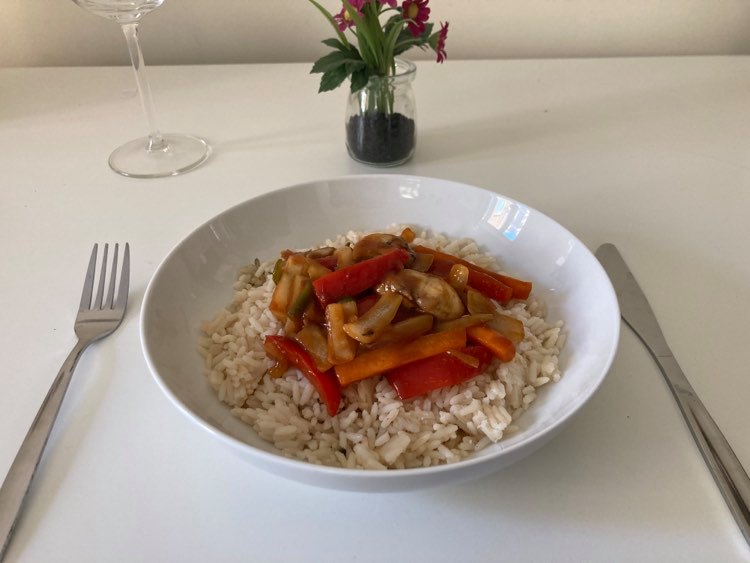
    This vegan stir-fry is so full of flavour, you won’t notice the lack of meat. Photo by Niamh Alexander

    It has become widely accepted that when it comes to reducing our carbon footprint, going vegan is one of the most impactful things we as individuals can do.

    It is a little bit surprising then that just under 1% of the world’s population is vegan.

    Numerous studies have proven that the food production industry is one of the largest contributors to climate change, with livestock production alone contributing around 14.5% of total greenhouse gas emissions (higher even than the transport sector). While some meat industries are more sustainable than others, even the most eco-friendly meat products are more harmful than the ‘worst’ vegetables.

    Further studies have shown that a global reduction in our meat and dairy intake by 2050 would cause a reduction in emissions of over 72%.

    You do not realise how many food products contain dairy until you’re not allowed to eat it

    Faced with facts like these, it’s hard to argue against adopting a vegan diet, especially when our planet is steadily approaching the point of no return. 

    With this in mind, I decided to try and switch to veganism for a (brief) period of time to see how difficult it can be. (Answer: very.)

    I knew going into this challenge that it wouldn’t be cutting out meat that would be the most difficult part, but the lack of dairy.

    I definitely found that it was dairy products like milk and cheese that I missed the most. You do not realise how many food products contain dairy until you’re not allowed to eat it.

    My first challenge was finding something to eat for breakfast that wasn’t just a quick and easy bowl of cereal.

    A quick google search told me that most cereals are not actually vegan because of the added vitamin D that apparently comes from sheep (who knew?), which ruled out my foolproof plan of simply substituting my usual milk with a soy or almond alternative.

    I found that smoothies made with almond milk and dairy-free yoghurt were a good way to start the day, and tasted amazing. I used frozen fruit, which is a good way to reduce food waste by ensuring the fruit doesn’t go bad before you get through it, and it’s cost effective. 

    Lunch was also a bit tricky, as I struggled to come up with something that wasn’t just a sandwich or wrap with a meat filling and copious amounts of cheese. 

    I may have cheated a little bit here by making a large pot of butternut squash soup with enough to last me several days. Served with a slice of soda bread, this is a really simple and filling lunch option. 

    I did switch things up at the end of the challenge and tried out this sweet potato salad recipe, which tasted amazing and was so easy to make.

    Butternut squash soup, photo by Niamh Alexander

    I opted for a vegan burrito instead – and honestly, it was hard to tell the difference

    Surprisingly, dinner was probably the easiest meal to find vegan alternatives for.

    One of my favourites was a vegetable stir-fry with cashew nuts added in as a protein-rich substitute for meat. For the sauce I used this maple syrup and ginger recipe – which tasted just as good as it sounds.

    I definitely found my willpower being tested when my housemate suggested a takeaway towards the end of the week, and I wanted nothing more than a cheesey pizza.  Thankfully, I resisted and opted for a vegan burrito instead – and honestly, it was hard to tell the difference. 

    I am a self-confessed picky eater, so going into this I was unsure if I would be able to stick it out. I found I was putting a lot more thought into what I was eating, which had the knock-on effect of making me eat a lot healthier. 

    I do have a lot of admiration for people who stick to a vegan diet full time – it takes a lot of effort to make sure everything you are eating is definitely vegan, but that is probably something that gets easier over time. 

    I don’t think I had long enough to notice most of the benefits I’ve read about, but I did feel more energised throughout the day – probably because I was making healthier choices (and chocolate had been ruled out).

    While I probably won’t be switching to a full-time vegan diet any time soon, I will definitely be putting more effort into reducing my meat intake and doing what I can to source sustainable products.

  • A Covid tale of two cities

    A Covid tale of two cities

    Beaming Tara Wiekert (left) enjoys a brew indoors at a bar in Tuscaloosa, while Julia Hadley (right) is smiling through her state-mandated mask outdoors in Boston. Photos courtesy of Tara Wiekert and Julia Hadley

    In North America, each state decides on its own Covid-19 regulations. Different states can have radically different restrictions – changing the experience of the pandemic for their residents.

    A part of Biden’s 2020 presidential campaign was the requirement of masks to be worn throughout the US as he stated it could “save 100,000 lives” if masks were made mandatory to wear in every state.

    Less than a month into his inauguration, President Biden has already pushed nationwide mandates, requiring masks to be worn by all Federal employees and by those who use public travel throughout the US.

    However, social distancing regulations are very different depending on the state.

    Answering the same set of questions, two students who reside in different states share their lifestyle and opinions with Jessica Viola on the Covid-19 pandemic.

    Tara Wiekert lives in Tuscaloosa, Alabama, and studies advertising with a minor in German at the University of Alabama.

    Julia Hadley is a health science major at Boston University in Boston, Massachusetts. These responses are based on the student’s opinions as well as on their state’s individual regulations. 

    What is your opinion on Covid-19 now, in 2021? 

    Tara Wiekert: “I think it’s serious and something everyone needs to be made aware of. I know it affects older people more severely, which is why I think a lot of people at school don’t take it that seriously, since we are in a college town surrounded by people who are all mainly around the age of 20-25.”

    Julia Hadley: “My opinion on Covid-19 has remained the same over the past months. It is a very scary time for so many individuals and has affected far too many people. While the vaccination is bringing so much hope for the future, it’s still imperative people take precautions.”

    “While the vaccination is bringing so much hope for the future, it’s still imperative people take precautions”

    Julia Hadley

    What measures are being taken to prevent the spread of Covid-19 in your college?

    TW: “The school requires students to be tested for Covid-19 randomly. I try to wash my hands as often as possible, but since life here feels so normal, I do not take immense measures to prevent the spread of Covid-19. I still go out, eat out, and hang out with all my friends the same way as we did before.”

    JH: “At BU, students who attend classes on-campus or live on-campus must take a Covid-19 test every three days. When taking a class in-person, students must provide proof of their negative Covid-19 test. Throughout campus, students must wear masks at all times.”

    Are you taking college classes in person now and are other work spaces open?

    TW: “Alabama is probably one of the states with the least amount of Covid restrictions. We have some in-person classes and some online depending on what the professor prefers. Libraries and other study areas are open, however, you must wear a mask on campus at all times.”

    JH: “All students and faculty are required to get a Covid-19 test every 3 days, allowing students to take classes in person, if permitted. Libraries and study areas are open, but space is limited. Students must wear a mask at all times, while also having a negative Covid-19 test result, in order to enter the space.”

    “I still go out, eat out, and hang out with all my friends the same way as we did before”

    Tara Wiekert

    How has socialising been for you in 2021?

    TW: “In all honesty, life in Alabama has been rather normal. Bars have been open for a while now. They only shut down at the beginning of last semester for about two weeks.

    “All or most college organised events are happening here in Alabama. We just won the National Championship for (American) football.”

    JH: “Boston does have indoor dining and restaurants utilise glass shields and place diners a safe distance away from one another. The state’s mandates include setting limits on gatherings, also mask and face-coverings must be worn indoors and outdoors with a capacity limit and there’s a curfew for restaurants as well as businesses.

    “At this moment, no organized events are happening within my college campus and are highly discouraged within Massachusetts.”

    University of Alabama students celebrating their American football victory in January 2021. Video courtesy of Tara Wiekert

    What is your opinion on how your state is handling Covid-19 procedures now?

    TW: “In my hometown of New Jersey, my life has changed a lot, and I am able to do a lot less, yet both states seem to be doing ‘fine’. I do think wearing a mask in public should be required for the safety of others and the elderly. However, in Alabama, my life seems rather normal and I often forget Covid-19 is even a ‘thing’. I am doing everything that I used to do even before Covid-19 hit.” 

    JH: “Just as everyone around the world, my life has changed since COVID-19. I have limited traveling, restricted seeing people outside of my immediate circle, among many other things. While adapting to our new ‘normal’ has had its challenges, it is a sacrifice I am willing to contribute to keep myself, family, and friends safe during the pandemic and, I am extremely fortunate for their good health thus far.”

    “Adapting to the new ‘normal’ is a sacrifice I am willing to contribute to keep myself, family, and friends safe during the pandemic”

    Julia Hadley

    American universities have been a hot spot for the spread of Covid-19. Throughout the course of the pandemic, more than 85 colleges have had over 1,000 reported cases on campus. In a recent study, 70% of Covid-19 cases in the US have been spread by young aged 20-49 years old.

    Although Massachusetts has almost over 2 million more residents in it than Alabama, they comparatively have a little over 72,000 more confirmed Covid-19 cases than this southern state. As it stands now, Massachusetts has 546,800 confirmed cases and Alabama has had 474,666 coronavirus cases since the beginning of the pandemic.

    Masks, social distancing, and socialising remain hot-button issues – will Biden manage to unite his nation?

  • Preview: Ireland vs New Zealand

    Preview: Ireland vs New Zealand

    By Harry Hatton

    On the afternoon of November 24th, 2013, the Irish rugby team seemed for one brief moment of time as if they were on top of the world.

    At the Aviva Stadium that winter afternoon, Ireland had breezed into a 19-0 lead against New Zealand inside 20 minutes of action. It was incredible stuff, being in such a commanding position against the most feared and dominant rugby nation on the planet.

    However, New Zealand demonstrated why they are the world’s best by overhauling Ireland’s lead with a late try and conversion to snatch victory by two points.

    Hakka
    Source: Wikimedia

    The manner in which New Zealand actually came out victorious was one of the hardest things for Joe Schmidt’s weary charges to take.

    The Television Match Official (TMO) had to be called in to confirm that Dane Coles’ pass to substitute Ryan Crotty was not forward. That decision tied the teams up but there would be more drama to follow.

    Aaron Cruden’s conversion attempt went wide of the posts but Welsh referee Nigel Owens ordered it to be retaken as he deemed Ireland to have charged out from their goal too early.

    Cruden found the target at the second attempt which left the home side stunned and still without a test victory over New Zealand. At that stage three years ago, we wondered what it would take for us to ever beat the world’s best team.

    Two weeks ago, we discovered just that … the best way to beat New Zealand is to take the game to them and put them on the back foot. And that’s exactly what Schmidt’s determined band of warriors did at Soldier Field, Chicago in front of 62,300 spectators.

    They stood up to the task even before kick-off. As the All Blacks performed their customary Haka war dance, the entire Irish match-day squad stood in a figure of eight in memory of the late Anthony Foley, the Munster and Irish stalwart who passed away in October.

    Ireland were mentally and physically ready for the big occasion against a side that had eight survivors from their World Cup final triumph over Australia a year previously.

    Tries from back row forwards Jordi Murphy and CJ Stander in addition to Conor Murray crossing the line meant that Ireland held a 25-8 lead at half-time. Winger Simon Zebo stretched Ireland’s lead with another try after the break before the inevitable New Zealand onslaught began.

    The world champions displayed their strength in depth as tries from TJ Perenara, Scott Barrett and Ben Smith began to test the mental resolve of this Irish side.

    Schmidt’s men regrouped and sealed the historic triumph in the ‘Windy City’ with a late try from Henshaw and a successful conversion from Joey Carbery.

    The result ended New Zealand’s 18 game winning streak. It was also Ireland’s highest ever points total against the All Blacks. New Zealand don’t get beaten too often so when they do, it comes as a bitter pill to swallow.

    Ireland will definitely be without the services of flanker Jordi Murphy when they renew acquaintances with the All Blacks this Saturday evening. The Leinster player suffered an injury to his left knee in the first half of the historic win in Chicago and it was later confirmed that he had suffered anterior cruciate ligament (ACL) damage, which will rule him out of action for between six and nine months.

    Luckily enough, Ireland have two able replacements in Munster’s Peter O’Mahony and Leinster star Sean O’Brien, who both got game time in the facile 31 point victory over Canada last Saturday.

    New Zealand were given a boost ahead of the trip to Dublin with Brodie Retallick’s second half appearance in the 68-10 rout of Italy last weekend leaving him poised for a return to the starting line-up.

    Retallick could be joined in the second row by Sam Whitelock. The pair are well accustomed to each other as they were second row partners when New Zealand defeated Australia to reclaim the World Cup in October 2015.

    If Ireland are to come out on top again against Steve Hansen’s world champions, they’ll need to stop winger Julian Savea. Savea scored 45 tries for New Zealand in the space of four years and the winger will aim to use his powerful presence to break down the Ireland defence.

    It’s unlikely that this game will resemble the Chicago fixture in terms of such high-scoring and free-flowing rugby. New Zealand will want to reaffirm their status as the best international rugby team by whatever means necessary.

    This is bound to be another physically demanding clash and it just appears that New Zealand have the greater strength in depth to emerge on top after a gruelling 80 minutes of action.

    Guinness Series Ireland v New Zealand Aviva Stadium Saturday, 19th November

    Kick-off 5.30pm


  • In Pursuit of Dublin’s Greatest Pizza Slice

    In Pursuit of Dublin’s Greatest Pizza Slice

    Screen shot 2014-10-07 at 19.58.40
    Photo: Hilary Pidgeon

    “Pizza is like sex, even when it’s bad it’s still pretty good” – some genius

    A month ago I vowed that I would embark on a mission to find the greatest slice of pizza that Dublin has to offer. I chose slices over full pizzas, not because I’ve ever doubted my ability to consume whole pizzas, but because Dubliners are definitely busy enough these days that we, like New Yorkers, should start celebrating delicious food on the go.

    The contestants were as follows:

    Steps of Rome – Southside

    Rays – Temple Bar

    Di Fontaines – Temple Bar

    Sbarro – Northside

    Each slice was rated 1-5 on crust, sauce, cheese, toppings (we went with the classic pepperoni), and that all-important cheese-sauce-base ratio. 1 = Speaks for itself really 2 = It’s really not great, but it’s pizza so I’m still gona finish it 3 = Average. But pizza is like sex – even when it’s bad it’s still pretty good 4 = You, Sir Pizza, have impressed me 5 = Practically pizza perfection Joining me was my pizza-partner and pizza photographer. Here’s what we discovered.


    Steps of RomeGreat for a sit-down slice to take your time over

    1 Chatham St, Dublin 1             Slice of pepperoni: €4.60 Cheese: 4.5 Sauce: 4 Crust: 5 Toppings: 4 Ratio: 3.5

    Average score: 4.2

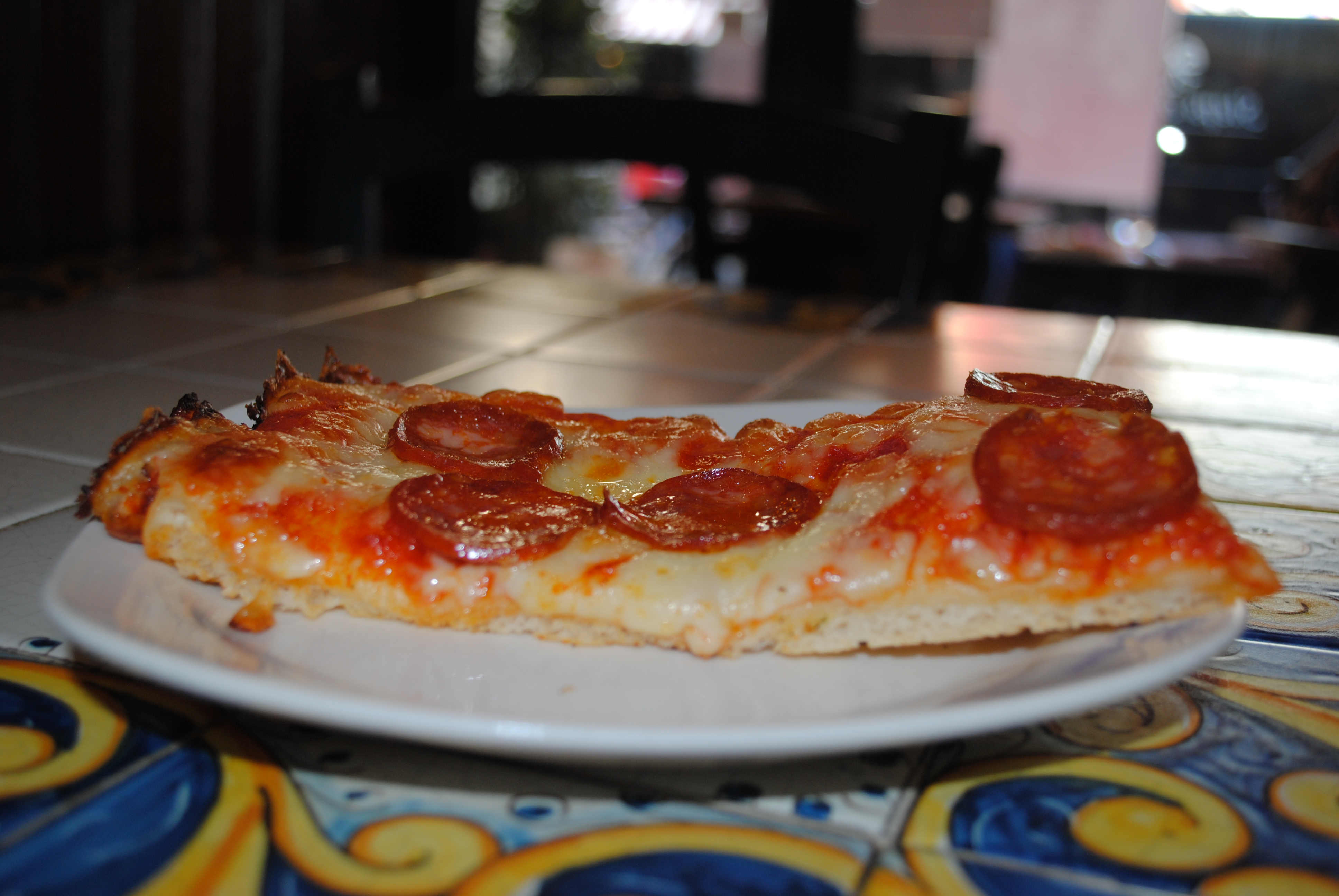
    What I have to say about the Steps of Rome is that the crust was amazing. It was thin, yet fluffy and also had that perfect pizza crunch. My pizza-partner felt that the pepperoni wasn’t tender enough, but personally it was one of my favourite things about this pizza. It was thicker than normal and full of flavour. The most expensive of all the slices we tried, but definitely worth it.

    DSC_0015


    RaysGood for when the clubs close and you’re still drunk

    2 Upper Fownes St, Temple Bar                  Slice of pepperoni: €3 Cheese: 2.5 Sauce: 1.5 Crust: 2.5 Toppings: 3.5 Ratio: 2.5

    Average score: 2.5 (Technically at 2.5 the score was between two ratings, but we rounded up. Just to be nice.)

    Ray’s is known as the go-to pizza place in Dublin for when the party’s over and the night club is done, and I can see why. It’s central, cheap, and probably tastes hundreds of times better if you’re drunk. I was pretty thankful for the pepperoni, as other than that I couldn’t really taste much going on. I’m not one to leave pizza, but my pizza partner abandoned hers with a few bites left (naturally I swooped in and ate it.) She also broke the plastic cutlery cutting the pizza, and while no reflection on the flavour, that can’t bode well for the disorientated drunk people who frequent Ray’s at night-time.

    DSC_0062


     Di FontainesDublin’s hotspot for pizza to go

    22 Parliament St, Temple Bar             Slice of pepperoni: €4 Cheese: 4 Sauce: 3.5 Crust: 4.5 Toppings: 4.5 Ratio: 4

    Average score: 4.1

    When asking around to find out which places to try for the best slice in Dublin this place came up again and again, and it didn’t disappoint. Ratio of cheese-sauce-base was awesome, and my pizza-partner went so far as to exclaim that it was the pepperoni she’d always dreamt of (it’s always good to feel passionate about your pizza). She also seemed delighted over the fact that they had a stone oven. As ‘New York’ a pizza as you’ll find in Dublin.

    DSC_0086


    Sbarro Should’ve stayed in America

    Jervis Shopping Center, Dublin 1            Slice of pepperoni: €3.95 Cheese: 1 Sauce: 1.5 Crust: 2 Toppings: 1 Ratio: 1.5

    Average score: 1.4

    Firstly, I want to say that I love Sbarro’s branches in America. I worked in Chicago for four months and I ate Sbarro at least twice a week. In that time I ripped through four pairs of jeans (not even a joke). But unfortunately it just doesn’t taste quite the same over here. I’ve been told if you’ve nothing good to say then you shouldn’t say anything at all, so I’ll have to stop here. Sborry.

    DSC_0120


    For me and my pizza-partner clear winners are Steps of Rome and Di Fontaines. As for Rays, I may stumble in after a night in Workmans to re-evaluate. Disagree with our findings? Vote for your favourite here!

  • TheCity sleeps…

    TheCity sleeps…

    TheCity.ie was produced by 4th year journalism students from DIT during the first semester of 2012, and, as dissertations and projects beckon in semester two, theCity.ie will be going into mothballs for a few months.

    But don’t forget us! We’ll be back with a new batch of 4th years in September 2013.

    We’ve all really enjoyed working on the project – just click on the video to see what our favourite stories were: