Valentine’s Day can be a tough time for single people. Scrolling through photos of happy couples sometimes triggers that voice in your head that reminds you – you’re alone.
Add a global pandemic, isolation, and government-imposed celibacy to the mix, and it’s not a far reach to assume this year’s going to be a lot harder than usual.
In-person socialising has been put on hold and life is happening online. It is no surprise that the sense of loneliness this brings can have a massive impact on someone’s mental health.
“Dating is, at its core, about hope and connecting with somebody”
Roe McDermott
Speaking to TheCity, Roe McDermott, Sex and Relationships Expert at The Irish Times, said she believes people are really underestimating the importance of physical contact and dating throughout the pandemic.
“Dating is, at its core, about hope and it’s about connecting with somebody. Even a mediocre or bad date, it’s the hope that you’ll get an entertaining story to tell your friend. Losing that sense of hope and connection when we are so isolated is seriously psychologically damaging,” she says.
Many people have turned to online dating as a means of coping with this. Match Group – who own popular dating platforms like Tinder and match.com – have reported a significant increase in users since the pandemic hit.
Enda Collins, a 22-year-old musician from Dublin, has been taking part in online dating for the past year.
“One guy sent me, let’s just say a very explicit picture, with the caption ‘Can you handle this?’ I was like oh my god. You’ve ruined it!”
Enda, musician
“I think it can be good, but I miss physical contact. You get to that point after a few days of chatting online where you want to meet up but it’s like… you just can’t,” he says.
While he feels these conversations can be helpful to combat loneliness, some users only have one thing on their mind – and it’s not the R number.
“You get people messaging you like ‘what do I have to do to get you to come out now?’
“One guy, we were chatting for over an hour and really hitting it off. Next minute, he sends me, let’s just say a very explicit picture with the caption ‘Can you handle this?’ I was like oh my god. You’ve ruined it!”
“I believe online dating is great if you know how to use it correctly and know how to sell yourself,” she says.
“You have to be strategic in the way you use it. I advise my clients to be online as you can throw your net so much wider in the pool of potential partners. The more you put yourself out there, the better chance you have of meeting the right person.”
McDermott also believes online dating can be a great experience, but its potential benefits are relative to how you present yourself. Being clear about what you’re looking for is essential and can help you navigate the online world more easily, as well as counteract any time wasting or negative experiences.
“The basic act of filling out your profile – which a lot of people don’t do – is about saying what you’re looking for and telling people what you have to offer. It takes [dating] to a different level of thoughtfulness and seriousness,” she explains.
Your profile is in your hands, so why not put your best self out there, you might not meet the right person, but you might get a funny story or two and find a welcome respite to lockdown boredom.
Online dating presents its own set of challenges, it is far from perfect, but it can be what you make of it, and for singles everywhere, now is the perfect time to give it a try.
For those out there who are reluctant to dive into the world of online dating, Frances thinks it’s worth a shot.
“For people who are reluctant, I would say just give it a try. There are different apps so try a few to see which one you prefer. You can always come off if you hate it.”
Radio-cassette player used to listen to music in 2020-set film The Half of It (Photo: YouTube)
We check them up to 150 times a day — but is it good for our well-being? Tech insiders have described the methods used by app developers to effectively “programme” us to never put our phones down. TheCity.ie’s Paul Caffrey explains why he ditched his device after three years — and explores the beginnings of a backlash against them
On Friday night, Netflix released The Half of It, a thoughtful film depicting 17-year-olds posting each other handwritten love letters and listening to their favourite music on portable analogue radio-cassette players.
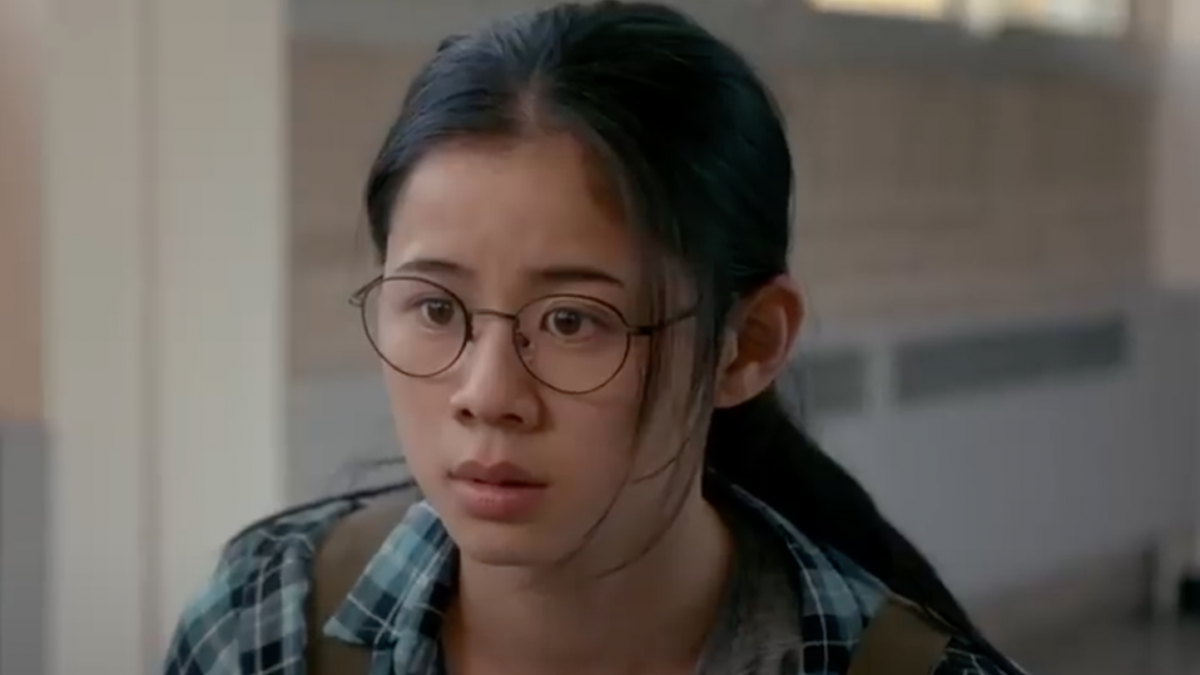
Modelled on the clever premise of Edmond Rostand’s 1897 classic Cyrano de Bergerac, the expert wordsmith here is “shy, straight-A student” Ellie (played by Leah Lewis), who ghostwrites all of “inarticulate jock” Paul’s romantic notes to Aster, the popular girl of his dreams.
GHOSTWRITER: Leah Lewis plays Ellie, a shy student who favours pen and paper over messaging apps, in The Half of It, released by Netflix on Friday 1st May (Photo: YouTube)
Currently, a whopping 91% of Irish people own a smartphone, but I was never so keen on the idea. Until 2016, I resisted owning one and brazened it out with my no-nonsense 2007 Nokia.
It wasn’t easy shrugging off the endless comments about my stubborn refusal to switch over to the latest techology that’s been firmly in fashion since 2012.
Finally, I gave in and purchased an Android, internet-enabled device — the cheapest, least advanced Huawei that I could find. Suddenly, a whole new world of apps and 24/7 internet in the palm of my hand opened up to me.
A Nokia 2007 model (Photo: Paul Caffrey)
At first, it was exciting. I found endless uses for the device, both professionally and socially. But it quickly took control of my life. Like a love/hate relationship, I couldn’t seem to get any peace from this thing until I switched it off at night.
After three years, I ditched it. I’m now back to a basic phone with no internet function and I’m managing fine.
I can Zoom, Facetime or Skype call — and tune in to a range of radio and television stations around the world — using my laptop.
I watch Sky News, CNN, BBC News, Netflix, the Dáil channel and RTÉ on a TV and enjoy listening to our native radio stations on an analogue radio set. I like the intimacy and sense of shared experience of live radio.
I listen to my favourite CDs on a hifi (though also own an iPod), and regularly buy newspapers and current affairs magazines (though also hold online subscriptions to some publications).
In short, in terms of keeping up with the latest goings on, I don’t miss much.
During the extended Covid-19 lockdown period, the internet is certainly a lifeline to many for keeping up with studies, work and friendships.
But I personally don’t feel the need to access that world using these rather bulky handheld computers.
RETRO-STYLE: Some smartphones are being styled as cassettes in a nod to the era that went before (Photo: Pinterest.ie)
I’m not missing Whatsapp at all. Each Whatsapp group I joined began with a sense of shared purpose and camaraderie — and went downhill from there. I’ve found there are other ways to stay in touch with friends and colleagues.
Moreover, as President Michael D Higgins told the Irish Daily Mail in March 2018, social media can be used as “an instrument of abuse, which it so unfortunately has been for so many.”
President Michael D Higgins was interviewed by the Irish Daily Mail in March 2018 (Photo: Paul Caffrey)
By any reckoning, the endless rise of “social” smartphone apps has enabled bullies, crooks, scam artists and worse to thrive like never before using platforms that let them pose as anyone they want to be.
The internet has long been a world of opportunities for those who wish harm on others; smartphones increase their opportunities.
Smartphone app Tinder and its ilk are reportedly popular with so-called “romance scammers” who seek your cash rather than your love using false profiles. So much so that gardaí have issued official advice on how to spot such confidence tricksters.
WATCH: The 2011 film Cyberbully illustrated the psychological effects of relentless online bullying on teenagers in a realistic way (Video: YouTube)
For anyone who hasn’t suffered consistent bullying or depression before, it may be hard to understand my instinctive aversion to being permanently hooked up to the world wide web.
Had smartphones been on trend when I was at secondary school, my life would certainly have been much worse than it already was on a daily basis.
Relentless harassment and threats (of physical harm and even death), along with ritual violence and humiliation — while existing in constant fear of being beaten up — was bad enough.
I won’t understate the huge impact on me when there’s any kind of reoccurrence of that trauma in my present-day life.
As I’ve discovered myself, online bullying and harassment doesn’t just affect schoolchildren. Owning an internet-enabled smartphone for three years in adulthood showed me that even now, I’m not immune to it.
As one good friend remarked to me recently: “I’m glad you’re still here.”
Coco’s Law: Nicole Fox Fenton, 21, had been constantly bullied online (Photo: Facebook)
As it turns out, I’m far from the only adult who feels smartphone-phobic. Something of a movement against the devices has been underway for the past few years, with some tech experts on board.
Former Google employee Tristan Harris says we check our smartphones about 150 times a day and that we’re all being “programmed” by tech giants to never put our device down.
Google headquarters in California where Tristan Harris worked (Photo: Twitter)
App developers use techniques that “work on everybody” to get our attention “at all costs” and keep the world’s three-and-a-half billion smartphone users hooked 24/7, he says.
Harris told America’s PBS NewsHour in 2017 that, after spending just 20 minutes scrolling through his own smartphone:
“I don’t feel very good after that. I feel like my anxiety goes up.”
Tristan Harris describes how ‘your phone is trying to control your life’
The Stanford University graduate set up the Center for Humane Technology in 2018 that urges tech executives to consider the mental health of consumers instead of always looking to their company’s bottom line.
Meanwhile stars like Tom Cruise, Vince Vaughn, Robbie Williams and Elton John refuse to own a mobile phone.
Big Little Lies star Shailene Woodley owns an iPhone (with no data) that she uses like a portable computer when wifi is available, but only communicates using a basic T-Mobile flip phone. The star told Jimmy Kimmel Live last year:
“We don’t notice each other any more.”
Shailene Woodley, 28, blames smartphones for a “bigger lack of camaraderie and community than there’s ever been.” (Photo: YouTube)
Businessman Steve Hilton refuses to own a mobile phone (Photo: Twitter)
And after three years of being connected to the world wide web at every waking moment, I found that I’d had enough, too.
Enough of the incessant social media updates, non-stop email alerts and continuous news flashes at every moment of the day.
My own inability to stop impulsively posting status updates on social media at any given moment was becoming problematic. The more I used the thing, the lower my overall mood became.
Break-out panel: Paul Caffrey
Does the smartphone and its ever-enticing LED screen limit our ability to make conscious choices about how we spend our time? It certainly had that effect on me.
The world changed in the early 2010s when smartphones became universally popular. The days of using our laptops to surf the internet — while separately picking up the phone to make a call — were gone.
In the 2000s, we had more stuff, but perhaps a more restful night’s sleep. Nowadays, our internet-enabled smartphones have replaced items like alarm clocks (Photo: Paul Caffrey)
In short, this cassette-sized appliance was taking over my life. Before long, it controlled me, commanding my non-stop attention to the exclusion of all else. So I quit.
This AsapSCIENCE video that explores how our smartphones alter how our brains function — and suggests we all take a “smartphone vacation” — has had 63,000 likes on YouTube.
Since doing away with my smartphone, I’m unable to obtain apps that range from the handy but laughably unnecessary (turn my heating on before I get home or switch on the kettle remotely from the sofa) to the downright ludicrous (an app which tells me if it’s dark outside).
I’ve been reading more newspapers and books and find that I’m more alert because I’m forced to use my brain more. My sleep is less disturbed and I feel less anxious in general. Social media is still a part of my life but I can put it away when I want to.
And what do you know, I’m somehow in a majority after all. Currently, 55% of the world’s entire population do not own a smartphone, according to number crunchers Statista.





You must be logged in to post a comment.