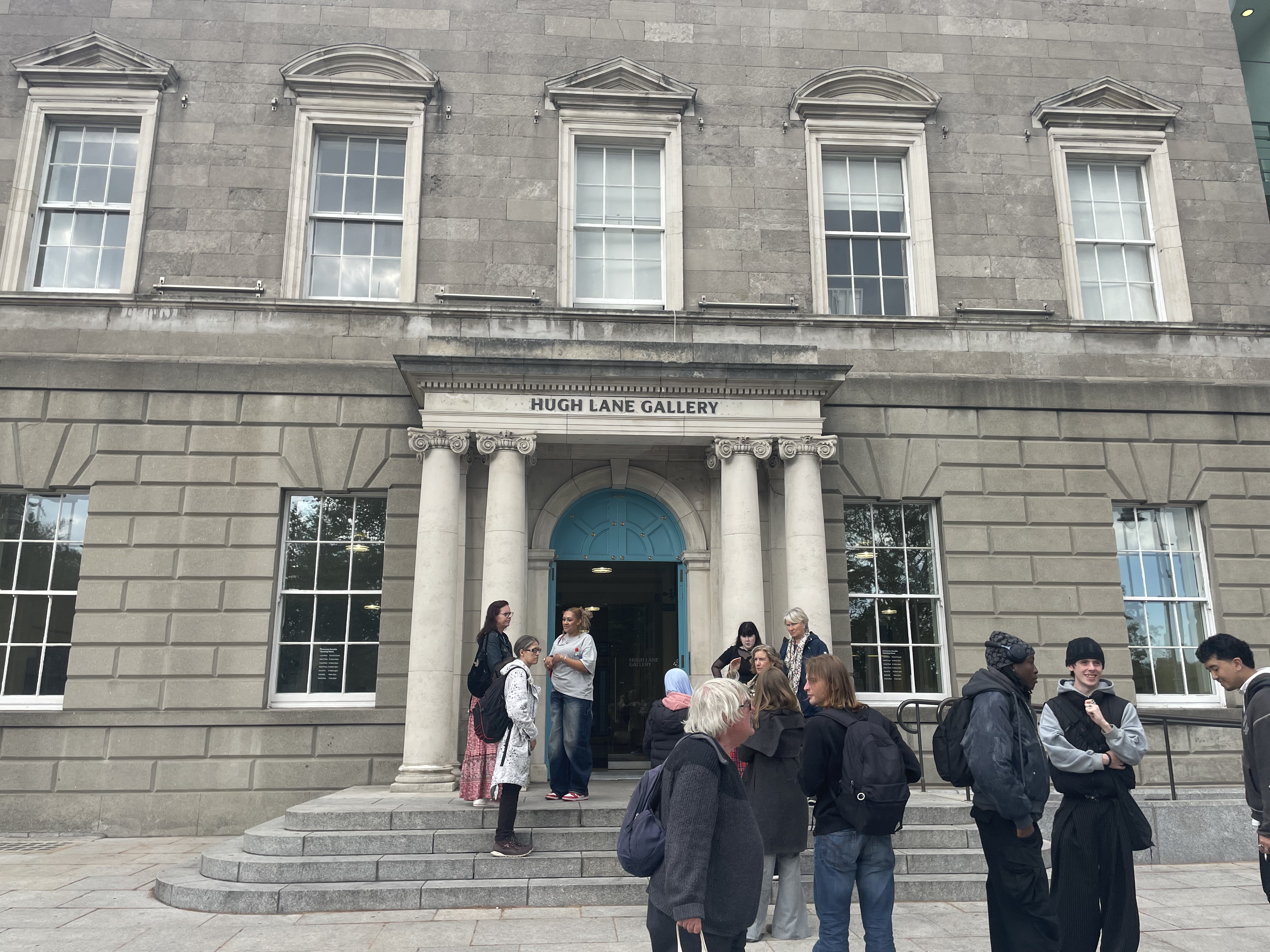
Hugh Lane Gallery closed its doors last Sunday at 5pm and won’t reopen to the public for another three years.
At the end of July, Dublin City Council announced that the beloved art museum would be closing to facilitate the renovation and safe removal of the gallery’s collection.
In the statement released by Dublin City Council it said that “the refurbishment will upgrade the gallery’s original 1930s wing to 21st century museum standards of security and environmental controls.”.
The statement continued saying that the renovations would “ensure the preservation of the collection for future generations and enhance the gallery’s ability to secure significant international loans.”
The cost of the refurbishment is unknown as of now, as the statement read: “The cost of the project will be determined when tender submissions have been reviewed and the contract awarded. It’s expected the tender will be issued in the coming months.”
The popular Boghanna Báistí Beaga will reopen when the refurbishment works are completed. Credit: Aidan O’Boyle
The refurbishment will also include a direct link between the gallery and the new Dublin City library that is due to be completed in 2029. This is promised to create a unique experience for tourists and locals alike.
The library will be popular once opened and Dublin City Council released a statement highlighting what the project will include: “The Dublin City Library Project (Phase 1) will deliver a new 5,500 sqm City Library at Parnell Square North. The project will include a multi-purpose conference centre, spaces to meet, read and study, a café and exhibition areas.”
All the paintings and sculptures will have to find new homes for the time being. “A number of important works will be on loan to the National Gallery of Ireland. The Hugh Lane Gallery already has works on loan to the Office of Public Works in Dublin Castle, Farmleigh House and Kilmainham Gaol Museum. The remaining collection will be stored safely in museum standard offsite facilities.”
Some of the exhibitions Hugh Lane gallery has had over the years. Credit: Aidan O’Boyle.
Most of the artwork will remain in Ireland apart from “the shared paintings from the Sir Hugh Lane Bequest in the National Gallery London. This partnership was signed in 2021 between The National Gallery London, and Hugh Lane Gallery regarding the 39 paintings in the Sir Hugh Lane Bequest, allowing the public in both the UK and Ireland to enjoy these works on a regular basis.”
The gallery’s conservation team is now “working hard to safely pack and transport the gallery’s renowned collection to museum standard storage facilities.”
Failte le Gra cafe which is situated on the ground floor inside the gallery will also close for the foreseeable future. A notice outside the entrance read “Dear guest, due to the closure of the gallery our last trading day will be the 27th of September. Thank you for all your support over the years and we hope to see you all when the gallery re-opens”.
A notice outside the entrance of Failte le Gra cafe. Credit: Aidan O’Boyle
Before the gallery closed there was 40 permanent staff members employed. Dublin City Council confirmed that all staff will retain their posts when it reopens.
They added that “A certain number of employees will remain operating core aspects of gallery functions including managing the care and conservation of the collection in offsite locations, monitoring environmental controls and daily 24hr security, organising offsite education and community projects and working on future collaborations and exhibitions.”
The remaining employees will be redeployed in other jobs throughout Dublin City Council.
Events host and organiser Good Vibrationz are continuing to operate their events outdoors, despite last week’s news that Dublin will remain in Level 3, with the rest of the country joining them and Donegal. Erica Carter discusses with them how they’re adapting to the new restrictions.
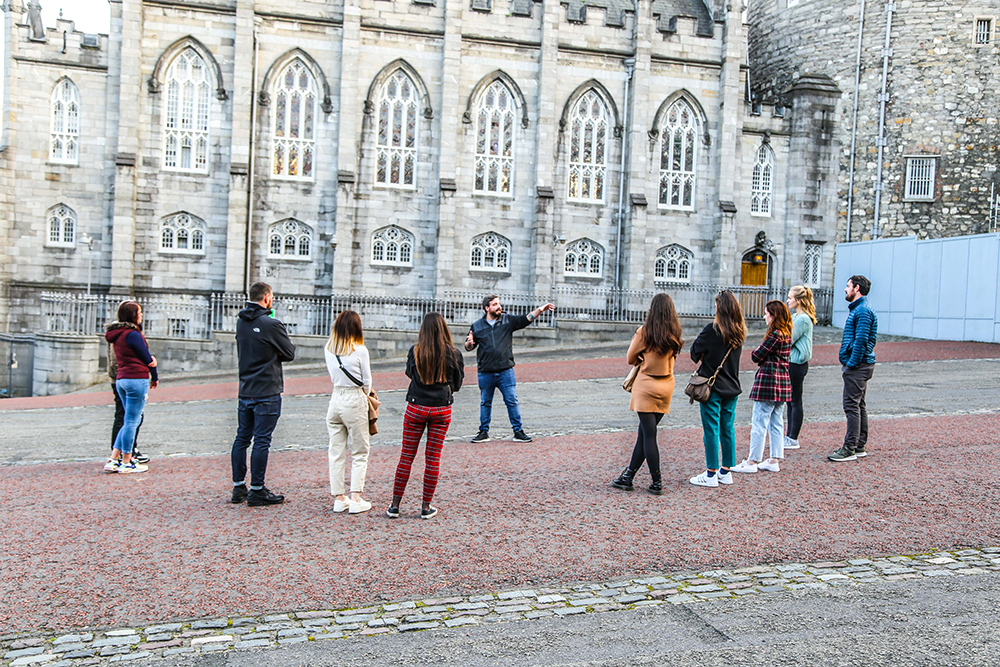
Good Vibrationz Street Walking Tour. Photo taken by Diarmuid Montgomery Clery.
Based in Dublin, Good Vibrationz are a collective of artists, filmmakers and self-proclaimed “messers”. They are known for their Photo Walks, Drink and Draw classes and Dublin Night Tours. They resumed their photowalk events in July, after being out of action for months.
“The response has been so good,” said Diarmuid Montgomery Clery, one of the organisers. “Despite the lockdown, it seems people are more eager than ever to get back out there and have fun.”
In order to comply with public health guidelines, Good Vibrationz have reduced the capacity of their events by 70%, allowing only 15 people on their outdoor photo-walks and tours. “It’s going to be tough but sure look, be grand,” Diarmuid said. Their walking tours are back on every Saturday and Sunday, with a whole host of new themes, including a music based walk, starting in the days of Dublin folk music and ending with the emergence of Irish hip hop.
Image courtesy of Good Vibrationz.
Back in September Good Vibrationz started hosting their events in their new city centre space, the Arts Bar – however mere weeks later they were forced to close their doors as Dublin entered Level 3 restrictions.
The Arts Bar is a new pop up gallery and events space on Francis Street in Dublin City Centre, above bar Drop Dead Twice. They were operating with a full bar and food menu. “The new premises is a commission free art gallery and artists are welcome to put on shows and keep all the profits and our team will help with the production free of charge also,” explained Diarmuid. “We’ll be hosting our own events, classes and shows to keep it financially viable.”
Despite all of these plans, the Arts Bar has had to postpone all of its indoor events. “It’s really hard because we put so much into the project then had to close so soon after,” expressed Diarmuid. “For us it’s about constantly trying to innovate to survive.”
“For us it’s about constantly trying to innovate to survive.”
“We know that when this is over the demand for our events will go through the roof. We just need to be able to keep paying all the bills and staying focused – I’ve noticed lots of friends who have been forced to leave the event industry and we don’t want that to happen.”
Good Vibrationz’s walking tours have proved very popular as an activity people can still partake in safely amid restrictions, but Diarmuid is concerned about the future of the tours as the weather grows colder: “It’s going to become more difficult but it just means we need to be the best we can be,” he asserted.
If Dublin moves to Level 5, they’re prepared for that scenario too. “We have started virtual walking tours and events through our new brand Alternative Experiences.ie,” Diarmuid explained. “Thankfully we’ve gotten a few bookings from various organisations and previous clients even before we launched so that was a great motivator.
“We are also launching several more events at home including a Christmas crafts set that people can create at home with our instructor!”
Businesses have been forced to adapt and get creative during the Covid-19 pandemic, and Good Vibrationz are certainly doing the most to keep going during such a dark time.
Plans for the redevelopment of St James’s Gate site in Dublin have been unveiled by Guinness owner Diageo, reports Keeva Tyrrell.
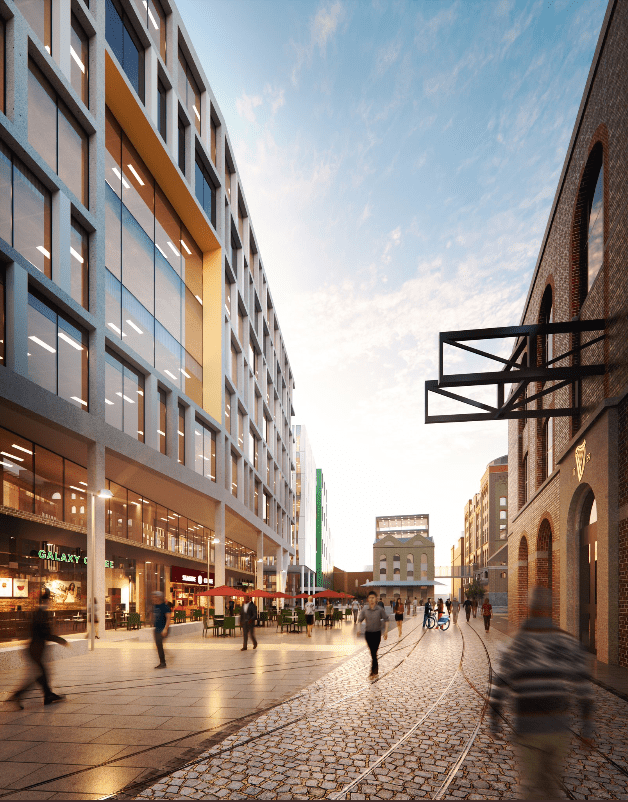
The international drinks company, Diageo, plans to develop an estimated 12.6 acres of the St. James’s Gate site into a new urban quarter for Dublin.
Diageo said due to the advancements in technology, it can now brew its product in a smaller space thereby leaving a surplus of space for the company to use for other investments.
The urban quarter will be situated in the popular Guinness brewery in the heart of the city centre.
An artistic drawing of the new Diageo facility in Dublin 8. Source: Twitter
The redevelopment project would transform the Dublin 8 area and would also be one of the largest developments in the city centre in many years.
Diageo have received planning permission for a €25m development “to provide craft distillery and [a] visitor centre in what was their power station on Thomas Street,” said a spokesperson for Dublin City Council.
The new urban quarter will feature a mixture of commercial and residential space along with public spaces and streets that will be integrated within the Liberties area.
The residential aspect of the area should prove to be appealing for those looking to set up a new home in the coming years and with the Living City Initiative from Dublin City Council, it could be a smart move to make.
The Living City Initiative focuses on encouraging people to live in historic centres in cities like Dublin.
“The aim of the Living City Initiative is to bring life back to the heart of the cities by offering tax relief for qualifying expenditure incurred on the refurbishment or conversion of certain buildings were conditions are met,” said a spokesperson from Dublin City Council.
The spokesperson said: “The initiative is designed to encourage the renovation and reuse of pre-1915 city centre properties and there are so many such properties in the Liberties so there is great potential for further renewal in Dublin 8.”
Source: Twitter
Fáilte Ireland were happy to welcome this proposed development at the St. James’s Gate site with Guinness Storehouse being Dublin’s most popular tourist attraction last year, attracting over 1.6 million visitors through its doors.
“We are thrilled that this development, which builds on the industrial heritage of the area, will be located along the Dubline, an orientation route for visitors that runs through the heart of the city from Parnell Square out to Kilmainham Gaol,” said Keelin Fagan, Head of Dublin Programme with Fáilte Ireland.
The upgrade of the site is one of a long list of developments that have been planned and some which have already been achieved in the area.
“Along with other exciting developments such as ongoing public realm improvements that have been funded by Fáilte Ireland and Dublin City Council, the recently opened Pearse Lyons Distillery and Visitor Centre, new cafes and restaurants, and Diageo’s own planned Roe & Co Distillery and visitor centre on James’s St, this area of the city is becoming an ever more attractive destination for overseas visitors,” said Ms. Fagan.
The total amount spent on marketing the island of Ireland overseas increased in 2016 for the first time in five years.
The tourism marketing fund for 2016 was €35,053,000, an increase of €1,000,000 compared to the figure for 2015.
The total figure for the marketing fund decreased annually from the years 2011 to 2015, making 2016 the first year to see an increase in the fund in five years.
Source: Kieva McLaughlin and John Smith
From 2008 until 2011, there is a clear correlation between the amount spent on marketing and the number of tourists who visited Ireland. However, from 2012 to 2015, the number of tourists continued to rise even as the amount spent decreased.
Supposedly, this rise in tourists will continue to increase, with over 9 million tourists, the highest number ever, expected to have visited Ireland by the end of this year.
The majority of the 2016 fund, €25,106,000, comes from the State’s share of the agreed North/South co-funding of Tourism Ireland’s destination marketing of the island of Ireland overseas.
Year
Tourism Marketing Fund (Tourism Ireland’s allocation)
Tourism Marketing Fund (Fáilte Ireland’s allocation)
Tourism Marketing Fund (TOTAL)
2008
€33,685,000
€16,315,000
€50,000,000
2009
€32,185,000
€15,065,000
€47,250,000
2010
€30,242,000
€14,008,000
€44,250,000
2011
€34,942,000
€11,141,000
€46,083,000
2012
€29,335,000
€10,019,000
€39,354,000
2013
€28,445,000
€8,800,000
€37,245,000
2014
€28,363,000
€8,213,000
€36,576,000
2015
€25,992,000
€8,061,000
€34,053,000
2016
€25,106,000
€9,947,000
€35,053,000
Source: Kieva McLaughlin and John Smith
Tourism Ireland is a north/south body, and therefore receives funding from the Northern Ireland exchequer for its core overseas marketing activity. The agreed ratio for marketing activity is two euros in the south for one euro in the north.
Tourism Ireland Ltd is the all-island tourism marketing company that was established after the Good Friday Agreement.
The remainder of the fund, €9,947,000, is used by Fáilte Ireland to support niche, product and regional marketing.
The marketing of Ireland overseas appears to be paying off as CSO figures show that overseas visits to Ireland for 2015 grew by 13.7% compared to 2014.
All of the main overseas markets grew in 2015. Visits from Mainland Europe increased by 15.4%; visits from the U.K. were up by 12.1%; visits from North America increased by 14.0% and other long-haul markets increased by 13.7%.
Tourism Ireland undertook the extensive Global Greening initiative as part of the St. Patrick’s Day celebrations, which saw some 180 landmark buildings and sites, including the Great Wall of China, and the Christ the Redeemer statue in Rio de Janeiro, Brazil, light up green to mark the day.
Having spent many weekends in Galway and viewing myself as somewhat of a Galway aficionado, I felt compelled to share my experiences of this small city in the west of Ireland. If you wish to escape the busy streets of Dublin but still want to immerse yourself in urban life, Galway is the perfect spot for you!
With a population of 75,000 it may be small but it is certainly mighty. Galway is known for its stake in the arts and culture scene and there is always something going on in this town. While the weather can often be less than inspiring, you can be sure to find something to do when you pass through and when the weather is good in Galway it oozes an effervescent energy.
In the city centre there are plenty of bars, pubs, restaurants, cafes and shops to keep you entertained for a long weekend or even a week or two holidays. There is always something happening in the city that is different, making your trip that little bit extra special.
What’s on in Galway?
If you are planning a trip in the upcoming weeks there is lots of exciting events. Over the Easter weekend the annual food festival took place at the Spanish Arches. Paired with sunny skies and not a drop of rain in sight (but plenty of wine) it made for a memorable feast. Whatever your taste buds crave, there was something to satisfy it so I recommend checking it out next year. There is also a weekly market in Galway City, which opens all year on Saturday and Sundays and even on Fridays in July and August. This market has been running for centuries and you can find everything from beeswax candles to falafels to wooden furniture. http://galwaymarket.weebly.com/
Galway Food Festival, Easter Weekend 2015. Photo by Rachael Hussey
Galway Food Festival, Easter Weekend 2015. Photo by Rachael Hussey
Galway Food Festival, Easter Weekend 2015. Photo by Rachael Hussey
Galway Food Festival, Easter Weekend 2015. Photo by Rachael Hussey
Organic fruit and vegetables, Galway Food Festival, Easter Weekend 2015. Photo by Rachael Hussey
Galway Food Festival, Easter Weekend 2015. Photo by Rachael Hussey
For film fanatics, The Japanese Film Festival is coming to the Eye Cinema from the 12th April to the 16th. http://www.jff.ie/
For those who would are looking for more action and adventure, there is the Galway Water Sports Show on the 11th and 12th of April. http://galwaywatersportshow.com/
For the brave at heart who long to be at one with the elements, The Western Lakes and Atlantic Challenge (WLAC) might be what you are after. This cycling challenge suits everyone; it includes a short cycle (family friendly) and also a long cycle for the more athletically gifted. Taking place on the 26th April, it gives you enough time to get into shape before the big day. http://www.wlac.ie/
The Cúirt International Festival of Literature takes place in Galway City this year and it runs from the 21st April to the 28th and includes authors such as Colm Toibin and Jane Hershfield. From a celebration of Yeats to a Poetry Slam, the festival includes an eclectic mix that caters to many audiences. http://www.cuirt.ie/en
Over the summer there will continue to be exciting events so be sure to keep a look out for upcoming events in Galway for Summer 2015.
Where to Eat?
Despite its diminutive size as far as cities go, you can always find somewhere to eat and all appetites are catered for. Whether it is a salad and a healthy juice or hearty pub grub and a nice pint, Galway will have it. Here are my top places to eat depending on the mood you or in or your dietary requirements.
Weekend Brunch
As brunch continues to gain popularity across Ireland and we scratch our heads to think of what life was like before it became part of our weekend ritual, here is the lowdown to Galway’s best brunch options.
Gourmet Tart Co. in Salthill is a great place to go for something quick and delicious. It has a lovely deli and bakery section as well as serving lunch and dinner. On the weekends they cater for the brunch clientele and it is always tasty and the service is reliable. Rachael’s recommendations: brioche French toast, as it is zesty and sweet. http://www.gourmettartco.com/
My favourite place to spend a Sunday morning in Galway is Ard Bia at Nimmos. From the cakes displayed at the entrance door, to the stone bar, to the fresh juices, to the menu, everything is perfection! This place is hidden away under the Spanish Arches and is a must try. Not only is the food delicious but also the vibe is great and the building itself is quaint and full of character. The waiter’s laid back but friendly attitude will make you feel at home especially after a night on the town. Rachael’s recommendations: my absolute favourite brunch dish from here is the buttermilk pancakes, they are fluffy cakes of heaven and with honey, mascarpone and berries accompanied, they are the perfect Sunday treat. http://www.ardbia.com/
Ard Bia at Nimmo’s, Spanish Arches, Galway. Photo by Rachael Hussey
Ard Bia at Nimmo’s, Spanish Arches, Galway. Photo by Rachael Hussey
Ard Bia at Nimmo’s, Spanish Arches, Galway. Photo by Rachael Hussey
Art fro sale in Ard Bia at Nimmo’s, Spanish Arches, Galway. Photo by Rachael Hussey
Gourmet Tart Co. Salthill, Galway. Photo by Rachael Hussey
Lunch
For lunch in the city my best recommendation is McCambridges. Based conveniently on Shop Street in the city centre this is a charming spot. While it may not look like much from the outside, inside there is a large delicatessen grocery store full of specialist foods and a coffee spot. Upstairs is the restaurant and you can often be kept waiting to get your hands on their delectable lunch options. Rachael’s recommendations: the falafel wrap and don’t forget to order a side of sweet potato fries. They have nice desserts for afters as well. https://mccambridges.com/
McCambridges, Shop Street, Galway. Photo by Rachael Hussey
Coffee in the sun. McCambridges, Shop Street, Galway. Photo by Rachael Hussey
McCambridges, Shop Street, Galway. Photo by Rachael Hussey
Dinner
For a fairly fancy dining experience that costs a little extra, it has to be Kai. Based just outside the city centre on Sea Road, this small spot offers something unique to its punters. With a constantly changing menu, Kai keeps you on your toes and everything is made with fresh and organic ingredients and for vegetarians out there, the options are always great. With mains starting at €20 it is not a cheap option but you won’t be disappointed in quality or taste. http://kaicaferestaurant.com/
If you are craving something more exotic, check out eastern Tandoori. With reasonable prices, attentive staff and delicious Indian cuisine, Eastern Tandoori is a hit in my books. Based on Spanish Parade it is easily accessible for those spending the day in the city centre. Rachael’s recommendations: onion bhaji to start followed by tikka masala and garlic naan bread. http://eastern-tandoori-galway.com/
Eastern Tandoori, Spanish Parade, Galway. Photo by Rachael Hussey
Pub Grub Dinner
There are plenty of pubs to choose from and here are a couple of pubs that do great drinks and food too. A few pints or glasses of wine, paired with hearty and flavoursome food might be the ticket after a busy day in Galway.
Everyone who goes to Galway should venture to Salthill, this seaside town is only a ten-minute drive from the city centre and is packed with pubs. Oslo is one that combines a good atmosphere, craft beer and great food perfectly. After taking a stroll down the promenade, be sure to pop in to Oslo for a drink and some food. Rachael’s recommendations: the falafel burger or the broiled salmon. http://www.galwaybaybrewery.com/oslo/
A little bit further outside the city you will find a pub that holds a restaurant upstairs, Tom Sheridan’s Bar & Restaurant in Knocknacarra. You may need a car to venture out here but if you have a rented car or you are willing to get a taxi, you can spend an enjoyable evening here. Rachael’s recommendations: traditional fish and chips but most items I have tried have not disappointed. http://tomsheridans.ie/
Where to Party?
Galway is known as a student city and a party place. Whether you are a student out with classmates or on a long weekend off from work or on a hen/stag do, there are plenty of places to let your hair down with a few drinks and some music. While there are much fewer clubs in Galway compared to Dublin, there is an abundance of pubs and a few nightclubs worth visiting.
Pubs
As well as the pubs mentioned for pub grub there are a couple of city centre pubs that stand out for me.
Tigh Neachtain’s is in the centre of the city and covers all bases for a popular Irish pub. It is over 100 years old so it has character and history, they host live music nights and have over 130 types of whiskey, what more could you want? http://www.tighneachtain.com/
Located on the same street in the Latin Quarter is The Quays. This pub trumps Tigh Neachtain as it is nearly 400 years old and it also provides music throughout the week. This area of town is always buzzing and a great place to start your evening off. http://www.galwaycitypubguide.com/the-quays.html
The Quay’s, Latin Quarter, Galway. Photo by Rachael Hussey
Tigh Neachtain, Cross Street, Galway. Photo by Rachael Hussey
Tigh Neachtain, Cross Street, Galway. Photo by Rachael Hussey
Clubs
The nightclub scene is not huge in Galway as more emphasis is placed on pubs but there are two nightclubs worth visiting if you have the stamina to keep going after visiting the Galway pubs.
Halo is situated on Upper Abbeygate Street and is an upmarket spot. It is over 23s however so not suitable for the younger students. It has a smoking area and has sizeable dance floor areas and with cocktails for under €10 it is pretty reasonable as far as club prices go. http://www.halonightclub.com/
Karma Club is another popular nightclub and is conveniently located on Eyre Square. It is a good spot to hit after 12.00 am when you are looking to keep the party going till the early hours, just be aware nightclubs in Galway close earlier and you will be out on the streets by 2.30 am. http://www.karma.ie/
Coffee and Cake
If you have little interest in hitting the bars, there are plenty of cute coffee and tea joints around town. My favourites are Cupan Tae, which will wow you with its kitschy furnishings and mouth watering homemade cakes and its neighbour, Pura Vida. They do great coffees and juices and it has a substantial outdoor area for a seat in the sun.
Cupan Tae, Quay Lane, Galway. Photo by Rachael Hussey
Cupan Tae, Quay Lane, Galway. Photo by Rachael Hussey
Pura Vida, Quay Street, Galway. Photo by Rachael Hussey
Whatever you enjoy doing on a weekend away Galway certainly has it. Only two hours by car from Dublin and with hourly buses leaving from the quays in the city centre for only €12 single journey, check Galway out this year for an idyllic staycation.
Cheap food, fine wines, boutique hostels – Lisbon has it all. For budget holidaymakers, it doesn’t get much better than this.
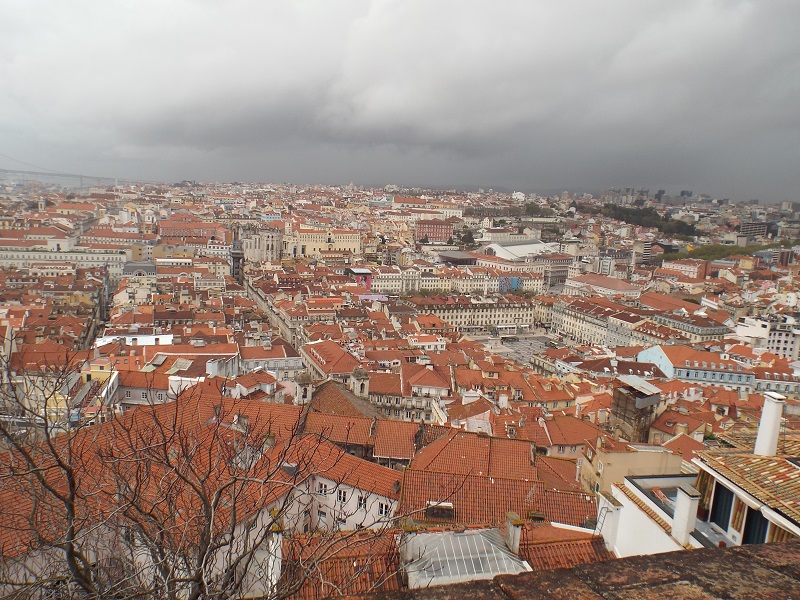
Located only 30 minutes from the beach town of Cascais, Lisbon is a great destination if you’re after a short, cultural city break and want to get your share of beach time as well.
If you can get it, that is. When I arrive in the Portuguese capital, it’s a washout, but my guide Carmo promises temperatures of up to 30 degrees during the summer.
First off, accommodation: The Independente is your best bet any time of the year.
Located near Bairro Alto (the heart of Lisbon’s nightlife), the trendy hostel is run by the three S’Eça Leal brothers. The price is very agreeable: an average night in one of the bright dorms with the cork bunk beds costs €12.
What’s more, The Independente’s restaurant, The Decadente, boasts an excellent menu and hipster-friendly décor. A three-course lunch will set you back a mere €10 and coffee costs 60c. Need I say more?
Tram 28 is one of the most popular ways of getting around the city. Or you can opt for the Yellow Bus tour, which will bring you to the usual touristy spots as well as the more off-the-track attractions. Bottom line: Lisbon is a city of seven hills, so prepare for some serious hill-walking. The tiled paths can be slippery in the heat, so good footwear is essential.
The city is relatively small, so it won’t take you long to find your feet. And besides, Lisbon is the birthplace of Saint Anthony, the patron saint of lost articles, so if you do get lost, pray to him and he’ll help you find the right path.
If you’re looking to get your fill of culture, pay a visit to the wonderful Belém district, where your first stop should be the Jeronimós monastery. It is one of the oldest structures in Lisbon and survived the famous 1531 Lisbon earthquake and subsequent tsunami and fires.
Colloquially known as “the pepper monastery”, Lisbon’s history is literally written on its walls. All the motifs that appear on the tiles that line Lisbon’s streets are here – sea monsters, elephants, lions, etc. – and the tomb of Portugal’s greatest explorer Vasco da Gama is housed at Jeronimós.
While you’re in Belém, grab a Pastéis de Belém pastry at Antiga Cafeitaria. Sprinkled with cinnamon and icing sugar, these custardy, flaky treats will melt in your mouth. But watch your timing: cruise calls bring hundreds of tourists to the café and it can get pretty full around lunchtime.
Although Lisbon is the oldest city in Western Europe, its architecture is quite diverse. Modern buildings sit comfortably alongside traditional structures.
Juxtaposed to the 15th century Jeronimós is the very modern Museu Coleçao Berardo. The Berardo collection is home to some of the 20th century’s greatest artworks. Pablo Picasso, Andy Warhol and David Hockney all find their place in the permanent collection, which is free to visit.
On the way back, stop-off at the LX Factory in Rua Rodrigues de Faria. It mightn’t look like much from the outside, but this former printing factory is home to some of Lisbon’s most unique cafés, restaurants and shops.
Around 150 companies have set up camp in the LX Factory, making use of its old warehouses, cafeteria and shops to create a trendy haven. You could easily spend half a day here, wandering around the impressive Ler Devagar bookshop-café, admiring the artwork in Studioteambox Gallery and filling up on Landeau chocolate cake.
Comercio Square in the city centre is a popular meeting point for tourists, and the Lisboa Tourist Board has given the square a revamp by renting out spaces to new restaurants and attractions like the Lisbon Story Centre. The multimedia experience takes about 50 minutes to complete and tells you all you need to know about Lisbon’s rich history.
Rua Augusta, one of Lisbon’s busiest shopping streets, leads off Comercio Square. The pedestrianized street offers the usual high street shops as well as a couple of unique design shops like Typographia, a shop that sells Portuguese themed t-shirts by Lisboan designers.
If you head away from Lisbon’s historic centre and visit Parque das Nações, you’ll find that the former Expo 98 site has been put to good use with attractions like Oceanário de Lisboa aquarium.
In Lisbon, cod is king. It’s said that the Portuguese have invented 365 different ways to cook cod (one for every day of the year). I sampled only six but can confirm that if you’re banking on cod alone during a week’s holiday, you’ll do just fine.
One of the most delicious dishes is served at Restaurante 5 Ocenaos: sea bass cooked and served in salt and a white wine.
The most exciting cod dish is the incredible bacalhau à bras with exploding olives by Michelin-star chef José Avillez. The young chef owns a string of restaurants in Lisbon, including Pizzaria Lisboa on Rua dos Duques de Bragança – a unique experience to be served pizza from a Michelin-star chef.
One of the biggest nuisances for tourists is the constant hassle from “drug dealers” at every corner in the city centre. They constantly pick on visitors to buy “hashish”. If partial to a joint, don’t be fooled: what’s on offer looks suspiciously like green tea.
Apart from that, there’s very little bad to say about Lisbon. It’s cheap, it’s cheerful, it’s a platter of culture. What more could you want?
Conor McMahon travelled to Lisbon courtesy of the Portuguese Tourism Board and Ryanair.
Dublin is the most popular destination for domestic holidaymakers during the midterm break, according to data from hotel search site trivago.ie.
The Shelbourne Hotel. Picture: Conor McMahon
The capital is also the most expensive domestic location, with a standard double room averaging €107 from October 24 to November 2.
Despite this, average prices for Dublin in October 2014 dropped nine per cent compared to September, but increased 11 per cent compared to October 2013.
Waterford is the cheapest destination in the top 10, with the average price of a standard hotel room at €81.
The most popular international destination is London, also the most expensive, with an average room price of €195.
John Pilkington of Trivago UK & Ireland says: “It is interesting to see that Dublin and London remain the top choices for Irish holidaymakers despite the higher prices found there. These two cities were also favourites for summer travel, showing their popularity in Ireland.”
Unsurprisingly, city breaks and beach locations in Southern Europe make the Trivago’s top 15 most searched international destinations.
Nine European capitals top the list — London, Belfast, Paris, Edinburgh, Lisbon, Amsterdam, Rome, Berlin and Prague — while four beach locations appear as well — Puerto del Carmen, Benidorm, Albufeira and Playa Blanca.
See the top 10 Irish and top 15 international destinations below.
How does a whistle-stop journey around Dublin sound, say from Bull Island to Irishtown Nature Park? Trinity College have recently launched 11 podcasts to help you along the way.
Locations covered by audio guide. Map courtesy of Trinity College Dublin.
The free audio guide called DBAT(Dublin Biodiversity Audio Tour) includes undiscovered gems like Serenity community gardens and firm favourite Dublin Zoo. Biodiversity refers to the variety of life on earth. The initiative is sure to prove popular with tourists and nature lovers alike.
Overall, the podcasts are perfectly compiled. They are short, sweet and most importantly exciting. There is also an educational element to the podcasts, as they include the history of each area. Go on, have a listen. I promise you’ll be impressed!
2013 will be the year of The Gathering Ireland. Hundreds of thousands of people with Irish heritage are expected to descend on the Emerald Isle for this year long event celebrating Irish Culture, Heritage and Craic. There is no doubt that businesses in Ireland will soon begin to pump up their Irish-ness in order to capitilise on the influx of tourists.
TheCity.ie decided to visit one such place that is already primed for the tourist market.
Nestled on the corner of Jervis Street by the tracks of the Luas Red Line is Ireland’s Official Leprechaun Museum. As you step into the veranda and onto the synthetic grass you are invited to leave the human world behind and enter into a land of myth and legend….the land of Leprechaun.
Be warned do not enter this museum with the notion that Leprechauns, Fairies and Giants do not exist…for you shall be reprimanded. Once inside you are greeted by various pictures and illustrations of the Leprechaun. A tour guide will then give you a brief history of the legends of Ireland, before whisking you through the secret door to the magical tunnel which will in turn transport you to a different world.
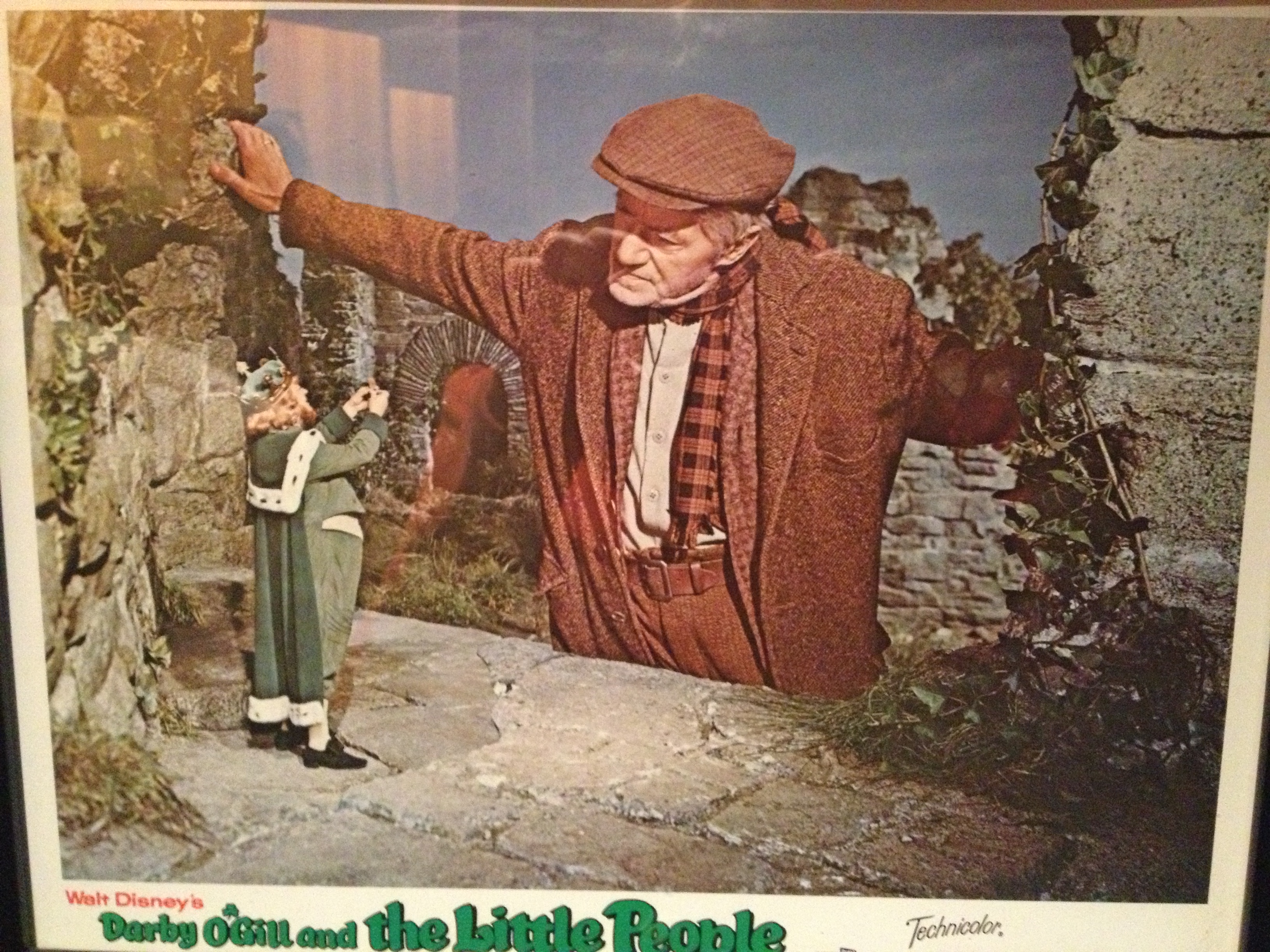
The magical tunnel by way of clever trickery appears to make the tourist shrink in size, thereby enhancing the museum experience. If you’ve ever wondered what it would be like to walk underneath the Giant’s Causeway or sneak inside a Fairy Fort then wonder no more. On this tour you will be taken through twelve chapters of Irish Mythology each with their own story to tell.
In essence the museum sounds like a wonderful place, a haven from the bustling world of Dublin city. The tales are interesting and educational and have the potential to be entertaining. Yet there are a couple of things that soured this reviewer’s experience. Perhaps it was the fact that it was the last tour of the day but this reviewer found the tour guide to be un-enthused – recounting tales in a monotone manner.
The Giant’s Room should be the highlight of the tour. The guide invited us all to linger and take photographs on the oversized novelty furniture; alas many members of the tour group appeared frustrated as they were unable to climb said furniture without some difficulty, and unless you are an experienced photographer the dim lighting hampers any attempts to take a decent photograph.
The idea of a National Leprechaun Museum is simple yet ingenious. It is a gem for tourists a veritable treasure trove for the operators and looks likely to benefit greatly from the upcoming Gathering 2013.












You must be logged in to post a comment.