Tag: traffic

  • Cycling for a living: The untold realities 

    Cycling for a living: The untold realities 

    Delivery cycling in Dublin, and the overlooked challenges of making a living on Dublin’s busiest road.

    By Samuel Adeleke 

    I Citizens’ concerns in Dublin are usually centered on motorists and pedestrians. Still, recent statistics from the Road Safety Authority (RSA) shows that the greatest share of serious injuries was among those cycling for social trips, at 76 per cent.    

    In addition, the statistics also revealed that 187 cyclists were seriously injured while commuting to and from work, and the majority of these injuries occurred in Dublin. 

    These figures raise questions about the challenges faced by cyclists in the city center, especially for delivery cyclists whose livelihoods depend on riding these roads daily and who are exposed to different road and weather conditions without the protection of a vehicle. 

    Damilola Foluwashayo, a delivery cyclist with the delivery service Just Eat, said, “Cycling can be tedious when it rains. The roads become slippery, and there is a higher chance of getting a flat tire.”  

    This not only makes riding more difficult but also increases the risk of injury to the rider. 

    “If you ride too fast and want to apply the brakes on a slippery road, you might fall because there is no friction to hold your tires,” Foluwashayo said. 

    One of such fall led to Foluwashayo sustaining a serious injury. “I was trying to avoid two kids playing on the road. In the process, I stepped on the wrong brake, my tires got spoiled, and I broke my leg,” he said.  

    The changeable weather presents other challenges for cyclists. “In the first seconds it’s raining, the next seconds it’s not raining, just always take your safety gears with you and have your lights, lights make you safer,” said Judge Eddy, who uses his bicycle for grocery shopping for his wife. 

    In addition to challenging weather conditions, cyclists also have to deal with careless drivers.  

    “We often encounter reckless drivers on the road,” said Thomas Nve, a delivery cyclist with Deliveroo.  

    “Taxi drivers, in particular, seem determined to meet the metrics and quickly get to their next client,” he added. 

    But other road users criticise delivery riders for breaking the rules.  

    “I have a big thing against delivery riders; they have no lights, they go through red lights all the time, and they tend to just cross over all the time,” said Judge Eddy.  

    Eric Andrel, a delivery cyclist with Deliveroo, attributed an accident he had to the deplorable state of the road.  

    “There have been a lot of potholes because of the rain, I had an accident because the pothole was covered by water,” he said. 

    “The roads are also narrow and don’t give room to swerve safely,” Andrel said. To constantly keep himself safe, Andrel said, “I wear high-visibility clothes and always have my helmet on.” 

    Andrel says The Government should do more to keep all road users safe “They should create a system where, after 6pm, only public transport is allowed in the city.” 

    Mariann Finan, who is an all-year-round cyclist, said conditions have improved for Dublin cyclists, but problems remain.  “In terms of infrastructure for cyclists, it is better than it was; at least we have a lot of cycle lanes now, but they are not really finished. They stop and start, and you don’t really know where the next lane is.”  

    Photo credit: Samuel Adeleke

    Finan also noted a pandemic of wearing headphones among cyclists.  

    “I don’t even know how anybody can wear headphones while cycling, because there is so much going on around you that you need to be alert to,” she said. 

    Finan warns of dangerous overtaking by cyclists. She said: “A lot of the Brazilians and Chinese delivery riders have electric bicycles and tend to overspeed, but they should always use their bells to alert other road users.” 

    Cliff Nolan, the owner of Bike Stops on Capel Street, Dublin, which sells and repairs bicycles, said, “I service a lot of delivery riders’ bicycles. The most recurrent issue with them is a puncture in the tyres, and their brakes always need a lot of attention.” 

    “Delivery riders should always buy quality parts instead of going for cheap parts, which puts them at risk,” Nolan advised. 

    Photo credit: Samuel Adeleke

    One Chinese worker with Deliveroo, who did not wish to be named, said, “There are many dangers on the road. There are robberies by teenagers, and our bicycles are easily stolen.” 

    He also highlighted other issues with the healthcare system that discourages drivers from seeking treatment for injuries.  

    “I have fallen so many times on my bicycle and have had to treat my own wounds,” he claimed.   

    “We generally don’t go to the hospital because going to the hospital will be troublesome and takes a lot of time. We figured we could handle it ourselves, and it would be much faster.” 

    “Cyclists should ensure that both they and their bikes are visible to other road users by investing in good sets of front and rear lights, and by wearing clothing that helps them be seen,” said John Paul Guiheen, the Executive Officer of Communications at the RSA, in an email correspondence.  

    “They should also consider wearing high-visibility materials and obeying the rules of the road,” he added. 

    The RSA stated that there was a deliberate effort last year to inform major food delivery companies about changes to the law concerning electric bicycles as introduced in the Road Traffic and Roads Acts 2023.  

    “Riders must obey the same rules of the road as drivers; the roads are a shared space. Hence, drivers must follow all speed limits, traffic signals, and parking regulations,” said Guiheen.  

    On other issues bothering on weather conditions, cycle lanes, and bicycle theft, the RSA said, “That should be directed to the NTA, local authorities who maintain roads, and the Gardai respectively.” 

     But “during severe weather events, we issue advice to all road users, including cyclists,” he said.
  • Dublin City Council Clamping Down on Parking 

    Dublin City Council Clamping Down on Parking 

    by Molly O’Reilly

    Credit Molly O’Reilly 

    In Ireland’s busiest city, full of life,  

    As the epidemic of clamping down on cars becomes rampant around the Capital, there are three things guaranteed in life in Dublin; death, taxes and clamping.  

    It is no secret that the housing crisis has seeped into student life in Dublin, resulting in many in neighbouring counties commuting to college or having to find accommodation for the academic year. 

    Despite the argument there are plenty of transport to use or places to “pull in,” many Irish students have been left lost and have had no choice but to fork out a sum to release their car from the shackles of the clamper. 

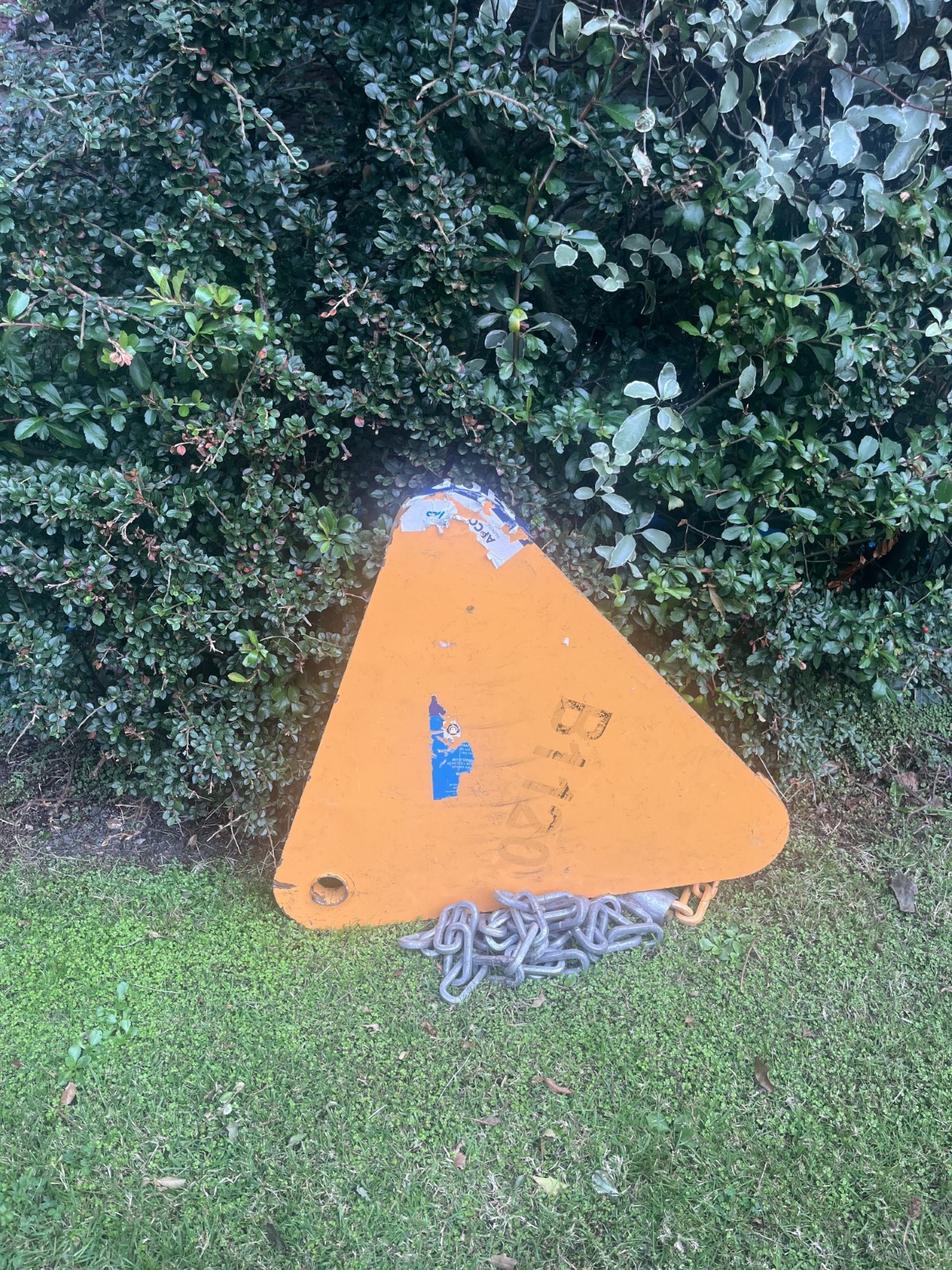
    The fee for clamping is a release fee of one hundred and twenty-five euro, which is operated by Dublin Street Parking (DSPS). 

    However, if the release fee is not paid within the 24 hours of being initially clamped, not only will your car be towed away to the city car pound, but there is also a fee of 250 euro and an additional 35 euro per day according to the DSPS website.  

    Dublin City council has released the statistics for clamping of cars around the city from 2022 with a total number of clamps of 40,732 excluding invalids (disabled parking badges out of date is an example of an invalid) 

    Credit Millie Storey 

    Although the reasonings behind the clamping may seem obvious, there can be virtually nowhere for people to park even when paying elevated levels of rent for accommodation. 

    For instance, in private accommodations and estates it is not an unusual sight to see a car with a registered parking ticket clamped. 

    Dublin City Council provide an appeals process that must be submitted within 60 days from the original day the car was clamped. 

    One Dublin driver, who did not wish to be named, had their car clamped last year whilst it was parked on a private estate in Dublin. Not only was their car the only one clamped on the street, but without their knowledge it was moved from Cabra to Stoneybatter.  

    Is this Dublin’s latest trend amongst students? 

    Marese Masterson, originally from Leitrim, who studies in Maynooth said her car is a necessity during her time in Dublin for her work as an intern. Masterson drives to work five days a week and says the lack of parking is taking a toll on her finances. 

    “They even clamp in Supervalu in Ranelagh, there is barely any street parking just loading bays and clearways. I have gotten clamped twice, said loading bay and once got clamped at 7 in the evening,” she said. 

    “The parking price per hour is extortionate for students- example twenty euro a day, very unfair as this leads to students unable to pay the ticket, which in hand leads to clamping.” 

    Masterson is not the only student feeling the pinch. Elli Duggan from Kilkenny recently studied social care in TU Dublin Grange Gorman and lived in student accommodation in Phibsborough. Her car was a necessity for her work placement as well as getting to and from her job in Kilkenny.  

    “In my student accommodation of 400 students there were only 8 parking spaces available, which were 50 euro a month, I would have to park on the North Circular Road.” 

    According to DSPS website, clamping can occur when a park has expired by as little as ten minutes.  

    The City.ie asked the DSPS to comment on allegations that   clamping was excessive around Dublin. They declined to comment but said further contact can be made with those in higher management or an FOI (freedom of information) application can be made. 

  • The Rise of Road Deaths and the Fall of Speed Limits: Have our Roads Become More Dangerous? 

    The Rise of Road Deaths and the Fall of Speed Limits: Have our Roads Become More Dangerous? 

    by Katie Shadlow 

    As the number of road fatalities in 2024 goes up, the speed limit goes down, but will this be enough to keep people safe on our roads? 

    As of September, according to An Garda Síochána, Irelands national police and security service, the amount of road deaths recorded has been a total of 132. 

    Of the 132 deaths, 52 of these deaths have been drivers, 29 have been passengers, 17 have been motorcyclists, 22 have been pedestrians, eight have been pedal cyclists, and three have been e-scooter drivers. 

    The number of road deaths this year has yet to surpass last year’s number of road deaths, which came to 184, but as we look at previous year’s numbers and the already rapid growth of road deaths this year, we can see that these statistics show no sign of slowing down or decreasing. 

    Between 2022 and 2023, there was a 19% rise in road deaths and fatal road accidents, with the rise in road deaths between 2021 and 2022 also being 19%. 

    Looking at these statistics, we can only hope that the same pattern does not follow in 2024. 

    The hope for safer roads for Irish people was not lost when significant decreases in road deaths were recorded over the last 2 decades, seeing a 55% road death drop from 1997 where 472 people lost their lives on Irish roads, versus in 2010 when this figure dropped to 212. 

    Source: Leitrim Observer 

    As quickly as the number of road deaths decreased, the rise started again.  

    From 2018 on, when recorded road deaths were at the lowest since 1945 at only 138 deaths, the numbers slowly started increasing until 2020, when we see a low of 130 road deaths and fatal collisions.  

    The Covid-19 lockdown is likely to play a big role in the decrease in road deaths for 2020. 

    Since then, the number has yet again been increasing, and precautions have been put in place as of 2024 to combat these rising numbers, but will they be enough?  

    A reduction in Ireland’s national speed limit will begin to take effect in November of 2024. 

    Mary Bolger from Blessington in County Wicklow was involved in a road accident when a drunk driver hit her vehicle in a head on collision just outside the town in 2004..  She questions whether the new lower limit will make a difference.”The problem is the people – if they didn’t mind the speed limit before they won’t mind it now,” she said. 

    Blessington seen a reduction in its speed limits both in and surrounding the town as far back as May. 

    Source: Irish Times. Photograph: Keith Arkins 

    “I know in my case anyway it wasn’t the speed that was the problem – drink driving has become second nature to far too many people from small towns – rural parts,” Mary explained 

    Junior Minister at the Department of Transport James Lawless has said it is the ‘intention’ from November the limit on local roads will fall to 60kph from 80kph. 

    Further limit drops will follow in the new year and are expected to include a fall on national secondary roads from 100kmh to 80km/h and from 50km/h to 30km/h in built-up areas. 

    “It’s definitely a step in the right direction though, so I suppose we can only wait and see how much good it does us,” Mary added. 

    Most road accidents have been recorded in Tipperary and Dublin so far in 2024. Drivers can only hope to see a change in this with the introduction of lower speed limits. 

  • Electric Scooters to be legal on Irish roads

    Electric Scooters to be legal on Irish roads

    By Ciara Tyrrell

    In recent times it seems clear that planes, trains, and motor mobiles are not the only vehicles on Irish roads. Electric scooters have gotten more and more popular in 2021 with people zooming up and down roads on these strange new scooters. 

    The problem with Christmas just around the corner is that these electric scooters can be bought in stores just as easily as they can be seized by the guards and their legal status is becoming more concrete (and about time too!)

    The legal status of electric of these battery-powered scooters has been updated in the new ‘Road Traffic and Roads Bill 2021’ where Minister for Transport Eamon Ryan and Minister of State Hildegarde Naughton delivered this legislation. 

    The ‘Road Traffic and Roads Bill 2021’ explains that E-scooters will be a new class of powered personal transporters and the Minister will be able to provide for the use of these vehicles in public places under existing regulatory powers. It is hoped, by Minister Ryan, that this legislation will resolve “legal barriers to the use of e- scooters”.

    However, although these scooters are becoming more and more acceptable, their legal status won’t necessarily stop the misuse of them in public areas as legislation won’t stop the users of these vehicles from zooming past pedestrians at crazy speeds.

    Where can these scooters be bought and for how much?

    On Halfords.ie- for example- their most expensive scooter is the ‘Mi Electric Scooter Pro2’ for 898.00 which can go at a maximum speed of 15.5 miles per hour with a charge time of up to 9 hours.

    Halfords cheaper electric scooter is the ‘Micro Merlin Electric Scooter’ which can also go at a maximum speed of 15.5 miles per hour with a lesser charge time of 3 hours. 

    An electric scooter owners view

    Katrina Marsh is the owner of an electric scooter. When Katrina first got her electric scooter there were still questions about their legality on the roads “I’ve heard about the are they or aren’t they talks when they first got popular”.

    Katrina first got her electric scooter when they purchased a SEAT car as an“ incentive to order the car quickly” and when asked if the sellers of the car and the electric scooter mentioned anything about the illegality of the electric scooters in Ireland at the time, Katrina said, “they didn’t mention it, but it’s probably because they are a European company, but I’ve never been stopped by the guards for using it”.

    Katrina was asked whether or not she thought it was reasonable to legislate electric scooters in the future if they did become legal to use in Ireland and Katrina responded by saying “yeah, I do think it would be reasonable. Scooters are scary man. I avoid using it unless I don’t have any other choice because it feels a lot more exposed and less under control than cycling”.

  • Is driving dead in Dublin?

    Is driving dead in Dublin?

    Will we go back to pre-pandemic bumper-to-bumper traffic jams? Image courtesy of Life of Pix via Pexels.com

    Over the last year, Dublin’s city centre has gone through periods of being like a ghost town, with shops, restaurants, and retail outlets shut down, causing reduced traffic and nearly barren streets due to restrictions.

    Drivers, businesses, cyclists, and pedestrians are all competing for space in the city, and with the pandemic’s demand for outdoor spaces the competition for space is more prevalent than ever.

    The Covid-19 mobility plan has introduced new cycle lanes citywide, leading to movements like the Cycle Lane Action Group sprouting up to oppose road space being handed over to cyclists.

    Reducing the number of cars in the city isn’t anything new – before the pandemic, the installation of Luas tracks meant fewer streets in the city could be driven through. Dublin County Council’s city development plan has, since 2016, been working to make Dublin into a pedestrian and cyclist friendly city.

    If you do choose to venture into the city by car, the parking prices are often sky-high, with spaces ranging from 60 cent to a whopping €3.20 an hour.

    Is Dublin’s city centre destined to become pedestrianised, with public transport walking, and cycling being the only way to venture into the heart of the city? And is that such a bad thing?

    I asked the people of Dublin for their thoughts on the matter.

    “At 30km you’re barely moving. I understand safety but I don’t think it’s fair”

    Brian

    Earlier this month, the Love 30 campaign backed by Lord Mayor of Dublin Hazel Chu, sought to bring the speed limit of the city down to a blanket 30km/h in an effort to improve safety and reduce road accidents.

    However, while the campaign garnered some support it was also met with backlash from certain members of the public and some county councillors.

    The campaigners are now attempting to bring in a 40km/h, which will apply to roads like Dorset Street and the Clontarf Road.

    “At 30km you’re barely moving. I understand [it for] safety, but I don’t think it’s fair. The guy in the car now, the motorist, is being penalised for every single thing. People are paying high car tax and insurance, and I think they have a right to bring their car [into Dublin city] and pay exorbitant prices in car parks,” says Brian, a Dublin native.

    These streets belong to the pedestrian! Image courtesy of Jeshoots.com via Pexels.com

    This frustration is understandable for those working by car or van in and around the city. Changes in infrastructure over the last few years has already meant changing routes and a reduced speed limit, which can lead to further disruption of services and cause motorists frustration and stress.

    “The government and the councils have tried to get rid of cars and traffic from the city centre for long enough, some of us live areas not too far from the city who do not have an adequate public transport system”

    Brída

    What about those sharing the road with motorists, the people whose safety this campaign is trying to protect – would a lower speed limit make the city safer?

    “Absolutely, especially for cyclists as well. I know there’s a lot of talk ‘oh you know they’re not paying road tax’ but a lot of cyclists are motorists as well, and they cycle in the city. I’ve cycled on the ‘Tunnel of Death’ on Westmoreland street and it’s tricky enough, especially for cyclists but pedestrians as well,” says Jo, an avid cyclist who I met on Grafton Street.

    While there are some clear benefits to this proposal, it’s unclear if the Love 30 campaign will be robust enough to stave off its critics, and that plan may already be dead in the water.

    However, this campaign isn’t the only plan to change the city’s infrastructure.

    Minister for Transport Eamon Ryan and the department of transport have released a paper proposing that congestion charges should be implemented in Dublin and Cork city.

    This is in an effort to reduce carbon emissions by discouraging motorists from driving in the city – reducing traffic and air pollution.

    “Today is my first time in the city for god knows how long and I’ve just found it so easy to cross the road”

    Stephen

    “A lot of people already leave their cars in train stations and travel in by train,” says Graham from Dublin, who agrees with the idea of congestion charges.

    For pedestrians, less traffic around Dublin city is a nice prospect – especially when they’ve become accustomed to it after a year of lockdown.

    “Today is my first time in the city for god knows how long and I’ve just found it so easy to cross the road. There’s buses but there’s not so many cars, which I was surprised by because I thought people were genuinely back at work, and I’ve really enjoyed that, but then again I’m a bit of an introvert,” says Stephen.

    Apart from pleasing the pedestrians, the environmental benefits of congestion charges are clear, and can be seen by the success of cities like Stockholm.

    But, is the city ready for a change like this?

    “The government and the councils have tried to get rid of cars and traffic from the city centre for long enough. Some of us live areas not too far from the city that do not have an adequate public transport system. We’re not near the Luas, not near the proposed underground and we have an appalling bus system,” says Brída, a Rathfarnham native who feels strongly that the government should focus on improving public services before ridding the city of cars.

    It’s clear that something needs to change, and it needs to provide adequate services to the public while considering the environmental impact.

    If we are to tackle emissions in a meaningful way traffic needs to be reduced, but if the intention is to pedestrianise the city further, the public transport system may need a closer look.

  • BusConnects: “environment and traffic proof”

    BusConnects: “environment and traffic proof”

    Dublin City Council has been working hard this year to ensure that BusConnects is “environment and traffic proof.” 

    Labour Party Councillor Marie Sherlock said the original BusConnects plans “didn’t take in all the environmental concerns.” In 2014, areas like Phibsborough had “50,000 cars go through Doyle’s Corner” creating the need for radical changes to the infrastructure of Dublin city.

    “BusConnects is not radical enough with deterring cars and promoting pedestrian and cycle access,” Cllr Sherlock said.

    The National Transport Authority (NTA) has designed a new Public Realm Improvement scheme for Phibsborough Village. It aims to encourage higher pedestrian usage by widening the footpath and adding pedestrian crossing.

    The NTA hopes a new Royal Canal CycleWay will help reduce traffic congestion along the canal. Cllr. Sherlock has welcomed this idea: “It will at least provide a safe cycle route for cyclists through an area that’s incredibly congested.”

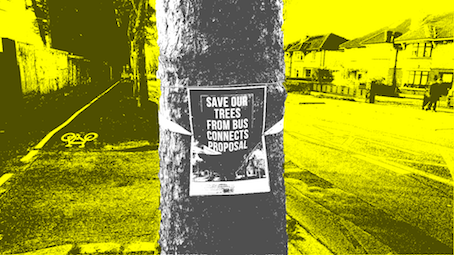
    The initial BusConnects plans laid out by the NTA would have removed trees along Mobhi Road to implement bus lanes and cycle lanes. However, this led to an outcry among locals. The NTA is now exploring alternative options that would keep the trees.

    Cllr. Sherlock said: “Thankfully the NTA have agreed to change their plans now and are looking at a very different type of proposal for the area. They’re going with a variation of one of their original proposals, which is to keep the trees but close the road to cars for some time.”

    Breakingnews.ie reported that Dubliner’s would have their say on the latest plan for the redesign of BusConnects after concerns from thousands of people. The consultation period closed on 10 December, but concerns remain over the impact that bus corridors will have on local communities and businesses.

    Eileen Walsh, a Sales assistant at ACME Blinds in Terenure said: “I don’t think people will be hopping on and off buses to come into businesses.”

    Joe Cripps is another local business person who fears that BusConnects will affect the local community: “As a kid’s shoe business, a lot of people will drive here cause they’ve got small children. 

    “Customers could be coming from the other side of the city, out in Kildare, wherever. They’ll come in the M50, and they’ll come down from Tallaght, Templeogue. So with the bus corridor there, it is going to make it more restrictive to get into the village.”