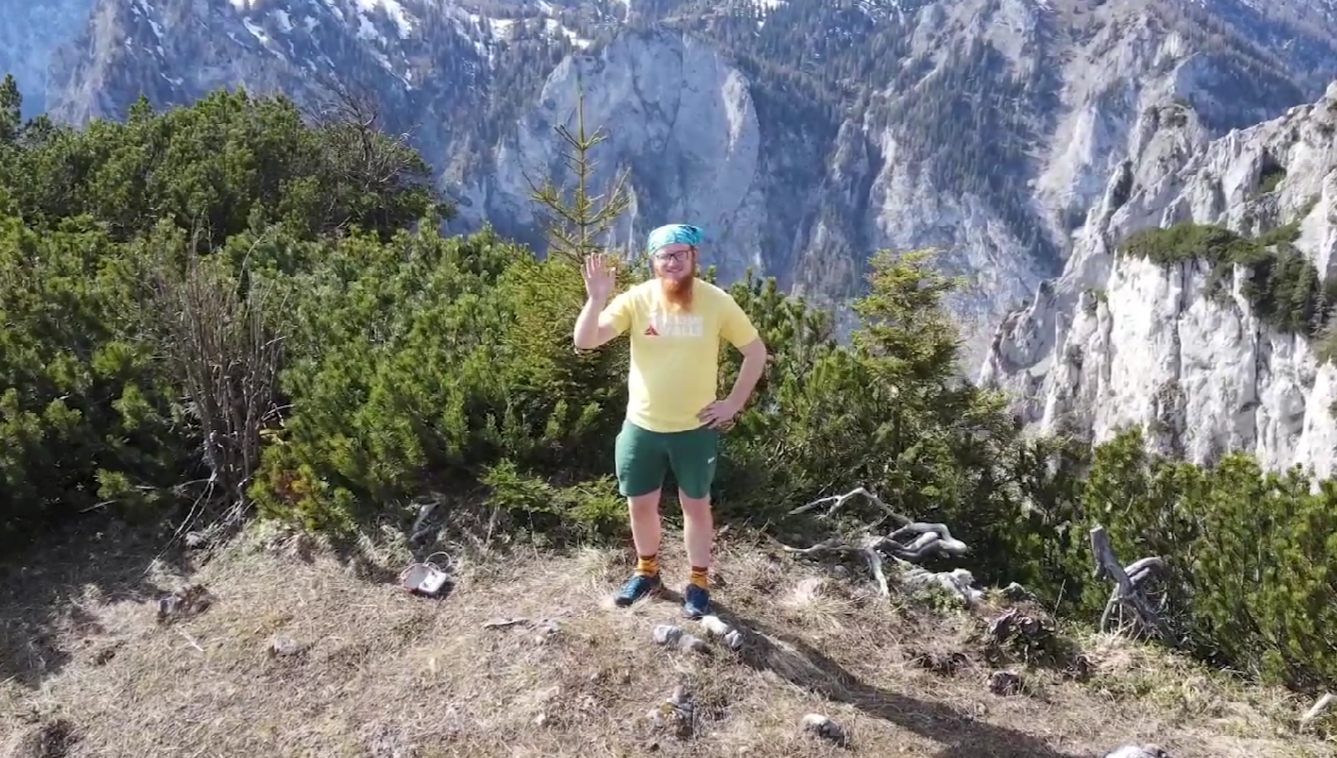
Aidan Sheridan, a 25-year-old from Co. Cavan, decided to take his love of travelling a step further when he explored Europe out of a small caddy van.
Aidan flew from Ireland to Czech Republic in Spring and purchased a van that had been customised into a small but liveable space with a mattress in the back to sleep at night.
His trip ended up lasting for more than 7 months in which he drove through Europe, clocked up over 25,000 kms and visited 10 countries.
The National Transport Authority (NTA) has approved a nine per cent increase in the National Maximum Taxi fare. This increase is due to take effect from the 1st of December.
This adjustment is to ensure that taxi fares reflect the rise in inflation and costs of operating a taxi service in Ireland.
“I’ll just take the bus, I have a 24-hour bus that I can get home after being out, but for people who don’t, it’s just going to break their banks,” said Niamh Linnane, a 22-year-old student.
“The cost of a taxi in Ireland is extortionate if you aren’t sharing with people,” said Linnane.
We will also see a change to the ‘Special Rate’, which a rate charged only for journeys taken between Christmas Eve, Stephen’s Day, New Year’s Eve and New Year’s Day during unsocial hours.
The Special Rate will now cover the weekend peak hours from midnight to 4:00 AM on Friday night into Saturday morning and Saturday night into Sunday morning, year-round. The fare will be higher rate, and this change aims to encourage more drivers to support the nighttime economy.
There also will be an increase in pre-booking fees. During weekend peak times it will rise from €2 to €3.
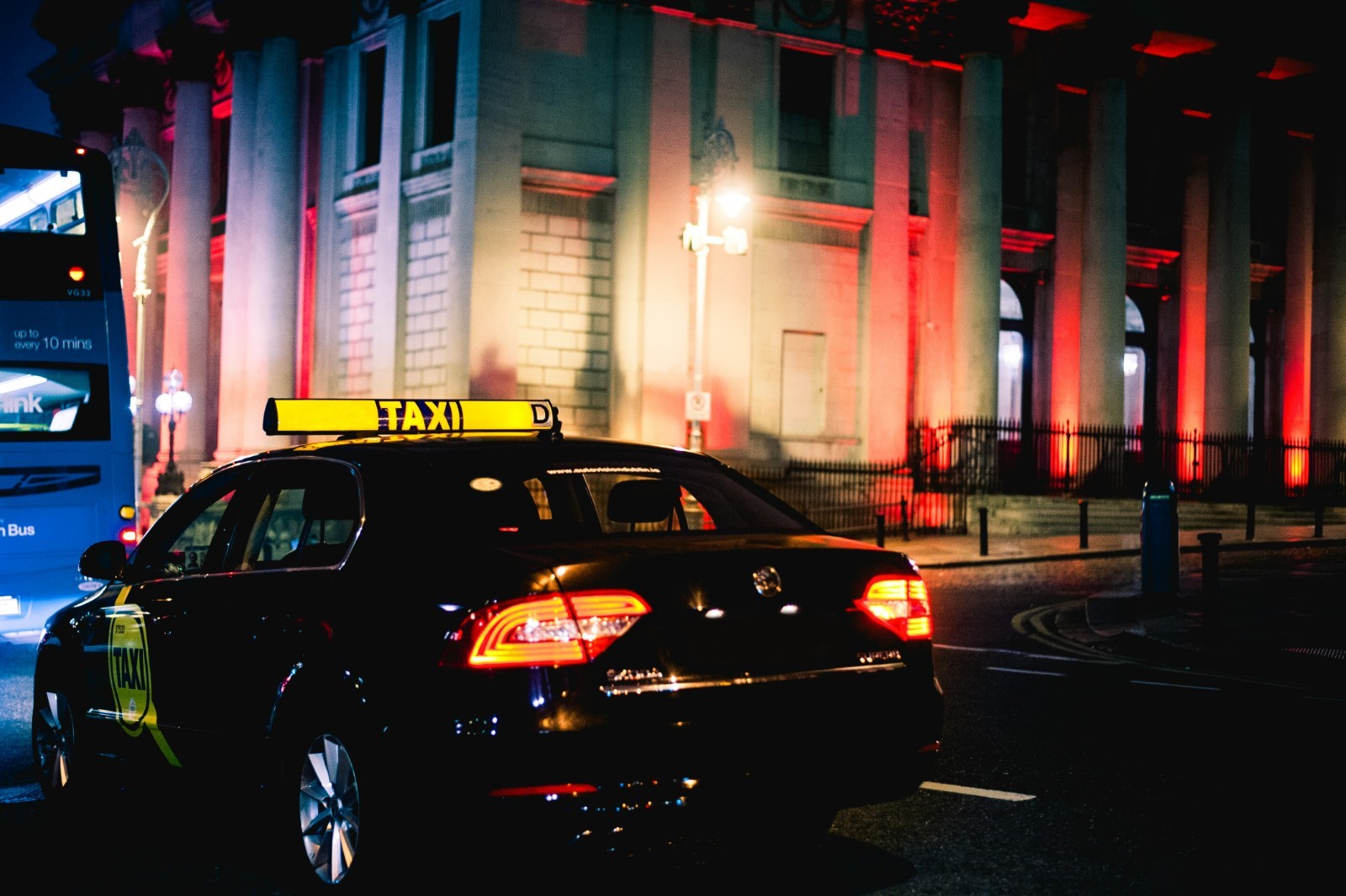
Photo by Naseem Buras / Unsplash
“With the cost of petrol, diesel and all that goes into owning a car, never mind a taxi, I am happy to see this fare increase,” said Paul Murphy, a taxi driver of nearly 20 years.
“I know it sounds bad to customers but with the cost-of-living crisis it’s just something that needs to happen,” said Paul Murphy.
This National Maximum Taxi Fare Review takes place every two years to ensure the fares match the costs of maintaining a good quality taxi service and the cost of living within Ireland.
The 2024 Review, published in July, revealed that taxi operating costs increased by approximately 9-11% between 2022 and 2024. Following public consultations regarding these rising costs for taxi drivers, the Taxi Regulation (Maximum Fares) Order 2024 implemented an average fare increase of nine per cent, adjusted across different time bands and distances.
‘Numbeo’ has ranked countries in order of the highest fare of a taxi per kilometer. Switzerland was ranked 1st with the average fare per kilometer being €4.15. According to ‘My Swiss Company’ the average salary in Switzerland is relatively high, reflecting the country’s strong economy, with figures around CHF 78,000 per year as of 2024, which is equivalent to around €83,000.
Ireland placed 13th out of 97 countries with an average of €2 per kilometer.
Taxi fares should reflect the country’s cost of living. Given Ireland’s cost of living crisis and high inflation, this has led to the increase on the taxi fares.
However, with the inflation rate falling to 1.7% in the month of August, figures from the Central Statistics Office (CSO) have shown. This is the first time the inflation rate has lowered since June 2021.
Despite this, The Budget 2025 informed us that the rate will increase from €56 to €63.50 for petrol and diesel. This means an extra €1.20 per full tank for motorists. Potentially meaning this increase taxi fare will not be changed.
“This increase will be in place for the next two years, if inflation continues to decline, then it will be considered and there may be a decrease in taxi fares, but it must match the cost of living at that time,” said The NTA press office.
Since June of last year, popular taxi app ‘Bolt’ has extended their services to provide the people of Bray Co. Wicklow with electric bicycles.
These bikes have been a massive success across the town among people of all ages due to their cheap costs and easy accessibility.
Green Party Councillor for Bray East, Erika Doyle, was one of those involved in getting the scheme up and running in the town.
“With the introduction of the bikes, there has definitely been a modal shift, which is great because in a town like Bray we have a congestion problem. It’s very hilly as well, so with the pedal assist it has become much more accessible for people that otherwise maybe wouldn’t have used a push bike,” Doyle explained.
“It’s been a really positive thing for the town, and data from Bolt shows that these are being used even during winter months, because originally, there was a suspicion that they might only be used during the summer, but people are clearly just dressing for the weather and using them regardless which is great.”
The success of this scheme is partly due to just how easy the bikes are for people to use. Users simply download the Bolt app, scan the barcode on the bike, and they will then be charged 18 cent per minute.
Once the user completes their journey, they park the bike in one of the ‘park zones’ that can be found on the app or can be identified by a green square on the ground and bike racks.
Along with a pay as you use option, there are also a variety of subscription passes available to users too, such as a day pass, weekly passes, monthly passes and ‘unlimited unlocks for 30 days’.
The bikes go up to 25 kilometres per hour, but can be capped at 15 kilometres per hours if users wish.
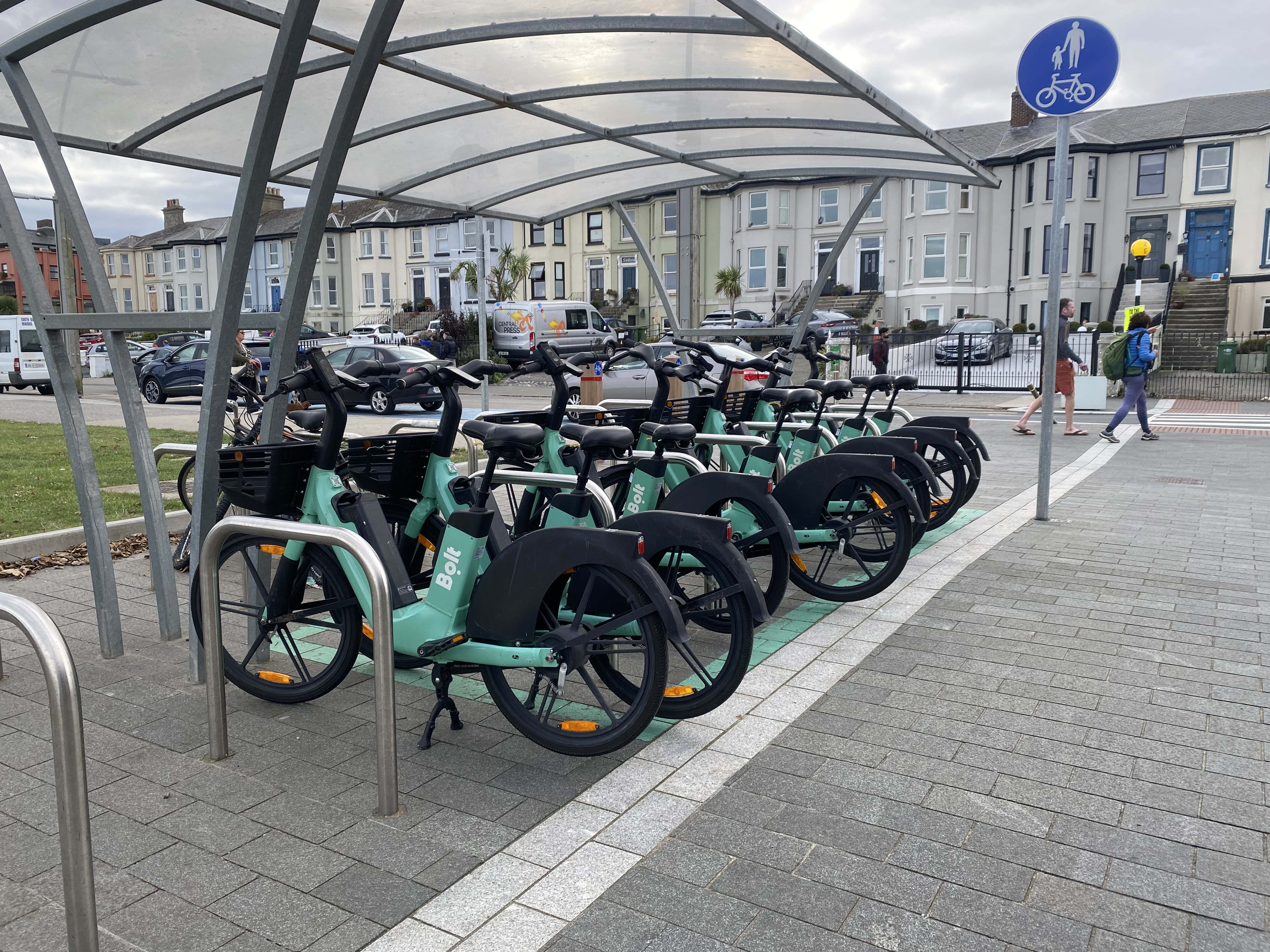
Bolt Bikes at Little Bray ’Parking Bay’ – Photo Credit: Jamie Ryan
Sinn Féin Councillor for Bray West, Dermot O’Brien, speaks highly of the impact that the bikes have had in Bray.
“I would say overall there has been a very positive impact from the introduction of Bolt bikes in Bray. The user numbers are a good reflection of this, and the feedback from local people who see them as an alternative to the car, or as an easy option for getting around the town,” he said.
“I particularly notice the variety of local users, young and old, as well as tourists and exchange students who benefit from an easy and accessible option to move around the area.”
“On a personal level, I would use Bolt bikes very often, and they are a wonderful asset to someone who lives on the edge of being on time for meetings, as I bounce from one venue to another around the town.”
The bikes are easily maintainable due to there being no shock absorbers in their frames, and the tyres not containing air.
However, although there has been a plethora of extremely positive experiences from Bolt bike users, there have been issues with bikes being damaged, defaced or suffering from wear and tear.
Councillor O’Brien himself has fallen victim to this, he explained.
“In recent weeks, I changed my bike four times because of malfunctioning and ultimately, I just walked home which was frustrating,” he said.
Adam Byrne, 20, regularly uses Bolt bikes to get around the town.
“The bikes have made such a difference for me. Getting to and from work has become so much handier and it only costs me maximum €3 per journey which is much better than spending it on petrol – not to mention not having to sit in traffic the whole time,” Byrne said.
Bolt Bike at Bray Harbour with graffiti at the rear mud guard – Photo Credit: Jamie Ryan
“Of course, like anyone else who uses them regularly I’ve had one or two issues, but nothing crazy, more so just maybe a lack of maintenance with the brakes and minor damage to the pedals, but overall, I really can’t say any bad about them. I hope they stay around for a long time.”
The contract between Bolt and Bray Municipal Council has recently been extended for a further year, for locals to enjoy and utilise.
As the epidemic of clamping down on cars becomes rampant around the Capital, there are three things guaranteed in life in Dublin; death, taxes and clamping.
It is no secret that the housing crisis has seeped into student life in Dublin, resulting in many in neighbouring counties commuting to college or having to find accommodation for the academic year.
Despite the argument there are plenty of transport to use or places to “pull in,” many Irish students have been left lost and have had no choice but to fork out a sum to release their car from the shackles of the clamper.
The fee for clamping is a release fee of one hundred and twenty-five euro, which is operated by Dublin Street Parking (DSPS).
However, if the release fee is not paid within the 24 hours of being initially clamped, not only will your car be towed away to the city car pound, but there is also a fee of 250 euro and an additional 35 euro per day according to the DSPS website.
Dublin City council has released the statistics for clamping of cars around the city from 2022 with a total number of clamps of 40,732 excluding invalids (disabled parking badges out of date is an example of an invalid)
Credit Millie Storey
Although the reasonings behind the clamping may seem obvious, there can be virtually nowhere for people to park even when paying elevated levels of rent for accommodation.
For instance, in private accommodations and estates it is not an unusual sight to see a car with a registered parking ticket clamped.
Dublin City Council provide an appeals process that must be submitted within 60 days from the original day the car was clamped.
One Dublin driver, who did not wish to be named, had their car clamped last year whilst it was parked on a private estate in Dublin. Not only was their car the only one clamped on the street, but without their knowledge it was moved from Cabra to Stoneybatter.
Is this Dublin’s latest trend amongst students?
Marese Masterson, originally from Leitrim, who studies in Maynooth said her car is a necessity during her time in Dublin for her work as an intern. Masterson drives to work five days a week and says the lack of parking is taking a toll on her finances.
“They even clamp in Supervalu in Ranelagh, there is barely any street parking just loading bays and clearways. I have gotten clamped twice, said loading bay and once got clamped at 7 in the evening,” she said.
“The parking price per hour is extortionate for students- example twenty euro a day, very unfair as this leads to students unable to pay the ticket, which in hand leads to clamping.”
Masterson is not the only student feeling the pinch. Elli Duggan from Kilkenny recently studied social care in TU Dublin Grange Gorman and lived in student accommodation in Phibsborough. Her car was a necessity for her work placement as well as getting to and from her job in Kilkenny.
“In my student accommodation of 400 students there were only 8 parking spaces available, which were 50 euro a month, I would have to park on the North Circular Road.”
According to DSPS website, clamping can occur when a park has expired by as little as ten minutes.
The City.ie asked the DSPS to comment on allegations that clamping was excessive around Dublin. They declined to comment but said further contact can be made with those in higher management or an FOI (freedom of information) application can be made.
“It would be the equivalent to winning an Olympic gold medal in what we do.”
Irish skipper Tom Dolan became only the third non-French sailor to win the ‘Solitaire du Figaro’, one world’s most prestigious yacht races on September 12.
Image credit: La Solitaire du Figaro Paprec Instagram
La Solitaire du Figaro Paprec is renowned as the toughest single handed multistage offshore sailing race in the world, with the finish positions for the race calculated on cumulative time.
“Three legs they call them, so three separate races between six and seven-hundred miles. We leave on a Sunday and get in on a Thursday, so we’re at sea for four days on our own and then we try to rest and recover as much as we can and then we go again the following Sunday. We do that for three weeks straight,” Dolan said.
The Mullagh man secured victory on the 55th edition of the race aboard his boat, the ‘Smurfit Kappa-Kingspan’. He finished ninth in the first of two stages but went on to win the second 515-mile stage and then finished 7th in the third and final stage but had already done enough to clinch the overall lead.
Dolan grew up on a farm in Mullagh, on the border of Meath and Cavan where he developed a keen interest in boats from a young age.
“When I was young, I used to love pirate movies, I used to make boats out of cardboard boxes,” he said. Dolan explained that this caught his father’s attention, and so they decided to buy a boat.
“We went up to Boyle in Roscommon and bought this little wooden boat. We used to go out on Lough Ramor in Cavan and float about a bit, I suppose that’s how I got the taste for it.”
He stopped sailing during his teenage years as his friends were more interested in football than boats. Despite this, whenever he sailed, he felt it always came naturally to him.
“My mother sent me to Dublin on a holiday for a week and I went to a sailing school out in Dún Laoghaire, I remember being good at it,” he said.
The 37-year-old first heard about La Solitaire when working for a boat racing association called Glenans in Cork.
“There used to be a lot of French volunteers that would come over and work during the summer. A buddy of mine started telling me about this race that he was going to try to do when he went back to France and he started showing me videos on YouTube. I remember thinking that ‘this is mad’, and ‘how do the skippers do all of this stuff on their own especially for so long?” he said.
Imagecredit: Tom Dolan Skipper Instagram
He decided to move to Concarneau, France in 2011 due to the lack of accessibility for sailing in Ireland.
“I wanted to learn more about boats and sailing. I wanted to be a technician on sailing boats. I never thought I’d end up being a skipper and definitely never thought I’d end up winning it, (La Solitaire). I first landed in France 12 years ago, so I’ve spent a third of my life there almost,” Dolan said.
The multiple stage race is an extremely challenging task. “It’s very intense because the level is so high and all the boats are the same, so there is always someone beside you. You’re continuously competing and you’ve no help. If you hurt yourself, you’ve got to patch yourself up, there’s no manager on the sidelines or substitutions, you’re completely on your own,” he said.
After spending so much time by himself, Dolan finds the return after the race a shock to the system.
“When you get in, there’s all these cameras and people throwing champagne and it’s a bit of a shock. You miss being on your own actually.”
Time is still needed for Dolan to fully process his big win. “It’s a bit weird, devoting 12 years of your life to something and now it’s done, I have to take it in and enjoy the moment for a bit.”
He hopes to return to Ireland for a trip to visit family in the near future.
As the number of road fatalities in 2024 goes up, the speed limit goes down, but will this be enough to keep people safe on our roads?
As of September, according to An Garda Síochána, Irelands national police and security service, the amount of road deaths recorded has been a total of 132.
Of the 132 deaths, 52 of these deaths have been drivers, 29 have been passengers, 17 have been motorcyclists, 22 have been pedestrians, eight have been pedal cyclists, and three have been e-scooter drivers.
The number of road deaths this year has yet to surpass last year’s number of road deaths, which came to 184, but as we look at previous year’s numbers and the already rapid growth of road deaths this year, we can see that these statistics show no sign of slowing down or decreasing.
Between 2022 and 2023, there was a 19% rise in road deaths and fatal road accidents, with the rise in road deaths between 2021 and 2022 also being 19%.
Looking at these statistics, we can only hope that the same pattern does not follow in 2024.
The hope for safer roads for Irish people was not lost when significant decreases in road deaths were recorded over the last 2 decades, seeing a 55% road death drop from 1997 where 472 people lost their lives on Irish roads, versus in 2010 when this figure dropped to 212.
Source: Leitrim Observer
As quickly as the number of road deaths decreased, the rise started again.
From 2018 on, when recorded road deaths were at the lowest since 1945 at only 138 deaths, the numbers slowly started increasing until 2020, when we see a low of 130 road deaths and fatal collisions.
The Covid-19 lockdown is likely to play a big role in the decrease in road deaths for 2020.
Since then, the number has yet again been increasing, and precautions have been put in place as of 2024 to combat these rising numbers, but will they be enough?
A reduction in Ireland’s national speed limit will begin to take effect in November of 2024.
Mary Bolger from Blessington in County Wicklow was involved in a road accident when a drunk driver hit her vehicle in a head on collision just outside the town in 2004.. She questions whether the new lower limit will make a difference.”The problem is the people – if they didn’t mind the speed limit before they won’t mind it now,” she said.
Blessington seen a reduction in its speed limits both in and surrounding the town as far back as May.
Source: Irish Times. Photograph: Keith Arkins
“I know in my case anyway it wasn’t the speed that was the problem – drink driving has become second nature to far too many people from small towns – rural parts,” Mary explained
Junior Minister at the Department of Transport James Lawless has said it is the ‘intention’ fromNovember the limit on local roads will fall to 60kph from 80kph.
Further limit drops will follow in the new year and are expected to include a fall on national secondary roads from 100kmh to 80km/h and from 50km/h to 30km/h in built-up areas.
“It’s definitely a step in the right direction though, so I suppose we can only wait and see how much good it does us,” Mary added.
Most road accidents have been recorded in Tipperary and Dublin so far in 2024. Drivers can only hope to see a change in this with the introduction of lower speed limits.
Despite vocal protestation from locals regarding the proposed extension of the Carlingford-Omeath ‘Greenway’ there are those who are in support of the project. The existing trail in Co. Louth provides residents and tourists with a publicly available trail for both cycling and walking.
The proposal to extend the Greenway is part of the National Development Plan (NDP) 2021-2030 which is advertised by our current government as being a major benefit with the announcement document stating, “the investment planned under the NDP will result in increased GDP, employment and wages out to 2030.”
However, what these government documents don’t show is the localised impact of projects and the direct effect, whether positive or negative, they have on small communities.
Map of existing greenway. Source: Carlingford Tourist Office
Built along the old Dundalk Newry & Greenore railway line the Greenway, which opened in 2014, is subject to a government proposal under the NDP whereby the existing route will be extended from Carlingford to Dundalk.
The announcement has been met with a lot of vocal opposition from locals who have taken to constructing signs saying ‘No to Greenway’ at several points along the proposed route.
As the project would be placed on or near people’s homes and land used for agricultural purposes there has been a lot of resistance from people who believe the extension of the Greenway would only be detrimental to them and their livelihoods.
Many of the older residents in the peninsula have bad memories of government involvement in the area when the foot and mouth disease broke out in 2001 leading to the forced killing of farmer’s livestock and eradication of the local wild deer and goat population.
One homeowner in the locality, who wished to remain anonymous, is annoyed by the lack of proper consultation with locals surrounding the whole process. They spoke of “farmers who are going to have their fields cut in two, so they won’t be able to get cattle from one side to the other.”
“A friend is going to have the greenway going through her already very small garden which she is very upset about. I also don’t understand all of the proposed route and why some of the route can’t be on some of the quieter roads, they said.
Sign in resident’s garden opposing the greenway extension: Photo by Ethan McDonagh
However not all local reaction is negative, with one local shop owner Aaron Farnon saying: “As a local person who has been working in Carlingford for the last six years I believe that the greenway will greatly enhance the business opportunities and the footfall in Carlingford.”
With a lot of Carlingford’s businesses being largely tourism- based and thus highly seasonal, Mr. Farnon believes that: ”The greenway gives people more of an initiative to go to Carlingford during the summer months and weekends and see the beauty that the village holds as well as giving local businesses and small shop owners the opportunity to showcase their offerings and bring people in to support them in these hard times.”
Optimism and support are a commonly shared sentiment among business owners in the region with David Hanlon, owner of a Carlingford bike hire company, stating: “The new proposed Dundalk to Carlingford Greenway will be the greatest infrastructure investment in Cooley in decades. It will create a safe passage for our kids and families to cycle and walk safely off the busy, truck laden, roads of the Peninsula.
“It will have massive health benefits for the people of the peninsula as it will encourage a lot more people to get out for walks and cycles, reducing obesity and mental health problems by building lifelong healthy habits. Finally, the Greenway will create hundreds of ancillary jobs through tourism to the area, just look at places like Waterford and Mayo. Louth County Council needs to work with landowners to find a pragmatic approach to getting a route agreed with minimum impact.”
Conversely, what is outlined on the government website for the proposal is that “The R173 Regional Road connecting Dundalk with Carlingford, along with other regional and local roads in the study area have no provision for pedestrians and cyclists.”
One of the stated goals of the greenway extension would be to change this with a key goal of the NDP being to “recognise the importance of active travel not only in reducing carbon emissions, but also in achieving other national strategic outcomes such as compact urban growth and balanced regional development.”
The website also states that the proposed greenway meets the seven appraisal headings identified in the Department of Transport’s “Transport Appraisal Framework” from June 2023; transport user benefits and other economic impacts, accessibility impacts, social impacts, land use impacts, safety impacts, climate change impacts and local environmental impacts.
A brand new one day festival, District X came to Palmerstown House, Co Kildare. It was a techno and house music fans dream.
The festival saw Irish artists like blk. and Kettama perform throughout the day. Other international artists that performed were Chris Stussy, Hannah Laing and Pawsa.
The event was an enormous success, a sold-out event with people searching for tickets right up to outside the venue just before it started.
The event had high security, medical tents, and transportation organized for people arriving and leaving the festival. However, there was no service which made ordering a taxi a little difficult if people wanted to leave earlier than planned.
There were after parties scattered across Dublin city center after the festival, with some of the Dj’s playing in different nightclubs.
The City sent some of our photographers into the festival to capture the energy throughout the day.
Tents were placed close together, enabling festival goers to move with ease from one place to another. This allowed people to see multiple acts and as many as possible, as there were crossovers with some artists’ set times.
There were carnival rides, which cost around 10 euro per person. Despite the price there were people queuing up throughout the day.
Kerri Chandler drew an enormous crowd at the District X stage. Many people were pushing to the front forone of his most popular songs ‘You are in my system.’
Elena Gatica, 22, an attendee who has traveled to popular rave destinations like Ibiza and Berlin. She was most excited to see Dj Heartstring.
People were feeling the love duringSkepta’s set. The backstage section was packed with people.
As it got darker the lights placed around the venue started to light the way for the crowd trying to find their next stage.
“I am most excited to see BLK, I met him once and it makes me proud that he’s from Ireland.” Orla Shortt, 21, from Meath.
Despite the fun being had, it was a long day for some. Rodney Jones, 22, from Dublin, had been there since 1:00pm and his bus home was not scheduled till 11:30pm that night.
Some visuals during Chris Stussy’s set who later guest appeared during Ketama’sset.
As the event ended the lights from the rides and ‘X’ statue became more vibrant and led to the long walk back to the car park.
It’s official; everyone and their cousin has been to Amsterdam, and everyone who hasn’t been always talks about wanting to go. But what if you want something different? Something similar to Amsterdam but cheaper and without the swarms of tourists?
Next time go off the beaten track and follow this guide to the Netherlands’ second largest city, Rotterdam.
Known as the gateway to Europe, this architectural wonder of a city is only 40 minutes outside of Amsterdam. It is full of amazing food, amazing things to do and amazing people. Here is The City’s guide to Rotterdam.
Culture/Cultuur
Rotterdam is full of modern art museums and some of the coolest architecture you have ever seen. There’s even a dance culture for those who love a boogie.
For art lovers, visit Depot Boijmans van Beuningen; the first ever publicly accessible art depot in the world. Called the giant’s mirror, it’s truly a wonder for architecture lovers and art lovers alike.
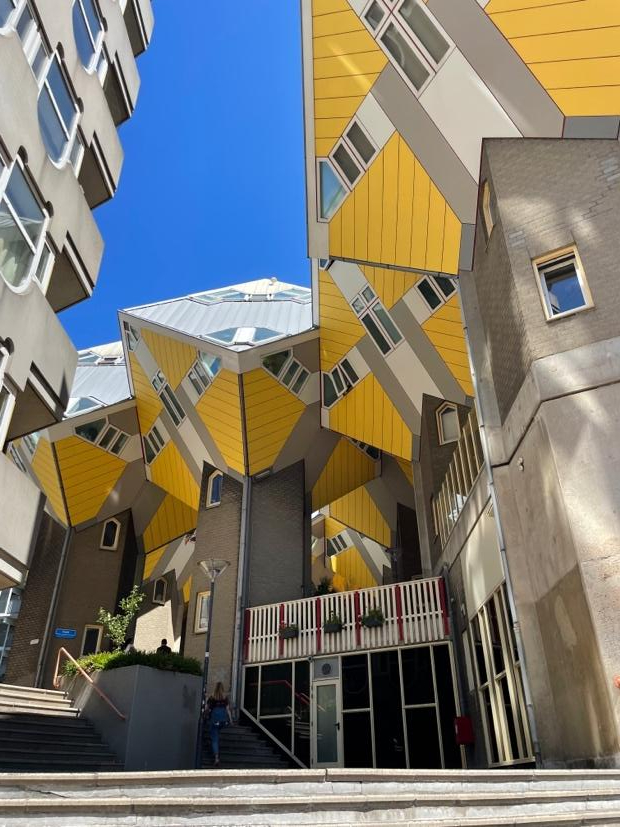
Go see the famousKubuswoningen (Cube Houses) and even get inside. Built in 1977 these houses are designed as high-density housing with enough space on the ground lever, while still having amazing space inside. And for only 3 euro you can get inside one of these houses and see it for yourself.
Get ready to dance the night away in some of Rotterdam’s famous dance clubs. Cultuurpodium Perron is the most famous, it has even hosted Boiler Room sessions for native Rotterdam DJs like Bas Mooy.
Rotterdam is full of some seriously amazing food. Check out these restaurants on your next visit.
Go to Café de Beurs for some traditional Dutch bitterballen. Bitterballen are deep fried beef stew balls, found across the country usually as an accompaniment to some pints. You can get them in most pubs, but Café de Beurs have the best in the city!
Address: Kruiskade 55, 3012 EE Rotterdam, Netherlands.
Grab a beer and some burgers in BrewDog Outpost Rotterdam. Serving 18 different craft beers this brewpub has 10 fermenters and 10 serving tanks, this pub always has a class smell of brewing beer.
For the best burger in Rotterdam take a trip to Ter Marsch & Co. After opening in Rotterdam in 2014, they have gone on to win many awards and even opened a second location in Amsterdam! Last year they even won the best burger in the country!
Address: Witte de Withstraat 70, 3012 BS Rotterdam, Netherlands.
Shopping/Inkopen
Rotterdam is full of local markets and vintage shops you absolutely have to see!
Visit the wonderful Markthal for some of the best small shops and Asian food in the city. Every Tuesday you can also visit the food and clothes markets that happen in the square outside. Only a stone’s throw from the cube houses, it makes for a great day out!
Address: Rev. Jan Scharpstraat 298, 3011 GZ Rotterdam, Netherlands.
Go treasure hunting in the best vintage shop in the city, Cheap Fashion. Filled with two floors of stunning vintage clothes, shoes, and accessories: it’s a fashion lovers haven.
For the music lovers, head over the road from Cheap fashion to discover the very cool Songs for Sale. Full of new and used records as well as some rare ones, stock up your music collection before heading home (if your case isn’t too full already!).
Address: Meent 22A, 3011 JK Rotterdam, Netherlands.
Watch Katy Brennan and Nicole Kidd discuss how Covid-19 has been handled in Vancouver, British Columbia
As Canada begin to ease its restrictions , Katy Brennan speaks to Nicole Kidd, who gives an account of the country’s dealings with the Covid-19 pandemic over the past year
The first community transmitted case of coronavirus in Canada occurred on 5 March 2020. Cases grew rapidly, and by mid-March, all provinces had declared a state of emergency.
In response to the growing number of cases, Canada severely restricted its borders, banning all non-essential travellers and forcing any exceptions to self-isolate for 14 days.
Each province implemented varying degrees of restrictions and has continued to do so as case numbers rise and fall.
Some provinces, such as Ontario and Quebec, introduced heavy restrictions like school closures, shutting down non essential retail, and curfews. Other areas, like British Columbia, have taken a lighter approach.
Nicole Kidd left Ireland for Vancouver, British Columbia, three years ago.
We feel really spoiled over here because we have never not been able to go eat food, or go out for lunch, and our bars are open
Nicole Kidd
She explains that social gatherings are banned and most people work from home, but stores, cafes and bars have remained open throughout – offering people some sense of normality.
People are expected to socialise exclusively with people from their own household, but exceptions are made for those who live alone, who are permitted to have a ‘bubble’ of two other people.
A shot overlooking Vancouver. Photo by Adi Kavazovic on Pexels
Kidd is grateful to have maintained a decent social life – something she thinks is important for mental health and hard for those back home in Ireland.
“We feel really spoiled over here because we have never not been able to go eat food, or go out for lunch, and our bars are open,” she says.
Kidd is a qualified yoga teacher and while she is eager to get the vaccine and return to normal life, she is happy the pandemic has allowed her to devote more time to her yoga.
Canada’s vaccine rollout began on 14 December, and since then the country has vaccinated 1.1 million people. The rollout consists of three stages, working its way down from most vulnerable to least vulnerable.
You must be logged in to post a comment.