Watch Katy Brennan and Nicole Kidd discuss how Covid-19 has been handled in Vancouver, British Columbia
As Canada begin to ease its restrictions , Katy Brennan speaks to Nicole Kidd, who gives an account of the country’s dealings with the Covid-19 pandemic over the past year
The first community transmitted case of coronavirus in Canada occurred on 5 March 2020. Cases grew rapidly, and by mid-March, all provinces had declared a state of emergency.
In response to the growing number of cases, Canada severely restricted its borders, banning all non-essential travellers and forcing any exceptions to self-isolate for 14 days.
Each province implemented varying degrees of restrictions and has continued to do so as case numbers rise and fall.
Some provinces, such as Ontario and Quebec, introduced heavy restrictions like school closures, shutting down non essential retail, and curfews. Other areas, like British Columbia, have taken a lighter approach.
Nicole Kidd left Ireland for Vancouver, British Columbia, three years ago.
We feel really spoiled over here because we have never not been able to go eat food, or go out for lunch, and our bars are open
Nicole Kidd
She explains that social gatherings are banned and most people work from home, but stores, cafes and bars have remained open throughout – offering people some sense of normality.
People are expected to socialise exclusively with people from their own household, but exceptions are made for those who live alone, who are permitted to have a ‘bubble’ of two other people.
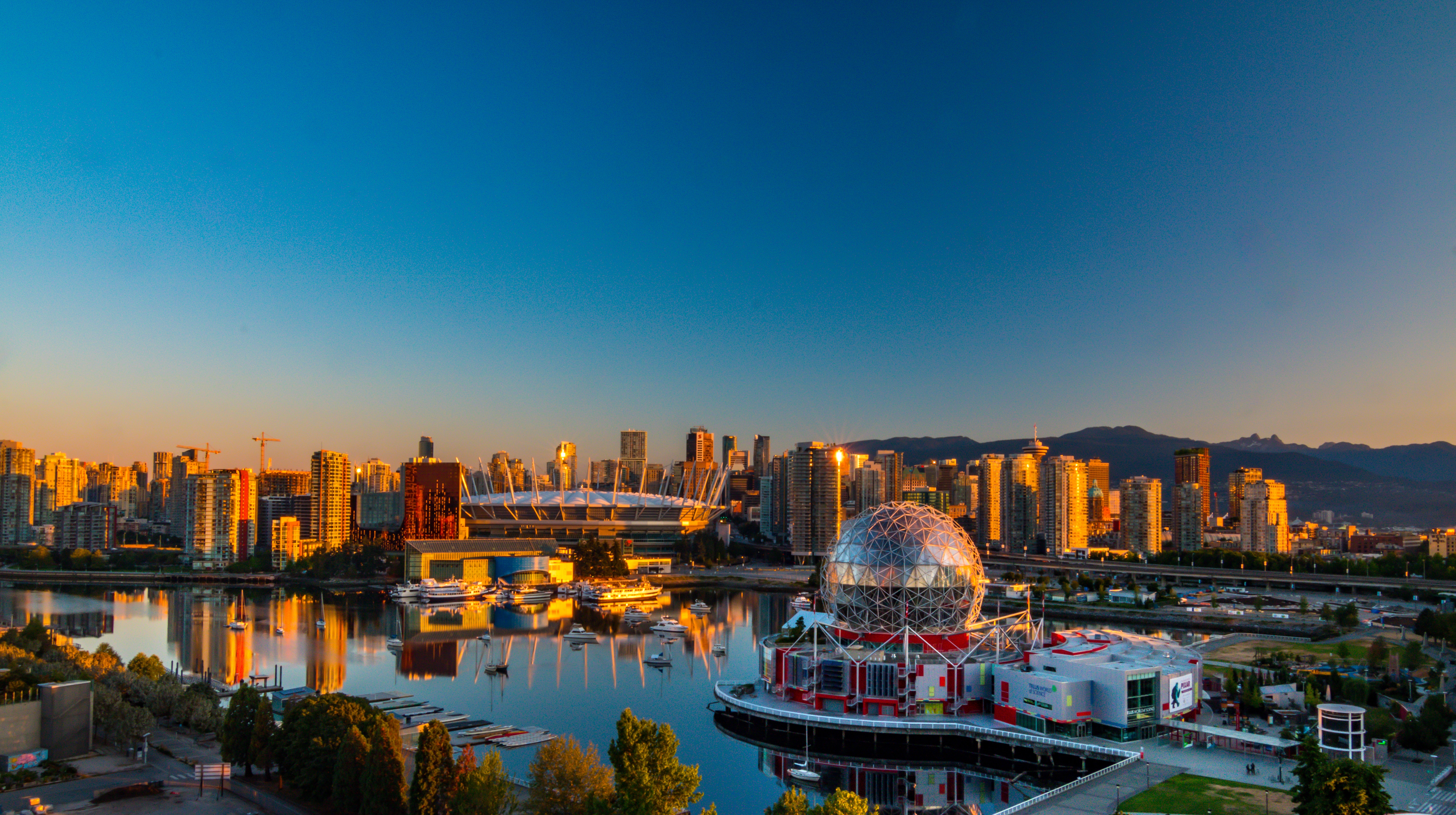
A shot overlooking Vancouver. Photo by Adi Kavazovic on Pexels
Kidd is grateful to have maintained a decent social life – something she thinks is important for mental health and hard for those back home in Ireland.
“We feel really spoiled over here because we have never not been able to go eat food, or go out for lunch, and our bars are open,” she says.
Kidd is a qualified yoga teacher and while she is eager to get the vaccine and return to normal life, she is happy the pandemic has allowed her to devote more time to her yoga.
Canada’s vaccine rollout began on 14 December, and since then the country has vaccinated 1.1 million people. The rollout consists of three stages, working its way down from most vulnerable to least vulnerable.
With a high of 13 degrees celsius, Monday, 15 February 2021 marked one of the of the warmest days of the winter this year. Like many South Dublin natives, I strolled the East Pier in Dún Laoghaire to enjoy this rare moment of warm weather and sunny skies. Here are some of the furry friends that I met on my journey.
“She’s almost a year old now, we’re lucky to have had the lockdown to train her”
“While you’re at it, make sure you tell the owner’s to pick up their pet’s crap too”
“She’s the model of the family”
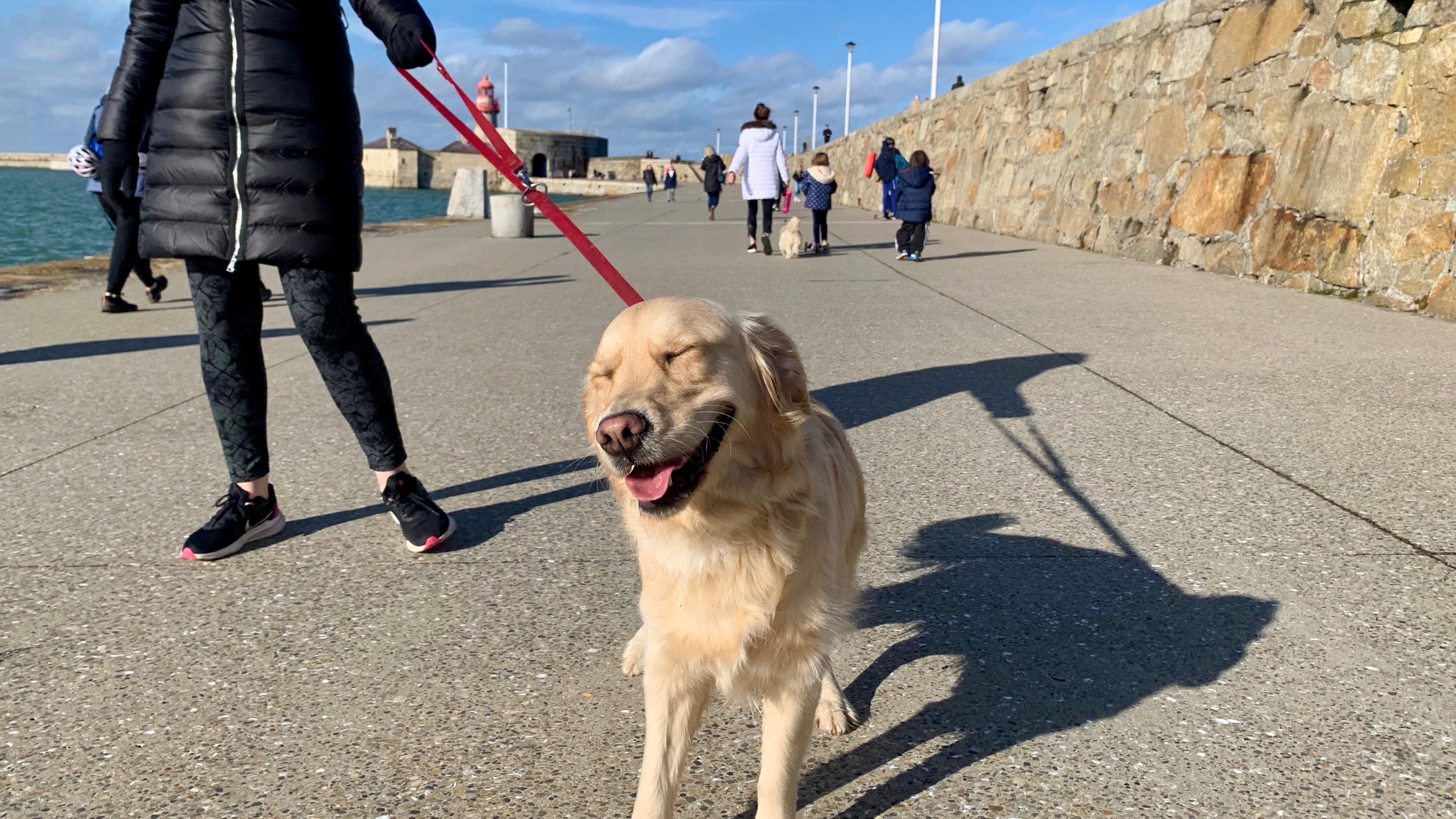
Smiley Cosmo abiding by social distancing measures
“It’s hard for him to see all the action from so low down, so he loves when I let him stand on the benches”
Cone of no shame
“They’re just a bit camera shy”
“Bonnie isn’t one for walking”
“My record is thirteen dogs at once”
“We asked Lulu to sit, but she didn’t get the memo”
Major, the Siberian Husky
“It might be hard to capture them, since they never sit still”
“Don’t forget to make her the star of the piece”
Seeing triple with half siblings Woody, Buzz and Kenny.
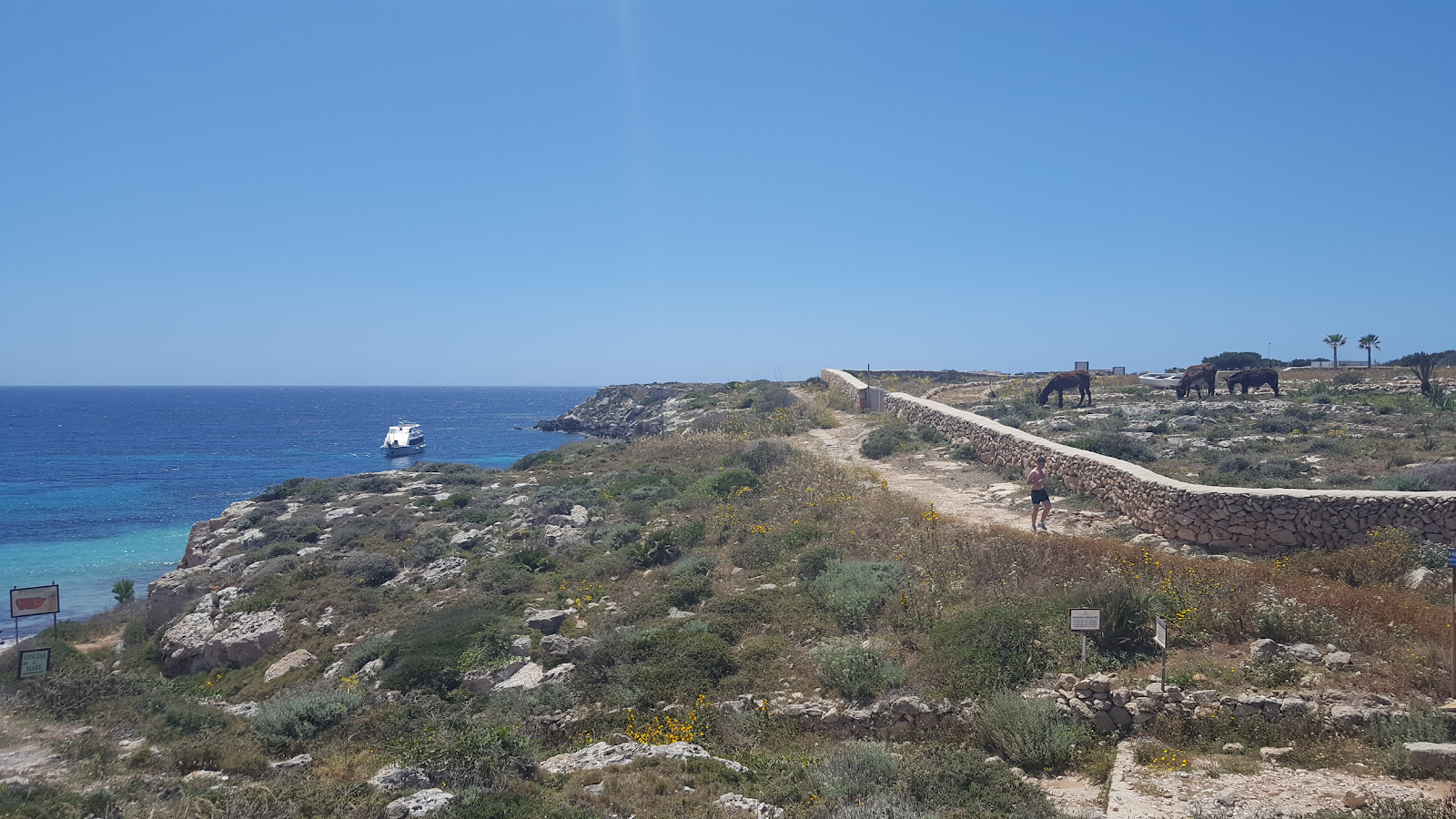
A clear sky and inviting blue water in Favignana, Coast of Sicily. Photo by James Molloy
With the doom and gloom of the current Covid-19 pandemic, holidays have effectively been cancelled for the foreseeable future. However, when it eventually comes to an end, here are three superb places that should be on your travel bucket list.
1 ACHILL ISLAND, IRELAND
Keel Beach, Achill Island. Photo by James Molloy
To start things off, Achill Island is a close to home destination and is Ireland’s largest island, situated off the west coast of Mayo. It’s a hub for tourists the world over. Famous for its unspoiled scenery, pristine beaches and rich culture, Achill has something for everyone.
Achill is home to five blue flag beaches, the most well known of which being Keem Bay, which can be found nestled away at the western tip of the island. The clear blue waters of the bay are home to a vast array of fish, basking sharks and dolphins making it the perfect place to go snorkelling in the summer months.
Keem Bay, Achill Island. Photo by James Molloy
If hiking is more your speed, then you’re in luck. Towering over the Keem Bay are the Croaghaun cliffs, the third highest sea cliffs in Europe. The imposing mountain of Slievemore can be found to the north east of the Island, and is another favourite spot amongst hikers and history buffs alike due to its deserted village situated on its slopes with a megalithic tomb from the Neolithic period alongside of it .
Surfing is another immensely popular pastime for locals and tourists, and the best place to do it is Keel beach in the village of Keel. There are many surf schools which offer both surf lessons and surfboard rentals. This beach stretches three kilometres, so it is perfect for a leisurely stroll if surfing isn’t for you.
The island is also dotted with many cafes, pubs and restaurants serving up hearty dinners, local fresh seafood and perfect pints beside rustic turf-burning open fires. Achill Island contains the perfect balance of adventure and relaxation.
Standout memory: Spending the day on Keem Beach relaxing, then spending the night in the Valley House sipping creamy pints of Guinness beside the fire while listening to live music.
2 BUDAPEST, HUNGARY
Hungarian Parliament Building, Budapest. Photo by James Molloy
Budapest is a city of two halves. Separated by the river Danube are the districts of Buda and Pest. There’s a saying in the city: “If you’re looking up, you’re in Pest and if you’re looking down, you’re in Buda.” Budapest is the perfect city escape on a budget.
Buda is recognised as the historical old town, full of palaces, castles, and quaint streets. It’s the perfect place to get lost strolling through the streets as you take everything in. The Fisherman’s Bastion is the perfect viewpoint, giving you the perfect view of the Széchenyi Chain Bridge and Pest. This view is exceptional in the dark of night as the parliament building across the water is lit-up.
The Széchenyi Chain Bridge, Budapest. Photo by James Molloy
For those who want to experience the wilder half of the city, Pest is the place for you. You will be exposed to one of the most vibrant and full-on nightlifes Europe has to offer. It is full to the brim with a wide variety of watering holes from the high-end to the eccentric rune bars which the city is famed for, all serving some locally brewed beer and strong cocktails. There are a multitude of companies offering pub crawls, which can be a fun way to see the city and its bars while also possibly making new friends along the way.
Budapest is also home to many thermal baths, the best known of which is the Szechenyi Baths. These baths are the perfect place to go and chill and recuperate after a hectic night on the town, with saunas, massage parlours and outdoor pools. The baths often host parties which are a must when in this wonderful city. Budapest is a brilliant city break because of its rich history and fantastic options for nightlife.
Standout memory: Experiencing the unique ruin bar Szimpla Kert, a disused hospital turned local market by day and eccentric bar by night really embodies the Budapest vibe with a mixture of new and old.
3 FAVIGNANA, COAST OF SICILY
Monte Santa Caterina, Favignana. Photo by James Molloy
Last but not least is a place the majority of people outside Italy may never have heard of — the island of Favignana, found off the west coast of Sicily. This undiscovered gem is the perfect place for someone to escape reality, be it for a few days or a few weeks.
Favignana’s immaculate beaches and lagoons are the perfect place to unwind and de-stress whilst sunbathing or swimming in the clear unspoiled waters. There are a few to choose from, with Cala Rossa and Bue Marino being the most popular.
The east of the island is mainly flat, whilst the west of the island is home to a chain of hills, of which Monte Santa Caterina is the highest. There are two main ways of getting around the island, for those who want to take their time and embrace the sights the island has to offer, bicycles are readily available. But, for those who want a faster mode of transport, scooters are the way to go, costing around €20 per day.
Favignana has a rich history as it has seen the likes of the Phoenicians, Arabs and even the Normans passing through at some stage. The marks they left behind can be seen in the small town of Favignana and around the island. Another historic site on the island is the old tuna factory which can be toured for around €6 per person.
Favignana is easily accessible from Trapani by ferry with multiple daily departures costing around €20 return.
Standout memory: Zipping around on a scooter, exploring the island and taking in the breathtaking scenery Favignana has to offer.
The tourism sector of the Irish economy is set to receive a major
boost with the building of a new runway
at Dublin Airport. In 2018, over 31 million people passed through Dublin
Airport, travelling to over 180 destinations across the world. An Bord Pleanála
passed the application for another runway at Dublin Airport in 2007, but due to
the economic crash, plans had been put on hold until 2016.
The new runway will be over 3,000 metres long, more than six times
longer than O’Connell Street and will open potential new markets for tourism in
long-haul destinations such as the Americas, Asia and Africa. Construction first
began on the runway in December 2016 and is on course for its scheduled
completion in 2021.
The north runway is expected to deliver a 31% gain in connectivity
between Dublin and the rest of the world, making it a crucial European airport.
It will open opportunities for connecting tourists to spend some time in Dublin
and the rest of Ireland. In the last five years, Dublin Airport has seen a 34%
increase in total passenger numbers and a 59% increase in transatlantic seats,
highlighting the need for another runway to cope with this ever-increasing
demand.
“The north runway is expected to deliver a 31% gain in connectivity between Dublin and the rest of the world”
Tourism Ireland is the company responsible for marketing Ireland to
potential tourists abroad and they see the building of the new runway as an
opportunity to attract a more diverse audience to Ireland. Sinead Grace, Media
and Public Relations Manager for Tourism Ireland said: “As the main gateway for
tourists to Ireland, Dublin Airport has a critical role to play in the
continued growth of tourism, particularly from long-haul and emerging markets.”
“As an island destination, the importance of convenient, direct,
non-stop flights cannot be overstated, they are
absolutely critical to achieving growth in inbound tourism,” she
continued. “As such, we work very closely with all airports on the island
of Ireland, to drive inbound flights.”
“As the main gateway for tourists to Ireland, Dublin Airport has a critical role to play in the continued growth of tourism”
Sinead Grace: Media and Public Relations Manager for Tourism Ireland
Tourism is Ireland’s largest indigenous industry and one of the main
benefits of the new runway at Dublin Airport will be the fact that it will be
able to handle every type of commercial aircraft due to its length, which
currently is not possible as the existing runways aren’t long enough. This will
be a big boost to opening up markets in foreign locations.
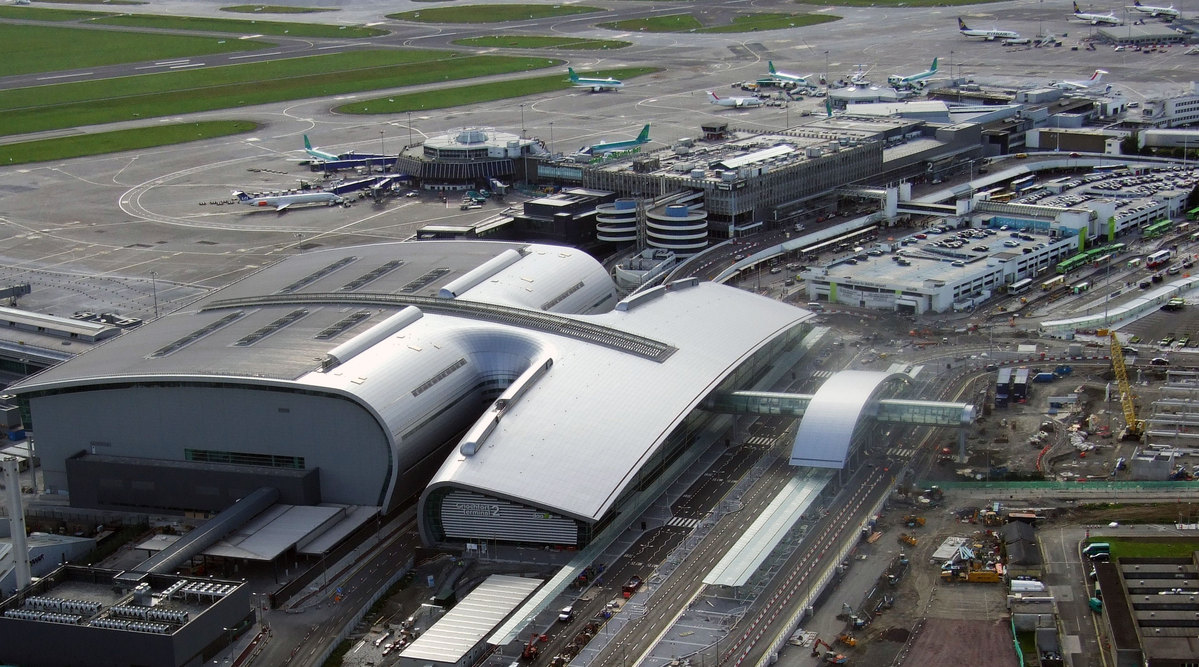
Source: Wikimedia Commons
Grace went on to talk about the importance of tourism in Ireland:
“Tourism is responsible for in excess of 4% of GNP in the Republic of Ireland,
and for employing about 325,000 people across the island.
“In 2018, we welcomed almost 11.2 million overseas visitors to
the island of Ireland (+5% on 2017), delivering revenue of approximately €5.86
billion (+5%). We are very much focused on driving growth in overseas
holidaymakers; and growth in revenue from overseas holidaymakers,” she
added.
“In 2018, we welcomed almost 11.2 million overseas visitors to the island of Ireland, delivering revenue of approximately €5.86 billion”
Sinead Grace: Media and Public Relations Manager for Tourism Ireland
The first pavement of concrete is currently being laid onto the runway
and the Dublin Airport Authority (DAA) said that this is a key milestone in the
construction of the €320 million runway. Dalton Philips, Chief Executive of the
DAA, said: “We’re delighted to be starting to build the top pavement concrete
layer of Ireland’s new runway. North runway is an essential development for the
Irish economy and will help underpin additional tourism, trade and foreign
direct investment for years to come.”
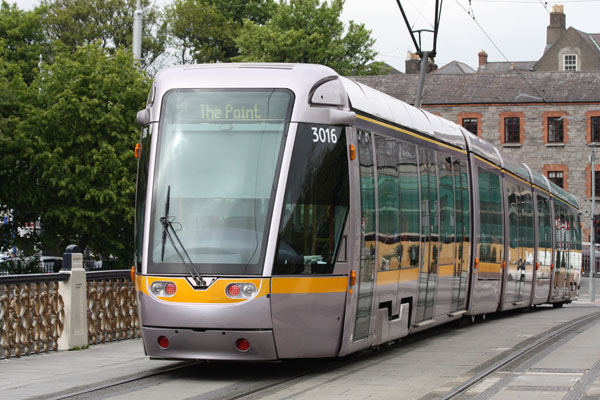
Luas elevators have been out of order for the equivalent of up to 82 days in the last two years. Lifts at the Dundrum stop have been out of service for a combined time of 1,966 hours since 2016, according to data obtained through the Freedom of Information Act.
Three out of the eight stops were out of order for the equivalent of a month or more from 2016 to 2018.
The Phibsborough stop which opened last December as part of the new Cross City service has been broken down for the equivalent of 17 days.
Dervla Brophy, a spokesperson for the Luas, said: “All the lifts on the system are checked daily … regrettably lifts do break down and one of the main reasons is vandalism … there is currently a case before the court in relation to vandalism.”
In cases when an elevator is out of service the Luas will recommend that members of the public who require the lifts use the next accessible stop. In the most extreme circumstances this could lead to individuals having to travel 2.1 kilometres between Cabra and Broombridge and vice versa.
James Cawley, the policy officer for the Independent Living Movement Ireland (ILMI) understands personally the setbacks out of order lifts can have on people with disabilities.
“When elevators are out of service this makes the transport system inaccessible immediately [for people with disabilities],” Mr Cawley said. “In instances where this occurs over a long period of time it can contribute to social isolation within the disabled community,” he continued.
Cawley voiced ILMI’s concern on the measurements being taken by the Luas transport system to maintain a reliable service for those dependent on the lifts. “It is important that we just don’t focus on the repairing of these elevators but what could be done to prevent [vandalism] happening on a regular basis?”
According to the ILMI, disabled people are significantly more likely to be at high risk of social isolation. The research, carried out by the National Disability Authority, found that 32% of disabled people are at risk of being socially isolated.
Over eight million overseas visitors came to Ireland during the first nine months of 2018, new figures show.
Information released by the Central Statistics Office portrays a visitor increase of seven percent on the same period for last year.
A total of 8,203,500 people came from outside the state to visit Ireland from January to September of this year, 542,300 more than 2017.
British visitors represent a third of all overseas visitors for the year so far, with 2,842,000 Britons venturing across the Irish Sea.
2,976,200 Europeans have visited so far in 2018, more than 270,000 above the total from the same period in 2017.
With 2017 being Ireland’s best ever year for tourism, according to Tourism Ireland,and with visitor figures on the rise, there is every possibility that 2018 will be even better for tourism figures on the island.
Fáilte Ireland’s CEO Paul Kelly welcomed this, saying: “2018 has been an exceptional year for tourism. Our latest estimates now show that we will have welcomed over 9.6 million overseas tourists and 9.8 million domestic trips this year, generating €7.8 billion in revenue. There is now an impressive 260,000 people estimated to be employed in the sector, an increase of 20,000 since 2017.
“The tourism industry is vitally important for Ireland, particularly when you consider that this growth in revenue and jobs is generated in many parts of the country where many other major industries do not exist.”
In September of this year, the collective number of trips to Ireland by overseas residents increased by 2.3% to 968,200 – an overall increase of 21,600 compared to twelve months earlier.
British nationals visited 9.1% less than they did the previous year with figures dropping from 327,300 to 297,600, however, trips by residents of European countries other than Great Britain rose by 6.9% from 321,400 in 2017 to 343,500 in 2018.
Residents of Canada and the USA willing to make the long trip across the pond to Ireland rose 11 percent from 235,500 to 261,400.
Recently, Fáilte Ireland published its annual list of Ireland’s most popular visitor attractions for 2017. This list looks at both free and paid for spots, with the Guinness Storehouse topping the former and the National Gallery of Ireland topping the latter.
TV and film exposure has been named as a contributing factor to the high levels of incoming visitors over the past number of years, with Game of Thrones and Star Wars having major scenes shot on the island. Skellig Michael, an ancient monastic settlement off the west coast of Ireland features heavily in Star Wars: The Last Jedi released in 2017. As well as this, spots such as Castle Ward in County Down and The Dark Hedges in Co Antrim feature in Game of Thrones, which averaged 30.6 million viewers per episode in its seventh season.
There has been a rise in Dublin third-level students taking part in the Erasmus+ programme, statistics obtained via Freedom of Information act have found
Over the last five years, four Dublin colleges (UCD, DIT, Trinity and DCU) have seen an increase in students studying abroad at partner European universities. DIT however, has the highest number of participants. In the 2017/18 academic year alone, DIT sent 549 students to partner universities.
Peter Dalton, Erasmus coordinator at DIT, said: “The significance of the Erasmus programme is life changing for students, it allows students to broaden their horizons, both academically and personally.”
Mr Dalton explained how beneficial the programme is for students and their future careers. He said: “Any student who undertakes an Erasmus abroad, from an employability point of view, in the years ahead will stand out amongst the rest. It shows an employer that a student can adapt to change and learn new cultures.
“The Erasmus programme is an academic and personal journey in life that should be experienced by all students.”
UCD have sent over 2,000 students abroad over the past five years. UCD student, Jane Moloney, took part in the Erasmus programme in the 2017/18 academic year. Jane said: “I originally chose to go on Erasmus because I was not overly happy with the course I was doing in UCD. I decided that if I went away for a year it would really stand to me in my future career and set me aside from my peers when applying for jobs and graduate programmes.”
Jane, who studied at Utrecht University in the Netherlands, said a year away from Dublin did her the world of good as she had the opportunity to experience a new lifestyle and culture. She said: “It is so important for students to take part in the Erasmus programme because there are so many different countries right on our doorstep in Europe.”
Jane said her time abroad allowed her to become more confident and independent. She said: “As someone from Dublin, who goes to university in Dublin, I never actually got the chance to move out of my family home, so it was good to be able to get the chance to do that in such a cool country. I gained, not only an international degree and international experience, but also international friends and connections that will last a lifetime.”
Erasmus+ is a European Union programme which gives students the opportunity to study abroad and develop their educational and social skills. It also allows students to live and study in another European country for up to a year and experience a new way of life.
In the second of a two-part series, The City’s Keith Horan looks at incidents of anti-social behaviour on Intercity Irish Rail services, using figures obtained under the Freedom of Information Act.
2018 looks set to be the worst year since 2015 for incidents of anti-social behaviour on Intercity Irish Rail services, with 280 incidents reported by October, more than the final year figure for any of the previous three years. Already this year, there have been 100 more incidents reported than in the whole of 2016. And overall, a total of 964 incidents of anti-social behaviour were reported on Intercity Irish Rail services since 2015.
The most common complaint of anti-social behaviour made by Intercity Irish Rail customers is to do with disruptive passengers, with a total of 628 complaints – a whopping 65% of all total reports made. Like the rising total yearly trend, incidents involving disruptive passengers have been on the up since 2016 when 120 reports were recorded, to 153 in 2017, escalating to 186 by October of this year.
According to the figures obtained for disruptive passengers on InterCity services, you are most likely to run into problems on the Galway line, which holds the title for most reports since 2015 with 105. At the other end of the scale, you are least likely to run into a disruptive passenger on the Kildare line, with only 17 reported incidents over four years. The total figure for disruptive passengers on the Kildare line since 2015 is lower than every individual yearly figure of similar reports on the Cork, Galway and Sligo lines.
The next most common complaint around anti-social behaviour centres on reports of intimidation. Since 2015, there have been 164 reported incidents of intimidation, although this figure is skewed somewhat by a totally disproportionate 31 incidents in Longford in 2017, more than treble the yearly complaints of intimidation on every other line.
Unsurprisingly, Longford has the highest number of reports of intimidation since 2015, with 58 made – Dundalk with 20 has seen the second highest number of reported incidents of intimidation, followed by Cork and Sligo with 16 each. Compared to Longford, if you want a care-free train journey free of intimidation, the Rosslare Europort service is ideal, with only two incidents of intimidation being reported on the line in the last four years.
Acts of vandalism are the third most reported incident of anti-social behaviour on Intercity services, with a total of 65 reported since 2015. However, vandalism seems to be a receding problem, with reported incidents since 2016 all lower than a high of 26 in 2015.
Longford again takes the unwanted position of number one for reports of vandalism on InterCity services, with a total of 21 incidents since 2015. Like with incidents of intimidation, Longford has a disproportionate figure in incidents of vandalism – the 11 reported in 2015 being more than double the figure reported in any year on any other line. Dundalk had the second most reports of vandalism with 13, while at the other end of the scale, the Belfast and Westport services have seen no reported incidents of vandalism being made from 2015 to October of this year.
Incidents of theft aboard Intercity services in 2018 look set to be the highest since 2015, with more than double the amount of theft recorded in 2017. There have been 16 reports of theft made by October of this year, compared to a total of six last year. The Longford and Cork services share the position of number one in terms of reports of theft with ten each, while your bags and belongings should be perfectly safe on the Tralee and Belfast lines, with both without a report of theft in that time.
Longford also tops the table for reported assaults on Intercity Rail services, with eight such incidents reported since 2015, closely followed by Dundalk with seven. Again, 2018 looks set to be a bad year for safety on Intercity services, with the eight reports of assault by October of this year equalling the same number for the whole of 2015. The Westport service is closest to Longford and Dundalk, with a total of three reported assaults, while both the Galway and Sligo services have yet to see an incident of assault being reported.
Speaking to The City NRBU General Secretary Dermot O’Leary said that “the situation of anti-social behaviour on Irish Rail services is an escalating problem, with incidents rising year on year.” Mr O’Leary also said that NRBU members have been both physically and verbally assaulted on rail services, and that while issues around anti-social behaviour are a wider societal problem, he appealed to Minister for Transport Shane Ross and Minister for Justice Charlie Flanagan to intervene and deal with the problem on Irish Rail services across the country.
Figures released by the Central Statistics Office (CSO) and sourced by the Dublin Airport Authority (DAA) have shown that Ireland has been getting a steady increase in foreign visitors for the period spanning 2010 to 2017.
The overall figure has risen from just over 6 million people in 2010 to 9.9 million in 2017, a rise of over 35%. Unsurprisingly, Great Britain sent the most visitors to Ireland over this period with more than 25.5 million people visiting our shores in the eight year period. Conversely, 20 countries from Africa produced only 348,500 people travelling to the country.
However, it’s when you look at the figures on a year by year basis that you begin to see the trend of the number of visitors rising every year bar a few exceptions. Germany, Spain, The Netherlands, The USA, Canada and Asia (includes 50 countries) all had increases every year without fail.
Figures show a steady increase of visitors to the country in the last few years // Central Statistics Office
While some countries and areas had annual decreases here and there, not a single one had lower figures for visitors in 2017 compared to 2010. Again, as you would expect, the majority of visitors were from Europe, but outside of that, the USA dominated with more visitors than Canada, Australia, New Zealand and Other Oceania (31 countries), Africa, Central and South America, Mexico and Asia combined.
Niall Gibbons, CEO of Tourism Ireland, commented on Ireland’s increased number of visitors for 2018 by saying: “Particularly welcome in today’s figures is the continued strong performance from North America, with an increase of 12.9%. A number of factors are working in our favour, including more airline seats than ever before, from more gateways across the US and Canada.
“We’ve also seen excellent results from Mainland Europe, up 10% on January-September last year, with particularly strong performances from Germany (+20.9%) and Italy (+11.8%). While we welcome the fact that arrivals from Britain are up 1.1%, it is not yet clear if this represents a turnaround in the long-term trend. The impact of Brexit on outbound travel from Britain remains a concern.”












You must be logged in to post a comment.