

Wrestler and bodybuilder Carl O’Reilly has been an advocate for keeping gyms classed as an essential service during the lockdown. In an exclusive sit down with the City.ie, Carl speaks about the importance of exercise and gyms during these tough times, and how many personal trainers are struggling to adapt to a new business based solely on digital technology.
Tag: UN Technology
-

How technology has kept Enable Ireland going during the Covid-19 pandemic
The City’s Ciaron Noble spoke with Enable Ireland representative Donal Kitt about the role technology has played in helping them keep the services up and running for their service users during the pandemic.
-
How digital technology impacts those living abroad
In 2020, digital technology is almost an essential part of modern life. In particular, for those living half way around the world. Paul Doyle and Lauren O’Reilly spoke about the importance of technology as a means of communicating with those back home in Ireland.
-

Mobile Cash Transfers are changing how we donate to disadvantaged communities
Mobile cash transfers have proven to be one of Concern’s most modern, innovative methods of giving those most in need, a foundation to build better lives in what are the most challenging of situations. Gavin Dalton explores this modern way of helping those who need it.

Picture from Pixabay. The idea of cash transfers to disadvantaged communities worldwide comes as a faster, more efficient way of delivering humanitarian response. In Somalia in 2018, the Somali Cash Consortium was formed, led by Concern in coordination with other aid agencies and funded by ECHO (European Civil Protection and Humanitarian Aid Operations Department). Throughout the year, the consortium distributed over €15 million to more than 300,000 beneficiaries through mobile-money transfers. Vital to the initiative was Concern’s Private Sector Engagement Manager, Paul Carr. Carr spent 15 months working in the field in the easternmost country of Africa.
So what exactly is meant by mobile-money cash transfers? Carr explains.
“Traditionally humanitarian organisations would’ve gone with the physical products or services that are needed in an emergency response,” he said. “So if people are hungry, bring them food. If people need medical supplies bring them medical supplies.
“I think what became evident with the likes of food interventions was that we were flooding markets where there weren’t really viable markets, with foreign foods and that meant, although we may be plugging the initial food shortage, the medium to long term effects of this is that there’s no local market for local products.
“It’s much cheaper to supply cash transfers than it is to organise the logistics of moving huge amounts of supplies – whether it be food, shelter or cooking supplies for example the logistics and time it takes to move things into these areas, in contrast with the speed of mobile cash transfers which is immediate, really allows them to buy the products they need at that time, far quicker.”
The delivering of all these payments obviously takes some work. Working with people who may misfortunately have just endured a natural disaster like a cyclone, or are in the midst of a drought or famine for example in areas of low connectivity around the world obviously brings its own challenges from a technological point of view. Concern’s Chief Information Officer Barry Roche adds how exactly the NGO carries out the process of delivering money to the mobile phones of those in need.
“It’s relatively simple,” Roche explained. “From a technical perspective there’s not that much to it.
“Obviously we have our beneficiaries and they would register with us. This is the analogy I always use myself, if we’re in a particular country and they don’t have a department of social welfare, we effectively become the department of social welfare in that particular region. We’re there essentially to distribute social benefits. So if you are one of our beneficiaries, we will run registrations where we will go out to particular areas and say “we’re here, come to us and we’ll register you and put you on the system”. We’ll take the details and basically sync them up to the system. M-Pesa (a mobile phone based money transfer service) have been doing mobile money in Africa for a long long time. Somebody like that will then distribute the money for us.”
So after the details are received and processed, when do the residents of the communities receive their payments?
Carr said: “In one year we had two periods of 3 months of transfers so we would each month, for three months, give cash transfers over mobile money. Essentially we would work with the telecommunications companies and they would deliver the cash over their mobile money platform. Somalia has lots of development issues but it has an amazingly effective telecommunications network which allows us to reach practically everybody with money mobile transfers over mobile phones. The three month periods of mobile transfers will coincide with the periods where we feel it will be most needed.So it could be a period of drought which is relatively seasonal although climate change is having significant impacts on the predictability of those occurrences, but it could be in relation to the harvest, during harvesting times when food shortages will be most severe. We’ll time those transfers to coincide with the times when we know the needs will be greatest.”
The benefits of mobile-money transfers speak for themselves. Not only does it supply those in need with essential funding for putting the receivers children through school for example, it lays the groundwork for a sustainable economy in the specific region.
Carr added: “As for instance, as I mentioned before, when traditionally, aid agencies would’ve flooded markets with food and supplies which were from other countries, not locally produced, not bought from the local markets, then what happens to the local economy? What chances do local farmers have to sell their produce? What opportunities do local market traders have to sell their own produce if it’s being flooded with basically foreign goods. So, in the long term money transfers have great, significant benefits for small communities and that cash injection really stimulates the local economy.
“A big one is the choice and dignity it gives to the people, we work with, the participants in our programmes, instead of us saying we know what you want, here it is, they have the choice, flexibility and dignity to make those choices and decisions for themselves.”
Speaking of some new plans in the pipeline for Concern, Roche said, “It’s ongoing in Somalia, there’s going to be another one in Syria and Iraq, there’s talk about one in Chad, so it depends on the scale of the programme.
“It’s an ever evolving thing, but certainly from a programming perspective we’ve moved on quite a bit from the old idea of just delivering sacks of rice or foodstuffs. We feel people should be in charge of their own destinies, if they’re in receipt of say five dollars, they can make the best decisions to suit their own specific needs or situation at that particular time.”
An exemplary initiative which showcases the great lengths improved digital technologies have strived to on a global scale, with its vast array of rewards more than evident— testimony to the great work being done by those involved.
-
Ag-Tech is at the forefront of digital developments
We’re living the digital technological revolution and every day we experience the impact of it but there is still so much more potential to create change with technology. Megan O’Brien explains how the food and agriculture industry is at the forefront of this change.

Picture courtesy of “Radical Growth Solutions”. There is major innovation happening around the technology in this industry with a number of start-ups bringing ideas to the market that can help to combat our climate crisis, implement food crises solutions and teach us how to use our scarce resources in a more efficient and sustainable way.
There are roughly 70 million people in the small growth farming community in Pakistan and the average income for a typical family of 6 is $350 per year. Water is considered a scarce resource and these farmers cannot afford to waste it, that’s where Radical Growth Solutions (RGS) comes in; an ag-tech start-up that have built a smart irrigation system to enable these farmers to understand exactly how much water they need for each plant in their crop in order to utilise their resources more efficiently.
RGS is a start-up founded by Nabeel Yousuf. Originally from Jordan with a background in film and entertainment, Yousuf moved to Pakistan 10 years ago on a mission to create a movie to showcase Pakistan in the positive light that it is so often denied by the media. However, his dream took a turn down a different path when he connected with nature on an island in Thailand and decided to go back to Pakistan to grow vegetables. He loves this work, explaining: “We work on the land every day; it’s a very personal relationship and it teaches you give and take. You take care of the soil; it will give you food.”
However, it was while working as a farmer Nabeel encountered the problems that RGS is now working to solve: “The electricity was expensive, fertiliser was messy and all that so I thought there has to be a way of fixing this,” Yousuf said. “I looked at the models available online and they were very expensive so I started talking to engineers locally and I realised that we have the local resources to make this equipment and there is a massive market, why shouldn’t we try it?”
Explaining how the system works, Yousuf said, “For 11 thousand years, farmers have watered crops the same way.
“He gets up every morning and waters his soil. What we’re doing is we’re going a level below, we’re monitoring root conditions, we are not watering land, we’re watering plants. We collect real time data from the field using multiple sensors below and above ground and based on that information we determine exactly how much water each plant requires, not the land.
“It’s a completely automated system, we use soil sensors and weather sensors, so we don’t only just look at how much moisture there is and what is the temperature of the soil, we also look at weather conditions and how much humidity is available in the air. What side is the wind coming from and its speed? These things determine if the rain is going to come. We have predictive algorithms and models that determine when precisely it will rain and how much there will be, and it waters each plant accordingly. So, the main concept we’re working on is trying to optimise irrigation cycles.”
The system uses Internet of Things (IoT) and Long Range (LoRa) technology and will also focus on the collection and analysis of data using simple Artificial Intelligence algorithms. “If everything works out fine in the next 10 years, I’m going to have enough data using the sensors to literally be able to tell you how much water it requires to grow a watermelon for example,” Yousuf said. “Once we have those numbers, then I can try to make sure that people use that information to help each other.”
The impact of this is huge, it won’t just conserve water; a large amount of fertiliser gets lost as the crop gets watered through evaporation or seepage into the soil. Smarter irrigation will conserve fertiliser and pesticides too, pumps will be turned on less and so electricity will also be conserved meaning the farmer will save money. And finally, as the system is automated it will conserve manpower. “We don’t want to eliminate the human resource, but you would drastically enhance their livelihood with so much more time to do other things.”
By “other things”, Yousuf is referring to education and the sharing of experiences. Education is just as important in RGS as the product itself: “the first step is always to educate the farmer.”
Tik Tok, Facebook and YouTube are extremely popular apps and a lot of people in the farming community use them for entertainment, but Yousuf believes we should think about the potential for education through them. “Imagine in a country where you have about 70 million farmers and you have a small YouTube channel with locals from this community that have time now to talk about their methods, their success and the value of Agri-tech,” Yousuf said. “Imagine the potential to educate through that.
“With less time taken up with physical farming, they have more time to share experiences, it’s a massive ripple effect.”
Talking about how big the market could be for this innovative system, Yousuf isn’t concerned with dominating it, he actually welcomes the spotlight on his competitors as it means the world is becoming educated on the idea.
As the UN turns 75 this year, we’re talking about the impact of technology, impact comes from widespread dissemination, not coveting and Yousuf expresses a belief that reflects that. “It’s too big, there’s 7 billion people on the planet, I can’t serve everybody, and I don’t want to.
“In a competition, one person has to lose; in collaboration, everybody wins, and that’s always been my model. The best part of sharing is when you share knowledge. If I just learn things and keep them to myself, what’s the point, It’s all about sharing.”
-
Technological changes in Italian agriculture
Digital agriculture is at a turning point and the expanding market for technological and organisational aspects is constantly growing. Although the digitisation of the agricultural sector has many advantages, there are still obstacles to the development of its full potential in Europe. Abderrahmen Ben Chouchane explores these technological changes by looking at Italian agriculture.

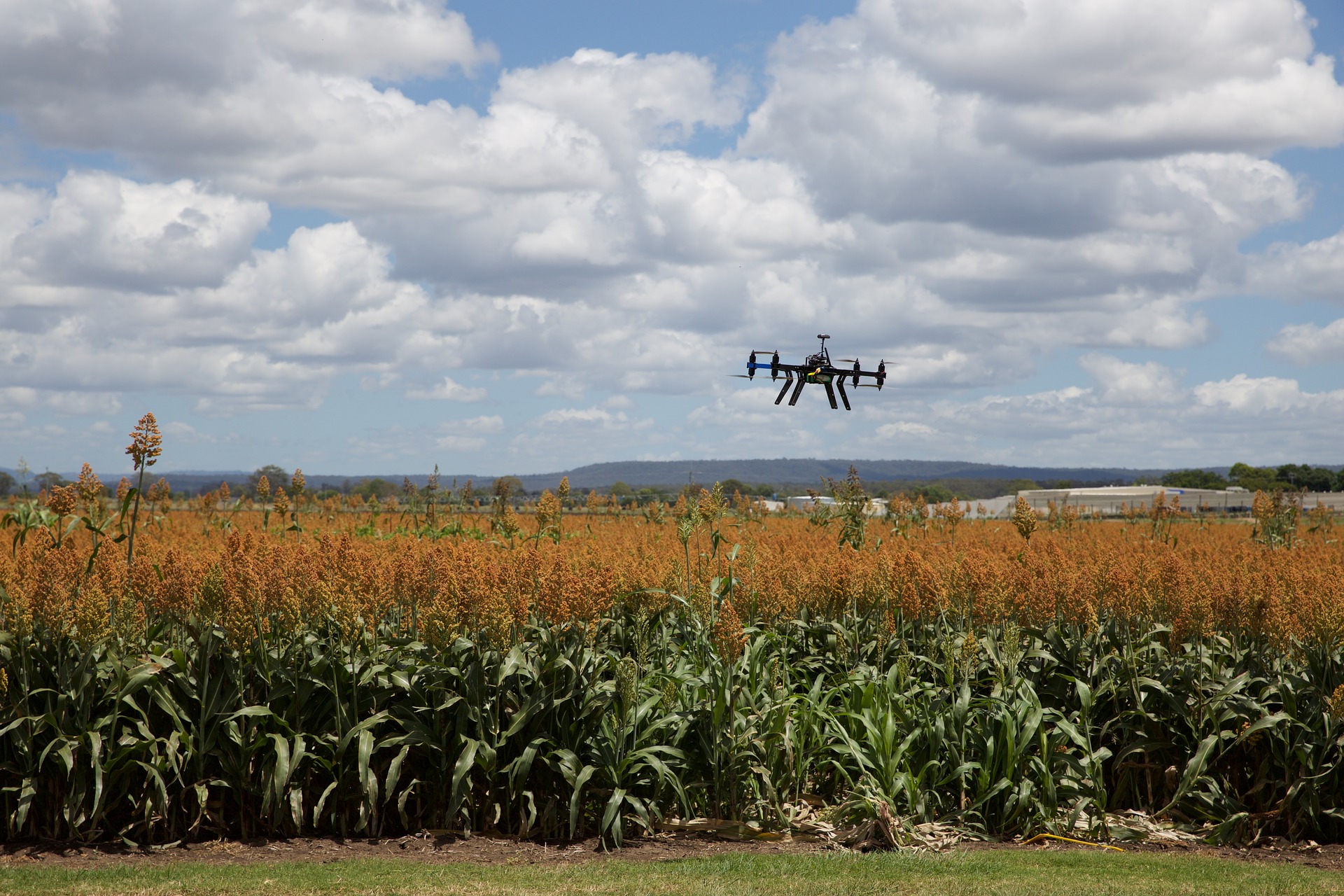
Picture from Pixabay. Digital technologies can help European farmers provide sustainable and quality food. Not only do they help farmers produce more food with less, but they can also help fight climate change.
Giovanni Nardecchia is a young Italian agricultural entrepreneur who studied Agricultural Sciences and Technologies and decided to invest his talent in the family business.
“The land is about 8 hectares and we mainly cultivate olive trees” said Mr. Nardecchia,
“Given the area we are in and the numerous European laws, we try to do our best. My father worked here for many years and it took me a long time to convince him of how important change is.”
Mr Nardecchia explains the first steps:
“The use of drones allows a considerable saving of time, resources and energy, given that they can do tasks that would otherwise be for one or more people. Despite this, the olive tree must avoid being subject to an excessive lack of water at the beginning of the vegetative season (spring) and in the summer months. A good solution is micro-irrigation, which allows the plant to receive the right amount of water, avoiding damage deriving from excessive humidity.”
Technologies of this kind are developed, for example, by Carbon Bee, which proposes a measuring instrument (mountable on drones, robots, and tractors) capable of collecting detailed data on plant diseases.
“CarbonBee is also really good because drones are also excellent tools that help determine the health of crops from area to area. This allows the farmer to intervene in the most appropriate way, possibly redistributing the quantities of fertilizer, water, and pesticides,” Mr Nardecchia said.
In the past two years, thanks to Airbnb, he has been able to transform the abandoned house into a small agritourism, increasing the family income.
This dream model created by the Nardecchia family does not represent the Italian majority, in fact, the statistics show it. The adoption of new technologies remains far below expectations and varies from region to region.
The European Commission has been monitoring the digital progress of the Member States since 2014. For the 2020 edition, Italy ranks 25th among the 28 EU Member States.
According to the EU average, Italy has very low levels of basic and advanced digital skills. The number of specialists and graduates in the sector is also far below the EU average. Although the country ranks relatively high in the supply of digital public services, their use remains low.
Francesco D’Angelo lives in the province of Dogliola in a renovated farm, surrounded by 3.6 hectares of land which has 150 olive trees and a grove with a wonderful view of the sea.
Mr D’Angelo said: “It sounds good but after working for 50 years in these lands you understand that it is hard to change and what they don’t tell you is that you need money to buy all the new stuff (technologies) they talk about and then they should give us courses to learn how to use them. However, for some of us it takes at least another 50 years to adapt.”
Under pressure, D’Angelo had to adapt and began selling vegetables online using the MangioaKm0 app which is used to sell local vegetables and fruits online.
“It certainly helps me to make some more money than usual but unfortunately I compete against large companies that are much more technological and much more effective than mine. This gap must be addressed so that everyone, including small and medium-sized farmers, can access and benefit from the technology,” he said.
-

How is digital technology changing the way homeless services work in 2020
Digital Technology has changed virtually everything in the world today. One such thing is homeless services. With Covid-19 restrictions pushing services online, Amber Baxter spoke to Brian O’Loughlin about how Inner City Helping Homeless is adapting to these changes.
-

The role of social media in the representation of minority languages
Social media already connects almost half of the entire global population, it enables voices and communities to be connected and heard on a scale that would have been unfathomable to past generations. Róise Collins explores how to effectively utilise these platforms as a means to represent and express our culture and its values.

Image source: Pixabay The Irish language has often been referred to as a ‘dying language’ or even politicised, but language identity is a human right – and minority languages are much more than a means of communication, they are a fundamental aspect of our cultural identity.
Social media platforms have been integral in ensuring Irish language speakers have a platform to explore their culture and identity, and communicate within a public sphere.
Jamie Mac Uiginn, an Irish language advocate, explained how “we’re currently living in a world driven by relevance, especially on social media”. He went on to say: “This creates particular challenges to minority languages to survive but it also offers opportunities. Many minority languages have flourished online, Irish being one of them.
“Gaeilgeoirí are able to create a ‘Cibear-Ghaeltacht’, a safe space for speaking the language if you will, without leaving the comfort of their own homes,” he said.
“The phrase “you can’t be what you can’t see” can be modified to apply to the relevancy of minority languages – if you can’t see the language being used then what is the point in speaking it.
“Social media provides an outlet for people to see the language being used in new and innovative ways and thus proving that there is a point, reason, and relevancy in speaking it,” added Mac Uiginn.
Ceithleann Ní Dhuibhir Ní Dhúlacháin works with Gaelbhratach, a scheme run by Gael Linn which promotes the informal use of the Irish Language in primary and post-primary schools.
She explained how the inclusion of the Irish language on social media platforms is “of great importance when it comes to normalising the language”. She talked about how children’s exposure to the language on a daily basis, not only through social media interaction but also on radio, television and other traditional media outlets helps to normalise the Irish language as an integral part of their day to day lives.
Gael Linn are constantly creating content ‘as Gaeilge’ for their social media channels, and they encourage participating schools to include as much Irish as possible on their own social media, school websites or through their newsletters and correspondence with other schools.
“The inclusion of the Irish language on social media websites and in the wider media, has helped win back a generation of language learners who may have parted ways with the language after leaving formal education.” she said.
This is evident in the growth of Irish language communities on Twitter and Instagram in recent years with accounts like Bloc TG4, The Irish For and Motherfócloir engaging with thousands of people daily and not only in Ireland but globally.
When the country first went into lockdown due to the pandemic, there was a surge in the number of Irish language accounts on Instagram. “This has continued with more Irish language bloggers than ever using social media to give a platform not only to themselves and their thoughts and ideas ,but also to the Irish language on the global stage.” she said.
Hugh Carr (@hughcarrhere) uses his platform on social media to promote and encourage the use of the Irish language, he explained that when he first started using social media, there wasn’t nearly as prevalent a space for the Irish language as there is now. “Usually, Irish was reserved for bad puns and complaints about Peig* (*part of the Irish language curriculum in schools).
“Nowadays, there’s a much bigger audience for Irish only content – some of the most successful posts that I’ve made through Tiktok and Twitter were entirely through Irish.” he said.
“I think that while there is still a long way to go, content like this does a lot to destigmatise the use of Irish in day to day life and takes it out of the classrooms and into the ‘real world’,” he said.
Carr told TheCity.ie how representation in media is key to providing people with an identity that they can relate to. “The more Irish language media, the more comfortable people will be in expressing themselves through it” he said.
Mollaí Meehan is currently studying education through the Irish language in Marino Institute of Education. She told TheCity.ie how she recognised the benefits that came with studying through Irish and appreciating her love for the language – and the opportunities it has given her.
She is currently working as a presenter with Radio RíRá, an Irish language radio station. “I got involved with Raidió Rí Rá over a year ago through a workshop with my college. Myself and two of my friends were offered our own show and jumped at the chance,” she said.
She also has her own blog, Stay Sásta, and Instagram account where she often posts through Irish, she told TheCity.ie about her views on normalising the language, and how it could start with small steps like “swapping little phrases to the Irish version like saying ‘go raibh maith agat’ instead of thank you” or by using the Irish language options available like gifs on Instagram or setting your phone and apps to the Irish option.
-
Smartwatches are changing how we exercise
In the midst of the Covid-19 pandemic, fitness resources like trainers and gyms are harder to access. Nathan Davies explores how technology makes it easier than ever to get fit at home.

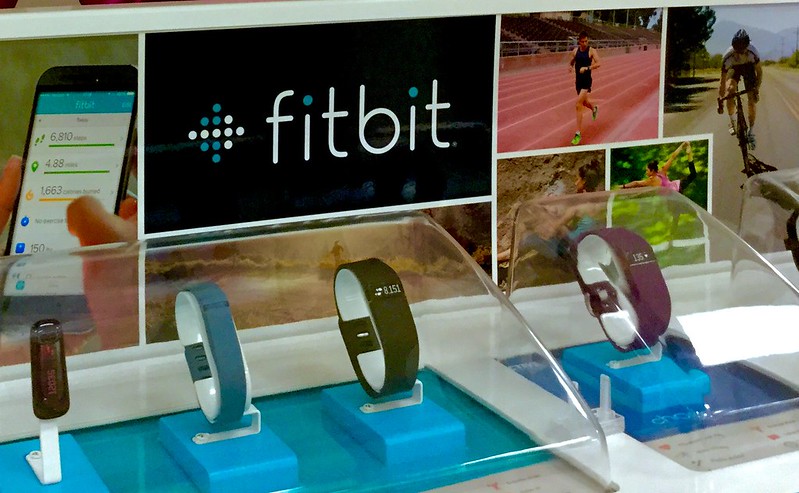
Photo taken by Mike Mozart. Sourced from Flickr. Never before has the topic of health been as important as it is today. Covid-19 continues to dominate the news cycle, placing our mental and physical health at the forefront of public consciousness.
The pandemic has also created new problems that must be overcome around health and fitness. Covid-19 restrictions have made it harder to access the resources needed to improve ourselves. Personal trainers and physiotherapists are harder to reach, while most gyms have been closed or severely restricted.
This new environment has seen an acceleration of an already growing trend; the digitisation of fitness.
Studies conducted in the past few months have shown just how Covid-19 has impacted the ways in which we keep fit. One survey from Dublin-based Amárach Research found that almost two-thirds of people surveyed had spent more time in online fitness classes than they did before the pandemic.
The study also brought to light the growing use of devices when tracking fitness goals, with 60% of people having used mobile apps, smartwatches, and other devices in order to track their activity and compete with family and friends.
The numbers show just how popular digital fitness is becoming, and personal accounts from athletes explain why.
“For me, the best thing about them [smartwatches] is being able to track how far and how long I swim for with the GPS in the watch.” said Wicklow-based triathlete Anthony McGrath. “I like to see how far I go and try to beat it the next time.”
Fellow triathlete Jean Fogarty favours the health benefits from her smartwatch: “I use mine to keep track of my weight,” she said. “Counting calories, checking resting heart rate and peak heart rate. You couldn’t do any of that years ago.”
Agreeing with McGrath, she sees the benefit in tracking her progress. “I can set a distance on the app and start running.
“When I hit that distance, the watch will buzz to let me know I have hit my goal. It takes so much of the weight off my shoulders. I don’t have to work out how far I ran. It knows how many calories I burned whether I’ve swam, cycled or even gone kayaking.
“It keeps me motivated. I know when I’m doing well. I know when I’ve had a lazy day. It kept me motivated during lockdown to keep exercising.”
However, these technologies have not come without their downsides. Like all digital technologies, the issue of privacy has inevitably been raised given how much data these devices are gathering.
Google’s ongoing acquisition of Fitbit has raised alarms given their history with gathering data for advertisement purposes. The ramifications of the merger have been scrutinised by the EU, who warn that it presents a “high level of risk to the fundamental rights to privacy and to the protection of personal data.”
Despite Google claiming they have no intention to use the data in this manner, the EU’s fears may be justified. Fitbit’s ability to gather sensitive health information on its 28 million users may present yet another digital privacy issue in the wrong hands.
-

Managing cybersecurity in a time of the pandemic
As the pandemic threatens to overload the global economy, the healthcare system, it’s also having a powerful impact on the security of business and people.
You must be logged in to post a comment.